Gold and silver fell on the last trading day of 2025, though both remained on track for the biggest annual gain in more than four decades as a banner year for precious metals draws to a close.
Spot gold hovered around $4,320 an ounce, while silver slid toward $71. The two have seen exceptional volatility in thin post-holiday trading, plunging Monday before recovering Tuesday and dropping again Wednesday. The big swings prompted exchange operator CME Group to raise margin requirements twice.
Both metals are still on track for their best year since 1979, supported by strong demand for haven assets amid mounting geopolitical risks, and by interest-rate cuts by the US Federal Reserve. The so-called debasement trade — triggered by fears of inflation and swelling debt burdens in developed economies — has helped supercharge the scorching rally.
In gold, the bigger market by far, those factors spurred a rush by investors into bullion-backed exchange-traded funds, while central banks extended a years-long buying spree.
Gold is up about 63% this year. In September, it eclipsed an inflation-adjusted peak set 45 years ago — a time when US currency pressures, spiking inflation and an unfolding recession pushed prices to $850. This time around, the record run saw prices smash through $4,000 in early October.
“In my career, it’s unprecedented,” said John Reade, a market veteran and chief strategist at the World Gold Council. “Unprecedented by the number of new all-time highs, and unprecedented in the performance of gold exceeding the expectations of so many people by so much.”
Silver has notched up a gain of more than 140% during the year, driven by speculative buying but also by industrial demand, with the metal used extensively in electronics, solar panels and electric cars. In October, it soared to a record as tariff concerns drove imports into the US, tightening the London market and triggering a historic squeeze.
The new peak was then passed the following month as US rate cuts and speculative fervor drove prices higher, and the rally topped out above $80 earlier this week — in part reflecting elevated buying in China.
Yet the latest move swiftly reversed, with the market closing down 9% on Monday then swinging the following two days. In response to the extreme volatility, CME Group again raised margins on precious-metal futures, meaning traders must put up more cash to keep their positions open. Some speculators may be forced to shrink or exit their trades — weighing on prices.
“The key driver today is the CME raising margins for the second time in just a few days,” said Ross Norman, chief executive officer of Metals Daily, a pricing and analysis website. The higher collateral requirements are “cooling the markets off,” he said.
Platinum, Palladium
The enthusiasm for gold and silver has extended into the wider precious-metals complex in 2025, with platinum breaking out of a years-long holding pattern to hit a new high.
The metal is on course for a third annual deficit, following disruptions in major producer South Africa, and supply will likely remain tight until there’s clarity on whether the Trump administration will impose tariffs — as well as on silver.
Prices for silver, platinum and palladium all sagged on Wednesday, though there’s little sign of enthusiasm waning.
“2025’s surprise was how safe-haven metals turned into momentum trades — silver in particular,” said Charu Chanana, chief market strategist at Saxo Markets in Singapore.
Silver traded down 6% at $71.44 an ounce as of 12:28 p.m. in New York. Gold slipped 0.4% to $4,322.04 an ounce, while the Bloomberg Dollar Spot Index was up 0.1%.
The incoming mayor will take his oath of office with two family editions of the Quran and a 19th century edition, symbolising New York City history.
Zohran Mamdani on Thursday became the first New York City mayor to be sworn in using a Quran.
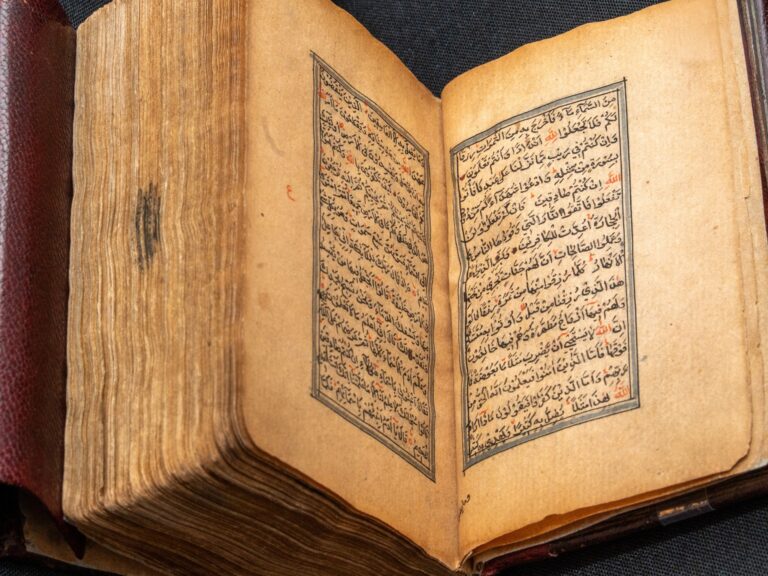
The first Muslim and South Asian mayor of the United States’ biggest metropolis, Mamdani used his grandfather’s Quran and a 200-year-old copy on loan from the New York Public Library (NYPL) for the private swearing-in event held at a disused subway station under Times Square.
Recommended Stories
list of 4 itemsend of list
He then plans to use two copies of the Quran that belonged to his grandfather and grandmother for a daytime ceremony at New York City Hall on Friday.
The historic Quran, borrowed from the library, once belonged to Arturo Schomburg, a Black historian and writer who sold his collection of 4,000 books to the NYPL in 1926. His collection became the Schomburg Center for Research in Black Culture.
Schomburg was born in Puerto Rico in the 1870s to parents of German and Afro-Caribbean descent. He later immigrated to New York and was a key player in the Harlem Renaissance of the 1920s and 1930s – a period of intense cultural and intellectual flourishing within New York’s Black community.
The library praised Mamdani’s decision to use Schomburg’s Quran because of its connection to one of New York’s “most groundbreaking scholars and for its simple, functional qualities”.
This photo provided by the New York Public Library shows the Schomburg Quran on December 16, 2025, in New York [Jonathan Blanc/The New York Public Library via AP Photo]
The small size of the Quran and its black and red ink suggest it was designed for everyday use, the library said. The edition is neither signed nor dated, but its “minute naskh script and its binding, featuring a gilt-stamped medallion filled with a floral composition, suggest it was produced in Ottoman Syria in the 19th century”, the library added.
“The significance of this Quran extends far beyond the beauty of its pages,” said Hiba Abid, curator of Middle Eastern and Islamic studies. “It is a Quran close to the people, not only because of its simple craftsmanship, but also because it is part of the collections of the nation’s largest public library system.”
Anthony W Marx, the library’s president and CEO, said the choice of Quran and its association with Schomburg “symbolises a greater story of inclusion, representation, and civic-mindedness”.
Mamdani is one of only a handful of US politicians to be sworn in with the Quran. New York does not require mayors to take the oath of office with their hand on a religious text, but many past mayors have used a copy of the Bible.
Former New York City Mayor Michael Bloomberg used a 100-year-old family Bible during one ceremony, while Mayor Bill de Blasio used a Bible that once belonged to US President Franklin D Roosevelt. Mamdani’s predecessor, Mayor Eric Adams, also used a family Bible for his oath.
This photo provided by the New York Public Library shows the Schomburg Quran on December 16, 2025, in New York [Jonathan Blanc/The New York Public Library via AP Photo]
Mamdani’s faith and his background as a Ugandan-born American of South Asian descent were front and centre during his campaign, which focused on celebrating the diversity of New York.
In viral social media videos, Mamdani also spoke candidly about the effect of the September 11 terrorist attacks on New York and the subsequent rise in Islamophobia in the US. Other videos featured the experiences of everyday New Yorkers, including many of its Muslim and immigrant communities.
Mamdani has also been a firm critic of Israel’s policies towards Palestinians and its genocidal war on Gaza.
Critics like New York Representative Elise Stefanik homed in on Mamdani’s background and left-wing politics as a Democratic Socialist, calling the incoming mayor a “jihadist Communist” and “terrorist” sympathiser.
Mamdani, however, pledged to never hide from his background during a campaign speech. “I will not change who I am, how I eat, or the faith that I’m proud to call my own,” he said during his campaign. “I will no longer look for myself in the shadows. I will find myself in the light.”
A required part of this site couldn’t load. This may be due to a browser
extension, network issues, or browser settings. Please check your
connection, disable any ad blockers, or try using a different browser.
A worker at Walt Disney World is “recovering” after being injured by a 400-lb (180kg) runaway fake boulder prop in an incident that was caught on video, the Florida theme park confirmed.
The incident took place at the Indiana Jones Epic Stunt Spectacular! during a live recreation of a famous scene from the film.
Video shows the boulder rolling towards the audience as a staff member jumps into its path, preventing it from reaching the crowd.
“We’re focused on supporting our cast member, who is recovering,” Disney said in a statement on Wednesday. “Safety is at the heart of what we do, and that element of the show will be modified as our safety team completes a review of what happened.”
The scene from 1981’s Raiders of the Lost Ark shows Indiana Jones – played by Harrison Ford – outrunning a giant boulder triggered by a booby trap, before leaping to safety.
Video of the incident on Tuesday shows the boulder bouncing off its tracks, and then bounding towards the audience as a staff member steps into its path and is knocked to the ground.
The staff member did not appear to stand up immediately, and other workers are seen running to his side.
According to a blog run by the park, the boulder prop is approximately 400-lbs and made of rubber.
A spokesperson for Disney did not confirm that the boulder was the cause of the incident, but told CBS News, the BBC’s US partner, that “a prop moved off its track”.
One witness told People magazine that the worker had “saved” the audience from being injured. “It was a crazy experience and definitely one that we will remember.”
In one video of the incident, a man behind the camera is heard saying: “He literally saved our lives, that guy.”
In 2025, the 13-14 girls’ age group saw all three breaststroke National Age Group Records go down, while the boys did not see any new NAGs. Karina Plaza earned the award on the girls’ side for her NAG performances in February. The boys’ decision came down to overall #1 times which Joey Eaddy led with 10 top times over the three seasons encompassed in 2025.
Karina Plaza was only 14 through the end of the 2024-25 short course season, but that was long enough to break both the 100 and 200 breaststroke NAG records with barrier-breaking times.
In February, Plaza, who swam for SwimMAC at the time but now swims for Mecklenburg, raced at the North Carolina Swimming Short Course Age Group Championships.
On the 2nd day of the meet, she swam the 100 breaststroke, touching in 59.94 to take nearly a second off her previous best 1:00.67 from the year prior. With this swim, she became the first 13-14 girl in history to break 1:00 in the 100 breaststroke, taking down Alexis Wegner’s 2015 record of 1:00.02.
The following evening, she dropped almost two seconds in the 200 breaststroke to swim 2:09.40, breaking 2:10 for the first time and breaking Mikayla Tan‘s two-month-old record of 2:09.58 from the 2024 Winter Junior Championships.
She also raced the 400 IM at that meet, swimming 4:12.12 to set the top time in the country and move up to 10th fastest all-time in the event.
She finished the 2024-25 SC season with top 10 times in the country in the 200 free, 50 back, 100 back, 200 back, 200 fly, 200 IM on top of her nation-leading times in the 100 and 200 breast and 400 IM.
Plaza was also part of a NAG record relay in 2025. In January, SwimMAC broke the 13-14 long course mixed 400 medley relay NAG, swimming 4:05.66 to take more than three seconds off Santa Clara’s 2023 record of 4:09.21. Plaza swam the backstroke leg of that relay, touching in 1:03.56, which was the 7th fastest time in the country last season.
Plaza’s Top 10 Times in the Country
200 free — 1:47.66 (4th)
50 back — 25.54 (10th)
100 back — 53.87 (7th)
200 back — 1:56.06 (4th)
100 breast — 59.94 (1st)
200 breast — 2:09.40 (1st)
200 fly — 2:01.38 (8th)
200 IM — 1:57.44 (2nd)
400 IM — 4:12.12 (1st)
Honorable Mentions
Sydney Hardy, Sarasota Sharks — Sydney Hardy of the Sarasota Sharks has the fastest time in the country in the 1650 free (16:33.02) and 200 IM (1:58.89). She also appears on the top 10 lists in the 1000 free (2nd — 9:50.36), 200 back (6th — 1:57.79), and 400 IM (2nd — 4:12.55). Last short course she finished with top 10 times in the 1000 free and 1650 freestyles. In long course she was top-10 in the 200 free (5th — 2:03.40), 400 free (2nd — 4:17.45), 100 back (9th — 1:03.83), 200 breast (7th — 2:35.47), 100 fly (6th — 1:02.04), 200 fly (2nd — 2:17.58), 200 IM (3rd — 2:17.20), and 400 IM (2nd — 4:47.86), and she had top times in the 800 free (8:46.03), 1500 free (16:45.04).
Gabi Brito, Beach Cities Swimming — Gabi Brito recently turned 15, but not before she was able to make her mark on the 13-14 rankings. At the end of last short course she was the top swimmer in four different events and held top 10 times in eight others. In long course, she led five individual events with four other top 10 times. Her swims put her on the overall top 20 rankings in the short course 100 free (6th — 48.75), 100 fly (4th — 51.87), 200 fly (19th — 1:57.33), 200 IM (3rd — 1:56.39) and the long course 50 free (5th — 25.42), 100 free (5th — 55.74), 100 fly (5th — 59.60) and 200 IM (8th — 2:15.61).
Grace Koenig-Song, NASA Wildcat Aquatics — Grace Koenig-Song was the other NAG record breaker in the 13-14 age group this season. At the 2025 NCSA Spring Championships, she swam 27.98 in the 50 breast final to finish 2nd overall, taking down her own NAG record time of 28.23 from the prelims.
With no NAG record breakers, choosing a winner for the 13-14-year-old boys was not quite as clear cut, but Revolution Aquatic Club’s Joey Eaddy earned the win due to his number of nation-leading times and the skill he has shown in a variety of events across all three seasons.
Eaddy is 15 now, but with a birthday late in the year, he spent most of the calendar year as a 14-year-old. Over the first four months of this season, he racked up nation-leading times in the 200 free, 500 free, 1000 free, 1650 free, and 200 back.
Last short course he set the top time in the 1650 free and during long course he led the 400 free, 800 free, 1500 free, and 200 backstroke events.
Many of his top times were ranked in the top-15 all-time in the events, with his 500 free and 800 free both coming in 4th in the all-time 13-14 rankings.
Nation Leading Times
SCY
200 free — 1:39.91
500 free — 4:25.49 (#4 All-Time)
1000 free — 9:12.96 (#11 All-Time)
1650 free — 15:23.80 (#5 All-Time)
200 back — 1:47.46 (#14 All-Time)
LCM
400 free — 4:01.25 (#13 All-Time)
800 free — 8:15.28 (#4 All-Time)
1500 free — 15:49.23 (#14 All-Time)
200 back — 2:04.38 (#12 All-Time)
Honorable Mentions
Reef McMeeking, Laker Swim — Reef McMeeking currently holds the top time in the boys’ 100 breast for this season with the 54.30 he swam to finish 14th in the event at the East Winter Juniors Championships. He also holds top 10 times in the 50 free (4th), 200 breast (5th), 100 fly (3rd), 200 IM (2nd), 400 IM (3rd). Last long course he set the fastest times in the country in the 50 breast, 100 breast, and 200 IM for 13-14 boys. His 100 breast time from Winter Juniors is the 3rd fastest time in history. His long course 100 breast of 1:03.50 is the 4th fastest time of all-time, and his 200 IM of 2:05.89 is the 5th fastest.
Alexander Thomas, Dads Club Swim Team — Alexander Thomas is 15 now, but he was 14 through the long course season, which he finished with the top times in the country in the 100 free (52.49) and 200 freestyle (1:55.40). His spot on this ranking comes less from these swims, which don’t make it onto the top-20 all-time rankings, and more from the number of top-10 times he had. With just two seasons compared to Eaddy and McMeeking’s three, he held 14 top-10 times across the 2024-25 SC and the 2025 LC. The same number as McMeeking and only two less than Eaddy. He held top-10 times in six short course events — the 200 free (8th), 50 back (10th), 200 back (10th), 200 fly (3rd), 200 IM (5th), and 400 IM (7th)– and in eight other long course events — 50 back (5th), 100 back (6th), 200 back (6th), 200 fly (3rd), 200 IM (2nd), and 400 IM (6th).
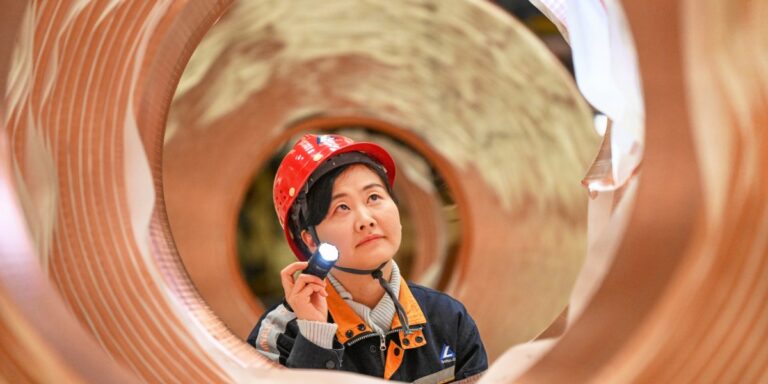
Copper had its best year since 2009, fueled by near-term supply tightness and bets that demand for the metal key in electrification will outpace production.
The red metal has notched a series of all-time highs in an end-of-year surge, rallying 42% on the London Metal Exchange this year. That makes it the best performer of the six industrial metals on the bourse. Prices dipped 1.1% Wednesday, the last trading day of 2025.
The latest gains also have been driven by traders rushing to ship copper to the US in anticipation of potential tariffs, creating tightness elsewhere. Trump’s plan to revisit the question of tariffs on primary copper in 2026 revived the arbitrage trade that rocked the market earlier in the year, tightening availability elsewhere even as underlying demand in key buyer China has softened. That price spread narrowed recently amid a power December rally on the LME.
“The expectation for future US import tariffs on refined copper has resulted in more than 650,000 tons of metal entering the country, creating tightness ex-US,” wrote Natalie Scott-Gray, senior metals analyst at StoneX Financial Ltd. She noted two-thirds of global visible stocks now are held within COMEX.
Beyond the tariff-driven flows, a deadly accident at the world’s second-largest copper mine in Indonesia, an underground flood in the Democratic Republic of Congo and a fatal rock blast at a mine in Chile have all added more strain to availability of the metal.
The near-term outlook for copper demand growth has been clouded by weakness in China, the world’s top consumer of the red metal. The country’s property market has been stuck in a yearslong downturn that’s dented the need for copper plumbing and wiring, while consumer spending has been sluggish, weighing on appetite for finished goods such as electronic appliances.
Still, robust momentum in global copper demand is expected over the long term. BloombergNEF estimates consumption could increase by more than a third by 2035 in its baseline scenario.
The drivers of this trend include the ongoing shift to cleaner energy sources such as solar panels and wind turbines, growing adoption of electric vehicles and the expansion of power grids.
Copper settled 1.1% lower at $12,558.50 a ton in London. Prices hit a record $12,960 on Monday.
A few months ago, the folks at the McCann Erickson (one the largest advertising agencies in the world), reached out to us. They said they were working on a Microsoft television campaign, showcasing how real people use PCs to achieve their passion, and they thought HoneyTrek could be a good fit. Flattered and flabbergasted, we started an intense interview process, and three months later we are on national TV! The whole experience from start to present has been incredibly humbling and absolutely surreal…here’s how it all went down.
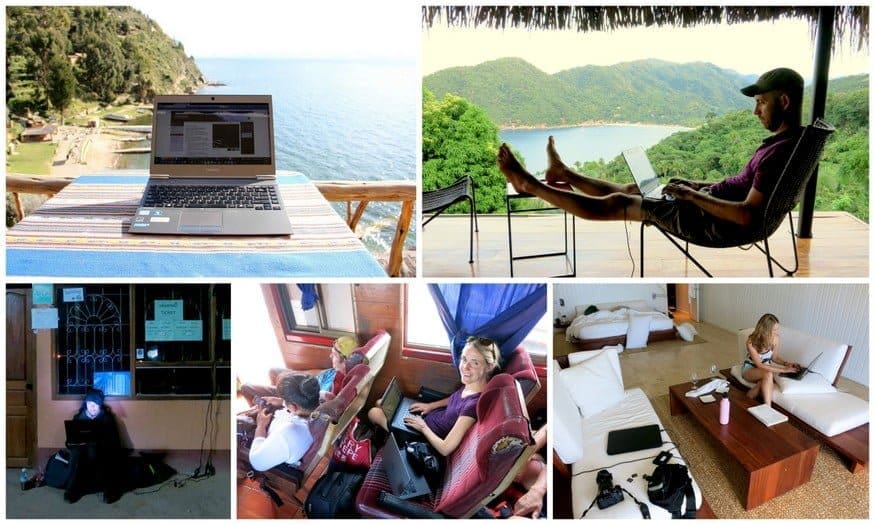
HoneyTrek began as a grand idea to honeymoon around the world, immerse ourselves in other cultures, seek life-changing adventures, and inspire other people to think beyond their country’s borders. Having ditched our desk jobs to follow our dream, we run HoneyTrek from our “satellite offices” (aka. beach chairs, bus stations, housesits, ferry boats, jungle huts, etc.) All we need is a laptop and each other to set up HoneyTrek HQ.
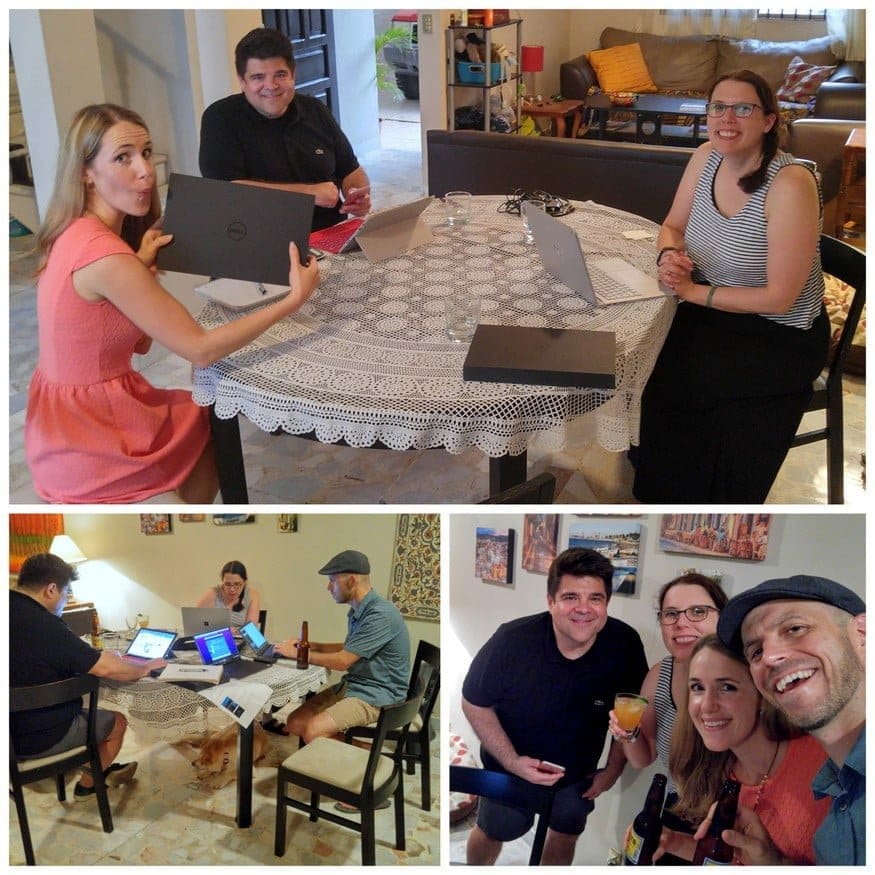
After a few rounds of Skype calls with then McCann and Microsoft teams, they said they wanted us to test out the new Dell XPS 13, loaded with Windows 10. Trying to contain our excitement, we sent them our mailing address in Mazatlan, Mexico. Their email reply (on a Friday) said, “Thanks for the address. The Senior Manager and Director of Global Advertising will be arriving on Tuesday.” Wait, what? They flew their upper management from Seattle to Mazatlan (totally crazy side note: Seattle & Mazatlan are actually Sister Cities…must be fate!) to hand-deliver and set up our computers in person! We spent the next three weeks exploring the latest Windows features (Microsoft Edge, Cortana personal assistant, Universal Apps, 3D Maps…to name a few) and putting the laptops through the HoneyTrek ringer (7-hour bus rides, sun-drenched work spaces, blogging marathons, etc.) and it passed with flying colors. One thing led to the next and before we knew it, we were on a first class flight to LA to shoot a TV commercial.
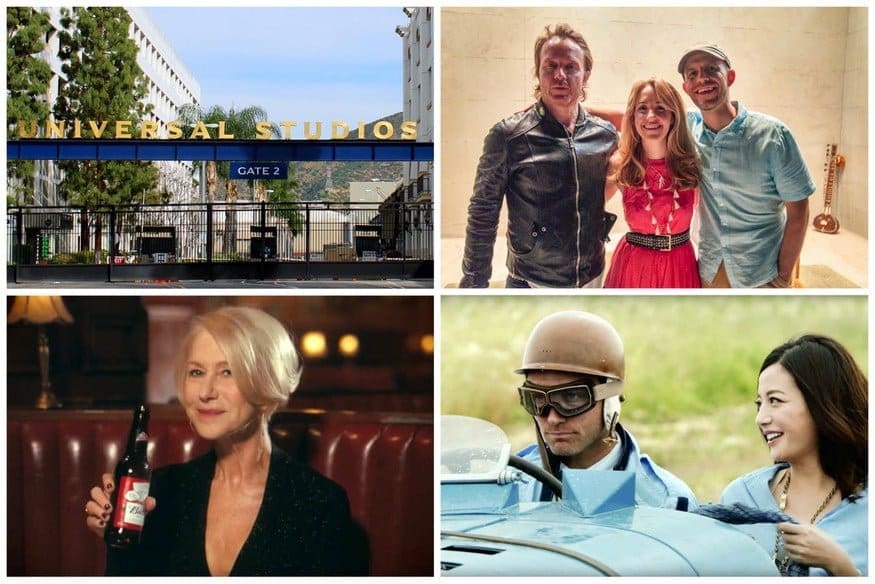
We pulled up to the gates of Universal Studios, and it was buzzing with camera crews, set builders, show runners, and glamorous people. A man with a RSA Films badge walked up to us, “Are you guys HoneyTrek?” With a mega brand like Microsoft we knew this wasn’t going to be a ragtag crew, but we didn’t realize they hired one of the best production companies in the world. RSA stands for Ridley Scott Associates; he’s the Academy Award Winning director of Gladiator, Black Hawk Down, The Martian, and a dozen more acclaimed films. He has an incredible team, including his son and director for our commercial, Jake Scott. You’ve seen Jake’s work…the Budweiser “Simply Put” Super Bowl ad with Helen Mirran, Johnny Walker’s “Gentleman’s Wager” with Jude Law, and music videos for U2, REM, Radiohead, and plenty more. No pressure, HoneyTrek.
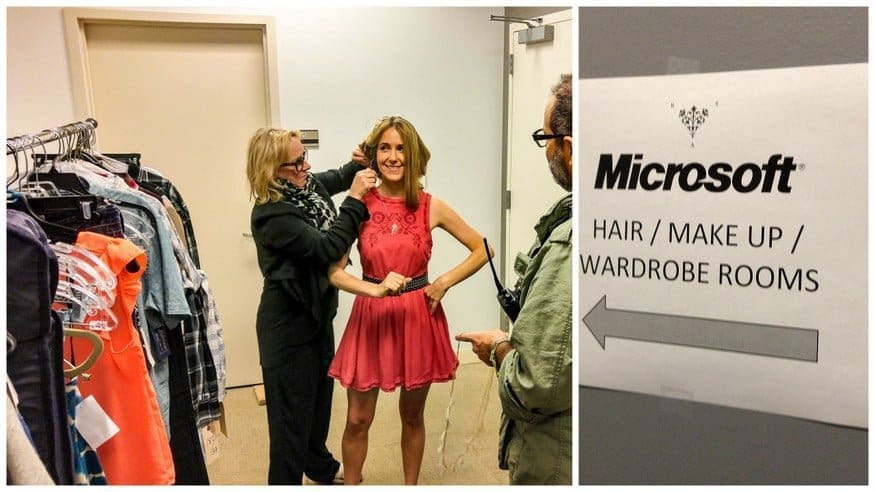
We were escorted to Wardrobe for a fitting with the two costume designers. Kim and David had been studying our “style” from photos and videos over the past week and selecting outfits to match. They had us try on and photograph a dozen different looks, incorporating some of our favorite personal accessories, until we had solid options to show Jake. Red linen dress, a beaded bracelet from Mazatlan, and leather sandals for Anne and some weathered Carhartts, a short-sleeve button-down, and the signature green hat for Mike.
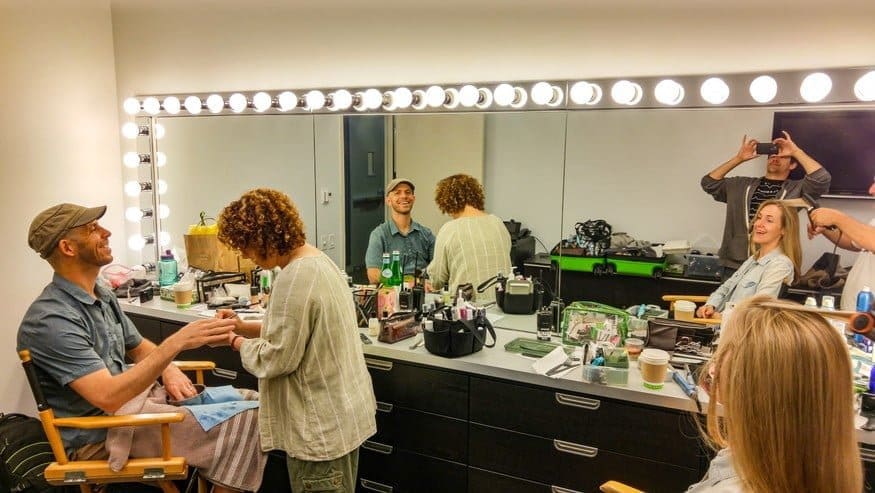
We tried to get a good night sleep but all the nerves and excitement woke me up at 4am, so I decided to go to the gym. I walk out of our hotel room on the 17th floor of the Universal Sheraton and I nearly jumped out of my skin…and so did Bernie Sanders’ aides. It was election day in California and The Bern was staying two doors down from us! But I digress…I did some yoga, had some breakfast, then we got picked up at 6am for hair, makeup, and nails. How glamorous!
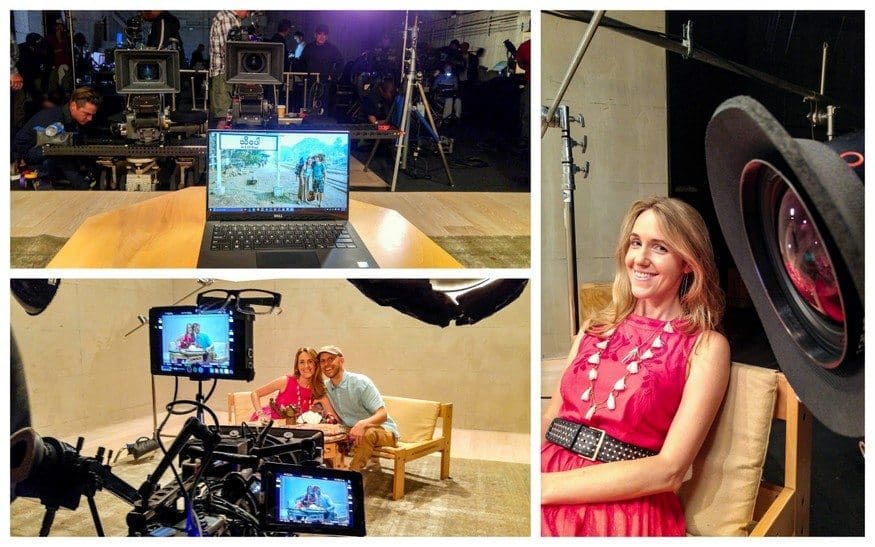
Primped and preened, the Assistant Producer escorted us to Stage 4. In a space the size of an airplane hangar, there were over 100 people…setting up lights, sound, cameras, and props for the “HoneyTrek Inspired” set. We rounded the corner, and everyone paused to stare at us. Gulp.
It was pretty intimidating having all these people and massive cameras around, but Jake, with his laid-back vibe and disarming English accent, somehow made us feel at ease. He sat at the edge of the stage and just asked us questions about HoneyTrek and how we use our tech. They didn’t give us a script…in fact, they barely gave us any info about what we’d be doing to keep our responses extra natural. We just riffed on travel and walked them through how we edit photos, compile videos, do social media, and post blogs. Not gonna lie, it was still pretty intense but so cool that they trusted us to shoot from the hip.
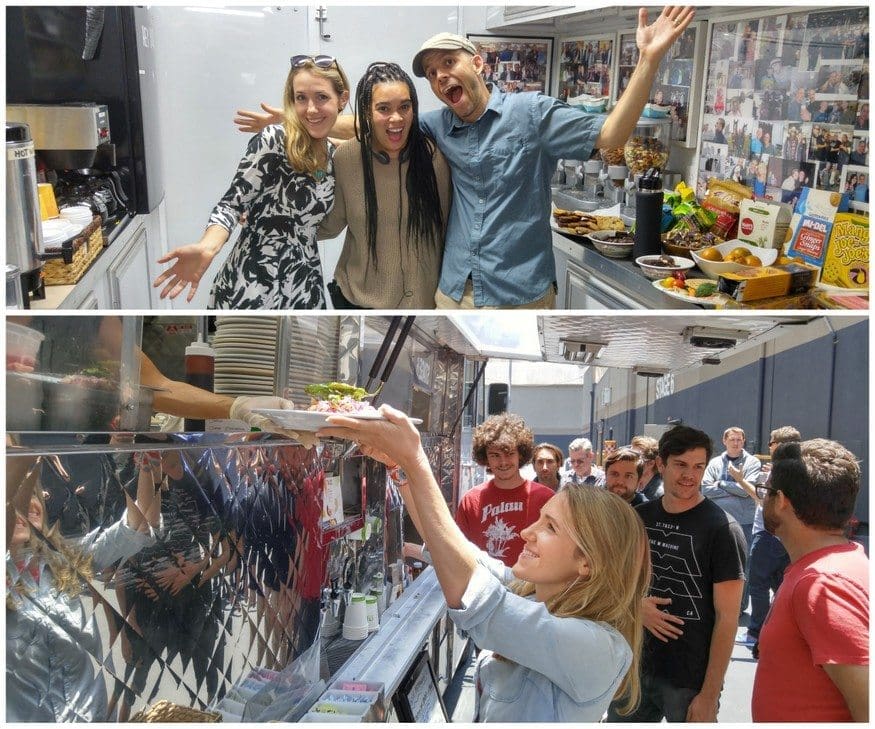
We made it to lunchtime, phew! We don’t know how people who work on these high-profile sets don’t get fat. Lunch was a smorgasbord, the food truck was always open, and the crafts service team delivered gourmet snacks every couple hours…and we loved every minute of it.
Once we completed the shot list of nitty gritty stuff, they had us share the stories behind some of our favorite travel treasures. With Maasai spears, Japanese Kabuki masks, Bolivian miners lamps, and Tibetan Cow Bells, we had a little fun with props…if only I knew they’d use the footage of my bell booty shake on TV!
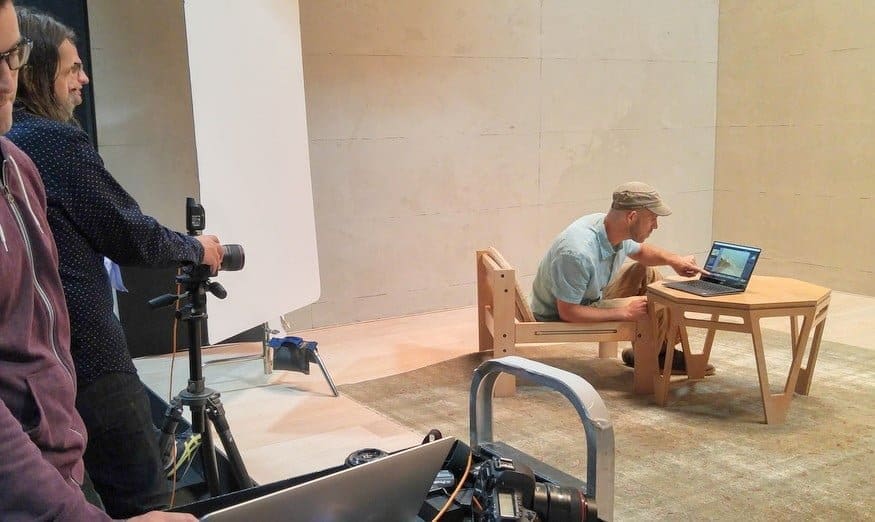
As the film crew deconstructed their gear, a 12-person photo team arrived for the still shots. In addition to what’s on Microsoft’s website right now, we might be in some print ads around the world. (They had me put on a sweater so it could run in the Middle East.)
Our Windows 10 TV Commercial
After we shot the commercial, McCann told us there was no guarantee it would air on TV. They asked us a few follow-up questions over the next two months but still gave no indication if and when it would run. Then last week, we get an email saying: “It’s airing on Monday, don’t tell a soul!” We were bursting at the seams and in a state of total amazement that 10 hours of intense filming could be culled into 30 beautiful seconds.
With so much footage and so many platforms to share it on, the team actually made three versions of the spot. Here’s one of the 15-second clips you may see around social media or Hulu.
We are so grateful for this opportunity to work with such a talented team and respected brand. We hope we did everybody proud!
From a CRISPR baby to a young AI disruptor, 2025 has seen some serious leaps in science and technology. It’s also seen some people stand up to the growing pressures facing the science community. Now, the world’s leading science journal, Nature, has named 10 prominent figures behind the year’s standout moments, which stretch from the darkness of the deep sea to the far corners of the universe.
Mengran Du – “Deep diver” Discovered the deepest known animal ecosystem on Earth
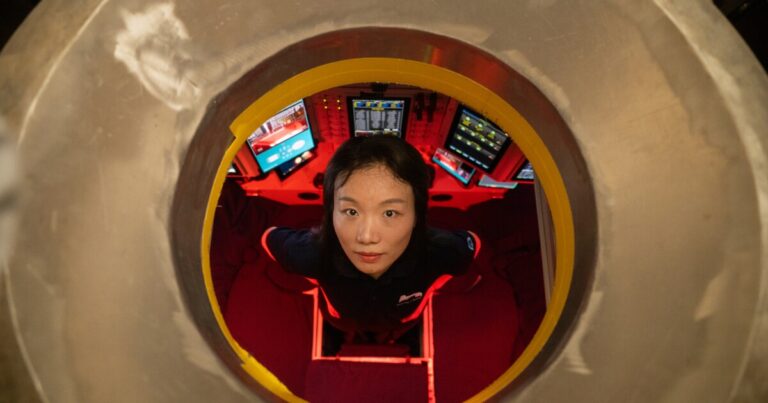
During an ocean dive to nearly six miles (10 km) below the surface in China’s Fendouzhe submersible, Mengran Du witnessed a scene no scientist had ever seen – an entire animal ecosystem thriving in the hadal zone, illuminated by the submersible’s lights. Du identified bristleworms, gastropods, clams, tubeworms and other organisms living in the extreme depths, supported not by sunlight but chemosynthetic microbes drawing energy from methane and sulfide seeping through the ocean floor. Her expertise enabled immediate identification of multiple new deep-sea species. Subsequent expeditions revealed similar ecosystems in other trenches, suggesting a vast global network of deep chemosynthetic communities we’re only just beginning to learn about. The discovery has reshaped our understanding of energy flow, biodiversity and habitability in Earth’s deepest and darkest environments.
“As a diving scientist, I always have the curiosity to know the unknowns about hadal trenches,” said Du (pictured above), a geoscientist at the Chinese Academy of Sciences’ Institute of Deep-sea Science and Engineering. “The best way to know the unknown is to go there and feel it with your heart and experience, and look at the bottom with your bare eyes.”
Susan Monarez – “Public-health guardian” Fired after refusing to compromise scientific standards
Susan Monarez, former director of the CDC, fought for medical science integrity
Alyssa Schukar/Nature
Microbiologist and immunologist Susan Monarez started the year as director of the US Centers for Disease Control and Prevention (CDC), where she was welcomed by researchers who hoped her two-decade-long career as a non-partisan government scientist would be a guiding light in challenging times. But less than a month into the job, she was abruptly dismissed after refusing to pre-approve vaccine guidelines without scientific review and resisting pressure to fire key CDC scientists. Monarez’s testimony before US Congress in August made clear that she regarded her stance as a defense of scientific evidence, not a political act.
“Susan has long established herself as someone who puts evidence in service of the country above all,” says Jennifer Nuzzo, an epidemiologist and director of the Pandemic Center at Brown University. “Susan did what any self-respecting scientist would do. No self-respecting scientist would agree to just rubber-stamp things without first scrutinizing the scientific evidence.”
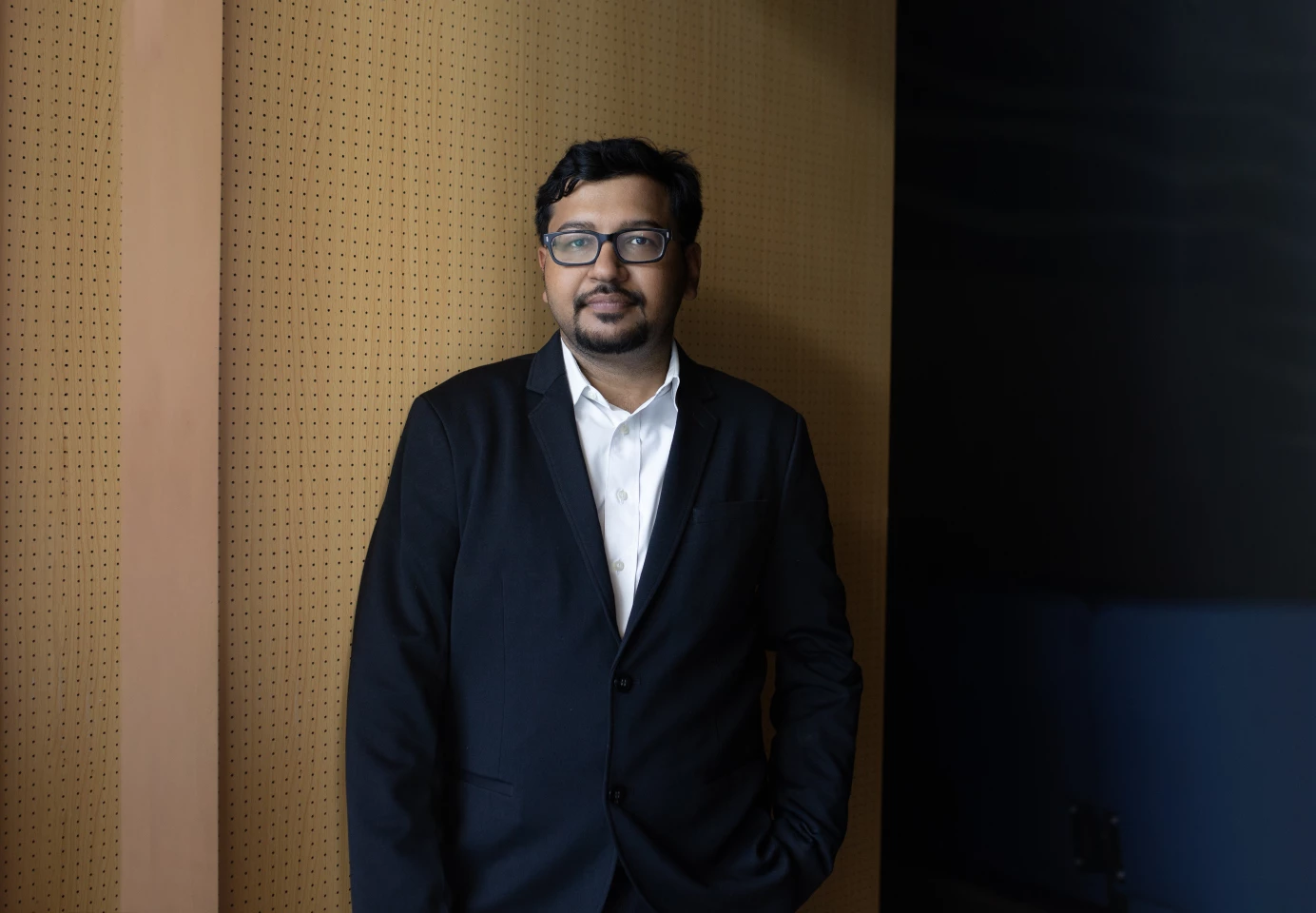
Achal Agrawal – “Research integrity” Exposed widespread misconduct in Indian academia
Achal Agrawal has changed academic research for the better
Billy H.C. Kwok/Nature
Achal Agrawal’s work began with a conversation with a student about paraphrasing software – and led him to uncover systemic problems in India’s research culture. Shocked by how routine plagiarism and paper-milling was, he resigned from his university position and dedicated himself to documenting research misconduct. Through India Research Watch (IRW), an online integrity watchdog he founded, Agrawal has documented retractions, exposed fraudulent processes and built a whistleblower community with tens of thousands of followers. His relentless, unpaid work has resulted in the Indian government imposing the first-ever penalties for institutions whose researchers accumulate large numbers of retractions – which in turn affects how Indian universities are ranked and funded. His activism, however, has come at a cost – including a lawsuit and difficulty finding employment – but Agrawal continues fighting the good fight, training universities in better research practices. IRW now reportedly receives around 10 tips a day.
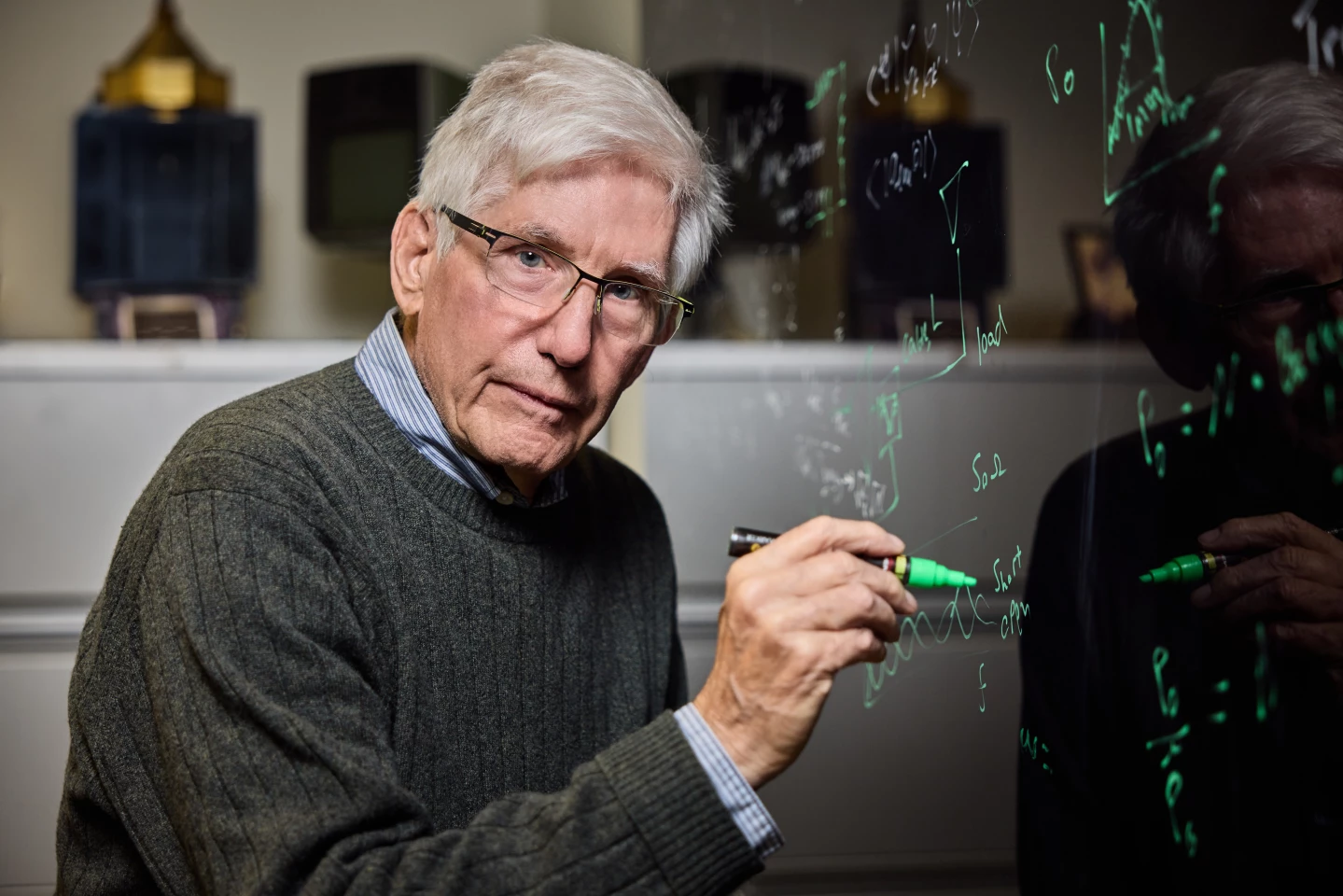
Tony Tyson – “Telescope pioneer” Created the Vera Rubin Observatory
Discovery and determination: Tony Tyson has let us see space in HD
Rocco Ceselin/Nature
Tony Tyson has spent more than 30 years imagining and building a telescope capable of recording the changing universe in real time. In 2025, he finally watched the first images of thousands of galaxies arrive from the Vera Rubin Observatory atop Cerro Pachón in the Andes, Chile. Tyson’s vision began decades earlier, when he recognized the power of early charge-coupled devices (CCDs) for mapping faint galaxies and developed methods to detect dark matter through weak gravitational lensing. His proposals were initially dismissed as too ambitious, but he persisted, designing the Rubin Observatory’s enormous, ultra-fast imaging system and its 3,200-megapixel camera. Now, at 85, Tyson continues to fine-tune the telescope as it prepares to survey the southern sky repeatedly over 10 years, mapping dark matter, tracking asteroids and capturing cosmic events in unprecedented detail.
“It was high-risk, high-reward. We took the risk,” said Tyson, a physicist at the University of California, Davis, of his US$810-million, life-long pet project.
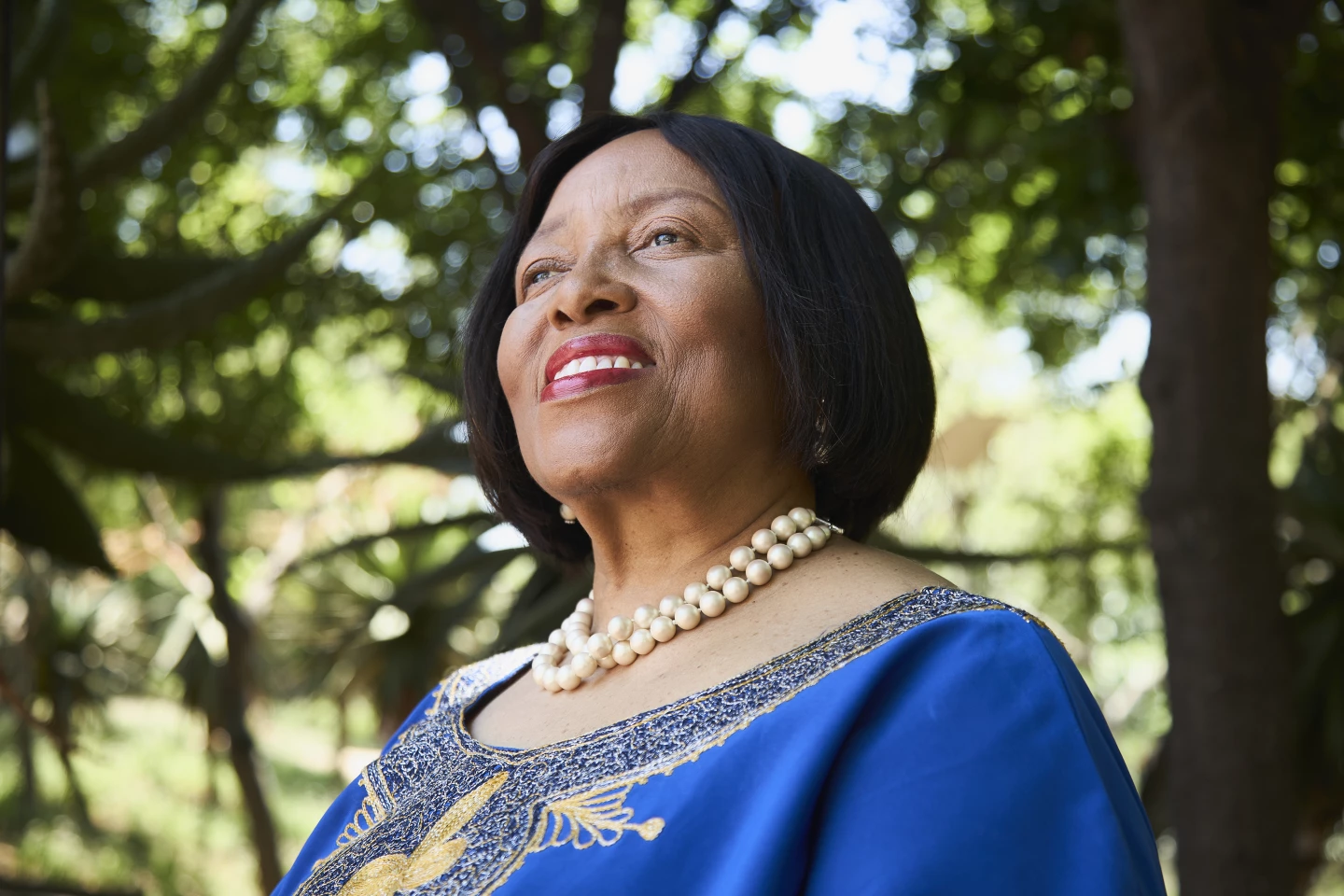
Precious Matsoso – “Pandemic negotiator” Architect of the world’s first pandemic treaty
Precious Matsoso made history by brokering the world’s first pandemic treaty
Chris de Beer-Procter/Nature
As geopolitical tensions strained global cooperation, South Africa’s former health department director-general Precious Matsoso guided 190 nations toward an agreement many believed impossible: the world’s first pandemic treaty. After years of negotiations, nations reached consensus on the treaty in April. Matsoso’s decades of experience expanding access to medicines – including HIV treatments at home in South Africa – proved crucial as she balanced demands from high- and low-income countries. Her insistence on compromise, combined with warmth (including singing “All You Need Is Love” to delegates), helped push difficult discussions forward. The treaty includes provisions for data sharing, access to medical countermeasures and technology transfer to poorer countries. Although the treaty’s implementation will take years and ratification requires political involvement, the agreement would not exist without Matsoso steering the ship.
“If it were not for her, we might not have a pandemic agreement,” said Lawrence Gostin, a legal scholar at Georgetown University who advised the World Health Organization (WHO) on the treaty.
Sarah Tabrizi – “Huntington’s hero” Delivered the first strong clinical evidence that gene therapy can slow Huntington’s disease
Sarah Tabrizi has championed groundbreaking research on Huntington’s disease
Jessica Hallett/Nature
British neurologist and neuroscientist Sarah Tabrizi has published more than 420 peer-reviewed publications, and this year pushed treatment for Huntington’s disease (HD) to the next level, spearheading research on the gene therapy AMT-130. The drug, delivered directly into the brain using viral vectors, was shown to reduce the rate of disease progression by 75% in people who received high doses. It was the most promising clinical result ever achieved for the fatal hereditary brain disorder. Tabrizi has led or advised nearly every major therapeutic program in the field, and her expertise helped shape the design of clinical trials. She is now guiding the evaluations of multiple next-generation treatments that lower levels of the toxic huntingtin protein that causes Huntington’s, as well as studying early brain changes in pre-symptomatic carriers to identify the ideal intervention window. Her work has re-energized a field that has been long marked by setbacks, offering genuine hope that HD may one day be preventable.
“Sarah is amazing,” said Hugh Rickards, a neuropsychiatrist at the University of Birmingham. “She’s the spider in the middle of the web. You name a disease-modifying therapy in HD – she’s got her hand on it somewhere.”
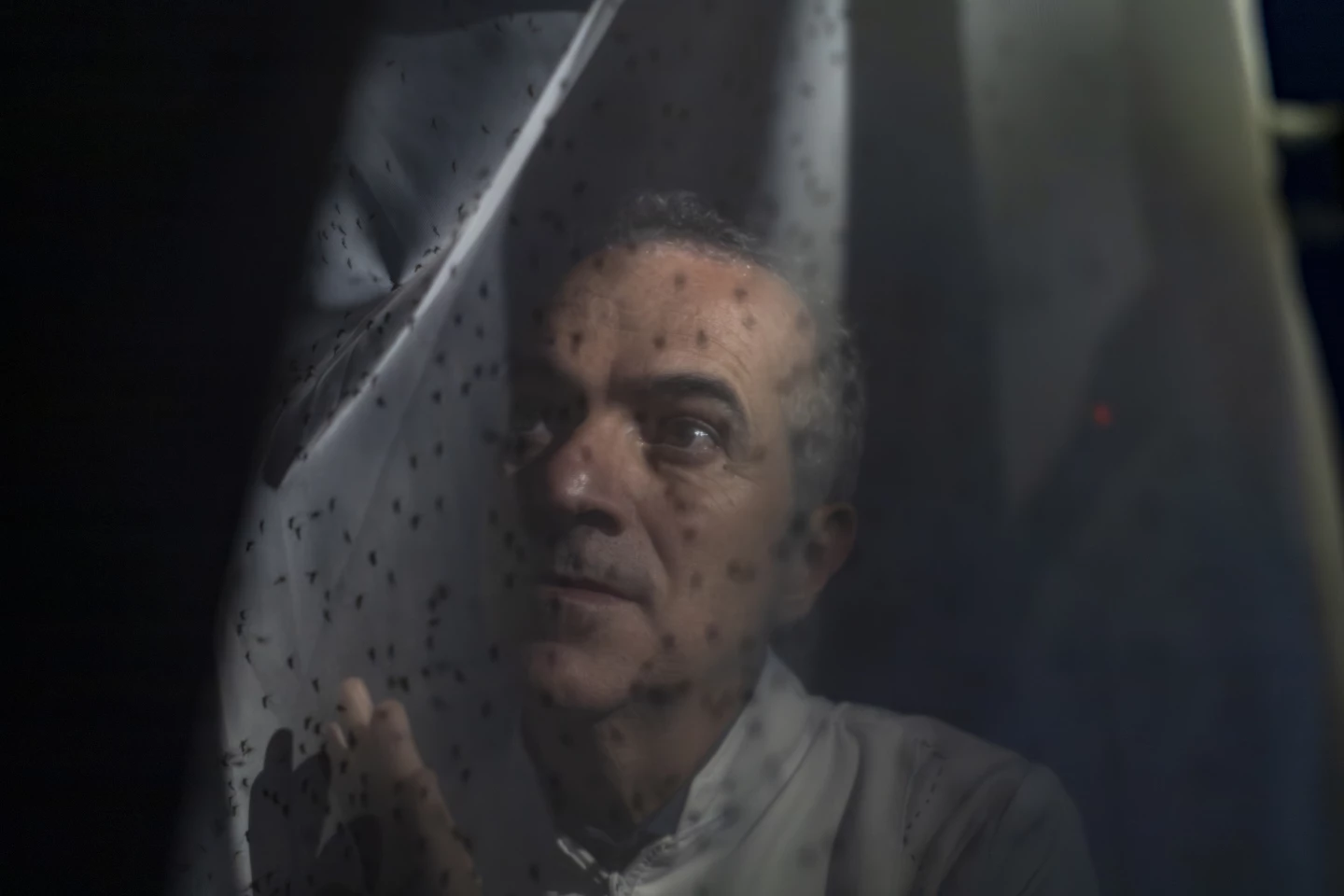
Luciano Moreira – “Mosquito rancher” Revolutionized mosquito-based disease control across Brazil
Mosquito king Luciano Moreira is leading the fight against mosquito-borne disease in Brazil
Gabriela Portilho/Nature
Luciano Moreira has transformed an experimental mosquito-control method into a nationwide public-health program in Brazil. By breeding Aedes aegypti mosquitoes infected with Wolbachia bacteria – which dramatically reduces transmission of dengue and other viruses – he helped Brazil adopt the strategy as an official tool in fighting mosquito-borne disease. His work covers novel research, field trials, political campaigning and industrial-scale implementation. The mosquito factory he launched in Curitiba now produces more than 80 million eggs per week and aims to release five billion Wolbachia-carrying insects – “Wolbitos,” if you will – per year. Early deployments in cities such as Niterói have now reduced dengue fever by nearly 90%. Moreira is now running the Wolbito do Brasil facility, leading a team of 75 as the technology continues to be scaled up and expanded to more regions.
“He has succeeded not only in carrying out the academic work, running experiments to demonstrate the model’s effectiveness, but also in convincing political decision-makers to implement the technology,” said Pedro Lagerblad de Oliveira, a molecular entomologist at Brazil’s Federal University of Rio de Janeiro. “This is a skill that not all scientists have.”
Liang Wenfeng – “Tech disruptor” Built DeepSeek, creator of the open-source R1 reasoning model
Chinese startup DeepSeek did what the AI tech giants thought was impossible
Liang Wenfeng, 40, took the US AI powers by surprise when his company DeepSeek released the R1 model – a powerful, cheap reasoning-focused large language model (LLM) that allowed anyone to study or build on it. Trained at a fraction of the cost of its big competitors from the likes of OpenAI and Google, and released with full technical transparency, R1 became the first major reasoning LLM to undergo peer review. Liang, a former hedge-fund co-founder, had spent a decade buying up 10,000 all-important Nvidia GPUs before US export controls hardened, forming DeepSeek in 2023. The success spurred other companies to open their models and shifted perceptions of China’s AI landscape from imitator to innovator. The company has just launched DeepSeek-V3.2 and DeepSeek-V3.2-Speciale, two reasoning-first models that are once again earning high praise.
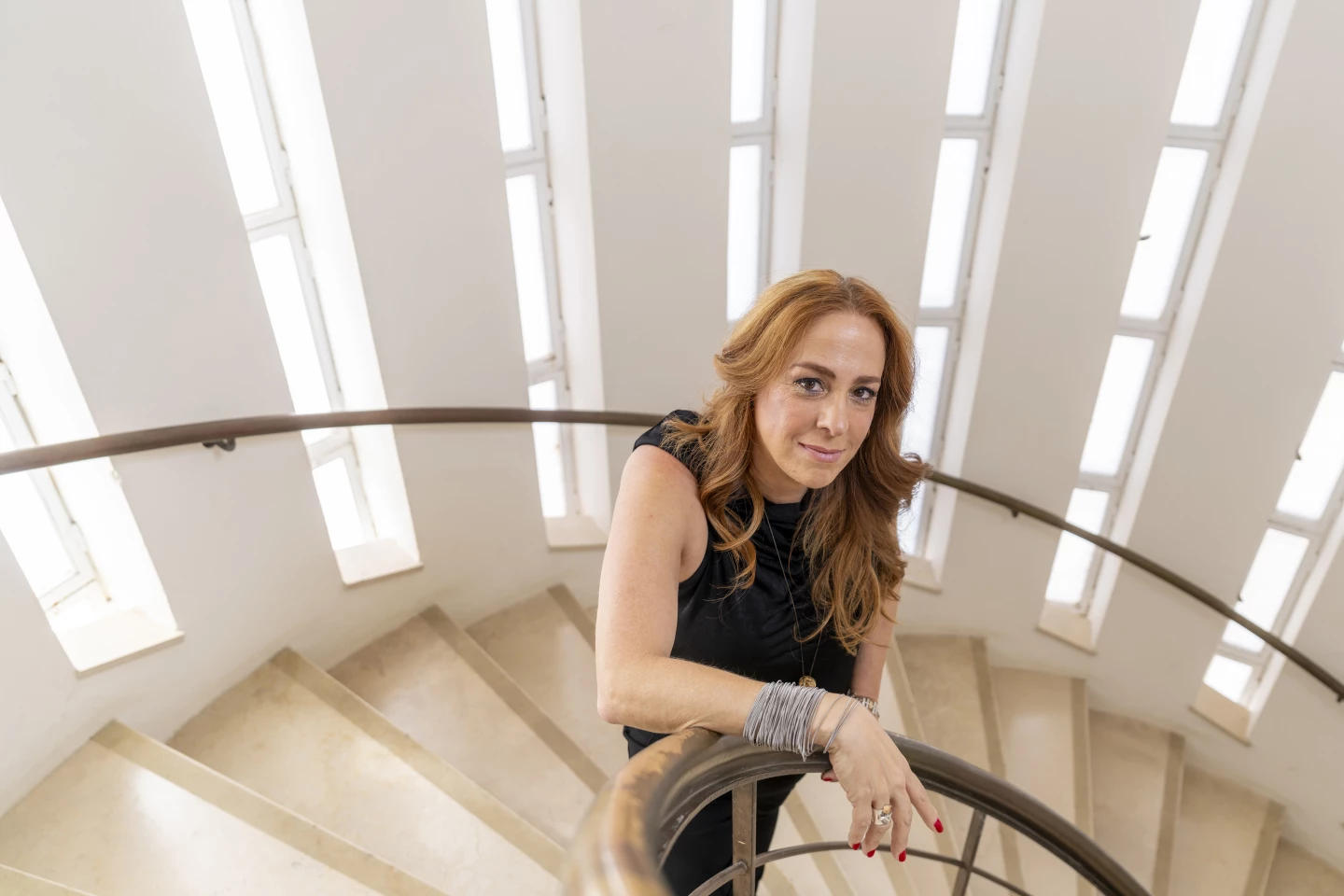
Yifat Merbl – “Peptide detective” Uncovered a hidden antimicrobial system inside the proteasome
Yifat Merbl, a professor in the Department of Systems Immunology at the Weizmann Institute of Science, led new discoveries about cell immune defenses
Daniel Rolider/Nature
Systems biologist Yifat Merbl discovered an entirely new facet of the immune system by investigating what she calls “the garbage cans of cells.” Using mass spectrometry to examine peptides produced by large protein complexes in cells called proteasomes, she and her team found that many fragments had antimicrobial properties. Further experiments showed that proteasomes change their configuration during bacterial infection to favor production of these defensive peptides, revealing a previously unknown immune pathway. The discovery suggests that ordinary cellular proteins may have multiple hidden immune roles once processed by proteasomes, with more than 270,000 possible antimicrobials at play. Merbl made the discovery despite her lab beyond destroyed in June by anIranian ballistic missile attack that hit Israel’s Weizmann Institute of Science.
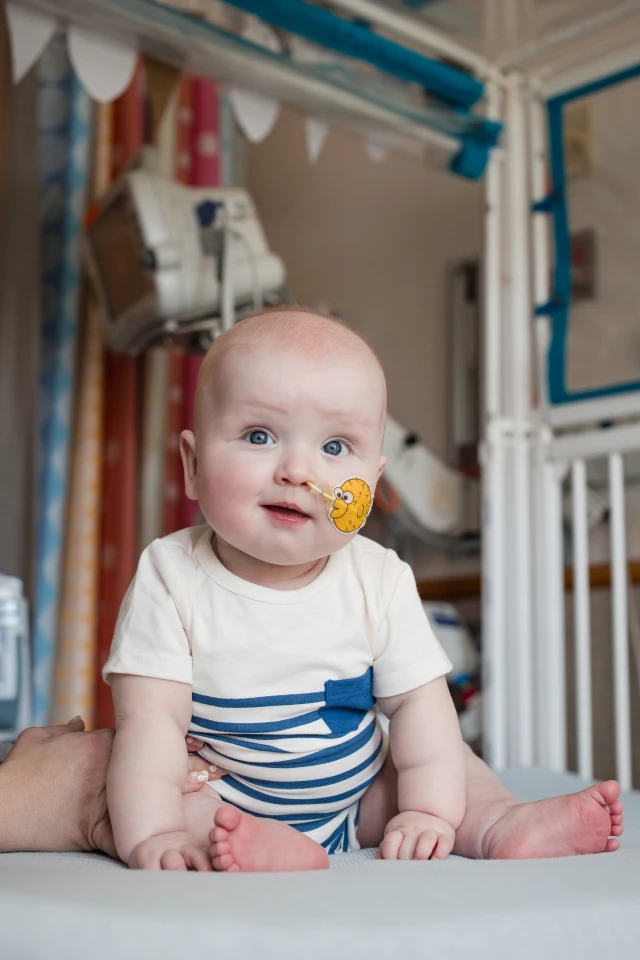
KJ Muldoon – “Trailblazing baby” Received the world’s first hyper-personalized CRISPR therapy
KJ Muldoon became the first baby to have CRISPR therapy tailored specifically to his genome
Children’s Hospital of Philadelphia/Nature
KJ Muldoon became the face of a new era in genetic medicine when, as an infant, he received the first CRISPR-based therapy designed for a single patient. Born with a deadly metabolic disorder caused by a single-letter DNA mutation, Muldoon was treated with a custom base-editing system tailored specifically to correct his unique error. A large team developed the therapy in a record six months and delivered it through three infusions beginning in February 2025. The infant’s tolerance for dietary protein improved, his ammonia levels stabilized and, after spending his first 307 days in hospital, he was able to go home. It demonstrates both the promise – as well as the immense logistical and financial challenges – of individualized genome editing. Researchers are now racing to adapt the approach for more children with rare diseases.