“Everywhere we went, people treated energy availability as a given,” Rui Ma wrote on X after returning from a recent tour of China’s AI hubs.
For American AI researchers, that’s almost unimaginable. In the U.S., surging AI demand is colliding with a fragile power grid, the kind of extreme bottleneck that Goldman Sachs warns could severely choke the industry’s growth.
In China, Ma continued, it’s considered a “solved problem.”
Ma, a renowned expert in Chinese technology and founder of the media company Tech Buzz China, took her team on the road to get a firsthand look at the country’s AI advancements. She told Fortune that while she isn’t an energy export, she attended enough meetings and talked to enough insiders to come away with a conclusion that should send chills down the spine of Silicon Valley: in China, building enough power for data centers is no longer up for debate.
“This is a stark contrast to the U.S., where AI growth is increasingly tied to debates over data center power consumption and grid limitations,” she wrote on X.
The stakes are difficult to overstate. Data center building is the foundation of AI advancement, and spending on new centers now displaces consumer spending in terms of impact to U.S. GDP—that’s concerning since consumer spending is generally two-thirds of the pie. McKinsey projects that between 2025 and 2030, companies worldwide will need to invest $6.7 trillion into new data center capacity to keep up with AI’s strain.
In a recent research note, Stifel Nicolaus warned of a looming correction to the S&P 500, since it forecasts this data-center capex boom to be a one-off build-out of infrastructure, while consumer spending is clearly on the wane.
However, the clear limiting factor to the U.S.’s data center infrastructure development, according to a Deloitte industry survey, is stress on the power grid. Cities’ power grids are so weak that some companies are just building their own power plants rather than relying on existing grids. The public is growing increasingly frustrated over increasing energy bills – in Ohio, the electricity bill for a typical household has increased at least $15 this summer from the data centers – while energy companies prepare for a sea-change of surging demand.
Goldman Sachs frames the crisis simply: “AI’s insatiable power demand is outpacing the grid’s decade-long development cycles, creating a critical bottleneck.”
Meanwhile, David Fishman, a Chinese electricity expert who has spent years tracking their energy development, told Fortune that in China, electricity isn’t even a question. On average, China adds more electricity demand than the entire annual consumption of Germany, every single year. Whole rural provinces are blanketed in rooftop solar, with one province matching the entirety of India’s electricity supply.
“U.S. policymakers should be hoping China stays a competitor and not an aggressor,” Fishman said. “Because right now they can’t compete effectively on the energy infrastructure front.”
China has an oversupply of electricty
China’s quiet electricity dominance, Fishman explained, is the result of decades of deliberate overbuilding and investment in every layer of the power sector, from generation to transmission to next-generation nuclear.
The country’s reserve margin has never dipped below 80%–100% nationwide, meaning it has consistently maintained at least twice the capacity it needs, Fishman said. They have so much available space that instead of seeing AI data centers as a threat to grid stability, China treats them as a convenient way to “soak up oversupply,” he added.
That level of cushion is unthinkable in the United States, where regional grids typically operate with a 15% reserve margin and sometimes less, particularly during extreme weather, Fishman said. In places like California or Texas, officials often issue warnings about red-flag conditions when demand is projected to strain the system. This leaves little room to absorb the rapid load increases AI infrastructure requires, Fishman ntoed.
The gap in readiness is stark: while the U.S. is already experiencing political and economic fights over whether the grid can keep up, China is operating from a position of abundance.
Even if AI demand in China grows so quickly renewable projects can’t keep pace, Fishman said, the country can tap idle coal plants to bridge the gap while building more sustainable sources. “It’s not preferable,” he admitted, “but it’s doable.”
By contrast, the U.S. would have to scramble to bring on new generation capacity, often facing years-long permitting delays, local opposition, and fragmented market rules, he said.
Structural governance differences
Underpinning the hardware advantage is a difference in governance. In China, energy planning is coordinated by long-term, technocratic policy that defines the market’s rules before investments are made, Fishman said. This model ensures infrastructure buildout happens in anticipation of demand, not in reaction to it.
“They’re set up to hit grand slams,” Fishman noted. “The U.S., at best, can get on base.”
In the U.S., large-scale infrastructure projects depend heavily on private investment, but most investors expect a return within three to five years: far too short for power projects that can take a decade to build and pay off.
“Capital is really biased toward shorter-term returns,” he said, noting Silicon Valley has funneled billions into “the nth iteration of software-as-a-service” while energy projects fight for funding.
In China, by contrast, the state directs money toward strategic sectors in advance of demand, accepting not every project will succeed but ensuring the capacity is in place when it’s needed. Without public financing to de-risk long-term bets, he argued, the U.S. political and economic system is simply not set up to build the grid of the future.
Cultural attitudes reinforce this approach. In China, renewables are framed as a cornerstone of the economy because they make sense economically and strategically, not because they carry moral weight. Coal use isn’t cast as a sign of villainy, as it would be among some circles in the U.S. – it’s simply seen as outdated. This pragmatic framing, Fishman argued, allows policymakers to focus on efficiency and results rather than political battles.
For Fishman, the takeaway is blunt. Without a dramatic shift in how the U.S. builds and funds its energy infrastructure, China’s lead will only widen.
“The gap in capability is only going to continue to become more obvious — and grow in the coming years,” he said.
First Lady Melania Trump has threatened to sue Hunter Biden for more than $1bn after he said she was introduced to her husband by sex offender Jeffrey Epstein.
Lawyers acting on behalf of the first lady, who married President Donald Trump in 2005, described his claim as “false, disparaging, defamatory and inflammatory”.
Biden, son of former US President Joe Biden, made the comments during an interview this month. He defended them on Thursday and did not seem willing to back down in the face of the lawsuit threat.
Donald Trump was a friend of Epstein, but has said they fell out in the early 2000s because the financier poached employees from the spa in Trump’s Florida golf club.
A letter from the first lady’s lawyers and addressed to an attorney for Hunter Biden demands he retract the claim and apologise, or face legal action for “over $1bn in damages”.
It says the first lady has suffered “overwhelming financial and reputational harm” because of the claim he repeated.
It also accuses the youngest Biden son of having a “vast history of trading on the names of others”, and repeating the claim “to draw attention to yourself”.
During a wide-ranging interview with filmmaker Andrew Callaghan published earlier this month, Hunter Biden claimed unreleased documents relating to Epstein would “implicate” President Trump.
He said: “Epstein introduced Melania to Trump – the connections are so wide and deep.” The first lady’s legal letter notes the claim was partially attributed to Michael Wolff, a journalist who authored a critical biography of the president.
In a recent interview with US outlet the Daily Beast, Wolff reportedly claimed that the first lady was known to an associate of Epstein and Trump when she met her now-husband.
The outlet later retracted the story after receiving a letter from the first lady’s attorney that challenged the contents and framing of the story.
When asked during an interview on the YouTube show Channel 5 with Andrew Callaghan if he would apologise, Biden said “not going to happen”.
Biden said in the interview posted on Thursday that he did not think “these threats of a lawsuit add up to anything other than a designed distraction”. But he noted that if the lawsuit was filed, he would be able to collect testimony from both Trumps through depositions and he was “more than happy to provide them the platform”.
There is no evidence the Trumps were introduced to each other by Epstein, who took his own life in prison while awaiting trial in 2019.
In the first lady’s legal letter, Hunter Biden is accused of relying on a since-removed article as the basis of his claims, which it describes as “false and defamatory”.
A message on the archived version of the Daily Beast online story reads: “After this story was published, The Beast received a letter from First Lady Melania Trump’s attorney challenging the headline and framing of the article.
“After reviewing the matter, the Beast has taken down the article and apologizes for any confusion or misunderstanding.”
Asked about the legal threat, the first lady’s lawyer, Alejandro Brito, referred BBC News to a statement issued by her aide, Nick Clemens.
It read: “First Lady Melania Trump’s attorneys are actively ensuring immediate retractions and apologies by those who spread malicious, defamatory falsehoods.”
A January 2016 profile by Harper’s Bazaar reported the first lady met her husband in November 1998, at a party hosted by the founder of a modelling agency.
Melania Trump, 55, told the publication she declined to give him her phone number because he was “with a date”.
The profile said Trump had recently separated from his second wife, Marla Maples, whom he divorced in 1999. He was previously married to Ivana Trump between 1977 and 1990.
The BBC has contacted Hunter Biden’s attorney.
The legal letter comes after weeks of pressure on the White House to release the so-called Epstein files, previously undisclosed documents relating to the criminal investigation against the convicted paedophile.
Before being re-elected, Trump said he would release the records if he returned to office, but the FBI and justice department said in July that no “incriminating” client list of Epstein associates existed.
Universal Music Group-backed investment vehicle Chord Music Partners has raised over USD $2 billion in investible capital to buy music rights.
That’s according to MBW sources close to the company, who say Chord has raised the sum via a funding round due to close in October.
Those same sources expect Chord will secure an additional $1 billion to $2 billion in investible capital before the round closes – taking its total raise to between $3 billion and $4 billion.
The round – which covers the period Chord launched with UMG last year to date – is understood to have been fuelled by equity investments from several family offices and pension funds across Europe and the US.
Universal Music Group has maintained its ~26% share in Chord, contributing an incremental EUR €30 million investment into the vehicle earlier this year, UMG has confirmed. Dundee Partners remains the controlling shareholder in Chord.
Like the investment capital raised by Warner and Bain Capital’s new JV last month, Chord’s $2 billion+ funding is understood to involve a debt component.
One of Chord’s new investors has today (August 14) been confirmed as Searchlight Capital Partners, a global investment firm with offices in New York, London, Miami, and Toronto and more than $18 billion in assets under management. MBW understands that Searchlight has contributed $400 million to Chord in equity investment.
“Searchlight looks forward to contributing to Chord’s next chapter of growth and value creation for both its artists and existing investors.”
Darren Glatt, Searchlight
Commenting on the deal, Darren Glatt, Partner at Searchlight, said: “The Chord team have built an incredibly strong and diversified platform at the forefront of music investment and evolved Chord into the desired home for the works and legacies of the world’s premier artists.
“Searchlight looks forward to contributing to Chord’s next chapter of growth and value creation for both its artists and existing investors.”
“Searchlight’s expertise, network and ability to meaningfully contribute toward expanding Chord’s premier IP portfolio make Searchlight an ideal strategic partner for our Company’s next chapter.”
Sam Hendel, Dundee Partners / Chord
Sam Hendel, Dundee Partners’ Managing Principal and Co-Founder of Chord, added: “Searchlight’s expertise, network and ability to meaningfully contribute toward expanding Chord’s premier IP portfolio make Searchlight an ideal strategic partner for our Company’s next chapter.
“We’re thrilled to welcome them into the fold and look forward to pursuing the increasingly exciting opportunity set within today’s music landscape together.”
Chord has been “deliberately quiet” in terms of announcing deals over the past year, say sources, but some nine-figure agreements have leaked, including a Morgan Wallen acquisition reported in May.
That deal saw Big Loud, the Nashville-based record label home to the country superstar, sell a minority stake in Wallen’s master recording catalog to Chord for north of USD $200 million, according to MBW’s sources, although financial details were not officially disclosed.
Chord Music Partners was founded in 2021 by investment companies KKR and Dundee Partners. In addition to its interest in the Morgan Wallen catalog, it has built a portfolio that includes music from The Weeknd, Lorde, David Guetta, and more.
That deal, which saw Chord valued at USD $1.85 billion, resulted in KKR exiting its position in the company.
Under the strategic partnership between Dundee Partners and Universal Music Group, Chord’s music publishing rights are administered through Universal Music Publishing Group (UMPG) and recorded music through UMG’s Virgin Music Group (VMG).
Today’s news arrives a couple of weeks after Universal Music Group’s Chief Operating Officer Boyd Muir commented on the progress of the Chord investment vehicle during UMG’s Q2 earnings call at the end of July.
“We also continued our long-term strategic investment in the business. We paid EUR €149 million for catalog acquisitions in the period, about half of which are catalogs that will be moved into the Chord vehicle in the coming months,” Muir told investors on the call.
He added: “Chord is successfully raising capital and building a strong deal pipeline. The structure is working exactly as we envisioned – enabling us to move quickly to acquire high-quality catalogs, without significant capital allocation over time.”
Muir also confirmed that “to maintain our share of ownership in the vehicle, we also made a EUR €30 million incremental equity investment into the business in the first half of the year.Music Business Worldwide
Vladimir V. Putin exuded confidence. Sitting back, surrounded by foreign dignitaries, the Russian president explained the futility of Ukrainian resistance. Russia had the advantage on the battlefield, as he saw it, and by rejecting his demands, Ukraine risked even more for peace.
“Keep at it, then, keep at it. It will only get worse,” Mr. Putin said at an economic forum in June, as he taunted the Ukrainian government. “Wherever a Russian soldier sets his foot, it’s ours,” he added, a smirk animating his face.
His self-assurance is born out of the Russian military’s resurgence.
In the depths of 2022, his underequipped forces were disoriented, decimated and struggling to counter Ukraine’s hit-and-run tactics and precision-guided weapons. Instead of abandoning the invasion, Mr. Putin threw the full strength of the Russian state behind the war, re-engineering the military and the economy with a singular goal of crushing Ukraine. In his push, the country revamped recruitment, weapons production and frontline tactics.
This is now a war of attrition favoring Russia, which has mobilized more men and arms than Ukraine and its Western backers. While their casualties are mounting, Russian forces are edging forward across most of the 750-mile front, strengthening Mr. Putin’s resolve to keep fighting until he gets the peace deal he wants.
Source: Institute for the Study of War with American Enterprise Institute’s Critical Threats Project (extent of Russia-controlled areas as of Aug. 13)
Ukraine and its allies hope to hold out long enough to exhaust Mr. Putin’s forces. In World War I, the German Army had made it within about 40 miles of Paris before it collapsed. The German Empire capitulated and disintegrated months later.
There are warning signs for Russia. Its elite infantry units have been wiped out. Its military plants depend on foreign components and dwindling Soviet-era stocks. Its economy shows cracks.
Mr. Putin figures that he can manage the wartime pressures longer than Ukraine and can secure a peace deal that would ensure his legacy. He has repeatedly demanded four regions that Moscow has claimed to have annexed and sought a deal that blocks Ukraine from joining NATO and limits the size of its military.
If talks with President Trump in Alaska this week don’t lead to such a deal, Mr. Putin has signaled that he is willing to fight on, using force to achieve what diplomacy cannot.
“I have stated Russia’s goals,” Mr. Putin told reporters this month when asked if Russia was willing to compromise. “These conditions undoubtedly remain the same.”
Recruitment
Speaking by phone from a hospital, a Russian sergeant named Vladislav rattled off the money he was waiting to receive after he lost his foot storming Ukrainian trenches in January.
The equivalent of $6,400 from the local governor; $28,300 from the state insurance company; $47,000 from the defense ministry.
Then there’s the veteran’s monthly pension of $1,100, enough for him to retire in his hometown in western Russia at age 33. “You don’t even need to work there with this money,” said Vladislav, who like other Russian soldiers interviewed, asked to publish only his first name for security reasons.
Vladislav said his monthly frontline salary had already allowed him to improve his family’s living standards in ways he said would have been impossible in his previous job, at a sunflower oil plant where he earned $300 a month.
He is building a house for his parents and upgrading his and his girlfriend’s cars. He is focused on providing a future for his children. “Whatever they needed, I bought it for them,” Vladislav said in July. “Whatever they required, I gave it to them.”
Hundreds of thousands of well-paid volunteers like Vladislav have transformed the Russian Army.
A recruitment billboard in St. Petersburg.
Photo by Anatoly Maltsev/EPA, via Shutterstock
Russia’s early military disasters in 2022 decimated the ranks of career servicemen at the core of the invasion, and the Ukrainians exploited the weakness. A September counteroffensive of that year broke through Russian lines, nearly thwarting the invasion.
Mr. Putin took drastic steps to avoid defeat. He announced Russia’s first mobilization since World War II, officially drafting 300,000 men. He ramped up presidential pardons and payments to enlisted convicts, bringing an estimated 100,000 men from Russian jails to the front.
These measures stabilized the battlefield but at a political cost. The draft caused the biggest spike of social discontent in Russia in years. Hundreds of thousands of men fled the country.
But the success of the prison campaign gave the Kremlin a blueprint for a less coercive recruitment strategy, one based on money and appeals to manhood.
The government significantly raised soldiers’ salaries, introduced lucrative sign-up bonuses, and rolled out myriad other financial benefits. Kremlin propaganda presented military service as a unique chance for men at the margins of Russian society to show their worth by becoming breadwinners.
Today, Russia recruits about 1,000 soldiers a day. The figure has stayed broadly stable since 2023, and it is about twice as high as Ukraine’s.
Russia has consistently recruited about 1,000 soldiers per day
Source: Analysis of Russian Finance Ministry data by Janis Kluge
Russia’s recruitment strategy has depended on the country’s economic resilience. Even under the most comprehensive sanctions in modern history, Russia continues replenishing its war chest from exports of oil, natural gas, coal and gold.
The reliance on volunteers has benefited Mr. Putin politically. Middle-class Russians have largely tuned out the war as fears of a general draft have receded, removing the biggest threat of protests.
“The larger the payout, the less sympathy fallen or injured soldiers receive from society, and the less likely are the protests against the war,” said Janis Kluge, a Russia expert at the German Institute for International and Security Affairs.
Russia’s ministry of defense did not respond to a request for comment.
The military’s strong recruitment masks underlying problems.
Many of Russia’s best soldiers were killed early in the war. About 230,000 Russian soldiers have died since the invasion, according to estimates based on obituaries collected by the independent Russian news outlet Mediazona and BBC News Russian.
Their replacements are older, with less military experience. The median age of a Russian soldier killed in Ukraine in the first months of the war was about 28. It rose to 38 by August of this year, according to Mediazona.
“It was riffraff: the homeless from train stations, alcoholics, men running from the law,” said another Russian soldier, Vladimir, describing his enlistment at a large Moscow recruitment center in 2024. “The health check was fictional.”
The shrinking recruitment pool means that regional officials have to keep increasing payments to meet enlistment quotas, straining local budgets and destabilizing the broader economy.
The northern region of Mari El has spent more paying bonuses to new recruits this year than it has on health care, according to an analysis of Russian budget data by Mr. Kluge, the Berlin-based analyst.
Production
Far from the battlefield, Russia has been racing to produce more weapons, ammunition and vehicles than Ukraine and its Western allies.
The goal is to outlast the enemy through superior industrial might — and Russia has gone full throttle.
Mr. Putin has drawn on foreign partners, including Iran, North Korea and China, as well as a vast Soviet-era network of arms factories, to turbocharge the supply of everything from drones to missiles to tanks. He has sharply raised military spending, despite economic risks, to more than a third of the federal budget.
Ukraine has received about $70 billion-worth of military equipment from its own allies in Europe and the United States, but the West hasn’t mobilized its industrial base in the same way as Russia. Kyiv has also significantly increased domestic production, just not at the same scale; Russia’s defense budget this year is about $170 billion, more than three times Ukraine’s.
To bolster production, Mr. Putin has showered military factories with subsidized loans. He has changed labor laws to usher in night, weekend and holiday shifts. He has tapped vocational schools, foreign countries and even prisons as sources of labor. And he has moved swiftly, with top-down control, thanks to Russia’s autocratic system and a defense sector still largely owned by the state.
Perhaps no effort has drawn more attention than the drone plant in Yelabuga, a city 620 miles east of Moscow in Tatarstan. There, a regional lawmaker has repurposed an idling “special economic zone” created for Western investors in 2005 to manufacture a Russian version of Iran’s Shahed attack drone, initially with Tehran’s help.
Production of the Geran-2 drones at the Yelabuga plant.
Stills from documentary on state-owned Russian television
Its founder, the lawmaker Timur Shagivaleev, claims that Yelabuga is now the largest military drone production facility in the world. “We’re witnessing a technological revolution,” Mr. Shagivaleev told Russian state television in July. “Warfare is becoming unmanned.”
The plant did not respond to requests for comment.
In the state television program, Mr. Shagivaleev wore a jumpsuit with an arm patch of a Soviet flag as he walked through rows of black drones standing upright along white walls. The scene matched the aesthetics of the early Star Wars films, albeit with reproductions of Stalinist propaganda on display.
One of the posters read: “Kurchatov, Korolev and Stalin are in your DNA,” a reference to the Soviet scientists credited with Moscow’s atomic bomb and rocket programs, and the dictator who raised industrial production through mass terror.
A poster inside the Yelabuga drone production plant.
Still from documentary on state-owned Russian television
To fill its shifts, Yelabuga has looked for workers in local schools and abroad. When Ukraine attacked the plant with its own drones in April 2024, Russian state news reported that citizens of Russia, Kyrgyzstan, Sri Lanka, Zimbabwe, Rwanda, Congo, Kenya, Nigeria and South Sudan were among the injured.
A technical college associated with the facility trains teenagers in specialist tasks. “The pupils are called in after the ninth grade, and after college, they are invited to stay,” said the presenter of the state television documentary.
Yelabuga’s scientists have reengineered the Iranian models to improve them. The Russian version, the Geran-2, flies higher and carries more explosives. It is now Russia’s main weapon in its bombing campaign against Ukrainian cities.
Russia has tripled production of the Geran-2 since 2023 and makes about 80 a day, according to The Royal United Services Institute, a London-based research organization with ties to the British defense ministry, known as RUSI.
Russia has used its increased supply of drones to drastically escalate its bombing campaign, launching an average of 200 drones every night in July and once topping more than 700. Early in the war, Russia’s biggest attacks included 40 drones, according to RUSI.
Russian strike drones fired at Ukraine per week
Source: New York Times analysis of Ukrainian Air Force statements
Data compiled by Kim Barker and Saurabh Datar
Russia has also breathed new life into underused Soviet defense factories to bolster conventional weapon production and modify Communist-era equipment.
Last year, Russian industry produced more than 1.3 million standard artillery rounds, up from 250,000 in 2022, according to RUSI. Production of Iskander short-range ballistic missiles, one of Russia’s main precision bombing weapons, nearly tripled last year from 2023 to reach 700, the group estimates.
Russia has also found a way to upgrade its Soviet-era “dumb bombs” into guided munitions. Production of upgrade kits has grown from a few thousand units in 2023 to a projected 70,000 this year, said the group, which bases its estimates on publicly available data and information obtained from Western and Ukrainian intelligence sources.
Russia still needs imported components for its latest weapons, leaving it vulnerable to sanctions and shifting geopolitical alliances. Satellite imagery also indicates that Russian stocks of Soviet military equipment are running out, forcing the country to rely on the slower and more expensive process of building new tanks and armored vehicles.
“They are triaging just the same way the Ukrainians are,” said Max Bergmann, an analyst at the Center for Strategic and International Studies in Washington. “It’s just that at Russia’s scale, they are much bigger.”
Tactics
By late 2023, the Russian Army had regained its footing but continued to underperform. Endemic corruption and irregular supplies hobbled offensives and bred discontent.
“The supply situation was disgusting — practically nothing was given out,” said Anton, a Russian soldier, describing early fighting. “We had to buy everything.”
In May 2024, Mr. Putin decided to act. He fired the old friend who was his longest-serving minister, Sergei K. Shoigu, from his post atop the defense ministry. Russian prosecutors began jailing Mr. Shoigu’s associates on corruption charges.
Mr. Putin chose an unusual replacement: a stonefaced economist without military expertise named Andrei Belousov.
The new defense chief traded the medal-studded parade uniforms of his predecessor for an austere business suit. He set out his technocratic goals in monotonous readouts. Improve supply chains, introduce new technology, and deepen the army’s ties with businessmen and scientists — all with the aim of giving Russia a decisive advantage.
Russian soldiers said in interviews that they saw a significant improvement in the supply of first-person view drones and other advanced weapons after Mr. Belousov’s appointment, allowing them to experiment with new tactics.
A drone filmed by a Ukrainian soldier.
Obtained by The New York Times
In one of his first public initiatives, in August of last year, Mr. Belousov created Russia’s first specialized drone unit, Rubicon. He lavished the project with money, staffed it with the army’s best drone operators, and connected it with drone inventors and manufacturers.
Armed with more powerful drones in larger numbers, Russian forces began systematically targeting Ukrainian supply lines, making it harder for Ukrainian forces on the front to replenish ammunition, receive reinforcements and evacuate their wounded.
Under Mr. Belousov, the military changed other tactics. It improved communication between units and it tested, with varying success, the use of motorcycles, all-terrain vehicles and electric scooters.
In this summer’s offensive, Russia is experimenting with sending small groups of camouflaged soldiers deep inside enemy lines, where they hide in abandoned buildings or ravines, before mounting coordinated attacks. This played out recently in the battle for the eastern Ukrainian city of Pokrovsk. The head of the Ukrainian Army, Gen. Oleksandr Syrskiy, referred to the tactic this month as “total infiltration.”
Russia’s new approaches proved effective in Vuhledar, a major Ukrainian stronghold in the eastern Donetsk region.
Early in the war, Russia had sent armored columns to the town, with disastrous results, as videos show. Late last year, its forces changed tack, gradually occupying the fields on Vuhledar’s flanks over several months.
The move allowed Russian drone operators to get around the town and target Ukrainian supplies. When Russia then launched a general assault, Vuhledar fell in about a day. The defenders withdrew to avoid being trapped.
Sources: Institute for the Study of War with American Enterprise Institute’s Critical Threats Project (extent of Russia-controlled areas), satellite imagery from Planet Labs
Russia is racing to erase Ukraine’s early advantage in drones, which are now accounting for the majority of deaths in the war.
In February 2025, Rubicon, the elite drone unit, was dispatched to Russia’s Kursk region, where Russian forces and their North Korean allies were struggling to push back a Ukrainian incursion.
The unit introduced a new generation of Russian drones guided by a thin optical cable, which makes them immune to signal jamming and invisible to drone detection systems. Rubicon’s drones would lie on roadsides behind the enemy lines undetected for hours, before ambushing anything that moved.
“They destroyed all the logistics,” recounted a Ukrainian special forces soldier who, like others, for security reasons identified himself by his call-sign, Cap.
When the Russians attacked the Ukrainian positions in Kursk from all sides in early March, the defenses buckled.
“In some sections, I can say that the front had collapsed,” said a commander of a Ukrainian paratrooper platoon with the call sign Beard.
Mr. Belousov is expanding Rubicon, pledging to build an entire new branch of the Russian military, the Drone Forces, by October. After helping reclaim Kursk, Rubicon has been dispatched to Donetsk, the focus of Russia’s current offensive.
“The game changed when they came here,” Rebekah Maciorowski, an American military medic fighting for Ukraine in Donetsk, said in an interview in June, describing the pressure the Ukrainian military faces in the area. “The game changed drastically.”
Methodology
Videos at the beginning of the article were compiled from Telegram channels that regularly post drone footage of frontline combat, often from either Ukrainian or Russian military units, including @strikedronescompany, @combat_ftg, @nm_dnr, @icpbtrubicon, @supernova_plus, @voin_dv and @ratnik2nd. While these videos are often shared for propaganda purposes, they also help illustrate shifting tactics and how new battlefield technologies are reshaping the war. Videos are from 2023 onward, after first-person view drones, which were used to capture most of the footage, became widely used on the battlefield.
A required part of this site couldn’t load. This may be due to a browser
extension, network issues, or browser settings. Please check your
connection, disable any ad blockers, or try using a different browser.
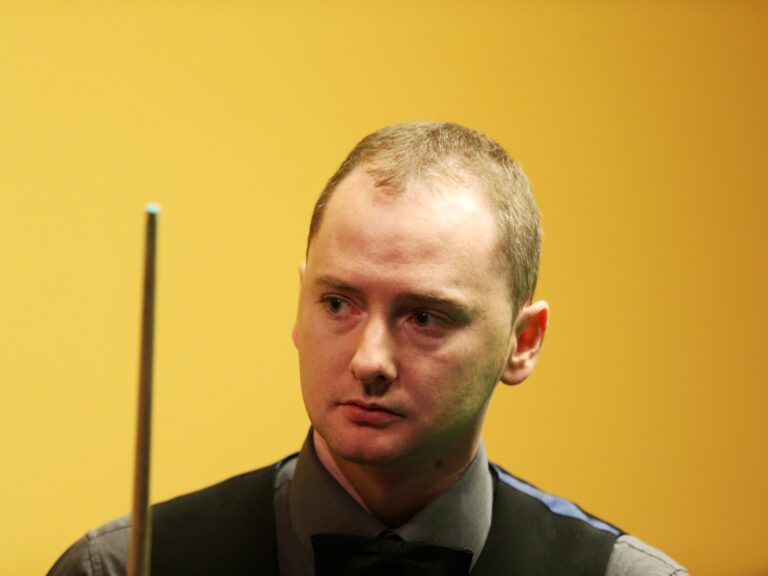
Former world snooker champion Graeme Dott faces two charges of sexual abuse against a boy and a girl.
Former world snooker champion Graeme Dott will go on trial next year over allegations that he sexually abused children.
The 48-year-old Dott is facing two charges of sex abuse against a boy and a girl. According to court papers seen by The Associated Press, the alleged abuse took place from 1993-96 and from 2006-10.
A virtual hearing took place on Thursday at the High Court in Glasgow where Dott, who was not present, denied the charges, Britain’s Press Association reported.
“The position of the accused is that the allegations are fabricated and there is no truth in any of them,” said Euan Dow, who is defending Dott.
A trial date was set for August 17 next year at the same court and bail was continued, PA reported.
Dott was suspended by snooker’s governing body in April after being charged.
Dott won the World Snooker Championship in 2006 after beating Peter Ebdon in the final at the Crucible Theatre in Sheffield. The Scottish player also reached the final on two other occasions, losing to Ronnie O’Sullivan in 2004 and Neil Robertson in 2010.
After returning home, Jack sat down with SwimSwam to discuss his season between Australian Trials, where he was 21.8, and US Champs. The SPW product said he discussed a plan with coach Dean Boxall that focused just on the 50 free (only for the rest of the season). That also included training with Cam McEvoy and his coach, Tim Lane, in the lead-up to Irvine.
In the SwimSwam Podcast dive deeper into the sport you love with insider conversations about swimming. Hosted by Coleman Hodges and Gold Medal Mel Stewart, SwimSwam welcomes both the biggest names in swimming that you already know, and rising stars that you need to get to know, as we break down the past, present, and future of aquatic sports.
Opinions, beliefs and viewpoints of the interviewed guests do not necessarily reflect the opinions, beliefs, and viewpoints of the hosts, SwimSwam Partners, LLC and/or SwimSwam advertising partners.
One of the oldest building materials in the world – it was already in use in Roman times – is, at the same time, the subject of countless research projects today. After all, concrete is still the basic element in construction. However, technical advances are driving the development of more sustainable concrete, self-repairing, or capable of sequestering carbon dioxide.
Typically, these qualities are achieved through new ingredients, ranging from adding organic waste, such as beets, to using calcite-generating bacteria. At the University of Pittsburgh in the USA, they have turned to another approach – metamaterials – to develop a touch-sensitive concrete that can store energy.
What is a metamaterial?
First of all, it is essential to clarify what a metamaterial is. Basically, it is an artificial material endowed with electromagnetic qualities not found in nature, thanks to the creation of nanostructures with a specific geometry.
The theoretical development of metamaterials dates back to the 1970s, when the Soviet physicist V. G. Veselago published a paper describing their potential properties. In fact, it is such a novel field that the term “metamaterial” itself was not coined until 1999. Metasurfaces apply the principles of metamaterials but in two dimensions, which mean a thickness of a few nanometers.
The most common example is a material with a negative refractive index, i.e., capable of deflecting light in the opposite direction. In nature, all elements have a positive refractive index. For example, water has a refractive index of 1.33, while glass has a refractive index of 1.45. Technically, the ability to control the refraction of light could lead to the creation of so-called invisibility cloaks, i.e., a material worthy of science fiction that makes people and objects covered by them invisible. Or cameras the size of a grain of salt, as explained in this article.
A new metamaterial that works as a sensor and generates energy
The new type of concrete proposed by researchers at the University of Pittsburgh in a paper published in the scientific journal Advanced Materials can monitor variables such as pressure and, at the same time, store energy. These properties were studied in previous research on “self-aware” materials. That is, with structures that transmit information about the loads and stresses to which they are subjected, without the need for additional sensors.
As explained, the properties of a metamaterial can be modified by tuning the geometry of its nanostructures. In the case of concrete, minor adjustments can be made to its strength, durability, or flexibility. At the University of Pittsburgh, they have resorted to reinforced auxetic polymer lattices embedded in a conductive cement matrix with graphite powder.
The cement acts as an electrode and, when subjected to pressure, generates a small electrical charge. This electrical charge can be used to detect fractures in concrete in the event of earthquakes or impacts or to power LED lights or low-power devices.
In the experiments, in addition to these qualities, the scientists found that the material could be compressed by up to 15% without losing its structural integrity. This enables obtaining similar results to current concrete with a smaller amount of material, resulting in lower CO2 emissions in its production. Finally, the production of the new concrete is scalable and cost-competitive, paving the way for industrial-scale manufacturing.
Smart roads built with metamaterials
According to the researchers, these unusual properties could also be used to construct smart roads. The idea is that road managers can check the condition of the road surface in real-time and repair it quickly. On the other hand, while the amount of energy is quite small, it is sufficient to power signaling components such as integrated lights or chips that communicate with self-driving cars. In this way, even in situations of poor GPS signal, the road could signal vehicles to guide them.
The roads of the future will integrate multiple functionalities beyond accommodating road traffic. For example, solar roads, i.e., roads equipped with photovoltaic cells. Another area of research is the development of electrified roads that allow electric car batteries to be charged with inductive technologies. Moreover, roads may even become self-healing. And all this with greater sustainability since they will also integrate recycled materials such as tires.
Sir Keir Starmer and Volodymyr Zelensky agreed there was a “powerful sense of unity and a strong resolve” to secure peace in Ukraine, Downing Street said.
The PM held a breakfast meeting with the Ukrainian president ahead of a vital summit in Alaska between US President Donald Trump and Russian President Vladimir Putin on Friday to discuss ending the war in Ukraine.
There is a “viable chance” of a ceasefire between Russia and Ukraine, Sir Keir has said, and stressed Ukraine’s “territorial integrity” must be protected and international borders “must not be changed by force”.
Zelensky and other European leaders, who are not attending the meeting in Alaska, held a joint call with Trump on Wednesday to reiterate their position.
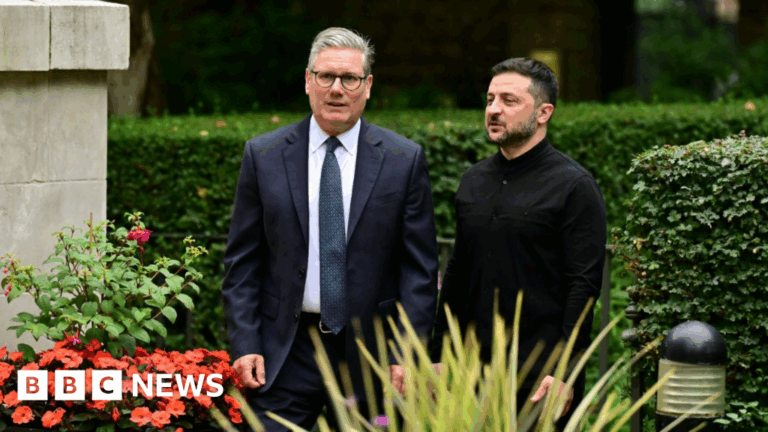
A red carpet was rolled out for Zelensky’s arrival at No 10, and he was pictured strolling through the Downing Street rose garden with the PM in a carefully co-ordinated show of support from the UK, scheduled just 24 hours before the summit in Alaska.
A Downing Street spokesperson said Sir Keir and Zelensky discussed this week’s talks over a private breakfast and “agreed there had been a powerful sense of unity and a strong resolve to achieve a just and lasting peace in Ukraine”.
“They then looked ahead to tomorrow’s talks between President Trump and President Putin in Alaska, which present a viable chance to make progress as long as Putin takes action to prove he is serious about peace,” they said.
Neither leader made any comment themselves to waiting reporters in Downing Street, maintaining a tactical diplomatic silence.
When leaders leave Number 10 they usually walk alone to their car, but today Starmer walked with Zelensky, giving him a hug and a handshake before his departure in an important show of unity.
The prime minister has not said that much to the media over the last few days, leaving commentary on meetings to official scripted handouts, partly in order to avoid saying anything that might appear to be a split with the US.
The main tactic within Downing Street in the past week or so has been to get Trump on board – to make sure the US president has the words of Europe and of Ukraine ringing in his ears when he sits down with Putin on Friday.
“We also discussed in considerable detail the security guarantees that can make peace truly durable if the United States succeeds in pressing Russia to stop the killings and engage in genuine, substantive diplomacy,” he wrote.
Zelensky added the two discussed weapons partnerships, including investment in drone production, and the One Hundred Year Partnership Agreement with the UK, which he said is set to be ratified this month.
In Russia, Putin told officials he welcomes Donald Trump’s “energetic and sincere” efforts to end the Ukraine war.
He added that the US was seeking to “stop the crisis and reach agreements that are of interest to all the sides involved in the conflict to create long-term conditions for peace between our countries, in Europe and in the world in general, if we at the subsequent stages arrive at agreements in the area of strategic offensive arms control”.
The Kremlin has announced that Putin and Trump will hold a joint press conference after their meeting on Friday evening.
Moscow wants to maintain control of land it has seized, including Crimea, while Ukraine has insisted that ceding territory would be unacceptable.
Russia also wants assurances that Ukraine will not join the Nato military alliance and a limit on the size of its army.
Addressing a virtual meeting of the European leaders following the call with Trump, Sir Keir said a lasting ceasefire needed security guarantees, adding the coalition had “credible” military plans ready that could be used in the event of a ceasefire.
He said the leaders of the group were also ready to increase economic pressure on Russia if necessary, for example through increasing sanctions, and credited Trump’s efforts for progress on the issue.
Sir Alex Younger, the head of MI6 between 2014 and 2020, told BBC Radio 4’s Today programme: “It’s true that Donald Trump is the only one who can solve this,” but he warned “Putin is playing him”.
“They’re all talking about the wrong thing,” he said, adding that the US strategy of resetting bilateral relations with Russia was “a total fantasy” that failed to recognise Putin’s aim of the “total subjugation” of Ukraine.