
8.9 C
New York
Sunday, March 29, 2026
Home Blog Page 678

Lessons Musk can take from Ma and Khodorkovsky

0

Unlock the White House Watch newsletter for free

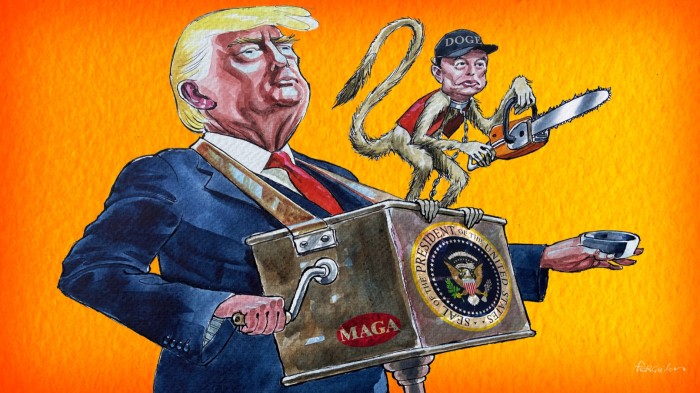
Tom Wolfe coined the term “masters of the universe” as an ironic description of Wall Street traders. Elon Musk takes the idea literally. He hopes to colonise Mars.

But Musk has come down to earth with a bump. After falling out with Donald Trump, the world’s richest man has discovered that he is not even the master of Washington — let alone the universe.

Musk’s downfall is part of a global pattern. Decades of globalisation have created vastly rich oligarchs all over the world. But when money power and political power clash, there is only one way to bet. Politics always comes out on top.

In countries as different as Russia, China, Saudi Arabia — and now the US — oligarchs who have developed independent political ambitions have been forcibly reminded where the real power lies.

The triumph of politics over money might come as a surprise to both Marxists and overconfident capitalists — who believe that politicians will always dance to the tune of the super-rich.

But, as Mao observed, power flows from the barrel of the gun. Control of the organs of the state — the army, state prosecutors, tax authorities — still ultimately counts for more than billions in the bank.

Of course, politicians do need money, particularly on the way up. Elections are expensive and so are the clientelist politics of an authoritarian state. Musk’s financial backing helped Trump win the 2024 presidential election.

Vladimir Putin’s rise to the apex of power in Russia was facilitated by some of the country’s richest men — who hoped that he would be the guardian of the vast fortunes they had made in the 1990s. But, once he was firmly installed in the Kremlin, Putin showed the oligarchs who was boss. When Mikhail Khodorkovsky, then Russia’s richest man, started to become an independent political force, Putin had him arrested. Khodorkovsky served 10 years in prison. Boris Berezovsky, who had also made a vast fortune in the Yeltsin years, was forced into exile and died in mysterious circumstances.

Jack Ma, then China’s richest man, got off comparatively lightly. President Xi Jinping evidently saw Ma’s high profile and sometimes outspoken views as a challenge. After Ma gave a speech in 2020 that criticised financial regulators, the share offering of his Ant Group was suspended and Ma all but disappeared from public view. The Chinese Communist party had put the country’s most prominent capitalist in his place.

Ma stayed out of jail and has begun to make public appearances again. But Jimmy Lai, a Hong Kong media tycoon who backed the territory’s pro-democracy movement, is currently serving a long prison sentence.

In Saudi Arabia, Crown Prince Mohammed bin Salman, a man much admired by Trump, also demonstrated that he can bring the richest men in his kingdom to heel. He locked dozens of wealthy businessmen up in the Ritz-Carlton in Riyadh in 2017 — ostensibly in an anti-corruption purge. Among them was Prince Waleed bin Talal, the kingdom’s most famous investor. The episode sent a message of ruthless power that has never been forgotten.

The best way for a billionaire to insulate themself from the whims of a country’s leader is to become the leader. That was the route followed by the late Silvio Berlusconi, a controversial tycoon who founded his own political party and served three terms as prime minister of Italy. Bidzina Ivanishvili, a billionaire who became prime minister of Georgia, followed a similar route. Trump himself used his wealth to fund his entry into politics

But few oligarchs make the transition. And those who operate on the fringes need to tread carefully. To retain their wealth and liberty they must understand the boundaries. In India, the fabulously wealthy Ambani family retain close ties to Narendra Modi, the country’s prime minister. But they have never sought to challenge his leadership.

Carlos Slim, Mexico’s richest man, has stayed close to a succession of Mexican presidents, while rarely expressing political opinions. Slim’s studied neutrality has enabled him to retain influence regardless of the administration in power. He even worked with the leftist president Andrés Manuel López Obrador, collaborating on major infrastructure projects.

Many Americans would recoil at the idea that the relationship between money and power in their country can be compared with how things are done in China, Russia, Saudi Arabia or Mexico.

After all, the US is a long-standing democracy with well-established property rights. The idea that the president could use the law to pursue a vendetta against the country’s richest man still sounds a bit shocking. But the president has already said that Musk could lose federal contracts and warned him of “very serious consequences” if he backs the Democrats.

Some of Trump’s most zealous followers want to go much further. Steve Bannon has suggested nationalising Musk’s SpaceX company, which plays a crucial role in federal space programmes. He has also urged Trump to investigate Musk’s immigration status with a view to deporting him.

Expropriation? Exile? It all sounds very un-American. But this is Trump’s America. Never say never.

gideon.rachman@ft.com

ICRC warns of deteriorating health system in Gaza as aid worker killings rise amid Israel-Palestine conflict

0

Israeli attacks at aid distribution sites sending increased number of casualties to hospitals says ICRC.

Gaza’s healthcare system is “extremely fragile” amid the ongoing Israeli war, the International Committee of the Red Cross (ICRC) has warned.

The organisation said in a statement on Sunday that the enclave’s hospitals are in urgent need of protection and reinforcement amid Israel’s continued bombardment and blockade. It added that the system is facing growing pressure due to increasing casualty rates from Israeli attacks at aid points.

“In the last two weeks, the Red Cross Field Hospital in Rafah has had to activate its mass casualty incident procedure 12 times, receiving high numbers of patients with gunshot and shrapnel wounds,” ICRC said in a statement on X on Sunday.

“An overwhelming majority of patients from the recent incidents said they had been trying to reach assistance distribution sites,” it continued.

Hundreds of Palestinians have been killed by Israeli fire around aid distribution sites operated by the US- and Israel-backed Gaza Humanitarian Foundation (GHF) since it launched on May 27.

The organisation ousted the United Nations and other independent agencies from the aid distribution effort following an 11-week blockade of the enclave that prompted numerous warnings that many of Gaza’s people now face famine.

Gaza’s Government Media Office reported on Sunday that the death toll from events centred on the GHF aid sites had risen to 125. A further 736 are reported to have been wounded, with nine missing.

‘Increase in hostilities’

The Hamas-run office said 13 people were killed and 153 injured in the latest attacks. Israeli forces were reported to have opened fire on civilians gathered near aid distribution centres east of Rafah and Wadi Gaza Bridge, in central Gaza.

Witness Abdallah Nour al-Din told the AFP news agency that “people started gathering in the al-Alam area of Rafah” in the early morning.

“After about an hour and a half, hundreds moved towards the site and the army opened fire,” he said.

The Israeli military said it fired on people who “continued advancing in a way that endangered the soldiers” despite warnings.

A GHF statement said there had been no incidents “at any of our three sites” on Sunday.

‘Urgent action’

The Red Cross also expressed concern that the intensifying conflict is putting the enclave’s few functional medical facilities at risk.

“Recent days have seen an increase in hostilities around the few remaining and functional hospitals,” it said in the statement.

“This has made patient transfers between facilities increasingly challenging, and in many cases, patients cannot receive the intensive or specialized care they require.”

The ICRC warned that further loss of life is inevitable without urgent action and called for the protection of healthcare infrastructure and personnel.

“It requires taking all feasible steps to support their work, ensure their safety, and guarantee that they are not deprived of vital resources needed to carry out their work.”

Tikehau Capital Announces Share Repurchases Between May 30th and June 5th, 2025

0


Tikehau Capital:  Disclosure of Shares Repurchases From 30 May 2025 to 05 June 2025

Kaylee McKeown, WR Holder in 50 Back, Initially Disqualified for False Start but Later Reinstated

0

2025 AUSTRALIAN SWIMMING TRIALS

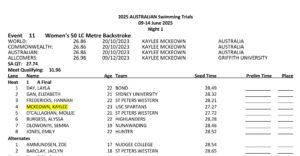
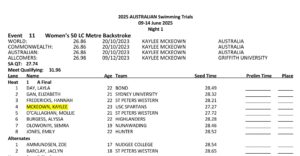
Women’s 50 Backstroke – Prelims

  • World Record: 26.86 – Kaylee McKeown, AUS (2023)
  • Australian Record: 26.86 – Kaylee McKeown, (2023)
  • All-Comers Record: 26.86 – Kaylee McKeown, AUS (2023)
  • 2023 Trials Champion: Bronte Job – 27.73
  • SwimAustralia Qualifying Time: 27.74

Top 8

  1. Kaylee McKeown (USCS) – 27.27
  2. Mollie O’Callaghan (STPET) – 27.72
  3. Hannah Fredericks (STPET) – 28.21
  4. Alyssa Burgess (HLDR) – 28.28
  5. Elizabeth Gan (SYDU) – 28.32
  6. Semra Olowoniyi (NUN) – 28.46
  7. Layla Day (BOND) – 28.49
  8. Emily Jones (HUNT) – 28.52
  9. Zoe Ammundsen (NCOLL) – 28.54

UPDATE: Kaylee McKeown‘s result of 27.27 appears atop the Live Results page as the top seed. With the delay of the publication of tonight’s heat sheet, one had to wonder if she had won the appeal and its subsequent release confirmed the suspicions. Tom Decent of the Sydney Morning Herald reported the news and reasoning behind the withdrawal of the disqualification.

McKeown will take the middle lane in the A-Final, with Zoe Ammundsen relegated to the first alternate.


World Record holder and 2023 World Gold medalist Kaylee McKeown was disqualified in the first heat of the prelims of the Women’s 50 backstroke. McKeown, who opted not to enter the 200 IM, which was earlier in the session, was called for a false start after initially recording a time of 27.27.

McKeown has 30 minutes to contest the call, but the video replay shows the slightest of head nods upon the start.

This is not the first time that the Australian star has been DQed at a major meet. In 2023, she was disqualified for an illegal back to breaststroke turn in the semifinals of the 200 IM at the Fukuoka Worlds.

Taking the top seed in McKeown’s place tonight is fellow 2024 Olympic gold medalist Mollie O’Callaghan. The 200 free champion finished in a time of 27.72, and while it was an addition of .56 from her seed, she was the only swimmer, save McKeown to not only be under the SwimAustralia Qualifying time of 27.74, but she was the only swimer under 28.00.

If the DQ is upheld and no more than two swimmers go under the time, McKeown could still swim the event if she makes the Australian team in another event, a likely scenario as she is the top seed in both the 100 and 200 back.

How Green Hydrogen Ships Will be Powered by Offshore Solutions

0

The freighter moves through the Atlantic waters, emitting nothing but water vapour. Midway through its journey, it needs to refuel—with green hydrogen produced without fossil fuels. The hydrogen generator it relies on floats on the sea, powered by wind energy. This is an example of how green hydrogen ships could sail without needing to make port stops and without emitting greenhouse gases. Offshore hydrogen generators are a technology closer to reality than one might think, as demonstrated by prototypes already being tested in open waters. Here, we explore this potential paradigm shift in maritime transport.

How do green hydrogen ships work?

Before delving deeper, it is important to understand what green hydrogen is. It is produced through electrolysis, a process that separates hydrogen and oxygen molecules from water using renewable energy. Green hydrogen can be used to generate electricity via batteries or as a direct fuel source. As we have mentioned in previous articles, this gas is particularly useful for powering heavy machinery and vehicles, such as agricultural tractors, but also for green hydrogen ships.

Green hydrogen ships are already a reality. Since 2024, San Francisco Bay has been home to a hydrogen-powered catamaran designed to replace diesel-powered vessels in the medium term. This pilot project involves a vessel capable of travelling up to 500 kilometres and operating for 16 hours before refuelling. The catamaran uses hydrogen fuel cells to generate electricity, emitting only water vapour as a by-product.

Now, let us envision a future in which electric ships use green hydrogen as a fuel for navigation. Ports would need to be equipped with hydrogen refuelling stations. However, since green hydrogen is derived from water and renewable energy, offshore hydrogen generation plants could be installed, using seawater and wind power—two abundant resources in the oceans. Initial prototypes suggest that this technological approach is viable.

A hydrogen plant prototype for refuelling ships

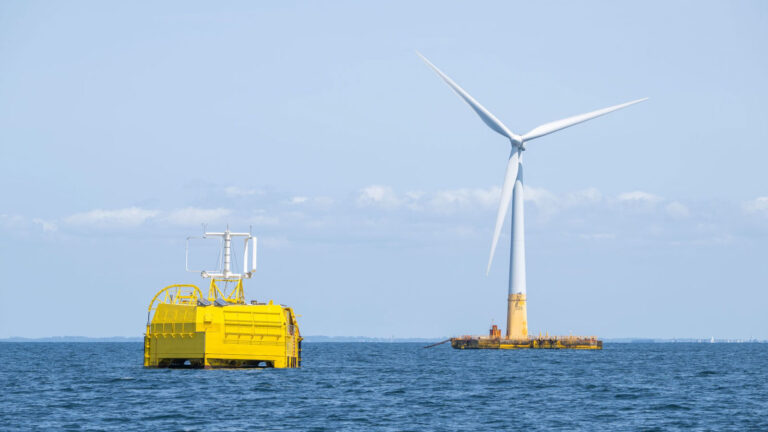
As mentioned, pilot tests of offshore hydrogen plants are already underway. One of the first prototypes was launched by a French company, which inaugurated its first green hydrogen production plant, Sealhyfe, in 2022, located 20 kilometres off the French Atlantic coast. With a hydrogen production capacity of 400 kilograms per day and a 1 MW electrolyser, the project began operating in June 2023 on a 200-square-metre platform connected to an offshore wind turbine. It produces green hydrogen by electrolysing seawater using renewable energy.

According to the project developers, the platform has already demonstrated its ability to produce green hydrogen autonomously. Once the test phase is complete, the aim is to install a plant capable of generating the equivalent of 10 MW of energy off the Belgian coast by 2026

In addition to hydrogen generators for ships, there are other offshore green hydrogen projects designed for industrial and commercial applications. One such initiative is the H2HEAT project, led by the PLOCAN platform and funded by European programmes. This project will produce green hydrogen to heat buildings such as hospitals, supporting the EU’s zero-emissions policies.

Regardless of its origin, green hydrogen has the potential to power a wide range of transport systems beyond hydrogen ships. Hydrogen-powered trains and planes are also emerging alternatives, as discussed in a previous article. If you would like to learn more about the potential of green hydrogen, please subscribe to our newsletter at the bottom of this page.


Sources:

Kenyan individual passes away while in custody following arrest for social media post

0

Kenya’s police chief has suspended the head of a police station and all officers who were on duty at the time when a man who had been detained for “false publication” died in custody.

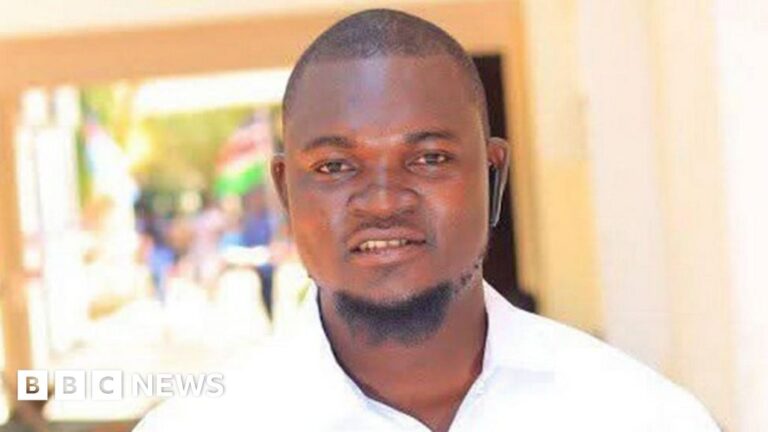
Albert Ojwang was arrested for a post on X in the western town of Homa Bay and then driven 350km (220 miles) to the capital, Nairobi, his father Meshack Opiyo told journalists.

“While in custody, the suspect sustained head injuries after hitting his head against a cell wall,” a police statement said. He was rushed to hospital “where he was pronounced dead on arrival”.

The director of rights group Amnesty International’s Kenya branch told the BBC that the death of Mr Ojwang was “very suspicious”.

Amnesty said in a statement that the death of the young man, described as a teacher and blogger, “raises serious questions that must be urgently, thoroughly, and independently investigated”.

Senior police officer Stephen Okal is quoted by the Star newspaper as saying what happened in the cell was “an attempted suicide”.

It is not clear what the charge of “false publication” referred to, but Mr Opiyo told online news site Citizen Digital that the arresting police officer said “Albert had insulted a senior person on X”, the social media platform.

A police statement released overnight said officers were suspended to allow Kenya’s independent oversight body to conduct an “impartial investigation”.

The death of Mr Ojwang, who was reported to have been 31, has sparked outrage online and calls for protests to demand police accountability.

Referring to the circumstances of his arrest, Amnesty International Kenya director Irungu Houghton said it was “quite shocking” that Mr Ojwang was not booked in at the local police station after being detained, but was instead taken on a long journey.

He called on the independent investigators to secure what he described as “the crime scene” at the police station in Nairobi.

The police said that Mr Ojwang was “lawfully arrested”.

His detention and death comes at a time of rising concern about how some government critics are being treated.

Last week, software developer Rose Njeri – who created a tool to help people oppose a government finance bill – was charged with violating a cybercrime law.

Alibaba and Tencent suspend AI tools during crucial China exam

0

China’s most popular AI chatbots like Alibaba’s Qwen have temporarily disabled functions including picture recognition, to prevent students from cheating during the country’s annual “gaokao” college entrance examinations.

Apps including Tencent Holdings Ltd.’s Yuanbao and Moonshot’s Kimi suspended photo-recognition services during the hours when the multi-day exams take place across the country. Asked to explain, the chatbots responded: “To ensure the fairness of the college entrance examinations, this function cannot be used during the test period.” 

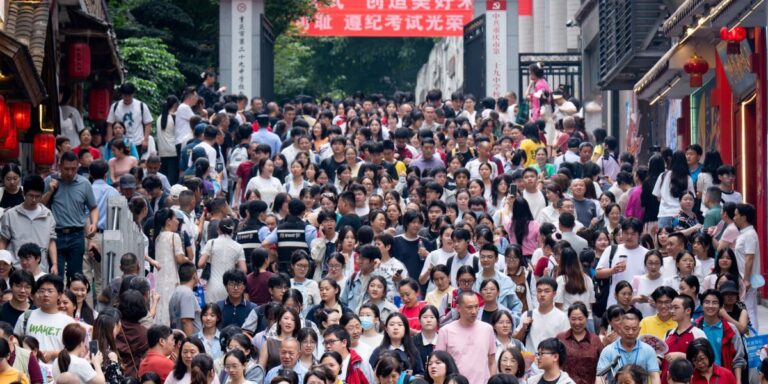
China’s infamously rigorous “gaokao” is a rite of passage for teenagers across the nation, thought to shape the futures of millions of aspiring graduates. Students—and their parents—pull out the stops for any edge they can get, from extensive private tuition to, on occasion, attempts to cheat. To minimize disruption, examiners outlaw the use of devices during the hours-long tests.

Alibaba Group Holding Ltd.’s Qwen and ByteDance Ltd.’s Doubao still offered photo recognition as of Monday. But when asked to answer questions about a photo of a test paper, Qwen responded that the service was temporarily frozen during exam hours from June 7 to 10. Doubao said the picture uploaded was “not in compliance with rules.”

China lacks a widely adopted university application process like in the U.S., where students prove their qualifications through years of academic records, along with standardized tests and personal essays. For Chinese high-school seniors, the gaokao, held in June each year, is often the only way they can impress admissions officials. About 13.4 million students are taking part in this year’s exams. 

The test is considered the most significant in the nation, especially for those from smaller cities and lower-income families that lack resources. A misstep may require another year in high school, or completely alter a teenager’s future.

The exam is also one of the most strictly controlled in China, to prevent cheating and ensure fairness. But fast-developing AI has posed new challenges for schools and regulators. The education ministry last month released a set of regulations stating that, while schools should start cultivating artificial intelligence talent at a young age, students should not use AI-generated content as answers in homework and tests.

This story was originally featured on Fortune.com

Unexpected Twitter Profiles Grieving Over Queen Elizabeth

0

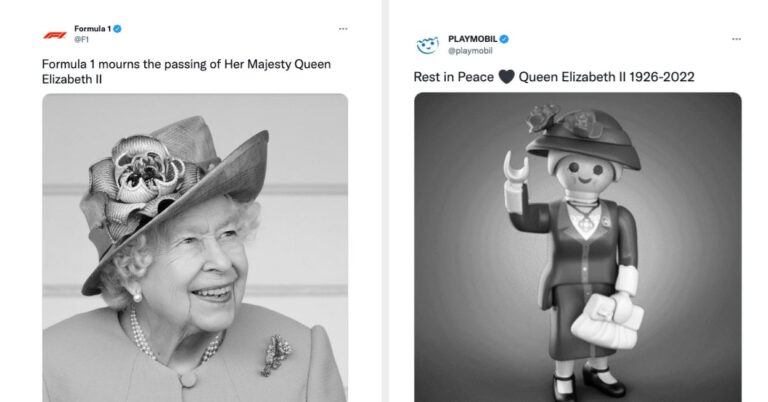
We are extremely saddened to hear of the passing of HM Queen Elizabeth II. Our thoughts are with all the Royal Family at this deeply sad time.

Out of respect the Resort will be closed tomorrow. If you’re due to visit you will receive an email about your booking.

Donald Trump pushes the boundaries of presidential power by deploying troops to Los Angeles.

0

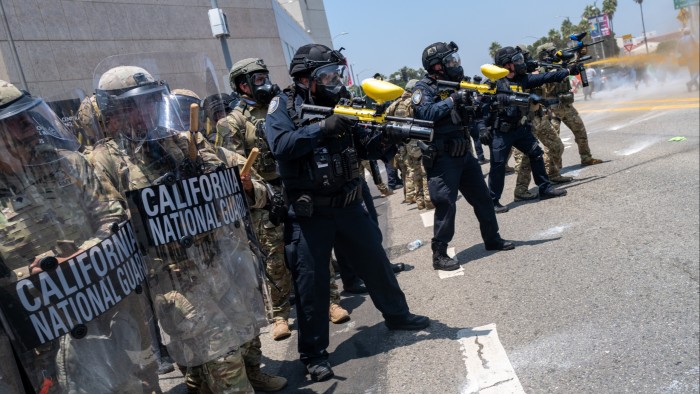
By calling on troops to suppress protests in Los Angeles on Sunday, Donald Trump has shown he is willing to put the country on a war footing — and test the boundaries of executive power — to achieve his goals. 

For the first time in decades, the National Guard was deployed against citizens on domestic soil against the wishes of local law enforcement, using a rarely invoked law designed to help the US fight off a foreign invasion. A US president last deployed a state’s National Guard without being asked by its governor in 1965, when Lyndon Johnson sent troops to protect civil rights demonstrators in Selma, Alabama.

Pete Hegseth, the defence secretary, even threatened to send in the marines to quell the unrest over raids against suspected illegal migrants. That would require invoking the Insurrection Act, which last happened 30 years ago during the riots that erupted in Los Angeles after the police who beat Rodney King were acquitted.

The deployment of the National Guard in the second-largest US city, one that is largely liberal, was “clearly done as an authoritarian show of strength”, said Ryan Enos, a professor of government at Harvard University.

“There is no policy reason [why the administration] should be targeting places in Los Angeles as opposed to places in red states.”

The deployment is the latest effort by the Trump administration to test the limits of presidential authority and force Democrat-run states to follow federal edicts. Some scholars warn these efforts are increasingly in open defiance of political convention and the US constitution.

In the space of a few days, Trump has ordered an investigation into his former presidential rival Joe Biden and officials in the previous administration, and threatened to stop federal funds flowing to California.

The president floated the idea of cancelling government contracts held by businesses belonging to his former ally Elon Musk, and warned there would be “very serious consequences” if the billionaire used his war chest to back Democratic candidates.

Trump’s most eager lieutenants have issued similar threats. Vice-president JD Vance suggested the spectacle of “foreign nationals with no legal right to be in the country waving foreign flags and assaulting law enforcement” could be legally defined as an invasion. 

Stephen Miller, the architect of the White House’s immigration policy, declared that the choice before the country was to “deport the invaders, or surrender to insurrection”. He endorsed a post which called for mass deportations no matter “what it costs”, and which concluded: “Nothing else matters if this isn’t handled.” 

On Fox News, border tsar Tom Homan suggested the Department of Justice would investigate Democratic lawmakers — including House minority leader Hakeem Jeffries — who called for Immigration and Customs Enforcement agents not to conceal their faces behind masks when conducting raids.

Justifying the deployment of troops in Los Angeles, homeland security secretary Kristi Noem claimed that ICE agents were merely going after the “worst of the worst” — criminal aliens embedded in otherwise law-abiding communities.

But a report by the conservative-leaning Washington Examiner last week claimed Miller had castigated ICE’s high command for merely pursuing criminals, and exhorted them to round up all undocumented migrants. ICE denied this.

The broad scope and haphazard nature of the sweeps by ICE agents over the past few days was highlighted by the mistaken arrest of a US marshal in Arizona, who officials admitted had merely “fit the general description of a subject being sought by ICE”.

The White House did not immediately respond to a request for comment.

On Saturday, White House press secretary Karoline Leavitt defended the operations as “essential to halting and reversing the invasion of illegal criminals into the United States.”

She added that “the Commander-in-Chief will ensure the laws of the United States are executed fully and completely.”

Critics of the administration’s immigration crackdown say raids are indiscriminate by design.

“Obviously they know that mass deportations are going to be incredibly disruptive to these cities that have so many immigrants living in them,” said David Bier, director of immigration studies at the Cato Institute, a libertarian think-tank. 

“They were fully expecting and hoping for this type of reaction,” he added, “because it’s good politics for them, and . . . further justifies both mass deportation and other power grabs.”

Andrew Weinstein, a lawyer who served as the Public Delegate to the UN under President Biden, said the escalation was part of a broader strategy.

“Whether it’s the unprecedented politicisation of the military, [the Trump administration’s] assault on higher education under the guise of combating the very real problem of rising antisemitism, or the expedited deportation of non-citizens without due process, it’s all a pretext to further an authoritarian agenda,” he said of recent moves by the White House.

“Each of these actions cracks the foundation of our democracy just a little bit more.”

For now, public support for Trump’s immigration crackdown appears to be holding up. A YouGov poll for CBS, conducted before the LA protests, found that 54 per cent of the country was in favour of the scheme. That figure dropped though when people were asked if they supported going after those who are not dangerous criminals.

In contrast to Trump’s first term, when defence secretary Mark Esper refused to send the military to quash Black Lives Matter protests, there has been no real opposition to the military deployment from members of the administration, or from Republicans in Congress. 

For his part, Trump on Sunday did not see any reason to de-escalate.

“We’re going to have troops everywhere,” he told reporters. “We’re not going to let this happen to our country. We’re not going to let our country be torn apart like it was under Biden.”

Israeli forces intercept aid ship bound for Gaza in ongoing Israel-Palestine conflict

0

NewsFeed

Video from Al Jazeera Mubasher showed the crew of the Gaza Freedom Flotilla Coalition’s Madleen in life jackets with their hands raised as the ship was about to be raided by Israeli forces. Communications with the vessel were cut shortly after.