


Viswash Kumar Ramesh was one of 242 people on the 787-8 Dreamliner that went down shortly after takeoff in Ahmedabad, India, and the only known survivor.
Benjamin Netanyahu pledges to continue attacking Iran for an indefinite period of time
Israeli Prime Minister Benjamin Netanyahu vowed to attack Iran for “as long as necessary” after his forces launched devastating air strikes against Tehran’s nuclear programme and military facilities, triggering a new war in the Middle East.
The assault, which came after years of tensions between the two states, struck facilities long at the heart of Iran’s nuclear ambitions, killed Iran’s top three military commanders, as well as leading scientists, and sought to disable the country’s air defences.
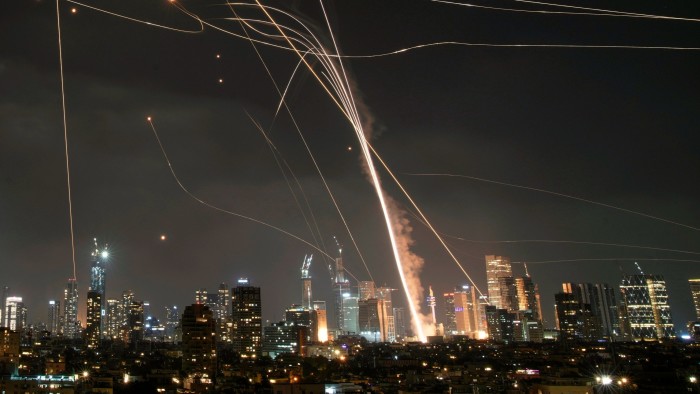
Iran retaliated on Friday night, launching a barrage of ballistic missiles at Israel. A US official told the Financial Times that the US was helping to shoot down Iranian missiles targeting Israel.
Tel Aviv was among Iran’s targets, with video on social media appearing to show missiles hitting the city. Thirty-four people have been injured in rocket strikes on the area, Israeli emergency services said.
Iran’s supreme leader Ayatollah Ali Khamenei threatened Israel with “heavy blows” and said it would not be allowed to escape unscathed after provoking a war.
“They should not assume that they hit [us] and it is over. No. They were the ones to start it and waged a war,” he said in a pre-recorded televised message late on Friday.
In a video broadcast earlier on Friday, Netanyahu said Israel’s strikes would continue for “as long as necessary, to distance and remove the threat as much as we can”.
In a separate video he addressed the Iranian people, saying Israel’s attacks were “clearing the path for you to achieve your freedom”. He added: “More is on the way. The regime does not know what hit them, or what will hit them.”
On his Truth Social platform, US President Donald Trump warned Tehran that the next “already planned attacks” on it would be “even more brutal”, adding that “Iran must make a deal [on its nuclear programme], before there is nothing left”.
In a later post, he added: “Two months ago I gave Iran a 60-day ultimatum to ‘make a deal’. They should have done it! Today is day 61.”
For more than two decades, Israel has viewed Iran’s nuclear activities as an existential threat and has long been opposed to efforts by the US and other powers to negotiate with Tehran, which insists its programme is purely peaceful.
US administrations going back to George W Bush have sought to prevent an Israeli strike on the Islamic republic for fear of escalation into a wider conflict, but Trump has signalled fewer misgivings.
Speaking to ABC News, he said of the Israeli attack: “I think it’s been excellent.”
An Israeli military official said the attacks could last for as long as two weeks, while another said dozens of strikes had already been carried out.
After massive explosions rocked Tehran at about 3.30am local time on Friday, state television also showed smoke rising from the main command headquarters of the Revolutionary Guards, the regime’s most powerful military force, in eastern Tehran.
Further strikes took place later on Friday, according to local media reports.
Iran’s state news agency said several senior military figures including Major General Hossein Salami, head of the elite Revolutionary Guards, were killed. Iran’s armed forces chief of staff, Major General Mohammad Bagheri, was also killed, state television reported, while Israel said it had killed the IRGC air force commander.
Mohammad Mehdi Tehranchi, a prominent physics professor, and Fereydoon Abbasi, a former head of Iran’s atomic organisation, also died, the state news agency said.
Unofficial estimates quoted by the Iranian media suggested that 78 people were killed and 329 injured by the Israeli strikes on military sites and residential areas in Tehran province. But they did not specify how many of the casualties were civilians.
US stocks extended their sell-off as the conflict intensified. The S&P 500 ended Friday’s session down 1.1 per cent and the tech-heavy Nasdaq Composite dropped 1.3 per cent. Brent crude, the international oil benchmark, surged as much as 12.5 per cent after Israel’s strikes before paring back to $74.36 a barrel, up 7.2 per cent.
The Israel Defense Forces said it had damaged an underground facility in Natanz, the country’s main site for uranium enrichment, which can produce both nuclear fuel and weapons-grade material.
Iran’s Atomic Energy Organisation said there had been some radiation and chemical contamination at Natanz, but the site, and another underground enrichment facility at Fordow, had not been seriously damaged. IDF strikes on Isfahan, another major site in Iran’s nuclear programme, caused fires in several warehouses, it added.
In an indication that Israel was seeking to establish air supremacy, the IDF said it had also carried out a large-scale strike against Iran’s air defences, including bases at Hamadan and Tabriz in western Iran. “Tabriz base was destroyed as a result of the attack,” the IDF said.
Israeli security officials added that Mossad operatives had smuggled explosive drones and precision weapons into Iran that were then used to target missile launchers and surface-to-air missile systems.
The attack came ahead of a sixth round of negotiations on Sunday between the Trump administration and Iran in an effort to resolve the nuclear crisis.
Trump said on Thursday that Washington was “fairly close to a pretty good agreement”, adding that he did not want Israel to attack Iran because it could “blow” the chances of a deal. But in comments before and after the attack he also suggested strikes could help progress towards an agreement.
Netanyahu, who had been lobbying the US to support military action against Iran, said in a video statement that Tehran was buying time, alluding to US and Israeli demands that Iran halt its nuclear enrichment programme.
“That is why we have no choice but to act and act now,” he said.
Israel’s strikes drew swift condemnation from Saudi Arabia, Oman and Turkey. Riyadh said the attack violated international laws.
US secretary of state Marco Rubio said Washington was “not involved in strikes against Iran and our top priority is protecting American forces in the region”.
“Israel advised us that they believe this action was necessary for its self-defence,” Rubio added. “Let me be clear: Iran should not target US interests or personnel.”
Iran’s foreign minister Abbas Araghchi said the strikes could not have happened without a green light from the US, adding that Washington was “responsible for the dangerous repercussions of this aggression”.
Earlier this week, Tehran reiterated warnings that the republic could also target American bases across the region if it was attacked.
Tehran has for several years been enriching uranium close to weapons grade. Both Israel and the US have vowed to prevent the republic developing nuclear weapons.
While Tehran says its programme is for civilian purposes, it has the capacity to produce sufficient fissile material required for a nuclear weapon in less than two weeks.
The board of the International Atomic Energy Agency, the UN atomic watchdog, declared on Thursday that Iran was in breach of its non-proliferation obligations, the first such censure in two decades.
The strikes cap nearly two years of conflict across the Middle East that began with the war between Israel and Hamas triggered by the Palestinian militant group’s October 7 2023 attack on Israel.
Additional reporting by Bita Ghaffari in Tehran and Jamie Smyth and Steff Chávez in New York
Recap of Day Five Finals at the 2025 Australian World Championship Trials
By Retta Race on SwimSwam
2025 AUSTRALIAN SWIMMING TRIALS
- Monday, June 9th – Saturday, June 14th
- SA Aquatic & Leisure Centre, Oaklands Park, South Australia
- Prelims at 11am local (9:30pm ET night before)/Finals at 7:30pm local (6:00am ET) nights 1&2; 7pm local (5:30am ET) nights 3-6
- LCM (50m)
- Swimming Australia World Championships Selection Criteria
- Meet Central
- Livestream (VPN needed outside of Australia)
- Start List
- Heat Sheets
- Results
- Recaps
We’ve made it to the penultimate night of racing at the 2025 Australian World Championship Trials with tonight’s agenda including some of the most highly anticipated races of the meet.
The women’s 100m freestyle contains one of the tightest fields as the athletes are vying not only for the top two individual spots but also for a coveted slot on the 4x100m free relay.
Olympic medalist Meg Harris led the field out of the heats, however, she has withdrawn from tonight’s final. That means Mollie O’Callaghan, Olivia Wunsch, Milla Jansen and Shayna Jack are very much in the mix for gold with everyone saving some fuel for tonight’s main event.
Olympic medalist and former world record holder Zac Stubblety-Cook will also be in the water as the clear favorite in the men’s 200m breaststroke while Bradley Woodward will try to fend off Joshua Edwards-Smith in tonight’s men’s 200m backstroke.
Add in the women’s 200m breast and the men’s 1500m free and we’ve got quite the show in store as action unfolds from the SA Aquatic & Leisure Centre.
Men’s 200 Backstroke – FINAL
- World Record: 1:51.92 – Aaron Piersol, USA (2009)
- Australian Record: 1:53.17 – Mitch Larkin (2015)
- AllComers Record: 1:53.72 – Mitch Larkin, AUS (2015)
- 2024 Trials Winner: Bradley Woodward – 1:56.22
- SwimAustralia Qualifying Time: 1:57.98
GOLD – Joshua Edwards-Smith, 1:56.94
SILVER – Bradley Woodward, 1:57.14
BRONZE – Stuart Swinburn, 1:58.89
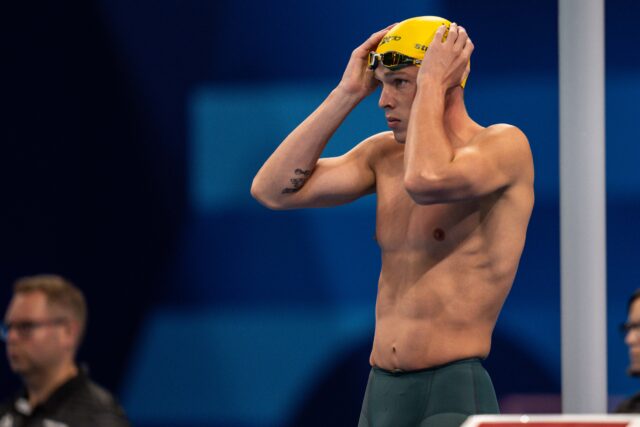
Joshua Edwards-Smith didn’t hold back with his post-race celebration as the 22-year-old Griffith University swimmer nailed a World Championships-worthy effort of 1:56.94 to take the 200m back title.
He was strong from start to finish, splitting 27.41/29.33/30.02/30.18 to hold off Bradley Woodward, who also was under the qualification time with a silver medal-worthy 1:57.14.
Stuart Swinburn rounded out the podium in 1:58.89.
Edwards-Smith talked post-race about the disappointment of missing out on the Paris 2024 Olympic team and how bouncing back to qualify here was what he set out to achieve.
His performance this evening represented the 4th-best result of his career, one which boasts a lifetime best of 1:55.42 from the 2022 Queensland Championships.
Women’s 100 Freestyle- FINAL
- World Record: 51.71 – Sarah Sjostrom, SWE (2017)
- Australian Record: 51.96 – Emma McKeon (2021)
- AllComers Record: 52.06 – Cate Campbell, AUS ( 2016)
- 2024 Trials Winner: Mollie O’Callaghan – 52.33
- SwimAustralia Qualifying Time: 54.16
GOLD – Mollie O’Callaghan, 52.87
SILVER – Olivia Wunsch, 53.38
BRONZE – Alex Perkins, 53.53
It was a very tight race among this women’s 100m freestyle pack, one that contained four teenagers, a testament to the ever-present depth waiting to rise to the surface within this sprinting nation.
Mollie O’Callaghan got the job done for gold, producing the sole time of the field under the 53-second barrier.
The 21-year-old Olympic multi-medalist produced a swift 52.87 to grab the gold and add a remarkable 4th individual event to her potential Singapore lineup after already nailing QT’s in the 50m back, 100m back and 200m freestyle.
O’Callaghan finished 4th in this event in Paris but was the 2022 and 2023 world champion. Her time tonight inserts her into slot #4 in this season’s world rankings.
2024-2025 LCM Women 100 Free
TorriUSA
HUSKE
HUSKE
06/03
52.43
52.43
| 2 | Marrit STEENBERGEN |
NED | 52.77 | 05/26 |
| 3 | Gretchen WALSH |
USA | 52.78 | 06/03 |
| 4 | Simone Manuel |
USA | 52.83 | 06/03 |
| 5 | Mollie O’CALLAGHAN |
AUS | 52.87 | 06/13 |
Slightly surprising was that Olivia Wunsch snagged the silver, putting up a solid 53.38 to earn her bid in this event for the World Championships.
That was just .21 off her lifetime best of 53.17 registered at last year’s Olympic Trials, despite being reportedly afflicted with granular fever (mono) in the lead up to this competition.
Alex Perkins rounded out the top 3 with a mark of 53.53 to add her name onto the 4x100m freestyle relay while Abbey Webb will join her as the 4th swimmer in 53.83. However, Hannah Casey tied Webb for that 4th slot, with Milla Jansen capturing 6th in 53.95.
Olympic medalist Shayna Jack was shut out, finishing a disappointing 8th in 54.03.
As a refresher, Meg Harris was this morning’s top performer in a mark of 53.01 but withdrew from the final.
For perspective, the top 4 American women’s 100m freestyle performers include Torri Huske (52.43), Gretchen Walsh (52.78), Simone Manuel (52.83) and Kate Douglass (53.16).
Men’s 200 Breaststroke- FINAL
- World Record: 2:05.48 – Qin Haiyang, CHN (2023)
- Australian Record: 2:05.95 – Zac Stubblety-Cook (2022)
- AllComers Record: 2:05.95 – Zac Stubblety-Cook (2022)
- 2024 Trials Winner: Zac Stubblety-Cook – 2:07.40
- SwimAustralia Qualifying Time: 2:10.32
GOLD – Zac Stubblety-Cook, 2:09.09
SILVER – Bailey Lello, 2:10.74
BRONZE – Finlay Schuster, 2:11.65
The Mel Marshall-trained Zac Stubblety-Cook accomplished his mission of qualifying for the World Championships, hitting a winning effort of 2:09.09. That positions the former world record holder and Olympic multi-medalist just outside the list of top 10 performers in the world this season.
Stubblety-Cook took silver in the 200 breast at the Paris Olympics with a time of 2:06.79 and helped the Aussie mixed 4×100 medley relay snag silver despite dealing with COVID-19 at the meet. He also revealed on Instagram after the competition that he broke his neck at the end of 2023, but did not reveal how he suffered the injury.
Joshua Yong touched second but wound up being disqualified for flinching at the start.
With that disqualification, Bailey Lello earned silver in 2:10.74, painstakingly short of the 2:10.32 Swimming Australia-mandated qualification time needed for Singapore.
Finlay Schuster collected bronze in 2:11.65.
Women’s 200 Breaststroke- FINAL
- World Record: 2:17.55 – Evgeniia Chikunova, RUS (2023)
- Australian Record: 2:20.54 – Leisel Jones (2006)
- AllComers Record: 2:20.04 – Rie Kaneto, JPN (2016)
- 2024 Trials Winner: Ella Ramsay – 2:22.87
- SwimAustralia Qualifying Time: 2:25.91
GOLD – Ella Ramsay, 2:23.92
SILVER – Tara Kinder, 2:24.61
BRONZE – Hayley Mackinder, 2:27.93
The top 3 performers in this women’s 200m breaststroke all dipped under the 2:30 barrier, led by 2024 Olympian Ella Ramsay.
20-year-old Ramsay of Griffith University produced an effort of 2:23.92 to capture gold and add this event to her World Championships lineup. Ramsay already made the Singapore roster earlier in the meet, courtesy of her 200m IM and 100m breaststroke performances.
Ramsay’s lifetime best remains at the 2:22.87 notched at last year’s Trials and in Paris she placed 12th overall in a time of 2:24.56.
Tara Kinder reaped silver in tonight’s final, hitting 2:24.61 to also clear the QT of 2:25.91. 22-year-old Kinder of Melbourne Vicentre already made the World Championships roster in the 200m IM behind Ramsay.
Hayley Mackinder rounded out tonight’s podium in 2:27.93.
Of note, B-Final winner, 16-year-old Lily Koch, fired off a time of 2:30.48, a mark which would have tied fellow 16-year-old Amelie Smith for 5th place in the A-final. That represented the 3rd-swiftest performance of Koch’s young career and the 2nd-best of Smith’s career to date.
Men’s 1500 Freestyle – FASTEST HEAT
- World Record: 14:30.67 – Bobby Finke, USA (2024)
- Australian Record: 14:34.56 – Grant Hackett (2001)
- AllComers Record: 14:34.56 – Grant Hackett, AUS (2001)
- 2024 Trials Winner: Matthew Galea – 14:58.96
- SwimAustralia Qualifying Time: 15:01.89
GOLD – Sam Short, 14:52.43
SILVER – Ben Goedemans, 14:52.99
BRONZE – Nick Sloman, 14:56.59
It was a thrilling race to the final touch in this men’s 1500m freestyle, with a cap-less Sam Short being chased by Ben Goedemans through the final 100 meters.
Rackley’s 21-year-old Short lost his cap during the race, which threw off his tempo a tad, but he still remained composed to put up a solid time of 14:52.43, the 4th-swiftest outing of his career. He easily clear the Swimming Australia-mandated QT of 15:01.89.
As did 21-year-old Goedemans who ripped sub-30-second splits on each of his final 6 50s en route to silver by less than half a second.
The Dean Boxall-trained Goedemans turned it on the final stretch and nearly caught Short, registering a final time of 14:52.99. That was a huge personal best, overtaking the 14:57.75 he notched at last year’s Australian National Championships. He’s now Australia’s 7th-quickest man in history.
Open water ace Nick Sloman turned in a time of 14:46.59 as tonight’s bronze medalist.
Short now ranks 8th in the world on the season while Goedemans is ranked 9th thus far this season.
2024-2025 LCM Men 1500 Free
FlorianGER
Wellbrock
Wellbrock
05/04
14:36.25
14:36.25
| 2 | Sven SCHWARZ |
GER | 14:36.82 | 05/04 |
| 3 | Oliver Klemet |
GER | 14:39.03 | 05/04 |
| 4 | Daniel Wiffen |
IRL | 14.42.71 | 04/16 |
| 5 | Bobby FINKE |
USA | 14:48.65 | 06/04 |
| 6 | Dávid BETLEHEM |
HUN | 14:48.73 | 04/09 |
| 7 | Kazuki Imafuku |
JPN | 14:50.18 | 03/23 |
| 8 | Samuel SHORT |
AUS | 14:52.43 | 06/13 |
| 9 | Kristóf RASOVSZKY |
HUN | 14:52.82 | 04/09 |
| 10 | Benjamin Goedemans |
AUS | 14:52.99 | 06/13 |
This checks in as Short’s 4th World Championships qualification after having earned bids in the 400m, 800m and 200m free, although he said he will most likely drop the individual 200m free. Goedemans also is now a multiple-event qualifier, having already earned a spot in the 800m freestyle event.
Read the full story on SwimSwam: 2025 Australian World Championship Trials: Day Five Finals Live Recap
Leading Innovations of 2024: From Green Concrete to Green Hydrogen
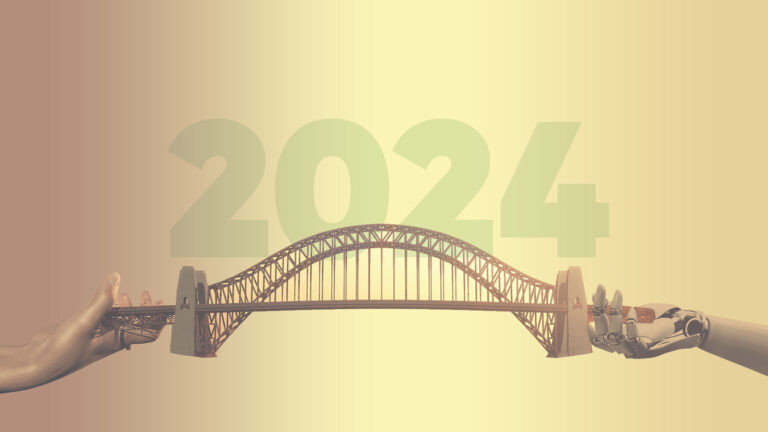
Technological progress often follows a quantitative trajectory, with incremental improvements culminating in a qualitative leap. This pattern is evident in recent developments with generative AI. Some innovations on this list are the result of years of refinement, such as 3D printing, while others, like the use of AI in water management, illustrate the ripple effect of innovation and how seemingly unrelated fields can benefit from this cross-pollination of knowledge. Without further ado, here is a list of the technological trends featured on this page in 2024.
1. Houses were built overnight
They say Rome was not built in a day, but some buildings now materialize within that timeframe. Thanks to robotic systems and on-site concrete module production, certain construction companies are exploring the potential to build at record speed. In an era of soaring housing prices, this is a groundbreaking advance. In this article, we highlighted a robot—named after a Roman emperor—that enables companies to meet unprecedented timelines.
2. Green concrete paved the way for more sustainable construction
Of course, achieving these results still requires one of civilization’s most fundamental materials: concrete. Traditionally, concrete production has been a major contributor to greenhouse gas emissions. Thankfully, more sustainable alternatives are emerging, employing techniques detailed in our article on green concrete. If you are unfamiliar with the term “clinker,” it is time to check it out.
3. Largest carbon sequestering facility inaugurated
When it comes to emissions, greenhouse gases—particularly carbon dioxide—remain a major concern in the fight against climate change. One standout innovation in 2024 was the inauguration of the world’s largest carbon sequestration plant, located in Iceland. Want to know how it works? Dive into our article about this plant and the various techniques used to capture carbon.
4. Some wind turbines retired while others were upgraded
While carbon capture strategies hold promise, renewable energy remains the most effective way to decarbonize the economy. In wind energy, significant progress has led to a new trend: wind farm repowering. This involves replacing aging turbines with newer, larger, and more powerful models. Learn all about the advantages of this approach in our feature article.
Do you like what you see? Download the PDF here
5. Wind energy scaled new heights thanks to Blade Lifter
As wind turbines continue to grow—some now taller than the Eiffel Tower—new methods for transporting them to mountainous locations have become essential. Traditionally, massive articulated trucks have handled this task, but a new technology, the Blade Lifter, is simplifying the process. It is already in use at the world’s largest wind farms.
6. Green hydrogen started to boost agriculture
While wind and solar energy remained crucial for sustainable development, other renewable energy sources began to make their mark. Enter green hydrogen: a clean fuel with diverse applications in agriculture, from powering heavy machinery to irrigation and heating systems for farms. Explore its potential in our comprehensive article.
7. World’s tallest 3D-printed tower was completed
3D printing had long been heralded as a game-changing technology, opening up possibilities in medicine, space exploration, and construction. In the latter field, it reached new heights—literally—in the Swiss Alps, where the tallest 3D-printed tower to date was completed.
8. Potable water, energy, and minerals were obtained from one process
The solution to this challenge lay in an experimental project known as INDESAL. This innovative desalination plant prototype combined three processes: generating renewable energy using salt gradient technology, extracting valuable minerals from seawater, and producing potable water through reverse osmosis.
9. Artificial intelligence improved water management…
Another major technological advance of 2024 was the application of AI to water-related processes. These included wastewater management, operations in water treatment plants, and decision-making for forecasting water demand. Our article delved into these applications, which aimed to better manage the increasingly scarce resource of drinking water.
10. And made cycling safer
If one technological breakthrough proved its versatility in 2024, it was artificial intelligence. Already making waves in various sectors, its application to urban mobility stood out. This year saw the debut of bicycles equipped with AI to recognize obstacles and alert cyclists to potential dangers.
If you would like to stay ahead of the curve and learn about next year’s technological breakthroughs before December rolls around, subscribe to our newsletter at the bottom of this page. You will receive monthly updates on the latest innovations.
World Leaders Respond to Assassination
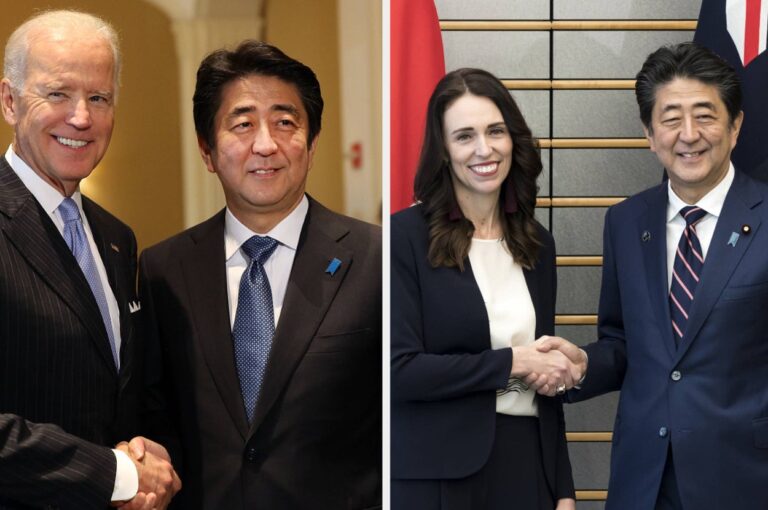
Former Japanese prime minister Shinzo Abe was assassinated on Friday by a gunman who shot him as he appeared at a campaign event.
Abe’s death has sent shockwaves through Japan, where deadly violence and shootings are extremely rare, and around the world.
The 67-year-old was Japan’s longest-serving prime minister, having held office twice from 2006 to 2007 and from 2012 to 2020.
World leaders who worked alongside Abe during his time as prime minister expressed their grief and distress at his death.
Critical Year Ahead for Adverum Biotechnologies: A SWOT Analysis of the Gene Therapy Stock

Adverum Biotechnologies' SWOT analysis: gene therapy stock faces pivotal year
Israel’s actions may have led Iran to advance towards acquiring nuclear weapons
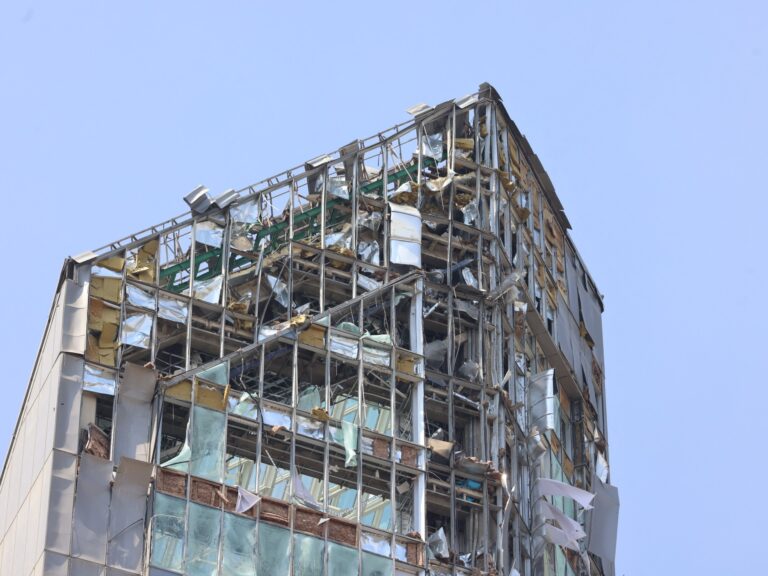
Historians may well mark June 13, 2025, as the day the world crossed a line it may not easily step back from. In a move that shocked the international community and sent global markets reeling, Israel launched a wide-scale military operation against Iran in the early hours of the morning, striking targets across at least 12 provinces, including the capital, Tehran, and the northwestern hub of Tabriz. Among the targets were suspected nuclear facilities, air defence systems, and the homes and offices of senior military personnel. Iranian state media confirmed the deaths of several top commanders in the Islamic Revolutionary Guard Corps (IRGC).
The Israeli government officially confirmed responsibility for the attacks, naming the campaign Operation Raising Lion. Iranian officials described it as the most direct act of war in the countries’ decades-long shadow conflict.
Israeli Prime Minister Benjamin Netanyahu appears to be pursuing two objectives. First, Israeli officials fear that Iran is nearing the technical capability to build a nuclear weapon – something Netanyahu has repeatedly promised to prevent, by force if necessary. Second, Israel hopes a dramatic escalation will pressure Tehran into accepting a new nuclear agreement more favourable to United States and Israeli interests, including the removal of its enriched uranium stockpiles. Just as Netanyahu has failed to destroy Hamas through military force, both goals may ultimately serve only to perpetuate a broader regional war.
While the prospect of all-out war between Iran and Israel has long loomed, Friday’s events feel dangerously different. The scale, audacity and implications of the attack – and the near-certain Iranian response – raise the spectre of a regional conflict spilling far beyond its traditional bounds.
Since the 2011 Arab Spring, a Saudi-Iranian cold war has played out across the region as each country has sought to expand its influence. That rivalry was paused through Chinese mediation in March 2023. But since October 2023, a war of attrition between Israel and Iran has unfolded through both conventional and asymmetrical means – a conflict that now threatens to define the trajectory of the Middle East for years to come.
Whether this confrontation escalates further now hinges largely on one man: Ayatollah Ali Khamenei. If Iran’s supreme leader comes to view the survival of the Islamic Republic as fundamentally threatened, Tehran’s response could expand far beyond Israeli territory.
In recent months, Israeli leaders had issued repeated warnings that a strike on Iran’s nuclear facilities was imminent. Intelligence assessments in Tel Aviv claimed Iran was only weeks away from acquiring the necessary components to build a nuclear weapon. Although this claim was disputed by other members of the international community, it nonetheless shaped Israel’s decision to act militarily.
At the same time, indirect negotiations between Iran and the US had been under way, focused on limiting Iran’s uranium enrichment and reducing tensions through a revised nuclear agreement. US President Donald Trump publicly supported these diplomatic efforts, describing them as preferable to what he called a potentially bloody war. However, the talks faltered when Iran refused to halt enrichment on its own soil.
The US administration, while officially opposing military escalation, reportedly gave tacit approval for a limited Israeli strike. Washington is said to have believed that such a strike could shift the balance in negotiations and send a message that Iran was not negotiating from a position of strength – similar to how Trump has framed Ukraine’s position in relation to Russia. Although US officials maintain they had advance knowledge of the attacks but did not participate operationally, both the aircraft and the bunker-busting bombs used were supplied by the US, the latter during Trump’s first term.
Initial reports from Iranian sources confirm that the strikes inflicted significant damage on centrifuge halls and enrichment pipelines at its Natanz facility. However, Iranian officials insist the nuclear programme remains intact. Iran’s nuclear infrastructure includes multiple deeply buried sites – some more than 500 metres (550 yards) underground and spread across distances exceeding 1,000km (620 miles). As a result, the total destruction of the programme by air strikes alone in this initial phase appears unlikely.
Iranian officials have long warned that any direct military aggression on their territory by Israel would cross a red line, and they have promised severe retaliation. Now, with blood spilled on its soil and key targets destroyed, Khamenei faces enormous internal and external pressure to respond. The elimination of multiple high-ranking military officials in a single night has further intensified the demand for a multifaceted response.
Iran’s reply so far has taken the form of another wave of drone attacks, similar to those launched in April and October – most of which were intercepted by Israeli and Jordanian defences.
If Iran does not engage with the US at the upcoming talks in Oman on Sunday regarding a possible nuclear deal, the failure of diplomacy could mark the start of a sustained campaign. The Iranian government has stated that it does not view the Israeli operation as an isolated incident, but rather as the beginning of a longer conflict. Referring to it as a “war of attrition” – a term also used to describe Iran’s drawn-out war with Iraq in the 1980s – officials have indicated the confrontation is likely to unfold over weeks or even months.
While retaliatory missile and drone strikes on Israeli targets are likely to continue, many now anticipate that Iran could also target US military bases in the Gulf, Bahrain, Qatar, the United Arab Emirates and even Jordan. Such an escalation would likely draw US forces directly into the conflict, implicate critical regional infrastructure and disrupt global oil supplies, particularly through the Strait of Hormuz. That, in turn, could trigger a steep rise in energy prices and send global markets spiralling – dragging in the interests of nearly every major power.
Even if an immediate, proportionate military response proves difficult, Iran is expected to act across several domains, including cyberattacks, proxy warfare and political manoeuvring. Among the political options reportedly under consideration is a full withdrawal from the Treaty on the Non-Proliferation of Nuclear Weapons (NPT). Iran has long used the NPT framework to assert that its nuclear programme is peaceful. Exiting the treaty would signal a significant policy shift. Additionally, there is growing speculation within Iran’s political circles that the religious decree issued by Khamenei banning the development and use of nuclear weapons may be reconsidered. If that prohibition is lifted, Iran could pursue a nuclear deterrent openly for the first time.
Whether Israel’s strikes succeeded in delaying Iran’s nuclear ambitions – or instead provoked Tehran to accelerate them – remains uncertain. What is clear is that the confrontation has entered a new phase. Should Iran exit the NPT and begin advancing its nuclear programme without the constraints of international agreements, some may argue that Israel’s campaign – intended to stop a bomb – may instead end up accelerating its creation.
The views expressed in this article are the author’s own and do not necessarily reflect Al Jazeera’s editorial stance.
Ford CEO Warns of Unstable Rare Earth Supply Following Plant Shutdown
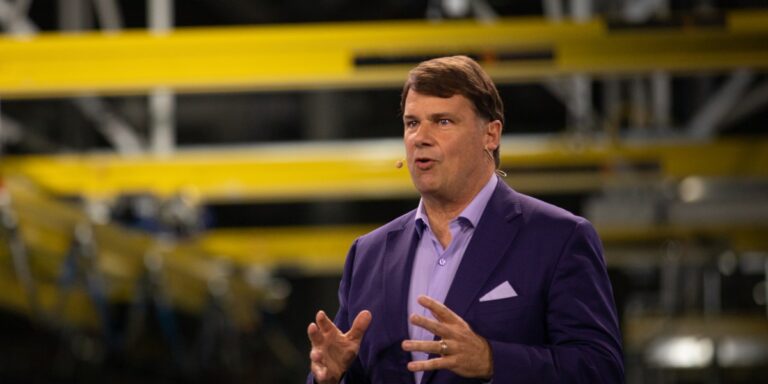
Ford Motor Co. continues to struggle to obtain rare earth magnet supplies that are essential to car production and have already forced a temporary shutdown of one of its factories.
The supply of the critical components has been trickling out of China, which has instituted a new approval process for exports of rare earths that continues to slow supply lines, Ford Chief Executive Officer Jim Farley said.
“It’s day to day,” Farley said in an interview Friday with Bloomberg TV. “We have had to shut down factories. It’s hand-to-mouth right now.”
Ford idled its Explorer sport utility vehicle factory in Chicago for a week last month due to a shortage of rare earth materials.
Farley said he is pleased with the progress he read about from trade talks between the US and China recently, but he has yet to see an improvement in the flow of magnets. Those are used throughout vehicles to power components such as windshield wipers, seats and audio systems.
“
We have applications into Mofcom and they are being approved one at a time,” Farley said, referring to China’s ministry of commerce. US President Donald Trump said that fresh negotiations with China this week yielded an agreement for Beijing to swiftly approve export licenses for rare earths.
The materials have emerged as a hot-button issue in US-China trade talks. The coveted raw materials are deeply embedded in cars, iPhones and other products and China has used its dominance to exert leverage in the negotiations.
“We’re educating the administration, we’re educating the Chinese leadership about how important these jobs in the Midwest are that are dependent” on the supply of rare earth magnets, Farley said.
This story was originally featured on Fortune.com
President pardons Nigeria’s Ken Saro-Wiwa and the Ogoni Nine, 30 years after their executions
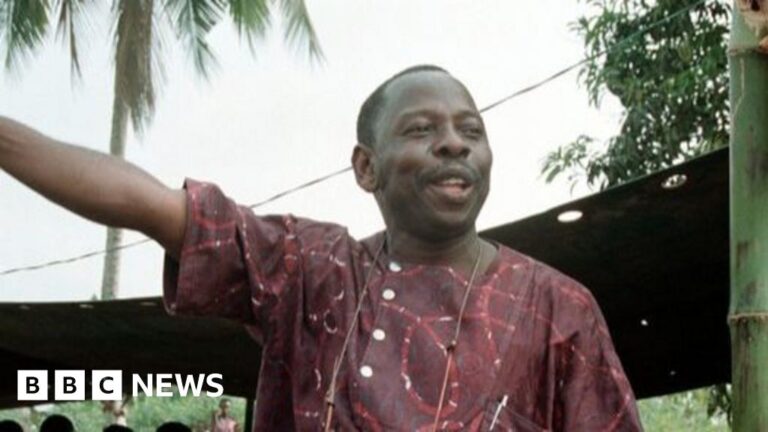
Nigeria’s president has pardoned the late activist Ken Saro-Wiwa, 30 years after his execution sparked global outrage.
Along with eight other campaigners, Mr Saro-Wiwa was convicted of murder, then hanged in 1995 by the then-military regime.
Many believed the activists were being punished for leading protests against the operations of oil multinationals, particularly Shell, in Nigeria’s Ogoniland. Shell has long denied any involvement in the executions.
Though the pardons have been welcomed, some activists and relatives say they do not go far enough.
As well as issuing the pardons on Thursday, Nigerian President Bola Tinubu bestowed national honours on Mr Saro-Wiwa and his fellow campaigners, who were known as the Ogoni Nine.
The nine men – Mr Saro-Wiwa, Barinem Kiobel, John Kpuinen, Baribor Bera, Felix Nuate, Paul Levula, Saturday Dobee, Nordu Eawo and Daniel Gbokoo – were among dozens who received the honours as part of Nigeria’s annual Democracy Day.
Tinubu said the accolades recognised “heroes” who had made “outstanding contributions ” to the nation’s democracy.
Responding to the pardons for the Ogoni Nine, campaign groups said they would like the government to take further steps.
The Movement for the Survival of the Ogoni People (Mosop), which was formerly led by Mr Saro-Wiwa, called the pardon a “courageous act”.
However, Mosop also said that the pardon implies wrongdoing, while in reality “no crime ever took place”.
Barinem Kiobel’s widow expressed her gratitude to Tinubu for the national honour, but called on the president to “properly declare [her] husband and his compatriots innocent” because a “pardon is not granted to the innocent”.
She told the BBC she wants a retrial.
Elsewhere, Amnesty International said clemency falls “far short of the justice the Ogoni Nine need”.
More must be done to hold oil companies to account for environmental damage currently occurring in Nigeria, the organisation added.
Mr Saro-Wiwa, who was one of Nigeria’s leading authors, led the Ogoni people in peaceful demonstrations against Shell and other oil companies.
Mosop accused the multinational company of polluting the land that locals relied on for their livelihoods.
The Nigerian government responded by brutally cracking down on the protesters. The Ogoni Nine were subsequently found guilty by a secret military tribunal of the murder of four Ogoni chiefs.
Their execution sparked outrage within the international community. It was widely condemned as extrajudicial murder and became a global symbol of the struggle against environmental injustice and repression.
Nigeria was consequently suspended from the Commonwealth group of nations.
Since then, Shell has faced various lawsuits over oil spills and environmental damage in the Niger Delta, the southern region that Ogoniland is a part of.
In 2021 a Dutch court ordered Shell to compensate farmers for spills that contaminated swathes of farmland and fishing waters in the Niger Delta. The company agreed to pay more than a hundred million dollars.
Earlier this year, lawyers representing two Ogoniland communities argued in London’s High Court that Shell must take responsibility for oil pollution that occurred between 1989 and 2020.
Shell denies wrongdoing and says spills in the region have been caused by sabotage, theft and illegal refining for which the company says it is not liable.
The case’s full trial is set for 2026.
Additional reporting by Chris Ewokor
Create Music Group partners with Ty Dolla $ign and Shawn Barron’s EZMNY Records for joint venture

Create Music Group has launched a joint venture with Ty Dolla $ign and his EZMNY Records label.
EZMNY Records was co-founded by Ty Dolla $ign and co-founder Shawn Barron, who signed Ty Dolla $ign to Atlantic Records back in 2012.
EZMNY’s signings include R&B artist Leon Thomas (EZMNY/Motown Records), who had a breakout hit this year with Mutt.
In addition to Thomas, EZMNY is home to newly signed artists Bizzy Crook, rjtheweirdo, Saige Michael, and Keith Turner.
Barron commented on the partnership: “The Create Music Group deal serves as a new chapter for EZMNY Records.
Partnering with the Create team is a natural extension of the artist-first vision Ty and I have already built with the success of EZMNY.
“Partnering with the Create team is a natural extension of the artist-first vision Ty and I have already built with the success of EZMNY.”
Shawn Barron, EZMNY Records
“We are excited to continue to foster the relationship and look forward to building something truly impactful for our artists.”
Jonathan Strauss, Founder and CEO of Create Music Group, added: “With over 15 years of chart-topping hits and industry accolades, their creative instincts have consistently shaped the sound of popular music.”
“their creative instincts have consistently shaped the sound of popular music.”
JONATHAN STRAUSS, CREATE MUSIC GROUP
Steeven Leblanc, Director of Business Development at Create Music Group, said: “They understand the culture, the art, and the business in a way that few others do.
“They understand the culture, the art, and the business in a way that few others do.”
STEEVEN LEBLANC, create music group
“This partnership is about amplifying that perspective and giving their artists the tools they need to break through at the highest level.”
Create Music Group has handled releases by several notable Hip-Hop and R&B artists, including Ye & Ty Dolla $ign, DeeBaby, Keri Hilson, DDG, Blxst, Bonp Rideaux, Rich The Kid, Tink, Erica Banks, Travis Porter, Jaylen Brown, Miles Bridges, October London, Calboy, ALLBLACK, and others.
Helen Yu, Head of Business Affairs and General Counsel for EZMNY, commented on the partnership: “Making this partnership deal with Create seemed the next logical step, as both companies have built their own measurable successes.”
“Making this partnership deal with Create seemed the next logical step, as both companies have built their own measurable successes.”
Helen Yu, EZMNY RECORDS
This partnership follows news of Create Music Group securing a $165 million investment round led by Flexpoint Ford back in June 2024.
This investment round led to a valuation of $1 billion for Create.
Since then, Create has been on an acquisition spree. In May 2025, the company acquired electronic music label Monstercat, less than a month after it bought Berlin independent music company !K7.
In February 2025, Create also formed a joint venture with independent record label Pack Records.Music Business Worldwide