
11.2 C
New York
Sunday, April 5, 2026
Home Blog Page 605

Modi’s supporters angered by Zohran Mamdani’s victory in New York primary | Human Rights News

0

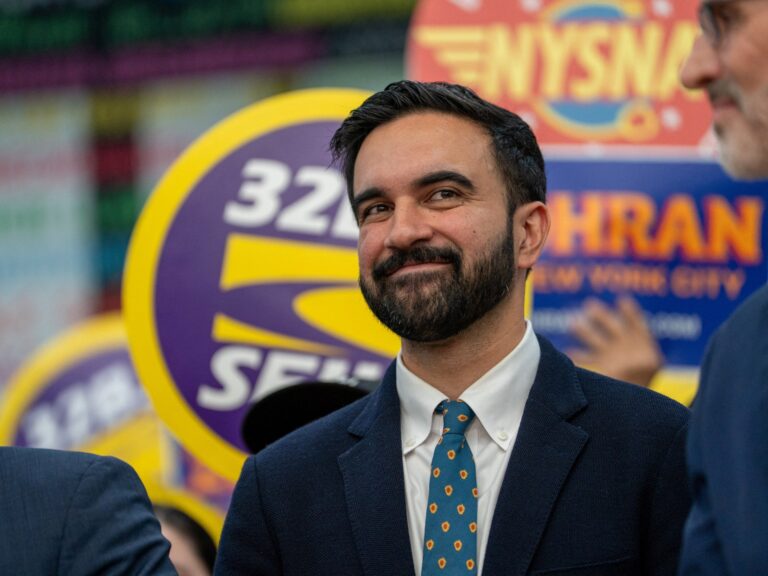
If he wins the general election in November, Zohran Mamdani could become New York City’s first South Asian mayor and the first of Indian origin.

But the same identity that makes him a trailblazer in United States politics has also exposed him to public outcry in India and within its diaspora.

Ever since Mamdani achieved a thumping win in the Democratic mayoral primary on June 24, his campaign has weathered a flood of vitriol – some of it coming from the Hindu right.

Experts say the attacks are a reflection of the tensions that have arisen between supporters of Prime Minister Narendra Modi and critics of the human rights abuses under his leadership, particularly against religious minorities.

A number of those attacks have fixated on Mamdani’s religion: The 33-year-old is Muslim. Some commenters have accused the mayoral hopeful of being a “jihadi” and “Islamist”. Others have called him anti-Hindu and anti-India.

Kayla Bassett, the director of research at the Center for the Study of Organized Hate (CSOH), a Washington-based think tank, believes the attacks against Mamdani are a vehicle to attack the Muslim community more broadly.

“This isn’t just about one individual,” she said. “It’s about promoting a narrative that casts Muslims as inherently suspect or un-American.”

Indian Prime Minister Narendra Modi has faced criticism for the treatment of religious minorities in India [Jermaine Cruickshank/AP Photo]

Backlash from Modi’s party

That narrative could potentially have consequences for Mamdani’s campaign, as he works to increase his support among New York voters.

Mamdani will face competition in November from more established names in politics. He is expected to face incumbent mayor Eric Adams in the final vote. His rival in the Democratic primary, former Governor Andrew Cuomo, has also not yet ruled out an independent run.

The mayoral hopeful has vocally denounced human rights abuses, including in places like Gaza and India.

That unabashed stance has not only earned him criticism from his rival candidates but also from overseas.

Members of Modi’s Bharatiya Janata Party (BJP), for example, have been among the voices slamming Mamdani’s remarks and questioning his fitness for the mayor’s seat.

BJP Member of Parliament Kangana Ranaut posted on social media, for example, that Mamdani “sounds more Pakistani than Indian”.

“Whatever happened to his Hindu identity or bloodline,” she asked, pointing to the Hindu roots of his mother, director Mira Nair. “Now he is ready to wipe out Hinduism.”

Soon after Mamdani’s primary win, a prominent pro-BJP news channel in India, Aaj Tak, also aired a segment claiming that he had received funding from organisations that promote an “anti-India” agenda.

It also warned of a growing Muslim population in New York City, an assertion it coupled with footage of women wearing hijabs.

But some of the backlash has come from sources closer to home.

A New Jersey-based group named Indian Americans for Cuomo spent $3,570 for a plane to fly a banner over New York City with the message: “Save NYC from Global Intifada. Reject Mamdani.”

Andrew Cuomo, Michael Blake, Zohran Mamdani and Whitney Tilsen stand behind glass podiums at a debate
Mayoral candidates Andrew Cuomo, Michael Blake, Zohran Mamdani and Whitney Tilson participate in a Democratic mayoral primary debate on June 4 in New York [Yuki Iwamura/AP Photo]

A critic of human rights abuses

Much of the pushback can be linked to Mamdani’s vocal criticism of Hindu nationalism and Modi in particular.

In 2020, Mamdani participated in a Times Square demonstration against a temple built on the site of the Babri mosque in Ayodhya that was destroyed by Hindu extremists in 1992. He called out the BJP’s participation in and normalisation of that violence.

“I am here today to protest against the BJP government in India and the demolition of the Babri masjid,” he said.

Then, in 2023, Mamdani read aloud notes from an imprisoned Indian activist ahead of Modi’s visit to New York City.

That activist, Umar Khalid, has been imprisoned since 2020 without trial on terrorism charges after making speeches criticising Modi’s government.

More recently, during a town hall for mayoral candidates in May, Mamdani was asked if he would meet with Modi if the prime minister were to visit the city again. Mamdani said he wouldn’t.

“This is a war criminal,” he replied.

Mamdani pointed to Modi’s leadership in the Indian state of Gujarat during a period of religious riots in 2002. Modi has been criticised for turning a blind eye to the violence, which killed more than a thousand people, many of them Muslim.

In the aftermath, Modi was denied a US visa for “severe violations of religious freedom”.

“Narendra Modi helped to orchestrate what was a mass slaughter of Muslims in Gujarat, to the extent that we don’t even believe that there are Gujarati Muslims any more,” Mamdani told the town hall. “When I tell someone that I am, it’s a shock to them that that’s even the case.”

Protesters in Gujarat sit on the ground with protest signs that read "We demand punishment for the killers of 2002"
Protesters in 2014 gather to mark the anniversary of the violence in the Indian state of Gujarat [File: Ajit Solanki/AP Photo]

Barriers of class and religion

It’s that “fearless” and consistent criticism of Modi that has made Mamdani the target of outrage from the Hindu right, according to Rohit Chopra, a communications professor at Santa Clara University.

“Among the Hindu right, there is a project of the political management of the memory of 2002. There’s this silence around Modi being denied a visa to enter the US,” said Chopra.

The professor also said class fragmentation among Hindu Americans may also fuel scepticism towards Mamdani.

Hindu Americans are a relatively privileged minority in terms of socioeconomic status: The Pew Research Center estimates that 44 percent Asian American Hindus enjoy a family income of more than $150,000, and six in 10 have obtained postgraduate degrees.

That relative prosperity, Chopra said, can translate into social barriers.

“They don’t necessarily even identify with other Hindu Americans who may come from very different kinds of class backgrounds – people who might be working as cab drivers, or dishwashers, or other blue-collar jobs,” he explained.

Meanwhile, Suchitra Vijayan, a New York City-based writer and the founder of the digital magazine Polis Project, has noticed that many lines of attack against Mamdani centre on his identity.

“Mamdani is an elected leader who is unabashedly Muslim,” she said.

She pointed out that other Muslim politicians, including US Congress members Rashida Tlaib and Ilhan Omar, have sparked similar backlash for reproaching Modi over the Gujarat violence.

But Mamdani’s family ties to the region make the scrutiny all the more intense.

“In Mamdani’s case, he’s Muslim, he’s African, but also his father is of Gujarati descent and has openly spoken about the pogrom in Gujarat,” Vijayan said.

Zoran Mamdani waves as he leaves an event, surrounded by media cameras.
New York City mayoral candidate Zohran Mamdani waves to supporters at an event on July 2 [David ‘Dee’ Delgado/Reuters]

A ‘seismic’ victory

Despite the online backlash, experts and local organisers believe Mamdani’s campaign can mobilise Indian American voters and other members of the South Asian diaspora who traditionally lean Democratic.

The Pew Research Center estimates that there are 710,000 Indians and Indian Americans living in the New York City area, the most of any metropolitan centre in the US.

Preliminary results from June’s mayoral primary show that Mamdani scored big in neighbourhoods with strong Asian populations, like Little Bangladesh, Jackson Heights and Parkchester.

A final tally of the ranked-choice ballots was released earlier this week, on July 1, showing Mamdani trounced his closest rival, Cuomo, 56 percent to 44.

“I’ve heard his win described as ‘seismic’,” said Arvind Rajagopal, a professor of media studies at New York University. “He can speak not only Spanish but Hindi, Urdu, and passable Bangla. A candidate with this level of depth and breadth is rare in recent times.”

Rajagopal added that Mamdani’s decision to own his Muslim identity became an asset for him on the campaign trail, particularly in the current political climate.

With President Donald Trump in office for a second term, many voters are bracing for the anti-Muslim rhetoric and policies that accompanied his first four years in the White House.

Back then, Trump called for a “total and complete shutdown of Muslims entering the United States”, saying they represented an “influx of hatred” and “danger”.

“The moment of Trump is something that Mamdani answers perfectly,” Rajagopal said. He called Mamdani’s success “a big reality check for the Hindu right”.

Whatever backlash Mamdani is facing from Hindu groups, Jagpreet Singh is sceptical about its influence over New York City.

“I can assure you – it’s not coming from within the city,” said Singh, the political director of DRUM Beats, a sister organisation to the social justice organisation Desis Rising Up and Moving.

That group was among the first in the city to endorse Mamdani’s candidacy for mayor.

Since early in his campaign, Singh pointed out that Mamdani has reached out to Hindu working-class communities “in an authentic way”.

This included visiting the Durga Temple and Nepalese Cultural Center in Ridgewood and speaking at events in the Guyanese and Trinidadian Hindu communities, Singh pointed out. During his time as a state assembly member, Mamdani also pushed for legislation that would recognise Diwali – the Hindu festival of lights – as a state holiday.

At a Diwali celebration last year, Singh said Mamdani “took part in lighting of the diyas, spoke on stage, and talked about his mother’s background as being somebody who is of Hindu faith”.

To Singh, the message was clear. South Asian groups in New York City, including Hindu Americans, “have adopted him as their own”.

Challenge from the Client

0


Client Challenge


JavaScript is disabled in your browser.

Please enable JavaScript to proceed.

A required part of this site couldn’t load. This may be due to a browser
extension, network issues, or browser settings. Please check your
connection, disable any ad blockers, or try using a different browser.

US Lawsuit Alleges Sport Agent Jonathan Barnett Committed Rape

0

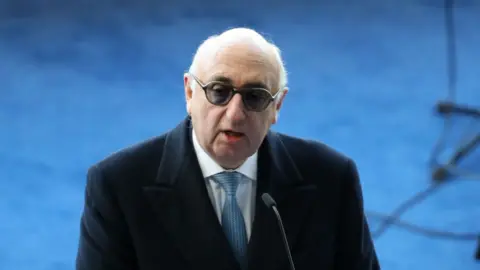
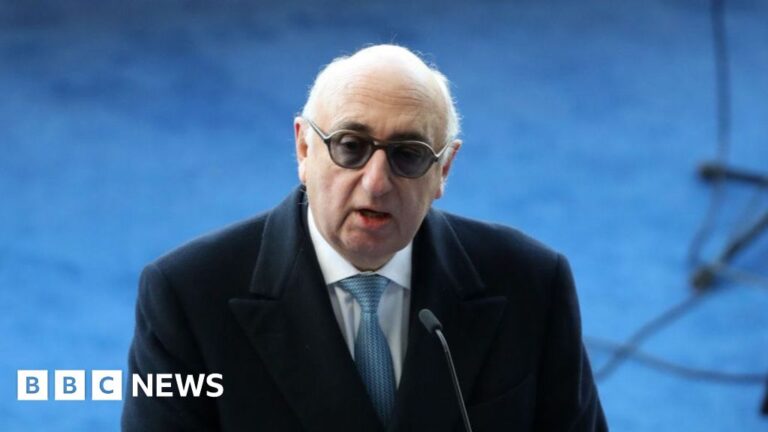
Adam Fradgley - AMA/West Bromwich Albion FC via Getty Images Barnett with thinning white hair, wearing darkened glasses, a dark overcoat, white shirt and blue tie, stands in front of a microphone in 2018. Adam Fradgley – AMA/West Bromwich Albion FC via Getty Images

Barnett denies the woman’s allegations that he kept her as a “sex slave”

High-profile British sports agent Jonathan Barnett has been accused of raping a woman more than 39 times, in a US lawsuit.

In a civil complaint lodged at a US district court in Los Angeles, the unnamed woman, referred to as “Jane Doe”, says Mr Barnett “trafficked” her from Australia to the UK in 2017, “tortured” and kept her as a “sex slave” over a six year period.

She says Mr Barnett made “repeated threats to her life and the lives of her minor children”.

The 75-year-old known for representing leading footballers including Gareth Bale and Jack Grealish, says the charges “have no basis in reality and are untrue”.

“We will vigorously defend this lawsuit through the appropriate legal process. I am looking forward to being entirely vindicated and exonerated,” a statement from his lawyers said.

Mr Barnett was ranked as the world’s most powerful sports agent in 2019 by Forbes magazine.

He co-founded London-based sports agency Stellar Group in 1994, eventually selling it to Hollywood talent agency ICM Partners in 2020. ICM was later bought by larger rival CAA in a deal that merged two of the world’s biggest agencies.

The civil case against Mr Barnett, filed on Wednesday, uses the name CAA Stellar throughout to refer to his sports agency.

According to court documents, the pair first met in the 1990s through a professional athlete in London and reconnected online and then in person in 2017.

Within a matter of weeks she relocated to the UK with her teenage children – with sports agency CAA Stellar, headed by Mr Barnett, covering moving expenses.

The filing says that upon her arrival, he told her he “owned” her and raped her in a hotel room.

Mr Barnett went on to impose strict rules to obey him at all times, referring to him as “My Master” and to “never say it hurts”, according to the lawsuit.

The complaint goes on to describe alleged degrading acts that included drinking urine or ingesting faeces.

The alleged torture also included the woman “tied up overnight without food or water”.

She says she was “trafficked, threatened, tortured, and held” in bondage in different locations throughout the world, including Los Angeles, from 2017 to 2023.

“Realising she was powerless against a dangerous predator, Ms Doe submitted to Barnett in order to avoid being severely beaten or even killed,” the lawsuit said.

“Jane Doe” is also suing Hollywood talent firm Creative Artists Agency and sports agency CAA Stellar, where Mr Barnett was executive chairman until his retirement last year.

The court documents state the CAA Stellar’s parent companies, talent agencies ICM and CAA, “failed to find and/or willfully or recklessly disregarded” that substantial payments were made between 2017 and 2023, despite the woman not being an athlete or agent.

It is claimed Mr Barnett referred to her as “slave” in emails sent from his work account.

Court documents say Mr Barnett used his “money and power to maintain coercive control” over the woman who was “in fear of her life and the lives of her children”.

Lawyers for “Jane Doe” state the case is about “institutional abuse at the highest level”.

They are seeking compensation on her behalf.

CAA said it first heard of the woman’s allegations in January 2024 when her lawyers made settlement demands – and the press inquired.

“While the complaint attempts to connect these allegations to CAA’s business, Ms Doe has never been an employee, consultant, or contractor of CAA, ICM, or Stellar, nor has she ever had any business connection to CAA, ICM, or Stellar,” CAA said in its statement.

“CAA takes any allegations of this nature seriously, and through counsel, promptly urged Ms Doe to contact law enforcement in the United Kingdom.”

The statement added that Mr Barnett “exited” Stellar in February 2024.

Report: US Air Force suspends SpaceX rocket project at Pacific atoll

0

US Air Force suspends SpaceX rocket project on Pacific atoll, report says

Record Number of Drones and Missiles Target Kyiv by Russia

0

new video loaded: Russia Targets Kyiv With Record Number of Drones and Missiles

Recent episodes in Latest Video

Whether it’s reporting on conflicts abroad and political divisions at home, or covering the latest style trends and scientific developments, Times Video journalists provide a revealing and unforgettable view of the world.

Whether it’s reporting on conflicts abroad and political divisions at home, or covering the latest style trends and scientific developments, Times Video journalists provide a revealing and unforgettable view of the world.

Trump to inform nations of U.S. tariffs reaching 70%

0

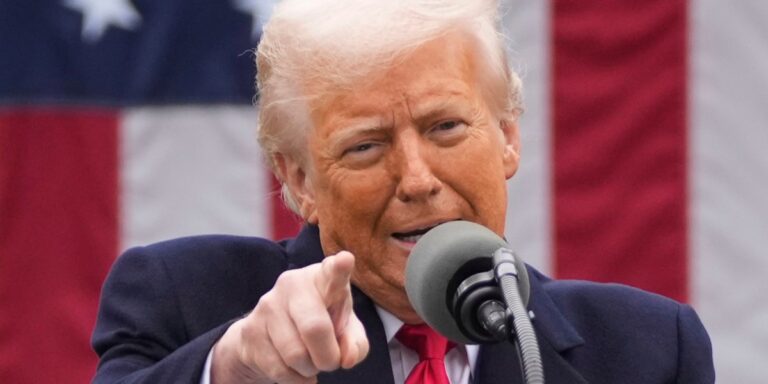
US President Donald Trump said his administration will probably start notifying trading partners Friday of the new US tariff on their exports effective Aug. 1, while reiterating a preference for simplicity over complicated negotiations five days before his deadline for deals.

Trump told reporters that about “10 or 12” letters would go out Friday, with additional letters coming “over the next few days.”

“By the ninth they’ll be fully covered,” Trump added, referring to a July 9 deadline he initially set for countries to reach deals with the US to avoid higher import duties he has threatened. “They’ll range in value from maybe 60 or 70% tariffs to 10 and 20% tariffs,” he added.

US talks with economies from Indonesia and South Korea to the European Union and Switzerland are reaching critical stages, where the most contentious issues are hammered out. Trump’s latest threat, which fits his pattern of issuing ultimatums to break any impasses, aligns with earlier statements that some nations won’t have a say in their tariff level.

The top tier of his new tariff range, if formalized, would be higher than any of the levies the president initially outlined during his “Liberation Day” rollout in early April. Those varied from a 10% baseline tariff on most economies up to a maximum of 50%. Trump didn’t elaborate on which countries would get the tariffs or whether that meant certain goods would be taxed at a higher rate than others.

Trump said that countries would “start to pay on Aug. 1. The money will start going to come into the United States on August 1.” Tariffs are typically paid by the importer, or an intermediary acting on the importer’s behalf. But often it’s profit margins or the end consumer that ultimately absorb much of the cost.

Stocks in Asia and Europe dropped along with the dollar. US equity and Treasury markets closed for the Fourth of July holiday.

The lagged effect of tariffs on inflation has some Federal Reserve officials wary of cutting interest rates. The Fed has held off on lowering rates this year — despite intense pressure from Trump — in part to determine whether tariff-driven price hikes might evolve into more persistent cost-of-living pressures.

Trump has long threatened that if countries fail to reach deals with the US before next week’s deadline, he would simply impose rates on them, raising the stakes for trading partners that have rushed to secure agreements with his administration.

He initially announced his higher so-called “reciprocal” tariffs on April 2, but paused those for 90 days to allow countries time to negotiate, putting in place a 10% rate during that interval.

Bloomberg Economics estimates that if all reciprocal tariffs are raised to their threatened level on July 9, average duties on all US imports could climb to around 20% from close to 3% before Trump’s inauguration in January. That would add to growth and inflation risks for the US economy.

So far, the Trump administration has announced deals with the UK and Vietnam and agreed to truces with China that saw the world’s two largest economies ease tit-for-tat tariffs and lower export controls

Asked Thursday if more deals were on the way, Trump responded that “we have a couple of other deals, but you know, my inclination is to send a letter out and say what tariffs they are going to be paying.”

“It’s much easier,” he said. “I’d rather just do a simple deal where you can maintain it and control it.”

Trump announced the Vietnam deal on Wednesday, saying that the US would place a 20% tariff on Vietnamese exports to the US and a 40% rate on goods deemed transshipped through the nation — a reference to the practice whereby components from China and possibly other nations are routed through third countries on their way to the US.

Vietnam Deal

While the rates are lower than the 46% duty Trump imposed on Vietnam initially, they are higher than the universal 10% level. And many of the particulars of the deal are still unclear, with the White House yet to release a term sheet or publish any proclamation codifying the agreement.

After Trump’s announcement, Vietnam said the negotiations were still ongoing.

Indonesia is confident it is close to securing a “bold” trade deal with the US that will span critical minerals, energy, defense cooperation and market access ahead of the looming tariff deadline, according to the nation’s chief negotiator on Friday.

Many major trading partners, however, such as Japan, South Korea and the European Union, are still working to finalize their accords. 

South Korea’s top trade official will visit the US this weekend with fresh proposals in a last-minute bid for a reprieve before higher tariffs are scheduled to kick in. 

The US president has expressed optimism about reaching an agreement with India but has spoken harshly about the prospects of an accord with Japan, casting Tokyo as a difficult negotiating partner. He intensified his criticism this week, saying that Japan should be forced to “pay 30%, 35% or whatever the number is that we determine.”

Trump on Tuesday also said he was not considering delaying next week’s deadline. Asked about any potential extension of talks, US Treasury Secretary Scott Bessent said earlier Thursday that Trump would make the final call.

“We’re going to do what the president wants, and he’ll be the one to determine whether they’re negotiating in good faith,” Bessent said on CNBC when asked whether the deadline might be lengthened.

Elon Musk brings back third party concept following approval of ‘One Big Beautiful Bill’ | Latest Elon Musk Updates

0

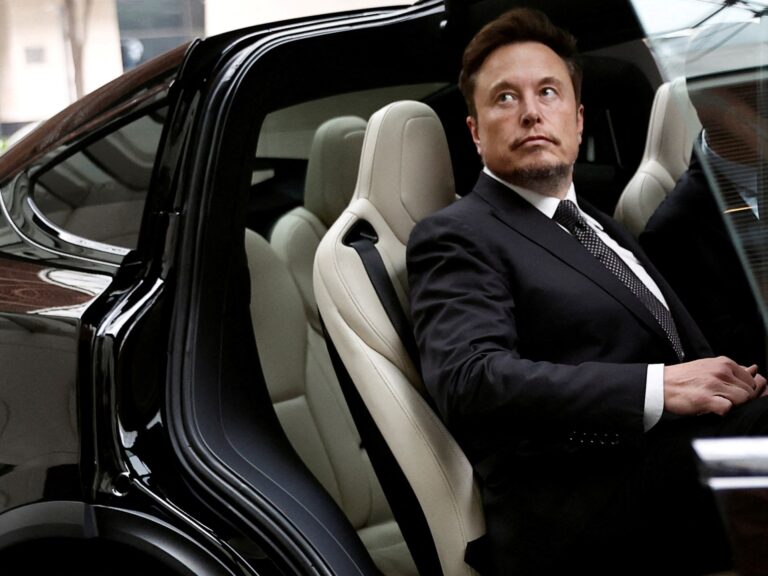
Billionaire entrepreneur Elon Musk has weighed in publicly for the first time since the passage of President Donald Trump’s signature piece of budget legislation, commonly known as the “One Big Beautiful Bill“.

On Friday, Musk took to his social media platform X to once again float the possibility of a third party to rival the two major ones — the Democrats and the Republicans — in United States politics.

“Independence Day is the perfect time to ask if you want independence from the two-party (some would say uniparty) system! Should we create the America Party?” Musk asked his followers, attaching an interactive poll.

Musk has maintained that both major parties have fallen out of step with what he describes as the “80 percent in the middle” – a number he estimates represents the moderates and independents who do not align with either end of the political spectrum.

His desire to form a new party, however, emerged after a public fallout with Trump over the “One Big Beautiful Bill”, a sweeping piece of legislation that passed both chambers of Congress on Thursday.

Yet again on Friday, Musk revisited his objections to the bill, albeit indirectly. He shared Senator Rand Paul’s critique that the bill “explodes the deficit in the near-term”, responding with a re-post and the “100” emoji, signifying his full agreement.

The “One Big Beautiful Bill” has long been a policy priority for Trump, even before he returned to office for a second term on January 20.

His aim was to pass a single piece of legislation that included several key pillars from his agenda, allowing him to proceed with his goals without having to seek multiple approvals from Congress.

But the “One Big Beautiful Bill” has been controversial among Democrats and even some Republicans. The bill would make permanent the 2017 tax cuts from Trump’s first term, which critics argue disproportionately benefit the wealthy over middle- to low-income workers.

It also raises the debt ceiling by $5 trillion and is projected to add $3.3 trillion to the country’s deficit, according to a nonpartisan analysis from the Congressional Budget Office.

Further funding is earmarked to bolster Trump’s campaign to crack down on immigration into the US. But to pay for the tax cuts and the spending, the bill includes cuts to critical social services, including Medicaid, a government health insurance programme for low-income households, and the Supplemental Nutrition Assistance Program (SNAP), also known as food stamps.

Fiscal conservatives opposed the debt increase, while several other Republicans worried about how Medicaid restrictions would affect their constituents.

But in recent weeks, Trump and other Republican leaders rallied many of the holdouts, allowing the bill to pass both chambers of Congress by narrow margins.

Senator Paul of Kentucky was one of only three Republicans in the Senate to vote “no” on the bill. In the aftermath of its final passage on Thursday, he wrote on social media: “This is Washington’s MO: short-term politicking over long-term sustainability.”

Trump is slated to sign the bill into law in a White House ceremony on Friday.

The debate over the bill, however, proved to be a tipping point for Trump and Musk’s relationship. In late May, during his final days as a “special government adviser”, Musk appeared on the TV programme CBS Sunday Morning and said he was “disappointed” in the legislation, citing the proposed increase to the budget deficit.

“I think a bill can be big or it can be beautiful,” Musk told a CBS journalist.

By May 30, his time in the Trump administration had come to an end, though the two men appeared to part on cordial terms.

But after leaving his government role, Musk escalated his attacks on the “One Big Beautiful Bill”, warning it would be disastrous for the US economy.

“I’m sorry, but I just can’t stand it anymore. This massive, outrageous, pork-filled Congressional spending bill is a disgusting abomination,” Musk wrote on June 3.

Musk went so far as to suggest Trump should be impeached and that he had information about the president’s relationship with sex offender Jeffrey Epstein, though he did not offer evidence. Those posts have since been deleted.

Trump, meanwhile, accused Musk on social media of going “CRAZY” and seeking to lash out because the bill would peel back government incentives for the production of electric vehicles (EVs).

On June 5, Musk began to muse about launching his own political party. “Is it time to create a new political party in America that actually represents the 80% in the middle?” he wrote.

In follow-up posts, he noted that his followers appeared to agree with him, and he endorsed a commenter’s suggestion for the party’s potential name.

“‘America Party’ has a nice ring to it. The party that actually represents America!” Musk said.

As the world’s richest man and the owner of companies like the carmaker Tesla and the rocket manufacturer SpaceX, Musk has billions of dollars at his disposal: The Bloomberg Billionaires Index estimates his net worth at $361bn as of Friday.

But experts warn that third parties have historically struggled to compete in the US’s largely two-party system, and that they can even weaken movements they profess to back, by draining votes away from more viable candidates.

Musk’s estimate about the “80 percent in the middle” might also be an overstatement. Polls vary as to how many people identify as independent or centrists.

But in January, the research firm Gallup found that an average of 43 percent of American adults identified as independent, matching a record set in 2014. Gallup’s statistics also found a decline in the number of American adults saying they were “moderate”, with 34 percent embracing the label in 2024.

Still, on Friday, Musk shared his thoughts about how a potential third party could gain sway in the largely bifurcated US political sphere. He said he planned to take advantage of the weak majorities the major parties are able to obtain in Congress.

“One way to execute on this would be to laser-focus on just 2 or 3 Senate seats and 8 to 10 House districts,” he wrote.

“Given the razor-thin legislative margins, that would be enough to serve as the deciding vote on contentious laws, ensuring that they serve the true will of the people.”

Jessica Koravos has been named the CEO of Pophouse Entertainment

0

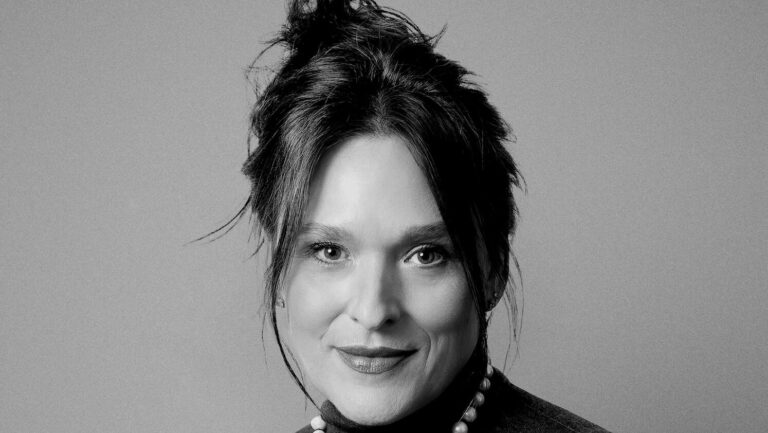
Pophouse Entertainment, the Sweden-based music investment firm co-founded by ABBA’s Björn Ulvaeus, has appointed Jessica Koravos as its new CEO, effective January 2026.

According to a press release issued on Friday (July 4),  Per Sundin, Pophouse’s current CEO, will remain in the role until Koravos joins in January 2026, and will “support a smooth and orderly process” before assuming a new role within the company.

The statement added that Sundin, who Pophouse said “has played a crucial role in shaping the company’s strategic direction and building a strong foundation for long-term success,” will transition to a new role “defined around his experience in and knowledge of the entertainment industry”.

Pophouse’s incoming CEO, Jessica Koravos, previously served as President of Oak View Group International, where she led international arena development projects, “navigating multiple high-value infrastructure investments and partnerships across global markets”.

Prior to that, Koravos was President of Andrew Lloyd Webber’s The Really Useful Group, managing global licensing and production for titles such as The Phantom of the Opera, Cats, and Jesus Christ Superstar.

Koravos was also a member of the Board of ABBA Voyage, the ABBA avatar show in London.

According to Pophouse, as a “highly regarded international business executive with extensive experience and a proven track record of expanding entertainment and live production ventures globally, [Koravos] is well-positioned to oversee Pophouse’s next phase of growth”.

News of the company’s leadership change arrives around three months after Pophouse announced that it had raised over EUR €1.2 billion (USD $1.3 billion) to invest in music catalogs and IP.

The Stockholm-based company’s debut fund, Pophouse Fund I, raised over €1 billion ($1.1 billion), reaching its hard cap and making it, Pophouse, claimed, “one of the largest first-time private equity funds to be raised in Europe in the last decade”.

Pophouse secured an additional €200 million ($216m) through dedicated co-investment vehicles, “providing investors the opportunity to invest alongside the Fund and participate in select transactions”.

The company said it had already deployed about 30% of the fund via partnerships with artists such as American rock band KISS, pop singer Cyndi Lauper, and Swedish electronic dance music artists Avicii and Swedish House Mafia.

Although Pophouse is most commonly associated with the wildly popular ABBA Voyage avatar show (operated by a separate UK-based holding company, Aniara Ltd.), the firm’s investment portfolio includes various other immersive productions like The Avicii Experience in Stockholm, Mamma Mia! The PartyABBA The Museum, and the soon-to-be-launched KISS avatar show in Las Vegas.

The company also said on Friday that it “has an exciting pipeline of new collaborations and creative projects in the works”.

The statement added that under Koravos’ leadership, Pophouse will be focused on “significantly expanding its portfolio and productions across the world, creating groundbreaking content at the intersection of music, entertainment, and technology”.

Pophouse noted that in her role as President of Oak View Group, Koravos established “a strong international management team” with operational hubs in London, Madrid, and Abu Dhabi.

Koravos was also responsible for overseeing the development and launch of the Co-op Live arena in the UK, now set to host the BRIT Awards’ move to Manchester in 2026.

Pophouse was founded by ABBA’s Björn Ulvaeus and EQT founder Conni Jonsson, and is chaired by Lennart Blecher, EQT’s Head of Real Assets.

“This leadership transition represents a pivotal moment in Pophouse’s evolution and underscores the company’s mission to redefine the entertainment landscape.”

Lennart Blecher, Pophouse

Lennart Blecher, Chair at Pophouse, commented: “This leadership transition represents a pivotal moment in Pophouse’s evolution and underscores the company’s mission to redefine the entertainment landscape.

“Jessica brings a proven track record of driving sustained growth across entertainment and live production ventures on a global scale, and her leadership in securing international licensing partnerships and delivering iconic IPs to audiences throughout Europe, Asia and the US aligns perfectly with our ambitious expansion goals – for example Mamma Mia! The Party and the upcoming KISS avatar show. I am truly thrilled to welcome Jessica to Pophouse.”

Blecher added: “I would like to thank Per for all he has contributed to put Pophouse firmly on the map. We are delighted that Per will continue to be a vital part of the team and we all at Pophouse look forward to continuing our collaboration.”

“I look forward to driving the future expansion and success of the business.”

Jessica Koravos

Jessica Koravos, incoming CEO of Pophouse, said: “I am truly delighted to be joining Pophouse at this exciting time.

“Having seen Pophouse’s tremendous growth – driven by their compelling strategy, powerful partnerships with global artists, inspiring Board and excellent team. I look forward to driving the future expansion and success of the business.”Music Business Worldwide

Hamas consulting with other groups on ceasefire proposal

0

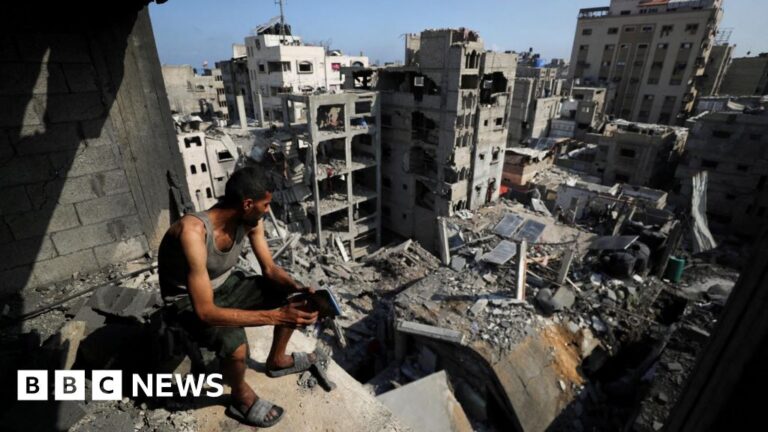
Hamas says it is consulting other Palestinian groups before giving a formal response to the latest proposal for a new Gaza ceasefire and hostage release deal put forward by the US.

President Donald Trump said on Friday morning that he expected to know within 24 hours whether Hamas has agreed to the plan.

He said earlier this week that Israel had accepted the conditions necessary for a 60-day ceasefire, during which the parties would work to end the 20-month war.

Meanwhile, the Israeli military is continuing to bomb targets across the Gaza Strip.

Overnight, at least 15 Palestinians were killed in strikes on two tents housing displaced people in the southern Khan Younis area, the local Nasser hospital said.

Thirteen-year-old Mayar al-Farr’s brother, Mahmoud, was among those killed.

“The ceasefire will come, and I have lost my brother? There should have been a ceasefire long ago before I lost my brother,” she told Reuters news agency at his funeral.

Adlar Mouamar, whose nephew Ashraf was also killed, said: “Our hearts are broken… We want them to end the bloodshed. We want them to stop this war.”

The Israeli military has not yet commented on the strikes, but did say its forces were “operating to dismantle Hamas military capabilities”.

In a statement issued early on Friday, Hamas said it was discussing with the leaders of other Palestinian factions the ceasefire proposal that it had received from regional mediators Qatar and Egypt.

Hamas said it would deliver a “final decision” to the mediators once the consultations had ended and then announce it officially.

The proposal is believed to include the staggered release of 10 living Israeli hostages and the bodies of 18 other hostages in exchange for Palestinian prisoners held in Israeli jails.

Fifty hostages are still being held in Gaza, at least 20 of whom are believed to be alive.

One of Hamas’s key demands is the resumption of unrestricted food and medical aid into Gaza, and the proposal reportedly says sufficient quantities would enter the territory immediately with the involvement of the United Nations and Red Cross.

It is said the plan would also include a phased Israeli military withdrawal from parts of Gaza.

Above all, Hamas wants a guarantee that Israeli air and ground operations will not resume after the end of the 60-day ceasefire.

The proposal is believed to say that negotiations on an end to the war and the release of the remaining hostages would begin on day one.

Donald Trump told reporters early on Friday that he expected to know “over the next 24 hours” whether the proposals would be accepted by Hamas.

The hope then would be the resumption of formal, indirect, talks ahead of a planned visit by Israeli Prime Minister Benjamin Netanyahu to Washington next week.

In the Israeli city of Tel Aviv, only 60km (40 miles) from Gaza, the families of the remaining hostages and their supporters held a rally outside the US embassy branch office, urging Trump to “make the deal” that would see them all released.

On the nearby beachfront, they laid out a giant banner featuring the US flag and the words “liberty for all”.

Among those who addressed the event was Ruby Chen, the father of Israeli-American Itay Chen. The 19-year-old soldier was killed during the Hamas-led attack on southern Israel on 7 October 2023 which triggered the war, and his body was taken back to Gaza as a hostage.

“I urge you Prime Minister Netanyahu to go to the US next week and bring back a deal that brings all the hostages home,” Mr Chen said. “There has to be a final, detailed agreement between Israel and Hamas.”

Keith Siegel, an Israeli American who was released in February during the last ceasefire after 484 days in captivity, also spoke.

“Many of my friends from Kibbutz Kfar Aza remain in captivity,” he said. “Only a comprehensive deal can bring them all home and create a better future for the Middle East.”

The primary concern for most Israelis is the fate of the remaining hostages and what might happen to them if the ceasefire does not happen and Netanyahu orders the Israeli military to step up its air strikes on Gaza.

There are plenty of reasons to hope, for these families, that the two sides can agree to a deal and achieve a lasting peace. But there is also anxiety, after the failure of previous efforts, that it might not happen.

On Thursday, Netanyahu promised to secure the release of all the remaining hostages during a visit to Kibbutz Nir Oz, a community near the Israel-Gaza border where a total of 76 residents were abducted on 7 October 2023.

“I feel a deep commitment, first of all, to ensure the return of all of our hostages, all of them,” he said. “We will bring them all back.”

He did not, however, commit to ending the war. He has insisted that will not happen until the hostages are freed and Hamas’s military and governing capabilities are destroyed.

The Israeli military launched a campaign in Gaza in response to the 7 October 2023 attack, in which about 1,200 people were killed and 251 others were taken hostage.

At least 57,130 people have been killed in Gaza since then, according to the territory’s Hamas-run health ministry.

Challenging Client

0


Client Challenge


JavaScript is disabled in your browser.

Please enable JavaScript to proceed.

A required part of this site couldn’t load. This may be due to a browser
extension, network issues, or browser settings. Please check your
connection, disable any ad blockers, or try using a different browser.