
15.1 C
New York
Tuesday, April 28, 2026
Home Blog Page 451

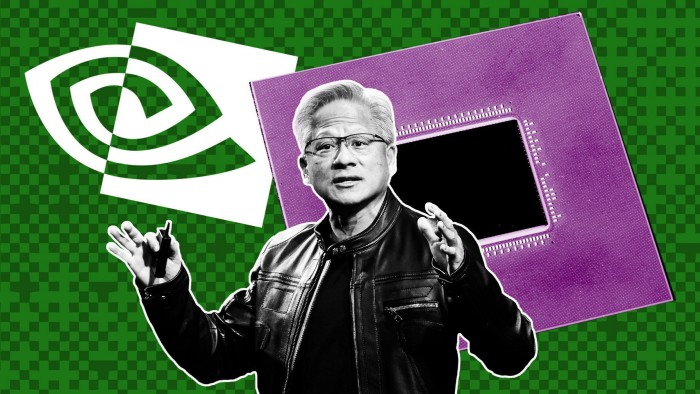
Nvidia shows strong growth despite uncertain outlook in China

0

Nvidia reported another quarter of strong growth on Wednesday in the face of market jitters about demand for artificial intelligence and how its China chip business will navigate geopolitical tensions between Washington and Beijing.

Booming sales of its AI chips have helped Nvidia withstand the hit to its business in China, and propelled it to become the world’s most valuable group by market capitalisation.

Chief executive Jensen Huang predicted spending on AI infrastructure would only increase in the coming years, as some investors question whether the pace of investment in chips and data centres is sustainable.

The $4tn tech giant said its revenue was $46.7bn for the quarter to July 28, up 56 per cent year on year and slightly above consensus estimates of $46.5bn, according to Visible Alpha.

Nvidia said it expected $54bn in sales for the current quarter, plus or minus 2 per cent, better than expectations of $53.8bn.

Despite the solid results, its shares fell 3 per cent in after-hours trading as the report left uncertainty over sales of Nvidia’s AI chips in China unresolved.

The Trump administration earlier this year blocked exports of the H20 chip, which Nvidia designed for the Chinese market. Nvidia then cut a deal to allow sales to resume in exchange for giving the US government 15 per cent of the revenues.

But it is still unclear how quickly these sales can recover.

Gene Munster, managing partner at Deepwater Asset Management, said the fact that Nvidia did not include AI chip revenue from China in its financial guidance meant the forecast disappointed some investors’ expectations.

“That $54bn doesn’t include the H20 — and I was shocked that they didn’t,” he said. Many Wall Street revenue estimates had factored in about $2bn in additional revenue for the current quarter after the export restrictions were lifted, he added.

Nvidia chief financial officer Colette Kress told analysts on Wednesday that the company was still waiting on the US government to publish a “regulation” codifying the deal struck earlier this month.

If these issues were resolved, Nvidia could ship between $2bn and $5bn of its H20 chips to China during the current quarter, Kress said, with a “select number” of Chinese customers having received licences in recent weeks.

The White House did not immediately respond to a request for comment.

Nvidia warned in an earnings filing that its agreement with the Trump administration could also “subject us to litigation, increase our costs and harm our competitive position”. Rival AMD has struck a similar deal.

Beijing has pushed back against Chinese companies using Nvidia chips, adding to the doubts over how much it will sell this year as wider trade negotiations between Washington and Beijing drag on.

Nvidia said that despite there being no revenue from the H20 in China during the quarter due to new US export controls, it had managed to sell $650mn of the chips to a customer outside of the country.

Its other revenue from customers whose billing locations are in China, which includes sales of its gaming chips, fell by 50 per cent from the previous quarter and was down 25 per cent year on year, to $2.8bn.

Nvidia’s stock has surged 35 per cent this year as of Wednesday’s close, helping drive gains in the broader market. But the shares have been sensitive to any negative news.

They took a hit last week during a widespread sell-off in companies linked to AI, after a negative report on the technology’s practical applications and comments by OpenAI chief executive Sam Altman about investors overhyping it. 

Nvidia’s growth has slowed relative to the astronomical figures it reported at the start of the AI boom two years ago.

Its future prospects depend on Big Tech groups such as Google and Amazon continuing their massive spending on AI hardware, alongside smaller cloud companies and governments.

Huang told analysts that the spending spree would continue. “The AI race is now on,” he said, adding that just four “hyperscaler” tech companies had doubled their “capex spend . . . to $600bn per year”.

The company’s next generation chip — known as “Vera Rubin” — is on track to ship next year. With customers building “ever greater-scale AI factories . . . we’ll be building millions and millions of Rubin GPU platforms”, Huang said.

More growth would come as other countries start to catch up to the US, which represents about 60 per cent of the world’s computing power, he predicted.

Global data centre revenue, which relates to Nvidia’s AI chip business, was $41.1bn, slightly under consensus estimates of $41.4bn. The slip was offset by better than expected revenue from its gaming segment.

Nvidia’s net income jumped 59 per cent from last year to $26.4bn, against forecasts of $23.5bn. Earnings per share were $1.08, while adjusted gross margin was 72.7 per cent, slightly above consensus estimates of 72.3 per cent.

Nvidia’s board has also authorised $60bn in share buybacks, up from the $50bn it announced during the same quarter last year.

The rollout of Blackwell Ultra, the latest generation of hardware using its most advanced Blackwell chips, was “ramping at full speed, and demand is extraordinary”, Huang said.

Blackwell hit technical snags early in its development due to the more complex infrastructure required to run ever-larger racks of interconnected chips.

Nvidia is working on a new chip based on Blackwell for the China market, that is more powerful than the H20 but still not as capable as its most advanced US chips. Trump has indicated that he is open to a similar revenue deal.


European leaders provide assistance to Moldova amid ongoing pressure from Russia

0

Leaders from France, Germany and Poland have travelled to Moldova to show support for the country’s accession to the EU and warn of Russia’s “relentless” efforts to undermine that ambition.

The visit comes as Moldova marks 34 years of independence from Moscow, declared as the Soviet Union fell apart.

But it is also taking place a month before critical parliamentary elections in which the EU and the Moldovan government fear pro-Russian elements could gain ground.

Flanked by European heads of state, Moldova’s pro-Western President Maia Sandu told her country that it proved EU membership was “not a distant dream, but a project we are working on”, one that is vital as a guarantee of security.

“The merciless war that Russia wages against Ukraine shows us daily that Europe means freedom and peace, whilst Putin’s Russia means war and death,” the president said.

Ukraine is close by, just across the border.

Last year Sandu called a referendum on enshrining the goal of EU membership in the constitution. The “yes” vote narrowly won.

Shortly after that vote, the president, who went to Harvard and used to work for the World Bank, won a second term after a tense second round.

There were allegations of Russian interference with evidence of everything from widespread disinformation campaigns to paying cash for votes, as our own team discovered on the ground.

Today, Germany’s Chancellor Friedrich Merz said that is because Moscow “is trying relentlessly to undermine freedom and prosperity in Moldova,” as Vladimir Putin attempts to return it to Russia’s fold.

In response, Sandu is focused on forging strong relations with Europe.

In Chisinau she laid out the red carpet for her guests, greeting each of the leaders in turn before leading them up steps lined by soldiers standing to attention in white, elaborately embroidered capes.

Inside, in front of EU flags, President Emmanuel Macron described membership of the bloc as the “clear and sovereign choice” of Moldova and said he was there to convey “a message of solidarity and confidence” in that process from France.

Donald Tusk recalled how Poland’s own journey from beneath Moscow’s shadow towards EU accession had been littered with challenges, but worth the work. “You have chosen the right path,” said the Polish prime minister. “You chose peace not war, and we support your aspirations.”

Moldova has been a firm supporter of Ukraine since the start of Russia’s full-scale invasion, fearful that its own land was also in Putin’s sights. Today, Merz said that Europe and the US were “putting everything” into trying to end the war there.

“We want to see the weapons in Ukraine finally to fall silent …ideally today…but not at any cost,” the chancellor warned. “We don’t want to see the capitulation of Ukraine. Such a capitulation would only buy time for Russia, and Putin would use that to prepare the next war.”

President Sandu’s party, PAS, are hoping that elections next month will give it a new mandate to push ahead with reforms and keep moving closer towards Europe, after the country began formal accession talks last year.

But polls suggest PAS will lose seats – and likely its majority – in parliament.

Which is why the president called in the European cavalry for Independence Day: keen to make Moldova’s path to EU membership as “irreversible” as she asserts.

Tencent Music Entertainment Group Files Form 144 for August 27th

0


Form 144 Tencent Music Entertainment Group For: 27 August

Israel initiates fresh military operations in Syria following attack that resulted in soldier casualties | Current Events

0

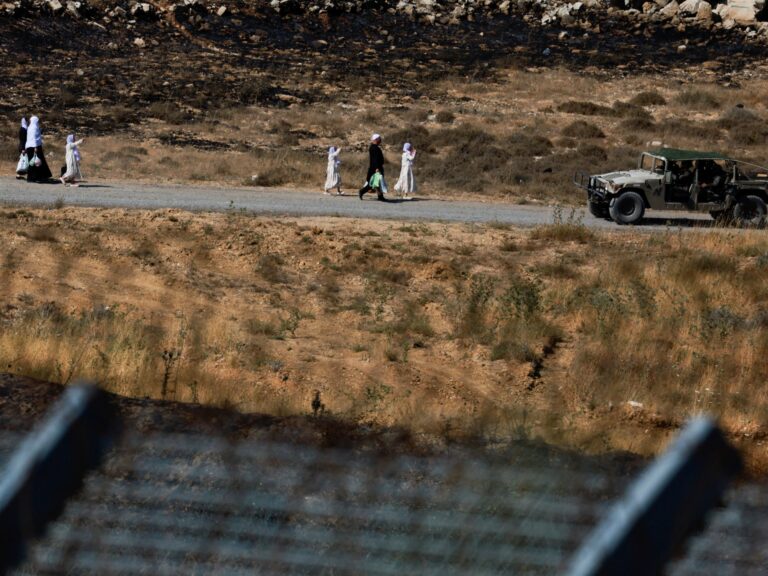
Local sources report an Israeli operation in Kiswa, where six soldiers were killed by Israeli drones strikes a day before.

Israeli forces have conducted a series of strikes on a former army barracks in Kiswa, southwest of the Syrian capital of Damascus, according to Syria’s state-run al-Ekhbariya TV.

Video verified by Al Jazeera’s Sanad fact-checking agency showed Israeli aircraft attacking sites in the village on Wednesday.

Meanwhile, a Syrian military source told Al Jazeera that the Israeli army carried out a landing operation in the barracks with the use of four helicopters.

According to the source, the Israeli army brought in dozens of soldiers and an unspecified amount of search equipment as it spent more than two hours at the site.

No clashes took place between the Israeli forces involved in the landing and the Syrian army forces.

The operation came a day after an Israeli drone strike killed six soldiers near Kiswa, and as Syrian officials in the government of interim President Ahmed al-Sharaa have increasingly accused Israel of seeking to expand its control in the region.

In a statement on Wednesday, Syria’s Ministry of Foreign Affairs called the strike “a gross violation of international law and the United Nations Charter”.

It added that the attack represented “a clear breach of the sovereignty and territorial integrity of the Syrian Arab Republic”.

Israel has launched hundreds of strikes targeting military sites and assets across Syria since the fall of former leader Bashar al-Assad in December. It has also expanded its occupation of the Syrian Golan Heights by seizing the demilitarised buffer zone, a move that violated a 1974 disengagement agreement with Syria.

On Monday, Syria’s Foreign Ministry said that Israel had sent 60 soldiers to take control of an area inside the Syrian border around Mount Hermon, near a strategic hilltop close to the border with Lebanon.

Syrian Minister of Foreign Affairs Asaad al-Shaibani decried the “military incursion” as part of an effort by Israel to advance its “expansionist and partition plans”.

The latest Israel operations follow deadly clashes in the Druze-majority Syrian province of Suwayda, where 1,400 people were killed in a week of sectarian violence in July.

Israel has since attacked Syrian troops and bombed the heart of the capital, Damascus, under the pretext of protecting the Druze people.

Nvidia surpasses expectations on earnings, but stock declines due to absence of H20 sales to Chinese customers.

0

Nvidia recorded no China sales revenue for H20 chips and just narrowly beat Wall Street estimates as the AI chipmaker reported quarterly earnings Wednesday. Tied up H20 chip inventory intended to be sold to China before U.S. intervention in April was sold elsewhere, the company said.

Revenue increased 56% from the same period a year ago to $46.74 billion, exceeding Wall Street’s projection of $46.52 billion, per data compiled by Visible Alpha. Profits came in at $26.4 billion, a 40.8% increase from $18.78 billion last quarter. Nvidia posted diluted earnings per share at $1.08, beating projections of $1.02 for the second quarter. Nvidia’s gross margins grew to 72.4%, up significantly from 61% last quarter.

“Production of Blackwell Ultra is ramping at full speed, and demand is extraordinary,” CEO Jensen Huang said of the tech behemoth’s next-generation AI chip, which is used in data centers globally, in the earnings release. “The AI race is on, and Blackwell is the platform at its center.”

The top-line results received a lukewarm reaction from investors. Shares edged down over 3% to around the $175 mark in extended trading Wednesday evening.

“(The stock movements are) probably just an initial reaction to a so-so number,” Scott Bickley, advisory fellow at Info-Tech Research Group told Fortune before the earnings call. “Which is kind of insane that we’re viewing $46.7 billion in a quarter” as ‘so-so,’ he said.

The company’s automotive and robotics segment grew the most at 69% year-over-year. 

Nvidia has been navigating trade restrictions on H20 shipments to China since April, and the company said no H20 chip revenue to China was included in the second-quarter figure. The company estimated $2 billion to $5 billion in value of H20 chips could be shipped to China this quarter, and that some China buyers received licenses over the past few weeks for these transactions.

“Expectations were sky-high, but Nvidia exceeded them again,” Michael Smith, senior portfolio manager and head of the growth equity team at Allspring Global Investments told Fortune. Allspring owns in Nvidia in some of the funds. “Margins are rising as Blackwell ramps, China remains a massive untapped opportunity post-export controls, and a $60 billion buyback is an extra sweetener amid record free cash flow.”

Introducing the 2025 Fortune Global 500, the definitive ranking of the biggest companies in the world. Explore this year’s list.

The Experience of a Journalist Working in Gaza

0

Amira Mhadhbi

BBC News Arabic

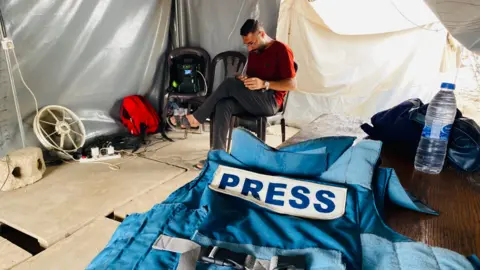
BBC A man sitting on a chair in a tent, surrounded by equipment used by journalists, including press flak jacket and electronic devices etcBBC

Journalists in Gaza work and sleep in tents near various hospitals

“I never imagined that one day I would be living and working in a tent, deprived of the most basic human necessities – even water and a bathroom.

“It’s more like a greenhouse in the summer and a refrigerator in the winter,” journalist Abdullah Miqdad told the BBC.

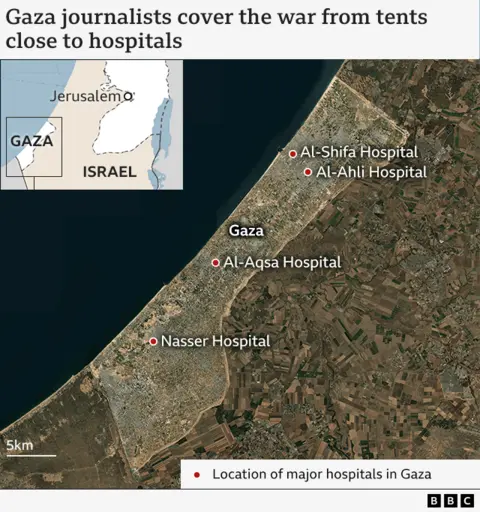
After 22 months of war in Gaza, most journalists find themselves working in tents around hospitals in order to access the electricity and reliable internet connection they need to do their jobs.

Power has been cut off across Gaza, so hospitals, whose generators are still functioning, provide the electricity to charge phones and equipment, and offer high points with better mobile reception.

But working at hospitals has not afforded them safety, with Israeli strikes on hospitals and their compounds killing a number of journalists during the conflict.

On Monday, five journalists were among at least 20 people killed in a double Israeli strike on Nasser hospital in the southern city of Khan Younis.

A map showing the location of the major hospitals in Gaza

International news outlets, including the BBC, rely on local reporters within Gaza, as Israel does not allow them to send journalists into the territory except on rare occasions when they are embedded with Israeli troops.

‘As journalists, we feel we are targeted all the time’

At least 197 journalists and media workers have been killed since the war in Gaza began following the Hamas-led attack on Israel on 7 October 2023 – 189 of them Palestinians killed by Israel in Gaza, according to the US-based Committee to Protect Journalists (CPJ).

Ahed Farwana of the Palestinian Journalists Syndicate in Gaza told the BBC that he and his colleagues felt targeted by Israeli forces “which leaves us in constant fear for our own safety and that of our families”.

After nearly two years of war, journalists are exhausted from non-stop work, but demand for news coverage persists.

This has opened the door for young people in Gaza, some of whom had never worked in journalism before, to become reporters and photojournalists.

Some journalists work officially for local or international media outlets, but many are hired on temporary contracts. This means their employment is less predictable and the protective equipment, insurance, and resources they receive varies greatly.

“Every journalist in the world has the right to enjoy international protection. Unfortunately, the Israeli military does not treat journalists this way, especially when it comes to Palestinian journalists,” Ghada al-Kurd, a correspondent for German magazine Der Spiegel, told the BBC (for which she also sometimes works).

EPA, AP, Reuters The five journalists killed in an Israeli double strike on Nasser hospital - individual portraits form a composite image - four of the journalists are wearing dark blue press flak jackets, one is wearing a helmet and holding a large cameraEPA, AP, Reuters

The five journalists killed in Monday’s double Israeli strike on Nasser hospital: Husam al-Masri, Mariam Abu Dagga, Ahmed Abu Aziz, Mohammad Salama and Moaz Abu Taha

Israel has repeatedly denied that its forces target journalists.

However, the Israeli military said it did target Al Jazeera correspondent Anas al-Sharif in his media tent in Gaza City on 10 August, in a strike that also killed three other Al Jazeera staff, two freelancers, and one other man. The military alleged Sharif had “served as the head of a terrorist cell in Hamas”, which he had denied before his death.

The CPJ said Israel had failed to provide evidence to back up its allegation, and accused Israeli forces of targeting journalists in a “deliberate and systematic attempt to cover up Israel’s actions” in Gaza.

Reuters cameraman Husam al-Masri was killed in the first strike on Nasser hospital on Monday. The second strike, minutes later, killed rescue workers and four other journalists who had arrived at the scene – Mariam Abu Dagga, a freelancer working with the Associated Press; Al Jazeera cameraman Mohammad Salama; freelance journalist Ahmed Abu Aziz and freelance video journalist Moaz Abu Taha.

Israeli Prime Minister Benjamin Netanyahu described the incident as a “tragic mishap”.

The Israeli military said on Tuesday that, after an initial inquiry, “it appears” troops struck “a camera that was positioned by Hamas in the area of the Nasser Hospital that was being used to observe the activity of [Israeli] troops”. It also identified six people whom it said were “terrorists” killed in the strikes. None of the five journalists were among them.

The military provided no evidence and gave no explanation for the second strike.

Two female journalists working inside the Journalists Syndicate tent - one is typing on a mobile phone, the other sits in front of a large fan

Journalists work inside the tent of the Palestinian Journalists Syndicate, whose secretary in Gaza says they feel “constantly targeted”

“When you’re working inside a tent, you never know what might happen at any moment. Your tent or its surroundings could be bombed – what do you do then?” says Abdullah Miqdad, who is a correspondent for Qatar-based Al-Araby TV.

“In front of the camera, I have to be highly focused, mentally alert, and quick-witted despite the exhaustion. But the harder part is staying aware of everything happening around me and thinking about what I could do if the place I’m in is targeted,” he told the BBC.

‘We ourselves are hungry and in pain’

Last Friday, famine was confirmed in Gaza City for the first time by a UN-backed body responsible for monitoring food security.

The Integrated Food Security Phase Classification (IPC) reported that more than 500,000 people in the Gaza Strip were facing “starvation, destitution and death”.

The journalists in Gaza are suffering the same extreme hunger as those they are covering.

“A cup of coffee mixed with ground chickpeas, or a glass of unsweetened tea, might be all you can consume during an entire workday,” says independent journalist Ahmed Jalal.

“We suffer from severe headaches and fatigue, unable to walk from the sheer hunger,” he told the BBC, “but we still carry on with our work.”

Ahmed has been displaced many times with his family, yet each time he has continued his journalistic work while trying to secure food, water and shelter for his family.

“My heart breaks from the intense pain when I report the killing of fellow journalists, and my mind tells me I might be next… The pain consumes me inside, but I hide it from the camera and keep working.”

“I feel suffocated, exhausted, hungry, scared – and I can’t even stop to rest.”

‘We have lost the ability to express our feelings’

Ghada Al-Kurd Ghada Al-Kurd stands in front of a mass of tents with the sea in the background. She is wearing a blue press flak jacket and has glasses on her head.Ghada Al-Kurd

Ghada Al-Kurd is a correspondent for the German magazine Der Spiegel and also works with other international organisations, including the BBC

Ghada Al-Kurd says two years of covering news about death and hunger has changed her.

“During this war, we have lost the ability to express our emotions,” Ghada told the BBC. “We are in a constant state of shock. Maybe we will regain this ability after the war ends.”

Until that day comes, Ghada holds back her fear for her two daughters and her grief for her brother and his family, whose bodies she believes are still buried under rubble following an Israeli strike in northern Gaza early in the war.

“The war has changed our psyches and personalities. We will need a long period of healing to return to who we were before 7 October 2023.”

A media tent in Gaza, with other tents visible in the background.

The Solidarity Media Center – an example of a tent Gazan journalists are living and working in

Photojournalist Amer Sultan in Gaza assisted in preparing the report.

Anthropic reaches settlement with authors in lawsuit over pirated books, potentially benefiting Universal Music Group’s legal team

0

Anthropic has reached a settlement with US authors who accused the AI company of illegally using their copyrighted books to train its Claude chatbot.

The resolution of the authors’ case could prove significant for Universal Music Group, Concord, and ABKCO, who are pursuing their own copyright lawsuit against the $61 billion-valued AI company.

Evidence from the authors’ case has revealed that Anthropic downloaded millions of files from pirate websites to gather training data.

How the authors’ case helps the music publishers

The music publishers originally sued Anthropic in 2023, alleging that its Claude chatbot regurgitated copyrighted lyrics, indicating the company had trained the chatbot on their lyrics without permission.

However, evidence that emerged during the authors’ lawsuit has given the music publishers new ammunition. In the authors’ case, Judge William Alsup found that Anthropic torrented 5 million files from the pirate online library LibGen, 2 million files from Pirate Library Mirror (PiLiMi), and nearly 200,000 records in the Books3 collection.

Crucially for the music publishers, lawyers discovered that LibGen “contains well over a thousand illegal copies of sheet music, songbooks, and other lyric-related books,” including works specifically involved in their lawsuit such as Tiny Dancer (written by Elton John and Bernie Taupin), A Thousand Miles (written by Vanessa Carlton), and 7 Rings (recorded by Ariana Grande).

The music publishers alleged earlier this month that Anthropic hid the fact that it used BitTorrent to pirate these materials, only discovering this through the separate authors’ lawsuit.

“Inexplicably, Anthropic never disclosed to publishers in this case that it had used BitTorrent to copy books containing their works from pirate sites in this manner, despite publishers’ discovery requests calling for exactly this type of information,” lawyers for the music publishers wrote in their recent court filing.

The music publishers are now seeking to amend their complaint to include new charges against Anthropic for distributing copyrighted lyrics without a license, not just using them for training.

Details of the authors’ settlement

“The Parties have negotiated a proposed class settlement intended to resolve the pending class action litigation in the district court. The Parties memorialized the core terms of that proposed settlement in a binding term sheet dated August 25, 2025,” according to a court document filed on Tuesday (August 26), which you can read in full here.

Financial terms of the settlement were not disclosed. Judge Alsup ordered the parties to seek preliminary approval of their settlement by September 5.

In a statement issued to Reuters, the authors’ attorneys said: “This historic settlement will benefit all class members. We look forward to announcing details of the settlement in the coming weeks.”

Syracuse University College of Law Professor Shubha Ghosh told Reuters that the settlement could be “huge” in setting a precedent in AI litigation.

Ghosh said: “The devil is in the details of the settlement and future litigation about the terms of the settlement.”

The judge’s mixed ruling

In June, US District Judge William Alsup delivered a mixed decision in the authors’ case. He ruled that Anthropic’s use of copyrighted books to train AI, without explicit permission to do so, counted as “fair use.”

However, he also ruled that “Anthropic had no entitlement to use pirated copies for its central library. Creating a permanent, general-purpose library was not itself a fair use excusing Anthropic’s piracy.”

This ruling could be significant for the music publishers’ case, as it establishes that while AI training may be fair use, obtaining copyrighted material through piracy is not protected.

Before Anthropic reached a settlement, Judge Alsup on August 11 rejected Anthropic’s motion to stay the case while the AI company pursues appeals of earlier rulings.


The resolution between Anthropic and the book authors comes as more AI companies face copyright litigation over their training models.

In June last year, the major music companies sued Suno and Udio in the US for allegedly training their systems using the companies’ recordings without permission – an accusation they pretty much admitted to in court filings last August.

Suno and Udio faced another lawsuit in June, with country musician Tony Justice filing class-action lawsuits against both controversial AI music generators.Music Business Worldwide

Indian Exports Face 50% Tariffs from U.S.

0

new video loaded: Indian Exports Hit With 50% U.S. Tariffs

By Monika Cvorak

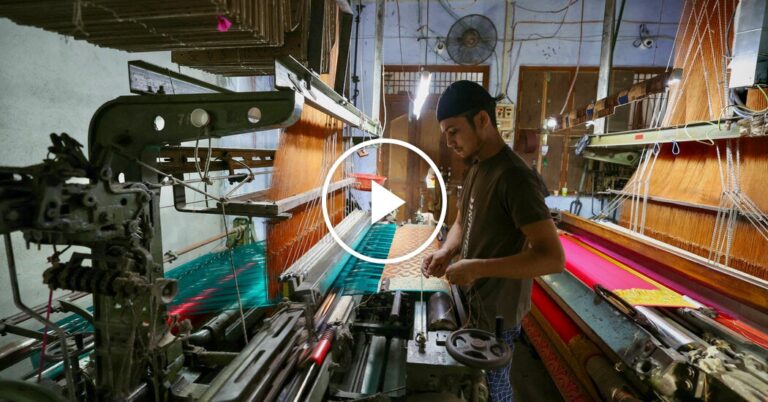
Traders in India expressed concern after President Trump on Wednesday doubled the tax on nearly all goods imported from the subcontinent. The 50 percent rate, half of which is punishment for India’s buying of Russian oil, is expected to damage many Indian exporters.

Recent episodes in India

Lib Dem leader refuses to attend UK state banquet for Trump in solidarity with Gaza protest

0

Unlock the White House Watch newsletter for free

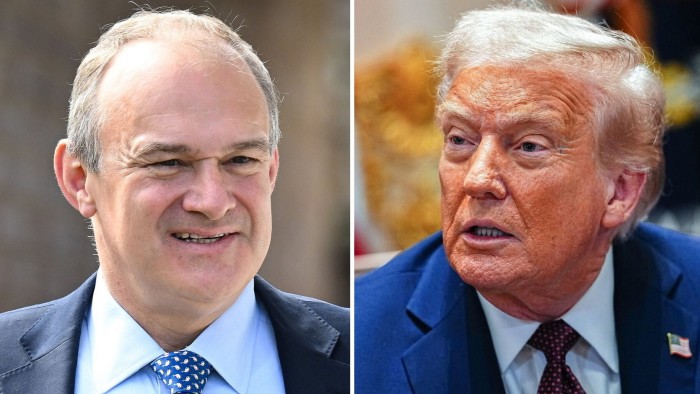
Sir Ed Davey, Liberal Democrat leader, is to boycott a UK state banquet for Donald Trump next month in protest over the US president’s alleged “complicity” in the humanitarian crisis in Gaza.

King Charles will host the banquet at St George’s Hall in Windsor Castle during Trump’s second state visit to Britain, which is taking place between September 17 and 19.

Davey, a long-standing critic of the US president, announced on Wednesday he would not attend the event, claiming Trump and Prime Minister Sir Keir Starmer were averting their eyes from the Gaza crisis. A UN-backed panel last week declared a famine in the Palestinian territory for the first time.

The state banquet involving Trump will be held just days before the start of the Liberal Democrat annual conference in Bournemouth on September 20, so Davey will hope his stance will generate some publicity for his party.

Davey said: “Boycotting the banquet is the one way I can send a message to Donald Trump and Keir Starmer that they can’t close their eyes and wish this away.”

Davey’s intervention came just hours before Trump was due to convene talks at the White House on the situation in Gaza, including on ways to increase humanitarian aid to the territory and on its post war future.

The Liberal Democrats, who have 72 MPs, have become Britain’s leading “anti-Trump” party.

Starmer’s Labour government has been keen to hold the US president close, while the Conservatives and Reform UK have been supportive of Trump.

Davey said turning down an invitation from the King was an agonising decision and suggested he and his wife Emily had sought divine guidance.

“Emily and I have spent all summer thinking about this and have prayed about it,” Davey added. “There is no honour like an invitation from the King and not to accept it goes against all of our instincts.”

The Lib Dems said Trump was guilty of “complicity in the humanitarian disaster in Gaza” and Davey said: “If Donald Trump tells [Israeli Prime Minister] Benjamin Netanyahu to stop this, it ends tomorrow.”

About 150 guests, including politicians and diplomats, typically attend state banquets during official visits by world leaders to the UK.

Priti Patel, shadow foreign secretary, said Davey’s boycott was an act of “deep disrespect” to the King and demonstrated “appalling judgment”.

“America is our closest ally and security partner, and the world’s biggest economy,” she added.

Palestinian health officials have said Israel’s military offensive in Gaza has killed more than 62,000 people in the territory.

Israel was responding to Hamas’s October 7 2023 attack on southern Israel, during which militants killed 1,200 people and took a further 250 hostage, according to Israeli officials.

North Carolina Welcomes Breaststroke/IMer Cate Pawlaski to 2026 Recruiting Class

0

By Terin Frodyma on SwimSwam

Fitter and Faster Swim Camps is the proud sponsor of SwimSwam’s College Recruiting Channel and all commitment news. For many, swimming in college is a lifelong dream that is pursued with dedication and determination. Fitter and Faster is proud to honor these athletes and those who supported them on their journey.

Cate Pawlaski of Edina Swim Club and Andover, MN, has committed to the University of North Carolina, joining the Tar Heels’ class of 2030. 

Extremely excited to announce my commitment to continue my athletic and academic career at University of North Carolina! Thank you to my coaches, friends, and family for helping me during this process! Go Heels!!🩵🐏

The Andover High School graduate recently took home gold in the 50 breaststroke (32.16) at the NCSA Summer Championships (LCM) at the end of July, setting a new lifetime best on the way to gold. At those championships, she added a multitude of top eight finishes, including a 4th place finish in 200 IM (2:18.32, her fastest time this season), 5th in the 100 breast (1:11.55), and a pair of 6th place finishes in the 200 breast (2:37.33) and 400 IM (4:54.95, a new lifetime best).

In December, Pawlaski raced in four events at the Toyota US Open Championships (SCY). There, she touched 7th in the 400 IM in 4:18.12, swimming a lifetime best in her top finish of the meet. She also posted a pair of top 15 performances in the 200 IM (11th, 2:01.52) and 200 breast (15th, 2:16.88).

Her best 100 breast time came from the Minnesota Senior State meet in 2022, where she touched in 1:01.58, nearly a second and a half faster than the rest of the field at age 13. This time still stands as her only swim under 1:02.

Best Times SCY:

  • 100 Breast: 1:01.58
  • 200 Breast: 2:14.88
  • 200 IM: 2:00.26
  • 400 IM: 4:18.12

The North Carolina women finished 6th at the ACC Swimming and Diving Championships. With Pawlaski’s best times, her 100 breast would have been good enough for the ‘C’ final, 29th in the 400 IM, 30th in the 200 breast, and 35th in the 200 IM. 

Pawlaski’s 100 breast is fast enough to score at ACCs, an event that is already proven to be strong for the Tar Heel women, scoring 42 points last season in the event. UNC returns their 2nd and 3rd fastest performers in Samantha Armand (59.94) and Ava Muzzy (1:01.90), each will be entering their junior seasons and will be seniors by the time Pawlaski gets on campus. 

Pawlaski may opt for the 400 IM over the 200 IM for her 3rd conference event, based on where she would have stood at the meet last season, and that the 400 IM was a stronger showing for the Tar Heels at ACCs, earning 41 points compared to the 200 IM’s 31. Pawlaski would have had the 6th fastest 400 IM time last season, compared to her 200 IM, which would have been 7th.

Pawlaski is the youngest sister of Emily Pawlaski, who was a four-year swimmer at LSU, graduating last season with her degree in biochemistry. 

The Tar Heels add Pawlaski to their 2026 recruiting class that includes Nehir Oner, Tiffany Murillo, Morgan Farlow, Defne Tanig, and Kenzie Sellars

If you have a commitment to report, please send an email with a photo (landscape, or horizontal, looks best) and a quote to Recruits@swimswam.com.

About the Fitter and Faster Swim Tour 

Fitter & Faster Swim Camps feature the most innovative teaching platforms for competitive swimmers of all levels. Camps are produced year-round throughout the USA and Canada. All camps are led by elite swimmers and coaches. Visit fitterandfaster.com to find or request a swim camp near you.

FFT SOCIAL

Instagram – @fitterandfasterswimtour
Facebook – @fitterandfastertour
Twitter – @fitterandfaster

FFT is a SwimSwam partner.

Read the full story on SwimSwam: North Carolina Adds Breaststroke/IMer Cate Pawlaski to 2026 Recruiting Class