
3.2 C
New York
Saturday, March 28, 2026
Home Blog Page 693

Boulder assault raises fresh safety worries for Jewish communities in the US

0

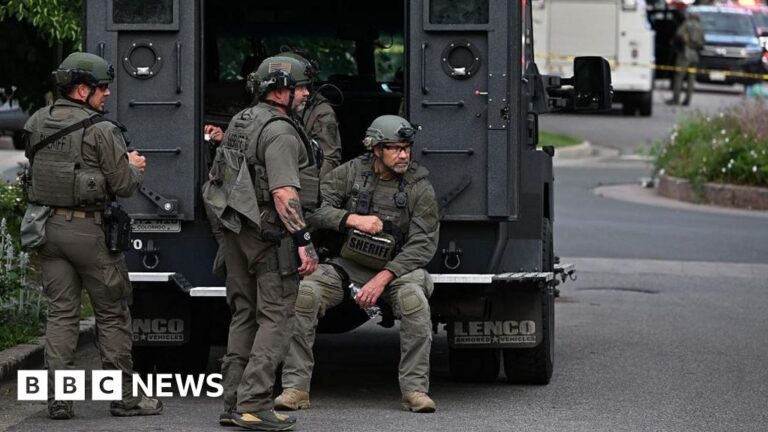
On Sunday, a group gathered in Boulder, Colorado, to raise awareness for hostages held in Gaza was attacked, leaving 12 people injured.

The suspect, Mohammed Sabry Soliman, accused of throwing incendiary devices at them, allegedly planned the attack for a year, and told police he wanted to “kill all Zionist people,” according to court documents.

It was the latest in a string of attacks against Jewish people and institutions, ratcheting up anxiety among those in North America’s Jewish community who see these incidents as signs of growing antisemitism in the US.

The Boulder attack occurred just weeks after a suspect shot and killed a couple outside the Capitol Jewish Museum in Washington, DC. They were later identified as employees of the Israeli embassy who had been attending an event at the museum. In April, the official residence of Pennsylvania governor Josh Shapiro was set on fire, just hours after the Jewish lawmaker celebrated the first night of Passover.

“Jews are feeling the impact and are more afraid than they were two weeks ago, or that fears that existed in some communities a few weeks ago are more heightened,” said Adina Vogel Ayalon of J Street, a pro-Israel advocacy group that’s critical of the war and has called for a ceasefire in Gaza.

“These types of hate crimes are not distinguishing between where you fall on the political spectrum about the war” between Israel and Hamas, Ms Ayalon said. “And that is something very unsettling.”

Israel has faced sustained international criticism over its military actions in Gaza, which it undertook after Hamas attacked the country on 7 October 2023, killing about 1,200 people – mostly civilians – and taking 251 hostages.

Over 50,000 people have been killed in Gaza since the start of the war, according to the territory’s Hamas-run health ministry. The statistics do not distinguish between civilians and Hamas fighters, and the BBC and other international media organisations are blocked by Israel from entering Gaza to verify.

But a United Nations report that assessed Gazan deaths during a six-month period found nearly 70% of verified victims were women and children. Throughout the conflict, human rights experts have raised the alarm of widespread hunger, disease, and displacement within Gaza.

The war also has become a divisive political issue in the US. Pro-Palestinian protests across university campuses and in major cities have ignited greater debates over education and free speech. There are religious, generational, and partisan divides within the American Jewish community about support for Israel and the question of Palestinian statehood.

But the attacks in Boulder and Washington DC, struck a broader nerve because they crossed a “clear red line between legitimate free speech and political violence,” Ms Ayalon said.

Boulder’s attack has drawn condemnation outside the Jewish community.

“Acts of antisemitism have no place in our society,” the Muslim Public Affairs Council condemned the Boulder attack in a statement. “This violent assault is not only an attack on a specific community but a direct threat to the values of pluralism, dignity, and safety for all people of faith. As Muslims, our faith calls us to speak out against injustice and to uphold the sanctity of every human life.”

The group targeted in Boulder, Run For Their Lives, holds weekly meetings and marches across the country to call for the release of the remaining hostages taken to Gaza.

“The premise of the group is to peacefully raise awareness of the hostages. We’re apolitical, we’re not protesting anything,” said global coordinator Shira Weiss.

Many of the group’s members are Jewish and support Israel, but those are not requirements for participation.

“We get people from all walks of life – who vote Republican, Independent, Democrat, who support the Israeli government, or don’t support the Israeli government,” Ms Weiss said.

Safety has always been a top priority for group chapters, she said, but they “never thought such a violent attack would happen.”

Jewish communities and institutions across the US have long required security, but many bolstered their defences after a shooter espousing right-wing antisemitic conspiracy theories murdered 11 worshippers at a Pittsburgh, Pennsylvania synagogue in 2018. The following April, another shooter attacked a synagogue in Poway, California, killing one person and injuring three others.

Those conversations are again happening in the wake of the Boulder incident.

“The attacks, especially given the succession of attacks in a short period of time have made every Jewish American question their security, whether it’s their personal security or the security of Jewish institutions that they visit,” said Haliey Soifer, CEO of the Jewish Democratic Council of America.

“There’s a sense that what has occurred in DC and Boulder could have happened anywhere, could have happened to anyone.”

The Jewish Colorado organisation announced a fundraiser to support increased security for Boulder’s Jewish community, as well as financial and trauma support for victims of the attack. Its goal is $160,000.

Rabbi Dan Moskovitz of Temple Sholom in Vancouver, Canada frequently joins Run For Their Lives events and plans to continue advocating for the hostages in Gaza.

But he worries the Boulder attack would not be an isolated incident.

“It’s only going to inflame more radicalisation,” he said. “It’s only going to inspire more people to do those things.”


Heir of Red Bull transfers $1.1 billion stake to trust firm based in Geneva

0

© 2025 Fortune Media IP Limited. All Rights Reserved. Use of this site constitutes acceptance of our Terms of Use and Privacy Policy | CA Notice at Collection and Privacy Notice | Do Not Sell/Share My Personal Information
FORTUNE is a trademark of Fortune Media IP Limited, registered in the U.S. and other countries. FORTUNE may receive compensation for some links to products and services on this website. Offers may be subject to change without notice.

Rankings of Watch List Players for the Class of 2027

0

NINA APONTE

New Jersey – Defense/Midfield
Saint Joseph Academy
Spirit of USA

JILLIAN BRESLIN

New Jersey – Defense
West Essex High School
NJ Grit

MADELINE BUCKLEY

Virginia – Defense
Jamestown High School
Focus

CAROLINE CAMPBELL

Missouri – Midfield/Forward
Westminster Christian Academy
Gateway

CASEY CAPRIOTTI

New Jersey – Midfield/Forward
Camden Catholic High School
Spirit of USA

LINDSAY CATCHPOLE

New Jersey – Forward
Madison High School
Centercourt

KAYLA CHUDGAR

Illinois – Forward
New Trier High School
Windy City

CAELEY CLOUGH

Connecticut – Defense/Midfield
Sacred Heart Greenwich
AGH

JULIA CONFORTI

New Jersey – Midfield
West Essex High School
NJ Grit

TESSA CONNOR

New Jersey – Midfield
Eastern Regional High School
Uprise

MAE CONROY

Ohio – Goalkeeper
Thomas Worthington High School
FH Life

AMHERST “LUVY” DANIELSON

New Hampshire – Midfield
Phillips Exeter Academy
Seacoast

MEADOW D’ANNIBALE

New Jersey – Forward
Newton High School
Centercourt Elite

GIANNA DECESARIS

Pennsylvania – Defense/Midfield
Lake-Lehman High School
Electric Surge

CAROLINE DELLIN

Illinois – Midfield
New Trier High School
Windy City

LUCIA DEMCSAK

Virginia – Forward
Independence High School
Metro HC

LIZZY EISNER

Texas – Forward/Midfield
Awty International School
Texas Pride

KAYLA GOCKLEY

Pennsylvania – Defense
Warwick High School
Next Level

CAITLIN GORMAN

New Jersey – Midfield/Forward
Montclair High School
Centercourt Elite

SARA GRAVES

Massachusetts – Midfield
Pingree School
NorthEast Elite

TESS HANKINS

Pennsylvania – Forward
Mount St. Joseph Academy
WC Eagles

COURTNEY HELTZEL

Pennsylvania – Midfield
Northern York High School
Central Penn

MALLORY JERLECKI

Missouri – Forward
MICDS
Gateway

SAMANTHA KIM

Virginia – Midfield
National Cathedral School
Next Level

ADDISON LAMB

Maryland – Midfield
Severn School
Freedom HKY

DYLAN LARSON

New Jersey – Defense/Midfield
Oak Knoll School
New Heights

ELIZA LEWIS

Kentucky – Goalkeeper
Collegiate School
IFHCK

SOPHIA LIANOS

Virginia – Goalkeeper
Bishop O’Connell High School
Washington Wolves

CASEY MCCORMICK

Pennsylvania – Forward
Academy of Notre Dame de Namur
WC Eagles

MOLLY MCGINN

Pennsylvania – Midfield
Springside Chestnut Hill Academy
Mainline Mayhem

RYLIE MICHAEL

Pennsylvania – Defense
Lower Dauphin High School
PA Revolution

LAUREN PELIKAN

Missouri – Defense/Midfield
Villa Duchesne
Gateway

ALIVIA PUFPAF

Michigan – Defense/Midfield
Saline High School
Pinnacle

ELLE PUFPAF

Michigan – Midfield
Saline High School
Pinnacle

NOORA QURESHI

Texas – Midfield/Forward
Greenhill School
Lonestar

PEYTON RAUFER

Virginia – Midfield
Langley High School
Metro HC

KADYN RHOADS

Pennsylvania – Forward
Oley Valley High School
High Styx

OLIVIA ROLLINS

Michigan – Defense
Pioneer High School
Pinnacle

WHITNEY ROUSSEAU

Connecticut – Forward
Sacred Heart Greenwich
AGH

MIA RYAN

Missouri – Forward
St. Joseph’s Academy
Gateway

MEAGHAN SHEA

New Hampshire – Midfield
Pinkerton Academy
NorthEast Elite

FIONA SOKORAI

New Jersey – Forward
Seneca High School
Uprise

ANJA SPEERS

Virginia – Defense/Midfield
Norfolk Academy
Saints

SIDNI TEMPLETON

Pennsylvania – Midfield
Wilson High School
PowerHouse

PAISLEY TESTA

New Jersey – Forward
North Hunterdon High School
Omega

ANASTASIA TSATSARONIS

Delaware – Forward
The Tatnall School
H20

UMI VAN DER VEEN

Texas – Midfield
Awty International School
Texas Pride

MEGHAN WALKER

Maryland – Forward
Glenelg High School
Warhawks

ANGIE WEBB

Maryland – Midfield
Saints Pete & Paul High School
TC Shore

TESSA ZWICKER

Missouri – Goalkeeper
John Burroughs School
Aim

The post Class of 2027 Watch List Player Rankings appeared first on MAX Field Hockey.

Transforming Your Backyard into a Geothermal Energy Source Using Mini-Tunnelling Technology

0

Underground heat increases as we go deeper into the Earth, offering an almost limitless energy source alongside other renewable alternatives. In some areas of the Earth’s crust, such as Iceland—where geothermal wells are a common energy source—high temperatures are reached at depths of less than one kilometre. This heat generates steam, which can be used for heating systems or to drive turbines.

However, extreme temperatures are not necessary for a domestic geothermal system designed to maintain a comfortable indoor temperature year-round. One company is now exploring the potential of shallow boreholes with a portable tunnelling machine that can be used almost anywhere—from a garage to a backyard.     

What are geothermal wells?

A geothermal well is a borehole designed to harness the Earth’s natural heat for power generation or climate control. Typically, these boreholes extend to underground layers where temperatures are higher, capturing geothermal energy to produce electricity, heating, or cooling in a sustainable way.

In terms of depth, geothermal wells can vary greatly—from shallow heat exchange systems with boreholes only a few metres deep to wells that reach several kilometres for high-enthalpy installations, where heat and pressure generate steam to drive a turbine.

Most common types of geothermal wells:

1. Shallow or low-enthalpy wells

  • Primarily used for heating and cooling buildings via heat pumps.
  • Typically drilled to depths of a few dozen metres.

2. Medium-enthalpy wells

  • Ideal for industrial processes and district heating.
  • Reach depths of several hundred metres.

3. High enthalpy wells

  • Can extend between 1,000 and 3,000 metres (or more).
  • Used for large-scale electricity production by extracting steam and high-temperature geothermal fluids.

A mini-tunneling machine in your garden

If you follow our website, you may have come across our discussions on tunnel boring machines (TBMs)—the massive metal worms that carve through the earth to create tunnels for vehicles and passengers, such as the Quito Metro or São Paulo’s Line 6. These machines can weigh up to 5,000 tonnes and require complex operations, typically featuring a cutting head, a propulsion system, and onboard personnel to control them.

Swiss company Borobotics has taken a different approach, developing a miniature tunnel boring machine for geothermal exploration. While its design is similar to conventional TBMs, the differences are substantial. The machine, named Grabowski after the cartoon mole, is less than 14 centimetres in diameter and only 2.8 metres long. Moreover, its “worm” is autonomous and requires less than eight square metres of space to operate. In fact, both the worm and its surface equipment fit into a small van, and a single operator is enough to handle the installation.

Powered by an electric propulsion system, the device features sensors that detect the type of material it is drilling through and automatically stop if it encounters a water or gas deposit, which it can also seal on its own. Additionally, it can adjust its direction as it drills, following the path of least resistance. It is capable of boring through various ground types, from sand to granite.

According to its creators, Grabowski can reach depths of up to 500 metres—still far from conventional geothermal wells but more than sufficient to stabilise a home’s temperature. They note that at a depth of 250 metres, the average temperature is around 14°C. Geothermal heat pumps circulate air to cool buildings in summer and warm them in winter relative to the outdoor temperature.

If you’re interested in other innovative renewable energy solutions beyond geothermal wells and solar power, check out our articles on the triboelectric effect and wave energy.


Source:

Wilders Sets Sights on Prime Minister Role After Dutch Government Collapse

0

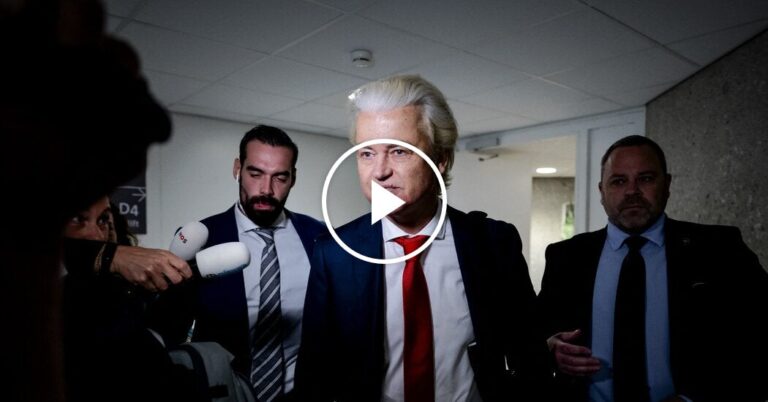
The Netherlands’ first far-right government fell after the populist leader Geert Wilders withdrew his party after a dispute about migration policy.

It’s Official: Bruno Crolot Joins Believe as President of Label & Artist Solutions (LAS)

0

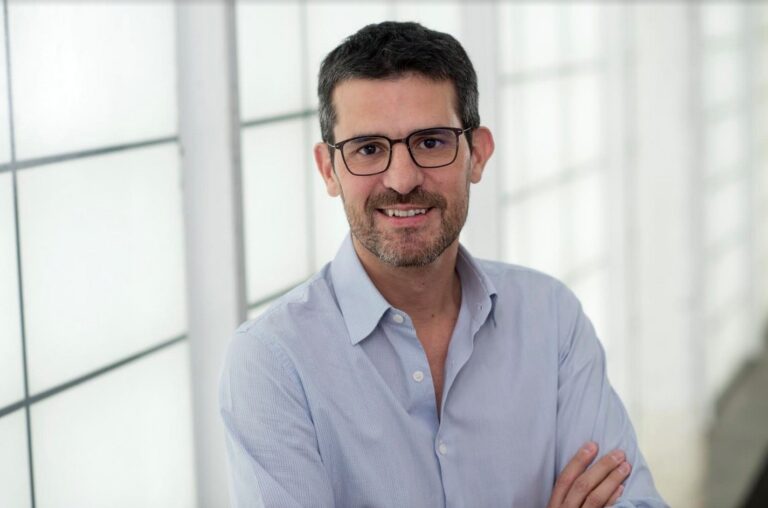
Spotify’s Senior Director, Head of International Music, Bruno Crolot has confirmed he’s leaving the streaming company for a role at Believe.

In a LinkedIn post on Tuesday (June 3), Crolot said he will be taking up the role of President, Label & Artist Solutions (LAS) at the France-headquartered music company.

MBW first reported on Crolot’s imminent departure from Spotify last month, though at that time it was unclear what role he would be taking up at Believe.

In his new role, Crolot will lead the LAS business and P&L at Believe, working closely with regional and local general managers, as well as with TuneCore, Believe’s DIY distribution company.

“Believe is one of the most innovative, forward-thinking and consistently successful players in the music industry for years – a company I’ve long watched and admired.”

Bruno Crolot

“Believe is one of the most innovative, forward-thinking and consistently successful players in the music industry for years – a company I’ve long watched and admired,” Crolot wrote on LinkedIn.

“I’m deeply grateful to [Believe Founder and CEO] Denis [Ladegaillerie] and [Global Head of Music] Romain [Vivien] for their trust and for welcoming me at such an exciting and pivotal moment in Believe’s journey.”

On Tuesday, Crolot described his time at Spotify as “the most fulfilling professional experience” of his career so far.

“Over the course of almost nine years, I had the privilege to lead incredible teams, collaborate with – and learn from – some of the most talented, passionate and purpose-driven people in the business – both as MD France & Benelux and later as Head of International Music.”

Crolot originally joined Spotify in 2016 as General Manager for France and Benelux, a role in which he was tasked with defining and deploying Spotify’s development strategy in France, Belgium, the Netherlands, and Luxembourg. He was promoted to Senior Director, Head of International Music at the platform four years later, in 2021.

Prior to his time at Spotify, Crolot served for five years as Head of B2B music trade show Midem in Cannes, France. His two decades of music industry and digital entertainment experience also include time at Universal Music, Noos, Orange, and Sony Music.

Crolot’s arrival at Believe comes in the wake of a number of notable moves within the company’s senior staff, including the promotion of Romain Vivien to the role of Believe’s first-ever Global Head of Music last fall.

Also last year, Believe appointed Henri Jamet – who previously served as the Director of labels AllPoints, Morning Glory, naïve and Animal 63 – to the role of Managing Director of Believe France.

Believe’s TuneCore has also seen some fresh faces of late, including Kevin Ferguson, who joined as Senior Vice President, Technology, in February, and Mike Ceglio, who was appointed to the role of Vice President, Operations Strategy, in January.Music Business Worldwide

The Piper’s Symbolic Role at the Queen’s Funeral: Playing Each Morning for Her

0

As something of an alarm clock, the piper would play at 9 a.m. for 15 minutes for the monarch wherever she was in residence.


View Entire Post ›

British industry spared from Trump’s decision to double steel tariffs

0

Unlock the White House Watch newsletter for free

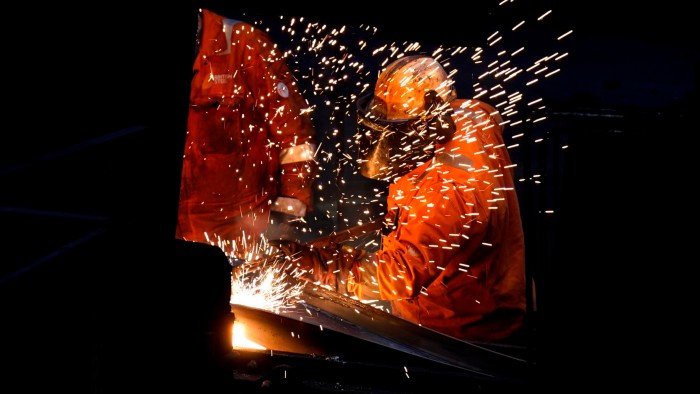
UK industry was on Tuesday exempted from a doubling of US steel and aluminium tariffs by Donald Trump, as British bosses urged Sir Keir Starmer to work quickly to implement a trade pact that would cut the levies to zero.

The surprise move by the Trump administration to hand Britain a carve-out from its latest tariff increases provided some respite for the prime minister, who is facing mounting frustration from industry over delays to implementing the US-UK trade accord.

Announcing the new tariffs via an executive order, Trump said the UK would escape a 50 per cent levy on steel and aluminium “to allow for the implementation of the US-UK Economic Prosperity Deal” — but British metal producers will contend with a 25 per cent tax until the pact takes effect.

Under the terms of the agreement, the UK will receive a zero-tariff quota for steel if it meets US security requirements to exclude China from its supply chains.

However, since the May 8 signing ceremony involving Starmer and Trump, negotiations over implementing the deal have dragged on.

Trump’s executive order added a note of jeopardy to the UK exemption, saying the president reserved the right to increase steel and aluminium tariffs on Britain to 50 per cent if “he determines that the United Kingdom has not complied with relevant aspects” of the trade deal.

The Trump administration’s decision to spare Britain came after UK business secretary Jonathan Reynolds held talks with his US counterpart Jamieson Greer in Paris on Tuesday, in a further effort to expedite the pact.

Reynolds said after the meeting that both sides were working to implement the agreement “as soon as possible” without specifying a timeline.

The UK government said in a statement: “We’re pleased that as a result of our agreement with the US, UK steel will not be subject to these additional tariffs.

“We will continue to work with the US to implement our agreement, which will see the 25 per cent US tariffs on steel removed.”

The trade pact also promised to reduce US tariffs on up to 100,000 British car exports from 25 per cent to 10 per cent. 

Before Trump unveiled his executive order, Duncan Edwards, chief executive of BritishAmerican Business, a transatlantic trade body, said it was “very frustrating” from a British point of view that US tariffs on UK steel exports had not yet been cut to zero. Trump imposed 25 per cent tariffs on aluminium and steel imports in March.

Edwards said Starmer had slightly “oversold” the trade pact. “There’s a credibility issue when you say you have done it, but it’s not finished yet,” he added.

UK industry leaders showed growing signs of impatience earlier on Tuesday, telling parliament’s business and trade committee that it was urgent the trade accord was operationalised. 

Russell Codling, director of markets business development at Tata Steel, which has steel making operations at Port Talbot in south Wales, said US tariffs of 25 per cent had already a “big impact” on the business, creating “huge levels of uncertainty” for the industry.

“My ‘ask’ is please can the government act as quickly as possible on this,” he told MPs. 

The US is the UK’s second most important export market for steel, worth around £400mn a year.

UK carmakers are also in limbo, awaiting details on how they can qualify for a US export quota of 100,000 cars at a reduced 10 per cent tariff, and how it will be shared out.

Murray Paul, public affairs director at Jaguar Land Rover, said the company would continue hurting for as long as the UK government failed to conclude the negotiations on the trade pact.

“It comes down to speed. We are losing business rapidly — a complete cessation of activity with US customers and orders . . . I have confidence [in the deal], but it needs to happen, really, really quickly,” he added.

The hastily agreed trade pact announced by Starmer and Trump had an important disclaimer in the small print: “Both the United States and the United Kingdom recognise that this document does not constitute a legally binding agreement.”

British officials have been working to persuade the Trump administration to bring it into force, but some admitted there was no “clarity” about when this might happen.

The UK made concessions to the US side, agreeing 13,000 tonnes of beef and 1.4bn litres of bioethanol could be exported to the UK tariff free. Bioethanol is used to make the UK’s standard E10 petrol less carbon intensive.

US to scale back military presence in Syria, maintaining only one operational base | Updates on Syria’s Conflict

0

US envoy says Syria strategy ‘will not be like the last 100 years’ as troops pull out.

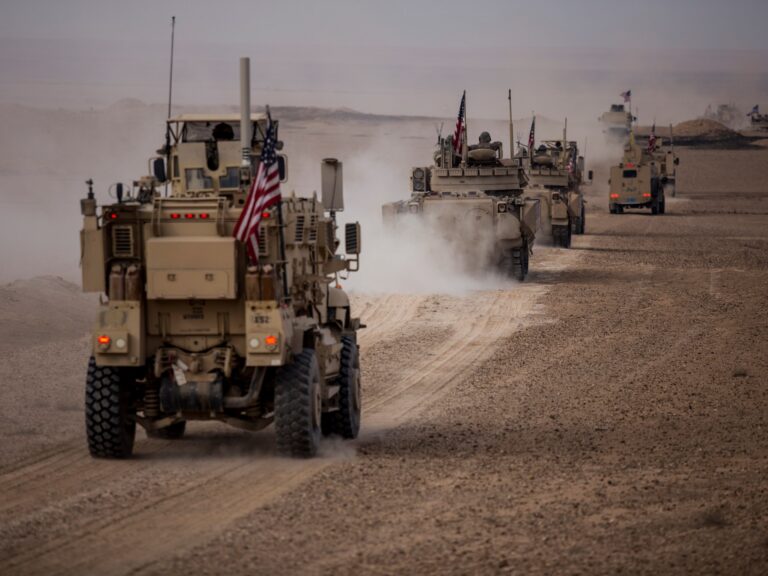
The United States will shut down most of its military bases in Syria, consolidating operations to a single location, as part of a policy overhaul announced by its new special envoy.

Thomas Barrack, appointed by President Donald Trump last month as the US ambassador to Turkiye and special envoy for Syria, said the shift marks a rejection of Washington’s past century of failed approaches in Syria.

In an interview with the Turkish broadcaster NTV on Monday, Barrack said the troop drawdown and base closures reflect a strategic recalibration.

“What I can assure you is that our current Syria policy will not be close to the Syria policy of the last 100 years because none of these have worked,” he said.

US forces are expected to withdraw from seven of eight bases, including those in Deir Az Zor province in eastern Syria, with remaining operations centred in Hasakah in the northeast.

Two security sources told the Reuters news agency that US military hardware and personnel have already started relocating. “All troops are being pulled from Deir Az Zor,” one source told Reuters in April.

A US Department of State official later said troop levels would be adjusted “if and when appropriate”, depending on operational demands.

Roughly 2,000 American soldiers remain in Syria, largely embedded with the Kurdish-led Syrian Democratic Forces (SDF), a key partner in the US-led campaign against ISIL (ISIS).

The SDF, dominated by the People’s Protection Units (YPG), a Kurdish militia, has been a longstanding point of contention with NATO ally Turkiye, which views it as linked to the outlawed Kurdistan Workers’ Party (PKK).

The PKK, which recently announced its disbandment, fought a decades-long armed rebellion against the Turkish state.

Barrack called the SDF “a very important factor” for the US Congress, stressing that integrating the group into Syria’s national army is now a priority. “Everyone needs to be reasonable in their expectations,” he said.

Since the ouster of Syrian President Bashar al-Assad in December, international engagement with Damascus has resumed under new President Ahmed al-Sharaa. Barrack recently raised the US flag over the ambassador’s residence in Damascus for the first time since 2012.

Turkish President Recep Tayyip Erdogan criticised the SDF last week, accusing it of “stalling tactics” despite its agreement to join the Syrian armed forces.

BRC Inc. Reveals Outcomes from Annual Stockholder Meeting

0


brc inc. announces results of annual stockholder meeting