The Trump administration is facing legal challenges to its deployment of Marines and National Guard troops to Los Angeles. Shawn Hubler, the Los Angeles bureau chief for The New York Times, talks with Katrin Bennhold, a senior writer, about what she’s seen on the ground in the city.
Simply sign up to the Oil myFT Digest — delivered directly to your inbox.
Oil prices surged on Friday in the biggest move in more than three years as Israel’s air strikes against Iran threaten supplies across the region and sparked a rush to safe haven assets.
In early afternoon in Asia Brent crude, the international benchmark, rose about 8 per cent to $74.88 and US marker West Texas Intermediate rose more than 8 per cent to $73.67, with traders concerned the conflict could hit energy supplies in one of the world’s most important oil and gas producing regions.
Michael Alfaro, chief investment officer at Gallo Partners, a hedge fund focused on energy and industrials, said the attack on Iran’s nuclear facilities marked a “seismic escalation” in the conflict.
“We’re staring down the barrel of a prolonged conflict that’s almost certain to keep oil prices elevated,” he said.
Gold, an asset seen as a haven, rose by roughly 1.2 per cent during Asian trading hours to $3,427 per ounce.
There are multiple risks for the energy sector from a renewed conflict.
The Strait of Hormuz, the narrow waterway separating Iran from the Gulf states, is a conduit for around a third of the world’s seaborne oil supplies. Iran has repeatedly threatened to close it in the event of an attack.
Some of the world’s largest oilfields, including in Saudi Arabia and Iraq, are also within reach of Iran’s missiles and drones. In 2019 Iran was widely believed to be behind an attack on Saudi Arabian oil facilities that briefly pushed the price of crude.
Qatar is also one of the world’s largest suppliers of liquefied natural gas (LNG), and its shipments must traverse Hormuz to reach international markets at a time of tight global supplies.
Helima Croft, a former CIA analyst who is now at RBC Capital Markets, questioned whether the latest strike was a limited military engagement, as occurred in autumn, or if Iran would target regional energy supplies.
“The key question is whether Iran seeks to internationalise the cost of tonight’s action by targeting regional energy infrastructure,” Croft said.
US President Donald Trump has previously pledged to keep oil prices low to help tame inflation.
After Russia’s full-scale invasion of Ukraine the Biden administration released around 300mn barrels of crude from the US Strategic Petroleum Reserve (SPR), the world’s largest emergency stockpile, to help keep prices in check.
If the oil price surge is prolonged or supplies are disrupted from the Middle East, Trump could utilise the SPR, but in the past he has criticised former President Joe Biden for draining the reserve to its lowest level in 40 years. The SPR currently has around 400mn barrels, well below its 727mn barrel capacity.
Traders will also look for any response from the Opec+ group of oil producers. Saudi Arabia, one of the group’s most powerful members, condemned Israel’s attack on Friday.
The group, of which Iran is a member, has been raising production in recent months but may face additional pressure from the Trump administration to tap it’s additional capacity to keep markets well supplied.
Stocks in the benchmark Nikkei 225 index fell by around 1.3 per cent. South Korea’s Kospi and the Hang Seng in Hong Kong fell 1.28 per cent and 0.7 per cent respectively.
The price of Bitcoin fell as much as 3 per cent on Friday in Asia hours, matching a broad sell-off of risk assets across the region.
The price of one Bitcoin dropped briefly to the $103,000 level, before rallying slightly to $104,000.
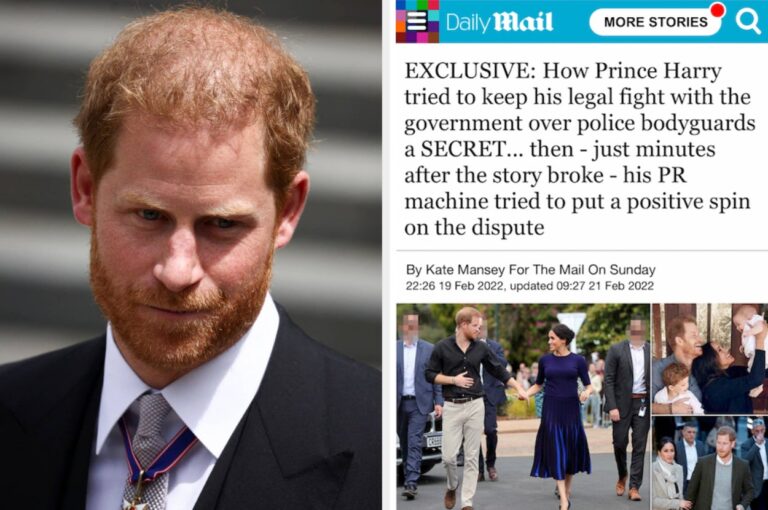
The High Court judge agreed with this interpretation, writing that the story could lead readers to believe that Harry had purposefully tried to bamboozle the public about the truth of his legal proceedings against the government.
“It may be possible to ‘spin’ facts in a way that does not mislead, but the allegation being made in the article was very much that the object was to mislead the public,” the judge wrote. “That supplies the necessary element to make the meanings defamatory at common law.”
Nicklin also determined that the story’s description of how Harry and his lawyers had attempted to keep his effort to secure police protection from the Home Office confidential met the threshold for defamation.
The “natural and ordinary” meaning of the Mail on Sunday article, Nicklin wrote, was that Harry “had initially sought confidentiality restrictions that were far-reaching and unjustifiably wide and were rightly challenged by the Home Office on the grounds of transparency and open justice.”
The High Court justice wrote that “the message that comes across clearly, in the headlines and [specific] paragraphs” of the Mail on Sunday story met the common law requirements for defamation.
Throughout the judgment, Nicklin emphasized that his decision was “very much the first phase in a libel claim.”
“The next step will be for the defendant to file a defense to the claim. It will be a matter for determination later in the proceedings whether the claim succeeds or fails, and on what basis,” Nicklin wrote.
We’ve got another day of high-octane racing about to unfold at the 2025 Australian World Championship Trials as swimmers vie for slots on the nation’s roster for Singapore.
World record holder Kaylee McKeown led the women’s 200m backstroke heats and will look to complete her sweep of the discipline this evening, with Hannah Fredericks, Jaclyn Barclay and Jenna Forrester also in the mix.
The men’s 200m IM field is essentially wide open, although William Petric staked his claim with the sole sub-2:00 performance of the prelims. David Schlicht will flank him this evening, with Gabriel Gorgas on the other side.
Olympians Brendon Smithand Se-Bom Lee are also in the 2IM hunt.
2023 World Championships silver medalist Elizabeth Dekkers leads the women’s 200m butterfly while a big battle is brewing in the men’s 100m free.
Kyle Chalmers already qualified for Singapore in a silver medal-earning 50m free performance and will look to add the 100m free to his lineup. He’ll need to fend off the likes of Zac Incerti, Flynn Southam and Maximillian Giuliani, among others.
Olympic champion Kaylee McKeown did not disappoint on her way to dominating this women’s 200m backstroke.
The 23-year-old busted out a season-best of 2:04.47 to beat the pack by over 5 seconds en route to adding this event to her Singapore lineup. The USC Spartan split 29.12/31.56/31.93/31.86 to shave .10 off her previous season-quickest effort of 2:04.57 notched at March’s NSW Championships.
She maintains her spot atop the world rankings on the season and remains the only swimmer on the planet who has been under 2:05 thus far.
22-year-old Hannah Fredericks of St. Peters Western clocked a speedy 2:09.54 to reap silver and also clear the World Championships qualification time of 2:10.51.
Fredericks’ lifetime best remains at the 2:08.25 at last year’s Olympic Trials, just missing out on the Paris team.
Jenna Forrester, also trained by Dean Boxall, settled for bronze in 2:11.79. She’ll have another attempt at making the squad via the women’s 400m IM.
Men’s 200 IM – FINAL
World Record: 1:54.00 – Ryan Lochte, USA (2011)
Australian Record: 1:55.72 – Mitch Larkin, 2019
All Comers Record: 1:54.98 – Michael Phelps, USA (2007)
Two men dipped under the Swimming Australia-mandated qualification time of 1:59.05, with David Schlicht and William Petric getting the job done.
Donning an ASU cap, 25-year-old Schlicht cleared the 2:00 barrier for the first time in his career, hitting 1:58.10 after a slight time delay with the results. Splits were incomplete on the results.
20-year-old Petric touched next in 1:58.25 in the duel, splitting 25.43/29.93/34.14/28.75 in the process. That checked in as the 4th-best time of the St. Peters Western swimmer’s career, one which boasts a lifetime best of 1:57.54 from last year’s Olympic Trials.
Petric placed 10th in Paris, producing a time there of 1:58.13 to miss out on the final.
Fellow Olympian Brendon Smith rounded out tonight’s podium in 2:00.04, well off his PB of 1:58.12 from last year’s Trials.
Women’s 200 Butterfly – FINAL
World Record: 2:01.81 – Liu Zige, CHN (2009)
Australian Record: 2:03.41 – Jessicah Schipper, (2009)
It was a slight upset in this women’s 200m butterfly as 2023 World Championships silver medalist Elizabeth Dekkers found herself in 3rd place behind winner Brittany Castelluzzo and runner-up Abbey Connor.
Making her first long course Australian international squad, 24-year-old Castelluzzo of Tea Tree Gully powered her way to a winning effort of 2:06.91. That mark fell just .05 outside her season-best and lifetime best of 2:06.86 established at April’s Australian National Championships to become the nation’s 11th-best performer of all time.
The 20-year-old Olympic finalist in this event, Connor touched next in 2:07.14 to also easily clear the 2:09.21 Swimming Australia-mandated QT needed for the World Championships. Connor’s PB remains at the 2:06.43 notched at last year’s Trials.
King Kyle Chalmers did his thing in this men’s 100m freestyle, reaping gold in a near-season best of 47.29.
26-year-old Chalmers of Marion opened in a swift 22.73 as the top contender leading out and brought it home in 24.56 to fall just .02 outside the 47.27 he nabbed at April’s Bergen Swim Festival to rank 3rd in the world this season.
20-year-old Flynn Southam carried his momentum from earning bronze in the 200m free, upgrading to silver here in a rapid 47.69.
Bond’s Southam split 23.28/24.41 to establish a new lifetime best. Entering this competition, Southam’s PB rested at the 47.77 registered 2 years ago. He just earned an individual spot in this 1free for Singapore.
TSS Aquatics ace Maximillian Giuliani wrangled up bronze in 48.34, within striking distance of his fastest-ever performance of 48.21 also from 2 years ago.
Kai Taylor of St. Peter’s Western clocked 48.37 to earn his slot on the men’s 4x100m freestyle relay as the 4th place finisher. Harrison Turner was 5th in 48.43 while Zac Incerti produced 48.46 for 6th place.
That’s a solid stable from which to draw the relay, putting Australia right up there as medal contenders for Singapore and beyond. For perspective, the top 4 Americans from Trials were Jack Alexy (46.99), Patrick Sammon (47.47), Chris Guiliano (47.49) and Destin Lasco (47.58).
23-year-old Lani Pallister busted out a new Australian national record of 8:10.84 to destroy the field and become the #3 performer of all time in the women’s 800m free.
Pallister delivered a monster performance, hacking over 4 seconds off her previous PB of 8:14.11 from the 2023 World Cup.
Pallister’s huge outing also overtook the All Comers Record of 8:11.35 Olympic multi-gold medalist Katie Ledecky of the United States put on the books over 10 years ago.
Also qualifying for the World Championships in this event was Jamie Perkins, hitting 8:26.20 for her first time ever under the 8:30 barrier.
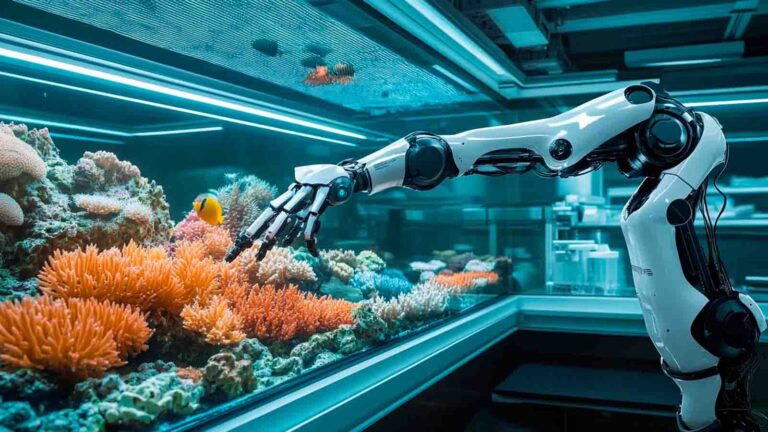
In an Australian laboratory, a small coral nursery is home to a tireless robotic arm that works around the clock. This machine feeds, cleans, and nurtures young corals. Once the corals are ready to be introduced back into the ocean, an underwater drone takes over, monitoring their health and the condition of the reefs. This partnership between two robotic systems highlights the potential of technology to tackle environmental challenges. With climate change threatening coral survival, these innovations offer a glimmer of hope. In this article, we delve into these advancements and showcase a video featuring some of the most impressive marine robots to date.
A coral nursery with a robotic caretaker
Before exploring the cutting-edge robotic solutions aimed at regenerating Australia’s coral reefs, it’s essential to understand the challenges these ecosystems face. Corals, particularly those in the Great Barrier Reef, are under siege. Climate change has led to mass bleaching events, where corals lose their nutrient-providing algae. Adding to the crisis are pollution from agricultural runoff, plastics, overfishing, and coastal development. Intensified tropical storms and invasive species like the crown-of-thorns starfish further threaten their survival.
In response, researchers are increasingly growing corals in controlled laboratory environments before transplanting them into the ocean. However, this labor-intensive process requires significant resources. Each coral must be fed, cleaned, and moved to larger tanks as it grows. Scaling up to regenerate millions of corals highlights the enormity of the task.
Enter robotics. The Commonwealth Scientific and Industrial Research Organisation (CSIRO), an Australian government agency, is exploring innovative ways to automate this work. Beyond Coral, a foundation committed to reef restoration, has deployed a robot named CHARM (Coral Care Automated Circuit Machine). CSIRO contributed to CHARM by designing an advanced robotic arm capable of operating non-stop.
This arm, equipped with soft grippers, delicately handles coral tissue while being strong enough to lift and transfer corals to new tanks. Developed using generative AI, the arm’s design has been optimized for efficiency and durability. It is 3D printed with materials resistant to saltwater corrosion, including hard polymers and soft rubber. Researchers hope similar technology can one day be used to plant adult corals directly onto reefs.
A robot that monitors coral health
The role of robots in coral regeneration extends beyond laboratory cultivation. Recently, an Australian company unveiled Hydrus, a lightweight underwater drone designed for coral monitoring. This innovative drone is capable of descending to depths of 300 meters and operating within a nine-kilometer range. Weighing under seven kilograms, Hydrus is equipped with advanced features that include high-intensity lights, cameras, and an AI-powered image recognition system.
Hydrus has been designed to identify marine species and other underwater objects. Its primary mission is to assess coral health, locating areas affected by bleaching and surveying underwater meadows where corals thrive. The drone also autonomously maps the seafloor, providing invaluable data for the preservation of these fragile ecosystems.
The emergence of biomimetic marine robots
Hydrus is part of a new wave of underwater robotics aimed at protecting marine ecosystems. Many of these innovations are inspired by marine life itself, employing biomimetic designs to improve efficiency. Aquatic drones modeled after turtles, jellyfish, and tuna have been developed to navigate and operate more effectively than traditional robots. These machines also monitor water quality and biodiversity.
In addition, researchers are exploring the potential of soft, biodegradable robots made from algae. These environmentally friendly devices could play a critical role in understanding and preserving underwater habitats that are increasingly threatened by climate change, pollution, and overfishing.
For readers interested in other environmental applications of robotics, including those unrelated to marine ecosystems, we recommend exploring the use of robots and artificial intelligence in waste recycling.
US officials tell news agencies that Israel has started attacking sites in Iran as blasts reported in Tehran.
Several explosions have been reported in and around Iran’s capital Tehran, according to the state-run news agency Nour News.
“Loud explosions are being heard in different locations of the capital Tehran,” it said in a TV report, adding that Iran’s air defence system is on full alert and all flights at Iman Khomeini airport have been suspended.
While the Israeli military is yet to release an official public statement on the attack, it has reportedly confirmed to the Times of Israel newspaper that it has “launched an aerial campaign against Iran’s nuclear programme”.
The operation, dubbed “Nation of Lions”, has seen Israeli fighter jets bomb dozens of targets related to Iran’s nuclear programme and other military facilities, the outlet reported.
The Israeli military told the outlet that Iran has enough enriched uranium to build several nuclear bombs within days and it needed to act against this “imminent threat”.
Sirens have sounded across Israel as a preemptive warning as Israeli authorities prepare for a potential Iranian response. In a post on X, the Israeli military announced that Israel’s civil and public security guidelines had been changed to “essential activity” as of 03:00 local time (00:00 GMT).
“The guidelines include: a ban on educational activities, gatherings, and workplaces, except for essential businesses,” it said.
Israel’s Transportation Ministry has confirmed that it has also closed the country’s airspace for arrivals and departures until further notice.
US Secretary of State Marco Rubio said late on Thursday that the United States was not involved in the strikes, as he urged Iran not to target American interests or personnel in the region.
“Tonight, Israel took unilateral action against Iran. We are not involved in strikes against Iran and our top priority is protecting American forces in the region,” Rubio said in a statement.
“Let me be clear: Iran should not target US interests or personnel,” he added.
Iran’s Defence Minister Aziz Nasirzadeh said on Wednesday his country would target US military bases in the region if nuclear talks break down and conflict breaks out with the United States.
“Some officials on the other side threaten conflict if negotiations don’t come to fruition. If a conflict is imposed on us … all US bases are within our reach and we will boldly target them in host countries,” Nasirzadeh told reporters.
Washington and Tehran have held five rounds of talks since April as Trump seeks an agreement that would place constraints on Iran’s uranium enrichment.
Al Jazeera correspondent Alan Fisher said developments over recent days indicated that US President Donald Trump “was told that there was going to be some sort of strike”.
“[Just] 24 hours ago the United States announced that it was going to start moving non-essential personnel out of the embassy in Baghdad [in Iraq] and also recommended that others in embassies around the region could also leave if they wish,” he said.
Fisher said that President Trump did not “want Iran to get a nuclear weapon”, but he was “hoping” that nuclear talks with Tehran would be able to avert a conflict.
“The big question now of course is how the United States reacts to any response from Iran. If they side with Israel that suggests that the nuclear talks are done,” Fisher said.
“Steve Witkoff still intends to hold another meeting with the Iranians at the weekend. Of course it’ll be up to the Iranians to decide whether or not they want to go,” he added.
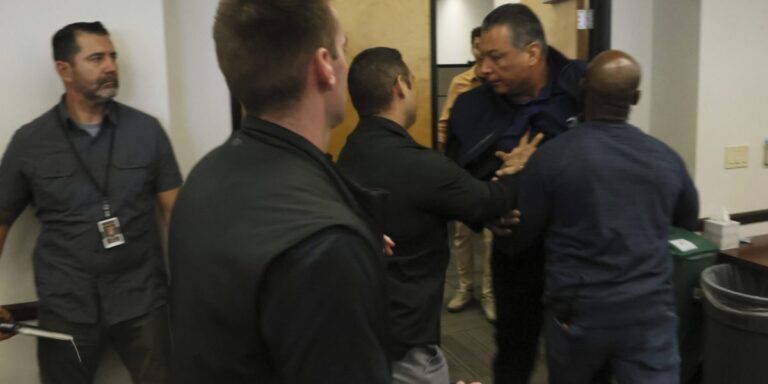
Video shows a Secret Service agent on Noem’s security detail grabbing the California senator by his jacket and shoving him from the room as he tried to speak up during the DHS secretary’s event. Padilla interrupted the news conference after Noem delivered a particularly pointed line, saying federal authorities were not going away but planned to stay and increase operations to “liberate” the city from its “socialist” leadership.
“I’m Sen. Alex Padilla. I have questions for the secretary,” he shouted in a halting voice.
Scuffling with officers outside the room, he can be heard bellowing, “Hands off!” He is later seen on his knees and then pushed to the ground and handcuffed in a hallway, with several officers atop him.
The shocking scene of a U.S. senator being aggressively removed from a Cabinet secretary’s news conference prompted immediate outrage from his Democratic colleagues. Images and video of the scuffle ricocheted through the halls of Congress, where stunned Democrats demanded an immediate investigation and characterized the episode as another in a line of mounting threats to democracy by President Donald Trump’s administration.
Senate Democratic leader Chuck Schumer said what he saw “sickened my stomach.”
“We need immediate answers to what the hell went on,” the New York senator said from the Senate floor. “It’s despicable, it’s disgusting, it’s so un-American.”
In a statement, DHS said that Padilla “chose disrespectful political theater” and that Secret Service “thought he was an attacker.” The statement claimed erroneously that Padilla did not identify himself — he did, as he was being pushed from the room.
“Padilla was told repeatedly to back away and did not comply with officers’ repeated commands,” the statement said, adding that “officers acted appropriately.”
The fracas in Los Angeles came just days after Democratic U.S. Rep. LaMonica McIver was indicted on federal charges alleging she assaulted and interfered with immigration officers outside a detention center in New Jersey while Newark’s mayor was being arrested after he tried to join a congressional oversight visit at the facility. Democrats have framed the charges as intimidation efforts by the Trump administration.
It also follows days of rising tension between Trump and Democratic California Gov. Gavin Newsom over the federal military intervention in California. In a speech earlier this week, the governor warned that “democracy is under assault before our eyes.”
Emerging afterward, Padilla said he was removed while demanding answers about the Trump administration’s “increasingly extreme immigration enforcement actions.” He said he and his colleagues had received little to no response to their questions in recent weeks, so he attended the briefing for more information.
“If this is how this administration responds to a senator with a question … I can only imagine what they are doing to farmworkers, to cooks, to day laborers throughout the Los Angeles community, and throughout California and throughout the country,” he said.
Noem told Fox LA afterward that she had a “great” conversation with Padilla after the scuffle, but called his approach “something that I don’t think was appropriate at all.”
The White House accused Padilla of grandstanding.
“Padilla didn’t want answers; he wanted attention,” White House spokeswoman Abigail Jackson said. “It’s telling that Democrats are more riled up about Padilla than they are about the violent riots and assaults on law enforcement in LA.”
Padilla, the son of immigrants from Mexico, has been a harsh Trump critic and his mass deportations agenda. In a social media post, he said of recent federal immigration raids in Los Angeles, “Trump isn’t targeting criminals in his mass deportation agenda, he is terrorizing communities, breaking apart families and putting American citizens in harm’s way.”
Padilla in 2021 became the state’s first Latino U.S. senator when he was selected by Newsom to fill Kamala Harris’ Senate seat after she was elected vice president. At the time, Padilla was the state’s chief elections officer.
Harris wrote in a social media post Thursday that Padilla “was representing the millions of Californians who are demanding answers to this administration’s actions in Southern California.” She called his forceful removal “a shameful and stunning abuse of power.”
Democratic senators quickly gathered in the chamber, denouncing the treatment of their colleague — a well-liked and respected senator — and urged Americans to understand what was happening.
Sen. Elizabeth Warren, D-Mass., said Trump is making this country “look more and more like a fascist state.”
“Will any Republican senator speak up for our democracy?” Warren pleaded.
Sen. Tina Smith, D-Minn., called on Noem to resign, saying that there was no justification for Padilla’s treatment and that the Trump administration needed to be held accountable.
House Speaker Mike Johnson, R-La., accused Padilla of “charging” Noem and indicated that the behavior “rises to the level of a censure.”
“My view is it was wildly inappropriate,” Johnson, a Trump ally, told reporters outside the House chamber as Democrats walking past shouted over him, “That’s a lie!”
“A sitting member of Congress should not act like that,” Johnson said, loudly speaking over reporters’ questions. “It’s beneath a member of Congress. It’s beneath the U.S. senator.”
Senate Republican leader John Thune said he has spoken to Padilla and is trying to reach Noem but hasn’t yet connected with her.
“We want to get the full scope of what happened and do what we would do in any incident like this involving a senator and try to gather all the relevant information,” the South Dakota senator said.
The No. 2 Republican, Sen. John Barrasso of Wyoming, said that he was unaware of what happened but that Padilla should have been at work in Washington.
The stark incident comes as Congress faces increasing episodes of encroachment on its authority. As a coequal branch of the U.S. government, the Trump administration is exerting its executive powers in untested ways.
As part of their work in Congress, lawmakers are responsible for providing oversight of the administration, its agencies and actions.
Several senators and representatives have been exercising their oversight roles by surveying the treatment of immigrants and others being detained as part of the Trump administration’s mass deportation operation.
From the steps of the U.S. Capitol, House Democratic leader Hakeem Jeffries said what happened to Padilla “was un-American” and those involved must be held accountable.
“This is not going to end until there is accountability and until the Trump administration changes its behavior,” he said.
Almost all those on board an Air India flight bound for London Gatwick Airport that crashed shortly after take-off in western India have died, the airline has confirmed.
There were 242 passengers and crew on board the plane, including 169 Indian nationals, 53 Britons, seven Portuguese nationals and one Canadian.
Officials earlier said some local people would also have died, given the populated area of Ahmedabad where the plane came down.
Akeel Nanabawa, his wife Hannaa Vorajee and their four-year-old daughter Sara Nanabawa were all on board the flight.
A statement from Gloucester Muslim Society said it passed on its “most sincere and deepest condolences”.
“No words can truly ease the pain of such a profound loss, but we pray that the family may find solace in the tremendous outpouring of compassion and solidarity from communities across the world.
“May their cherished memories provide comfort, and may they rest in eternal peace.”
Adam and Hasina Taju, and their son-in-law Altafhusen Patel
Adam Taju, 72, and his wife Hasina, 70, were flying back from Ahmedabad with their 51-year-old son-in-law, Altafhusen Patel. All three lived in London.
The couple’s granddaughter, Ammaarah Taju, spoke of her shock and disbelief at her parents home in Blackburn.
She said her father, Altaf Taju, had driven to London to be with his sister as they received updates about the crash from Air India and government officials.
Fiongal and Jamie Greenlaw-Meek
Instagram
Fiongal and Jamie Greenlaw-Meek posted an Instagram story before their flight
Fiongal and Jamie Greenlaw-Meek, a married British couple, ran a spiritual wellness centre in London.
They posted on Instagram earlier on Thursday saying they were about to board the flight from Ahmedabad airport.
In the video, they were seen laughing and joking with each other about their trip to India.
Syed family
Facebook
Javed Syed and Mariam Syed were on the flight with their two children
Also on the plane were Javed Syed and his wife Mariam, from west London.
They were been onboard with their two young children.
Mrs Syed worked at Harrods and Mr Syed worked at a west London hotel.
Ajay Kumar Ramesh
Ajay Kumar Ramesh was on the flight, sat alongside his brother, the British surviving passenger Vishwashkumar Ramesh.
His cousin, Ajay Valgi, told the BBC that Vishwashkumar Ramesh had called his family to say he was “fine”, but he did not know the whereabouts of his brother.
Vijay Rupani
Hindustan Times via Getty Images
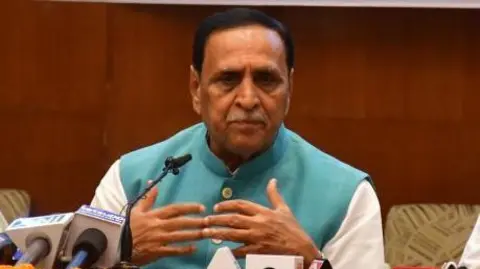
Vijay Rupani, former chief minister of India’s Gujarat state, was killed in the crash, the country’s civil aviation minister told reporters.
Rupani served as the chief minister of the western Indian state from 2016-21.
He was a member of the governing BJP party.
Singson
Singson was a member of the cabin crew on board Air India flight 171, her family said.
Outside the Civil Hospital in Ahmedabad, her cousin, T. Thanglingo Haokip, told the BBC he was trying to get information about her but was unsuccessful.
He added that Singson had a mother and brother who were “wholly dependent on her” as she “was the only breadwinner” in her family.
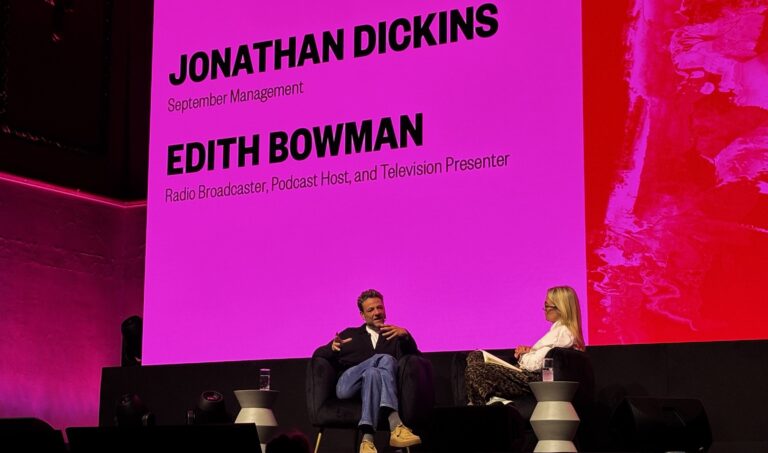
September Management founder Jonathan Dickins participated in a rare on-stage interview at SXSW London on Friday (June 6).
Speaking with broadcaster Edith Bowman, Dickins reflected on his 20-year journey from being “a pretty average A&R guy at a major record company” to managing some of the biggest artists in the world – including superstar Adele.
The conversation spanned the work behind constructing a temporary stadium in Munich for Adele’s record-breaking residency to nurturing long-term careers of September Management artists like Jamie T, among others.
MBW had a front row seat. Here are five things we learned…
1. Long-term artist development trumps viral moments every time
Dickins is adamant that sustainable success comes from patient career building rather than chasing social media trends or viral moments. He emphasized this philosophy using various examples of artists who have developed over time.
“I’m proud of the work we’ve done [with artists] like Jamie T. The last album [The Theory of Whatever ] was his first No.1 album [in the UK]. He’s 37 years old, and, you know, he came out at the same time [as] the Klaxons and the Kooks.
“We’ve just continued to grow, and that culminated in [Jamie T] selling 35,000 tickets at Finsbury Park two years ago.”
But Dickins believes the industry is finally embracing “long-term thinking” when it comes to artist development.
“I think there’s a new way of thinking where it isn’t necessarily like, it has all got to happen on the first record. And long may that continue, because we as a business, really need to concentrate more and more [on] development of artists. Quick fixes usually just give short-term results.”
In the wider industry, he pointed to artists like Sleep Token, Mitski and Turnstile as having developed long-term and finding success. “I would put my money on Turnstile being the next really big alternative rock [band], 15 years in the making,” he said.
“Sleep Token have been putting music out since 2016.” Sleep Token’s Even in Arcadia (RCA) recently hit No.1 on the US album chart.
“Long-term thinking, long-term planning, and long-term strategies are key,” added Dickins.
2. Modern management is all about teamwork and self-sufficiency
Asked about what’s changed the most in management over the past 20 years, Dickins said: “When we look back at [the history] management, you always look at individuals. It’s like, Brian Epstein or Jon Landau, always men by the way, which is bollocks. There are brilliant managers [who are]. women out there. But I don’t think it’s about the individual [managers] anymore.
“Management is a team, and in a weird way, what we’re trying to build are services that kind of mirror a small record company. We build self-sufficiency.”
He explained that September Management has developed extensive in-house capabilities:
“What I mean by self-sufficiency is that we have a place where people can record. We have a facility where people can put music out as a record label. And more importantly, we have digital [capabilities] in-house. And that’s been very valuable.”
This approach allows the company to maintain control and quality: “[The September team] have already added value to that, and they almost, in a way, supply some of the functions that you would expect to find at a social media agency or a record company.
“It’s not about individuals. It’s really about teams and having resources in-house, which means that you can be self-sufficient and not rely on other people.”
3. The Munich stadium project set new standards for bespoke artist experiences
Adele’s 10-night stadium residency in Munich in August 2024 represented a completely new model for touring, one that Dickins describes as “the single biggest grossing show by a female artist in history for one city.”
The event attracted over 730,000 fans, making it the highest-attendance concert residency outside of Las Vegas, according toLive Nation and Ticketmaster.
“No one’s done anything like it,” said Dickens. “I just don’t want to be generic. I want us to try new things. I don’t just want to be doing the same shit as everyone else, playing the same venues.”
The project involved constructing a purpose-built venue in the car park of the Messe in Munich, and even earned a Guinness World Record for the “Largest Continuous Outdoor LED Screen.”
“As soon as people entered the walkway into the stadium, it [was] a reflection on Adele,” Dickins explained. “So you had two pressures. You had the pressure of building the show, like you do with any tour. Then you had the pressure of building the surroundings.”
The venue operated more like a festival than a traditional concert, as Dickins explained: “She went on about 8:15 pm, for probably a two-hour show, but we had the license in the venue until 1 am.
“At 1 am in the morning, there were 22,000 people in there, still drinking, hanging out… We [created] an environment where people [experienced] a mini festival. It was a festival for one artist.”
The approach created two distinct experiences for Adele: “We had the Munich show, which [was] so big and huge, and then we [had] the complete antithesis of that with Las Vegas, which was … small and intimate, playing a room of, I think, 4,000 people. And then the other side of that was building this stadium and having 80,000 people in it every night.”
Credit: S_Photo / Shutterstock
4. Historical streaming deals are creating an unfair system for some artists
Dickins was asked about how the industry has changed for artists, and the conversations he’s having with artists in terms of fighting for them in the music business. He was particularly critical of how pre-streaming record deals are being treated in the current landscape.
“If you’re in a deal in the UK music business [signed in around ] 2010, just prior to streaming and you weren’t in the position to be able to renegotiate that deal, you are getting paid a fucking slave rate for historical catalog,” he said.
“Artists [who signed a deal] in 2006, 2007, I don’t think it’s uncommon to see those artists getting paid a royalty of 14% on streaming.
Asked by Bowman what can be done for artists in that situation, Dickens explained: “You’re talking about times when every deal was in perpetuity of contract. So there’s not much you can do.”
He explained how this creates a profitable situation for labels at artists’ expense: “New music becomes a loss leader. Everybody’s really holding on to these historical [contracts], because there’s a lot of money to be made in streaming.
“As an artist gets bigger, no one’s invested in the catalog. It’s just sitting there, and they’re spending no money on marketing, and those streaming numbers are just hitting the bottom line. So it’s pure profit, and when that’s being shared, I think [at] a really poor rate [with] those artists [who signed deals] at the time, I think it’s not right.
“That’s the problem for artists pre-streaming; deals before 2011, 2012. Since then, there’s much more flexibility for artists.”
Elsewhere, Dickens highlighted the importance for artists to focus on making good music:
“I believe that, when you have a successful business with an artist, the recorded part of it could end up being a little bit like special projects. But music is central to everything.
“Without the music, it doesn’t drive all these other areas. You’ve got to be focused on making great music, but at the same time, it’s definitely important to look at growing outside the areas of the traditional verticals.”
5. Relevance is about combining youth and experience, not choosing between them.
For Dickins, staying relevant in the music industry requires embracing both fresh perspectives and accumulated wisdom.
“I’ve always been neither disrespectful of experience nor disrespectful of youth, because they both offer different things.
“It’s mind-blowing to me how internet savvy the younger generation are [compared] to someone of my age. It’s important as well that you’re always [exploring] new models and new things, because the last thing you want is your artist to get old with you.”
Dickins added: “I’m always interested in people who are designing or producing shows or making music in terms of production, or beat makers. It’s really important as a company that we’re on top of things.”
But experience proves crucial when success arrives: “Experience comes in [useful] when artists become a bit more successful. People lose their minds when it blows up. They get gassed up. And then when it comes to [the] real business, which is touring, and some of the stuff around that, and the costs, if you don’t get a bunch of that right, artists can lose fortunes. And that’s where I think experience comes in.
“I think it’s really about having a blend of youth and experience. I don’t think one works without the other. I always want to try to get that blend as good as we possibly can.”
Elsewhere in the conversation, Dickins explained that he’s “not worried” about the company getting any bigger than it is today.
“I’m proud that the company is 100% independent,” he said. “I’m really happy about that. There’s no private equity, there’s no big corporate funding.
“I’ve never wanted to be a management supermarket. I’ve always wanted to get better, rather than bigger.”Music Business Worldwide









 Reuters
 Family Handout
 Instagram
 Facebook
 Hindustan Times via Getty Images