
19.7 C
New York
Wednesday, April 1, 2026
Home Blog Page 639

Exploring Angola: From Calai to Dirico – A Journey through Uncharted Tourist Territory

0

Overlanding from Namibia to Angola was a total wild card. All we really knew was that this southern African country was a Portuguese colony for ~400 years and was embroiled in a decades-long civil war until 2002. We figured we’d get to the border town of Rundu, Namibia, gather some local intel for this Angola trip, and things to do in the neighboring town of Calai…but we couldn’t find anyone who had been over the border! Google Maps made it seem like you had to drive eight hours out of the way to cross the river, and Booking.com pulled up zero results for hotels…this only made us even more curious and eager to explore Southern Angola! 

Namibia-Angola Border Crossing at Calai
Angola Border Crossing

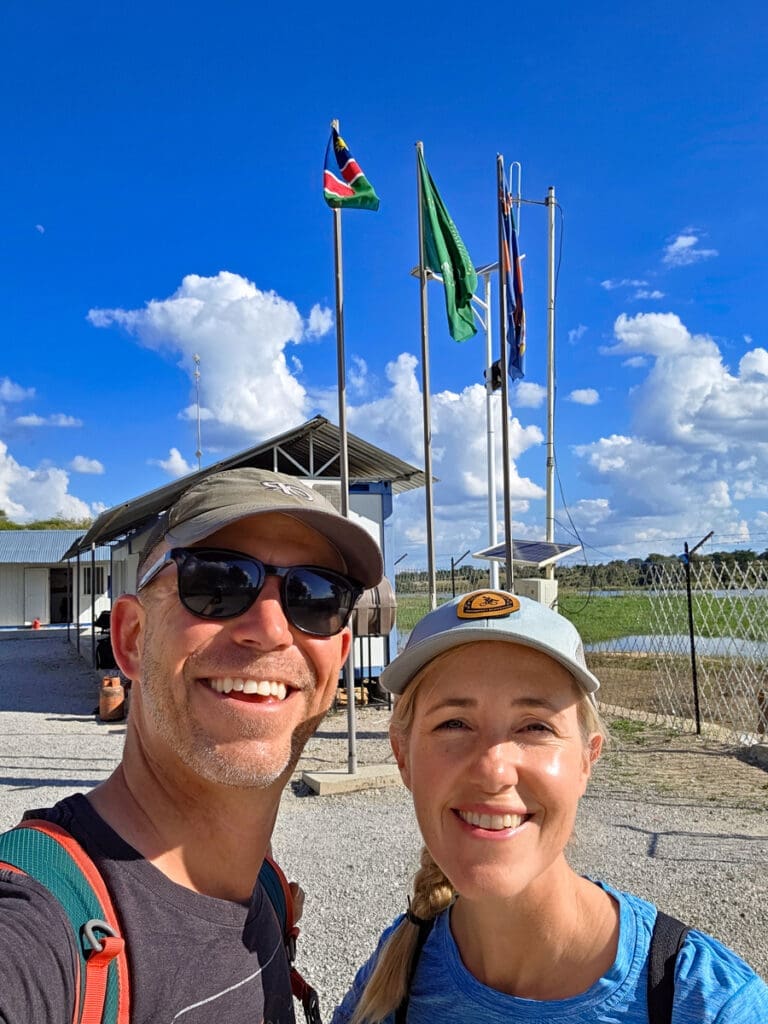
Crossing the footbridge over the Okavango River, we said goodbye to Namibia and ola to Angola. The immigration officer only spoke Portuguese, so in our best Portuñol pidgin, we explained our four-day Angola trip was for “ferias” (holiday purposes) and heard that sweet sound of a stamp hitting our passport. We may have been “in” but with no idea what we were getting into.

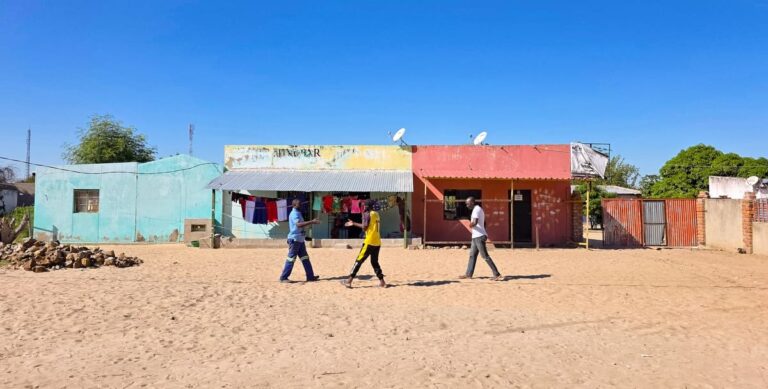
A fleet of moto taxis waved us over, so with no cars in sight, Mike and I had no choice but to each saddle up with a stranger and hope we were heading to the same place. Vrrrooom, we zipped through the sandy roads and into central Calai, two streets of shops, an outdoor market, a Portuguese bar…and one guesthouse! 

Where to Stay in Calai

Food of Southern Angola

We opened the tall gate to the unassuming Tchingwali Guesthouse, and we were met with a tropical garden, a full restaurant, and pleasant rooms with AC and en-suite baths for $16. Who knew?! As vegans who don’t speak Portuguese, it was a bit hard to figure out the best plant-based option, but an hour and a half later (Africa time is real and it’s even slower in Angola lol), a yummy lunch arrived.

Maize porridge is the basis of most meals in Southern Africa and takes many names (pap, ugali, funge, etc) and is often prepared so it’s dense enough to pick up and scoop the accompanying veg and meat. In Angola, it’s called funge, and we enjoyed ours with sides of wild spinach, peanuts, and slow-cooked beans. We washed it down with a pair of Cuca beers, and ordered another round just because we loved the local custom of cerveja and a bottle opener delivered by wicker basket.

Government Permission to Explore
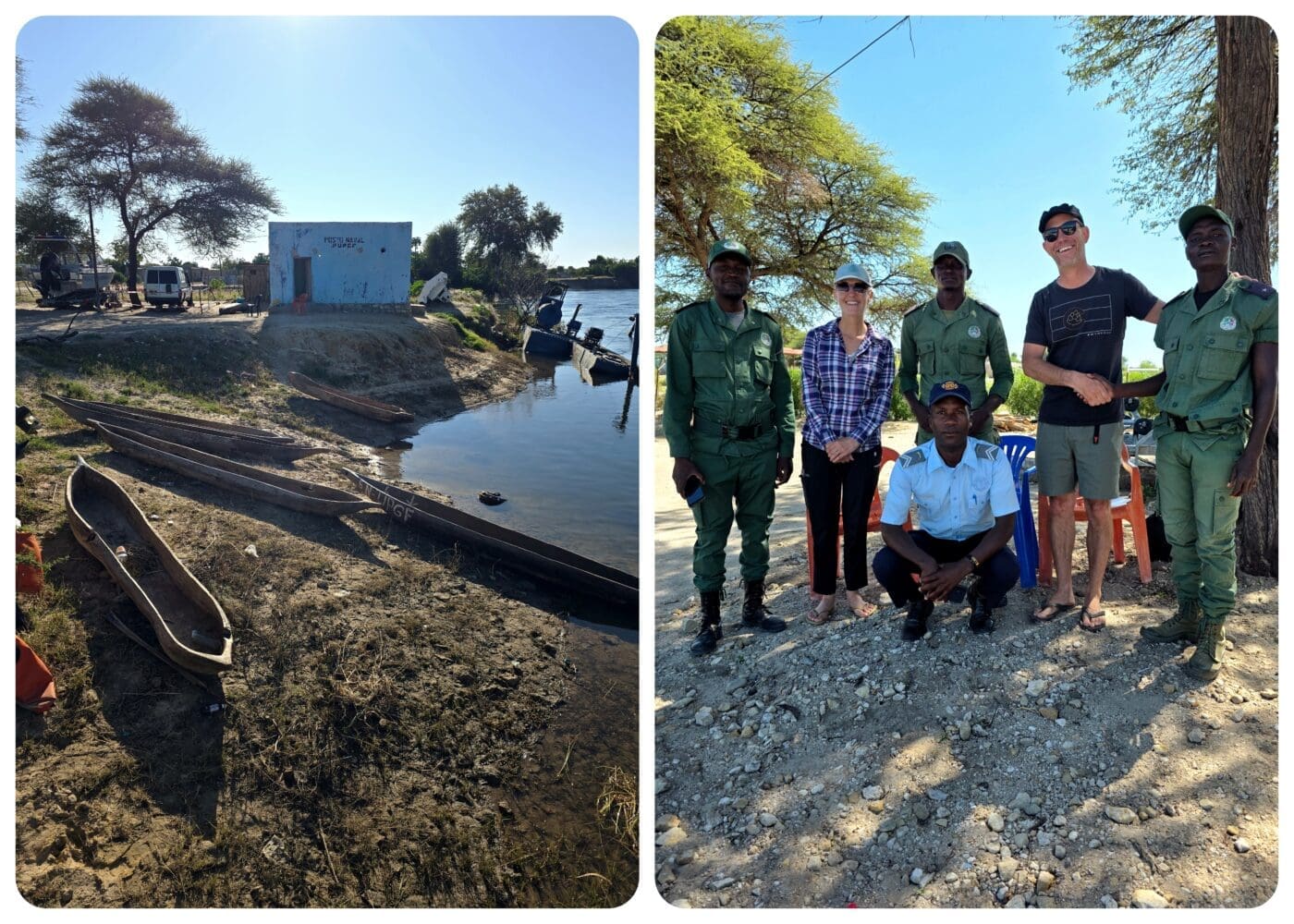
Angola Border Guards

We knew Calai wasn’t a tourist destination, but with the famed Okavango River, we figured there would be some water adventures in our future. We asked our guest house where we could arrange a boat trip, and they said, “Nowhere that we know of, maybe ask by the dock.” They left out the part that the “dock” was actually a naval base, and they weren’t so friendly to unannounced visitors.

After meeting with multiple officers and receiving a long line of questioning (“Are you trying to cross to Namibia? Why do want to canoe if you aren’t fishing? Are you a good swimmer? You know the river is full of crocodiles, right?” ), they warmed up to our idea of a dugout canoe trip with a local fisherman…and they even wanted a selfie to commemorate our trip!  

Dugout Canoeing the Okavango River
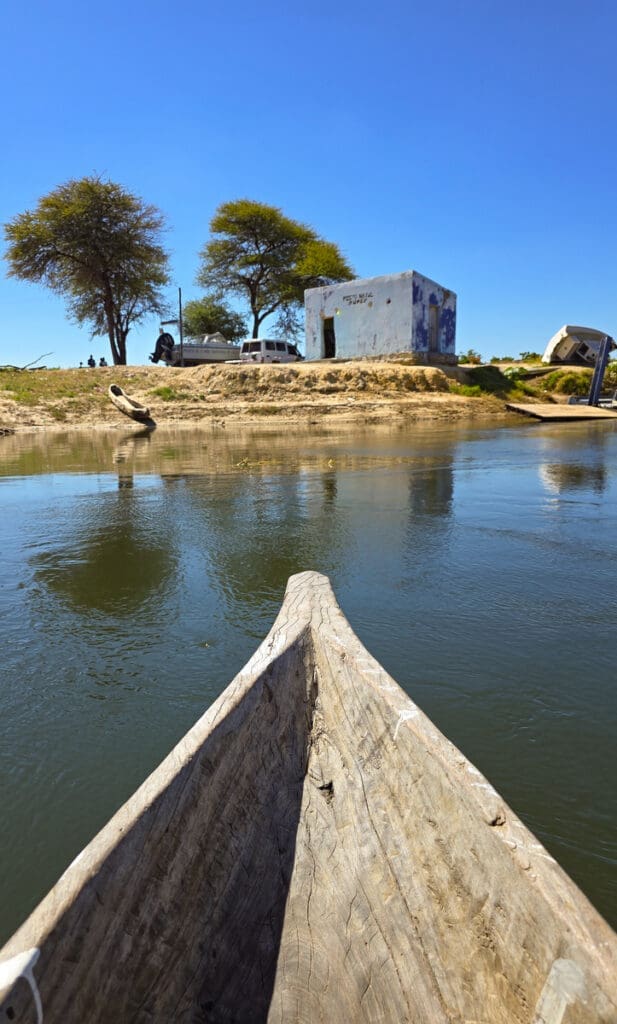
Dugout canoe Angola

Donning the fire department’s life vests, we joined Segunda for his first foray into river-guiding. He’d never had passengers in his canoe, but he dressed up for the occasion and showed us his favorite eddies, islands, and hippo hiding spots. We tipped him handsomely and shared (the best!) malasada donuts to celebrate what might just become a new chapter in his waterman career. To help make this happen, we introduced him to the Tchingwali Guesthouse team so they could send future guests on an Okavango canoe expedition with the lovely Segunda! 

Road Tripping Southern Angola

Southern Angola Road Trip

Now to arrange a road trip to explore more of Angola! There were only a handful of non-governmental cars in town, and the best truck happened to be parked at our guesthouse. We went out on a limb and asked the vehicle-owner, Peter, if he’d be willing to show us around the Southern Angola countryside. This unexpected request was met with an even bigger offer to join him the following day on his 120km trip to Dirico with a stop to meet one of the queens of the Cuando-Cubango province.

No crazier than any other idea this trip, we thought, “Heck, why not?!” Off we went on a wild ride down the deep sand roads, cutting through the thick brush. When the bushes opened up, we’d catch glimpses of the mighty Okavango River, the occasional grouping of mud & thatch huts, and fields of pearl millet for a scenic drive. 

Visiting with the Queen of Mutango
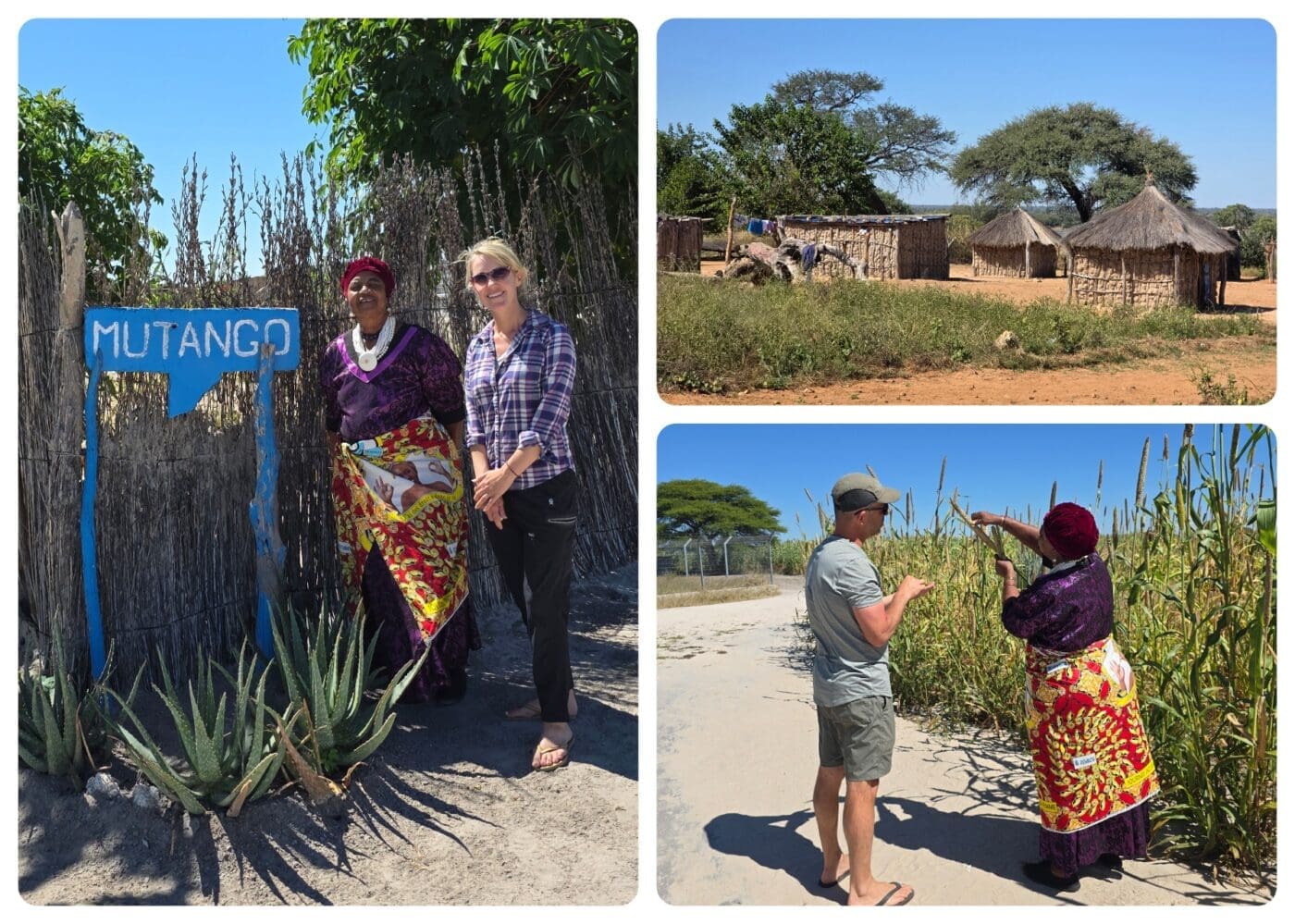
Queen of Angola

To learn about the local life and agriculture, there was no better person to meet than Queen Katrina! She graciously showed us around her village and farm, and how to shuck and chew sugarcane like the boss she is! Our Angola education continued in the car as I peppered Peter with questions. (I would speak to him in Spanish and he’d respond in Portuguese, and amazingly, we understood each other enough for some deep conversations). During the Angolan Civil War, his dad was a general for the Rebel Party, which was based in this province of Cuando-Cubango.

This area used to be teeming with wildlife, from elephants to lions to giraffes to leopards, but the fighting drove most of them south to the safety of Namibia. Countless landmines still litter the area, and he lamented, Angola still hasn’t quite gotten on its feet, even though the war ended in 2002. Corruption is rife and infrastructure is severely lacking, but you can’t break the spirit of the Angolan people! 

Dirico: Where the Rivers Meet

Dirico Southern Angola

After a four-hour ride down a one-lane sand road, taking countless hits from overgrown bushes and yielding to cows, we arrived in the town of Dirico. Atop a hill where the Cuito River meets the Cubango River, it’s a lovely location and a cheery place. The town square is anchored by its namesake sign and garden with a cute elephant and hippo statue. Adults and kids alike were playing soccer, and we could hear a church choir practicing.

We popped into a market for some food and drinks (the first shop we’d seen all day), and a group of teenage girls swept me up like a long-lost friend. “Selfie, selfie,” they squealed.  What started as a photo op turned into an impromptu dance session and laughing fit.

Southern Angola Trip…SOOO worth it!
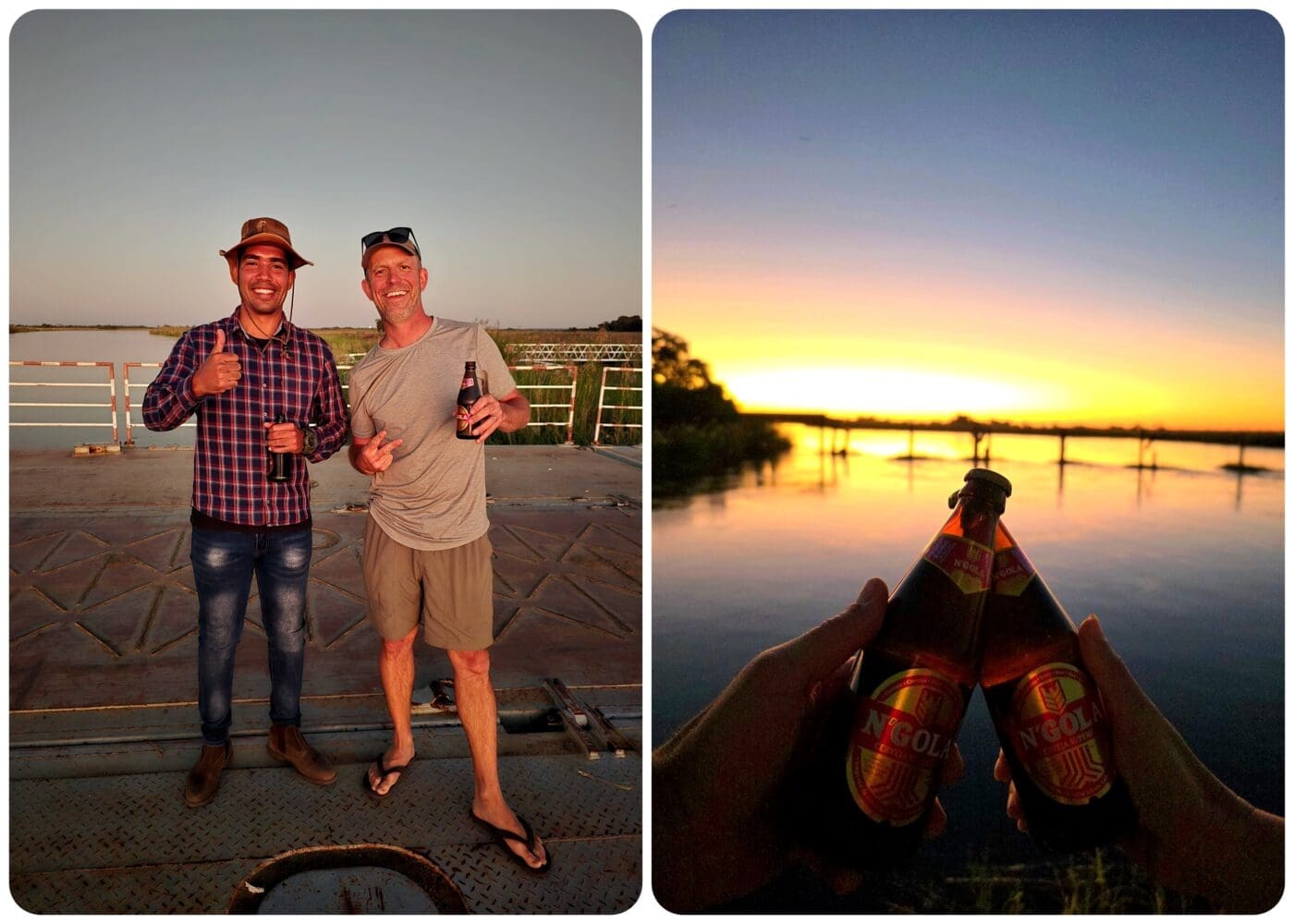
Angola Sunset

Before facing the dark and sandy road back to Calai, we took a moment to enjoy the sunset at the bridge over the Cuanavale River. Fishermen hugged the railing and, with just a stick and a line, they were pulling out tiger fish of epic proportions. Kids were cheering with each catch; dinner was served. Peter, Mike, and I cracked our N’gola cervejas, raised our warm beers over the shimmering pink waters, and toasted an unforgettable trip and new friendship.

Angola Trip Tips

Rundu-Calai Border Crossing: From Rundu, it’s a 15-minute cab ride to this remote border post. You’ll process your passport on the Namibia side, then walk across a floating bridge to finish your paperwork in Calai. No visa or entry fee is required.

  • Time Change: Note there is a one-hour time difference between Angola and Namibia. In Namibia, borders are open 9am-6pm, and in Angola, the hours are 8am-5pm.
  • Language: Portuguese is the official language of Angola, with 47 recognized local languages. There is limited English in Southern Angola, but between that and/or Spanish, people can often understand you if you speak slowly. Since I only know a handful of words in Portuguese, I spoke Spanish with a Portuguese inflection, and it worked pretty well…especially when combined with an offline version of Google Translate’s Portuguese language dictionary! Be sure to download before you go!
  • Money: The Angolan Kwanza (Kz) is the national currency and exchanges at 917 Kz to $1 USD. In Calai and Dirico, the Namibian dollar is widely accepted, so we never needed to exchange money. Southern Angola is incredibly affordable, with our hotel running us $15 a night, a meal $2, and a beer $1.
  • Connectivity: WiFi and cell reception are hard to come by in Southern Angola. Our T-Mobile Red Unlimited/international plan did not work, but if you have a Namibian SIM card, it should pick up signal from Calai. Best to download maps, currency conversions, and the Portuguese dictionary before you go. 
  • Transportation: Most people who come to Southern Angola from Namibia arrive by 4×4 overland vehicles for camping adventures. This would undoubtedly be fun and an easier choice, but we’re happy to report that a trip to Calai can be done on foot, by moto-taxi, and by making friends with cars, lol.

We embarked on this Angola trip with zero expectation (and a little bit of jitters) and were met with the pure kindness and unbridled adventure…exactly what we dream of in travel! We hope you too, can take the road less traveled to Southern Angola.

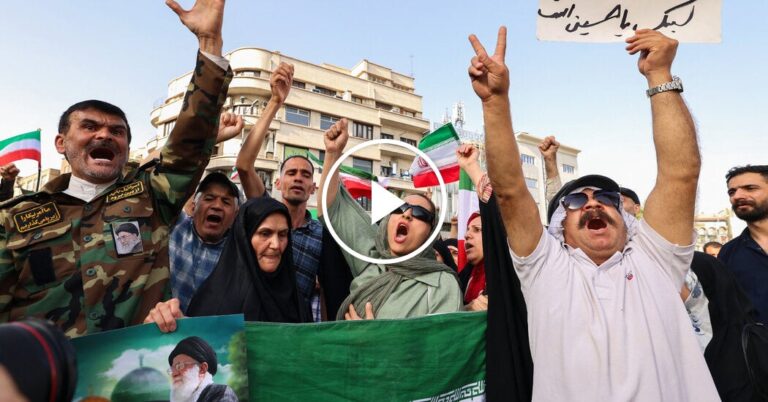
Russia and China advocate for ceasefire during UN Security Council meeting on Iran

0


UN Security Council meets on Iran as Russia, China push for a ceasefire

Iran Asserts Its Right to Retaliate Against U.S. Attacks

0

new video loaded: Iran Says It Has the Right to Respond to U.S. Attacks

transcript

transcript

Iran Says It Has the Right to Respond to U.S. Attacks

In a briefing at the Pentagon, officials said the U.S. strikes caused “severe damage” to Iranian nuclear sites. Iran condemned the attacks and has vowed to defend itself.

“The order we received from our commander in chief was focused. It was powerful. And it was clear. We devastated the Iranian nuclear program. The operation President Trump planned was bold, and it was brilliant, showing the world that American deterrence is back.” There is no red line that they have not crossed, and the last one and the most dangerous one happened only last night, when they crossed a very big red line by attacking nuclear facilities. I don’t know how much room is left for diplomacy. We are now calculating the damages. Iran, the bully of the Middle East, must now make peace. If they do not, future attacks will be far greater and a lot easier.

Recent episodes in Iran–U.S. Relations

Mideast Shipping on High Alert Following U.S. Strikes on Iran

0

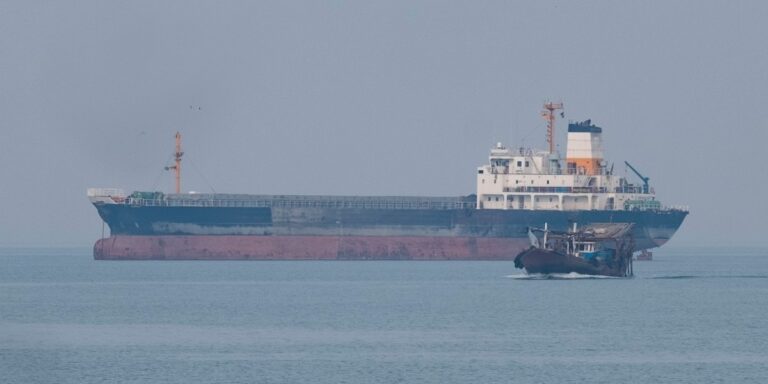
The shipping industry was placed on high alert on Sunday with warnings that Tehran could retaliate against commercial vessels following US airstrikes against Iran’s nuclear facilities.

Greece, home to more oil-tanker capacity than any other nation, cautioned its ship owners to think again if they’re considering entering the Persian Gulf in the wake of US airstrikes. Vessels planning to sail through the Strait of Hormuz, the waterway that sits at the mouth of the region, should “reassess passage” until the situation normalizes, according to a circular seen by Bloomberg that its shipping ministry sent to vessel owners. It advised waiting in nearby safe ports.

Naval forces in the area warned that ships, especially US-linked ones, could be at heightened risk. Shipping giant A.P. Moller – Maersk A/S said it continues to transit Hormuz but is ready to re-evaluate its position based on the information available.  

The actions of the maritime industry — and its risk tolerance — will be a critical detail in the wake of the strikes because of Iran’s proximity to the Strait of Hormuz, a conduit for a fifth of the world’s oil and an unavoidable searoute into the Persian Gulf.

Athens’ warning is the latest sign of pressure on shipping markets as attacks on Iran escalate. Tanker earnings already soared by almost 90% since Israel first started conducting airstrikes on June 13. As one of the world’s largest shipowning nations, advice to Greece’s vessel owners would have a major impact on commodity transportation markets, especially oil. 

There’s every chance shipowners will ignore the advice because the Persian Gulf is too-important a region for them to avoid and rates can always rise to compensate for the risk of sailing in the region. Operators that do decide to transit Hormuz should adopt the highest security level available and maintain the maximum possible distance from Iranian waters, Greece’s ministry added.

In Sunday’s notice, the Greek ministry cited concern around a possible closure of Hormuz as a reason behind its message. 

Read more: Qatar Advises Caution for LNG Vessels Using Hormuz Strait 

Officials at three Greek tanker companies said they were still assessing the situation. One did indicate he might still allow his tankers to enter the region, while another said their ships would likely stay away.

Greek government spokesman Pavlos Marinakis said in a statement that the government, via the shipping ministry, advised Greek-flagged and Greek-owned ships in the area of the Strait of Hormuz to go to safe port until the situation normalizes. 

Bigger Risk

Naval groups are also warning of greater risk. 

On Sunday, the Joint Maritime Information Center, a liaison between navies and merchant shipping in the region, said that Washington’s airstrikes mean US-linked ships sailing through the Red Sea and Gulf of Aden face a high risk of attack. 

Yemen’s Houthi rebel group issued fresh threats against American commercial and naval ships earlier in the day. There had been a ceasefire between the US and the Houthis in early May, geared toward limiting the group’s attacks on the US navy. US-linked ships should consider re-routing, the JMIC said in its update.

Still, it said some US-associated vessels have successfully transited the Strait of Hormuz, “which is a positive sign for the immediate future.”

Separately, the European Union’s naval force in the region raised its threat assessment for US-linked vessels as a result of the strikes. It now sees a severe threat to ships linked to the US and Israel and a low risk for all other ships. 

“This does not exclude the possibility of all merchant vessels being targeted in the future,” it said in an update published by France’s MICA Center, which helps co-ordinate global maritime security. 

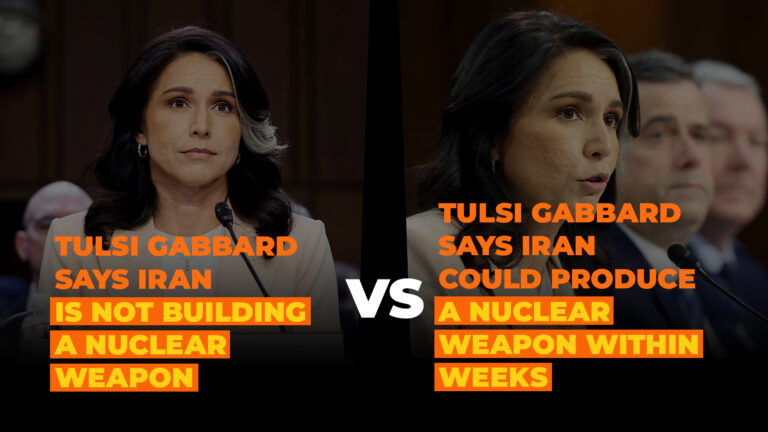
Tulsi Gabbard discusses Iran’s nuclear capabilities

0

We compare and contrast Tulsi Gabbard’s congressional testimony that Iran is not building a nuclear weapon, with her rec

US President Donald Trump risks his presidency as the United States engages in a conflict with Iran

0

Donald Trump took the biggest gamble of his combined four and a half years in the White House on Saturday night in striking Iran and joining Israel’s war against the Islamic republic. 

Trump’s primary wager is that Iran and its proxies in the Middle East have been so weakened that the US president can cast his intervention as both limited and successful. It is also a bet that a cowed Tehran will swiftly seek a settlement rather than retaliating.

If Trump is right, he will have achieved a goal that has eluded the US foreign policy establishment for decades: the elimination of the Iranian nuclear threat. And he could cement his own legacy at home and abroad as a strongman who can achieve “peace through strength”.

But the move carries the huge risk of inflaming the Middle East further — jeopardising the security of the US and Israel and backfiring on a president who had vowed not to draw America into new global conflicts. 

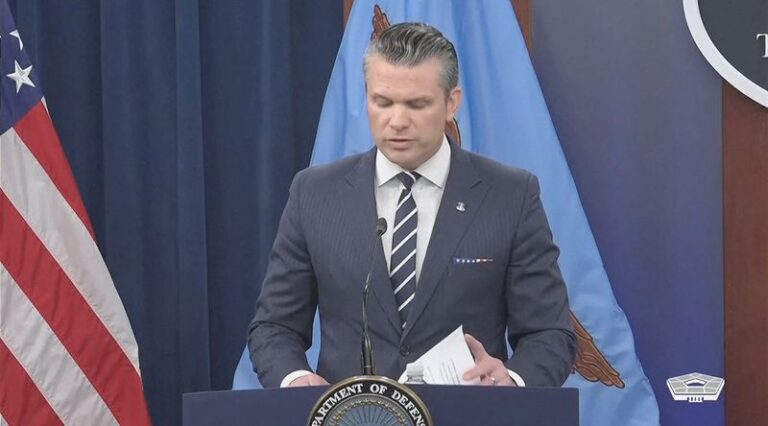
In a press conference at the Pentagon on Sunday morning, Pete Hegseth, Trump’s defence secretary, said: “Many presidents have dreamed of delivering the final blow to Iran’s nuclear programme, and none could until President Trump.”

But experts caution that the road ahead is full of unknowns — and the US president and his allies cannot claim victory until Tehran’s full response becomes clear.

“It all depends on how the Iranian regime reacts — and it’s not clear what the regime’s capacities and will are at this point. [But] Iran’s network across the region remains operationally lethal, and it is able to sow more instability and terror if it chooses to do so,” said Brian Katulis, senior fellow at the Middle East Institute, a Washington think-tank. 

Trump had spent much of his 2024 presidential campaign arguing that he would be a peacemaker in his second term, solving global conflicts rather than fomenting new ones.

But the president, under pressure from Israel’s Prime Minister Benjamin Netanyahu, saw a strike against Iran both as an opportunity to be seized, and a chance to secure a legacy as a leader willing to wield American military power.

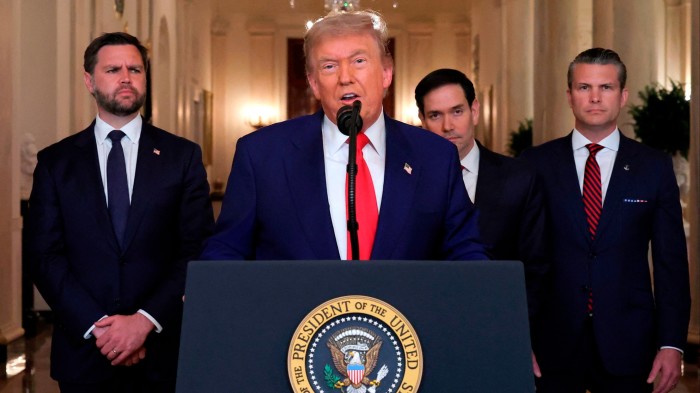
On Saturday, Trump seemed to relish his transition from isolationist to warmonger. The president donned a red “Make America Great Again” cap as he gathered with top aides in the White House situation room. During a late-night speech to the nation after the strikes, he warned that he was ready to expand the military campaign against Iran, if needed.

“There will be either peace or there will be tragedy for Iran far greater than we have witnessed over the last eight days,” Trump said. “Remember, there are many targets left . . . But if peace does not come quickly, we will go after those other targets with precision, speed and skill.”

Trump’s vice-president JD Vance — who has in the past been critical of US intervention in overseas conflicts — told ABC News on Sunday: “You can’t be weak. You can’t sit there and allow the Iranians to achieve a nuclear weapon.”

Iran has always been something of an exception to Trump’s non-interventionist mantra. In early 2020, towards the end of his first term, he launched a high-stakes military operation to assassinate Iran’s military commander Qassem Soleimani in Baghdad. 

“If Americans anywhere are threatened, we have all of those targets already fully identified, and I am ready and prepared to take whatever action is necessary. And that, in particular, refers to Iran,” Trump said at the time.

On his visit last month to the Gulf region, the US president had issued another clear warning to Tehran. “We want them to be a wonderful, safe, great country, but they cannot have a nuclear weapon,” Trump said. “This is an offer that will not last for ever.”

Those public warnings to Tehran were dramatically stepped up over the past week, as he departed early from a G7 summit in Canada to consider the strikes against Iran. His suggestion on Thursday that the Islamic Republic had two more weeks to bow to US demands proved shortlived.

Dana Stroul, former deputy assistant secretary of defence for the Middle East, now at the Washington Institute for Near East Policy, said Trump’s bellicose shift on Iran was at odds with his earlier stance on foreign policy.

“Trump has repeatedly stated his preference for diplomacy, his desire to make a deal, and his desire to be judged by the wars the United States does not enter into,” she said.

“And here we are, five months into the second administration, and he has entered the United States into direct conflict with Iran, absent a serious articulation to the American people about the intelligence picture, absent serious engagement with Congress . . . about authorising the use of military force.”

Republican lawmakers were quick to praise Trump’s move on Saturday night.

Speaker of the House Mike Johnson, a loyal ally of the president, said the strikes had prevented “the world’s largest state sponsor of terrorism, which chants ‘Death to America’, from obtaining the most lethal weapon on the planet.

“This is America First policy in action,” Johnson added.

Nearly all of the Democrats on Capitol Hill expressed outrage, questioning why the president had neither informed Congress about his plans nor sought lawmakers’ approval.

It remained unclear at the weekend whether US voters would rally behind Trump’s decision. A YouGov/Economist poll out last week showed more than half — 53 per cent — of Trump’s own supporters were opposed to the US joining Israel in striking Iran.

Still, Aaron David Miller, a former US state department negotiator in the Middle East now at the Carnegie Endowment for International Peace, said Trump had “a lot of margin politically” to keep fighting, especially if Iran retaliated.

But he also warned that the window may not be open for long, especially if the war widened or sparked a new energy crisis. “How that would play with Americans being killed, and the price of oil over $100 a barrel, is another matter.”

Jack Reed, the top Democrat on the Senate Armed Services Committee, put it another way: “This was a massive gamble by President Trump, and nobody knows yet whether it will pay off.”

Frik Potgieter and Peter Huxham released from prison in Equatorial Guinea, return to South Africa

0

Two South African engineers have returned home after spending more than two years in jail in Equatorial Guinea on what the UN has called “arbitrary and illegal” drugs charges.

Frik Potgieter and Peter Huxham, both in their mid-50s, were arrested in February 2023 after drugs were allegedly found in their luggage.

They were sentenced to 12 years in prison and fined $5m (£4m) but have been given a presidential pardon after a long campaign by their families and the South African government.

Their arrest came days after luxury assets belonging to Equatorial Guinea’s Vice-President Teodoro Nguema Obiang were seized in South Africa.

A yacht and two Cape Town villas belonging to Obiang, who is also the son of Equatorial Guinea’s president, were impounded in execution of a court ruling.

“We are overwhelmed with relief and joy. The last two years and four months have been unimaginably painful for both of our families,” according to a statement released by the two men’s families.

They were working for the Dutch oil and gas company SBM in Equatorial Guinea when they arrested the night before they were due to return home after a five-week stint in the country.

The families had called for the assistance of the South African government as well as that of the UK government, as Mr Huxham has dual nationality.

“South Africa expresses its sincere gratitude to the Government of Equatorial Guinea for considering and ultimately granting this Presidential pardon, allowing Mr Huxham and Mr Potgieter to return home to their loved ones,” said a post on X by South African Foreign Minister Ronald Lamola.

The United Nations Working Group on Arbitrary Detention last year called for the pair’s release, saying their detention was unlawful.

Their families say the pair were arrested in retaliation for the seizure of the assets belonging to Equatorial Guinea’s vice-president.

The BBC has contacted Equatorial Guinea for comment.

A South African official told the BBC it was for the courts to decide the fate of the yacht and villas, and the government couldn’t intervene.

Pentagon chief clarifies US strikes against Iran are not intended for regime change

0

US strikes against Iran not aimed at regime change, Pentagon chief says

Iran Issues Warning to US Following Strikes, Accuses Trump of Betraying Voters | Updates on Israel-Iran Conflict

0

Iran says the United States will be “solely and fully responsible for the dangerous consequences” of its attacks on Iranian nuclear sites, adding that US President Donald Trump has “betrayed” American voters by submitting to Israel’s wishes.

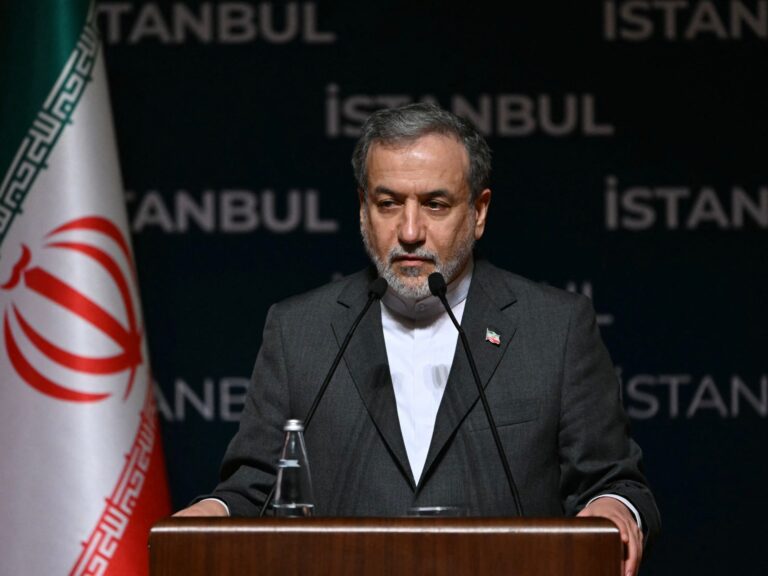
During an address to a meeting of the Organisation of Islamic Cooperation (OIC) in Istanbul on Sunday, Iran’s Foreign Minister Abbas Araghchi said the US crossed “a very big red line” by attacking Iran’s three nuclear facilities.

Speaking just hours after Trump announced that US warplanes had “obliterated” the nuclear sites, Araghchi condemned the strikes and called on the United Nations Security Council to act.

“It is an outrageous, grave and unprecedented violation of the fundamental principles of the Charter of the United Nations and international law,” he said, adding that the “warmongering and lawless” US administration will be “solely and fully responsible for the dangerous consequences and far-reaching implications of its act of aggression”.

“The US military attack on the territorial integrity and national sovereignty of a UN member state carried out in collusion with the genocidal Israeli regime has once again revealed the extent of the United States’ hostility towards the peace-seeking people of Iran. We will never compromise on their independence and sovereignty,” he said.

“The Islamic Republic of Iran continues to defend Iran’s territory, sovereignty, and people by all means necessary against not just US military aggression, but also the reckless and unlawful actions of the Israeli regime.”

Israeli Prime Minister Benjamin Netanyahu, who escalated the Middle East conflict by launching strikes on Iran on June 13, praised Trump’s “bold decision” to hit Iran’s nuclear sites, and said Israel and the US acted in “full coordination”.

After the strikes, Trump said Iran “must now agree to end this war” and that under no circumstances could Iran possess a nuclear weapon.

But Araghchi said any demand to return to negotiations on the country’s nuclear programme was “irrelevant”. The US and Iran were engaged in nuclear talks before Israel launched a surprise strike on Iran – publicly backed by the US – earlier this month.

Iran denies its uranium enrichment programme is for anything other than civilian purposes, rejecting Israeli allegations that it is secretly developing nuclear weapons. Netanyahu has pledged to continue the attacks for “as many days as it takes” to stop Iran from developing a “nuclear threat”.

Reporters take photos of a displayed graphic as US Defense Secretary Pete Hegseth speaks during a news conference at the Pentagon in Washington, DC, the United States, June 22, 2025 [Alex Brandon/AP]

“The world must not forget that it was the United States which – in the midst of a process to forge a diplomatic outcome – betrayed diplomacy by supporting the genocidal Israeli regime’s launch of an illegal war of aggression on the Iranian nation,” Araghchi said.

“So we were in diplomacy, but we were attacked. They gave a green light to Israelis, if not instructed them, to attack Iran’s nuclear facilities. They have proved that they are not men of diplomacy, and they only understand the language of threat and force.”

US Defense Secretary Pete Hegseth on Sunday said he still hopes Iran will return to the negotiating table.

“I can only confirm that there are both public and private messages being delivered to the Iranians in multiple channels, giving them every opportunity to come to the table,” he told reporters.

Trump also ‘betrayed’ US voters

Araghchi also accused Trump of betraying not only Iran, but his own supporters as well. He said Trump was elected on a platform of putting an end to “America’s costly involvement in ‘forever wars’”.

“He has betrayed not only Iran by abusing our commitment to diplomacy, but also deceived his own voters by submitting to the wishes of a wanted war criminal who has grown accustomed to exploiting the lives and wealth of American citizens to further the Israeli regime’s objectives,” said Araghchi, referring to Netanyahu.

Iran says more than 400 people have been killed and at least 3,056 others wounded since Israel launched its attacks on June 13. In Israel, at least 24 people have been killed in Iranian strikes.

Araghchi said he would head to Moscow later on Sunday and hold “serious consultations” with Russian President Vladimir Putin on Monday morning in the wake of the unprecedented US strikes.

“Russia is a friend of Iran and we enjoy a strategic partnership,” he said in Istanbul. “We always consult with each other and coordinate our positions.”

Meanwhile, Iran’s delegation to the UN also formally called for an emergency meeting of the UN Security Council on Sunday to discuss the US strikes. In a letter submitted to the council carried by Fars News Agency, the Iranian delegation urged “immediate action and the adoption of necessary measures under the framework of the United Nations Charter”.

“Silence in the face of such blatant aggression will plunge the world into an unprecedented level of danger and chaos,” Araghchi said in Istanbul. “Humanity has come too far as a species to allow a lawless bully to take us back to the law of the jungle.”

Signs of Russia’s Military Spending Bubble Bursting

0

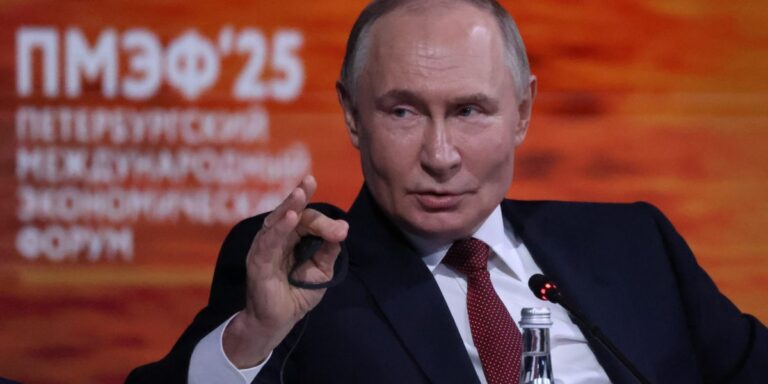
Russia’s wartime economy, once defiant in the face of Western sanctions and geopolitical isolation, is showing signs of fatigue. On Thursday, Russia’s economy minister Maxim Reshetnikov warned the country was “on the brink” of a recession at the St. Petersburg Economic Forum. 

Reshetnikov’s declaration confirmed what several economists foresaw earlier this year: Russia’s high-spending war economy, after years of defying predictions of imminent recession, is finally running into the hard limits of labor, productivity, and inflation.

Russia’s 2022 invasion of Ukraine prompted a slew of sanctions by Western nations, and the near-total departure of Western companies from the nation. But despite predictions of its imminent demise, the country’s economy has held up fairly well by pursuing what economists call “military Keynesianism,” fueling growth through massive defense-related fiscal spending. By pouring a record number of resources into the military-industrial complex, which reached a value of $167 billion last year, the Kremlin spiked industrial production, drove two consecutive years of GDP growth, and lifted wages across war-related sectors. 

For decades, the Kremlin has allowed Russia’s defense budget to grow faster than the country’s GDP, but the budget expenditures have increased enormously since the start of Russia’s invasion of Ukraine. In 2021, the country spent 3.6% of its GDP on national defense, according to the World Bank. Now, 6.3% of the GDP goes to defense spending, nearly double the share in  the United States. 

Russia’s military spending bubble has created what Elina Ribakova, economist at the Peterson Institute for International Economics describes as a game of musical chairs. 

“Everybody’s making money. Suddenly, people are enjoying higher incomes, and can get a mortgage, or buy durables. It makes this war popular in a practical, morbid way. You want the music going,” she explains.

But, as Nicholas Fenton, associate director at the Center for Strategic and International Studies warns, “You can only kind of spend so much before you hit structural limits in the economy. And the big hang up for the Russian economy throughout this period has been the country’s chronic labor shortage.”

Prior to Russia’s invasion of Ukraine, the country reported 4.75% unemployment in 2021, with levels hitting a record 2.4% low in early 2025, according to state-reported data. But as unemployment has declined, the country has also witnessed a mass exodus of as many as one million residents, and has suffered significant military deaths in the hundreds of thousands. These figures have exacerbated a pre-existing worker deficit in Russia due to a declining working-age population. In 2022 alone, the number of workers aged 16 to 35 fell by 1.33 million, and their share of the labor force was the lowest on record since 1996.

These preexisting shortages in the labor market have compounded as citizens were drafted, emigrated, or flocked to defense-related jobs with lucrative bonuses. Although real wages increased, productivity didn’t, fueling inflation and the threat of stagflation outside of the military, and stifling investments in non-defense sectors.

This spring, Russia’s manufacturing sector, an industry that also includes defense enterprises, suffered its steepest downturn in close to three years, dropping 2 points from February to March. Similarly, Russia’s industrial production growth hit a two-year low, increasing only 0.2% year-on-year.

All the while prices have continued to increase, growing by 9.52% last year compared to 7.42% in 2023. Currently, inflation in Russia sits at nearly 10% and the central bank’s hawkish stance has interest rates up to 20% in June. Meanwhile, the central bank’s growth forecast is between 1 and 2% for 2025. 

Interest rates may be shifting, however: senior officials and Russian businessmen have repeatedly called for cuts to promote growth, and President Vladimir Putin has urged policymakers to strike a balance between fighting inflation and boosting growth.  

Ultimately, for the country’s growth potential to change, the country would need to improve labor productivity, a difficult feat amid persisting sanctions and significant inflation, according to Alexander Kolyandr, senior fellow at the Center for European Policy Analysis. 

On a per-capita basis, the nation’s GDP lags far behind peers, closer to that of Mexico or Turkey than Western Europe. And unlike Germany or Japan, Russia’s growth is heavily dependent on volatile commodity exports, such as oil, and state-driven demand.

Oil and gas revenues which account for around 20% of the country’s GDP, underscoring the precarious nature of its fiscal health. In the first half of 2025, falling oil exports and a dip in global prices forced the Kremlin to revise its budget deficit. But the growing conflict between Israel and Iran has already pushed oil prices higher, offering Russia potential temporary budgetary relief.

“The war in the Middle East is actually pretty good for Putin, but that wouldn’t save the economy. It just means that the government may continue to maintain this policy of managed decline,” Kolyandr tells Fortune

Ribakova agrees with Kolyandr. “We were sort of rubbing our hands as oil was going down because that’s the most effective sanction against Russia. And of course, now we’ve seen the prices pick up,” she says.

Russia’s oil exports, however, don’t provide a solution to the lack of foreign investments in the country and the total retreat of American companies. Even with President Donald Trump’s hands-off approach to diplomacy with the Kremlin, Charles Kupchan, senior fellow at the Council on Foreign Relations, sees the return of U.S. businesses to Russia as a key bargaining chip. 

“Trump is saying to Vladimir Putin, ‘if you’re ready to make a deal and end this war and agree to a ceasefire in place, I can envisage a return of American companies to Russia. I can envisage the rehabilitation of Vladimir Putin,’” he says.