
24.4 C
New York
Wednesday, April 1, 2026
Home Blog Page 633

AI Industry Celebrates Anthropic’s Copyright Ruling Victory, But Company Faces Piracy Claims

0

In a test case for the artificial intelligence industry, a federal judge has ruled that AI company Anthropic didn’t break the law by training its chatbot Claude on millions of copyrighted books.

But the company is still on the hook and must now go to trial over how it acquired those books by downloading them from online “shadow libraries” of pirated copies.

U.S. District Judge William Alsup of San Francisco said in a ruling filed late Monday that the AI system’s distilling from thousands of written works to be able to produce its own passages of text qualified as “fair use” under U.S. copyright law because it was “quintessentially transformative.”

“Like any reader aspiring to be a writer, Anthropic’s (AI large language models) trained upon works not to race ahead and replicate or supplant them — but to turn a hard corner and create something different,” Alsup wrote.

But while dismissing a key claim made by the group of authors who sued the company for copyright infringement last year, Alsup also said Anthropic must still go to trial in December over its alleged theft of their works.

“Anthropic had no entitlement to use pirated copies for its central library,” Alsup wrote.

A trio of writers — Andrea Bartz, Charles Graeber and Kirk Wallace Johnson — alleged in their lawsuit last summer that Anthropic’s practices amounted to “large-scale theft,” and that the company “seeks to profit from strip-mining the human expression and ingenuity behind each one of those works.”

As the case proceeded over the past year in San Francisco’s federal court, documents disclosed in court showed Anthropic’s internal concerns about the legality of their use of online repositories of pirated works. So the company later shifted its approach and attempted to purchase copies of digitized books.

“That Anthropic later bought a copy of a book it earlier stole off the internet will not absolve it of liability for the theft but it may affect the extent of statutory damages,” Alsup wrote.

The ruling could set a precedent for similar lawsuits that have piled up against Anthropic competitor OpenAI, maker of ChatGPT, as well as against Meta Platforms, the parent company of Facebook and Instagram.

Anthropic — founded by ex-OpenAI leaders in 2021 — has marketed itself as the more responsible and safety-focused developer of generative AI models that can compose emails, summarize documents and interact with people in a natural way.

But the lawsuit filed last year alleged that Anthropic’s actions “have made a mockery of its lofty goals” by tapping into repositories of pirated writings to build its AI product.

Anthropic said Tuesday it was pleased that the judge recognized that AI training was transformative and consistent with “copyright’s purpose in enabling creativity and fostering scientific progress.” Its statement didn’t address the piracy claims.

The authors’ attorneys declined comment.

Russian missile strikes Dnipro church during mid-service, causing devastation | Military

0

NewsFeed

A Russian missile attack on Ukraine’s Dnipro region killed at least 17 people and wounded more than 200 others, including 18 children, Ukrainian officials said. As rescue crews combed through rubble, President Volodymyr Zelenskyy urged NATO allies in the Netherlands to invest in Ukraine’s defence.

Hello, Superfans! Universal Music Group Launches Its Own Retail Store at UMusic Hotel in Madrid

0

Universal Music Group has opened its second physical retail location globally, launching the UMusic Shop inside its UMusic Hotel in Madrid.

The Madrid shop joins Universal Music’s existing retail presence in Tokyo’s Harajuku district, where the company operates a flagship store.

The two-floor Madrid store will open on July 8 to coincide with the city’s Mad Cool Festival, with performances from UMG artists.

The development arrives nearly three years after UMG opened the doors to UMusic Hotel Madrid in November 2022.

The first ever UMG hotel, with 130 rooms and suites, is located inside the historic Albéniz Theater building in the Spanish capital.

The new UMusic Shop features high-fidelity audio systems, digital displays and curated merchandise including vinyl records, apparel and artist-specific products from Universal Music’s catalog.

It also houses a café corner offering refreshments, as well as fitting rooms and modular displays to accommodate brand collaborations.

A press release from UMusic said the Shop would “combine the sale of exclusive products with immersive music experiences for dedicated music superfans”.

“At UMusic Hotels, we’re always exploring new ways to bring fans closer to the music and the artists they love, while delivering an exceptional entertainment, retail and hospitality experience.”

Jordi Solé, UMusic Hotels

Universal Music Japan opened the Harajuku store in October 2023 as a concept retail store and as a hub for “UMG artists and fans from around the world to connect offline.” Spanning four floors, the shop features dedicated fan experiences, product launches, and retail pop-up shops.

UMG describes the Madrid shop as “more than a retail move – it’s a cultural statement.”

“The UMusic Shop is more than a store; it’s a space for discovery, inspiration, and fan connection. We’re proud to bring this vision to life in Madrid, and it’s only the beginning.”

Jordi Solé, UMusic Hotels

Jordi Solé, President, UMusic Hotels, said: “At UMusic Hotels, we’re always exploring new ways to bring fans closer to the music and the artists they love, while delivering an exceptional entertainment, retail and hospitality experience.”

“The UMusic Shop is more than a store; it’s a space for discovery, inspiration, and fan connection. We’re proud to bring this vision to life in Madrid, and it’s only the beginning.”

Universal’s growing presence in direct-to-fan retail tallies with the company’s ongoing strategy surrounding ‘superfans’.

In January, Sir Lucian Grainge, CEO & Chairman of UMG, wrote: “This year will see us expanding our product offerings to fans, as we continue to redefine the ‘merch’ category and create superfan collectibles and experiences.

“Some of this will be done through our current partners and some through our own D2C channels, which we will continue scaling to meet the massive appetite of fans.”

Meanwhile, Universal Music Group has outlined expansion plans for additional UMusic Hotels across Europe, the US and Latin America.

Originally, UMG announced in 2020 that Atlanta, Georgia; Biloxi, Mississippi; and Orlando, Florida would house the first three locations through a previously announced joint venture with entertainment investment group Dakia U-Ventures. Madrid ultimately became the debut property instead.

UMG launched the UMusic Hotels brand in October 2020, at a time when the hotel industry and the whole hospitality sector was still reeling from the COVID-19 pandemic.Music Business Worldwide

Donald Trump condemns Israel and Iran in efforts to maintain peace deal

0

Unlock the White House Watch newsletter for free

Donald Trump lashed out at both Israel and Iran as he battled to preserve the fragile truce agreed after 12 days of war between two of the Middle East’s most powerful militaries.

The ceasefire brokered by the US president appeared to be holding on Tuesday evening despite what Trump denounced as violations by both sides, which led him to issue a rare rebuke of the Israeli government.

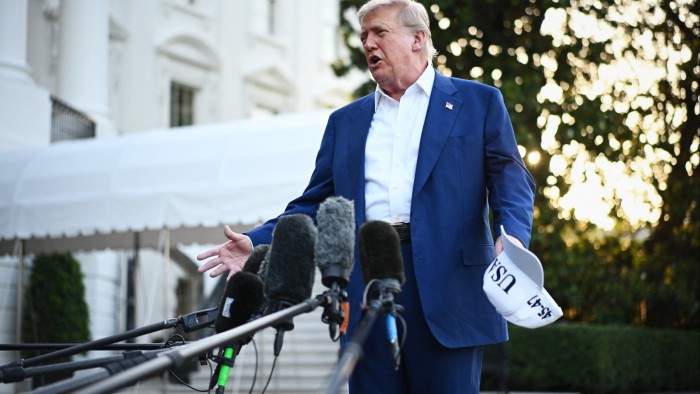
“We basically have two countries that have been fighting so long and so hard that they don’t know what the fuck they’re doing,” he told reporters at the White House before leaving for a Nato summit in the Netherlands.

The outbreak of a full-blown war between Israel and Iran has long been one of the region’s worst-case scenarios amid fears it would spill across borders and engulf the entire region.

Trump added that he was “really unhappy” with Israel in particular, but insisted that “the ceasefire is in effect”.

He had triumphantly declared the end of hostilities between the two countries on Monday.

The president promised to usher in new era of peace in the region after 48 hours in which the US claimed to have destroyed Iran’s principal nuclear sites and Tehran staged a largely symbolic retaliation against the largest US air base in the Middle East.

But in the hours before the ceasefire took effect early in the morning, Israel said it had killed “hundreds” of Iranian security personnel in bombing raids in Tehran, while an Iranian missile pierced Israeli air defences, hitting a residential building in Beersheba, killing at least four people.

After the truce came into force, Iran fired three further missiles, according to Israeli officials. The attacks left no casualties, but sparked outrage in Israel, which dispatched bombers in retaliation and struck an Iranian radar station.

“ISRAEL. DO NOT DROP THOSE BOMBS,” Trump posted on his Truth Social network as the US mobilised its diplomatic efforts to halt the conflict. “IF YOU DO IT IS A MAJOR VIOLATION. BRING YOUR PILOTS HOME, NOW!”

After a conversation between the US president and Israeli Prime Minister Benjamin Netanyahu, Israel said it had “refrained from additional attacks”.

Netanyahu’s office added: “President Trump expressed his great appreciation for Israel, which achieved all of its objectives for the war, as well as his confidence in the stability of the ceasefire.”

Trump said on the flight to the summit that he thought the ceasefire would be in place “for a long time”, adding that he respected “very greatly” Israel’s decision to “hold back the planes”.

While maintaining that Iran had also breached the truce, he offered conciliatory gestures towards Tehran’s leaders, adding that the country was “going to do well and . . . not going to have a nuclear weapon”.

The president said he was not looking for regime change in Iran, despite floating that possibility on Sunday.

“I don’t want it. I’d like to see everything calm down as quickly as possible,” he told reporters on Air Force One.

“Regime change takes chaos and ideally we don’t want to see so much chaos. So we’ll see how it goes.”

Trump also said China could “now continue to purchase oil from Iran”, in an apparent reversal of policy after his administration spent months imposing sanctions on Chinese refineries for buying Iranian crude.

Vice-President JD Vance sought to portray Trump’s rapidly shifting positions on the crisis in the Middle East as a “foreign policy doctrine” that would “change the country (and the world) for the better”. He added that the focus on US interests would involve “no mission creep” or protracted, ill defined ‘nation building’ BS”.

In a move Trump hailed as “great”, oil prices fell as Tuesday’s ceasefire appeared to take hold, trading 6.1 per cent lower at $67.13 a barrel.

Crude had dropped sharply following Iran’s attack on the US air base in Doha, which traders interpreted as designed to avoid a further response from the US.

Netanyahu launched Israel’s military campaign against Iran nearly two weeks ago, vowing to eliminate what he said was a threat from Tehran’s missile and nuclear programmes. Iran has maintained its nuclear programme is peaceful.

Boston College recruits Winter Juniors Qualifier Nick Fabian for Class of 2029

0

Fitter and Faster Swim Camps is the proud sponsor of SwimSwam’s College Recruiting Channel and all commitment news. For many, swimming in college is a lifelong dream that is pursued with dedication and determination. Fitter and Faster is proud to honor these athletes and those who supported them on their journey.

Nick Fabian, a three-time USA Swimming Scholastic All-American, has announced his commitment to Boston College, joining their class of 2029. Currently a native of Estero, Florida, Fabian will head north this fall to begin life in the ACC.

I am beyond blessed and excited to announce that I will be continuing my athletic and academic career at Boston College. I am extremely thankful for all my teammates, coaches, and friends who have supported me on my journey. I would like to give special thanks to Coach Dara and Coach Bruno for providing me with this opportunity. Most importantly, thank you to my mom, dad, and sister for their endless, unwavering support. I can’t wait to see what the future holds. GO EAGLES!!🦅🦅

Fabian is graduating from Community School of Naples, and was a two-time finalist at the FHSAA Class 1A State Championships in November, finishing 7th in the 200 free (1:40.30) and 8th in the 500 free (4:37.75). He competed in the 200 backstroke (1:56.50) and 400 IM (4:07.35) a few weeks later at the Speedo East Winter Junior Championships. Fabian was then a top-eight finisher in the 200 free (1:56.39) and 400 free (4:07.91) at the Southern Zone Sectionals in February, hitting Futures cuts on both.

He does his club swimming for T2 Aquatics, where he extends up to the mile as well as the 400 IM and 200 fly. He set best times in the 1000 free (9:09.05) and 400 IM (3:58.40) in March at the Florida Senior Championships, where he also added Futures cuts in the 200 free (1:40.60) , 500 free (4:30.47) and mile (15:48.61). He finished fourth in the 1000 free and 8th in the 1650 there in Orlando.

SCY Best Times

  • 200 Free: 1:40.30
  • 500 Free: 4:28.44
  • 1650 Free: 15:35.64
  • 200 Backstroke: 1:52.63
  • 200 Butterfly: 1:51.14
  • 200 IM: 1:56.32
  • 400 IM: 3:58.40

He is a versatile swimmer who will strengthen Boston College’s distance freestyle and IM groups. His 500 ranks him third on the team behind Finn Crawford and Ben Huffman for next year, while his mile time would rank second behind Huffman.

Boston College currently competes in the ACC conference, where the men finished 13th at the 2025 championships. While Fabian is not in scoring range yet for the Eagles, he could well find himself on the 800 free relay in years to come. The slowest split on that relay was 1:37.78, less than three seconds faster than his 200 free flat start time.

Fabian will join a big recruiting class in Boston this fall, made up of Gabriel Aleman, Luke Amerson, Sirui Wang, Lucas Bailey, Matt Cinque, Ryan Mendlick, Palmer Bice, Jack Hernandez, Jonah Nathanson, Evan Tack and Greyson Davies.


If you have a commitment to report, please send an email with a photo (landscape, or horizontal, looks best) and a quote to [email protected].

About the Fitter and Faster Swim Tour 

Fitter & Faster Swim Camps feature the most innovative teaching platforms for competitive swimmers of all levels. Camps are produced year-round throughout the USA and Canada. All camps are led by elite swimmers and coaches. Visit fitterandfaster.com to find or request a swim camp near you.

FFT SOCIAL

Instagram – @fitterandfasterswimtour
Facebook – @fitterandfastertour
Twitter – @fitterandfaster

FFT is a SwimSwam partner.

MIT creates one-shot HIV vaccine with two adjuvants

0

Researchers at Massachusetts Institute of Technology (MIT) have developed a way to ‘supercharge’ vaccines to the extent that just a single dose can provide strong protection from HIV.

Vaccines typically comprise two key components: immunogens that trigger an immune response in the body, and adjuvants which boost your immune system’s response to the immunogens. The MIT team, which collaborated with the medicine-focused Scripps Research Institute, focused on the latter, and actually combined two adjuvants to elicit a significantly better immune response than a vaccine with just either of them.

In the team’s study, whose results appeared in a paper in Science Translational Medicine this week, mice that received the dual-adjuvant vaccine exhibited a much wider range of antibodies against an HIV antigen, compared to those who received a vaccine with only one of the adjuvants.

The adjuvants in question are the commonly used aluminum hydroxide or alum, and a nanoparticle called SMNP developed by researcher and immunology professor Darrell Irvine. SMNP contains saponin, an adjuvant derived from the Chilean soapbark tree, and a synthetic adjuvant called Monophosphoryl Lipid A (MPLA).

In this work, the researchers found that the dual-adjuvant vaccine boosted what’s called the B cell response by two to three times more than single-adjuvant formulations. These B cells produce antibodies that can recognize a pathogen the body has previously been exposed to, and that gives you a better chance of fighting off dangerous viruses.

Indeed, the new approach caused the dual-adjuvant vaccine to accumulate in the mice’s lymph nodes and stay there for a month, during which time their immune systems effectively built up plenty of antibodies against the HIV protein.

The vaccine antigen (pink) being concentrated in a germinal center (yellow) within B cell follicles (cyan), triggered by the researchers’ combination adjuvant vaccine

Image courtesy of the researchers

“What’s potentially powerful about this approach is that you can achieve long-term exposures based on a combination of adjuvants that are already reasonably well-understood, so it doesn’t require a different technology,” chemical engineering professor J. Christopher Love remarked. “It’s just combining features of these adjuvants to enable low-dose or potentially even single-dose treatments.”

According to the researchers, this approach could come in handy for formulating protein-based vaccines to protect against many more challenging viruses, including influenza and SARS-CoV-2 (which causes COVID-19).

Interestingly, this breakthrough comes just as the US Food and Drug Administration (FDA) approved Lenacapavir, a twice-yearly injection that’s described as a ‘near-perfect shield against HIV infection.’ Rolling it out might prove challenging, as major global health programs that would procure and distribute the drug in low-income countries, have been slashed or undermined.

For context, HIV has already claimed more than 42 million lives worldwide, and nearly as many people were estimated to be living with the condition by the end of 2023. Of those people, 65% are in Africa. And in 2023, it was estimated that 1.3 million were infected with HIV globally.

Measures to prevent infection, such as strong vaccines, will prove vital to fighting this disease in the years to come.

Source: MIT News

Video Shows Explosion at Military Base Near Baghdad

0

The Iraqi authorities said a wave of drones targeted several Iraqi military bases in the early hours of Tuesday, including the Taji base 12 miles north of Baghdad, hours after Iran launched missiles at a U.S. base in Qatar.

Israel’s shortcomings in managing the Israel-Iran conflict

0

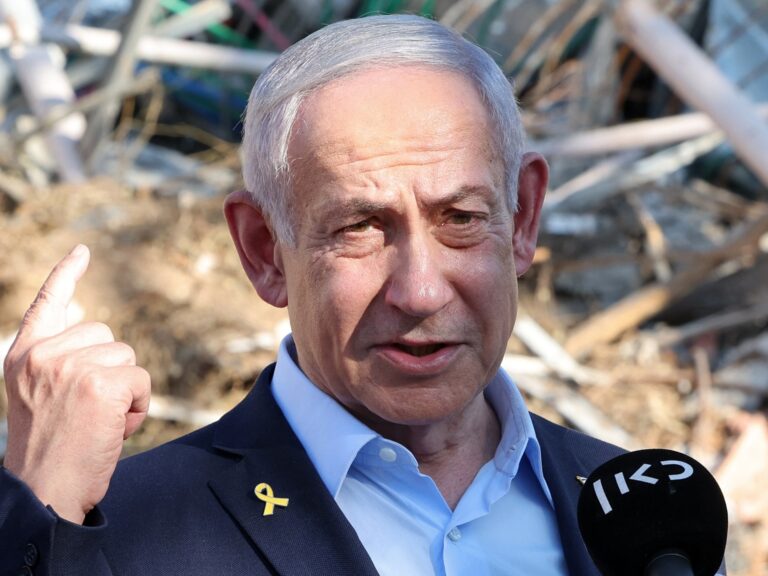
What did Israel accomplish in Iran after 11 days of incessant bombing? Prime Minister Benjamin Netanyahu claimed in his statement acknowledging the ceasefire that the Israeli goals have been achieved. Such an assertion seems problematic, to say the least.

At the start of the short-lived war, he declared two goals: “decapitating the nuclear programme” and “regime change”.

Was the nuclear programme decapitated? The answer is likely negative. It seems that Iran transported fissionable material out of the Fordow facility attacked by the United States. This stockpile is the most important part of the nuclear programme, so “decapitation” seems to have failed.

What damage, if any, did Israel inflict on the Iranian nuclear programme? That is also unclear. Israel managed to persuade the US to attack Iranian nuclear facilities using bunker-busting bombs, Massive Ordnance Penetrators (MOPs), but the US did little else to help the Israeli offensive. The extent of destruction would be hard to evaluate since Iran is unlikely to grant outside access.

Has Israel generated “regime change” in Iran? The brief answer is that it has very much achieved the opposite. Israel attempted to trigger an uprising against the regime by killing military leaders of Iran’s various security structures. This strategy is based on the firm Israeli belief that the best way to destabilise an enemy is through assassinations of senior leaders. This has never worked. The only possible exception was the effect Hassan Nasrallah’s death had on Hezbollah in Lebanon, but that had a great deal to do with internal Lebanese political dynamics. In all other cases, Israeli assassinations have failed to create any major political change.

In the case of Iran, the assassinations rallied the people around the government. Israel assassinated the senior commanders of the Iranian Revolutionary Guard Corps (IRGC), perhaps the most powerful element in current Iranian politics, but also one of the most hated by the Iranian public. Regardless, many Iranians who consider themselves staunch opponents of the Islamic Republic and especially of the IRGC found themselves supporting it. Iranians saw Iran in its entirety under attack and not just “the regime”.

Israel’s attempts to bomb “regime symbols” only made the situation worse. It attempted to spin its air strikes on Evin Prison, infamous for the torture of political prisoners, as a contribution to the struggle of the Iranian people against the repression of the Islamic Republic. But Israel’s bombs effectively worsened the situation of the prisoners, as the authorities moved many of them to unknown locations.

Bombing the “Israel doomsday clock”, which Israelis often employ as a demonstration of Iran’s commitment to Israel’s destruction, was simply pathetic.

Israel’s bombing of the Iranian state broadcaster IRIB was also absurd. Israel claimed it was curtailing the regime’s attempt to spread propaganda. As many Israelis pointed out, this bombing gave the Iranians the vindication they needed to threaten Israeli television stations as well.

If Israel did not manage to achieve its stated war goals, did it at least manage to rally the world behind it, to make the public forget about Gaza and recast Israel again as fighting the good fight? That seems dubitable at best. True, President Donald Trump and the US did strike Iranian nuclear facilities. By doing so, they violated several major rules of international law. This is likely to have long-term implications. However, Trump did not join the war alongside Israel. Immediately after the strike, the strategic bombers returned to the US.

Before and after carrying out the bombing, Trump iterated and reiterated his desire for a deal between the US and Iran, one that may also include Israel. It seems likely that the US president assisted Israel to serve his own interests as well as those of his allies in the Gulf.

While several world leaders, most notably German Chancellor Friedrich Merz, were quick to support the US strikes and “Israel’s right to defend itself”, no one adopted Israel’s stringent list of demands, which included that  Iran should not be able to enrich uranium at all.

The world returned to the formula of “no nuclear weapon”, with which Iran had already announced it was willing to comply.

When it comes to the operational development of the Middle East, the world appears to find Iran a legitimate partner for doing business. This is a loss for Israel and a victory for Iran.

The very real damage to the Israeli heartland should also be considered. Israel achieved aerial dominance over Iran very quickly and struck almost at will. Iranian missiles, however, repeatedly managed to penetrate the famed Israeli air defence system, strike at the heart of Israel and across the entire country, and bring it to a standstill while inflicting an unprecedented number of casualties as well as massive destruction. Israel was running low on interceptor missiles without hopes of immediate replenishment. The Israeli economy was quickly grinding to a halt. This was another triumph for Iran.

Iran emerged from the war bruised and bombed, suffering hundreds of casualties and real damage from incessant bombing around the country. But the Islamic Republic did not crumble, even when facing a massive Israeli force.

Iranian missiles hit home, Iran’s image was not tarnished (it was seen by most of the world as a victim of an Israeli attack), and Iran’s options for response were not severely constrained. Iran successfully de-escalated by warning in advance about its “retaliation” for the US strike on its military base in Qatar.

Iran was powerful enough to convince Trump to warn Israel not to attack after the ceasefire appeared to have been violated. Iran emerged as it prefers to emerge – still standing, and with potential for the future.

The views expressed in this article are the author’s own and do not necessarily reflect Al Jazeera’s editorial stance.

NextEra CEO emphasizes the need for a cautious approach to rolling back clean energy tax credits

0

No matter the challenge, America always rises to the occasion. From the first successful airplane flight to landing a man on the moon, nothing can stop American grit and ingenuity. It is what makes our country great.

Today, we face new challenges: winning the global AI race and fueling an American manufacturing renaissance.

Doing so requires an enormous amount of electricity—much more than America can generate today. It’s an undertaking that will take Herculean efforts of infrastructure building unlike anything we’ve seen since the end of World War II.

To maintain American dominance on a global stage, the U.S. 450 gigawatts of generation over the next five years—to put that in perspective, that’s the equivalent of adding enough generation to power 75 Miami metro areas or 11 Floridas. For context, just over 40 gigawatts of new natural gas and nuclear has been built over the last five years in the U.S.

Now is not the time to take options off the table. The stakes are too high. Finishing second in artificial intelligence cannot be an option. Nor should squandering an opportunity to create American jobs.

Clean energy tax credits

It’s why the debate over clean energy tax credits cannot be just about renewable energy. It’s much more than that. It’s about whether we want to turn our backs on the only forms of power generation available at scale at a time when the U.S. needs every electron it can get.

I say this not as an ideologue, but as the CEO of the country’s largest electric provider and America’s quintessential all-forms-of-energy company.

NextEra Energy is not just a leader in home-grown renewables. We own and operate more natural gas power plants than anyone in America. We also operate one of the nation’s largest nuclear fleets. We own pipelines and a natural gas extraction business. Our sole abiding interest is delivering low-cost energy to our customers as quickly as possible.

It’s clear Congress —we’re not here to debate that. But for the sake of America’s power supply, economy, and national security, we urge lawmakers to take a measured approach.

Because new nuclear power plants are not available until the mid-2030s and traditional power plants take years to build and turbines , a full-stop, immediate elimination of credits or a change to start of construction would effectively shut off America’s supply of new power plants through the end of the decade.

Until then, America’s only option is to build wind, solar, and battery storage—which can serve as a bridge while we expand traditional power plant supply chains and workforces.

Lower energy costs

Last week’s Senate Finance Committee acknowledges this reality and offers a pragmatic approach to phasing out the clean energy credits, recognizing that businesses signed contracts and made enormous capital decisions based on current law. By some estimates, over $1 trillion of U.S. energy infrastructure investments could be put at risk.

Practical, commonsense provisions, like tying credits to the start of construction as they are phased out, provide a runway to finish projects and put much-needed electrons onto the grid while keeping power prices low for American homes and businesses.

Remember, energy companies do not get the credits—they flow directly to American homeowners and business owners through lower energy costs. And in rural communities across America, renewable and storage projects inject significant tax revenue often used for essential services like police, schools, and roads.

Investing in American infrastructure and putting our country first should not divide us. We should be united about what’s at stake, compromise in deference to the facts, and work together to build what America needs.

We have a golden opportunity to meet this uniquely American moment. Let’s come together and get this right for America.

John Ketchum is the chairman and CEO of NextEra Energy, one of the largest electric power and energy infrastructure companies in North America.

The opinions expressed in Fortune.com commentary pieces are solely the views of their authors and do not necessarily reflect the opinions and beliefs of Fortune.

Read more: