

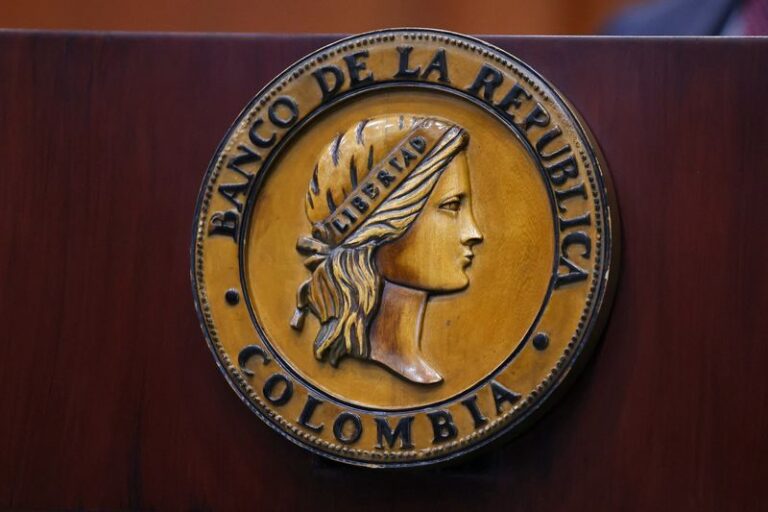
Colombia central bank holds rate at 9.25% amid fiscal uncertainty, inflation
The Trump administration’s focus on arresting individuals in immigration courts | Migration News
Houston, Texas – Oscar Gato Sanchez had gotten dressed up for his day in immigration court. The 25-year-old wore a red button-down, black slacks and dress shoes, his dark hair trimmed short with the aim of leaving a good impression.
It was a Monday afternoon in June, and Gato Sanchez, a Cuban immigrant, had come to present himself before a United States immigration judge.
As he sat inside the Texas courtroom, he had no reason to doubt that the court would eventually hear his case.
Gato Sanchez was seeking asylum on the basis that his life would be in danger if he returned to Cuba. There, human rights groups have accused the government of repression and torture, and Gato Sanchez feared he would face repercussions for having attended recent antigovernment protests on the island.
While he waited to go before the judge, his aunt, who asked not to be named for fear of retaliation, sat in the room outside. She was anxious. The clock seemed to move more slowly than usual.
“What is taking so long?” his aunt, a Houston resident, asked a friend next to her.
But the two women were not the only ones waiting outside the courtroom. Near the elevators, four men sat staring at their phones, dressed in ordinary street clothes.
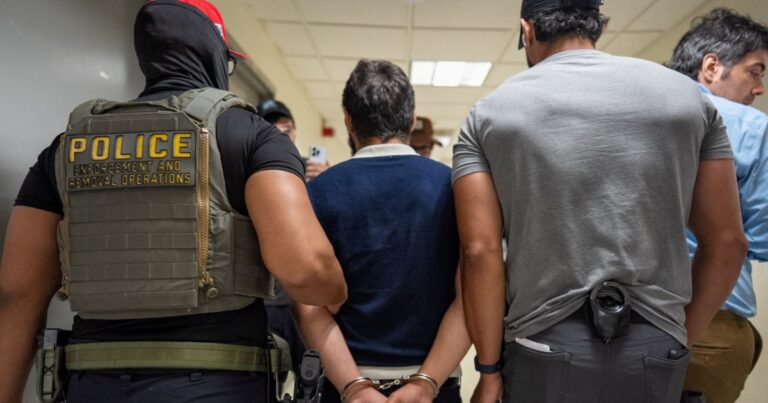
Around 3:15pm, Gato Sanchez emerged from the courtroom with a folder of documents in his hands. As soon as he did, the four men surrounded him. It was as if they already knew Gato Sanchez’s case had been dismissed.
They were federal agents, and they were in the courthouse to take Gato Sanchez into custody as soon as his case was thrown out.
His aunt was frantic. She tried to ask for information. But the only details the men would give her was that her nephew would be sent to Conroe, Texas, the site of the largest detention centre in the Houston area.
The men did not even tell her whether they were from Immigration and Customs Enforcement (ICE) or another federal law enforcement agency.
“Why, God, did they do this?” His aunt screamed, overcome with emotion. As the agents took Gato Sanchez away, his aunt’s friend yelled out to him.
“You’re not a bad person,” she said through tears.
Gato Sanchez is one of the hundreds of people recently detained immediately after leaving their immigration hearings. Advocates fear the courthouse arrests not only violate the right to due process but also discourage immigrants from pursuing legal means to stay in the US.
“These are people that are doing the right thing,” said Cesar Espinosa, the executive director of Houston immigrant rights nonprofit FIEL.
“You’re between a rock and a hard place. If you don’t show up, they’re going to come get you. If you do show up, they’re going to come get you, which is not due process.”
Nvidia’s surge could push market value to $4 trillion
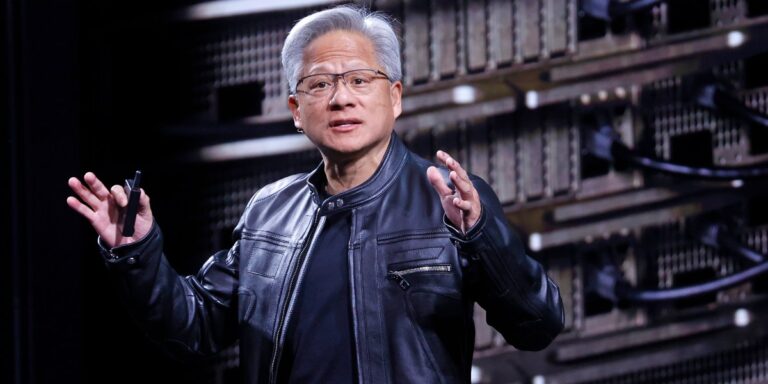
Two years after Nvidia Corp. made history by becoming the first chipmaker to achieve a $1 trillion market capitalization, an even more remarkable milestone is within its grasp: becoming the first company to reach $4 trillion.
After the emergence of China’s DeepSeek sent the stock plunging earlier this year and stoked concerns that outlays on artificial intelligence infrastructure were set to slow, Nvidia shares have rallied back to a record.
Its biggest customers remain full steam ahead on spending, much of which is flowing to its computing systems. A 66% gain from an April low has pushed its market capitalization to $3.8 trillion, overtaking Microsoft Corp. at $3.70 trillion to again become the world’s most valuable company. Nvidia shares rose as much as 1.3% in early trading Friday.
With a broadening customer base clamoring for Nvidia’s latest AI accelerators and competitors still distant, bulls are betting the chipmaker’s shares have plenty of room to run.
“We believe that Nvidia is truly uniquely positioned, and that it will sustain its position over the next decade-plus,” said Aziz Hamzaogullari, chief investment officer at Loomis, Sayles & Co. and founder of the firm’s growth equity strategies team.
Hamzaogullari isn’t alone. This week, Loop Capital analyst Ananda Baruah raised Nvidia’s price target to $250 from $175, a level that would equate to a roughly $6 trillion market value. Baruah, who has a buy rating on the stock, expects annual AI spending from various types of customers to rise to nearly $2 trillion by 2028.
“While it may seem fantastic that Nvidia fundamentals can continue to amplify from current levels, we remind folks that Nvidia remains essentially a monopoly for critical tech, and that it has pricing (and margin) power,” Baruah wrote in a research note on June 25.
The bullish sentiment behind Nvidia and other makers of AI gear is a stark reversal from earlier in the year when the emergence of advanced chatbots like DeepSeek, developed relatively cheaply in China, sparked fears that Nvidia’s customers would cut spending. Instead, US tech giants are plowing even more money into computing infrastructure.
Read More: Nvidia Attempts to Breakout of Range Relative to the S&P 500
Microsoft, Meta, Amazon.com Inc. and Alphabet Inc. are projected to put about $350 billion into capital expenditures in their upcoming fiscal years, up from $310 billion in the current year, according to the average of analyst estimates compiled by Bloomberg. Those companies account for more than 40% of Nvidia’s revenue.
Of course, there are still plenty of risks that could derail Nvidia’s rally. The company relies on Taiwan Semiconductor Manufacturing Co. for the production of its chips, exposing Nvidia to US President Donald Trump’s trade policies, which can change on a whim. Trump’s 90-day pause on the stiffest tariffs is set to end on July 9.
At the same time, there’s no guarantee Nvidia’s biggest customers won’t change their tune on spending in coming years. Many of them are developing their own chips to avoid the steep prices commanded by Nvidia.
“The valuation depends on the persistence of growth, and we already know that Nvidia’s largest customers are trying to figure out ways to be more efficient with their spending, not just with Nvidia, but also offloading to their own silicon,” said Dan Davidowitz, chief investment officer at Polen Capital Management. “You have to have very robust assumptions to get comfortable with the valuation, and we just don’t have a good enough view on what that demand looks like.”
Nvidia shares are priced at 32 times earnings projected over the next 12 months, compared with 22 times for the S&P 500.
The stock’s valuation doesn’t bother Loomis Sayles’s Hamzaogullari, who remains a firm believer that AI will transform society and is convinced that Nvidia will remain a key winner as productivity gains from the technology expand.
“That doesn’t mean it will be steady Eddie all the time, that there won’t be disruptions in spending, but this is a secular structural change, and Nvidia remains one of the biggest beneficiaries,” Hamzaogullari said. “The stock still looks attractive given that backdrop.”
Residents of Tehran are deeply shaken as the city comes back to life

Lyse Doucet
Chief international correspondent
Reporting fromTehran, Iran
In the heart of the Iranian capital, the Boof cafe serves up refreshing cold drinks on a hot summer’s day.
They must be the most distinctive iced Americano coffees in this city – the cafe sits in a leafy corner of the long-shuttered US embassy.
Its high cement walls have been plastered with anti-American murals ever since Washington severed relations with Tehran in the wake of the 1979 Iranian revolution and the hostage crisis – which still cast a long shadow over this tortuous relationship.
Inside the charming Boof cafe, Amir the barista says he’d like relations to improve between America and Iran.
“US sanctions hurt our businesses and make it hard for us to travel around the world,” he reflects as he pours another iced coffee behind a jaunty wooden sign – “Keep calm and drink coffee.”
Only two tables are occupied – one by a woman covered up in a long black veil, another by a woman in blue jeans with long flowing hair, flouting the rules on what women should wear as she cuddles with her boyfriend.
It’s a small snapshot of this capital as it confronts its deeply uncertain future.
 Charlotte Scarr/BBC
A short drive away, at the complex of Iran’s state TV station IRIB, a recorded speech by the Supreme Leader Ayatollah Ali Khamenei was broadcast to the nation on Thursday.
“The Americans have been opposing the Islamic Republic of Iran from the very beginning” he declared.
“At its core, it has always been about one thing: they want us to surrender,” went on the 86-year Ayatollah, said to have taken shelter in a bunker aer Israel unleashed its unprecedented wave of strikes targeting Iran’s nuclear and missile sites and assassinating senior commanders and scientists.
We watched his speech, his first since President Donald Trump suddenly announced a ceasefire on Tuesday, on a small TV in the only office still intact in a vast section of the IRIB compound. All that’s le is a charred skeleton of steel.
When an Israeli bomb slammed into this complex on 16 June, a raging fire swept through the main studio which would have aired the supreme leader’s address. Now it’s just ash.
You can still taste its acrid smell; all the TV equipment – cameras, lights, tripods – are tangles of twisted metal. A crunching glass carpet covers the ground.
Israel said it targeted the propaganda arm of the Islamic Republic, accusing it of concealing a military operation within – a charge its journalists rejected.
Its gaping shell seems to symbolise this darkest of times for Iran.
You can also see it in the city’s hospitals, which are still treating Iranians injured in Israel’s 12-day war.
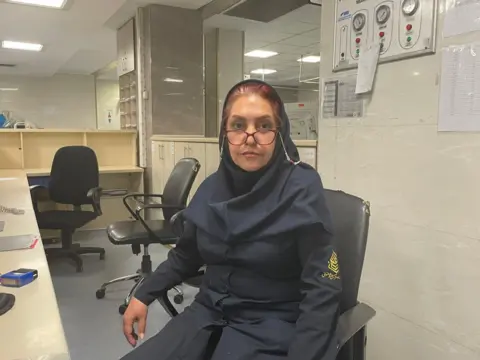
“I am scared they might attack again, ” Ashraf Barghi tells me when we meet in the emergency department of the Taleghani General hospital where she works as head nurse.
“We don’t trust this war has ended” she says, in a remark reflecting the palpable worry we’ve heard from so many people in this city.
When Israel bombed the threshold of the nearby Evin prison on 23 June, the casualties, both soldiers and civilians, were rushed into Nurse Barghi’s emergency ward.
“The injuries were the worst I’ve treated in my 32 years as nurse,” she recounts, still visibly distressed.
The strike on the notorious prison where Iran detains most of its political prisoners was described by Israel as “symbolic”.
It seemed to reinforce Israeli Prime Minister Netanyahu’s repeated message to Iranians to “stand up for their freedom”.
“Israel says it only hit military and nuclear prison but it’s all lies,” insists Morteza from his hospital bed. He had been at work in the prison’s transport department when the missile slammed into the building. He shows us his injuries in both arms and his backside.
In the ward next door, soldiers are being cared for, but we’re not allowed to enter there.

 Charlotte Scarr/BBC
Across this sprawling metropolis, Iranians are counting the cost of this confrontation. In its latest tally, the government’s health ministry recorded 627 people killed and nearly 5,000 injured.
Tehran is slowly returning to life and resuming its old rhythms, at least on the surface. Its infamous traffic is starting to fill its soaring highways and pretty tree-lined side streets.
Shops in its beautiful bazaars are opening again as people return to a city they fled to escape the bombs. Israel’s intense 12-day military operation, coupled with the US’s attacks on Iran’s main nuclear sites, has le so many shaken.
“They weren’t good days, ” says Mina, a young woman who immediately breaks down as she tries to explain her sadness. “It’s so heart-breaking, ” she tells me through her tears. “We tried so hard to have a better life but we can’t see any future these days.”
We met on the grounds of the soaring white marble Azadi tower, one of Tehran’s most iconic landmarks. A large crowd milling on a warm summer’s evening swayed to the strains of much-loved patriotic songs in an open air concert of the Tehran Symphony Orchestra. It was meant to bring some calm to a city still on edge.
 AFP
AFPSupporters and critics of Iran’s clerical rulers mingled, drawn together by shared worry about their country’s future.
“They have to hear what people say,” insists Ali Reza when I ask him what advice he would give to his government. “We want greater freedoms, that’s all I will say.”
There’s defiance too. “Attacking our nuclear bases to show off that ‘you have to do as we say’ goes against diplomacy,” says Hamed, an 18-year-old university student.
Despite rules and restrictions which have long governed their lives, Iranians do speak their minds as they wait for the next steps by their rulers, and leaders in Washington and beyond, which carry such consequences for their lives.
Additional reporting by Charlotte Scarr and Nik Millard.
Lyse Doucet is being allowed to report in Iran on condition that none of her reports are used on the BBC’s Persian service. This law from Iranian authorities applies to all international media agencies operating in Iran.
Suno, an AI music platform, expands into DAW market with acquisition of WavTool

Suno, the AI music startup currently in a legal battle with major record labels alongside its rival Udio, is foraying into the digital audio workstation (DAW) market with its acquisition of WavTool.
Suno announced the acquisition on Thursday (June 26), a day after its rival Udio released a visual editing workstation for AI-generated music.
Suno’s acquisition of WavTool integrates the latter’s browser-based DAW technology into Suno’s existing AI music generation platform.
In a press release announcing the acquisition, Suno described WavTool as “the first browser-based DAW to combine professional-grade music production features” like VST plugin compatibility, sample-accurate editing, and live recording.
WavTool has integrated AI capabilities including stem separation and automated MIDI generation. It also operates an in-app chatbot for real-time music editing.
“We’re finding that many of Suno’s early adopters are professional songwriters and producers who are seeing immense value in integrating AI into their creative process.”
Mikey Shulman, Suno
The deal follows Suno’s release of a new set of upgrades earlier this month, including the ability to upload up to 8 minutes of audio, replace lyrics, rework sections, and remix ideas.
Discussing the Wavtool acquisition, Mikey Shulman, CEO and co-founder of Suno, said: “We’re finding that many of Suno’s early adopters are professional songwriters and producers who are seeing immense value in integrating AI into their creative process.”
“Our ultimate goal is to empower musicians, build tools that amplify human creativity and open up access to making great music. By bringing in WavTool’s elite DAW technology, and their team of experts, we’re in a position to better deliver on our mission.”
Following the acquisition — financial terms of which were not disclosed — WavTool’s team will join Suno.
Sam Watkinson, co-founder and former CEO of WavTool, said: “Once we came to understand how Suno operates, and how aligned the Suno team is with our vision for AI in the music creation process, we knew joining forces was the right move.”
“Once we came to understand how Suno operates, and how aligned the Suno team is with our vision for AI in the music creation process, we knew joining forces was the right move.”
Sam Watkinson, Wavtool
“It’s a great privilege to be part of a team with such deep passion for music and a shared commitment to advance the future of music production – I can’t wait to show off what we’ve been building together.”
Suno raised $125 million in funding in the spring of 2024 from a variety of tech companies and venture capital funds, valuing the company at $500 million.
The acquisition of WavTool comes afer the DAW market was valued at $4.1 billion in 2024, and is forecast to reach $6.65 billion by 2032, according to data from Grand View Research.
Players in the field – for users of varying expertise – include Apple’s GarageBand, Adobe, BeatConnect, BandLab, and Avid Technology.
On Monday (June 23), music creation platform Splice announced that it has integrated its sample library with Avid’s Pro Tools DAW.
Suno’s entry into the DAW market comes as its co-founder and CEO Mikey Shulman suggested in a Rolling Stone article last year that, in the future, a billion people paying $10 per month (that’s $120 billion a year, all told) could be creating songs with Suno.
Also last year, Suno said it planned to pay $1 million between May 2024 and December 2024 to creators making music on its platform, starting with a tranche of $100,000 paid out to the 500 highest-ranked tracks made publicly available on the Suno platform in June 2024.
Music Business Worldwide
Mexico Considers Legal Action Against Elon Musk for SpaceX Debris: Environmental Concerns addressed
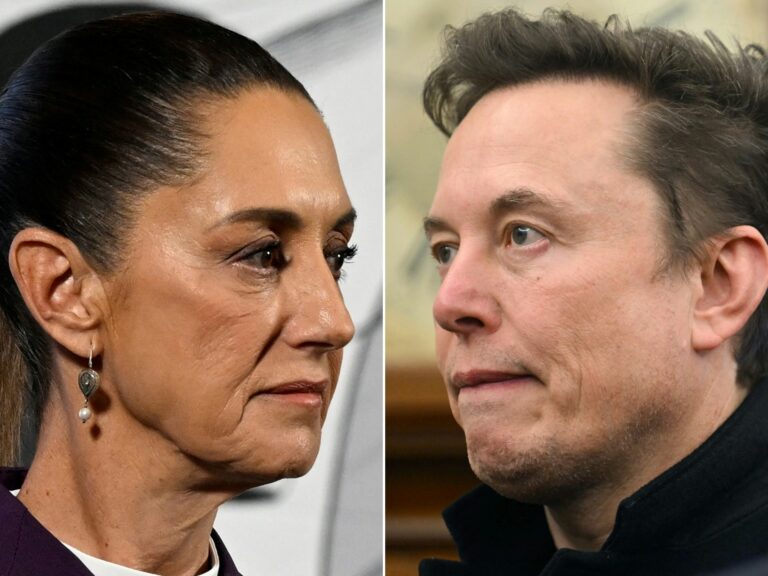
Mexican President Claudia Sheinbaum has threatened to sue Elon Musk’s SpaceX over falling debris from a rocket launch across the border in the United States.
SpaceX said its efforts to recover debris from Mexico had been hindered by “trespassers”.
Here is more about what is happening between Mexico and SpaceX.
What happened?
A SpaceX “Starship” rocket, part of Musk’s project to send humans to space, exploded in a giant fireball during a routine launch test in Texas on June 19.
Starship rockets are 120 metres (400ft) tall and made primarily from stainless steel.
The rocket, called the Starship 36, went through “catastrophic failure and exploded” at the Starbase launch facility at 04:00 GMT, according to local Cameron County authorities.
The facility is located at Starbase, formerly called Boca Chica Village, in Cameron County, Texas, close to the US-Mexico border.
What does Mexico say about contamination?
On Wednesday this week, Sheinbaum told her morning news conference that “there is indeed contamination” which has been detected in Mexico in the aftermath of the SpaceX explosion.
She said Mexican officials are conducting a review of the environmental effect caused to the Mexican state of Tamaulipas, a little more than 300km (190 miles) from Starbase.
Tamaulipas governor, Americo Villarreal Anaya, said authorities were examining “the internationally required distances are being respected in order to have these types of facilities, so that there is no risk to urban centres”, according to a report in The New York Times.
“We are reviewing everything related to the launching of rockets that are very close to our border,” said Sheinbaum.
She added that Mexico is currently trying to determine whether international laws had been violated so it can file “the necessary lawsuits”.
What does SpaceX say?
In an X post on Thursday, SpaceX claimed its attempts to recover the fallen debris from Mexican territory had been hindered.
“Despite SpaceX’s attempts to recover the anomaly related debris, which is and remains the tangible property of SpaceX, these attempts have been hindered by unauthorised parties trespassing on private property,” the X account wrote. It did not clarify who these parties were or where they were “trespassing”.
SpaceX also said there were “no hazards to the surrounding area” from the rocket debris. “Previous independent tests conducted on materials inside Starship, including toxicity analyses, confirm they pose no chemical, biological, or toxicological risks.
“We have requested local and federal assistance from the government of Mexico in the recovery,” it added.
As previously stated, there are no hazards to the surrounding area. Previous independent tests conducted on materials inside Starship, including toxicity analyses, confirm they pose no chemical, biological, or toxicological risks.
And as is the case before any test, a safety… https://t.co/lJHGInE5vj
— SpaceX (@SpaceX) June 26, 2025
Where else have SpaceX rockets exploded?
In May, the Federal Aviation Administration in the US granted SpaceX permission to increase the number of Starships it launches each year from five to 25.
Later that month, a Starship prototype exploded over the Indian Ocean.
Before that, two Starships broke into pieces after launching from Texas during test flights in January and March. In January, airlines were forced to divert flights to avoid falling debris.
Does space debris pose a danger to the Earth?
In January this year, a red-hot 500kg (1,100lb) metallic object fell onto a village in Kenya’s Makueni county, 115km (70 miles) southeast of Nairobi. The Kenyan space agency said the debris was a fragment of a space object.
On Monday, March 3, the Australian Space Agency released an advisory that a Russian rocket making re-entry into the Earth’s atmosphere was expected to fall into international waters off the southeast coast of Tasmania, causing a “sonic boom”. However, the following day, the agency said it had “monitored a space debris re-entry over the southeast coast of Tasmania” but was “unaware of any reports or sightings of the debris”.
The likelihood of space debris posing a danger to people, aircraft or the Earth, in general, is very low. However, recent studies show that the amount of space debris falling to the ground is on the rise.
A study by researchers at the University of British Columbia in Canada, published in Scientific Reports in January 2025, found that uncontrolled re-entries of rocket bodies or space debris into the Earth are on the rise and may pose an increased risk of collision to aircraft.
Another study, called The Space Environment Report, released by the European Space Agency (ESA) in March this year, found that at least three “intact”, human-made objects fall back onto the Earth every day. This is besides the several fragments of space debris that fall onto the Earth.
NASA has warned that there are millions of pieces of space debris low in the Earth’s orbit, but there are no international space laws about cleaning up this debris.
Currently, individuals on the ground are not at a high risk of being hit and injured by space debris re-entering the Earth. The US nonprofit space corporation, Aerospace, estimates this risk to be less than a one-in-one-trillion chance.
Keir Starmer to confront £4.25bn fiscal impact following benefits policy changes
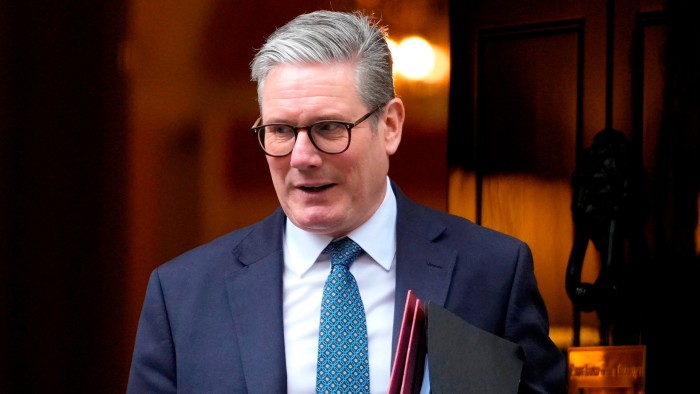
Sir Keir Starmer has blown a £4.25bn hole in his budget after retreating on cuts to disability benefits and pensioner subsidies, raising the likelihood of further tax rises and damaging his government’s credibility with investors.
The UK prime minister on Thursday gave rebellious Labour MPs about £3bn worth of concessions on planned cuts to welfare spending, just weeks after he reversed on cutting winter fuel payments for pensioners at a cost of £1.25bn.
Starmer, who swept to office last July in a landslide election victory, has made his huge parliamentary majority a core part of his pitch to investors, arguing that the UK government has the stability and strength to take tough decisions. But that argument had now been undermined, investors said.
“These U-turns are going to weaken the PM’s ability to take difficult decisions as his authority has clearly been challenged by the Labour parliamentary party,” said Nicolas Trindade, senior portfolio manager at Axa’s asset management arm.
The decisions “will make it much more difficult for the chancellor to keep her fiscal headroom intact and significantly increase the likelihood of tax increases at the Autumn Budget”, he added.
Chancellor Rachel Reeves in March left herself with a razor-thin £9.9bn margin against her key fiscal rule of eliminating the deficit on day-to-day spending by 2029-30.
The fiscal pressure on Starmer and Reeves may increase further in the coming months, with the economy predicted to weaken after a strong first quarter. Labour MPs may also be emboldened to push the government to scrap the two-child cap on benefits, inherited from the last Conservative government, a move that would cost £3.5bn a year.
Reeves has also considered watering down her October Budget raid on non-dom taxpayers to stem an exodus of wealthy residents, which would affect tax revenue projections if she softened the reforms.
The welfare U-turn “adds to the challenges they face”, said Andy King, a former official at the UK’s fiscal watchdog the Office for Budget Responsibility.
“This is several billion pounds since the Spring Statement that has to be found come the autumn and there are lots of other headwinds that need to be addressed too,” said King, who is now at consultancy Flint Global.
Another tax-raising Autumn Budget was “increasingly likely”, he added. “There is scope for it to be a material number.”
The UK’s 10-year borrowing costs reached a 16-year high above 4.9 per cent in January, amid a global bond sell-off and worries about the UK’s fiscal position, before falling back in recent months. Gilts were fractionally weaker on Friday, pushing the 10-year yield up 0.04 percentage points to 4.51 per cent.

“Market participants have largely priced in the likelihood of tax increases in the Autumn Budget, and Starmer’s U-turn on welfare cuts simply reinforces that view,” said Mujtaba Rahman, managing director for Europe at consultancy Eurasia Group.
“Markets clearly see that the government’s fiscal strategy is a bit of a mess and will require a further course correction later in the year,” he added.
Starmer has said his welfare reforms are designed to address the 2.8mn people in the UK who have a long-term health condition that prevents them from working.
The Labour government had hoped to save £4.8bn a year by cutting welfare payments, but the party’s MPs have been queasy about taking money away from vulnerable disabled people.
Analysts at the Resolution Foundation and Institute for Fiscal Studies said the compromise Starmer offered on Thursday could reduce the planned savings by about £3bn a year.
Starmer offered to limit cuts to Britain’s main disability benefit to new claimants after November 2026, increase health payments under a different benefit in line with inflation for existing claimants, and accelerate a £1bn package of employment support.
He conducted a ragged retreat after more than 120 Labour MPs vowed to vote down his welfare legislation at its second reading next Tuesday.
Some leading rebels welcomed the climbdown, including Meg Hillier, chair of the Treasury select committee, who said: “This is a good and workable compromise and shows that the Labour government has listened.”
Yet dozens of Labour MPs are still expected to vote against the legislation, including most of the “Campaign group” of left-wingers such as Nadia Whittome.

“If the government doesn’t pull the bill, doesn’t consult properly with disabled people and come back to MPs with a serious proposal that protects the dignity of disabled people, I will vote against and I will be far from the only one,” she told the BBC on Friday.
One concern among the hardcore rebels and disability groups is that the government will create a “two-tier” system whereby new applicants for personal independence payments (Pips) will be treated more harshly than existing recipients.
Downing Street on Friday said “the government has listened to MPs who support the principle of reform, but are worried about the pace change”. A spokesperson added that the reforms were still “meaningful” and said it was “not unusual to have different rates” for Pips.
Starmer’s government has not detailed how it will fund the changes to its plans on welfare and winter fuel payments, other than to say that there will be no “permanent” increase in borrowing.
Spending cuts will be challenging as the Treasury only recently set departmental budgets for the next three years after a painful spending review. Raising taxes will also be politically difficult. Reeves is still grappling with unhappiness over her £40bn of tax increases in last year’s Budget, and she has vowed not to raise taxes on “working” people.
Kemi Badenoch, Conservative party leader, said Labour had created “a multi-billion-pound black hole that can only mean higher taxes or more borrowing”.
Mark Dowding, chief investment officer for fixed income at RBC BlueBay Asset Management, said Starmer’s government was suffering from “fiscal slippage”.
The gilt market “may push the government to hike taxes in order to satisfy market concerns and avoid a repeat of the Truss tantrum”, Dowding warned.
Understanding the Supreme Court Case on Birthright Citizenship
Brandon Drenon
BBC News, Washington DC
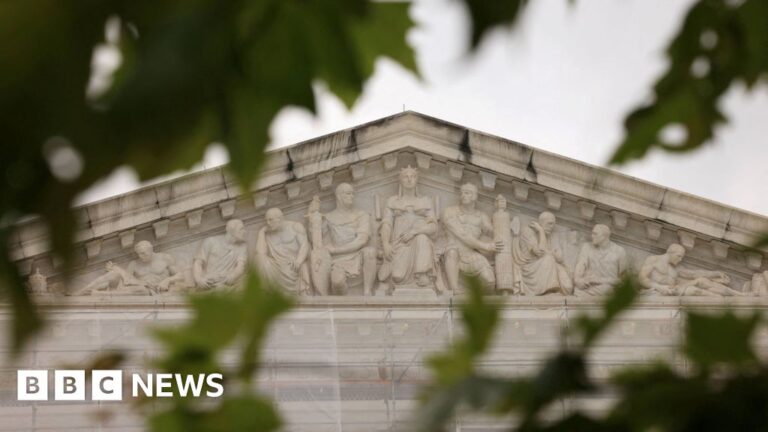
The Supreme Court is expected to decide one of the most consequential cases in modern US history on Friday – whether a single federal judge can block an order from the US president from taking effect nationwide.
The case stems from President Donald Trump’s bid to end birthright citizenship, which has been frozen by multiple lower courts.
The Supreme Court is not likely to rule on the constitutionality of birthright citizenship itself. It will instead focus on federal judges’ use of nationwide injunctions, which have stunted key aspects of Trump’s agenda.
The Trump administration has argued that the judges have overstepped their power, but others say the injunctions are needed to avoid “chaos”.
A quick road to the Supreme Court
On his first day back in office, Trump signed an executive order aimed at ending automatic citizenship rights for nearly anyone born on US territory – commonly known as “birthright citizenship”.
The move was instantly met by a series of lawsuits that ended in judges in district courts in Maryland, Massachusetts and Washington state issuing nationwide injunctions that blocked the order from taking effect.
In Washington, US District Court Judge John Coughenour called Trump’s executive order “blatantly unconstitutional”.
Trump’s Department of Justice responded by saying the case did not warrant the “extraordinary measure” of a temporary restraining order and appealed the case to the Supreme Court.
Injunctions have served as a check on Trump during his second term, amid a flurry of executive orders signed by the president.
Roughly 40 different court injunctions have been filed this year. This includes two lower courts that blocked the Trump administration from banning most transgender people from the military, although the Supreme Court eventually intervened and allowed the policy to be enforced.
So the case being heard at the nation’s highest court is not about birthright citizenship directly – but about whether lower courts should have the authority to block nationwide presidential orders with injunctions.
The argument against court injunctions
The issue of nationwide injunctions has long troubled Supreme Court justices across the ideological spectrum.
Conservative and liberal justices alike have argued that a judge in one district should not be able to unilaterally decide policy for the entire country.
Liberal Justice Elena Kagan said in remarks in 2022: “It can’t be right that one district judge can stop a nationwide policy in its tracks and leave it stopped for the years that it takes to go through the normal process.”
Similarly, conservative Justice Clarence Thomas once wrote that “universal injunctions are legally and historically dubious”.
Injunctions are also criticised for enabling what is known as forum shopping – the practice of filing a lawsuit in a jurisdiction where a more favourable ruling is likely.
Another critique of injunctions is the speed at which they are delivered versus their far-reaching impact.
The Trump administration is arguing in the birthright citizenship case that lower judges did not have the right to put time-consuming legal obstacles in front of the Trump’s agenda.
The arguments for nationwide injunctions
Without nationwide injunctions, backers of the measure say the power of the executive branch could go unchecked and leaves the burden of protection from potentially harmful laws on individuals who would need to file separate lawsuits.
Injunctions are often the only legal mechanism to prevent Trump’s executive orders from taking immediate legal effect. Such orders are a marked contrast from laws passing through Congress, which takes longer and subjects them to additional scrutiny.
Liberal Justice Ketanji Brown Jackson said the Trump administration’s argument advocated for a “catch me if you can” justice system.
“Your argument says ‘we get to keep on doing it until everyone who is potentially harmed by it figures out how to file a lawsuit, hire a lawyer, etc,'” Jackson said.
“I don’t understand how that is remotely consistent with the rule of law,” she said.
The other argument for injunctions is that it allows for consistency in the application of federal laws.
Lawyers arguing against the Trump administration have said that, in the birthright citizenship case, there would be “chaos” in the absence of a nationwide injunction, creating a patchwork system of citizenship.
What are the arguments around birthright citizenship?
The first sentence of the 14th Amendment to the US Constitution establishes the principle of birthright citizenship.
“All persons born or naturalized in the United States, and subject to the jurisdiction thereof, are citizens of the United States and of the state wherein they reside.”
However, the Trump administration’s arguments rest on the clause in the 14th Amendment that reads “subject to the jurisdiction thereof”. It argues that the language excludes children of non-citizens who are in the US unlawfully.
Most legal scholars say President Trump cannot end birthright citizenship with an executive order.
At the 15 May hearing, Justice Kagan noted that the administration had lost on the birthright citizenship issue in every lower court and asked: “Why would you ever take this case to us?”
Here are some of the ways the justices could rule
On nationwide injunctions, the justices could say injunctions can only apply to the people who sued, including class actions, as government lawyers have advocated for.
The justices could also say injunctions can only apply in the states where the cases are brought, or that injunctions can only be issued on constitutional questions (like birthright citizenship).
Constitutional questions, though, concern the bulk of the cases with nationwide injunctions that the Trump administration is appealing.
If the court rules the injunctions should be lifted, then the Trump administration could deny birthright citizenship to children of undocumented immigrants while the court cases proceed.
If the injunctions hold, the individual court cases challenging the birthright citizenship order will likely work their way to the Supreme Court.
The high court could decide on the constitutionality of birthright citizenship, but justices have indicated they would prefer a separate, full hearing on the question.
They could also give indications or hints in their written opinion on which way they are leaning on the citizenship question, without ruling directly on it.
US Supreme Court set to make decision on Texas law regulating age verification for online pornography
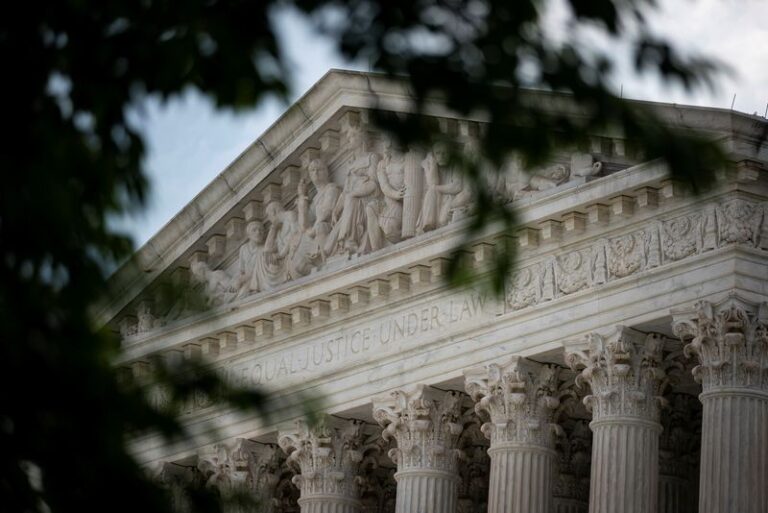
US Supreme Court poised to rule in challenge to Texas age-check for online porn
Myles Brown, Sprint Freestyle Specialist, Chooses Manhattan University as College Destination

Fitter and Faster Swim Camps is the proud sponsor of SwimSwam’s College Recruiting Channel and all commitment news. For many, swimming in college is a lifelong dream that is pursued with dedication and determination. Fitter and Faster is proud to honor these athletes and those who supported them on their journey.
Myles Brown, a sprint freestyler from Springfield Gardens, New York, has committed to Manhattan University for the class of 2029.
I am extremely blessed to announce my verbal commitment to continue my athletic and academic career to swim D1 at Manhattan University!!! First, I would first like to thank God for giving me this opportunity. This wouldn’t have been possible without the sacrifices of my mother, and support from my family, friends, and my teammates as well. I would like to thank my coaches especially at LIAC @liacswimming_ for everything these past 2 years, my former coaches at Nu-Finmen, and from my varsity team, coach Sands from Academy Charter, for pushing me to my best ever always and helping me fulfill my dream of swimming at the next level. Finally, I would like to thank Coach Brian at @jasperswimdive for giving me this incredible opportunity. GO JASPERS💚💚 #d1 #comitted #agtg
Brown swims club for the Long Island Aquatic Club. He also attends Academy Charter School in Hempstead New York, and he is the first Division I athlete to ever come out of the school for any sport.
In March, Brown competed at the Metro 15-18 Age group challenge, where he had multiple new personal best times, including in the 100 freestyle, where he swam 49.29 to finish 12th in the event. This was more than two seconds faster than his preseason best time of 51.56 from February of 2024.
Brown also dropped more than a second in his 50 freestyle this season, swimming 22.30 at his High School Section meet, finishing 6th and dropping from the 23.38 he went a year prior.
SCY Best Times:
- 50 Free- 22.30
- 100 Free- 49.29
- 200 Free- 1:50.07
- 100 Fly- 56.30
Manhattan University competes in the Metro Atlantic Athletic Conference, or MAAC, where the men’s team finished 9th overall at last season’s conference meet.
Brown will add some crucial depth to the Jaspers’ sprint freestyle relays, coming in as the 3rd fastest 50 freestyler and the 5th fastest 100 freestyler on the team. His 100 fly will also rank 5th on the team next year.
He is outside of scoring position in all of his events, but if he follows the same improvement trajectory he had this year, he could end up in multiple individual event finals, on top of relay swims.
If you have a commitment to report, please send an email with a photo (landscape, or horizontal, looks best) and a quote to [email protected].
About the Fitter and Faster Swim Tour
Fitter & Faster Swim Camps feature the most innovative teaching platforms for competitive swimmers of all levels. Camps are produced year-round throughout the USA and Canada. All camps are led by elite swimmers and coaches. Visit fitterandfaster.com to find or request a swim camp near you.

FFT SOCIAL
Instagram – @fitterandfasterswimtour
Facebook – @fitterandfastertour
Twitter – @fitterandfaster
FFT is a SwimSwam partner.