


Huron consulting director Lockhart sells $142,209 in stock
Huron Consulting Director, Lockhart, unloads $142,209 worth of stock
Angélique Kidjo makes history as the first black African to receive a star on the Hollywood Walk of Fame
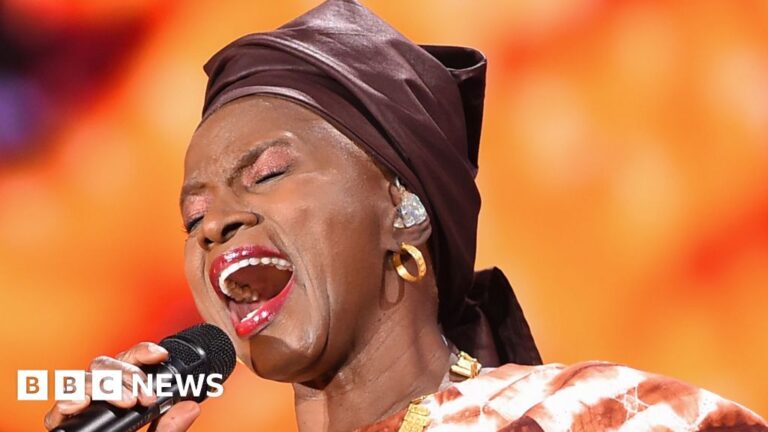
Musical icon Angélique Kidjo has become the first black African performer to be selected for a star on the prestigious Hollywood Walk of Fame.
Kidjo, who comes from the West African country of Benin and has won five Grammy awards, was among the 35 names announced as part of the Walk of Fame’s class of 2026 list.
The 64-year-old was hailed as Africa’s “premier diva” during a press conference announcing the list on Wednesday.
Singer Miley Cyrus, actor Timothée Chalamet, actress Demi Moore and former basketball player Shaquille O’Neal are also among those set to be honoured with a star on Los Angeles’ famous walk.
Kidjo receives the honour after making music for more than four decades and releasing 16 albums.
The songstress has won fans across the world with her commanding voice and ability to fuse West African styles with the likes of funk, jazz and R&B.
Her long list of collaborators includes forces such as Burna Boy, Philip Glass, Sting and Alicia Keys.
Kidjo joins Charlize Theron, a white South African actress, in representing Africa on the Walk of Fame, which comprises more than 2,700 stars.
Theron received her star in 2005.
The date on which Kidjo will see her star unveiled on the Walk of Fame has not yet been announced.
After recipients have been selected for a star, they have two years to schedule induction ceremonies.
Kidjo grew up in Benin, but left for Paris in 1983, citing oppression from the country’s then communist government.
“From the moment the communist regime arrived in Benin, I became aware that the freedom we enjoy can be snatched away in a second,” she told the BBC in 2023.
She said she has been driven by curiosity since childhood, adding: “my nickname was ‘when, why, how?’. I want to understand things, to understand my place in this world.”
Kidjo worked as a backing singer in France before striking out as a solo artist in 1990, with the album Parakou.
She is a Unicef and Oxfam goodwill ambassador, and has her own charity, Batonga, which is dedicated to supporting the education of young girls in Africa.
Microsoft asserts that its AI tool can diagnose intricate medical cases with four times greater accuracy than human doctors.

One of the world’s global powerhouses announced what could be a big win for the AI economy.
In a blog post, Microsoft said its AI diagnostic tool—the Microsoft AI Diagnostic Orchestrator (MAI-DxO), which simulates a panel of physicians and is trained using the standard Medical Licensing Examination—diagnosed cases four times as accurately as physicians after both parties were able to ask questions, order tests, and, eventually, finalize a diagnosis.
In the post—written by Harsha Nori, head of AI at Microsoft AI Health, and Dominic King, VP of Health at Microsoft AI—the company claimed its AI diagnosed 85% of over 300 real-world cases correctly, and that the model’s process “gets to the correct diagnosis more cost-effectively than physicians.”
Microsoft claims MAI-DxO “can blend both breadth and depth of expertise, demonstrating clinical reasoning capabilities that, across many aspects of clinical reasoning, exceed those of any individual physician.”
The rise of Dr. AI
AI is already rapidly evolving across the health care ecosystem. According to Microsoft, over 50 million health-related sessions occur daily using Microsoft’s AI consumer products. “From a first-time knee-pain query to a late-night search for an urgent-care clinic, search engines and AI companions are quickly becoming the new front line in healthcare,” the blog post said.
Beyond being a sounding board for health questions, AI is also expanding into physical clinics. With staffing shortages, long wait times, and a total of $5 trillion in annual health care expenditures, the industry is ripe for technological advancements.
In diagnostics, a separate study found couples in distress can derive similar mental-health benefits from AI therapy as they can from human therapists. However, there is still hesitancy about how the AI will be implemented, the accumulation of sensitive data, and, of course, the future of the doctor.
Nearly half of U.S. patients (48%) and 63% of clinicians are optimistic that AI can improve health outcomes, according to research from the 2025 Philips Future Health Index (FHI). It’s undeniable that minding this gap and building optimism among consumers, particularly those who may not trust traditional health care, is key to building and scaling new technological solutions.
“Breakthroughs need trust for real-world impact,” Dominic King, who co-wrote the blog post, told Fortune in a statement. “That’s why we’re committed to earning the trust of health care professionals and patients through rigorous safety testing, clinical validation, and regulatory reviews.”
Microsoft said it views the technology as a “complement to doctors and other health professionals” and emphasized doctors’ ability “to navigate ambiguity and build trust with patients and their families” is not something AI can replicate.
“Doctors aren’t going anywhere. AI will help them arrive at diagnoses and effective care plans faster, but it can’t replace the human connection and understanding patients’ needs,” King said.
The team at Microsoft noted the limitations of this research. For one, the physicians in the study had between five and 20 years of experience, but were unable to use textbooks, coworkers, or—ironically—generative AI for their answers. It could have limited their performance, as these resources may typically be available during a complex medical situation. Moreover, the doctors and AI analyzed only complex cases and not everyday ones.
“Important challenges remain before generative AI can be safely and responsibly deployed across healthcare,” the team wrote. “We need evidence drawn from real clinical environments, alongside appropriate governance and regulatory frameworks to ensure reliability, safety, and efficacy.”
Syria’s Assad Regime Buries Victims in Mass Graves
The Najha cemetery is about five miles south of Damascus, the capital. It was established decades ago as a modest burial ground for people from Damascus and neighboring towns.
Shortly after the crackdown on the Syrian revolution in March 2011, President Bashar al-Assad’s government began using the cemetery to bury people it killed — many after being detained and tortured in prisons. The regime’s victims included anti-government protesters, activists, journalists; loyalists who fell out of favor; and members of rebel factions.
While the existence of mass graves at Najha was previously known, our investigation reveals — for the first time — how the regime methodically developed the cemetery into one of the country’s largest mass grave sites.
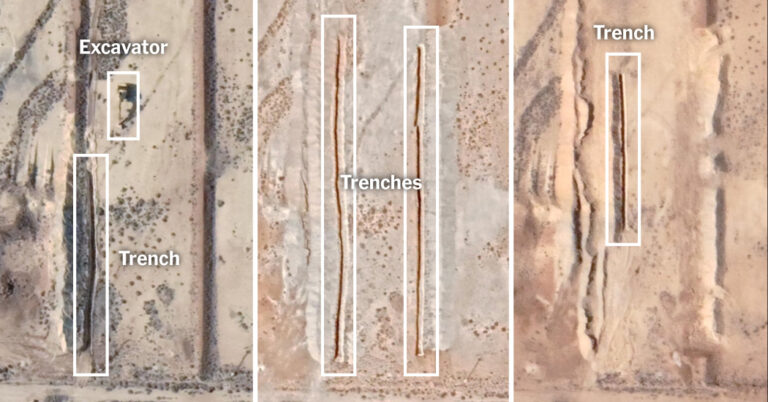
Ms. al-Assad’s intelligence forces initially used empty, existing tombs that had not yet been taken for civilian burials, and then began dumping bodies into crudely dug pits. In more recent years, long trenches were filled with bodies, section by section.
The Times visited the Najha cemetery in February, two months after rebels overthrew Mr. al-Assad’s government.
Times journalists also analyzed satellite images from 2011 to 2024, reviewed photos and videos, and interviewed more than 20 people — including neighbors and former workers who were coerced into taking part in mass burials at Najha. Their accounts are consistent with each other and with what human rights groups have reported about Najha and other mass graves.
There is now a broad effort to identify and locate what are believed to be dozens of mass graves across the country. Najha was identified before the Assad government collapsed. At least 60 total locations have been reported to the White Helmets, a Syrian civil defense group that is leading an effort to excavate the graves.
The Assad government repeatedly denied killing people in detention, but the practice has been documented extensively. The exact number of bodies in mass graves — including Najha — cannot be known until excavations are completed. The Syrian Network for Human Rights estimates that more than 160,000 people who had been held in the regime’s detention centers are still missing.
“The mass graves that we’ve seen so far are bigger than anything we’ve encountered,” said Kathryne Bomberger of the International Commission on Missing Persons.
Bodies were initially piled into existing tombs
2011 – 12
The Assad government began burying the bodies of detainees at Najha in mid-2011, according to former grave workers.
The early mass burials used sites meant for people to bury their loved ones — rows of prebuilt tombs several feet below ground.
But former workers at Najha said that the regime’s officers buried multiple bodies in a single tomb. By using existing sites, the regime was able to keep the initial burials more covert.
Muhammad Afif Naifeh — at the time a clerk at the local mortuary office — said his manager first ordered him to accompany intelligence officials to Najha in mid-2011. There, he witnessed them opening an unmarked tomb and dumping six to seven bodies inside. The same operation was repeated at least twice more in 2011, he said, with the number of bodies increasing each time.
“There were so many decomposed bodies that they started slipping out of the truck,” said Mr. Naifeh, who eventually was forced to manage some aspects of the burial operations. Bodies that were not already decomposed had torture marks on them, he said.
Satellite images analyzed by The Times confirmed signs of mass grave activity — earth disturbances, large vehicles, widespread digging and excavation — in the area described by Mr. Naifeh.
The bodies came to Najha and other mass graves nearby from torture prisons like Sednaya and military hospitals like Tishreen and Harasta, according to reports by human right groups, including the Association of Detainees and Missing Persons of Sednaya Prison.
The Times spoke to a former driver for the Assad government, who said he transported truckloads of bodies from the Harasta military hospital to mass graves and witnessed burials at Najha.
“I thought about leaving, but that would have put my family at risk,” said the driver, who spoke to The Times on the condition of anonymity out of fear of retribution for speaking out. “Every truck driver had to follow orders,” he added, because the Assad government was “merciless.”
As killings soared, bodies were dumped into deep pits
2012
By 2012, a year into the civil war, deaths under the Assad regime began to soar. As more detainees were killed, the government ramped up its mass burial operation at Najha.
Rather than use existing tombs, intelligence forces coerced local municipal workers to dig pits, some nearly 10 feet deep. Among them were Ragheb Turki Mihzah and Youssef Ubayd, who at the time drove heavy machinery for the Damascus governorate.
They said that intelligence officers directed workers to fill the pits with hundreds of bodies that arrived in 50-feet-long refrigerated trucks typically used to transport produce.
In precisely the area that both Mr. Mihzah and Mr. Ubayd said they dug with bulldozers, The Times found evidence of deep pits. The dimensions of many pits match Mr. Mihzah’s description.
The burials at Najha took place during early mornings and at night, according to former grave workers. Government forces would clear out anyone who was in the area and guard the entrance. The officials would confiscate grave workers’ phones and threaten to execute them if they refused to do as told.
Mr. Mihzah, 47, said that as bodies overflowed from a pit, an officer once told a bulldozer driver, “Push them down, or I’ll put you with them.”
Ayman Muhammad Khalil, a guard in the part of Najha used by civilians, said that he sometimes noticed signs of fresh dirt that had been turned over in the morning — a sign of recent digging. He was not allowed to be near the mass graves when the government forces were there.
“We were scared to come here,” said Mr. Khalil, who has worked at Najha for almost two decades and believes that some of his missing friends and relatives may be buried there. “They would take away anyone who would stand here.”
Residents who lived next to Najha told The Times they were aware of the mass burials but remained silent for more than a decade, fearing retribution.
Falah al-Za’al, 52, who had a direct view of the graves from his home, lost more than a dozen relatives to the Assad regime, some of whom he believes may be buried at Najha.
He never uttered a word about what he saw. “The fear is like when you’re near to death,” he said.
In recent years, bodies were discarded in long trenches
2018 – 24
Mass grave activity at Najha slowed for a time around 2013 because rebel advances in the area made it difficult for the burials to continue.
With limited access to Najha, the government that year shifted operations to another large mass grave site in Qutayfa, a town about 20 miles north of Damascus. Mr. Mihzah, who worked at both sites, said that at Qutayfa, he and others excavated long and narrow trenches.
The government regained control of the area near the Najha cemetery in 2014. The Times was unable to verify activity at Najha in satellite imagery until years later, but residents said that they saw trucks arriving at the cemetery then.
“I was terrified,” said Mohammad Ali al-Saleh, 48, a farmer who initially fled and returned to his home near Najha in 2014. “We saw the refrigerated trucks, but we couldn’t even get close — we would’ve been killed.”
Beginning in 2018, long trenches, similar to those at Qutayfa, began appearing in satellite images analyzed by The Times. The trenches were much longer than the crudely dug pits from years earlier. The operation at Najha had become more systematic.
The trenches appeared to be prepared months in advance of their use. The diggers tunneled for up to hundreds of feet, so as to not have to come back multiple times.
The Times was not able to interview anyone who worked directly on the trenches at Najha. But a longtime guard, Abdul Aziz, who is known by his nickname Abu Jihad, said that he witnessed small and large trucks arriving at the cemetery from 2018 to 2020. Around 2020, Mr. Aziz said that he and his brother saw exposed body parts in a trench where he suspected a mass burial had just happened.
Younes Adnan, a farmer who lived adjacent to the cemetery, said that he first saw excavators and trucks arriving at Najha in 2011 and was still seeing them as recently as 2024.
“Every now and then, we’d see an excavator coming from afar — we didn’t dare approach,” said Mr. Adnan, who believes his brother is buried in a mass grave. “But when the excavator showed up, we knew something abnormal was happening.”
Competition watchdog in UK warns Ticketmaster of potential legal action for Oasis ticket sales
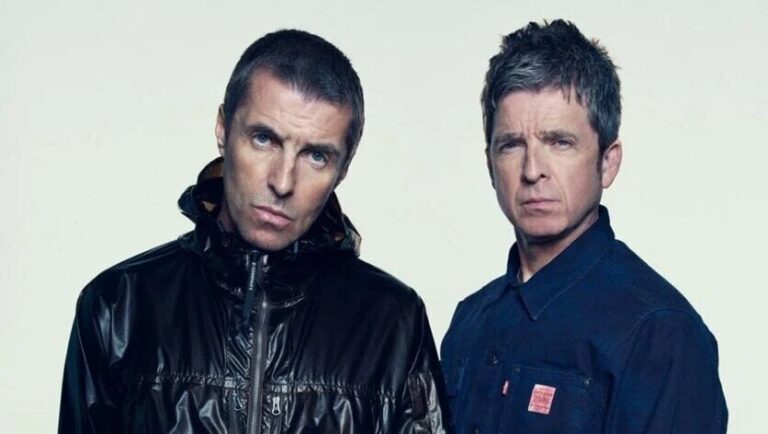
The UK’s competition regulator has threatened to take Ticketmaster to court over its pricing practices during the sale of more than 900,000 tickets in 2024 for the 2025 Oasis reunion.
The Competition and Markets Authority wrote a letter on Wednesday (July 2) to the Business and Trade Select Committee, saying it has now “discharged its obligation to consult with Ticketmaster” as “no undertakings have been offered or agreed.”
The CMA launched an investigation in September 2024 to scrutinize “whether the sale of Oasis tickets by Ticketmaster may have breached consumer protection law.”
Following “a thorough investigation,” the regulator said it has found that Ticketmaster sold “Platinum” tickets at nearly 2.5 times standard prices without explaining they offered no additional benefits beyond regular seats.
The regulator also determined the company failed to inform fans about two tiers of standing tickets at different prices, leaving many in lengthy online queues unaware they would face higher-than-expected costs.
However, the letter said: “The CMA did not find evidence that Ticketmaster used an algorithmic pricing model to adjust ticket prices in real time according to changing conditions like high demand.”
“[G]iven that no undertakings have been offered or agreed, [the CMA] is now preparing to litigate the matter if necessary.”
UK Competition and Markets Authority
The algorithmic pricing cited by the CMA refers to Ticketmaster‘s dynamic pricing model that saw some tickets sold in the UK more than doubling in price, with rates surging from around £150 to £355.
Due to the ticketing fiasco in the UK, Oasis decided not to use Ticketmaster‘s dynamic pricing model for its North American tour dates. Oasis said in October: “It is widely accepted that dynamic pricing remains a useful tool to combat ticket touting and keep prices for a significant proportion of fans lower than the market rate and thus more affordable.”
“But, when unprecedented ticket demand (where the entire tour could be sold many times over at the moment tickets go on sale) is combined with technology that cannot cope with that demand, it becomes less effective and can lead to an unacceptable experience for fans.”
In March, the CMA provided a progress update on its probe. At the time, the regulator said Ticketmaster has made changes to “some aspects” of its ticket sales process. However, the CMA said it “does not currently consider these changes are sufficient to address its concerns.”
“Having carefully considered Ticketmaster’s response, the CMA’s view is that there is fundamental disagreement between the CMA and Ticketmaster about whether Ticketmaster’s practices infringed consumer law.”
UK Competition and Markets Authority
Most recently, the regulator said Ticketmaster provided its response on June 16. However, the watchdog said: “Having carefully considered Ticketmaster’s response, the CMA’s view is that there is fundamental disagreement between the CMA and Ticketmaster about whether Ticketmaster’s practices infringed consumer law.”
It added: “Ticketmaster has declined to provide undertakings in the terms sought by the CMA or indicate whether there is a form of undertakings which it would be prepared to offer.”
As a result, the CMA said it has notified Ticketmaster that it “has now discharged its obligation to consult” with the ticketing giant.
“[G]iven that no undertakings have been offered or agreed, [the CMA] is now preparing to litigate the matter if necessary,” it said. However, the watchdog indicated that it would continue to engage with Ticketmaster “in an effort to secure a voluntary resolution.”
MBW has reached out to Ticketmaster for comment.
The Oasis Live ’25 Tour is set to begin on Friday, July 4, at the Principality Stadium in Cardiff, Wales.Music Business Worldwide
Video: UN expert strongly condemns the ‘economy of genocide’
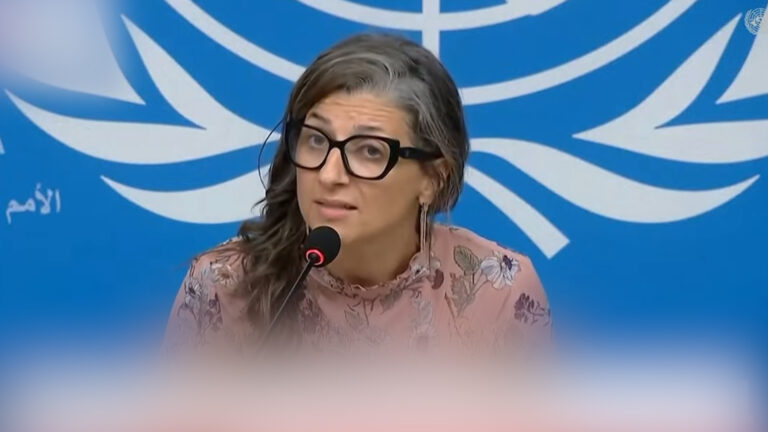
UN Special Rapporteur has named dozens of companies implicated what she calls “an economy of genocide".
Challenging Client

A required part of this site couldn’t load. This may be due to a browser
extension, network issues, or browser settings. Please check your
connection, disable any ad blockers, or try using a different browser.
Atiku Abubakar and Peter Obi unite to challenge Bola Tinubu in Nigeria
Mansur Abubakar
BBC News, Abuja
 AFP via Getty/Reuters
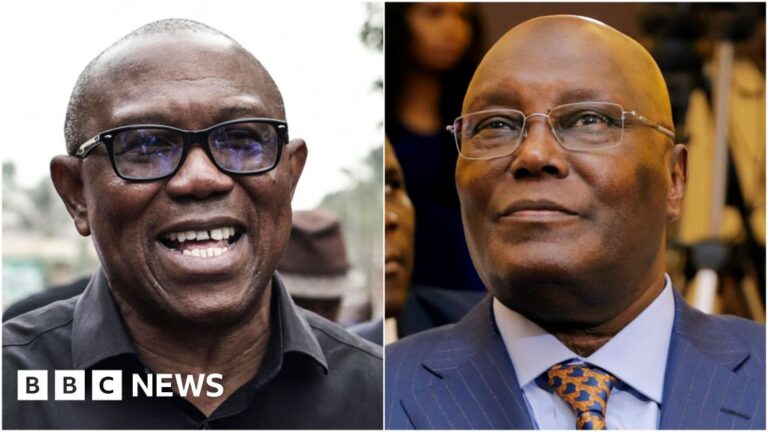
Nigeria’s two main opposition leaders have joined a new political party to challenge President BolaTinubu and his ruling party in the next election.
Atiku Abubakar and Peter Obi have chosen the African Democratic Congress (ADC) as their new political home after breaking away from their respective parties – the Peoples Democratic Party (PDP) and the Labour Party (LP).
This is one of the biggest shake-ups in Nigerian politics since the end of military rule in 1999.
Some political heavyweights from Tinubu’s All Progressives Congress (APC) party have also thrown their weight behind the formation.
Why have they joined forces?
The announcement is the culmination of a series of talks between the leaders to put up a united front in the 2027 election, rather than splitting their vote.
Tinubu won the 2023 election with just 37% of the vote after opposition supporters were divided between Abubakar who got 29%, and Obi with 25%.
Obi had broken away from the PDP after the party chose Abubakar as its presidential candidate.
At their unveiling with the ADC, interim chairman David Mark said it was an attempt to save the country’s democracy and to stop Nigeria from becoming a one-party state.
Both the PDP and LP are also battling internal crises which some believe were instigated by external forces.
Analyst Shehu Iliyasu said Abubakar and Obi are learning the lessons of the last election.
“Both Atiku [Abubakar] and Obi felt they came so close in 2023 and would have maybe won on a joint ticket so they want to amend their mistake by working together this time around,” he told the BBC.
Who else is in the ADC?

 Getty Images
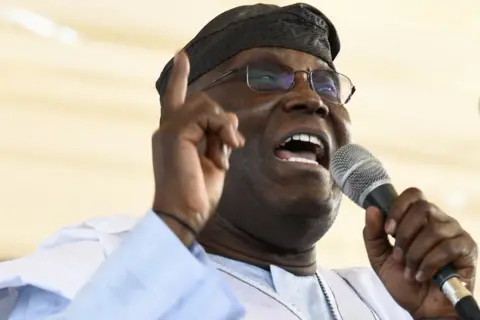
Tinubu’s biggest challengers in the last elections, Atiku Abubakar and Peter Obi are the face of the coalition.
Although there’s a long way to go before candidates are officially announced, political commentators are predicting that 78-year-old Abubakar will have another shot at the presidency – it would be his fifth attempt – with former Anambra governor Obi, 63, as his vice-presidential pick.
Other political heavyweights in the coalition include former Senate President David Mark, who like Atiku is leaving the PDP, former Tinubu ally turned foe Nasir El-Rufai and powerful minister in the last dispensation Rotimi Amaechi.
Is the ADC a new party?
No. The politicians are joining an already existing party which has an acronym closer to the All Democratic Alliance (ADA) they wanted to register.
The party was originally named Alliance for Democratic Change when it was formed in 2005, but it was renamed the African Democratic Congress by the time the party was registered with the Nigerian Independent National Electoral Commission (Inec).
The ADC’s Jamilu Danladi said they were sceptical of getting ADA ready in time and that is why they instead went for the ADC.
Registering a new political party is a difficult process. The Inec chairman recently announced that it had received over 100 applications from associations and groups that have submitted letters of intent to become political parties.
Many of those won’t make it, as apart from other conditions, the group must have a presence in at least 24 out of Nigeria’s 36 states and have a headquarters in Abuja.
The ADC’s Dumebi Kachikwu came fifth in the last presidential election and it currently has two members of parliament in the lower chamber.
Despite not being one of the big parties in Nigeria, the ADC has a good national spread and an active political machinery in each state, which will no doubt be boosted with the money and support of the political heavyweights who have joined it.
Its first presidential candidate in 2007 Professor Pat Utomi was instrumental in it getting national acceptance as he’s a renowned economist.
Can Obi and Abubakar work together again?
This is the question on the lips of many, as Obi’s large support base do not want to see him play second fiddle to anyone else – and this is why he quit the PDP to join the Labour Party in the last election.
While Abubakar’s supporters feel with him being the only former vice-president seeking the presidency, every other politician naturally comes second.
When both politicians worked together in 2019 with Obi serving as Abubakar’s running mate, they lost to the APC’s Muhammadu Buhari.
It will be interesting to see how things pan out from now to 2027.
What are their chances in 2027?
Analyst Ben Kenneth say he believes the coalition has a better chance of defeating Tinubu than last time.
“If you look at what Atiku and Obi got in the last election, it’s clear to see that they would’ve won assuming they worked together, so it’s a good thing they have realised they need each other,” he noted.
However, another analyst Sani Hamisu feels 73-year-old Tinubu has a better chance now than in 2023.
“In Nigeria and Africa, when a leader is in office seeking a second term, he hardly loses, it is very rare and that’s why I feel Tinubu has a better chance now than when he wasn’t in office in 2019,” he said.
Is the ruling party worried?
The ruling party says it is not bothered in the least by the coalition which it does not see as a real threat.
Acting chairman Ali Bukar Dalori told BBC Hausa the coalition would have no impact on the APC.
“Nobody is talking about a coalition except in Abuja. Even in Abuja, they are in a hotel, and when they are defeated in elections, they will leave the country,” he said.
What are the main political parties saying?
The country’s biggest opposition party, the PDP had since ruled out joining the coalition, preferring to face the APC on its own.
The Labour Party also called on its supporters to remain focused and resolute behind the party, denying any plans to join a coalition.
More BBC stories on Nigeria:
 Getty Images/BBC
Penske Automotive purchases Ferrari dealership located in Modena, Italy

Penske Automotive acquires Ferrari dealership in Modena, Italy
Converting Agricultural Waste into Green Hydrogen
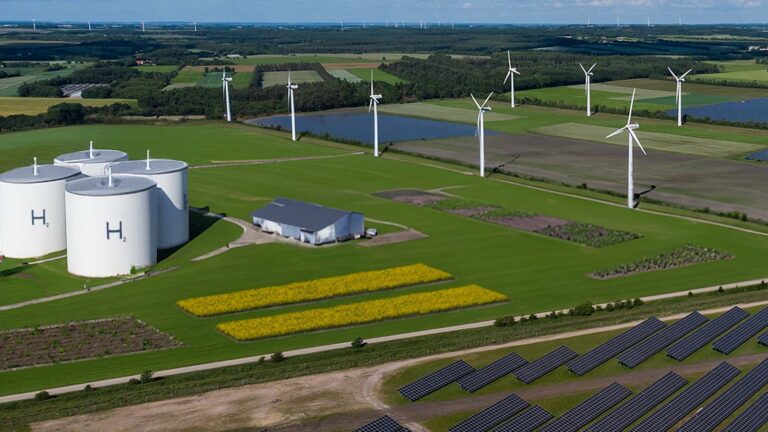
Green hydrogen is emerging as a key complement to solar and wind energy on the path to global sustainability. Its benefits are numerous: it serves as an effective energy storage solution, can be used in vehicles like airplanes without the weight burden of batteries, and can power heating systems or industrial processes without emitting greenhouse gases.
The critical factor for green hydrogen to surpass fossil fuels lies in its production—achieving hydrogen in a clean and efficient manner. The University of Illinois Chicago has recently unveiled a groundbreaking technique for generating it from agricultural or livestock biomass.
How green hydrogen is produced
To start, a brief overview: green hydrogen is produced from renewable energies like wind or solar. Since hydrogen is not typically found in its pure form in nature, it needs to be extracted from compounds such as water. This extraction process, commonly performed through electrolysis, requires energy, which is where renewable sources come into play. If fossil fuels were used instead, it would result in gray hydrogen.
Green hydrogen from solar energy and biomass
The innovation from engineers at the University of Illinois Chicago introduces a method to produce green hydrogen from water using only solar energy and agricultural waste. This technique is remarkable for its energy efficiency, reducing the energy required by 600%. The process involves a solution of agricultural and livestock waste in sulfuric acid as biochar, significantly lowering the electricity needed to produce hydrogen.
So, what is biochar? It is a carbon-rich compound produced through the pyrolysis of biomass in the absence of oxygen. Biochar can sequester carbon in a stable form for many decades, preventing its release as CO2 and improving soil fertility.
In the recent research, adding a biochar solution to the anode during green hydrogen electrolysis reduced the electrical power needs. Experiments show that the most efficient biochar comes from cow manure, reducing the energy required for one unit of hydrogen to one-sixth.
Thus, a single 15-milliampere photovoltaic cell and a current of 0.5 volts—less than the power of an AA battery—were enough to produce green hydrogen. The carbon in the biochar solution reacts with the O2 produced in electrolysis to generate CO2, which can be captured and reused in other industrial processes, such as fertilizer production, as mentioned in this article.
According to the researchers, the high efficiency of the process, achieving a 35% conversion of solar energy into hydrogen, could offer a cheaper and more sustainable alternative to current green hydrogen production methods, reducing greenhouse gas emissions.
Self-sufficient farms
One of the most intriguing prospects suggested by the researchers is a future where farms can combine energy from photovoltaic panels with plant or animal waste to generate green hydrogen, achieving energy self-sufficiency.
A hydrogen fuel cell offers high efficiency in powering machinery and complements other energy sources like solar or wind, regardless of weather or daylight hours. Moreover, the method developed by the University of Illinois Chicago isn’t limited to hydrogen production but can also generate other valuable products from agricultural waste.
If you are interested in learning more about green hydrogen production and other clean energy technologies contributing to a sustainable world, we recommend subscribing to our newsletter at the bottom of this page.
Source: