

6.3 C
New York
Monday, April 6, 2026
Home Blog Page 593

Megabatteries: The Connection Point for Renewable Energy

0

Discussing renewable energy encompasses not only the technologies facilitating its generation but also its distribution, storage, and utilization. This includes everything from solar panels and wind turbines to innovative approaches like V2G technology, which enables electric vehicles to feed energy back into the grid from their batteries, as well as the deployment of home-based battery systems. When we scale up this concept, we encounter the emergence of megabatteries, a key component in the evolving sustainable economy.

Transitioning from coal and gas plants to wind and solar installations is only part of the equation. Equally critical is reconfiguring the electrical grid to seamlessly integrate a substantial influx of clean energy sources, which are inherently variable. Unlike fossil fuels, wind and solar power generation is immune to geopolitical tensions and supply disruptions, solely reliant on natural phenomena like wind patterns and sunlight.

Energy storage systems are the solution here, offering a suite of technologies designed to stockpile energy when surplus is available and dispatch it when demand spikes, ensuring the electrical grid remains stable and operational. This involves balancing energy input and output in real-time to maintain essential grid parameters such as voltage and frequency, preventing outages and other disruptions, even in times of insufficient wind or sunlight.


Megabatteries: A paradigm shift in storage

Historically, pumped-storage hydroelectric facilities have dominated energy storage, using off-peak electricity to elevate water for later energy generation. However, this piece highlights an emerging and rapidly expanding technology: large-scale stationary battery systems (BESS) that interface directly with the power grid, either absorbing or supplying energy based on systemic needs.

Predictions by S&P Global anticipate a 57% surge in grid-connected battery storage capacity by 2023, reaching 40 gigawatts (GW), with expectations of continued robust growth to approximately 70 GW by 2030. China and the US are spearheading this expansion. Bloomberg NEF’s projections extend further, estimating global energy storage installations will hit 1,091 GW/2,850 GWh by 2040 — a substantial increase from the 9 GW/17 GWh recorded in 2018, necessitating an investment of $662 billion.

The role of megabatteries

The hallmarks of a reliable electricity system — flexibility, stability, reliability, and security — have traditionally been met with fossil fuel generation. The new challenge lies in achieving these standards within a renewable-dominant grid without CO2 emissions, ensuring power is available whenever and wherever needed.

Electricity storage is pivotal for maximizing the integration of variable renewable sources like wind and solar into the grid. It enables rapid absorption, storage, and redistribution of energy, aiding in the smooth operation of the electrical system. Megabatteries connected to the grid provide numerous services, enhancing efficiency and offering economic benefits. These include:

1. Operating reserve

Megabatteries can quickly respond to any potential technical imbalance in the system, such as frequency variations due to unexpected surges in electricity demand. Given that wind and solar generation possess less inertia or kinetic energy compared to traditional energy technologies, they are more susceptible to sudden mismatches between supply and demand. Despite significant advancements in forecasting wind or solar generation, these predictions are less precise than those for conventional technologies. Megabatteries offer essential reserve capacity to swiftly restore balance in such situations.

2. Ramping

In conventional electricity systems, the daily demand curve resembles a camel’s hump, with peaks in the morning as people prepare for their day and in the evening when they return home. In a renewable-powered system, this curve morphs into a ‘duck curve,’ primarily because solar energy peaks during midday and drops sharply as night falls. Storage systems, including megabatteries, provide a quick response to these abrupt changes or ramps in electricity production, eliminating the need for additional generation capacity.

3. Arbitrage

Arbitrage involves supplying energy to the grid during high-demand, high-price periods and storing it during low-demand, low-price times. Megabatteries excel at this role, enhancing system flexibility and smoothing out fluctuations in electricity production. This process helps avoid the necessity of constructing new facilities solely to meet peak demand, thus moderating electricity price volatility.

4. Smoothing

Megabatteries can mitigate sudden voltage or frequency fluctuations in the grid, such as those occurring when solar output changes due to cloud cover or wind output varies with gust intensity. In doing so, they support grid operators in maintaining the system’s technical equilibrium.

5. Savings in transmission and distribution investments

By employing megabatteries, it’s possible to circumvent the need for new transmission and distribution infrastructure designed to handle congestion when production is high and existing networks lack the capacity to manage the load. This approach also results in a reduced environmental footprint compared to constructing new power lines.

6. Peak shaving

In renewable energy systems characterized by high variability in generation capacity, there may be a need to build new fossil fuel power plants solely to address potential peak power demands, ensuring reliability and security of supply. Megabatteries address this need by providing a viable alternative, thus obviating the requirement for new backup generation facilities.

Beyond the six key functionalities that megabatteries provide to power grids, they also offer significant benefits in various other settings such as off-grid locations, island environments, or smaller grids, enabling reliable system management without relying on fossil fuel solutions. Additionally, there are valuable applications behind the meter, where consumers can leverage these systems to decrease their reliance on the grid and even supply services back to it at certain times.

The largest battery in Texas

A prime example of the potential large battery technology holds for grid services is illustrated by the recent agreement by the Spanish company ACCIONA Energía. This deal involved the acquisition of the largest battery in Texas, alongside a portfolio of six other developmental projects totaling 1.23 gigawatts of power—equivalent to the output of a medium-sized nuclear power station.

The most advanced among these projects is Cunningham, located 21 miles from Dallas. Scheduled to become operational in the first quarter of 2023, it will stand as the largest grid-connected battery in Texas. With a capacity of 190 MW and an energy storage capability of 380 MWh, it occupies approximately 6 hectares. The other projects are slated for completion within the next three years, further enhancing the region’s renewable energy infrastructure.


Source:

Photos:
Three or more people killed in flash flooding in New Mexico

0

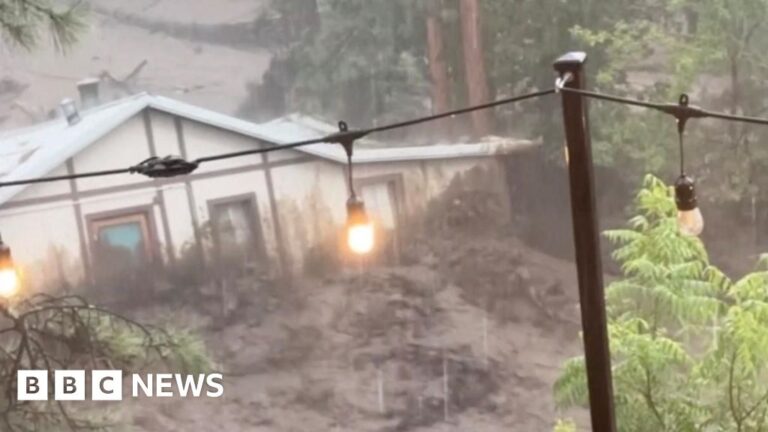
At least three people are dead in the village of Ruidoso, New Mexico after heavy rain caused flash flooding.

Up to 8.8cm (3.5in) of rain fell, causing the Ruidoso river to rise to an historic level. The floodwaters have now receded.

A man and two children died after being swept downstream, local officials confirmed on Tuesday evening.

The disaster comes after flooding in the neighbouring US state of Texas left at least 111 people dead, according to the latest toll published by US media. A further 161 people are still missing in one county alone, Governor Greg Abbott said on Tuesday.

In New Mexico, Ruidoso village spokesperson Kerry Gladden told the BBC’s US partner CBS News that search and rescue crews were still out in the field, and a hotline had been set up for people looking for missing family members.

Emergency crews in Ruidoso carried out at least 50 swift water rescues in the area, with residents urged to move to higher ground.

Three people had been treated for injuries at the local hospital, Ms Gladden said in a statement.

Social media footage captured by local artist Kaitlyn Carpenter showed at least one house being swept away by floodwaters, with Ruidoso Mayor Lynn Crawford unable to confirm how many homes had been lost.

Speaking on a local radio station, Mr Crawford said: “It got ugly really quick”.

The National Weather Service (NWS) had warned that two “burn scars” around Ruidoso were high risk for flash-flooding, as the charred soil left behind by last year’s wildfires would be “as water-repellent as a pavement”.

Southern New Mexico was hit by wildfires in June 2024. Ruidoso was evacuated as two fires burned approximately 10,000 hectares (25,000 acres) of land on either side of the village.

Two people were killed and hundreds of homes were destroyed.

Subsequent reports said that the risk of flash floods would be increased for at least two years due to the fires, and the likelihood of significant flooding events in the area was “dramatically increased”.

News of the flash flooding in New Mexico came just hours after Texas Governor Greg Abbott gave an update on the aftermath of last Friday’s floods in his own southern state.

He said at least 161 people were still missing in Kerr County alone, some four days after devastating flash floods in his own state.

The missing include five campers and a counsellor from Camp Mystic, a Christian all-girls summer camp located on the banks of the Guadalupe River.

More than 90 of the at least 111 people known to have died in the disaster, according to Us media reports, were in the Kerrville area.

Challenging Client Task

0


Client Challenge


JavaScript is disabled in your browser.

Please enable JavaScript to proceed.

A required part of this site couldn’t load. This may be due to a browser
extension, network issues, or browser settings. Please check your
connection, disable any ad blockers, or try using a different browser.

Blaze Erupts Close to Marseille

0

Flames burned on the outskirts of the French city, injuring over 100 people and prompting evacuations.

Investors look to US trade signals as European shares edge higher

0

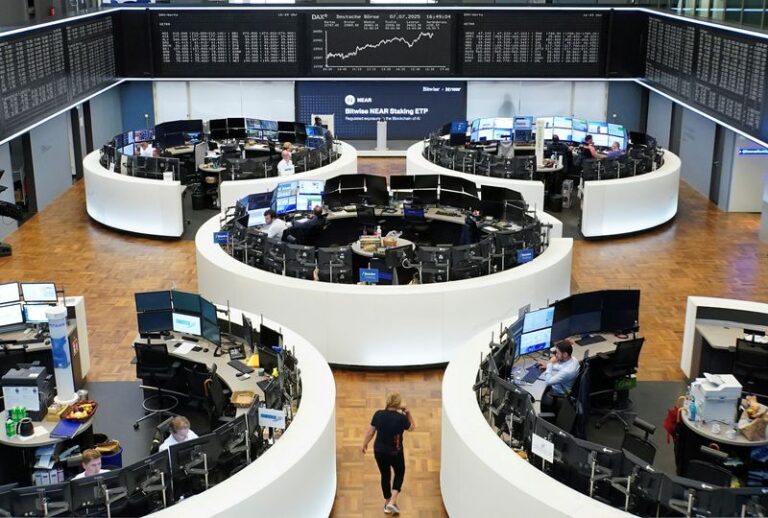
European shares edge higher as investors eye US trade signals

South Korea sends back six North Koreans rescued at sea | News

0

North Koreans’ repatriation comes as South Korea’s newly-elected president is working to improve inter-Korean ties.

South Korea has repatriated six North Koreans who were rescued at sea earlier this year after their vessels drifted across the de facto maritime border, Seoul’s Unification Ministry has said.

The North Koreans, who were picked up by South Korean authorities in separate vessels in March and May, were transported across the Northern Limit Line on Wednesday morning with their “full consent” and after they had repeatedly expressed their wish to return home, the ministry said.

The repatriation was successfully completed with the cooperation of North Korean authorities despite repeated failed attempts by Seoul to contact Pyongyang about their return, according to the ministry.

The development comes as South Korea’s newly-elected president, Lee Jae-myung, is working to bolster ties between the two Koreas, which remain in a technical state of war after hostilities in the 1950-1953 Korean War ended with an armistice, not a peace treaty.

Speaking at a news conference to mark his first month in office last week, Lee said that Seoul should work to improve relations in coordination with its ally, the United States, and that cutting off dialogue completely would be a “foolish act”.

Last month, South Korea’s military turned off loudspeakers broadcasting anti-North Korea propaganda across the inter-Korean border in one of the Lee administration’s first steps towards rapprochement.

South Korea’s Ministry of National Defence at the time said the move would help “to restore trust in inter-Korean relations” and “promote peace on the Korean Peninsula”.

Macron asserts France and the UK will be the saviors of Europe despite Brexit being about Britain exiting the EU

0

French President Emmanuel Macron on Tuesday urged Britain to stick close to its neighbors despite its exit from the European Union, saying France and the U.K. will “save Europe” by standing for democracy, law and international order in a dangerous world.

On a state visit that mixed royal pageantry with tough political talks on Ukraine and migration, Macron said Europe must strengthen its economy and defenses and reduce its dependence “on both the U.S. and China.”

Macron’s three-day trip, at the invitation of King Charles III, is the first state visit to the U.K. by a European Union head of state since Brexit, and a symbol of the U.K. government’s desire to reset relations with the bloc after Britain acrimoniously left the EU in 2020.

Macron addressed members of both houses of Britain’s Parliament packed into the building’s ornate Royal Gallery. He said the two countries represent “a world order based on law, justice and respect for territorial integrity, an order that is today being attacked on a daily basis.”

“The United Kingdom and France must once again show the world that our alliance can make all the difference,” Macron said, adding that “we will save Europe by our example and our solidarity.”

He said that even though Britain has left the EU, “the United Kingdom cannot stay on the sidelines. Because defense and security, competitiveness, democracy — the very core of our identity — are connected across Europe as a continent.”

Pomp and politics

The French president and his wife, Brigitte Macron, were treated to the full force of British ceremonial charm, a far cry from the chilly relations of 2022, when then-Foreign Secretary Liz Truss said that the “jury is out” on whether Macron was a friend or a foe.

The Macrons were greeted at London’s RAF Northolt air base by Prince William and his wife Catherine — wearing a dress by French design house Christian Dior — before being met by King Charles and Queen Camilla in Windsor, west of London. They were driven to the almost 1,000-year-old royal residence of Windsor Castle in horse-drawn carriages, through streets bedecked in Union Jacks and French tricolor flags.

The king and queen hosted a banquet for the Macrons at Windsor Castle on Tuesday evening, with 160 guests including politicians, diplomats and celebrities such as Mick Jagger and Elton John. They were served summer vegetables, chicken with asparagus and iced blackcurrant parfait, along with Champagne and a gin-infused cocktail called L’entente, after the “entente cordiale” struck between Britain and France in 1904.

As monarch, Charles is expected to be above politics, but he spoke about the support Britain and France give Ukraine “in defense of our shared values,” noted the challenge of “irregular migration across the English Channel” and said the two countries face “complex threats, emanating from multiple directions.

“As friends and as allies, we face them together,” Charles said.

New tactics to stop boats

Politics will take center stage on Wednesday, when Macron sits down for talks with U.K. Prime Minister Keir Starmer on migration, defense and investment — including a 12.5% stake by French energy firm EDF in a new nuclear power plant planned for eastern England.

Macron also came bearing a tantalizing cultural gift: an agreement to send the Bayeux Tapestry to Britain for the first time in more than 900 years. The 70-meter (230-foot) tapestry showing the Norman conquest of England in 1066 will go on display at the British Museum from September 2026 to July 2027.

At talks Wednesday and a U.K.-France summit on Thursday, Macron and Starmer will discuss ways to stop migrants from crossing the English Channel in small boats and try to advance plans for a post-ceasefire security force for Ukraine, despite apparent U.S. indifference to the idea and Russia’s refusal to halt the onslaught on its neighbor.

Britain receives fewer asylum-seekers than Mediterranean European countries, but thousands of migrants each year use northern France as a launching point to reach the U.K., either by stowing away in trucks or — after a clampdown on that route — in small boats across one of the world’s busiest shipping lanes.

The U.K. has struck a series of deals with France over the years to increase patrols of beaches and share intelligence in an attempt to disrupt the smuggling gangs.

It has all had only a limited impact. About 37,000 people were detected crossing the English Channel in small boats in 2024, and more than 20,000 people made the crossing in the first six months of 2025, up by about 50% from the same period last year. Dozens of people have died trying to cross.

British officials have been pushing for French police to intervene more forcefully to stop the boats, and welcomed the sight of officers slashing rubber dinghies with knives in recent days.

France is also considering a U.K. proposal for a “one-in, one-out” deal that would see France take back some migrants who reached Britain, in return for the U.K. accepting some of those in France.

Macron said the leaders would try “to fix today what is a burden for our two countries.”

“France and the U.K. have a shared responsibility to address irregular migration with humanity, solidarity and fairness,” he said.

Keeping Ukraine in focus

Starmer and Macron have worked closely together to rally support for Ukraine, though they have taken contrasting approaches to U.S. President Donald Trump, with Macron more willing to challenge the American president than the emollient Starmer.

Britain and France have led efforts to form an international peacekeeping force for Ukraine to reinforce a future ceasefire with European troops and equipment and U.S. security guarantees.

Trump has shown little enthusiasm for the idea, however, and a ceasefire remains elusive. British officials say the “coalition of the willing” idea is alive and well, with Macron and Starmer due to join an international videoconference on Thursday to discuss planning for the force.

Macron said the coalition was a sign that “Europeans will never abandon Ukraine – never.”

Chief of Aviation Stands by Safety Record

0

Just how safe are India’s skies?

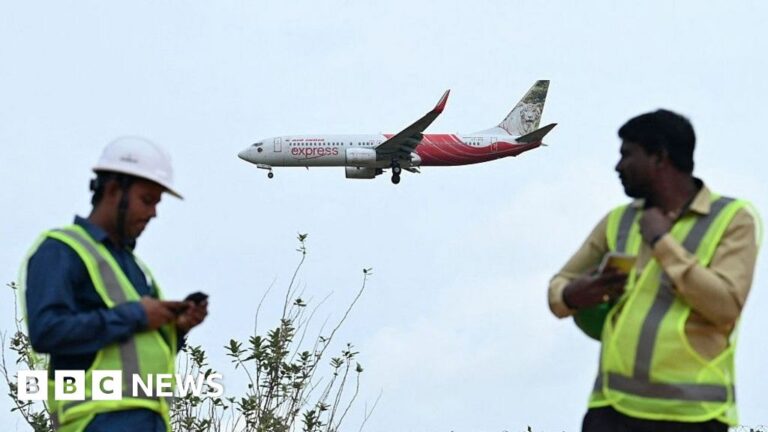
It’s a question many are asking after June’s devastating Air India crash, which killed at least 270 people. The London-bound Boeing 787-8 Dreamliner went down less than a minute after taking off from Ahmedabad airport in western India on 12 June.

“India’s skies have always been safe – in the past and even today,” said Faiz Ahmed Kidwai, the chief of Directorate General of Civil Aviation (DGCA) – India’s aviation safety regulator – in an interview with the BBC.

“If you look at global safety metrics, such as those published by International Civil Aviation Organization (ICAO), which track the number of accidents per million flights, India consistently performs better than the world average,” he said.

“There were only two years within the 2010–2024 period where we exceeded the global average – those were the years when major accidents occurred.”

In August 2020, Air India Express Flight 1344 crashed after skidding off a rain-soaked tabletop runway in Kozhikode, killing 21 people. A decade earlier, in May 2010, Flight 812 from Dubai overshot the runway in Mangalore and plunged into a gorge, leaving 158 dead. June’s Air India crash was the third such accident in the country in 15 years.

While such major accidents remain rare, recent headlines have raised fresh concerns. From a Delhi-Srinagar flight that hit severe turbulence, to growing reports of maintenance oversights and training shortfalls, questions around aviation safety are once again in focus.

The latest involved SpiceJet, India’s fourth-largest and longest-running low-cost airline.

The Economic Times newspaper found that the aviation regulator had recently summoned the airline’s leadership after a series of alarming findings – not from routine audits, but triggered by a British aviation firm.

The newspaper reported that it began earlier this year when two of SpiceJet’s De Havilland Q400 turboprops showed premature propeller failures. The airline alerted Dowty Propellers, a GE Aerospace-led UK manufacturer, which found damage to the internal bearings of the propellers.

Each propeller has bearings with two races, or rings or tracks. In this case, the inner race was damaged. Instead of addressing the root cause, SpiceJet “reportedly kept applying more grease to the [entire] unit instead of addressing the root cause”. Frustrated by the lack of corrective action, Dowty escalated the issue directly to India’s aviation regulator, the newspaper reported.

The DGCA’s own audit in April “revealed even more deficiencies, including snag occurrences”, the report said.

Mr Kidwai told the BBC that the “turboprop propeller issue came to our attention through one of SpiceJet’s maintenance organisations”.

“We took it up with SpiceJet and we ensured they took corrective action. We also found out that the senior management was not fully aware of the situation. We took action against the various post holders who were supposed to ensure compliance with the original equipment manufacturer and other regulations. We directed SpiceJet to remove them and suspend a few of them which they did,” he said.

More recently, Reuters reported that the aviation watchdog reprimanded Air India’s budget carrier in March for delaying mandatory engine part replacements on an Airbus A320 and falsifying records to show compliance.

Air India Express told the news agency it acknowledged the error to DGCA and undertook “remedial action and preventive measures”.

Mr Kidwai told the BBC that the information in this case came through “self-reporting by the airline”.

“I would not condone it [the lapses]. But [at least] we have started getting these reports. This came from the airline. Action has been taken in this case. In our audits we have mandated our people to be more alert and see whether there is any lapse and bring it to our attention.”

In May, an IndiGo flight from Delhi to Srinagar faced severe turbulence and hail about 45 minutes after takeoff.

The Airbus A321, carrying 222 passengers, reportedly encountered extreme vertical air currents – updrafts followed by downdrafts – that dislodged overhead bins and caused nose damage. The crew declared an emergency and safely landed at Srinagar with no injuries. The regulator launched an investigation, during which two pilots were grounded.

Mr Kidwai told the BBC that the regulator had now “refined” its guidelines for pilots flying in turbulent conditions.

For instance, if there’s significant cloud cover or any weather pattern that poses a risk – and “we’ve clearly defined what constitutes such a risk” – pilots are now required to take specific action a set number of nautical miles before reaching it, he said.

“This could include diverting, going around, or taking other appropriate steps.”

Since 2020, Indian domestic carriers have reported 2,461 technical faults, according to the federal civil aviation ministry data. IndiGo accounted for over half (1,288), followed by SpiceJet with 633, and Air India and its subsidiary Air India Express with 389 cases, as of January 2025.

“Reporting of snags by airlines has gone up. This is good,” Mr Kidwai said.

“I wouldn’t say I’m pleased about it. But I do see value in the growing culture of reporting [snags]. It’s far better for every snag to be brought to the attention of the authorities than keeping quiet and operating the aircraft.”

Mr Kidwai said with the number of flights increasing, it’s important to “see whether the turnaround time for flights is adequate for [maintenance] checks or not”.

To be sure, demands on the regulator have grown: India has emerged as the third-largest passenger aviation market in the world. Yet, over the past two years, the ministry of civil aviation has faced budget cuts, reflecting a reduced financial priority for the sector.

Today, the country’s scheduled carriers operate nearly 850 aircraft – a significant increase from around 400 just a decade ago.

The number of air passengers has more than doubled since 2014–15 – from 116 million to 239 million.

The number of commercial aerodromes has also seen a substantial rise – from around 60-70 a decade ago to nearly 130-140 today.

“In total, including both scheduled and non-scheduled operators, we now have 1,288 aircraft in operation. By the end of the decade, we are projected to operate over 2,000 aircraft,” Mr Kidwai said. (Non-scheduled operators include charter airlines, private jet operators, air taxis and helicopter services.)

So had the latest Air India crash dented the reputation of air travel in India? Mr Kidwai said the data didn’t point to that.

“We looked at the data to assess whether it had any impact on domestic or international operations. There was no significant drop in traffic. At most, we observed a very marginal dip for a short period, affecting both domestic and international flights, along with a few cancellations,” he told the BBC.

“It’s natural for people to feel anxious after such incidents. But over time, as more clarity emerges and the situation is better understood, that anxiety tends to subside. Time is a great healer.”

AEG Presents Asia Pacific announces Dion Brant as new President and CEO

0

Dion Brant, the CEO of AEG Presents’ Australian concert promoter Frontier Touring, has been appointed President and CEO of AEG Presents Asia Pacific, effective immediately.

Brant will continue in his role as chief executive at Frontier Touring, and will retain his seat on the company’s Board of Directors working out of Melbourne, AEG said in a statement on Tuesday (July 8).

In his new roles, Brant will report to Adam Wilkes, President and CEO of AEG Presents Europe and Asia Pacific. He will spearhead AEG Presents’ ongoing growth and development in Asia, working to further strengthen the company’s footprint and strategic direction.

Brant’s involvement with Frontier Touring began in 2013, when he was recruited by the Mushroom Group to head strategy and development across the company. He moved full-time to Frontier Touring a year later.

He worked closely with Mushroom Group and Frontier co-founder Michael Gudinski, and was a key player in negotiating Frontier’s joint venture with AEG Presents in 2019.

Brant took on the CEO role at Frontier following Gudinski’s untimely passing in 2021, after which AEG Presents took a controlling stake in the company.

“Dion is a highly respected executive who has played an integral role in our success,” Wilkes said in a statement.

“His leadership at Frontier has been transformational, proving he’s a steady hand capable of guiding our business into the future. I couldn’t be happier to name Dion to this position.”

“[Dion’s] leadership at Frontier has been transformational.”

Adam Wilkes, AEG Presents

Brant added: “I’ve worked closely with Adam for over a decade and have first-hand knowledge of the exceptional team he has built in AEG Presents’ Asia Pacific operations. And of course, our incredibly talented group at Frontier gives me the ability to split my time and take on this extra responsibility with the confidence that we’ll continue to lead the Australia and New Zealand markets.

“I look forward to getting involved and helping to maintain positive momentum from what has been a successful period under Adam’s leadership. This further opens opportunities for us to bring the Frontier Touring and Asia Pacific businesses closer together, sharing insights, building capabilities, and enhancing our offering for artists across the region.”

Brant’s appointment comes in the wake of a spate of personnel changes at the top of AEG Presents, notably a restructuring in January under which Wilkes assumed responsibility for AEG Presents’ European and Asia-Pacific operations, while Alex Hill assumed leadership of all of AEG’s global real estate and venue operations outside of the US, in the new position of President and CEO, AEG International.

Shortly thereafter, Andrew Klein was promoted to President of Global Partnerships. The company’s Global Touring division has also seen new faces at the top, with Angie Rho named Senior Vice President of the division last November, while Weston Herbert was named Vice President in January.

“This further opens opportunities for us to bring the Frontier Touring and Asia Pacific businesses closer together.”

Dion Brant, Frontier Touring, AEG Presents

In March, AEG Presents promoted seven executives to Senior Vice President roles in the Global Partnerships division, namely Andrew Bersch, Holli Branam, Samantha Fernandez, Brianne Grimley, Bret Heiman, Eric Kohler, and Alex McArthur.

Most recently, Andrew Spencer was named Chief Operating Officer at AEG Presents Europe, and Joe Jaeger was promoted to the role of AEG Presents’ Vice President, Integrated Marketing and Strategy.

A division of Anschutz Entertainment Group, AEG Presents is the world’s second-largest live music and entertainment company, behind Live Nation.Music Business Worldwide

Guatemala Hit by 5.7-Magnitude Earthquake, Map Shows

0

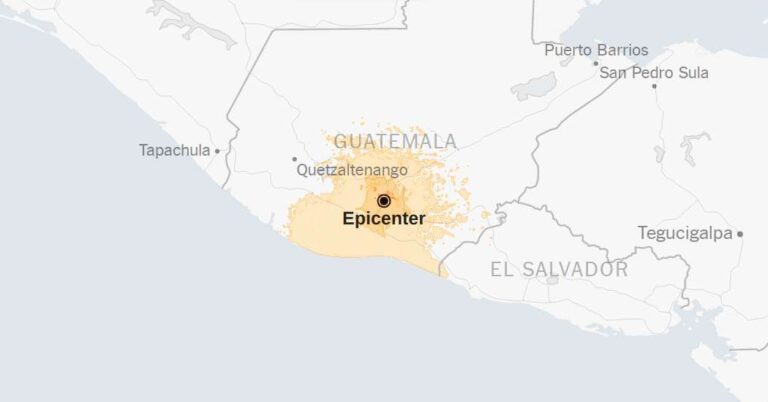
Note: Map shows the area with a shake intensity of 4 or greater, which U.S.G.S. defines as “light,” though the earthquake may be felt outside the areas shown.  All times on the map are Central time. The New York Times

A moderately strong, 5.7-magnitude earthquake struck in Guatemala on Tuesday, according to the United States Geological Survey.

The temblor happened at 3:41 p.m. Central time about 10 miles southwest of Guatemala City, data from the agency shows.

U.S.G.S. data earlier reported that the magnitude was 5.6.

As seismologists review available data, they may revise the earthquake’s reported magnitude. Additional information collected about the earthquake may also prompt U.S.G.S. scientists to update the shake-severity map.

Aftershocks in the region

An aftershock is usually a smaller earthquake that follows a larger one in the same general area. Aftershocks are typically minor adjustments along the portion of a fault that slipped at the time of the initial earthquake.

Quakes and aftershocks within 100 miles

Aftershocks can occur days, weeks or even years after the first earthquake. These events can be of equal or larger magnitude to the initial earthquake, and they can continue to affect already damaged locations.

When quakes and aftershocks occurred

Source: United States Geological Survey | Notes: Shaking categories are based on the Modified Mercalli Intensity scale. When aftershock data is available, the corresponding maps and charts include earthquakes within 100 miles and seven days of the initial quake. All times above are Central time. Shake data is as of Tuesday, July 8 at 8:17 p.m. Eastern. Aftershocks data is as of Tuesday, July 8 at 9:42 p.m. Eastern.

Maps: Daylight (urban areas); Natural Earth (roads, labels, terrain)