A required part of this site couldn’t load. This may be due to a browser
extension, network issues, or browser settings. Please check your
connection, disable any ad blockers, or try using a different browser.

A required part of this site couldn’t load. This may be due to a browser
extension, network issues, or browser settings. Please check your
connection, disable any ad blockers, or try using a different browser.
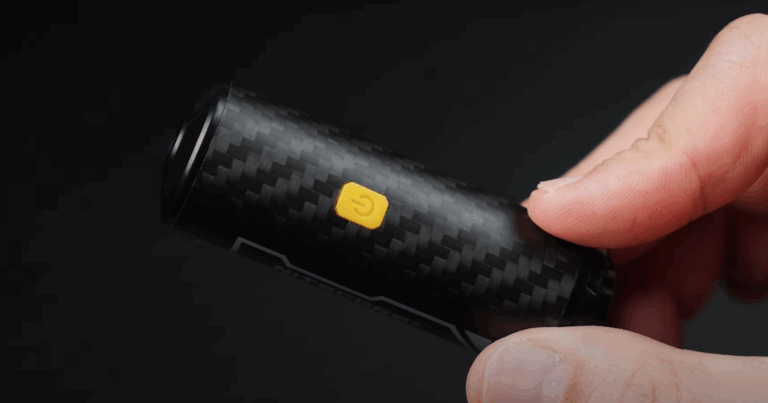
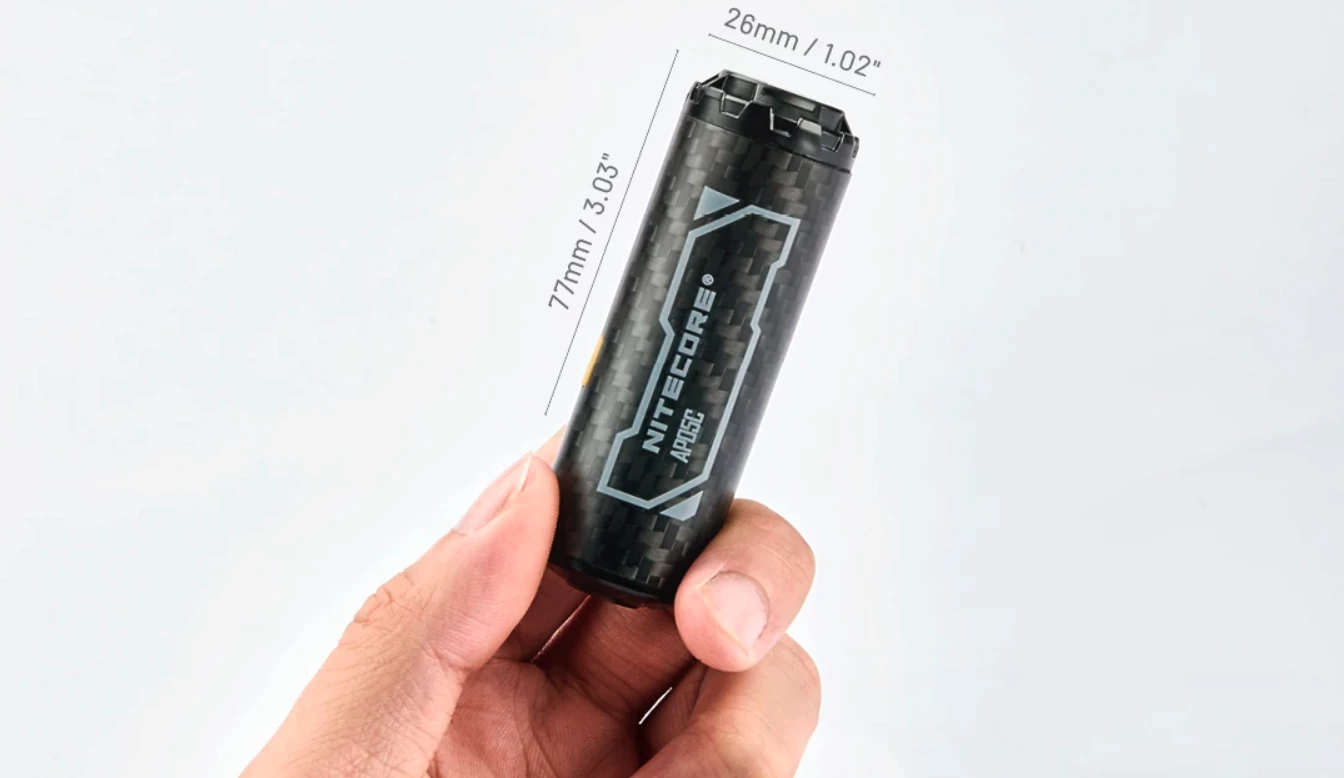
Just slightly larger than the typical human thumb, the all-new APO5C pocket pump is the first internally powered pump we’ve seen dip below the 1-oz (28-g) mark. Thanks to its carbon fiber construction, it’s nearly half an ounce (14 g) lighter than the last “lighter than light” miniature battery-powered pump we looked at. And this one comes from a brand with which we’re quite familiar: Nitecore.
It’s been a while since the crazy days of mid/late 2023 when it seemed like a new “lightest of its kind” pump was flying out of the gate (or at least appearing briefly on Kickstarter) every few weeks. At first, we thought maybe that was just us – after that quick succession, did we simply become numb to the gram-cutting of subsequent tiny ultralight pumps and stop paying them heed?
As it turns out, not so much. Googling up “world’s lightest sleeping pad pump” (and “electric inflator,” to get more technical) still lands us an awful lot of hits for the 1.2-oz (34-g) keychainable Flextail Zero we covered right in the middle of that 2023 run. And, not including today’s subject, we’re not seeing any inflator with its own battery that weighs in lighter.
Perhaps more telling than raw search results, the Zero is the battery-installed pump of choice for the absolutely ultralight obsessed minds behind brands like Zpacks, creator of some of the world’s lightest backpacking tents and shelters, and Garage Grown Gear, an online retailer of ultralight backpacking gear curated from both established brands and small boutique brands we’ve never seen outside of its website.
In the case of each brand, it’s one of only two ultralight pumps on offer and the only one powered by an internal battery. The 8.5-g (0.3-oz) Alpenglow Alpenblow that both companies also sell is even tinier, but it requires external power to run, as does the new 9-g (0.32-oz) V5 iteration of the Rex Creations Pad Pal.
Nitecore
Of course, the Flextail Zero and all those other noble competitors are not what we’re here to talk about. But the Zero’s two-year run at the top of the “world’s lightest” charts does make Nitecore’s APO5C all the more impressive. Because it weighs a full 11 grams (0.4 oz) less than the Zero at a mere 23 g (0.8 oz) – light enough that we’ve decided to abandon our preference for starting with US Customary measurements since we’re no longer dealing in whole ounces.
Both pumps’ weights are before installing the battery. Nitecore’s unit tacks on a few extra grams in comparison to the Flextail after installing the recommended 950-mAh RCR123 battery, upping the needle to 43 g (1.5 oz) versus the Flextail’s 52 g (1.8 oz) with battery. To spell out that easy math for all, that’s still 9 grams (0.3 oz) lighter. And the Nitecore has a larger capacity battery than the 650-mAh RCR123A battery used in Flextail’s total weight, resulting in 20 extra minutes of estimated runtime.
Nitecore
The AP05C measures just a hair larger than the Zero at a highly precise 3.03 x 1.02 in (77 x 26 mm) but relies on a carbon fiber shell to cut those extra grams.
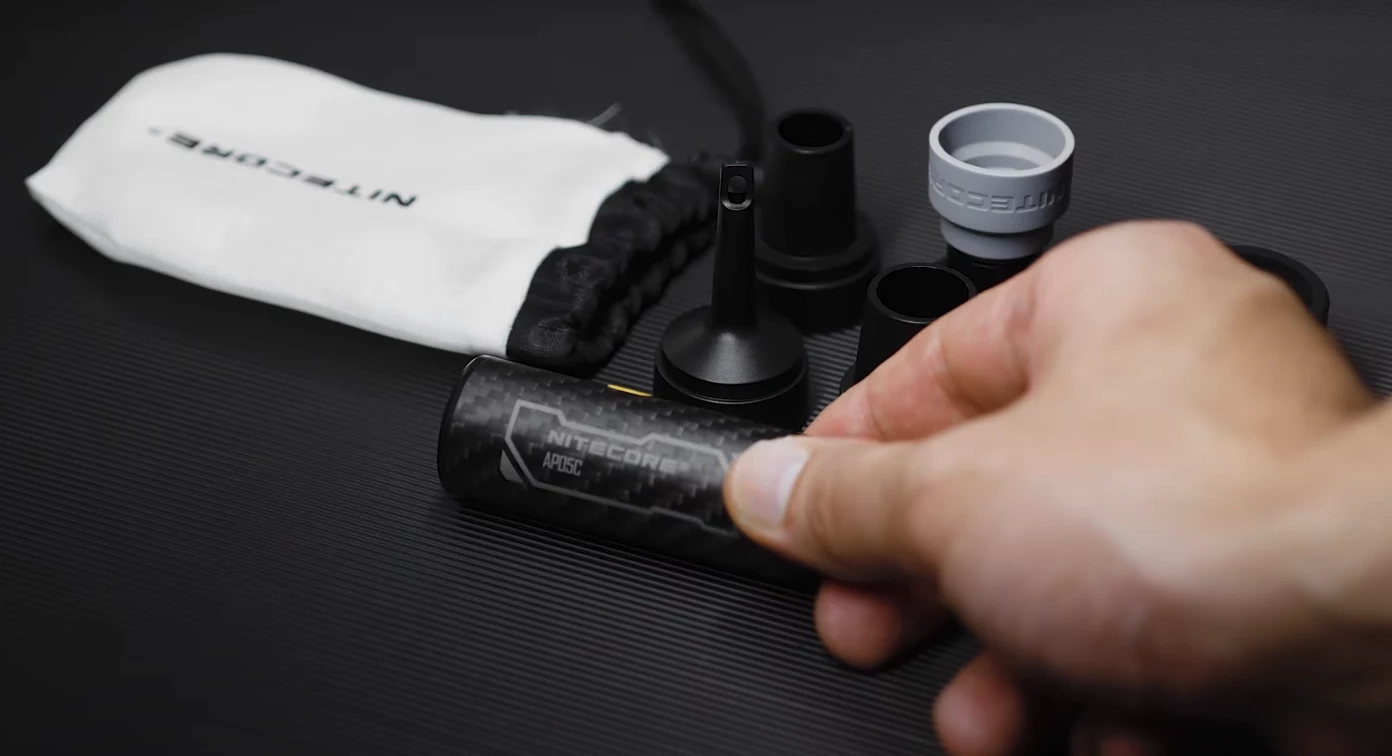
As for actually getting to work, the APO5C relies on an adapter and a series of nozzles to fit a wide variety of inflatable sleeping pads, pillows and flotation gear. It fills at a rate of 200 L/min, slightly quicker than the Zero’s 180 L/min, with a pressure of 2.7 kPa. It also works as a deflator, sucking air out of inflated wares or packing cubes to shrink them down to “go” size.
Nitecore
Nitecore says its new pump will fill up an inflatable camping pillow or inner tube in about 22 seconds, a sleeping pad in roughly 75 seconds. The rechargeable RCR123 battery offers an estimated 45 minutes – or 109 pillows – of runtime.
The APO5C launched in June and is available now for $42.95 from Nitecore’s online shop and other retailers.
Source: Nitecore
New Atlas earns commission from from some items you purchase through our links and you’ll be supporting your favorite news site! Thank you!
State Department head Rubio said he had sanctioned several senior officials and their ‘cronies’ for their ‘brutality toward the Cuban people’.
The US State Department has imposed sanctions on senior Cuban officials, including President Miguel Diaz-Canel, Secretary of State Marco Rubio announced as he marked the fourth anniversary of a brutal crackdown on historic antigovernment protests.
In a post on X, Rubio said the State Department would be “restricting visas for Cuban regime figureheads”, including President Diaz-Canel, Defence Minister Alvaro Lopez Miera, Interior Minister Lazaro Alberto Alvarez Casas, and their “cronies” for their “role in the Cuban regime’s brutality toward the Cuban people”.
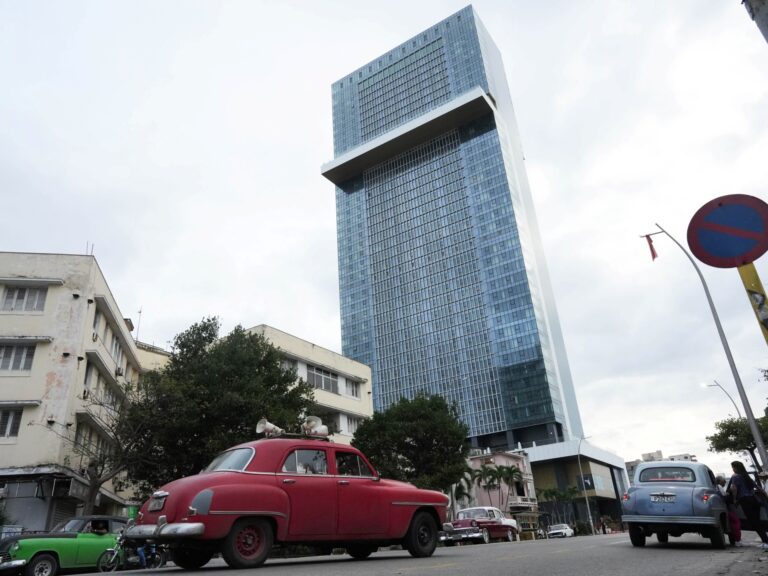
Rubio, the son of Cuban immigrants, also announced that the State Department has added the Torre K hotel to its restricted list of entities in order to “prevent US dollars from funding the Cuban regime’s repression”.
The Cuban government has promoted the luxury high-rise Torre K in central Havana as a symbol of modernisation. But the government has faced criticism for its large investment in luxury hotels amid a severe economic crisis in the nominally socialist one-party state.
“While the Cuban people suffer shortages of food, water, medicine, and electricity, the regime lavishes money on its insiders,” Rubio said.
Ten other “regime-linked properties” were also added to the State Department’s List of Prohibited Accommodations, it said in a statement.
The statement said the sanctions were being enacted in “solidarity with the Cuban people and the island’s political prisoners”, citing the Cuban government’s brutal crackdown on the July 2021 demonstrations – the largest since the Cuban revolution in the 1950s.
The police crackdown resulted in one death and dozens of wounded protesters.
“Four years ago, thousands of Cubans peacefully took to the streets to demand a future free from tyranny. The Cuban regime responded with violence and repression, unjustly detaining thousands, including over 700 who are still imprisoned and subjected to torture or abuse,” the State Department said.
Rubio also accused Cuba of torturing pro-democracy activist Jose Daniel Ferrer, whose bail was revoked as he was taken into custody alongside fellow dissident Felix Navarro in April.
“The United States demands immediate proof of life and the release of all political prisoners,” Rubio said.
Cuban Foreign Minister Bruno Rodriguez slammed the latest measures as part of a “ruthless economic war” being waged by the administration of US President Donald Trump.
“The USA is capable of imposing migratory sanctions against revolutionary leaders and maintaining a prolonged and ruthless economic war against Cuba, but it lacks the ability to break the will of these people or their leaders,” he said on X.
In January, then-US President Joe Biden had removed Cuba from the blacklist of countries sponsoring terrorism.
But Trump returned the country to the blacklist immediately after returning to the White House as he resumed his “maximum pressure” campaign against Cuba that typified his foreign policy during his first term.

Symbotic Inc: director Rus sells $132594 in shares

US President Donald Trump has reassured Kerrville, Texas, residents that the government would help rebuild after floods hit the central part of the state last week, killing 120 people.
The president and First Lady Melania Trump met on Friday with local officials on the ground – at one point standing in front of an upended tractor trailer – and surveyed the damage.
“I’ve never seen anything like it,” Trump said, after taking a tour of the devastation.
More than 12,300 volunteers have gathered to help search for the 161 people still missing statewide. Officials said volunteers have been working 10 hours a day.
While storms damaged homes and killed residents throughout central Texas, Kerr County faced the brunt of the floodwaters.
Trump told officials gathered for an afternoon roundtable at a Kerrville youth center that he and the first lady were in town to “express the love and support, and the anguish of our entire nation”.
The first lady, who ordinarily keeps a low profile, also toured the devastation. She said she hugged and prayed with families of the victims during her visit.
“My deepest sympathy to all of the parents who lost beautiful young souls,” she said. “We are grieving with you. Our nation is grieving with you.”
She also promised to visit again.
Among those killed in the storms were 27 young girls who were attending Camp Mystic – one of 18 summer camps located on that stretch of the Guadalupe River.
In the wake of the deadly tragedy, questions have been raised about whether adequate warnings were provided and why camps weren’t evacuated ahead of the deluge.
Experts have said a number of factor led to the deadly impact of the flash flood, including the pre-dawn timing, the location of some homes, the patchwork of cell service and its overall speed and severity.
Trump dismissed a media question on what more could have been done to warn residents, saying: “Only an evil person would ask a question like that.”
The Guadalupe River levels, which rose to flood homes, roads and cars, caught many by surprise.
The catastrophe unfolded before daybreak a week ago. The river rose 26ft (8m) in the span of just 45 minutes. Young children and staff at summer camps along the river were asleep as weather alerts went off.
Search crews in Texas are still sifting through debris for scores of missing people. Authorities have said they will not relent until everyone is accounted for.
Experts say that National Weather Service (NWS) alerts were timely in Texas last weekend.
But some have warned that cuts to federal agencies such as the National Oceanic and Atmospheric Organisation (NOAA) and its NWS subsidiary could affect the response to future sudden floods.

Google has struck a licensing deal with coding startup Windsurf, upending OpenAI’s $3 billion offer to acquire the startup after the clock on the deal’s exclusivity period expired.
The deal with Google means that Windsurf will continue to operate as an independent startup while key members of the team join Google, a source familiar with the matter told Fortune.
“We’re excited to welcome some top AI coding talent from Windsurf’s team to Google DeepMind to advance our work in agentic coding,” a Google spokesperson told Fortune in an emailed statement. The email also contained a statement from Windsurf founders Varun Mohan and Douglas Chen saying “We are excited to be joining Google DeepMind along with some of the Windsurf team.”
The news represents a setback for ChatGPT-maker OpenAI and comes as the generative AI startup has suffered talent raids from rivals like Meta. An OpenAI spokesperson confirmed to Fortune that the exclusivity period for the $3 billion acquisition deal with Windsurf, entered into in May, had expired, leaving Windsurf free to pursue other options.
AI coding startups, which use generative AI to assist programmers in writing code, have become one of the hottest categories in tech. Microsoft’s GitHub Copilot, built on OpenAI’s technology, has gained widespread adoption. In addition, Cursor, a startup backed by VCs like Thrive Capital, Accel, and Andreessen Horowitz, recently raised a $900 million Series C, hitting a $9 billion valuation.
Prior to making its bid for Windsurf, OpenAI had approached Anysphere about acquiring Cursor—but these discussions fell through as the startup wasn’t interested in being bought “even by OpenAI,” according to a report in TechCrunch.
Founded in 2021 by MIT classmates, and initially called Codeium, the startup changed its name to Windsurf in April, shortly before the OpenAI offer. The startup’s investors include Founders Fund, General Catalyst, Greenoaks, and Kleiner Perkins. TechCrunch reported in February that Windsurf was raising a funding round at a $2.85 billion valuation.
A civilian court of appeals says ex-Pentagon chief Lloyd Austin ‘had full legal authority’ to withdraw the plea agreement.
Washington, DC – An appeals court in the United States has validated the decision of former Pentagon chief Lloyd Austin to withdraw a plea deal for Khalid Sheikh Mohammed, the alleged mastermind of the 9/11 attacks on the US in 2001.
A panel of judges at the Washington, DC-based federal court of appeals ruled on Friday that Austin “had full legal authority” to revoke the plea agreement for Mohammed and two other defendants.
That deal would have spared Mohammed the possibility of the death penalty in exchange for a plea of guilty.
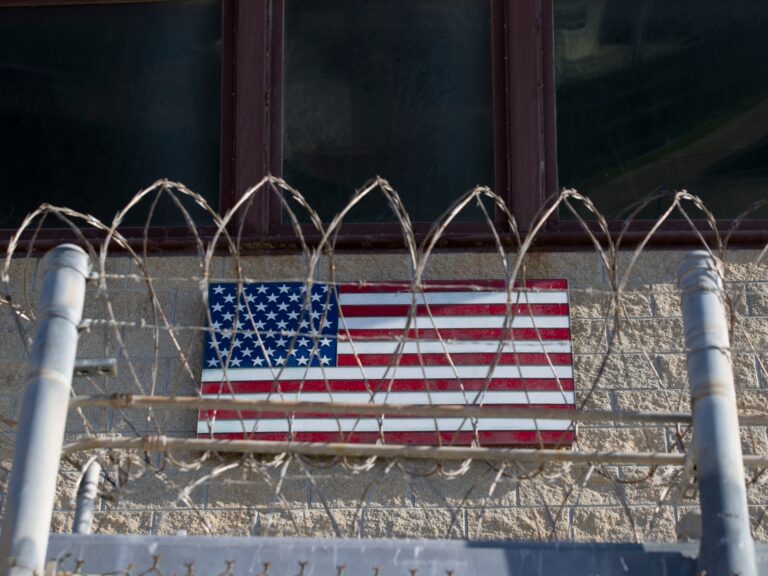
Friday’s decision will prolong a decades-long legal saga for Mohammed, who has been imprisoned at a notorious detention facility in Guantanamo Bay, Cuba, since he was captured in Pakistan in 2003.
Austin revoked the deal in August of last year, saying that the US public and victims’ families “deserve the opportunity to see” the case brought to trial before a military commission — an alternative justice system established for Guantanamo detainees.
But any trial is likely to be fraught with challenges — including questions about evidence obtained by torture — and will take years, extending the legal limbo for the Guantanamo detainees.
A military judge reinstated the plea agreements in November, and a military appeals court affirmed the decision one month later.
The administration of former President Joe Biden then took the case to a federal civilian court of appeals.
Lawyers for defendants like Mohammed argued that Austin was too late to revoke the agreements, parts of which were already materialising.
But the court of appeals in Washington, DC, ultimately ruled that Austin was right to wait for the outcome of the plea negotiations before revoking the deals.
Writing on behalf of the court’s majority, Judges Patricia Millett and Neomi Rao said that preventing the withdrawal of the deal would have sent the message that plea agreements are “irrevocable upon signing”.
“The Secretary acted within the bounds of his legal authority, and we decline to second-guess his judgment,” the ruling read.
However, dissenting Judge Robert Wilkins decried the decision as revoking a contract that was already in effect.
He likened nixing the plea agreement to refusing to pay a painter who has already finished parts of the work stipulated in a home repairs contract.
For years, rights groups have called for shutting down the detention facility at Guantanamo Bay, known as Gitmo.
The prison opened in 2002 to house prisoners from the so-called “war on terror” following the attacks in the US on September 11, 2001.
Detainees were arrested in countries across the world on suspicions of ties to al-Qaeda and other groups. Many endured torture at secret detention facilities, known as black sites, before being transferred to Guantanamo.
At Gitmo, civil liberty advocates say detainees had few legal rights. Even those cleared for release through the military commissions remained imprisoned for years, with no recourse to challenge their detention.
The detention facility once housed nearly 800 Muslim men and teenage boys. Now only 15 prisoners remain at the prison; three are eligible for release.

Welcome to Music Business Worldwide’s weekly round-up – where we make sure you caught the five biggest stories to hit our headlines over the past seven days. MBW’s round-up is supported by Centtrip, which helps over 500 of the world’s best-selling artists maximize their income and reduce their touring costs.
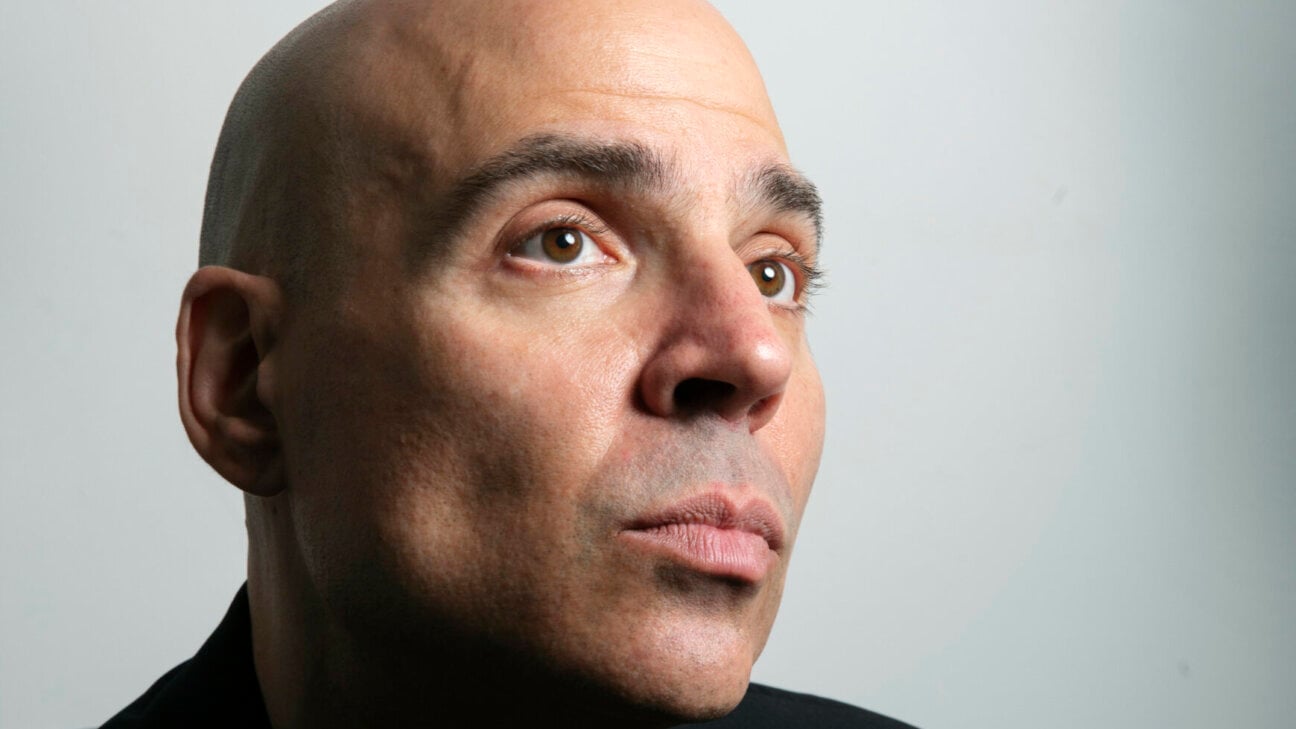
This week, we learned that Merck Mercuriadis, the maverick founder of Hipgnosis Songs Fund, is launching a new investment firm targeting artist management companies and music catalogs. His new company will also be called Hipgnosis.
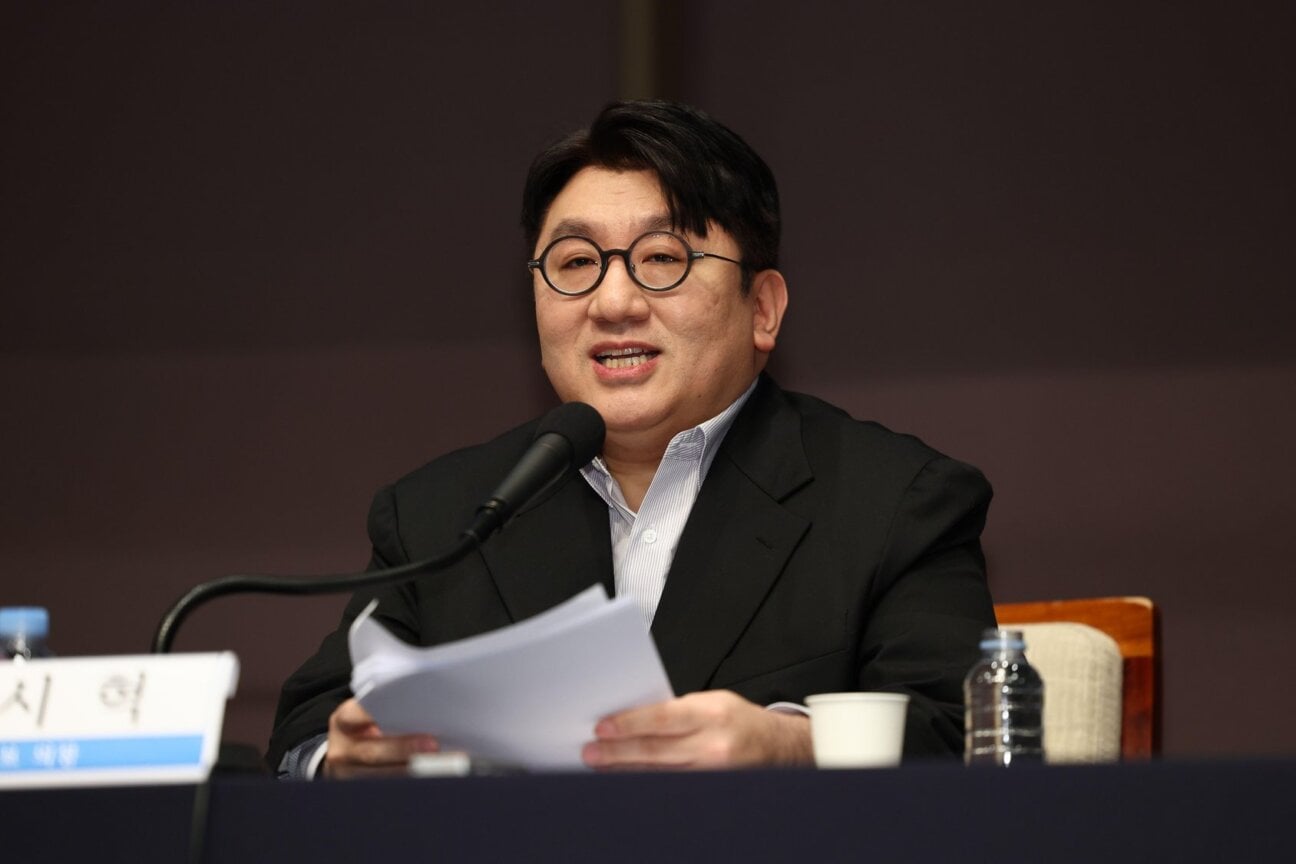
Elsewhere, South Korea’s financial regulator is reportedly preparing to refer HYBE Chairman Bang Si-hyuk to prosecutors over allegations related to the company’s IPO.
Also this week, over 200 people, including 20 employees from Beggars Group and Secretly Group, signed a letter objecting to Universal Music Group’s proposed takeover of Downtown Music Holdings.
Meanwhile, Paul Sinclair, who most recently served as General Manager and Executive Vice President of Warner’s Atlantic Records, has joined AI music platform Suno as Chief Music Officer.
Finally, Michael Nash, EVP and Chief Digital Officer at Universal Music Group, delivered a keynote presentation at the UN’s AI for Good summit in Geneva on Tuesday (July 8).
Here’s what happened this week…
You didn’t think he was done, did you?
Merck Mercuriadis, the maverick founder of Hipgnosis Songs Fund, is launching a new investment firm targeting artist management companies and music catalogs through a partnership structure that gives acts and their representatives ownership stakes.
The Financial Times reported on Saturday (July 5) that Mercuriadis’ new venture has already secured commitments in the “hundreds of millions” of dollars, citing people familiar with the matter.
The FT quoted Mercuriadis as saying: “I’m going to amass five or six really important management companies, all of which have superstar artists and superstar managers that go with them.
“It’s all about them having control and all about them making the majority of the money [rather than labels]…”
HYBE has pledged to cooperate fully with authorities as South Korea’s financial regulator reportedly prepares to refer the K-pop giant’s founder and Chairman, Bang Si-hyuk, to prosecutors over allegations related to the company’s 2020 IPO.
That’s according to The Korea Herald, Korea Times and other local news outlets, which report that The Securities and Futures Commission’s capital market investigation team voted on Monday (July 7) to refer Chairman Bang to prosecutors, with the commission set to formally consider the recommendation at its July 16 meeting.
Over 200 employees of indie companies have signed an open letter, distributed by IMPALA, addressed to Europe’s competition watchdog.
It urges the EC to conduct a “deep investigation” into Universal Music Group’s proposed acquisition of Downtown Music Holdings.
The letter’s signatories include significant representation from two leading indie music companies: UK-headquartered Beggars Group and US-headquartered Secretly Group.
They include 12 executives working for companies owned or co-owned by Beggars/XL, including 4AD, Everlasting Records, Matador, Popstock, Rough Trade, and Young, plus XL Recordings and Beggars Group…
4) Paul Sinclair joins AI platform Suno as Chief Music Officer
A prominent record label executive is joining the leadership team of Suno, the AI music-making platform that – along with rival Udio – is facing a copyright infringement lawsuit by the majors.
Paul Sinclair, who spent over two decades at Warner Music Group (WMG) in various roles, is taking up the post of Suno’s Chief Music Officer, a role in which he will “guide how Suno’s AI-powered tools are integrated into the process of songmaking,” Suno said.
Sinclair spent the last several months advising Suno, the Boston-headquartered company said in a statement on Monday (July 7)…
Michael Nash, EVP and Chief Digital Officer at Universal Music Group, delivered a keynote presentation at the UN’s AI for Good summit in Geneva on Tuesday (July 8).
This summit, which counts over 13,000 registered delegates, gathers UN decision makers, politicians, ambassadors, and other stakeholders to discuss AI in the context of the UN Sustainable Development Goals.
During his speech, Nash offered insights into how the world’s largest music rights company is approaching artificial intelligence, and why he believes “market-based solutions are the answer” to AI’s challenges in music.
Here are four things that stood out from Nash’s presentation…
MBW’s Weekly Round-Up is supported by Centtrip, which helps over 500 of the world’s best-selling artists maximise their income and reduce their touring costs.Music Business Worldwide
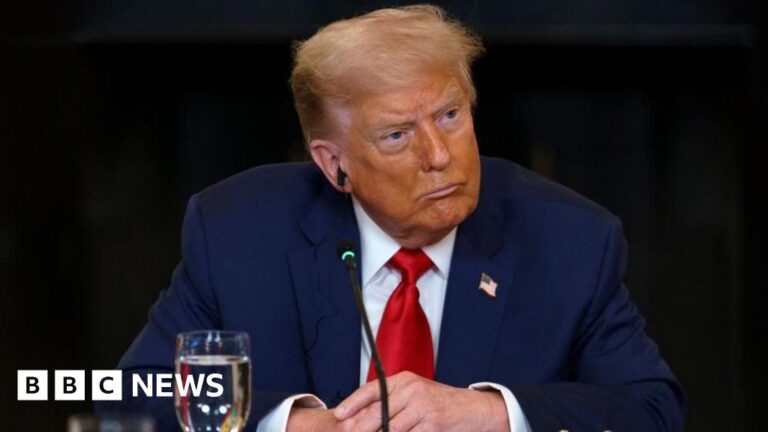
US President Donald Trump has said he will impose a 35% tariff on Canadian goods starting on 1 August, even as the two countries were days away from a self-imposed deadline to reach a new trade deal.
The announcement came in the form of a letter published on Trump’s social media platform Truth Social, along with additional threats of blanket tariffs of 15% or 20% on most trade partners.
Canadian Prime Minister Mark Carney said his government would continue to protect his country’s workers and businesses as they head towards the new deadline.
Trump has sent more than 20 such letters to other US partners this week. He also says he will soon announce new tariffs on the European Union.
Like Canada’s letter, Trump has vowed to implement those tariffs by 1 August.
A blanket 25% tariff has already been imposed on some Canadian goods, with the nation also hit hard by Trump’s global steel, aluminium and auto tariffs – though there is a current exemption in place for goods that comply with a North American free trade agreement.
US media is reporting that, for now, the Canada-United States-Mexico Agreement (CUSMA) exemption would still apply to this latest tariffs threat.
Trump has also imposed a global 50% tariff on aluminium and steel imports, and a 25% tariff on all cars and trucks not built in the US.
He also recently announced a 50% tariff on copper imports, scheduled to take effect next month.
Canada sells about three-quarters of its goods to the US, and is an auto manufacturing hub and a major supplier of metals, making the US tariffs especially damaging to those sectors.
Trump’s letter said the 35% tariffs were separate to those sector-specific levies.
“As you are aware, there will be no tariff if Canada, or companies within your country, decide to build or manufacture products within the United States,” Trump stated.
He also tied the tariffs to what he called “Canada’s failure” to stop the flow of fentanyl into the US, as well as Canada’s existing levies on US dairy farmers and the trade deficit between the two countries.
“If Canada works with me to stop the flow of Fentanyl, we will, perhaps, consider an adjustment to this letter. These Tariffs may be modified, upward or downward, depending on our relationship with Your Country,” Trump said.
Trump has previously accused Canada – alongside Mexico – of allowing “vast numbers of people to come in and fentanyl to come in” to the US.
In his response on X, Carney said Canada had made essential progress to “stop the scourge of fentanyl” in North America, and that his government was committed to continuing to work alongside the US to protect communities in both countries.
According to data from the US Customs and Border Patrol, only about 0.2% of all seizures of fentanyl entering the US are made at the Canadian border. Almost all of the rest is confiscated at the US border with Mexico.
Earlier this year, Canada also announced more funding towards border security and had appointed a fentanyl tsar in response to Trump’s complaints.
Canada has been engaged in intense talks with the US in recent months to reach a new trade and security deal.
At the G7 Summit in June, Carney and Trump said they were committed to reaching a new deal within 30 days, setting a deadline of 21 July.
Trump threatened in the letter to increase levies on Canada if it retaliated. Canada has already imposed counter-tariffs on the US, and has vowed more if they failed to reach a deal by the deadline.
In late June, Carney removed a tax on big US technology firms after Trump labelled it a “blatant attack” and threatened to call off trade talks.
Carney said the tax was dropped as “part of a bigger negotiation” on trade between the two countries.
On Friday, Canada’s industry minister Melanie Joly dismissed media questions about whether Ottawa was doing enough to stand for Canadians, saying: ‘We’re not going to negotiate in public.”
A required part of this site couldn’t load. This may be due to a browser
extension, network issues, or browser settings. Please check your
connection, disable any ad blockers, or try using a different browser.

Welcome to World Breaking News, your trusted source for fast, accurate, and impactful news coverage from around the globe. We are a dedicated team of journalists, editors, and news enthusiasts committed to delivering breaking stories, in-depth analysis, and real-time updates on politics, business, technology, sports, entertainment, and more.
© Copyright -World Breaking News -2025