

Thiel, Mara Holdings CEO, sells $536k in shares
Age limits for renting an RV depend on the location and the policies of the company. Often, renters under 25 will have to pay an extra fee.
Thiel, Mara Holdings CEO, sells $536k in shares

The relentless rain caused flooding across the country’s most populous province. Many of those killed have been children, officials said.

Astronomer, the tech company at the center of a viral internet controversy in which the married CEO embraced his chief people officer at a Coldplay concert where it was featured on a jumbotron, announced it launched a formal investigation. The Astronomer board is digging into the conduct of CEO Andy Byron and chief people officer Kristin Cabot and will reveal additional details soon, the company posted in a statement on LinkedIn and X.
“Astronomer is committed to the values and culture that have guided us since our founding. Our leaders are expected to set the standard in both conduct and accountability,” the company’s announcement read. “The Board of Directors has initiated a formal investigation into this matter and we will have additional details to share very shortly.”
The response was posted to both platforms on Friday. It received more than 700 reactions on LinkedIn almost immediately. Astronomer clarified in its post that an employee speculated to have also been at the Boston Coldplay concert with Byron and Cabot was not at the event. The company similarly refuted any alleged statements circulated online said to have been made by Byron or Astronomer as incorrect.
Astronomer is committed to the values and culture that have guided us since our founding. Our leaders are expected to set the standard in both conduct and accountability.
The Board of Directors has initiated a formal investigation into this matter and we will have additional… pic.twitter.com/rfrAQ5bygy— Astronomer (@astronomerio) July 18, 2025
Byron and Cabot’s concert hug rose to internet fame and sparked widespread affair allegations on Thursday after a clip, posted on TikTok, showed the CEO holding his subordinate in his arms at the Gillette Stadium show. Byron is seen in the video clutching Cabot from behind as the pair smiles and sways in the crowd. Coldplay frontman Chris Martin can be heard saying “Oh look at these two,” as they appear on the jumbotron, only for Cabot to quickly cover her face and turn away while Byron ducks to avoid the cameras.
Martin responded to their behavior, “Either they’re having an affair or they’re very shy” as the crowd cheered. The band played at the Boston venue on Tuesday and Wednesday night.
After the video went viral, it was revealed that Byron is legally married to Megan Kerrigan Byron. He and Kerrigan appear to have two sons. As for Cabot, public records suggest she has been married at least once. Her current marital status, however, could not be confirmed.
At many public and private companies, relationships between a CEO and another employee are prohibited because they can be viewed as coercive by their very nature. They can also disrupt morale and lead to allegations of unfair treatment.
Byron became CEO of Astonomer in 2023, whereas Cabot, according to her now-defunct LinkedIn, joined Astronomer in November 2024.
Astronomer is a private data infrastructure and operations company that achieved unicorn status in 2022 with a $1 billion or more valuation. The company recently moved its headquarters to New York City, and secured $93 million in series D funding in a round led by Bain Capital Ventures and Salesforce Ventures.

Your buddy is at the wheel—after you figured out how to rent an RV, you decide that he’s got the best driving track record of your crew. Your copilot is on music duty; he’s been working on a nostalgia-inducing playlist for weeks, and it’s taking you back to college.
You’re in the back with the rest of ’em singing all the wrong lyrics and then a synchronous “My Sharona!” while playing another round of Rummy.
You’re a few days into your cross-country road trip, cruising along Route 50 in the spiffed-up RV you rented. Sure, food and accommodation are few and far between—but you’ve got a fully equipped kitchen, comfortable beds and your preferred company right there with you.
Can you picture it? Of course, it’s easier to imagine this kind of trip of a lifetime if you knew what in the world you were doing when it comes to renting an RV.
First and foremost, an RV is a recreational vehicle that’s, in short, a motorized home designed to accommodate you while getting you from Point A to Point B.
When renters refer to RVs, they’re usually talking about either a motor vehicle or a trailer, both of which are usually equipped with home amenities like a living space, a bedroom and a kitchen.
What commonly comes to mind is a motorhome, which is large and compartmentalized — essentially meant to be, well, a home with a motor. It’s meant to provide comfort and, perhaps, a touch of luxury while traveling the great outdoors.
When renters refer to campervans, however, they’re talking about a van that’s been “fitted out” with basic accommodations—a van in which you can sleep and prepare food. They’re much smaller than typical RVs with beds of some kind, small cooktops and, sometimes, bathroom facilities.
Because of their small size (which means better gas mileage and easier maneuverability), campervan enthusiasts are typically young, free-spirited, backpacking-type travelers.
There are several types of RVs for different types of road trippers, travel plans and budgets.
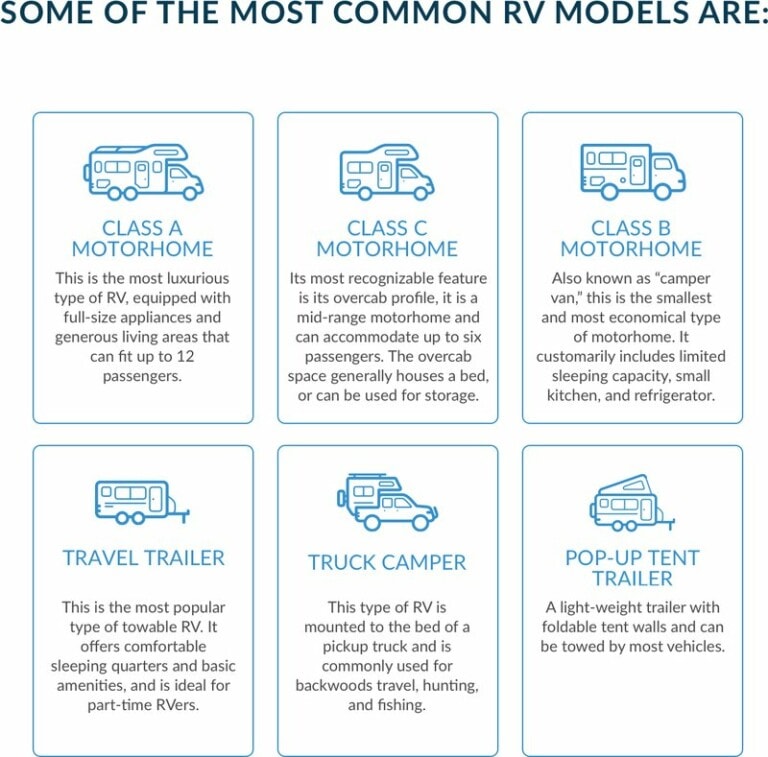
These are your crème de la crème motorhomes—they are the largest and most luxurious form of RV. Class As typically have full-sized furniture and kitchens, entertainment systems and sometimes a washer and dryer unit. In some models, they can sleep up to 12 people.
The only difference between a Class A Diesel Motorhome and a Class A Gas Motorhome is that the former are much more fuel-efficient. Keep in mind that, regardless, they are both the most expensive options to rent, have low gas mileage and take more skill to drive because of their size.
If you’re an adventurous and smaller group, a Class B Motorhome RV is an excellent choice. It looks a lot like a regular van from the outside, but it’s still equipped with home amenities inside.
The Class B Motorhome is tall enough to stand inside and has a kitchenette with a water tank, a double bed for two, and a small space for a combined shower and toilet.
They drive more like cars (which means easier parking and maneuverability, and they get better gas mileage than your Class A Motorhomes.
A Class C Motorhome is a good middle ground between a Class A and a Class B. Typically between 20 and 30 feet long with a cab, Class C Motorhomes can accommodate up to five people.
They boast comfortable amenities like queen-sized beds, larger living areas and separate bathrooms. Like Class B Motorhomes, they also drive easier than Class As and get better gas mileage.
Travel trailers are perfect if you want to tow your living quarters behind you, and also be able to unhitch and use your vehicle like normal. There’s an extensive range of travel trailers, from small ones with bare-minimum amenities to fancy ones with all the bells and whistles. Sizes can range from 10 feet up to 40 feet.
Considered a step up from travel trailers, a Fifth Wheel RV offers more space thanks to its split-level floor plan. They affix to the back of your truck or over the bed of your truck. And the extra cove added over the front of the truck means more living space for up two bathrooms and, sometimes, an outdoor kitchen extension.
You do need a pickup truck with high towing capacity for a Fifth Wheel, however.
Fold Downs—also known as camper trailers, pop-ups or tent trailers—are versatile, towable RVs that are ideal for beginners. They’re relatively lightweight, which makes them easy to tow, regardless of your vehicle type. And they vary in length, which makes some especially easy to maneuver.
You can often choose different amenity options depending on your needs, such as refrigerators, hot water, air conditioning and more.
Likewise, Expandables are designed for towing and are similar to Fold Downs with hard sides. They do have expandable tent ends, however. And they’re usually a step up from the Fold Down.
Toy Haulers are great if you’ve got a lot of toys—ATVs, motorcycles, snowmobiles, etc. That’s because they’re equipped with large cargo garages in the rears.

Now that you know what an RV is (and the various options available), you’re probably ready to figure out how to rent an RV.
It might sound easy. You just call your friends over, all crowd around a laptop, Google RV rentals and pick one that looks like the most fun and affordable. Right?
Wrong. There are several key steps you should take to rent an RV to ensure that…
One of you can actually operate this RV.
There’s plenty of room for your road beers in the kitchen. (Yes, you can drink in an RV, so long as you’re not the driver!)
With that said, here’s how to rent an RV in three simple steps.
Before you dive deep into the rental process, you’ll want to have the details of your trip down pat. Sit down to figure out who is going, what the purpose of your trip is, when you’re taking it, where you’re heading, and how you’re affording it.
If you’re taking a bachelor or bachelorette party of eight, renting a camper van won’t even be an option. And if you’re headed to Coachella with just your partner, you probably don’t need the added luxuries and cost of a Class A Motorhome.
Also, consider your furry friends. If you plan on traveling with your adventure-loving dog, you have to make sure that your RV rental allows pets.
Once you’ve decided you who is going on this road trip, decide what you all want to get out of the trip. What’s the purpose?
As you now know, there are different amenities available with each option, so decide what feels necessary.
For example, if you are indeed road-tripping for weeks across the country, you’ll probably want space so you’re not on top of each other. If you anticipate long hours in remote nowhere lands, you’ll want a good enough kitchen for survival purposes.
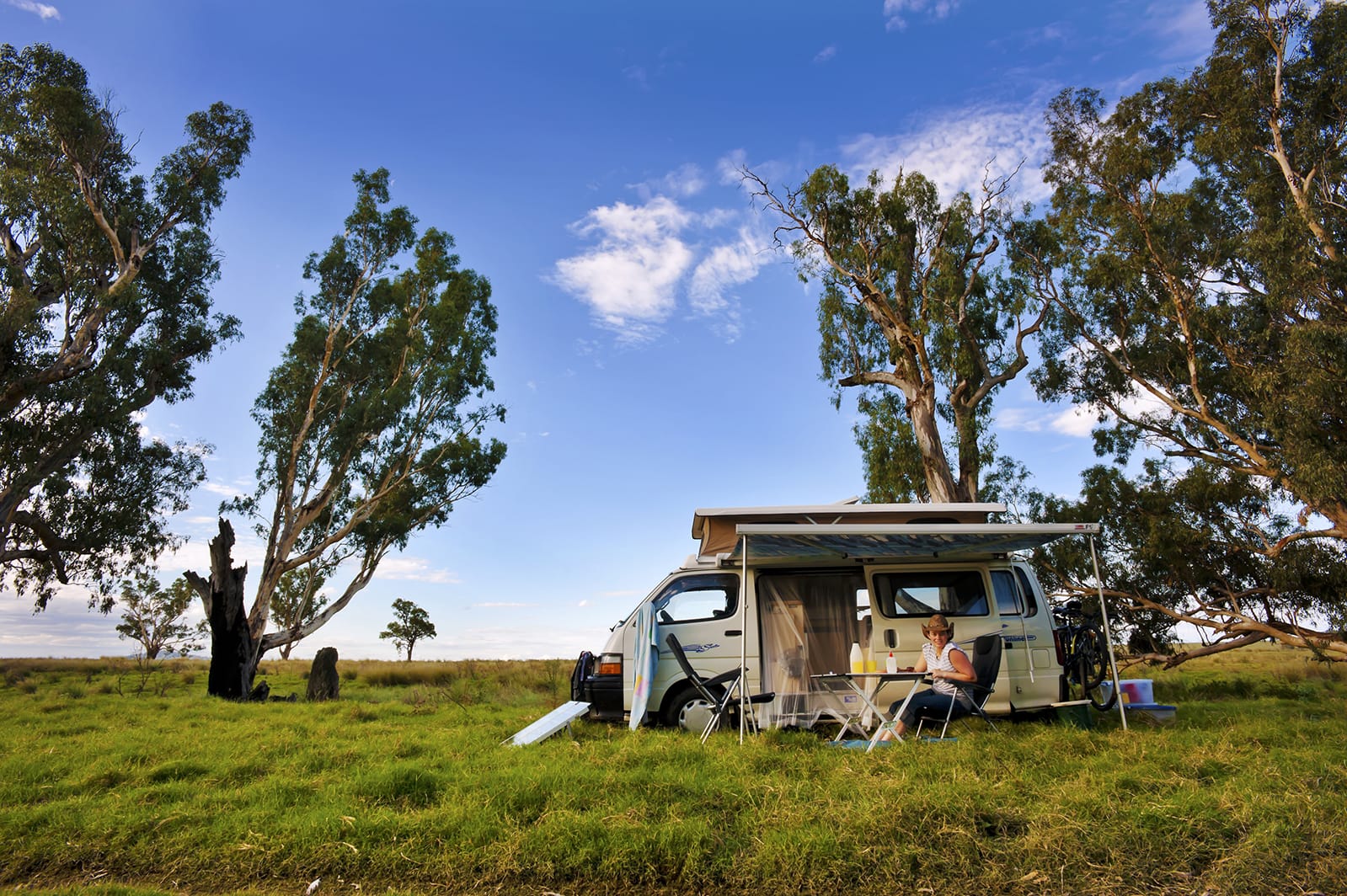
Now you know who’s coming and what you’re doing, so when are you leaving?
If you’re looking to hit the road in July or August, you should be booking your RV way ahead of time. During the high-season summer months, the availability of RVs (and the cost of RVs) can complicate plans.
The difference between renting an RV in Denver and driving to Colorado versus driving to the Grand Canyon is substantial when it comes to rental period lengths, mileage needed, fuel efficiency, etc.
Consider where you’re going to help you narrow down RV options.
Figure out how you’re going to afford this road trip. Your budget will definitely affect your recreational vehicle rental options.
A larger RV, like the Class A Motorhome, will not only have a higher daily rate, but it will also guzzle more gas due to its lower fuel efficiency. Meanwhile, if you only take a Fold Down with limited amenities and plan to stay at campgrounds with bathrooms and such, you should take into account the cost per night to park yourself there.
You or whoever you’re dubbing driver might need a license to drive an RV depending on where you live and the size of the RV you’re thinking about renting.
Some states will require you have non-commercial special licenses in order to drive an RV over a certain length or weight. Meanwhile, other states will require you to have a commercial driver’s license, which is needed for large and heavy vehicles (i.e. buses and tractor-trailers).
This guide is helpful in figuring out your state’s licensing requirements.
Once you’ve worked out the logistics of your trip and narrowed down some RV types you’d be interested in renting, look for a reputable rental owner or company to book your RV.
You can always talk more with the RV owner or rental center to answer any questions you might have and, possibly, negotiate rates. So long as you’ve nailed exactly what you’re hoping to get out of your RV road trip and a general travel plan, they can certainly help make recommendations.
But how can you find a reputable rental company? There are several places to safely rent an RV.

You can rent RVs directly from owners, work with relocation rentals or rent via rental centers. Let’s dive into all three of your options and some of our favorite RV rental companies.
Owners, who have put a lot of love into their recreational vehicles and personalized them with often unexpected and cool amenities, will rent out their RVs for novices and regular road-trippers alike.
Through sites like Outdoorsy and RVshare, which are basically Airbnb for RVs, you can rent directly from RV owners.
Renting an RV is a big deal. It’s your home, transportation and refuge for however long you choose to travel with it. That’s why you’ll want to choose a reputable company that knows how to rent RVs the right, trustworthy way.
Outdoorsy is by far my favorite company to rent through, and you can read my full Outdoorsy review here.
They’re the second largest online RV rental company and has proven itself with its 5,000+ five-star reviews. We’re also impressed by the A+ rating Outdoorsy received from the Better Business Bureau after four years in business.

What we like best about Outdoorsy is that it’s easy to use and you can view renters’ profiles and reviews. Every renter has to pass an application, so you know you can trust who you’re dealing with. And you’ll have direct access to them so you can communicate any questions or concerns and make sure you’re making the right choice.
Plus, you can get insider advice on the RV from someone who knows that vehicle best, as well as important information like how much it usually costs to fill up the camper’s tank, if it comes with kitchen accessories, or other tips a seasoned RVer can offer about travel routes, rest stops, etc.
A few more reasons that make Outdoorsy our #1 recommendation:
All you have to do is search by dates and location. You can also filter your search by RV type, price (min/max), ratings and/or amenities.
Search for RVs in your area using the widget below:
Have you heard of a relocation rental? It’s okay if you haven’t because they’re not very well known. This is when companies pay you to relocate their vehicles to the destinations they need them to be.
If you’re flexible with your schedule and road trip accommodation needs, you can get some incredible deals. But RV relocation rentals usually don’t show up more than a week or so in advance, which can complicate travel planning.
You can find RVs to relocate through sites such as TransferCar and Imoova.
Lastly, of course, you have your larger companies that own a fleet of RVs that they rent out from rental centers, like Cruise America and USA RV Rental.
The range of RVs cost more to rent, but some people may feel more comfortable renting a vehicle in a more traditional way.
The cost of your RV rental varies significantly depending on the following:
As mentioned above, the type of RV you choose will change the cost. Again, a Class A Motorhome is the most expensive option, while a Fold Down is your best bet for beginners on a budget.
Cost is also based on a daily rate, and you’ll want to know the rental owner or company’s mileage policy. Some may charge per mile traveled or allot a certain number of miles with an added fee if you go over (typically around $0.25-$0.75 per mile). They may also offer unlimited mileage, but be sure to ask so there are no surprises.
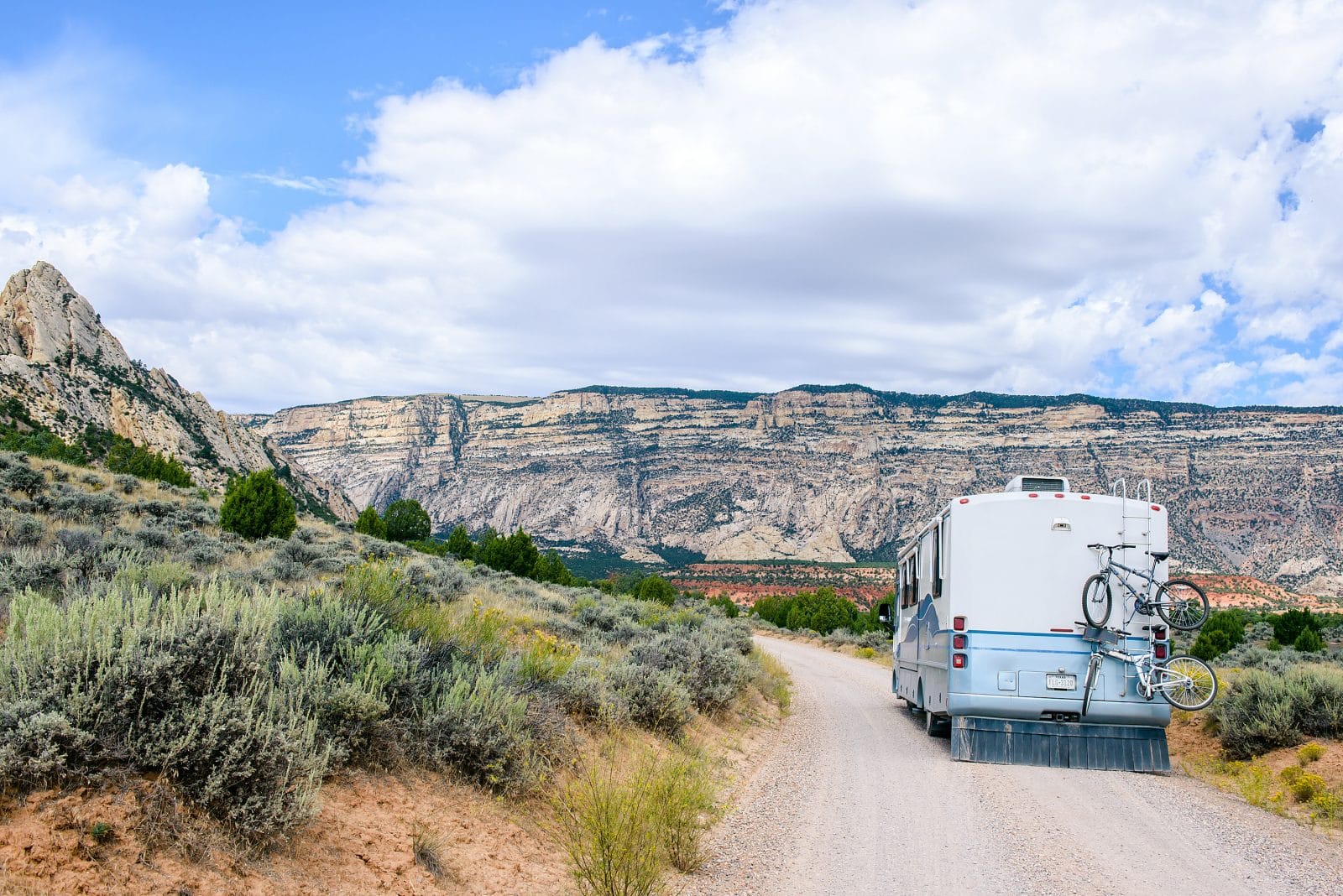
And, lastly, depending on from where you rent your RV, your cost can change. If you rent from an owner, there may be more wiggle room to negotiate rates. If you rent from a rental center with fixed rates, you’ll have to pay the advertised fee.
While there are a lot of different factors that will affect the cost to rent an RV, below is a general breakdown of average RV rental prices across the US. These prices are based on peer-to-peer RV rentals, like Outdoorsy. Rates from a traditional rental company will be higher.
| RV Type | Average Rental Price per Night |
| Class A | $175 to $275 |
| Class B | $75 to $200 |
| Class C | $150 to $200 |
| Travel Trailer | $50 to $125 |
| Fifth Wheel | $60 to $150 |
And, as already mentioned, you should factor in the added expenses like the insurance costs, cleaning fees, mileage, gas, etc. into the total price.
As part of the RV rental process, you will have to put down a deposit. This may be a security deposit that gets refunded when the RV is returned unharmed (fingers crossed!) or a deposit that’s required upon booking to hold your reservation.
Also, insurance coverage is required. As with renting a car, rental companies may offer this coverage for an extra fee, or you can check your own car insurance to see if you’re covered.
Add cleaning fees to your list of possible incurred expenses, as well. They might charge you around $150 if you don’t return the RV clean. So get those cleaning gloves and mop ready if you want to save yourself some money.
Oh, and don’t forget gas! Most renters want you to return the RV with a full tank, or they’ll charge you what it costs to fill it up plus an extra fee. Gas costs can add up quickly, especially with those larger vehicles, so keep that fuel tank in mind.
Now that you know how to rent an RV, where you can go about renting one and how much it’ll cost you, you can go ahead and get yourself one. But once it’s in your hands, do you know how to drive an RV?
If you can’t tell by now, we’re all for renting an RV for a real adventure-filled experience. However, there are a few things we want to be sure you’re aware of to keep you safe on the road and comfortable on your journey.
First and foremost, driving a large RV, like a Class A Motorhome, is not like at all like driving a car. If you’re a complete newbie, you’ll want to practice like you did when preparing for your first driver’s test.

What you may not have considered is that RVs move around. Because they’re tall and heavy, wind or a gust of air will feel like it’s blowing you off course. But don’t panic; you can minimize this by traveling at a slower speed.
Slamming on your brakes or tailgating the car in front of you is a definite no-no with an RV. Again, because of their size and weight, you must allow plenty of time and distance to come to a complete stop safely. Keep your vehicle in low gear when going downhill.
One other consideration we’d like to bring to a novice RVer’s attention is knowing the size of your vehicle. On a cross country journey, you’re likely to come across many tunnels, overpasses and bridges. Be aware of bridge clearances because they’ll determine whether or not you can pass safely.
We encourage you to explore your options and find what’s best for you. Pump up your travel companions in the process.
Maybe this is your first RV road trip, but we have a feeling it won’t be your last.
READ MORE:
Age limits for renting an RV depend on the location and the policies of the company. Often, renters under 25 will have to pay an extra fee.
You definitely need a drivers license to rent an RV, but you don’t need a CDL or any special license.
No, you can’t sleep anywhere in an RV in the US. Research the restrictions and legal camping areas at your destination.
Living full time in an RV is totally possible, and many people do it for months or years at a time.
The amount of gas an RV uses depends on the size. It ranges from around 6-8 mpg for class A motorhomes to 13-18 mpg for smaller camper vans.

So, you wanna drink from a water bottle while cycling, but you don’t like the idea of tipping your head way back and taking your eyes off the road. Well, this particular bottle was designed to accommodate folks like you, as it features its own integrated electric pump.
Currently the subject of a Kickstarter campaign, the aptly-named Active-Pump Sports Bottle is made by Hong Kong hydration gear company Bottle Bottle.
The actual liquid-carrying part of the device takes the form of a 600-ml (20-oz) double-walled stainless steel vessel, sheathed in BPA-free plastic. It’s dishwasher-safe, and reportedly keeps water or other beverages cold for up to 12 hours.
Its screw-on, silicone-sealed polypropylene lid incorporates the pump, its battery, and other electronics.
Bottle Bottle
Pressing a button on the front of the lid causes its spring-loaded dust cap to pop open, revealing a drinking spout underneath. Pressing a second button – on the back of the lid – then activates the pump, causing a stream of water to arc from the spout into the user’s mouth. The whole process is performed one-handed, no bottle-squeezing required.
A single 2.5-hour USB charge of the 3.7V/1,200-mAh lithium battery is claimed to be good for up to seven days of use, whatever that means in more practical terms. An LED indicator provides a warning when the battery is getting low.
And although the lid is not dishwasher-safe, it is IPX6 water-resistant. That means it can withstand jets of water from any direction.
Assuming the Active-Pump Sports Bottle reaches production, a pledge of US$59.99 will get you one in a color choice of black, pink or gray. The planned retail price is $99.99.
Of course, there are other options for cyclists who want to drink without tipping their head back. Using a hydration pack is an obvious solution, although casual riders on short jaunts might not want to bother wearing one. There are also bike-mounted vessels that are equipped with drinking hoses, plus there was the non-electric Upright bottle … but it failed to reach its crowdfunding goal.
BOTTLE BOTTLE: The World’s First Active-Pump Sports Bottle
Sources: Kickstarter, Bottle Bottle
Note: New Atlas may earn commission from purchases made via links.

Government wants to lower the voting age, saying it aims to modernise UK democracy.
The United Kingdom is set to make an historic change to its electoral system.
The government has announced a plan to lower the voting age from 18 to 16. It says the move will modernise and strengthen British democracy.
But critics say this is more than just democratic reform.
So, what’s really behind the decision? Is this about democratic renewal or short-term political gain? And has lowering the voting age worked elsewhere?
Presenter: Adrian Finighan
Guests:
Afzal Khan – Labour Member of Parliament in the UK
Yannis Koutsomitis – European affairs analyst
Alex Deane – Political analyst and conservative commentator

This week, Reuters reported that the European Commission plans to escalate its investigation into Universal Music Group‘s $775 million Downtown Music Holdings acquisition.
Meanwhile, the Department of Justice’s antitrust case against Live Nation and Ticketmaster potentially gained momentum with revelations of undisclosed kickback schemes involving venue giant Oak View Group.
Elsewhere, fresh data from Luminate painted a sobering picture for those chasing US chart hits, while Warner Music Group bolstered its catalog strategy with a key hire.
Also this week, Primary Wave continued its acquisition spree via a deal with Fleetwood Mac co-founder Peter Green’s estate, marking the latest in a series of catalog acquisitions backed by the company’s $2 billion partnership with Brookfield Asset Management.
Here are some of the biggest headlines from the past few days…
1. EU TO LAUNCH ‘FULL-SCALE’ INVESTIGATION INTO UMG’S $775M DOWNTOWN DEAL, REUTERS REPORTS
The European Commission is planning to open a “full-scale” investigation into Universal Music Group’s proposed acquisition of Downtown Music Holdings. That’s according to a report published by Reuters on July 16, citing “three people with direct knowledge of the matter”.
The move represents an escalation from the initial Phase 1 review to a more extensive Phase II investigation lasting up to 90 working days.
UMG’s Virgin Music Group revealed in December that it had agreed to buy Downtown Music Holdings LLC in a $775 million deal. The reported investigation comes after over 200 people signed a letter objecting to UMG’s proposed takeover of Downtown, including 20 employees from Beggars Group and Secretly Group companies.
Universal maintains confidence in the deal, with a spokesperson stating: “[We] remain confident that the combination of Virgin and Downtown will create an improved offering in the growing and highly competitive label services category that today consists of roughly 100 companies…”
The Department of Justice’s antitrust case against Live Nation and Ticketmaster potentially gained new ammunition this week with revelations of a previously undisclosed kickback scheme. The kickback arrangement was revealed as part of the DOJ’s investigation into bid-rigging allegations against OVG CEO Tim Leiweke.
OVG reportedly entered into a pact with the ticketing services provider, via which the ticketing company agreed to make annual $7.5 million “Sponsorship Payments” to OVG. These payments were “subject to adjustments based on the volume of primary, fee-bearing tickets sold” for venues managed by OVG360 in North America over a 10-year period.
The critical issue identified by the DOJ is that OVG failed to disclose this financial arrangement to venue owners, despite having fiduciary duties to them. The revelations could significantly strengthen the DOJ’s ongoing antitrust case against Live Nation and Ticketmaster…
3. IF YOUR MUSIC STRATEGY IS ‘QUICK HITS’ ON THE US CHARTS IN 2025… GOOD LUCK.
New data from Luminate’s midyear report reveals fundamental shifts in American music consumption patterns. The USA’s market share of global audio streaming volume has substantially fallen – down from 43.4% in 2019 to just 27.9% in H1 2025.
Even more striking is the decline of megahits. The USA’s Top 10 tracks in H1 2025 claimed a half-a-percent share of the market’s total audio streams (0.52%). Go back just a few years, and the equivalent stat was as high as 1.6%.
Perhaps most significantly, tracks younger than 18 months old (‘current’ releases) were streamed 168.5 billion times in the first half of 2025. That was down in volume terms by 3.3% YoY vs. the same period of 2024, when ‘current’ tracks racked up 174.3 billion streams…
4. ORLA LEE-FISHER JOINS WARNER AS HEAD OF DUAL CATALOG STRATEGY, AS MAJOR STEPS UP M&A ACTIVITY
Warner Music Group made a strategic hire to capitalize on the growing catalog market, appointing industry veteran Orla Lee-Fisher as Head of Dual Catalog Strategy. Lee-Fisher will “champion” catalogs represented by WMG. That will involve “crafting and leading campaigns for the company’s off-roster catalog” across both recorded music and publishing rights.
Lee-Fisher joins WMG from Universal Music Group, where she worked for more than 20 years, serving in a variety of roles, including General Manager of Polydor Records and Managing Director of A&M Records. Most recently, she was EVP, Global Marketing and worked across campaigns for superstar artists including The Beatles, The Rolling Stones, and Sir Elton John.
The appointment comes two weeks after we learned that WMG and private investment giant Bain Capital are launching a $1.2 billion joint venture to acquire “legendary” music catalogs across both recorded music and music publishing…
5. FLEETWOOD MAC CO-FOUNDER PETER GREEN’S ESTATE STRIKES MUSIC RIGHTS DEAL WITH PRIMARY WAVE
Primary Wave has struck a music rights deal with the estate of Peter Green, the founder and original lead of Fleetwood Mac. According to Primary Wave, terms of the deal will see the publisher acquire the assets comprised in Green’s Rattlesnake music publishing catalog, and his interest in all compositions written by him, as well as certain recordings.
Green’s writing credits include Fleetwood Mac songs such as Albatross, Black Magic Woman, Oh Well, The Green Manalishi (With the Two Prong Crown), and Man of the World. Rolling Stone ranked Green at No.58 in its list of the “100 Greatest Guitarists of All Time.”
This partnership marks the latest Fleetwood Mac-related deal for Primary Wave. In December 2020, the company acquired a majority stake in the publishing catalog of another Fleetwood Mac member, Stevie Nicks. The Wall Street Journal reported at the time that Primary Wave bought an 80% interest in the copyrights, which its sources said were valued at approximately $100 million…
MBW’s Weekly Round-Up is supported by Centtrip, which helps over 500 of the world’s best-selling artists maximise their income and reduce their touring costs.Music Business Worldwide

At least three police officers were killed in an explosion at a law enforcement training facility in East Los Angeles, officials say.
The blast occurred at around 07:30 local time (15:30 BST) on Friday at the Los Angeles County Sheriff’s Department’s Biscailuz Center Academy Training, according to emergency responders.
Authorities say the explosion took place in the parking lot of the facility’s Special Enforcement Bureau. US media, citing sources, report that officers were handling an unexploded ordnance recovered from a recent bomb disposal call when it detonated.
The exact cause of the explosion remains unclear, and officials have not yet confirmed whether there were additional injuries.
In a statement posted on X, US Attorney General Pam Bondi called the incident “horrific” and said federal agents had been deployed on the scene and “working to learn more”.
The bomb squad typically picks up potential explosives across the region daily, but it’s a situation that’s always fraught with danger because it’s hard to assess the stability of materials and their age, the Los Angeles Times reported citing law enforcement sources.
The immediate area around the scene has been reportedly evacuated.
The Department of Homeland Security, the Bureau of Alcohol, Tobacco, Firearms and Explosives, and the Los Angeles Police Department are assisting in the investigation.
California Governor Gavin Newsom has been briefed about the explosion and he is “closely monitoring the situation”, his office said in a statement on X.
Newsom’s office added that state assistance has also been offered to help respond to the incident.
Kathryn Barger, Chief of the Los Angeles County Board of Supervisors, wrote in a statement that she is “closely tracking the situation as we learn more about what occurred and the condition of those affected”.
“My heart is heavy, and my thoughts are with the brave men and women of the Sheriff’s Department during this difficult time,” she said.

A required part of this site couldn’t load. This may be due to a browser
extension, network issues, or browser settings. Please check your
connection, disable any ad blockers, or try using a different browser.

Washington, DC – New media reports in the United States, citing intelligence assessments, have cast doubt over President Donald Trump’s assertion that Washington’s military strikes last month “obliterated” Iran’s nuclear programme.
The Washington Post and NBC News reported that US officials were saying that only one of the three Iranian nuclear sites – the Fordow facility – targeted by the US has been destroyed.
The Post’s report, released on Friday, also raised questions on whether the centrifuges used to enrich uranium at the deepest level of Fordow were destroyed or moved before the attack.
“We definitely can’t say it was obliterated,” an unidentified official told the newspaper, referring to Iran’s nuclear programme.
Trump has insisted that the US strikes were a “spectacular” success, lashing out at any reports questioning the level of damage they inflicted on Iran’s nuclear programme.
An initial US intelligence assessment, leaked to several media outlets after the attack last month, said the strikes failed to destroy key components of Iran’s nuclear programme and only delayed its work by months.
But the Pentagon said earlier in July that the attacks degraded the Iranian programme by one to two years.
While the strikes on Fordow – initially thought to be the most guarded facility, buried inside a mountain – initially took centre stage, the NBC News and Washington Post reports suggested that the facilities in Natanz and Isfahan also had deep tunnels.
The US military did not use enormous bunker-busting bombs against the Isfahan site and targeted surface infrastructure instead.
A congressional aide familiar with intelligence briefings told the Post that the Pentagon had assessed that the underground facilities at Isfahan were “pretty much impenetrable”.
The Pentagon responded to both reports by reiterating that all three sites were “completely and totally obliterated”.
Israel, which started the war by attacking Iran without direct provocation last month, has backed the US administration’s assessment, while threatening further strikes against Tehran if it resumes its nuclear programme.
For its part, Tehran has not provided details about the state of its nuclear sites.
Some Iranian officials have said that the facilities sustained significant damage from US and Israeli attacks. But Supreme Leader Ali Khamenei said after the war that Trump had “exaggerated” the impact of the strikes.
The location and state of Iran’s highly enriched uranium also remain unknown.
Iran’s nuclear agency and regulators in neighbouring states have said they did not detect a spike in radioactivity after the bombings, suggesting the strikes did not result in uranium contamination.
But Rafael Grossi, the head of the United Nations nuclear watchdog, the IAEA, did not rule out that the uranium containers may have been damaged in the attacks.
“We don’t know where this material could be or if part of it could have been under the attack during those 12 days,” Grossi told CBS News last month.
According to Grossi, Iran could resume uranium enrichment in a “matter of months”.
Israel launched a massive attack against Iran on June 13, killing several top military officials, as well as nuclear scientists.
The bombing campaign targeted military sites, civilian infrastructure and residential buildings across the country, killing hundreds of civilians.
Iran responded with barrages of missiles against Israel that left widespread destruction and claimed the lives of at least 29 people.
The US joined the Israeli campaign on June 22, striking the three nuclear sites. Iran retaliated with a missile attack against an air base housing US troops in Qatar.
Initially, Trump said the Iranian attack was thwarted, but after satellite images showed damage at the base, the Pentagon acknowledged that one of the missiles was not intercepted.
“One Iranian ballistic missile impacted Al Udeid Air Base June 23 while the remainder of the missiles were intercepted by US and Qatari air defence systems,” Pentagon spokesperson Sean Parnell told Al Jazeera in an email last week.
“The impact did minimal damage to equipment and structures on the base. There were no injuries.”
After a ceasefire was reached to end the 12-day war, both the US and Iran expressed willingness to engage in diplomacy to resolve the nuclear file. But talks have not materialised.
Iran and the US were periodically holding nuclear talks before Israel launched its war in June.
During his first term in 2018, Trump withdrew the US from the 2015 multilateral nuclear agreement, known as the Joint Comprehensive Plan of Action (JCPOA).
The agreement saw Iran scale back its nuclear programme in exchange for lifting international sanctions against its economy.
In recent days, European officials have suggested that they could impose “snap-back” sanctions against Iran as part of the deal that has long been violated by the US.
Tehran, which started enriching uranium beyond the limits set by the JCPOA after the US withdrawal, insists that Washington was the party that nixed the agreement, stressing that the deal acknowledges Iran’s enrichment rights.
I had a joint teleconference with E3 FMs & EU HR last night, in which I made the following points clear:
It was the US that withdrew from a two-year negotiated deal -coordinated by EU in 2015- not Iran; and it was US that left the negotiation table in June this year and chose a… pic.twitter.com/NFQdK2HZD4
— Seyed Abbas Araghchi (@araghchi) July 18, 2025
On Friday, Iranian Foreign Minister Abbas Araghchi said he held talks with the top diplomats of France, the United Kingdom and Germany – known as the E3 – as well as the European Union’s high representative.
Araghchi said Europeans should put aside “worn-out policies of threat and pressure”.
“It was the US that withdrew from a two-year negotiated deal – coordinated by EU in 2015 – not Iran; and it was US that left the negotiation table in June this year and chose a military option instead, not Iran,” the Iranian foreign minister said in a social media post.
“Any new round of talks is only possible when the other side is ready for a fair, balanced, and mutually beneficial nuclear deal.”
Tehran denies seeking a nuclear bomb. Israel, meanwhile, is widely believed to have an undeclared nuclear arsenal.

Welcome to World Breaking News, your trusted source for fast, accurate, and impactful news coverage from around the globe. We are a dedicated team of journalists, editors, and news enthusiasts committed to delivering breaking stories, in-depth analysis, and real-time updates on politics, business, technology, sports, entertainment, and more.
© Copyright -World Breaking News -2025