
A required part of this site couldn’t load. This may be due to a browser
extension, network issues, or browser settings. Please check your
connection, disable any ad blockers, or try using a different browser.

A required part of this site couldn’t load. This may be due to a browser
extension, network issues, or browser settings. Please check your
connection, disable any ad blockers, or try using a different browser.
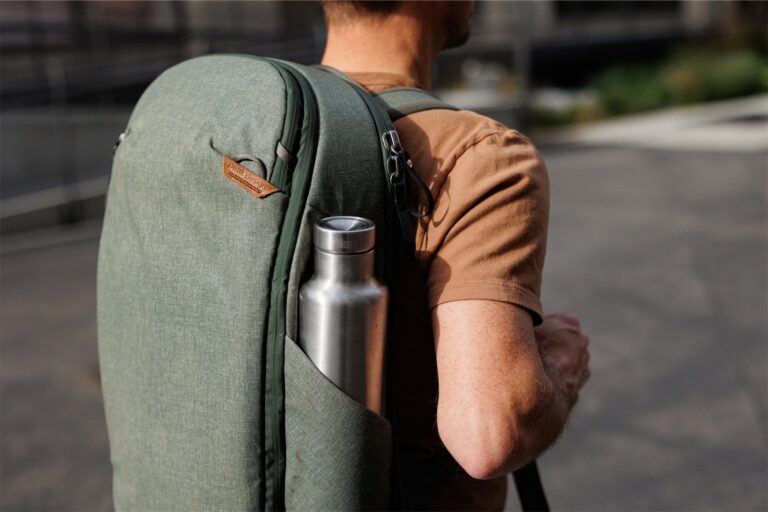
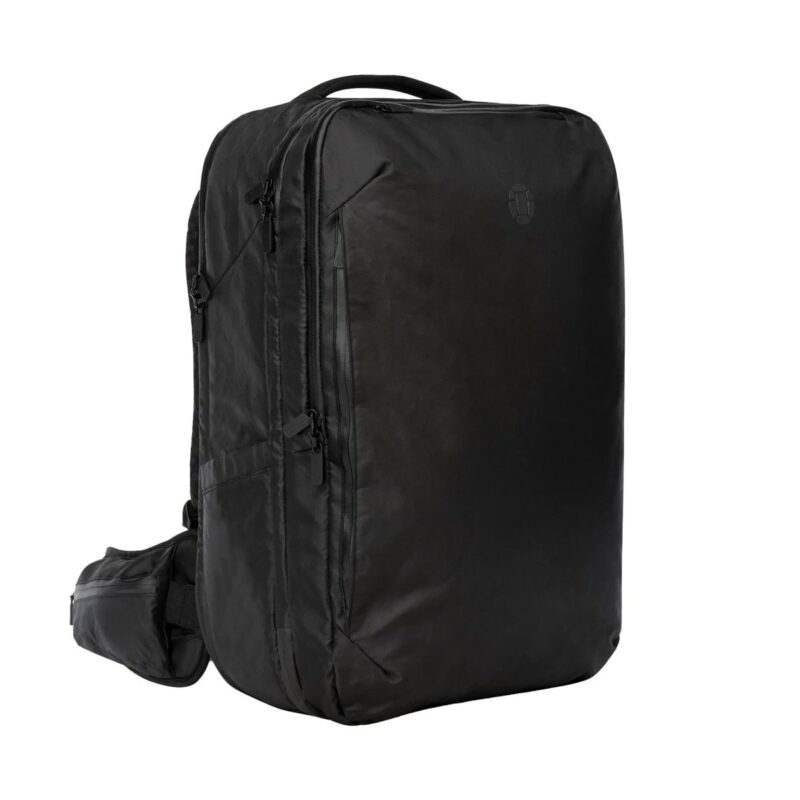
Tortuga designed this to be the ultimate carry-on backpack for urban travelers. Its outstanding build quality, thoughtful design, and superior comfort earned it the highest score of any carry-on backpack our team has ever tested.
It’s ideal if you want an easy-to-pack, easy-to-carry backpack that works for almost any trip to any destination. It’s ideal for city travel, but you can really take it anywhere.
Even when I was carrying a lot of weight, the Tortuga Travel Backpack felt comfortable and evenly distributed. This pack scored 9.2 for Comfort, which is the highest comfort score of any urban travel backpack we tested.
The main compartment fully opens like a book, which means you can pack it like a suitcase rather than stuffing things in from the top like a standard daypack. The external laptop sleeve made it really easy for me to pull my computer out for TSA checks, and I love the array of pockets. I was able to stay very organized during my trips with this bag.
Lastly, the backpack’s build quality is top-notch, scoring 9.5. The fabric is tough, the zippers are big YKK models, and every component feels durable.
The Tortuga Travel Backpack Pro isn’t perfect though. For one thing, at 4.5 lbs, it feels pretty heavy. I think the added comfort and support makes up for the weight, but if you’re looking for the best lightweight luggage, this isn’t a good option.
The price of this backpack is also on the higher end. You get what you pay for with the durable construction and smart design, but it’s not a great choice for anyone who only travels occasionally. This bag is an investment, and you want to be sure you’ll use it often enough to get your money’s worth.
The Tortuga Travel Backpack is ideal if you need a robust, high-capacity bag that organizes like a suitcase and carries comfortably across city streets and airports. However, if you tend to travel light or are concerned about price, this might not be the best choice. This backpack excels for frequent travelers who value organization, durability, and style.
If you like the Tortuga Travel Backpack Pro but want something lighter or cheaper, Tortuga offers an alternative option: The Travel Backpack Lite. It has a very similar design, but it is made of a less expensive 630D nylon, has less stiffness/structure, is less water-resistant, doesn’t have the adjustable torso length, and weighs a pound less.
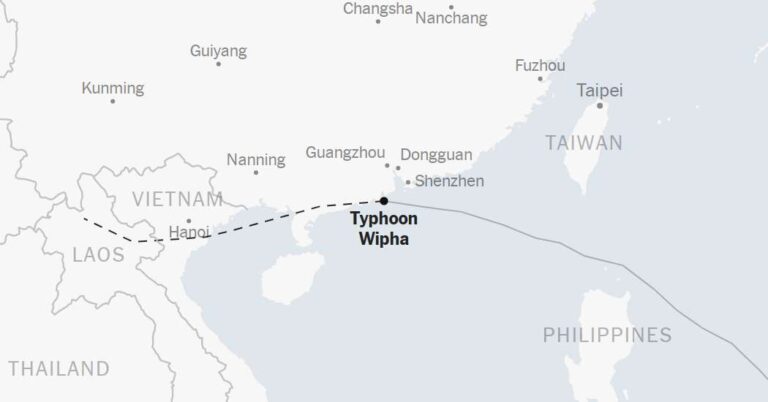
Wipha was a typhoon in the South China Sea early Sunday Eastern time, the Joint Typhoon Warning Center said in its latest advisory.
The typhoon had sustained wind speeds of 75 miles per hour, which would make it a Category 1 hurricane if it were in the Atlantic Ocean.
All times on the map are Eastern. By The New York Times
Satellite imagery can help determine the strength, size and cohesion of a storm. The stronger a storm becomes, the more likely an eye will form in the center. When the eye looks symmetrical, that often means the storm is not encountering anything to weaken it.
Typhoon season is year-round; however, most typhoons form from early July through mid-December.
Most typhoons scrape or strike places like the Philippines, Japan and Taiwan; they can also hit the Korean Peninsula, China and Vietnam, bringing damaging winds and storm surges.
Typhoons have also hit U.S. territories, causing billions of dollars in devastating damage to places like Guam, which was battered by Super Typhoon Mawar in May last year.
Sources and notes
Tracking map Tracking data is from the National Hurricane Center. The map shows probabilities of at least 5 percent. The forecast is for up to five days, with that time span starting up to three hours before the reported time that the storm reaches its latest location. Wind speed probability data is not available north of 60.25 degrees north latitude.
Wind arrivals table Arrival times are generated from a New York Times analysis of National Hurricane Center data. Geographic locations use data from the U.S. Census Bureau and Natural Earth. Time zones are based on Google. The table shows predicted arrival times of sustained, damaging winds of 58 m.p.h. or more for select cities with a chance of such winds reaching them. If damaging winds reach a location, there is no more than a 10 percent chance that they will arrive before the “earliest reasonable” time and a 50 percent chance they will arrive before the “most likely” time.
Radar map Radar imagery is from the National Oceanic and Atmospheric Administration via Iowa State University. These mosaics are generated by combining individual radar stations that comprise the NEXRAD network.
Storm surge map Storm surge data is from the National Hurricane Center. Forecasts only include the United States Gulf and Atlantic coasts, Puerto Rico, and the U.S. Virgin Islands. The actual areas that could become flooded may differ from the areas shown on this map. This map accounts for tides, but not waves and not flooding caused by rainfall. The map also includes intertidal areas, which routinely flood during typical high tides.
Satellite map Imagery is from the National Oceanic and Atmospheric Administration and Japanese Meteorological Agency via the Cooperative Institute for Research in the Atmosphere.
Precipitation map Data for multi-day forecasts or observed rainfall totals are from the National Weather Service. The 1-day forecast is from the National Oceanic and Atmospheric Administration.

Most comets, including the well-known Halley’s, loop through our solar system like cosmic time capsules that formed alongside our Sun and planets around 4.5 billion years ago. But every now and then, something far stranger streaks across the sky; an interstellar nomad, either forged in alien star systems or eternally drifting unclaimed through the void.
On 1 July 2025, as Chile’s ATLAS survey telescope swept the heavens, it captured a glimmer of something extraordinary, a visitor possibly older than the solar system itself. Named 3I/ATLAS, the discovery of this comet surprised astronomers.
Long before our solar system took shape, before Earth had oceans, trees, or trilobites, something remarkable was already drifting through the distant cosmos. And now, billions of years later, it has finally arrived at our cosmic doorstep.
3I/ATLAS is a ghostly interstellar voyager, rich in water ice and steeped in ancient history. Only the third such object ever detected, 3I isn’t just a visitor from outside our solar system; it hails from a completely different quadrant of the Milky Way.
To decode its origin, researchers turned to the Ōtautahi–Oxford Model, a celestial detective tool that simulates interstellar objects based on their orbital quirks and likely stellar birthplaces. According to the team’s analysis, this ancient comet could be more than 7.5 billion years old, predating our Sun by over two billion years and making it the oldest celestial wanderer humanity has ever glimpsed.
Unlike the last two space objects that visited our solar system, 3I/ATLAS is racing in on a steep path. This path hints that it came from a part of the Milky Way called the “thick disk”, where ancient stars orbit above and below the galaxy’s main plane. Since it probably formed near one of these old stars, scientists think it’s packed with water ice.
“This is an object from a part of the galaxy we’ve never seen up close before,” explained Chris Lintott, co-author of the study and presenter of the BBC’s The Sky at Night. “We think there’s a two-thirds chance this comet is older than the solar system, and that it’s been drifting through interstellar space ever since.”
As comet 3I/ATLAS nears the Sun, the heat kicks off a cosmic makeover, its icy surface starts to boil off gas and dust, creating a glowing halo and tail like a celestial dragon breathing mist.
Early peeks suggest this traveler may be bigger and brighter than the two interstellar guests before it: ‘Oumuamua (2017) and Borisov (2019).
If this holds, it could shake up how many such ancient comets future observatories might find. And more than that, it might hint that comets from distant corners of the galaxy have been quietly scattering ingredients for stars and planets wherever they roam.
“We’re in an exciting time: 3I is already showing signs of activity,” said co-author Michele Bannister, of the University of Canterbury in New Zealand. “The gases that may be seen in the future as 3I is heated by the Sun will test our model. Some of the biggest telescopes in the world are already observing this new interstellar object – one of them may be able to find out!”
Just days before the celestial revelation, Oxford astronomer Matthew Hopkins wrapped up his thesis, probably dreaming of beach naps and quiet skies. But the universe had other ideas. When 3I/ATLAS burst into view, his inbox lit up with messages like, “3I!!!!!!!!!!”, and so began an impromptu deep dive into interstellar data.
Instead of unwinding, Hopkins found himself testing predictions from the Ōtautahi–Oxford Model that he’d helped develop, which was now suddenly in action for real. This marked the first-ever real-time use of predictive modeling on an interstellar comet, turning a theoretical framework into a live galactic experiment.
And for the rest of us Earthbound stargazers? 3I/ATLAS is expected to grace our skies in late 2025 and early 2026, visible with a decent amateur telescope, providing a front-row seat to a relic older than our Sun.
Hopkins and his co-authors have published their analysis as a preprint on arXiv.
Source: The Royal Astronomical Society via EurekAlert

Death toll from Vietnam tourist boat accident climbs to 38
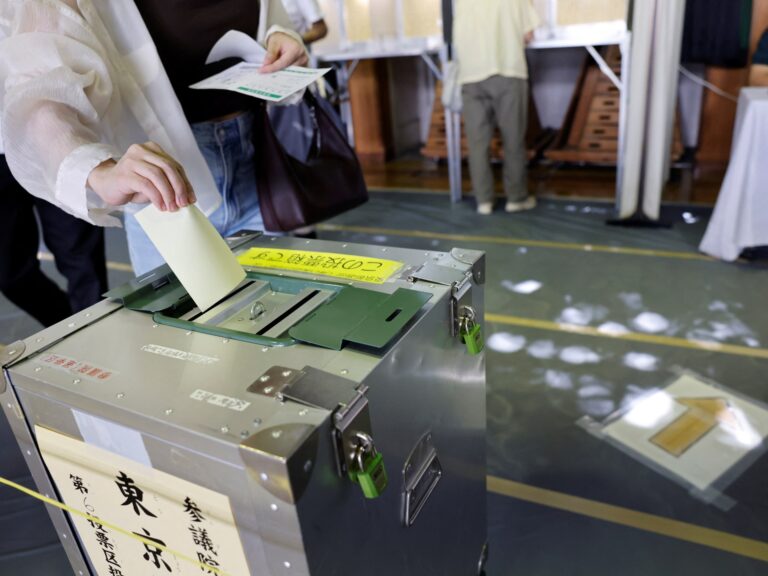
Opinion polls suggest Ishiba’s Liberal Democratic Party may fall short of a majority in Upper House elections.
Voters in Japan are going to the polls in an upper house election seen as a test of the popularity of Prime Minister Shigeru Ishiba and his ruling coalition.
Polling stations opened nationwide at 7am on Sunday (22:00 GMT, Saturday) and will continue until 8pm (11:00 GMT) in most places, according to Japan’s national broadcaster, NHK.
The rising cost of living, especially for the staple food of rice, is a key issue for many voters, with population decline and foreign policy also on the agenda, according to NHK.
Opinion polls suggest Ishiba’s Liberal Democratic Party (LDP) and coalition partner Komeito may fall short of the 50 seats needed to retain control of the 248-seat upper house of parliament in an election where half of the seats are up for grabs.
A poor performance on Sunday would not immediately trigger a change of government because the upper house lacks the power to file a no-confidence motion against a leader, but it would certainly deepen uncertainty over Ishiba’s fate and Japan’s political stability. Ishiba would face calls from within the LDP to resign or to find another coalition partner.
Opinion polls also suggest smaller opposition parties pushing for tax cuts and increased public spending are set to gain. These parties include right-wing Sanseito, which is promising to curb immigration, oppose foreign capital inflows and reverse gender equality moves.
“I am attending graduate school, but there are no Japanese [people] around me. All of them are foreigners,” said Yu Nagai, a 25-year-old student who said he voted for Sanseito.
“When I look at the way compensation and money are spent on foreigners, I think that Japanese people are a bit disrespected,” Nagai told the Reuters news agency.
Other voters, meanwhile, voiced concern about escalating xenophobia.
Yuko Tsuji, a 43-year-old consultant, who came to a polling station inside a downtown Tokyo gymnasium with her husband, said they support the LDP for stability and unity and voted “for candidates who won’t fuel division.”
“If the ruling party doesn’t govern properly, the conservative base will drift toward extremes. So I voted with the hope that the ruling party would tighten things up,” she told The Associated Press news agency.
Self-employed Daiichi Nasu, 57, said he hopes for a change towards a more inclusive and diverse society, with more open immigration and gender policies such as allowing married couples to keep separate surnames. “That’s why I voted for the CDPJ,” he said, referring to the opposition Constitutional Democratic Party of Japan. “I want to see progress on those fronts.”
More than 20 percent of registered voters, some 21 million people, voted early, significantly more than three years ago, NHK reported.
Ishiba, 68, a self-avowed defence “geek” and train enthusiast, became prime minister on his fifth attempt last September before immediately calling snap elections for late October.
Those polls marked a significant defeat for the new prime minister’s ruling coalition, which won just 209 seats in the lower house of parliament, down from the 279 it previously held.
In April, Ishiba announced emergency economic measures to alleviate any impact on industries and households affected by new tariffs imposed by the United States on Japanese exports.
The country is still frantically seeking to secure a reprieve from US President Donald Trump’s proposed 25 percent tariffs before a new August 1 deadline touted by Washington.
Ishiba’s centre-right LDP has governed Japan almost continuously since 1955, albeit with frequent changes of leader.
He is the third prime minister to lead the country since former leader Shinzo Abe resigned in September 2020.
Abe was assassinated two years later, leading to revelations and public outrage about ties between the former prime minister, his LDP and the Unification Church.
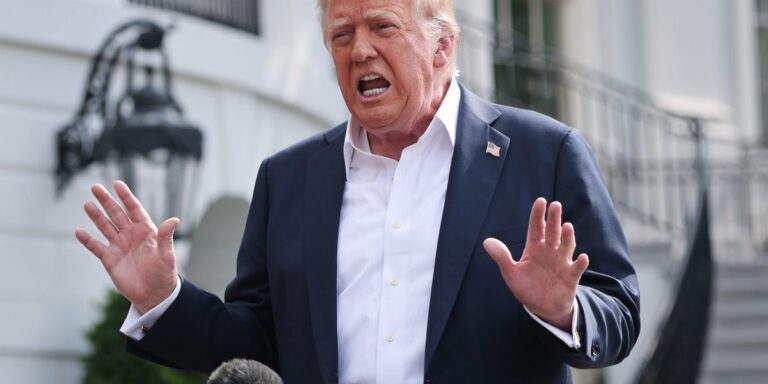
For President Donald Trump, whose political career has benefited from voter anxiety over Washington elites, the health of his predecessor and the riches of Wall Street, the past week offered a reversal of fortune.
Trump’s efforts to escape the uproar over Jeffrey Epstein failed spectacularly, after the Wall Street Journal published a story alleging he once sent a suggestive birthday letter to the disgraced financier — a claim the president denied.
The White House was forced to make a rare disclosure that Trump wasn’t in perfect health. And Trump whipsawed on the fate of Federal Reserve Chairman Jerome Powell, signaling to lawmakers that he would attempt to fire him before relenting after concern about a market backlash.
Now, as Trump gears up for a high-profile trip to the UK next week to finalize a trade deal with Prime Minister Keir Starmer, he finds himself looking slightly vulnerable.
There was much Trump hoped to harness in what he called a “week of wins” — passage of his flagship tax-cut package earlier this month, approval of spending cuts this week, a run of favorable economic data, the signing of a stablecoin bill, and implementation of his aggressive tariff agenda.
Instead, there were suddenly a few punctures in the armor of a president who at times in his second term has seemed irrepressible as he bent rival institutions, countries, and political opponents to his will.
Trump concluded the week posting angrily to social media and suing one of his top allies in the press, Rupert Murdoch, along with Dow Jones & Co. and News Corp. for libel.
The Journal reported Thursday that Trump had prepared a letter for a book compiled for Epstein’s 50th birthday. The president said the letter was “FAKE” and called the story “false, malicious, and defamatory.”
Still, the report threw gasoline on a simmering fire, particularly among members of Trump’s base, after the Justice Department claimed it had no evidence that Epstein had blackmailed political figures or kept a client list. That conclusion flew in the face of promises from some of the president’s top aides that they would reveal substantial new details about a case many Trump loyalists see as a smoking gun proving the existence of a so-called Deep State.
Trump supporters and FBI leaders Kash Patel and Dan Bongino are said to be at odds with Attorney General Pam Bondi, while the president has repeatedly tried — and so far failed — to quell the furor.
“Are you still talking about Jeffrey Epstein?” he barked at a reporter earlier this month. “People still talking about this guy, this creep? That is unbelievable.”
This week, he dismissed questions from his base and said those worried about Epstein are “weaklings” and that “I don’t want their support anymore!”
But what was once a potent political tool for Trump — stoking conspiracies about Epstein, and Democrats’ involvement — has now backfired, with his own supporters frustrated that his administration may be covering up details they hoped would be released.
“The emphasis on Epstein is truly the best intentions of your most loyal followers,” Charlie Kirk, a conservative media figure, said in a segment on his show addressed to the president. He said the Epstein case was a sort of linchpin in loyal Trump supporters’ questions about the alleged Deep State.
After the release of the Journal story, Trump moved quickly. He directed Bondi to pursue the release of some grand jury transcripts related to the case, though that stopped short of the full release of materials his allies have demanded.
Separately, Trump’s Director of National Intelligence, Tulsi Gabbard, directed the declassification of materials from the Obama administration that she argued showed evidence the former president and aides sought to politicize intelligence around Russia’s role in the 2016 election.
Trump has repeatedly drawn an equivalence between the Russia controversy and the Epstein case, suggesting both amounted to conspiracy-mongering by his political opponents. A special counsel ultimately did not find evidence Trump had coordinated with the Kremlin to interfere with the 2016 contest.
“It’s all the same scam,” Trump told Real America’s Voice in an interview that aired Wednesday.
The Epstein saga is a rare example of Trump struggling to successfully shift the narrative or change subjects in the news, according to one Trump ally, speaking on condition of anonymity. The ally predicted the matter would fizzle out by next year’s elections but criticized the White House’s move in February to hand right-wing influencers a binder called “The Epstein Files” that was largely a rehash of previously released information.
It even overshadowed the president’s escalating campaign against Powell, which has threatened to undermine longstanding conventions about Federal Reserve independence. Trump mused about dismissing Powell in a Tuesday meeting with lawmakers, with one White House official saying on condition of anonymity they expected the president to act soon to fire the central bank chief.
For Trump, his war against Powell serves an important political function, giving voice to homebuyers and borrowers who see lending costs impacting their wallets. But by Wednesday, Trump said he wouldn’t remove Powell unless the Fed chair was forced out for fraud, nodding to increasing efforts by the president’s allies to pressure the chairman over questions about a bank renovation project.
Trump backed off his push to force Powell out in part because of warnings that it would trigger a messy legal fight, according to one person familiar with the matter, who requested anonymity to discuss internal deliberations.
The issues are distracting from what the White House wants to steer attention to: a winning streak that includes passage of a package of spending cuts and the stablecoin bill Trump signed Friday.
“We’re winning everywhere,” Trump said at a signing ceremony for the stablecoin legislation. “It’s not even close — not even close — and we’re going to keep it going.”
Even as Trump has notched long-sought policy victories — extending his tax-cut package, gutting government agencies and securing funding for his sweeping immigration crackdown — Republicans know that each carries substantial political risk and that he’ll need to focus on selling his agenda.
Democrats have seized on provisions curtailing Medicaid eligibility and tax cuts benefiting the wealthy, to sharpen their economic critique of Trump. And Trump is now two weeks away from his next tariff barrage due on Aug. 1.
The president has batted away economists’ warnings that his tariffs will threaten growth, upend supply chains and amount to a fresh tax on consumers.

Pop star Charli XCX has confirmed her marriage to George Daniel, drummer of band The 1975, after a video snapped by a passer-by sparked online speculation of a wedding.
The pair were spotted posing on the steps of Hackney Town Hall on Saturday afternoon – Daniel in suit and tie and the ‘brat’ idol in white.
A TikTok post from the singer several hours later confirmed the nuptials, racking up seven million views and thousands of congratulatory comments for “Mr and Mrs XCX”.
Charli XCX’s album, Brat, became a global cultural phenomenon on its release last year. Filling social media feeds with viral videos and receiving critical acclaim, its success saw her perform a headline slot at Glastonbury in June.
The singer confirmed the news while dressed in an off-the-shoulder white dress and her signature dark wraparound sunglasses.
She stomped away from the camera – pretending to be annoyed – on a video beneath text that read, “When George isn’t crying when he sees me walking down the aisle.”
But “Luckily he did xx” was the accompanying caption.
A later post, which included shots of Daniel wearing Charli’s veil, gave “bridal party energy”, according to XCX.
The footage from outside Hackney Town Hall suggests the couple had an intimate ceremony.
The two have been public about their relationship for several years and shared engagement photos in 2023.
They have also worked together multiple times, first collaborating on Charli’s song Spinning and then on Brat, with Daniel named as co-producer and co-writer of two songs.
He also took part in the viral “Apple dance” at one of Charli’s London shows, appearing on the concert’s screens in front of thousands of fans.
His band The 1975 is fronted by singer Matty Healy and are well known for their song Chocolate. Daniel has released several tracks as a solo artist in recent years.

TikTok users in the Middle East and North Africa can now save tracks from TikTok straight to their music libraries on streaming service Anghami.
The platform has become the latest to sign up to TikTok’s ‘Add to Music App’ feature, which lets TikTok users save the songs they discover on the social app directly to their preferred music streaming service.
The ‘Add to Music App’ feature is rolling out now for users across the MENA region, including the UAE, Saudi Arabia, Egypt, and other markets.
According to TikTok, since its global rollout in 2024, the ‘Add to Music App’ has generated over 1 billion track saves and what the app claims to be “many billions more streams” on music streaming services.
The partnership with Anghami follows the addition of SoundCloud to ”Add to Music App’ in May.
The feature started with Amazon Music, Apple Music, and Spotify integration in the US and UK before expanding to most countries where TikTok is available.
Since then, streaming services Deezer, Melon, and TIDAL have also integrated with the service.
‘Add to Music App’ appears as an ‘Add Song’ button next to a track name at the bottom of a TikTok video in the For You feed.
The first time a user taps the Add Song button, they can select Anghami as their default platform, where the track will be added to the user’s ‘Likes’. This preference can be changed anytime via Settings and Privacy on TikTok.
Following the first use of the ‘Add to Music App’ feature, Anghami will then become the default music streaming service for future track saves. Users can also use the feature from an artist’s Song Page.
Lindsey Zikry, TikTok’s Global Product Partnerships Lead, said: “TikTok is already known as the global home of music discovery, and ‘Add to Music App’ takes it a step further by letting listeners instantly save and stream the tracks they love.”
“We are thrilled to be partnering with Anghami – a leading streaming service in the Middle East and North Africa – as the latest ‘Add to Music App’ partner.”
Lindsey Zikry, TikTok
Added Zikry: “We are thrilled to be partnering with Anghami – a leading streaming service in the Middle East and North Africa – as the latest ‘Add to Music App’ partner.”
“This integration is a powerful step in connecting music discovery and music streaming.”
Wael Hourani, Anghami
Wael Hourani, Product Director at Anghami, added: “This integration is a powerful step in connecting music discovery and music streaming.
“As the leading platform for Arabic and international music in the region, Anghami is proud to be partnering with TikTok to make it easier than ever for users to instantly find, save and stream the songs they love.”
The press release announcing the Anghami partnership notes that the tie-up arrives “at a pivotal moment” as Paris-headquartered music company Believe expands its Artist Services division in the region.
Believe has also signed Lebanese pop star Nancy Ajram to an Artist Services deal, after a long-standing collaboration with the company on distribution. Ajram’s latest album Nancy 11 was released today (July 17), coinciding with the rollout of TikTok’s latest feature in the MENA.
“We are incredibly proud and excited to collaborate with global music icon Nancy Ajram on the release of her latest album Nancy 11, which is out today,” said Georges ‘Josh’ Rouhana, TikTok Music Partnerships Lead in MENA.
“Thanks to TikTok’s new ‘Add to Music App’ feature we can help fans save their new favourite Nancy Ajram tracks directly to their Anghami Library, making streaming her music easier than ever.”Music Business Worldwide

Syria’s government says it has cleared Bedouin fighters from the predominantly Druze city of Suwayda and declared a halt to the deadly clashes there, hours after deploying security forces to the restive southern region.
The announcement on Saturday came after Syrian President Ahmed al-Sharaa ordered a new ceasefire between Bedouin and Druze groups, following a separate United States-brokered deal to avert further Israeli military intervention in the clashes.
Shortly before the government’s claim, there were reports of machinegun fire in the city of Suwayda as well as mortar shelling in nearby villages.
There were no immediate reports of casualties.
Nour al-Din Baba, a spokesman for the Syrian Ministry of Interior, said in a statement carried by the official Sana news agency that the fighting ended “following intensive efforts” to implement the ceasefire agreement and the deployment of government forces in the northern and western areas of Suwayda province.
He said the city of Suwayda, located in the province’s west, has now been “cleared of all tribal fighters, and clashes within the city’s neighbourhoods have been brought to a halt”.
The fighting broke out last week when the abduction of a Druze truck driver on a public highway set off a series of revenge attacks and resulted in tribal fighters from all over the country streaming into Suwayda in support of the Bedouin community there.
The clashes drew in Syrian government troops, too.
Israel also intervened in the conflict on Wednesday, carrying out heavy air attacks on Suwayda and Syria’s capital, Damascus, claiming it was to protect the Druze community after leaders of the minority group accused government forces of abuses against them.
Syrian government troops withdrew from Suwayda on Thursday.
At least 260 people have been killed in the fighting, and 1,700 others have been wounded, according to the Syrian Ministry of Health. Other groups, however, put the figure at more than 900 victims.
More than 87,000 people have also been displaced.
The fighting is the latest challenge to al-Sharaa’s government, which took over after toppling President Bashar al-Assad in December.
Al-Sharaa, in a televised statement on Saturday, called on all parties to lay down arms and help the government restore peace.
“While we thank the [Bedouin] clans for their heroic stance, we call on them to adhere to the ceasefire and follow the orders of the state,” he said. “All should understand this moment requires unity and full cooperation, so we can overcome these challenges and preserve our country from foreign interference and internal sedition.”
He condemned Israel’s intervention in the unrest, saying it “pushed the country into a dangerous phase that threatened its stability”.
After the president’s announcement, the Syrian government began deploying troops to Suwayda and Bedouin groups said they would withdraw from the city of Suwayda.
“Following consultations with all members of Suwayda’s clans and tribes, we have decided to adhere to the ceasefire, prioritise reason and restraint, and allow the state’s authorised institutions the space to carry out their responsibilities in restoring security and stability,” the Bedouin factions said in a statement.
“Therefore, we declare that all our fighters have been withdrawn from the city of Suwayda,” they added.
Al Jazeera’s Mohamed Vall, reporting from Damascus said the Druze, too, seemed to have accepted the truce despite some opposition within the community.
“Hikmat Al Hajri, a prominent spiritual leader, has called for all Bedouin fighters to be escorted safely out of Suwayda. Security forces from the interior ministry have been deployed to help separate rival groups, and oversee the implementation of the ceasefire. But there are still reports of ongoing fighting in the city, with some Druze leaders voicing strong opposition to the cessation of hostilities,” he said.
Vall added that while “there is hope” of an end to the hostilities, “there is also doubt that this conflict is over”.
Jordan, meanwhile, has hosted talks with Syria and the US on efforts to consolidate the ceasefire in Suwayda.
Jordanian Foreign Minister Ayman Safadi, his Syrian counterpart Asaad al-Shibani and the US special envoy for Syria, Thomas Barak, “discussed the situation in Syria and efforts to consolidate the ceasefire reached around Suwayda Governorate to prevent bloodshed and preserve the safety of civilians”, according to a readout by the Jordanian government.
The three officials agreed on “practical steps” to support the ceasefire, including the release of detainees held by all parties, Syrian security force deployments and community reconciliation efforts.
Safadi also welcomed the Syrian government’s “commitment to holding accountable all those responsible for violations against Syrian citizens” in the Suwayda area, the statement said.
Countries around the world have also called for the truce to be upheld.
The United Kingdom’s foreign secretary, David Lammy, said in a post on X that he was horrified by the violence in southern Syria and that “a sustainable ceasefire is vital”.
France’s Ministry for Europe and Foreign Affairs stressed the need for “Syrian authorities to ensure the safety and rights of all segments of the Syrian people”, and called for investigations into abuses against civilians in Suwayda.
Japan also expressed concern over the violence, including the Israeli strikes, and called for the ceasefire to be implemented swiftly.
It added that it “strongly urges all parties concerned to exercise maximum restraint, preserve Syria’s territorial integrity and national unity, and respect its independence and sovereignty”.

Welcome to World Breaking News, your trusted source for fast, accurate, and impactful news coverage from around the globe. We are a dedicated team of journalists, editors, and news enthusiasts committed to delivering breaking stories, in-depth analysis, and real-time updates on politics, business, technology, sports, entertainment, and more.
© Copyright -World Breaking News -2025