
A required part of this site couldn’t load. This may be due to a browser
extension, network issues, or browser settings. Please check your
connection, disable any ad blockers, or try using a different browser.

A required part of this site couldn’t load. This may be due to a browser
extension, network issues, or browser settings. Please check your
connection, disable any ad blockers, or try using a different browser.

Day temperatures vary drastically from night temperatures in many locations; therefore, it’s important to pack layers of clothing so you’re comfortable.
Depending on the region I’m in, I pack 4 main layers with me; a baselayer, 2 mid-layers, and a water and windproof “shell” outer layer.
A base layer is the layer closest to your body. It’s important that this layer is made of wicking materials to move moisture away from your body while keeping your skin dry. Generally, base layers are made of synthetic materials including polyester and nylon or merino wool and silk.
Base layers come in different thicknesses or weights. The thicker or heavier, the warmer they are rated.
In warmer regions, a synthetic tank top should suffice, however, when it’s cooler a long sleeve is a great option and also provides UPF sun protection, even in hot regions. Mountain Hardware’s Crater Lake sun hoodies are my favorite.
Merino wool is a great option for cold weather. It’s one of the warmest materials for its comfort and weight. I love anything made by Smartwool. I’d recommend a thermal layer rated around 250. Men should check out these Smartwool tops and women should check out these.
Mid-layers are important for providing insulation which increases body heat. I usually bring two of these, a puffy layer and a fleece layer. These layers come in both synthetic and natural materials, both of which have advantages and disadvantages.
To start, a fleece works great as one of your mid-layer options. Made of polyester, fleece is great because if it gets damp it dries quickly and still keeps you warm. It’s also breathable which keeps you from overheating. However, because it’s breathable, the wind easily blows through it so you’ll still need a wind layer.
On top of the fleece, I usually wear a puffy insulated jacket. Puffy’s come in both down and synthetic materials. The thicker the puffy, the warmer it is, however, the heavier it becomes.
A down puffy jacket packs down smallest for the amount of warmth it provides. Its fill power ranges from 450 to 900, with 900 being the warmest and most compact. Unfortunately, if damp, down loses efficacy and takes a while to dry out. Check out the men’s and women’s Arc’teryx Cerium LT Hoodies.
Synthetic puffy jackets don’t compress as well as down and are heavier, however, they still insulate well when wet. Patagonia’s Nano Puffs are a great synthetic option.
Your outer layer is a shell. It needs to be waterproof and windproof. I’d recommend buying a jacket that is waterproof. While they’re more expensive than water-resistant jackets, a waterproof jacket will keep you much drier but they’re worth it.
Arc’teryx’s Beta SL Jacket for both men and women is a great option. The REI XeroDry GTX is another option and a bit more affordable also made for both men and women.

The adoption of fossil fuels during the Industrial Revolution is often seen as a fait accompli, yet history could have taken a different path. Consider the first Porsche, manufactured in 1898—it was an electric car. In 1905, inventor Brian Cove introduced some of the first solar panels, but his endeavor faced a setback due to a mysterious kidnapping. Similarly, French physicist Jacques Arsene d’Arsonval proposed ocean thermal energy conversion (OTEC) as early as 1881, exploring the seas’ energy potential. However, his concept never gained significant traction—until recently.
Before delving further, let’s examine the French scientist’s proposition. Ocean thermal energy is derived by harnessing the temperature variances between the ocean’s surface and its deeper layers. Simply put, electricity can be produced through the utilization of the heat stored in large masses of surface water, in contrast with the cold water residing in the depths. Essentially, the ocean acts as an enormous solar energy reservoir.
Fast forward 150 years, and this theory has materialized into two technological approaches capitalizing on the thermal contrast:
This article will focus on OTEC power plants, offering the potential to emerge as a renewable and sustainable energy source despite previous unsuccessful attempts in the 1930s and 1970s.
The initial OTEC power plants grappled with numerous technical challenges, and following the resolution of the 1973 oil crisis, the technology fell into obscurity. However, as the 21st century unfolded and interest in renewable energies surged, a renewed exploration of ocean thermal energy commenced.
This resurgence saw the development of more efficient heat exchangers, a reduction in the risks associated with biofouling affecting their performance, and the incorporation of metals like aluminum. Furthermore, innovative experiments even explored desalination using the ocean’s heat. The missing piece, however, remained the establishment of the first commercial plant—an avenue where ongoing research is making strides.
Building on successful experiments conducted in Hawaii, Japan, and South Korea, where OTEC plants operated with kilowatt power, discussions now revolve around plants that can generate over one megawatt in the near future. A notable project, spearheaded by a British company, is slated for installation in the warm African waters off the island of São Tomé and Príncipe in 2025.
Named Dominique, the plant aims to harness the high temperature of surface waters and the pronounced thermal contrast occurring at the continental shelf’s end. Situated on a colossal barge, the plant boasts an electrical generating capacity of 1.5 MW. By extracting cold water from the depths, the technology can also be adapted for use in air conditioning systems by adding an OHP heat. Additionally, the nutrient-rich water extracted holds potential applications in aquaculture.
Looking ahead, there is optimism that this form of energy could offer a viable solution for islands lacking energy autonomy, potentially complementing other sources such as wind power or photovoltaics. Nevertheless, numerous challenges must be surmounted to establish power plants with extended service lives.
A pivotal concern revolves around the durability of the cold-water risers. To efficiently supply ample cold water to the heat exchangers, these risers must attain several meters in diameter and surpass depths of seven hundred and fifty meters. Endurance is crucial, given the need to withstand the movement of the OTEC platform or barge amidst waves, wind, and powerful underwater currents. The company spearheading the São Tomé and Príncipe project is actively exploring new materials and technological solutions to address this critical challenge.
In an optimistic scenario, the company envisions the initial generations of OTEC barges generating ocean thermal power at a cost ranging between $0.30 and $0.15 per kilowatt. With further advancements in large-scale projects, the expectation is to drive this cost down to as low as $0.05 per kilowatt. These figures are particularly encouraging, challenging the previous notion that competitive OTEC power required 50 or even 100 MW plants.
Source:
Image:
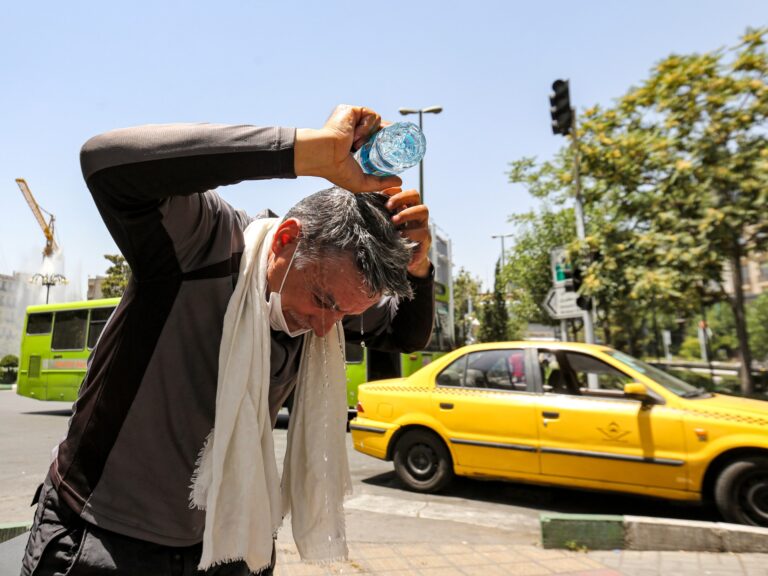
Reservoirs of the dams supplying water to Tehran are currently at their lowest level in a century.
Iranian authorities have urged people to limit water consumption as the country grapples with severe shortages during an ongoing heatwave.
The national meteorological service said Iran is experiencing its hottest week of the year so far with temperatures exceeding 50 degrees Celsius (122 Fahrenheit) in some areas.
Government spokesperson Fatemeh Mohajerani announced in a post on X on Sunday that Tehran province would observe a public holiday on Wednesday because of the ongoing heatwave.
“In light of the continued extreme heat and the necessity of conserving water and electricity, Wednesday … has been declared a holiday in Tehran province,” she wrote.
Temperatures in Tehran reached 40C (104F) on Sunday with a further rise to 41C (106F) forecast for Monday, according to meteorological reports.
Water scarcity is a major issue in Iran, particularly in arid provinces in the country’s south, with shortages blamed on mismanagement and overexploitation of underground resources, as well as the growing impact of climate change.
Tehran city council chair Mehdi Chamran urged people to “conserve water to avoid drops in supplies”, according to the ISNA news agency.
Authorities across Iran have issued similar appeals in recent days, asking residents in several provinces to limit water usage.
Tehran’s provincial water management company called for usage to be reduced by “at least 20 percent” to help ease the shortages.
In a statement, it said “the reservoirs of the dams supplying water to Tehran are currently at their lowest level in a century”, following years of steady decline in rainfall.
Javan, a conservative newspaper, reported on Saturday that authorities reduced water supplies in parts of the capital in a bid to mitigate the crisis, resulting in “water outages lasting between 12 and 18 hours” in some areas.
Energy Minister Abbas Aliabadi apologised on Sunday for reduced water supplies, saying the move comes “to better manage resources”.
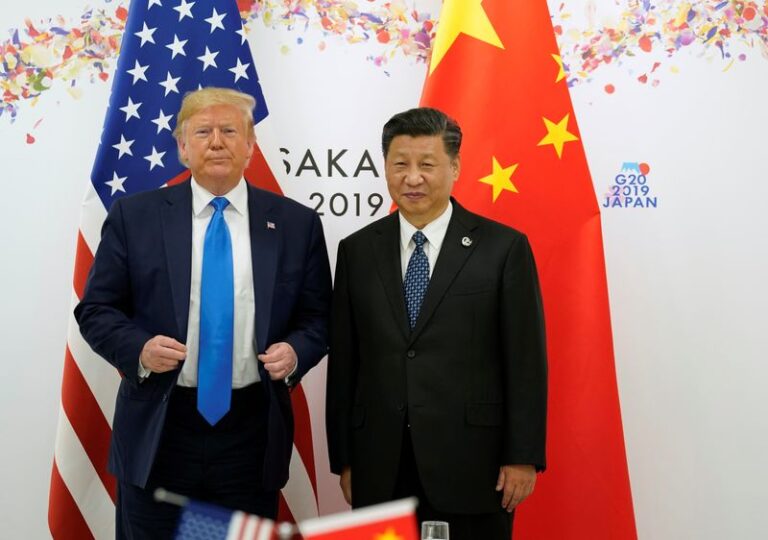
Trump, Xi might meet ahead of or during October APEC summit in South Korea, SCMP reports

At least five people have died and 284 rescued from a ferry fire off the coast of Indonesia’s Sulwesi island.
The Indonesian Navy said everyone onboard the KM III Barcelona has been removed from the ship.
Passengers were seen diving into the water with lifejackets to escape the flames, before the blaze was extinguished.
The Indonesian Navy, the Maritime Security Agency (Bakamla), and local search and rescue teams were deployed in the joint rescue effort.
The cause of the fire remains unknown.

AI use in healthcare has the potential to save time, money, and lives. But when technology that is known to occasionally lie is introduced into patient care, it also raises serious risks.
One London-based patient recently experienced just how serious those risks can be after receiving a letter inviting him to a diabetic eye screening—a standard annual check-up for people with diabetes in the UK. The problem: He had never been diagnosed with diabetes or shown any signs of the condition.
After opening the appointment letter late one evening, the patient, a healthy man in his mid-20’s, told Fortune he had briefly worried that he had been unknowingly diagnosed with the condition, before concluding the letter must just be an admin error. The next day, at a pre-scheduled routine blood test, a nurse questioned the diagnosis and, when the patient confirmed he wasn’t diabetic, the pair reviewed his medical history.
“He showed me the notes on the system, and they were AI-generated summaries. It was at that point I realized something weird was going on,” the patient, who asked for anonymity to discuss private health information, told Fortune.
After requesting and reviewing his medical records in full, the patient noticed the entry that had introduced the diabetes diagnosis was listed as a summary that had been “generated by Annie AI.” The record appeared around the same time he had attended the hospital for a severe case of tonsillitis. However, the record in question made no mention of tonsillitis. Instead, it said he had presented with chest pain and shortness of breath, attributed to a “likely angina due to coronary artery disease.” In reality, he had none of those symptoms.
The records, which were reviewed by Fortune, also noted the patient had been diagnosed with Type 2 diabetes late last year and was currently on a series of medications. It also included dosage and administration details for the drugs. However, none of these details were accurate, according to the patient and several other medical records reviewed by Fortune.
Even stranger, the record attributed the address of the medical document it appeared to be processing to a fictitious “Health Hospital” located on “456 Care Road” in “Health City.” The address also included an invented postcode.
A representative for the NHS, Dr. Matthew Noble, told Fortune the GP practice responsible for the oversight employs a “limited use of supervised AI” and the error was a “one-off case of human error.” He said that a medical summariser had initially spotted the mistake in the patient’s record but had been distracted and “inadvertently saved the original version rather than the updated version [they] had been working on.”
However, the fictitious AI-generated record appears to have had downstream consequences, with the patient’s invitation to attend a diabetic eye screening appointment presumedly based on the erroneous summary.
While most AI tools used in healthcare are monitored by strict human oversight, another NHS worker told Fortune that the leap from the original symptoms—tonsillitis—to what was returned—likely angina due to coronary artery disease—raised alarm bells.
“These human error mistakes are fairly inevitable if you have an AI system producing completely inaccurate summaries,” the NHS employee said. “Many elderly or less literate patients may not even know there was an issue.”
The company behind the technology, Anima Health, did not respond to Fortune’s questions about the issue. However, Dr. Noble said, “Anima is an NHS-approved document management system that assists practice staff in processing incoming documents and actioning any necessary tasks.”
“No documents are ever processed by AI, Anima only suggests codes and a summary to a human reviewer in order to improve safety and efficiency. Each and every document requires review by a human before being actioned and filed,” he added.
The incident is somewhat emblematic of the growing pains around AI’s rollout in healthcare. As hospitals and GP practices race to adopt automation tools that promise to ease workloads and reduce costs, they’re also grappling with the challenge of integrating still-maturing technology into high-stakes environments.
The pressure to innovate and potentially save lives with the technology is high, but so is the need for rigorous oversight, especially as tools once seen as “assistive” begin influencing real patient care.
The company behind the tech, Anima Health, promises healthcare professionals can “save hours per day through automation.” The company offers services including automatically generating “the patient communications, clinical notes, admin requests, and paperwork that doctors deal with daily.”
Anima’s AI tool, Annie, is registered with the UK’s Medicines and Healthcare products Regulatory Agency (MHRA) as a Class I medical device. This means it is regarded as low-risk and designed to assist clinicians, such as examination lights or bandages, rather than automate medical decisions.
AI tools in this category require outputs to be reviewed by a clinician before action is taken or items are entered into the patient record. However, in this case of the misdiagnosed patient, the practice appeared to fail to appropriately address the factual errors before they were added to the patient’s records.
The incident comes amid increased scrutiny within the UK’s health service of the use and categorization of AI technology. Last month, bosses for the health service warned GPs and hospitals that some current uses of AI software could breach data protection rules and put patients at risk.
In an email first reported by Sky News and confirmed by Fortune, NHS England warned that unapproved AI software that breached minimum standards could risk putting patients at harm. The letter specifically addressed the use of Ambient Voice Technology, or “AVT” by some doctors.
The main issue with AI transcribing or summarizing information is the manipulation of the original text, Brendan Delaney, professor of Medical Informatics and Decision Making at Imperial College London and a PT General Practitioner, told Fortune.
“Rather than just simply passively recording, it gives it a medical device purpose,” Delaney said. The recent guidance issued by the NHS, however, has meant that some companies and practices are playing regulatory catch-up.
“Most of the devices now that were in common use now have a Class One [categorization],” Delaney said. “I know at least one, but probably many others are now scrambling to try and start their Class 2a, because they ought to have that.”
Whether a device should be defined as a Class 2a medical device essentially depends on its intended purpose and the level of clinical risk. Under U.K. medical device rules, if the tool’s output is relied upon to inform care decisions, it could require reclassification as a Class 2a medical device, a category subject to stricter regulatory controls.
Anima Health, along with other UK-based health tech companies, is currently pursuing Class 2a registration.
The U.K. government is embracing the possibilities of AI in healthcare, hoping it can boost the country’s strained national health system.
In a recent “10-Year Health Plan,” the British government said it aims to make the NHS the most AI-enabled care system in the world, using the tech to reduce admin burden, support preventive care, and empower patients through technology.
But rolling out this technology in a way that meets current rules within the organization is complex. Even the U.K.’s health minister appeared to suggest earlier this year that some doctors may be pushing the limits when it comes to integrating AI technology in patient care.
“I’ve heard anecdotally down the pub, genuinely down the pub, that some clinicians are getting ahead of the game and are already using ambient AI to kind of record notes and things, even where their practice or their trust haven’t yet caught up with them,” Wes Streeting said, in comments reported by Sky News.
“Now, lots of issues there—not encouraging it—but it does tell me that contrary to this, ‘Oh, people don’t want to change, staff are very happy and they are really resistant to change’, it’s the opposite. People are crying out for this stuff,” he added.
AI tech certainly has huge possibilities to dramatically improve speed, accuracy, and access to care, especially in areas like diagnostics, medical recordkeeping, and reaching patients in under-resourced or remote settings. However, walking the line between the tech’s potential and risks is difficult in sectors like healthcare that deal with sensitive data and could cause significant harm.
Reflecting on his experience, the patient told Fortune: “In general, I think we should be using AI tools to support the NHS. It has massive potential to save money and time. However, LLMs are still really experimental, so they should be used with stringent oversight. I would hate this to be used as an excuse to not pursue innovation but instead should be used to highlight where caution and oversight are needed.”
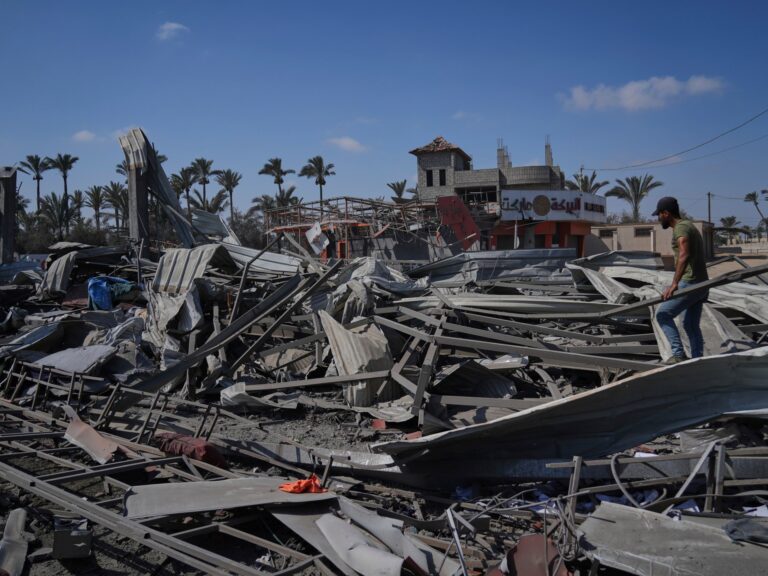
Thousands of leaflets dropped over Deir el-Balah, ordering Palestinians to move to a ‘safe zone’ Israel has repeatedly bombed.
The Israeli military has issued a new forced evacuation warning for the Palestinians in central Gaza, ordering them to move south to al-Mawasi, an area Israel has regularly attacked despite declaring it a “safe zone”.
Thousands of leaflets were dropped over Deir el-Balah on Sunday, telling displaced families living in tents in several densely populated parts of the city to leave immediately.
The Israeli military warned of imminent action against Hamas fighters in the area as it continued its deadly attacks on unarmed and starving civilians desperately looking for food, killing dozens of Palestinians on Sunday, at least 73 of them aid seekers in northern Gaza.
In a post on X, the military’s Arabic-language spokesman Avichay Adraee said residents and displaced Palestinians sheltering in the Deir el-Balah area should leave immediately.
Israel was “expanding its activities” around Deir el-Balah, including “in an area where it has not operated before”, Adraee said, telling Palestinians to “move south towards the al-Mawasi area” on the Mediterranean coast “for your safety”.
A video verified by Al Jazeera showed the Israeli army dropping vast amounts of leaflets over residential areas in Deir el-Balah, notifying Palestinians of the order.
Al Jazeera’s Hind Khoudary, reporting from Deir el-Balah, said the area targeted by Israel is densely populated and it would be “impossible” for the affected residents to leave on short notice.
“Palestinians here are refusing to leave and say they are going to stay in their houses because even the areas designated as safe by the Israeli army have been targeted,” she said.
“Palestinians say they have nowhere else to go, and there is no space because most western areas or even al-Mawasi are full of people and tents with no more extra space for expansion. They are left with zero options.”

The Israeli military issued the warning as Israel and Hamas held indirect ceasefire talks in Qatar, but international mediators said there have been no breakthroughs.
Israeli Prime Minister Benjamin Netanyahu has repeatedly stressed that expanding Israeli military operations in Gaza will pressure Hamas to negotiate, but negotiations have been stalled for months.
This month, the Israeli military said it controlled more than 65 percent of the Gaza Strip.
Most of Gaza’s population of more than two million people has been displaced at least once during the war, which is now in its 22nd month. Israel has repeatedly ordered Palestinians to leave or face attacks in large parts of the coastal enclave.
The United Nations Office for the Coordination of Humanitarian Affairs said in January that more than 80 percent of the Gaza Strip was under unrevoked Israeli evacuation threats and many of their residents were living with starvation.
A 35-day-old baby in Gaza City and a four-month-old child in Deir el-Balah died of malnutrition at Al-Aqsa Martyrs Hospital this weekend.
On Saturday, at least 116 Palestinians were killed, many of them aid seekers trying to get food from distribution sites run by the Israeli- and United States-backed Gaza Humanitarian Foundation (GHF).
At least 900 Palestinians desperate to find food have been killed at the sites since the GHF began operating them in late May as an Israeli blockade has prevented food and other necessities from the UN and other aid groups from coming into Gaza.
The genocide has prompted Pope Leo XIV to denounce the “barbarity” of the war as he urged against the “indiscriminate use of force”.
“I once again ask for an immediate end to the barbarity of the war and for a peaceful resolution to the conflict,” Leo said during a prayer meeting near Rome on Sunday.

Believe has expanded its MENA-based Artist Services division via deals with three superstar artists from the region.
The company has signed Arabic-language pop star Nancy Ajram (from Lebanon), along with Lebanese superstar Ragheb Alama and Egyptian superstar Angham.
According to Believe, the three “strategic deals” form the “cornerstone” of its roster and “evolution” in the MENA region.
Believe said on Wednesday (July 16) that following the announcement of its revamped MENA leadership team in 2024, its Artist Services division (led by Celine Hitti) has been expanding with a focus on both Egypt and Lebanon.
Widely known as the “Queen of Arab Pop,” Believe said that Nancy Ajram has “defined Arabic pop music over the past two decades” with her 10 studio albums, including Nancy 8 (2014), Nancy 9 (2017) and Nancy 10 (2021).
Ajram has had a long-standing relationship with Believe, working with Believe Artist and Label Solutions (LAS) for digital distribution and marketing services for more than 14 years.
Believe said that by signing a deal with its Artist Services division in the region, Ajram will now “[gain] access to a premium partnership that combines technology, data and marketing expertise through teams at both a local and international level, working in sync with her veteran team to deliver world-class service”.
Ajram’s new album Nancy 11 was released today (July 17). The company said in a press release announcing the deal that Ajram “is one of three key figures in Believe’s strategy to grow its presence across MENA through premium long-term collaborations”.
Believe’s other two signings as part of this regional expansion include Ragheb Alama (from Lebanon) and Angham from Egypt.
Described as “a pioneer of modern Arabic pop” and a household name in the Middle East, Alama transitions from Believe’s Label and Artist Solutions unit – into Artist Services ahead of his upcoming studio album.
According to the company, “this deal further solidifies Believe’s leadership in Arabic music and underscores its focus on high-impact partnerships”.
Meanwhile, known as the “Sound of Egypt,” Angham is described as “one of the most respected figures in Egyptian pop”, with a career spanning more than three decades.
Since 2021, she has been self-producing music under her label Soot Masr in collaboration with Believe Label and Artist Solutions, scoring 10 “major hits” in the region.
Angham released her “comeback album” Teegy Nsib via an Artist Services deal with Believe in July 2024. It made it into the Top 10 Arabic Albums in 2024 on MENA-focused music streaming service Anghami – where Angham also ranked as one of the top 10 Egyptian artists of the year.
“The signing of these three key figures, marks a defining milestone in Believe’s journey across the MENA region.”
Viktoria Siniavskaia, Believe
Viktoria Siniavskaia, Regional Managing Director & President – Meta – East & Southern Europe, said: “The signing of these three key figures, marks a defining milestone in Believe’s journey across the MENA region.
“It reflects the accelerating growth of our Artist Services division in Egypt, Lebanon, and beyond. With a renewed leadership team and a long-term vision rooted in local talent development, this is a new chapter for Believe in the region.”
“We are incredibly proud to be continuing our work with iconic artists like Angham, Ragheb Alama & Nancy Ajram, three of the defining voices of Arabic pop.”
Dolly Makhoul, Believe
Regional Managing Director for MENA, Dolly Makhoul, added: “We are incredibly proud to be continuing our work with iconic artists like Angham, Ragheb Alama & Nancy Ajram, three of the defining voices of Arabic pop.
“The long-term relationships we’ve built and the confidence they’ve shown in us with these new deals highlights our dedication to developing artists and continuing to grow their success.”Music Business Worldwide
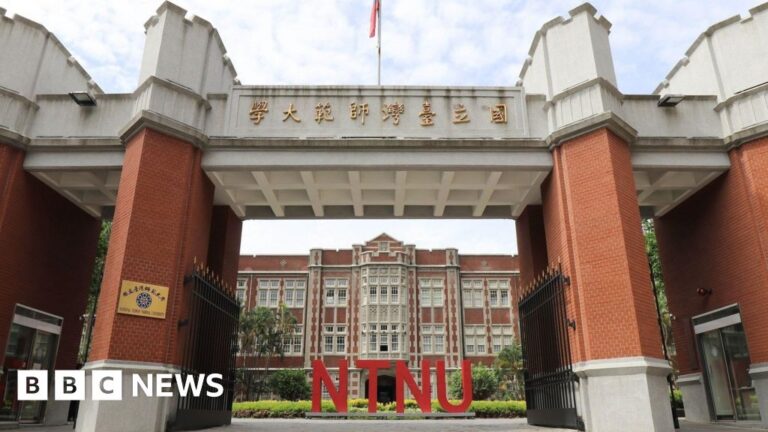
A sports coach at a Taiwanese university has issued a formal apology over a research project that allegedly involved her coercing students into giving blood, according to local media.
Chou Tai-ying, 61, said that her intention was to help her team “because I had only a few players and they were often injured”, but it is not known exactly what the blood was being taken for.
A Taiwanese politician, Chen Pei-yu, brought the case to light in 2024, alleging students were told that they would lose academic credits if they did not take part.
An internal investigation at National Taiwan Normal University (NTNU) in Taipei later found the blood sampling had started in 2019 and continued into 2024 for different “research projects”.
Coach Chou, who admitted asking unqualified students to help withdraw the blood, apologised on Saturday for placing “any pressure on the school and the students” through her “reckless words and behaviour,” Taiwan’s Focus News agency reported.
“It is definitely my fault for making you feel the way you did,” she said to the students via a statement.
Professor Chen Hsueh-chih, leader of one of the unspecified research projects, also issued an apology.
He said the aim was to help student athletes, but admitted it had unintentionally brought them and their families harm.
The internal investigation indicated that students had given blood once a day. The samples were thrown out after the investigation found fault with the way the blood was drawn.
Chen Pei-yu originally alleged that the research project required players to give three blood samples a day for 14 days straight. She said the players were required to take part in the project over several years.
NTNU principal Wu Cheng-chi apologised on Saturday for what he called the school’s negligence. He said the institution’s ethics and oversight procedures would be reviewed.
Taiwan’s deputy education minister said the case would be reviewed by their department, as well as the actions of Chou and Chen.
Separately, the education ministry said on Thursday it might revoke the coaching license of an NTNU women’s football coach, without naming the individual.

Welcome to World Breaking News, your trusted source for fast, accurate, and impactful news coverage from around the globe. We are a dedicated team of journalists, editors, and news enthusiasts committed to delivering breaking stories, in-depth analysis, and real-time updates on politics, business, technology, sports, entertainment, and more.
© Copyright -World Breaking News -2025