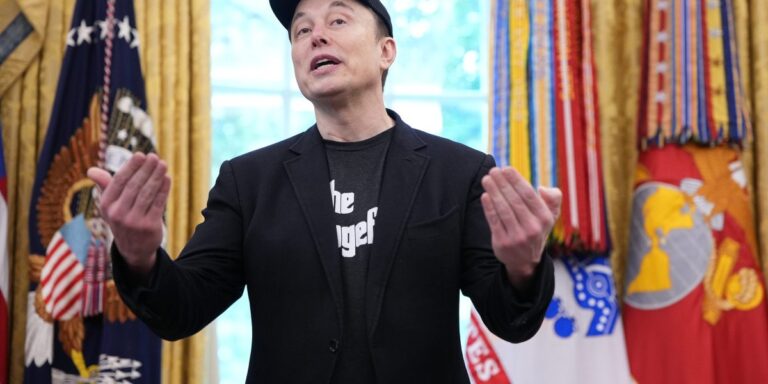
Owners of Tesla cars will be able to add their vehicles to the company’s robotaxi network sometime next year, Elon Musk said on the company’s quarterly earnings call on Wednesday, potentially allowing hundreds of thousands of customers to make money by remotely renting out their cars as self-driving cabs.
“I’d say confidently next year,” Musk, the CEO of Tesla, said on the call. “I’m not sure when next year, but confidently next year.”
The move would mark a major expansion of the company’s robotaxi network, which officially launched last month in Austin with just a handful of self-driving vehicles that Tesla directly owns and operates. Tesla is trying to catch up with industry leader Waymo, whose fleet of self-driving robotaxis ferry paying customers in numerous U.S. cities.
Musk noted that the Tesla team hasn’t “thought hard” about the details of adding cars that it doesn’t directly own to the robotaxi service, and was still primarily focused on safety in Austin, where it debuted operations in June with a safety driver in the passenger seat. “We need to make sure it works when the vehicles are fully under our control,” he said.
Tesla reported that revenue in its most recent quarter fell 12% year-over-year to $22.5 billion, the EV company’s worst performance in at least a decade. The company ascribed the decline to an ongoing slump in vehicle deliveries and falling prices (trends that were not helped by Musk’s involvement in partisan politics) as well as declining revenue from environmental credits.
Musk has suggested that Tesla would eventually incorporate Tesla EVs owned by its customers into the broader robotaxi network for several months now, raising the idea that individuals would be able to rent out their own cars and eventually even manage their own fleets. Besides the technological aspect of such a plan, it’s unclear how regulatory and liability issues might come into play. And, as of now, Tesla still has yet to fully remove safety drivers from the vehicles that it owns and operates on its fledgling robotaxi service. For its initial Austin rollout, Tesla has had someone sitting in the passenger seat at all times. Tesla has gradually expanded its service radius in Austin (a map shared by Tesla online last week depicts the latest robotaxi service area in a distinctly phallic shape) and Musk said the company plans to expand it further in a couple weeks time.
While Tesla’s robotaxi service is currently only available to invitees including social media influencers who regularly post about the company, and not the general public, Musk laid out lofty expansion plans for the robotaxi service on Wednesday’s earnings call, saying that Tesla was seeking regulatory permission to launch in the Bay Area, Nevada, Arizona, and Florida.
“As soon as we get the approvals and we prove our safety, then we’ll be launching autonomous ride hailing in most of the country, and I think we’ll probably have autonomous ride hailing in probably half the population of the U.S. by the end of the year,” he said.
So far, there have been no major safety episodes in Austin since the launch of the robotaxi service, Tesla’s CFO said on the call. Teslas have driven 7,000 autonomous miles thus far since June, he said.
Introducing the 2025 Fortune 500, the definitive ranking of the biggest companies in America. Explore this year’s list.
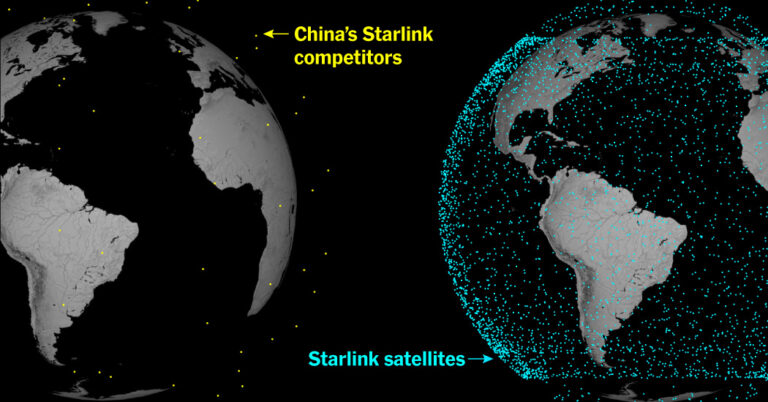
China’s two biggest networks have deployed less than 1 percent of their planned satellites, records show, a measure of how far they are falling behind Elon Musk’s company SpaceX for dominance in space communications.
Satellites in low Earth orbit, up to 1,200 miles above the planet, are increasingly seen as essential for driverless cars, drone warfare and military surveillance. China regards Starlink as a military threat, and Chinese companies have invested heavily in two huge networks, with nearly 27,000 satellites planned between them.
One reason for the unexpectedly slow pace is that the Chinese companies have not cleared a key engineering hurdle.
The first network, or megaconstellation, Qianfan, was scheduled to have about 650 satellites in space by the end of the year. But records show that the company behind the network, Shanghai Spacesail Technologies Co., has put only 90 satellites in orbit since its launches began in August.
A Chinese rocket, the Long March 8, sent 18 satellites into low Earth orbit in March.
Xiaoxu/Xinhua, via Getty Images
The other megaconstellation, Guowang, is even farther behind. Despite plans to launch about 13,000 satellites within the next decade, it has 34 in orbit.
SpaceX has about 8,000 Starlink satellites in orbit and is expanding its lead every month, according to data from U.S. Space Force and CelesTrak, a nonprofit group that gathers space data.
Chinese officials are alarmed by SpaceX, which they viewed as inextricably linked with the Pentagon even before Mr. Musk’s short-lived position in the Trump administration. Researchers for the People’s Liberation Army predict that the network will become “deeply embedded in the U.S. military combat system.” They envision a time when Starlink satellites connect U.S. military bases and serve as an early missile-warning and interception network.
Though Starlink is intended for civilian use, it has become essential for communications and coordinating drone strikes in the war in Ukraine. And SpaceX has contracts with the U.S. government to build and launch satellites, some for espionage and others for targeting enemies and tracking missiles. SpaceX also launches satellites built by other defense contractors.
China’s space agencies and its aerospace companies did not respond to requests for comment.
The Long March 8 had been seen as China’s best chance to rival SpaceX’s reusable rocket.
Jiang Jurong/Visual China Group, via Getty Images
China, like the United States, recognizes the national security value of being in space. But the government is also encouraging commercial space interests and says it expects to create a $344 billion market.
“Exploring the vast universe and building a space power is our unremitting space dream,” China’s top leader, Xi Jinping, said last year, according to government news media.
It has not gone smoothly.
China hasn’t solved a key rocket problem. SpaceX has.
One of the major reasons for China’s delay is the lack of a reliable, reusable launcher. Chinese companies still launch satellites using single-use rockets. After the satellites are deployed, rocket parts tumble back to Earth or become space debris.
But SpaceX’s workhorse rocket, the Falcon 9, is partly reusable. The rocket’s bottom portion, containing the main engines, returns to Earth upright, intact and ready to be deployed for other missions. That drastically reduces costs and speeds up the time between launches.
This is the innovation that propelled SpaceX far ahead of competitors. Falcon 9 rockets have been used in about 500 missions, according to SpaceX.
But six years after the Falcon 9 began launching Starlink satellites, Chinese firms still have no answer to it.
A Falcon 9 rocket is seen in Cape Canaveral, Florida, U.S., in June. The partially reusable rocket is a major key to SpaceX’s success.
Steve Nesius/Reuters
Reusable rockets must withstand extreme heat during their return to base. They also have to be stable and under control with engines that can restart in different aerodynamic conditions, said Jonathan McDowell, an astrophysicist at the Harvard-Smithsonian Center for Astrophysics who tracks objects in space.
“The question is not just recovering them,” Dr. McDowell said, “but recovering them in a good enough state to launch them again.”
The lack of a reusable rocket is not the only limitation. Manufacturing satellites is a complicated and time-consuming endeavor, and establishing a steady launch cadence is tricky even with reusable rockets. It took SpaceX years to work out the kinks. But experts said that the race for a reusable rocket was central to the future of the Chinese low Earth orbit constellations.
One Chinese government-funded model, the Long March 8, was meant to be reusable. But its developer, China Academy of Launch Vehicle Technology, abandoned that plan. An improved version, the Long March 8R, could “grow up” to be a reliable Falcon 9 equivalent, Dr. McDowell said.
The government has tested nearly 20 rocket launchers in the Long March series.
Another potential launcher alternative is the Zhuque-3, made by the Chinese firm Landspace. The launcher conducted a liftoff-and-recovery test last year and, in another test this June, its engines fired for 45 seconds.
The Zhuque-3 rocket, made by the Chinese firm Landspace, completed a takeoff and landing test in September. It could one day compete with SpaceX’s Falcon 9.
Visual China Group, via Getty Images
A third alternative, the Tianlong-3, had a setback last year. The rocket took off briefly during what was supposed to be a static test and exploded upon impact.
While the Chinese firms could have a technological breakthrough as early as this year, it will still take them time to get to a reliable cadence, said Andrew Jones, a journalist who has monitored Chinese space launches for the past decade.
“They have to work out the kinks,” Mr. Jones said.
That hasn’t stopped China from marketing its satellite services.
Chinese space companies are drumming up business in countries where governments are wary of relying on Starlink satellites or looking for better prices.
Shanghai Spacesail Technologies Co. says it is negotiating with 30 countries over contracts for access to its Qianfan megaconstellation.
The company signed a deal to provide internet in Brazil last year, soon after a Brazilian judge froze Starlink’s local assets in a dispute with another Musk-owned company, X. Spacesail has other agreements to provide internet in Thailand and Malaysia and has set up a local subsidiary in Kazakhstan.
A Long March 8 rocket blasting off from a launch site in China’s Hainan Province.
Luo Yunfei/China News Service/VCG, via Getty Images
Its services, however, are yet to come online. In fact, 13 of its 90 satellites did not reach the correct height of orbit, for unclear reasons. This means that they are most likely not functional, Dr. McDowell said.
The satellite internet contracts now under negotiation could become an important feature of economic diplomacy “in a world that is moving from free trade to a more protectionist and more autonomy-based order,” said João Falcão Serra, a research fellow at the European Space Policy Institute.
A country’s decision to sign contracts with Starlink could be seen as “a message to the U.S. and to China” about where its allegiances lie, he said.
There could still be a record number of Chinese launches this year.
Private and government-run companies in China conducted more than 30 launches in the first half of the year, a faster cadence compared with last year.
The missions have put about 150 satellites and two spacecrafts in space, according to official announcements and data compiled by U.S. Space Force. That includes launches into low, medium and farther orbits.
Still, Chinese companies will need to pick up the pace. This is especially true for the megaconstellations, which risk losing the right to operate on their radio frequencies.
A constellation has to launch half of its satellites within five years of successfully applying for its frequencies, and complete the full deployment within seven years, according to rules set by the International Telecommunication Union, a United Nations agency that allocates frequencies.
The Chinese megaconstellations are behind on these goals. Companies that fail to hit their targets could be required to reduce the size of their megaconstellations.
Still, experts say that it is unwise to write them off. Satellite launches in China tend to accelerate in the second half of the year. And a technological breakthrough could radically transform the landscape.
This year and next could signal the transition from Starlink’s dominance to a more competitive field, Dr. McDowell said.
Joy Dong and Chris Buckley contributed reporting. Additional work by Scott Reinhard.
Lex Luger, a hip-hop and trap music producer, has released his own AI-powered music model in partnership with BeatStars and Lemonaide.
The launch, available through BeatStars’ Collab Club, offers music creators royalty-free WAV and MIDI loops generated in Luger’s signature style for a limited-price of $49.99.
The Lex Luger AI Model includes a library of 4- and 8-bar WAV and MIDI loops, a bonus sound pack for early buyers, and entry into a global production challenge with prizes and mentorship.
It is cleared for use in projects up to 1 million streams or with a major placement.
Luger, a co-founder of 808 Mafia, is known for co-producing tracks like Hard in Da Paint by Waka Flocka Flame, and JayZ and KanyeWest’s H•A•M.
The AI model marks the latest partnership between BeatStars and Lemonaide. In 2023, the pair struck a strategic alliance “to establish a precedent for ethical AI business models in the music industry.”
Michael “MJ” Jacob, CEO & Co-Founder of Lemonaide, said: “AI in music is at a turning point. Creators are asking for tools that honor their sound, protect their rights, and elevate their ability to be creative. Collab Club is the answer.”
Luger said: “The reason I love this Lemonaide piece is because it’s a genius enhancement for my production.”
“I can take their MIDI, drop it in, flip it, and turn it into a whole different melody if I want. That’s what we need. Being able to customize it the way I like is how you get more creative.”
“I’m thankful Lex not only embraced the Lemonaide team’s vision of introducing AI models that respect the value of creators’ art, but also partnered with us to bring it to life.”
Abe Batshon
The partnership arrives amid growing collaborations between AI companies and artists. Last month, Grammy-winning artist and producer Timbalandlaunched an AI-focused entertainment venture, called StageZero, after he partnered with AI music company Suno. Stage Zero launched with its first AI artist, TaTa.
This isn’t the first release under the Collab Club series. The series previously featured producers like Kato On The Track, KXVI and DJ Pain 1.
Abe Batshon, Founder & CEO of BeatStars, said: “The opportunity for this generation of Trap producers to collaborate legally and ethically with a Hip Hop pioneer who helped shape the sound of an entire era in music is insane.”
“I’m thankful Lex not only embraced the Lemonaide team’s vision of introducing AI models that respect the value of creators’ art, but also partnered with us to bring it to life.”
When I was a backpacker, my low-budget lifestyle often took me off the beaten path, and rarely did I follow a fixed itinerary. Anything could happen, and that was the whole point.
In that same vein, it’s important that backpacker travel insurance coverage fits a lower budget yet is flexible enough to work with changing plans.
Within my fourteen years of travel, I’ve cashed in a travel insurance policy more than a few times. And while the industry has certainly changed in that time, general policy and coverage needs haven’t.
Based on years of travel, first-hand experience, extensive industry knowledge and deep research, I believe the following five companies offer the best insurance for backpackers because they are both flexible and affordable.
1
Heymondo: Best Backpacker Travel Insurance Overall
The word “insurance” can be intimidating, and it’s easy to assume that buying insurance for your trip will be a frustrating process that will leave your head (and wallet) aching.
Fortunately, there are more and more companies out there trying to create a more user-friendly approach to travel insurance. Heymondo is a modern travel insurance provider that has a straightforward process to buy a plan, and their insurance policies are very affordable.
Plus, their coverage is great. The lowest level plan pays up to $100,000 for emergency medical bills and $250,000 in medical evacuation coverage. That’s better than most companies’ upper-tier plans which cost much more!
In addition to emergency evacuation and medical costs, you also get protection for trip cancellations, missed flights, lost baggage, electronic equipment, and more. Heymondo also includes several benefits that many travel insurance companies don’t cover (or charge you extra for) like coverage for adventure sports and pre-existing conditions.
I also love that Heymondo has an easy-to-use app that lets you manage your plan and submit claims straight from your phone. It’s much easier to deal with than waiting for hours to speak to an agent on the phone. I’m a big fan of anything that streamlines and simplifies my travel experience.
Heymondo also has a medical-only plan that doesn’t include coverage for canceled trips, baggage loss, flight delays, or the other trip protection benefits. This plan is extremely affordable and is a great way to get the most important protection for your health if you don’t need or want anything else.
Heymondo doesn’t offer a ton of customization options, but their base plans are great and much less expensive than most competitors. That’s awesome for us backpackers who are pinching pennies to save up for our next flight!
Buy it if you…
Great standard coverage for medical and trip protection
Very affordable rates
Included protection for adventure sports and pre-existing conditions
Plans for trips of up to six months
Don’t buy it if you…
Skiing and snowboarding aren’t covered activities (even with the adventure sports add-on)
No Cancel For Any Reason coverage
Will only cover travelers up to 68 years old
4
Tin Leg: Best International Backpacker Travel Insurance
If you’re traveling overseas, it’s especially important to be able to rely on having your travel insurance cover anything unexpected. Tin Leg is a highly-respected travel insurance company that has a good reputation for offering high-value policies, and paying out claims when you need them.
When it comes to international travel, Tin Leg has some of the best backpacker insurance policies out there. They offer a great balance of comprehensive coverage and affordable prices.
With Tin Leg, you get all the coverage you expect. Flight delays, baggage protection, and canceled trips are all covered, though you have to cancel for a “covered reason,” like natural disasters or severe illness. This doesn’t include civil unrest, severe weather, or changing your mind. Fortunately, they offer an optional upgrade to Cancel for Any Reason coverage.
Unlike many other travel insurance providers, Tin Leg has a wide range of plans to fit your needs (9, in fact).
My top pick is their Luxury Plan, which is actually quite affordable despite the name. This plan offers great emergency medical protection and trip insurance at an impressive price.
Looking to save your pennies? Tin Leg’s Basic Plan is awesome for low-budget travelers.
They also offer an Adventure Plan, which includes high medical limits plus included coverage for extreme sports and adventure activities. This is perfect backpacking insurance for many of the adventurous travelers out there.
Tin Leg is one of the best overall backpacker insurance companies on the market. They are flexible, offer good coverage, and (most important for many of us) are very affordable.
Buy it if you…
Lots of plans to choose from
Travel freely for a year on an annual plan
Great trip cancellation coverage (including optional cancel for any reason)
Fast and reliable service
Optional add-ons, like car rental coverage
Don’t buy it if you…
Lower emergency medical limits compared to other plans
Why Backpackers Need Travel Insurance
When it comes to planning your once-in-a-lifetime backpacking trip, travel insurance may be the last thing on your mind. Honestly, isn’t it more fun to spend time picking out the right backpack or booking the coolest hostel?
Well, your health and safety is also something to consider. That’s why travel insurance is the single most important thing to bring on your trip. It protects you against any unforeseen accidents or emergencies that you may encounter on your journey.
Broken leg from a scooter crash? Your backpacker insurance policy covers your medical bills.
Stolen camera on the train? Backpacker insurance reimburses the cost of your belongings.
Tropical thunderstorms cancel your flight to Thailand? You’ll be reimbursed and scheduled on the next flight out.
It’s easy to see why travel insurance is worth it how insurance can protect you in a variety of unfortunate situations. It can also save you thousands of dollars in medical expenses. For this reason alone, travel insurance is absolutely worth it.
What to Look for in Backpacker Insurance
From digital nomads to adventure seekers, everyone traveling abroad needs good insurance to cover unexpected events on their backpacking trip. However, there is not a recommendation for a single plan that’s good for everyone.There are several key factors to consider when looking at backpacker insurance.
Some travel insurance providers offer specific benefits that cater to adventurous backpackers and long-term travelers, while others specialize in medical protection for folks with a pre-existing condition. Maybe good baggage cover and cancellation cover are important to you, or maybe you just want low-cost travel insurance policies that cover the basics for your backpacking trip.
Take the time to look for a plan that fits your travel plans.
Flexibility is Key
Backpackers, digital nomads, and long-term travelers often don’t stick to a fixed itinerary for their backpacking trips. Just like your plans, your backpacker insurance should be flexible.
Let’s look at an example.
You decide at the last minute to go skiing in Germany and Austria, two countries that weren’t originally on your itinerary. Or perhaps you spontaneously decide to extend your vacation by a few months.
In these situations, you’ll be thankful to have insurance that you can adjust on the go. You might look for backpacker insurance that is paid in installments, or that can be updated and changed midway through your trip.
This flexibility is great, and it lets you travel on your own terms.
Coverage for Medical Expenses
Your health is your most important asset, and it’s important to take care of it, especially when you’re traveling. The most important thing to look for in good travel insurance is solid coverage for medical emergencies. If you get sick or injured while traveling, you don’t want to be stuck with hefty hospital bills.
Most travel insurance will provide cover for up to specified benefit limits. I like to look for an insurance policy that provides at least $100,000 in medical care and $250,000 for emergency evacuation and repatriation cover. More is always better in this case.
Of course, no one expects to get severely ill or injured on their backpacking trips, but the worst can (and does) happen. Good medical coverage is an absolute essential. That way you know that if anything goes wrong, you’ll be taken care of and not have to foot the bill.
Coverage for Extreme Sports and Adventures Activities
Let’s face it; backpackers love their extreme (and sometimes reckless) activities. Did you know that most travel insurance won’t provide medical cover if you’re injured in what they deem extreme sports or other risky activities?
That’s why you should look for backpacker insurance that provides protection for whatever adventure you may encounter on your trip. From scuba diving in Indonesia to rock climbing in Morocco, you’ll want coverage for all those fun and exhilarating moments.
However, many traditional travel insurance companies don’t offer protection for these events. So if you plan on doing any extreme sports, make sure your backpacker insurance provides activity coverage.
Some quick safety advice: never participate in an activity that isn’t covered by your insurance, or you may end up paying potential hospital bills with your own money.
An Affordable Price Point
Finally, good backpacking travel insurance should be affordable. Flights, hostels, and food costs quickly add up. This can make price a big factor when choosing a plan.
Even if you’re hoping to keep your trip low-cost, you should still invest in travel insurance. Fortunately, there are several backpacker insurance companies that offer comprehensive insurance that won’t break the bank.
Final Thoughts on the Best Travel Insurance Companies for Backpackers
Besides your passport, backpacker insurance is one of the most important things to take with you on your trip. It’s there to protect you against unexpected incidents from bike accidents and food poisoning to stolen luggage and misplaced smartphones. It can save you serious money on hospital bills, legal expenses, and lost stuff.
One of my top travel tips for anyone is to buy good insurance.
And you don’t have to spend an arm and a leg to protect, well, your arms and legs! There are plenty of companies and policies that offer decent coverage for just a few dollars a day.
With affordable and comprehensive coverage, World Nomads is our backpacker insurance provider of choice. However, you may find that there are other companies that are better suited for your trip.
Check out different policies, compare companies, and shop around for good deals. But at the end of the day, just make sure you purchase insurance from somewhere. Because if you can’t afford travel insurance, you really can’t afford to travel!
Motors have been added to bikes, skateboards and kayaks … so how about just slapping a couple directly to your legs? That’s exactly what the Z1 knee exoskeleton does, reportedly offering a 50% boost in the wearer’s calf and thigh strength while reducing knee pressure by 200%.
Currently the subject of a Kickstarter campaign, the Z1 is made by Hong Kong startup Dnsys. The company was founded four years ago by robotics experts who previously worked for companies like Segway, DJI and Xiaomi.
Just last year, Dnsys brought us the similar X1 exoskeleton. That device, however, boosts strength at the hip joints, using motors to lift and push the legs forward at the tops/backs of the thighs. Some users reported that they’d appreciate the same sort of assistance at the knees, which is why the Z1 was created.
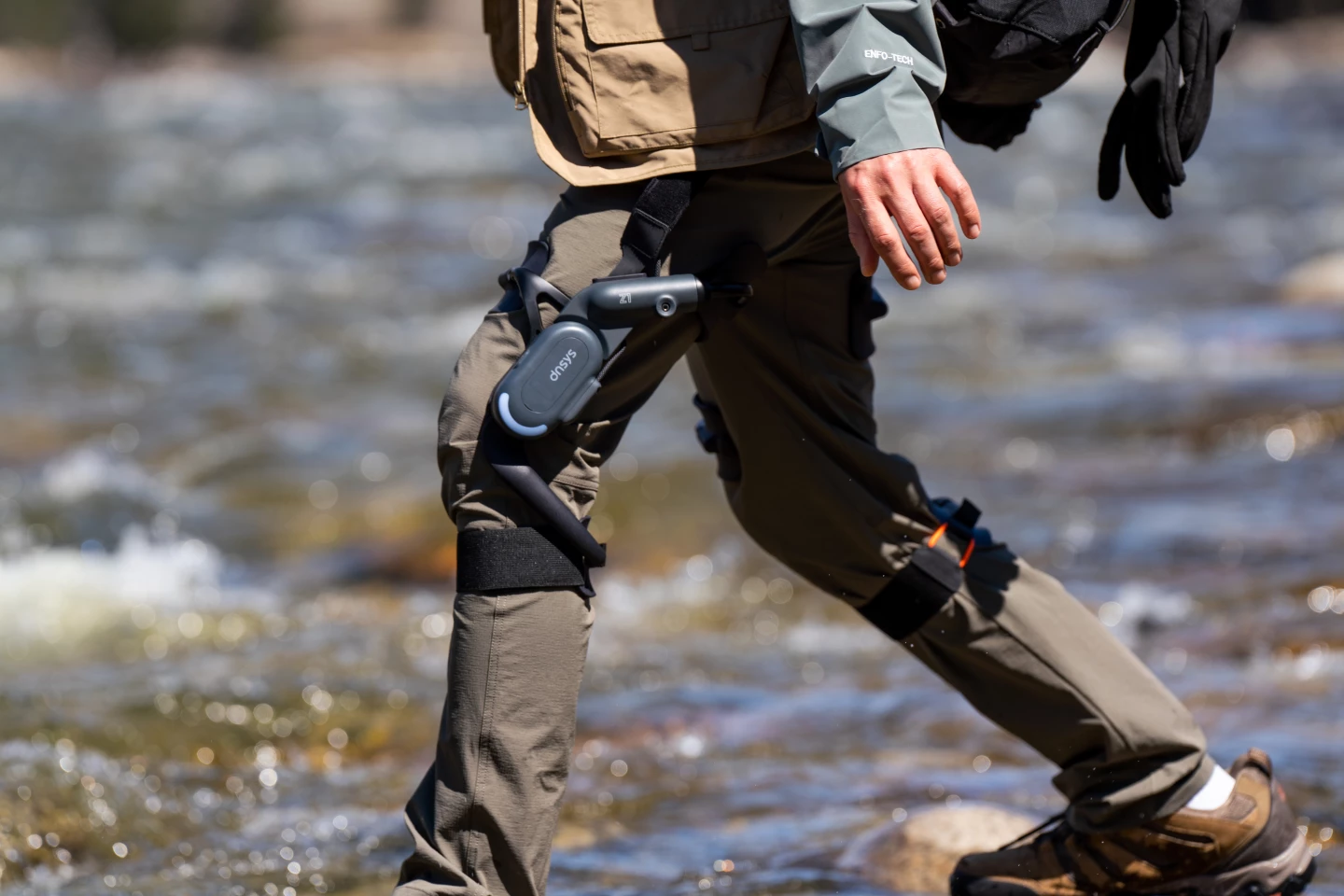
The system is said to make users feel 44 lb (20 kg) lighter when climbing
Dnsys
The setup actually consists of two 1.5-lb (680-g) hinged exoskeletons which can be carried in a backpack, and mounted on each leg in a claimed 15 seconds. A 450-watt motor in each unit then delivers force to the backs of the calf and the thigh via padded supports, simultaneously lifting the thigh up/forward while pushing off against the calf.
Onboard torque, position, and force sensors detect the initiation of leg movements, activating the motors within just 0.01 seconds. Over time, AI algorithms running on a dual-core 240-MHz processor (one per unit) learn the user’s movement patterns, allowing the electrical assistance to be applied more smoothly and naturally.
In fact, the AI is reportedly capable of recognizing movements and switching assist modes for activities such as walking, running, cycling, jumping, squatting, sitting, and standing.
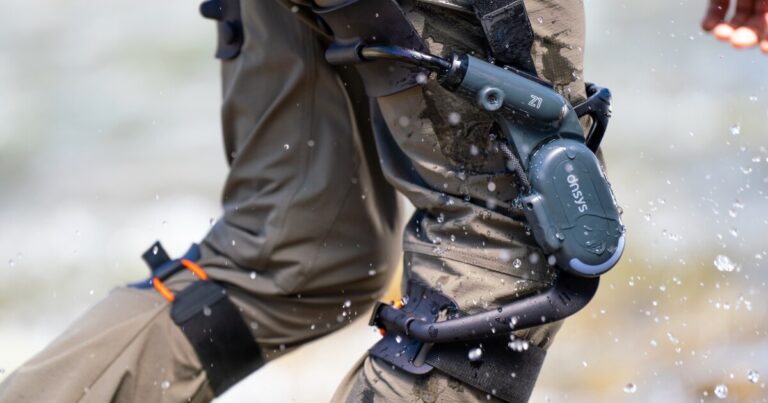
The Z1 is IP54 water-resistant, meaning it can withstand being splashed from any direction
Dnsys
When used for hiking, the Z1 is claimed to boost endurance range by an average of 15.5 miles (25 km). And although the setup actually adds 3 lb (1.4 kg) to the wearer’s weight, its lift assistance reportedly makes the person feel 44 lb (20 kg) lighter when standing up, climbing slopes, jumping, or squatting repeatedly.
The lithium-ion battery in each unit is said to be good for a runtime of up to five hours, although that figure obviously depends on usage. A kinetic energy recovery system helps boost the batteries by using the force generated when walking downhill to charge them.
For joint-punishing activities like downhill skiing, the Z1 is claimed to offload up to 330 lb (150 kg) of knee load
Dnsys
And just to make things a bit more complicated, Dnysys is offering the Z1 in three models. The mid-range aluminum/carbon fiber Dual Joint, which is described in this article, could be yours for a pledge of US$899 if it reaches production. The planned retail price is $1,499.
There’s also a lower-spec’d 225W-motor Single Joint model for a $699 pledge (retail $1,099), along with a premium Dual Joint Pro titanium model that goes for $1,398 (retail $2,298).
Dnsys Z1 Knee Exoskeleton: Defy Gravity, Go Beyond
Iranian state media describe the confrontation as ‘tense’, while US military says the encounter was ‘professional’.
Iran has said it warned a United States Navy destroyer to change course as it approached Iranian territorial waters in the Gulf of Oman, but the US has claimed the confrontation was “professional” and had “no impact” on its naval mission.
Iranian state media published video and images of Wednesday’s incident – the first direct encounter reported between Iranian and US forces since the 12-day war between Iran and Israel in June – taken from a helicopter dispatched to confront the USS Fitzgerald guided missile destroyer.
“US destroyer ‘Fitzgerald’ attempted to approach waters under Iran’s monitoring, in a provocative move”, Iranian state television said.
In video footage of the reported encounter, a helicopter is seen flying in close proximity to the warship and an Iranian crew member can be heard issuing what appeared to be a radio warning in English to the warship, ordering it to change course as it was approaching Iran’s territorial waters at about 10am local time (06:00 GMT).
Iranian state media have described the encounter as a tense exchange.
IRGC-affiliated Tasnim News on Wednesday released footage it claimed showed an Iranian navy helicopter forcing the USS Fitzgerald, a US guided missile destroyer, to alter its course. The report said the warship had approached waters under Iran’s supervision in the Sea of Oman. pic.twitter.com/gcfMQ23K6f
— Iran International English (@IranIntl_En) July 23, 2025
The US destroyer reportedly responded by threatening to target the Iranian aircraft if it did not leave. The vessel eventually departed the area upon continued warnings from the Iranian military.
US Central Command disputed the Iranian account of tension, calling the incident a “safe and professional interaction”.
Asked about the encounter, a US defence official, speaking on condition of anonymity with the Reuters news agency, also downplayed its seriousness.
“This interaction had no impact to USS Fitzgerald’s mission, and any reports claiming otherwise are falsehoods and attempts by Iran’s Islamic Revolutionary Guard Corps to spread misinformation,” the official said.
The official, who said the interaction took place entirely in international waters, identified the aircraft as an Iranian SH-3 “Sea King” helicopter.
The US military inserted itself into Israel’s war against Iran last month when it bombed Iranian nuclear sites. US President Donald Trump hailed the strikes as a “spectacular” success that “obliterated” Iran’s nuclear programme.
But media reports in the US, citing intelligence assessments, suggest the campaign was only partially successful, with just one of the three Iranian nuclear sites – the Fordow facility – reportedly destroyed.
In an interview broadcast on Wednesday, Iranian President Masoud Pezeshkian said Tehran was committed to continuing its nuclear programme for peaceful purposes, and that his country is prepared for any future war that Israel might wage against it.
He added that he was not optimistic about the ceasefire between the countries.
A required part of this site couldn’t load. This may be due to a browser
extension, network issues, or browser settings. Please check your
connection, disable any ad blockers, or try using a different browser.
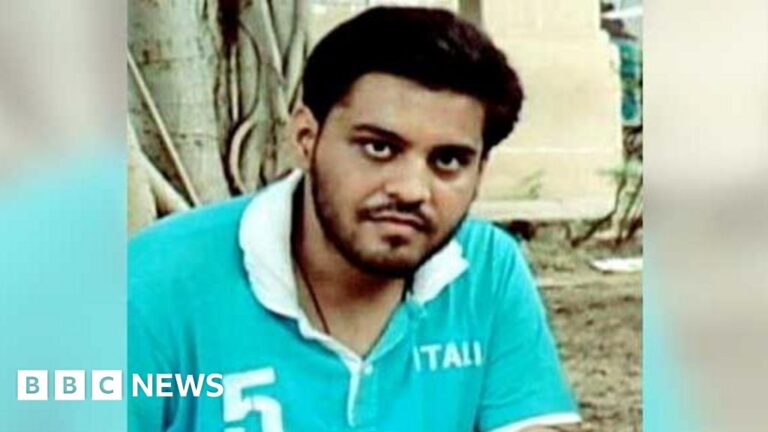
Najeeb Ahmed mysteriously disappeared in October 2016
Nine years ago, an Indian student vanished into thin air.
Najeeb Ahmed was studying biotechnologyat the prestigious Jawaharlal Nehru University (JNU) in Delhi, when he mysteriously went missing in October 2016.
The night before his disappearance, the then 27-year-old who lived in one of the university’s residential hostels was involved in a scuffle with members of the Akhil Bharatiya Vidyarthi Parishad (ABVP), a right-wing student group. The students have denied any involvement in his disappearance.
For years, India’s crime-fighting agency, the Central Bureau of Investigation (CBI), has been trying to figure what may have happened to Mr Ahmed – the agency took over the case from city police in 2017.
Now a court in Delhi has finally shut the investigation after the CBI said it had exhuasted all possible leads in the case.
“As a parting note, the court earnestly hopes that Najeeb Ahmed shall be traced soon,” the court said in the order, which was announced last month.
Mr Ahmed’s family, however, have alleged the inquiry was not conducted in a proper manner and said they would appeal the decision in a higher court.
“What message does it send, that India’s premier investigating agency has not been able to find a missing student from one of India’s best universities?” Mr Ahmed’s mother Fatima Nafees told BBC Hindi.
“We will not give up until we find our son.”
Born in a village in Uttar Pradesh, Mr Ahmed, the son of a carpenter, was the eldest of four. His family made many sacrifices to support his JNU education.
“After completing his undergraduate degree, he was adamant that he wanted to study at JNU,” Ms Nafees said.
“I told him you can take admission, but you won’t stay in the hostel. You are too naive. But he didn’t listen to me.”
Hindustan Times via Getty Images
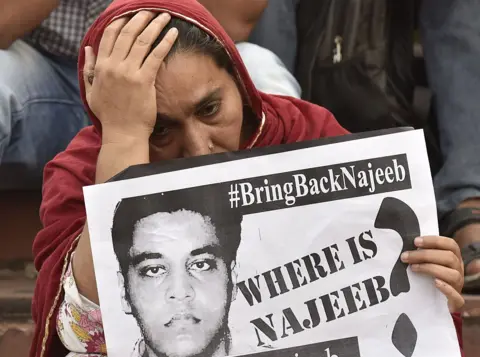
Fatima Nafees has been fighting a legal battle to find her son since 2016
On the night of 14 October, 2016, Mr Ahmed reportedly got into a scuffle with a group of students affiliated to ABVP who were campaigning for hostel elections. JNU is known for its vibrant and intense student politics, with ideological groups often clashing over campus issues.
In his testimonies to the CBI, his roommate Mohd Qasim said that Mr Ahmed got injured in the altercation and had to be taken to a public hospital, where he was allegedly refused treatment.
The doctors told him they could not treat his wounds without a formal crime complaint having been made to the police, his roommate alleged.
According to the court order, Mr Ahmed chose not to file a complaint and returned to campus. He went missing the next day, leaving behind his phone, wallet, and clothes in his hostel room.
A CBI report says Mr Ahmed last used his phone and laptop around 10am the day he disappeared. A hostel warden told the agency that he saw Mr Ahmed getting into a tuk-tuk in the morning and leaving campus.
Ms Nafees, who had been informed of the scuffle over phone by Mr Ahmed’s roommate, was on her way to Delhi to see her son. She arrived in the morning and upon finding him missing, filed a missing persons complaint on 15 October 2016.
For days, there was no progress. Protests erupted on campus as students and activists accused authorities of inaction.
In November 2016, Ms Nafees filed a petition in the Delhi High Court, accusing the police of being “slow, misdirected and subjective” and called for a court-monitored probe.
A month later, Delhi Police conducted two extensive searches using sniffer dogs across JNU’s sprawling campus – but again, nothing was found.
In May 2017, the court handed over the investigation to the CBI.
A year later, the CBI told the court it had exhausted all possible leads – and asked the bench to close the case.
The agency said it had examined more than 500 witnesses, collected information from taxi, bus, train and flight operators, and searched hospitals and morgues, but had found nothing.
A one million rupees [$11,600; £8,600] reward for information about Mr Ahmed also failed to yield results, investigators argued.
The case dragged on for two more years, when in 2020, Ms Nafees returned to court, this time to challenge the CBI’s conclusions.
She alleged the agency failed to properly probe the students involved in the scuffle with her son. She said they had a “clear motive”, had threatened him, and should have been arrested. The CBI denied all allegations saying they had left “no stone unturned” in looking for Mr Ahmed.
The agency said it had tracked the phone locations of the nine students involved in the fight with Mr Ahmed that night, but found no evidence linking them to his disappearance.
Hindustan Times via Getty Images)
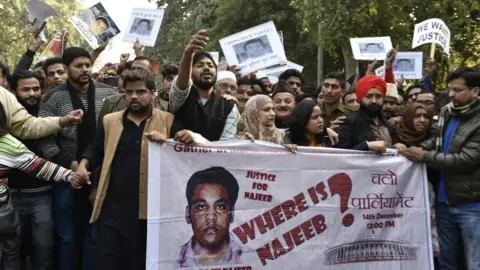
Najeeb Ahmed’s disappearance sparked massive protests in Delhi in 2016
Explaining its decision to finally shut the case, a court in Delhi said that the CBI has investigated “all plausible avenues” thoroughly but “no credible information” could be received about Mr Ahmed’s whereabouts.
The judge dismissed Ms Nafees’ plea, noting that while witnesses confirmed verbal threats, there was no “direct or circumstantial” evidence linking Mr Ahmed’s disappearance to the fight with ABVP members.
“Such scuffles and exchanges are not unheard of” in the charged atmosphere of JNU, the order added.
The court, however, added that the CBI could reopen the case if new information comes to light.
The order has been a huge blow for Mr Ahmed’s family and well-wishers.
Colin Gonsalves, who represented Ms Nafees in the Delhi High Court in 2018, said he still questioned the investigation.
“The police routinely arrest people for minor crimes in India. It’s shocking then, that none of the students were taken into custody for questioning,” he said.
Ms Nafees alleges that her son’s religion had affected the seriousness of the investigation.
“If the victim had been a Hindu boy, would the police have responded the same way?” she asked.
“They would have demolished the houses of those suspected,” she alleged, referring to the rising instances where homes of individuals accused of crimes are bulldozed by Indian authorities. The BBC has reached out to the CBI for comment.
However, the agency has consistently maintained that they have carried out the probe impartially. In 2018, the Delhi High Court had said that they had found no evidence that CBI investigated the case unfairly or “under political compulsions”.
Ms Nafees says she’s not done fighting. Every 15 October, the day her son vanished, she joins a candle march at JNU in his memory. The hope has dimmed, but the wait continues.
“Sometimes I wonder if I should put a nameplate outside our house,” said Nafees Ahmed, his father.
“Our house has been renovated. What if he comes, but can’t recognise it?”
were lying about Mrs. Macron’s biological sex, just as Owens intended. 29 Those
same outlets described Owens as doubling down on all her claims.
one that
102. Defendants prioritized profit over truth and used the December Retraction Demand as fuel for even more content. On January 13, 2025, Defendants posted on X that Owens was sharing her legal response to the Macrons- she had not yet sent to them.30 In Defendants’ January 13, 2025 episode, Owens promised to upload her entire response to her Locals page yet again, she did not follow through.31
29
Brigitte Macron was born a man: Candace Owens spreads crazy conspiracy theory about Emanuel
wife/articleshowprint/117208515.cms; French President Emmanuel Macron Says His Wife Does Not ‘Owe’ Candace Owens ‘Proof’ She Is and ‘Always Has Been a Woman’ in Stern Legal Letter, OK! Magazine, (Jan. 10, 2025, at 18:33 ET), https://okmagazine.com/p/emmanuel-macron-legal- letter-wife-doesnt-owe-candace-owens-proof-woman/; Jenel Treza Albuquerque, Candace Owens says Emmanuel Macron sent her a legal letter after she met a journalist who claimed Brigitte Macron was “born a man”, Soap Central, (Jan. 12, 2025, 18:54 ET), https://www.soapcentral.com/entertainment/news-candace-owens-says-emmanuel-macron-sent- legal-letter-met-journalist-claimed-brigitte-macron-born-man; Candace Owens responds to Emmanuel Macron’s legal threat after claiming his wife is transgender, The Express Tribune, (Jan. 11, 2025), https://tribune.com.pk/story/2521484/candace-owens-responds-to-emmanuel-
at
macrons-legal-threat-after-claiming-his-wife-is-transgender; President Emmanuel Macron and Wife Brigitte Send Candace Owens Legal Threat Over ‘Gender’ Report as Far-Right Pundit Laughs it Off – You’re Not Above Critique’, Radar, (Jan. 10, 2025, at 19:30 ET), https://radaronline.com/p/candace-owens-emmanuel-macron-brigitte-macron-transgender-
allegations-letter-legal/.
30
Candace Owens (@RealCandaceO), X (Jan.
https://x.com/RealCandaceO/status/1878900942986432750.
13
2025, at 15:24 ET),
31 Video posted by Candace Owens (@RealCandaceO), YouTube, I Respond To Mr. And Mr. Macron, Candace Ep. 131 (Jan. 13, 2025), https://www.youtube.com/live/mQoVHeeynNA.