7.9 C
New York
Wednesday, April 22, 2026
Home Blog Page 538

Trump refutes claims of pursuing summit with Xi, hints at potential visit to China | Latest Updates on Donald Trump

0

US president says he will visit China only at the invitation of Chinese leader.

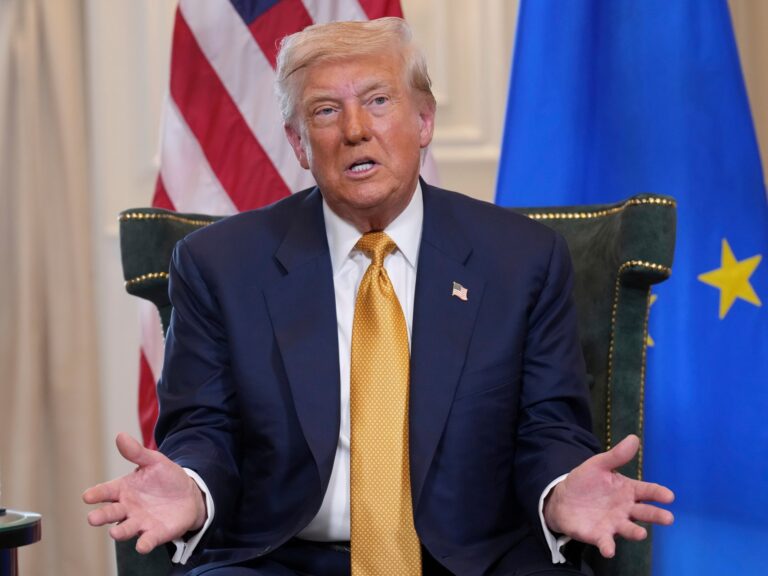
United States President Donald Trump has denied seeking a summit with Chinese President Xi Jinping while holding out the possibility of visiting China at his counterpart’s invitation.

“The Fake News is reporting that I am SEEKING a ‘Summit’ with President Xi of China. This is not correct, I am not SEEKING anything!” Trump said in a post on his Truth Social platform on Monday.

“I may go to China, but it would only be at the invitation of President Xi, which has been extended. Otherwise, no interest! Thank you for your attention to this matter.”

Trump’s comments come after the Reuters news agency reported last week that aides to the two leaders have discussed a possible summit during a trip to Asia by the US president later this year.

The report, which cited unnamed people familiar with the plans, said Trump and Xi could possibly meet on the sidelines of the Asia-Pacific Economic Cooperation summit taking place in South Korea from October 30 to November 1.

Trump and Xi last met face-to-face in 2019 on the sidelines of the G20 summit in Osaka, Japan.

The US and China are currently engaged in negotiations aimed at lowering trade tensions that have spiked since Trump rolled out his on-again, off-again tariffs on Chinese exports.

On Monday, US Treasury Secretary Scott Bessent and Chinese Vice Premier He Lifeng met in Stockholm, Sweden, to kick off two days of talks focused on reaching a trade deal before the end of a 90-day tariff truce that ends on August 12.

Bessent said in an interview with Bloomberg Television last week that the administration was in “a very good place with China now” and the August deadline could be extended in a “90-day increment”.

Flighthouse, Create Music Group’s digital content studio, introduces sports-centric Fieldhouse

0

Create Music Group-owned digital content studio Flighthouse Media sees an opportunity in bringing sports media to Gen Z fans, and to make it happen, it’s launching a new brand: Fieldhouse.

Fieldhouse is “a sports-first, chaos-powered content brand built for the next generation of fans,” the company said in a statement on Monday (July 28).

What, exactly, does that mean? For one thing, it means content like “gamified debates” and hot takes designed to “spark rivalries, ignite group chats, and keep fans engaged beyond the game.”

In other words, it’s ESPN for the TikTok generation.

“We saw a clear gap: traditional sports media isn’t resonating with this generation,” Flighthouse CEO Ash Stahl said.

“Gen Z doesn’t just watch sports, they react to it, interact with it, and shape the culture in real time. Fieldhouse is our take on the next generation of sports content: funny, fast, deeply online, and made for fans who grew up as much on TikTok as they did on ESPN.”

So far, it seems to be working: Flighthouse says Fieldhouse has already attracted 145,000 followers and 150 million views. Featured guests so far have included NFL athletes from the Cowboys and Texans, college stars from USC and UCLA, and cultural icons like the Harlem Globetrotters and the Dallas Cowboys cheerleaders.

Fieldhouse has also picked up some early brand sponsors, including SeatGeek and PrizePicks.

“Gen Z doesn’t just watch sports, they react to it, interact with it, and shape the culture in real time.”

Ash Stahl, Flighthouse Media

While sports media may seem outside the wheelhouse of a music distribution, rights management and publishing company, it does fit with its identity as an “audience company,” as Co-Founder and CEO Jonathan Strauss puts it.

“I’ve tried to keep this philosophy of encouraging our team members to build their own companies within Create,” he said in a recent interview. Stahl “has done this at a scale we never expected.”

Overall, Flighthouse Media boasts 330 million followers and over 1 billion monthly views on TikTok, YouTube, Instagram and Snapchat across its brands, which include Flighthouse, Retirement House and Flighthouse Radio.

Create acquired Flighthouse in 2016, when it was a discovery channel on Musical.ly (now TikTok), and folded it into FH Media, which it formed in 2023. Create also folded viral marketing agency VRTCL, which it acquired in 2022, into FH Media. The company has created campaigns for brands like Starbucks, Netflix and Beats by Dre.

Per Forbes, major music names like Atlantic Records, Capitol Records, Universal Music Group’s Interscope, Island, and Republic labels, and Warner Music Group have been Flighthouse marketing partners.

And in sports, Flighthouse sees an opportunity to expand its audience – and with it, the potential for brand partnerships.

“After what we’ve built with Flighthouse, Gen Z’s home for pop culture and female-driven fandom, and Retirement House, which proves you can grow old without growing up, stepping into sports felt like a natural next move for Flighthouse Media,” Stahl said.Music Business Worldwide

Trump requests expedited deposition in Epstein case citing Murdoch’s age

0

President Donald Trump has asked a US court to order a swift deposition of Rupert Murdoch in his lawsuit against the Wall Street Journal, citing the media mogul’s advanced age.

Trump sued the billionaire over an article in the Journal, which is owned by Murdoch’s News Corp, that alleged the president had written a “bawdy” letter to celebrate sex offender Jeffrey Epstein’s birthday in 2003.

In a court filing on Monday, Trump’s lawyers stated that he had informed Murdoch prior to the report being published that the letter was “fake”.

Trump’s lawyers argued that Murdoch should be asked to depose swiftly, noting that he was 94 and “is believed to have suffered recent significant health scares”.

“Taken together, these factors weigh heavily in determining that Murdoch would be unavailable for in-person testimony at trial,” Trump’s lawyers stated in their filing in Miami federal court.

The $10bn (£7.5bn) lawsuit against the Wall Street Journal states that the publication was attempting to harm the president’s reputation.

Dow Jones, the Journal’s publisher, has stood by the reporting and said it was prepared to defend itself against the president’s lawsuit.

US District Judge Darrin Gayles, who is presiding over the case, has asked Murdoch to respond to Trump’s deposition request by 4 August.

According to the Wall Street Journal, a letter bearing Trump’s name “contained several lines of typewritten text framed by the outline of a naked woman, which appears to be hand-drawn with a heavy marker”.

“Inside the outline of the naked woman was a typewritten note styled as an imaginary conversation between Trump and Epstein, written in the third person,” the paper reported.

It reportedly contained a joking reference that “enigmas never age” and allegedly ended with the words: “A pal is a wonderful thing. Happy Birthday – and may every day be another wonderful secret.”

Trump denied writing the note after the article was published on 17 July, posting: “These are not my words, not the way I talk. Also, I don’t draw pictures.”

The article was published amid mounting pressure on the Trump administration to disclose more information about Epstein.

Trump and Epstein had a publicly known friendship spanning several years. The president has claimed their relationship soured in 2004, long before Epstein was arrested on sex trafficking charges.

Epstein died by suicide in 2019 while awaiting trial on sex trafficking charges.

In addition to the birthday greeting, the Wall Street Journal reported that Trump was told he was among hundreds of people named in Justice Department documents on Epstein.

On Monday, the president told reporters that his name may have been planted in the Epstein files by former Attorney General Merrick Garland or former FBI director James Comey.

Trump did not provide any evidence to support his allegations. Garland and Comey have not immediately responded to his comments.

Challenging Client

0


Client Challenge


JavaScript is disabled in your browser.

Please enable JavaScript to proceed.

A required part of this site couldn’t load. This may be due to a browser
extension, network issues, or browser settings. Please check your
connection, disable any ad blockers, or try using a different browser.

Experts Say Tariffs Are Here to Stay as Trump’s August 1 Deadline Approaches | Latest Updates on Donald Trump

0

As United States President Donald Trump blasts his way through tariff announcements, one thing is clear, experts say: Some level of duties is here to stay.

In the past few weeks, Trump has announced a string of deals – with the European Union, Japan, Indonesia, Vietnam and the Philippines – with tariffs ranging from 15 percent to 20 percent.

He has also threatened Brazil with a 50 percent tariff, unveiled duties of 30 percent and 35 percent for major trading partners Mexico and Canada, and indicated that deals with China and India are close.

How many of Trump’s tariff rates will shake out is anybody’s guess, but one thing is clear, according to Vina Nadjibulla, vice president of research and strategy at the Asia Pacific Foundation of Canada: “No one is getting zero tariffs. There’s no going back.”

Trump’s various announcements have spelled months of chaos for industry, leaving businesses in limbo and forcing them to pause investment and hiring decisions.

The World Bank has slashed its growth forecasts for nearly 70 percent of economies – including the US, China and Europe, and six emerging market regions – and cut its global growth estimate to 2.3 percent, down from 2.7 percent in January.

Oxford Economics has forecast a shallow recession in capital spending in the Group of Seven (G7) countries – Canada, France, Germany, Italy, Japan, the United Kingdom and the US – lasting from the second quarter to the third quarter of this year.

“What we’re seeing is the Donald Trump business style: There’s lots of commotion, lots of claim, lots of activity and lots of b*******,” Robert Rogowsky, professor of international trade at the Middlebury Institute of International Studies, told Al Jazeera.

“That’s his business model, and that’s how he operates. That’s why he’s driven so many of his businesses into bankruptcy. It’s not strategic or tactical. It’s instinctive.”

Rogowsky said he expects Trump to push back his tariff deadline again, after delaying it from April to July, and then to August 1.

“It’s going to be a series of TACO tariffs,” Rogowsky said, referring to the acronym for “Trump Always Chickens Out”, a phrase coined by Financial Times columnist Robert Armstrong in early May to describe the US president’s backpedalling on tariffs in the face of stock market turmoil.

“He will bump them again,” Rogowsky said. “He’s just exerting the image of power.”

Trump’s back-and-forth policy moves have characterised his dealings with some of the US’s biggest trade partners, including China and the EU.

China’s tariff rate has gone from 20 percent to 54 percent, to 104 percent, to 145 percent, and then 30 percent, while the deadline for implementation has shifted repeatedly.

The proposed tariff rates for the EU have followed a similar pattern, going from 20 percent to 50 percent to 30 percent, and then 15 percent following the latest trade deal.

The EU’s current tariff rate only applies to 70 percent of goods, with a zero rate applying to a limited range of exports, including semiconductor equipment and some chemicals.

European steel exports will continue to be taxed at 50 percent, and Trump has indicated that new tariffs could be on the way for pharmaceutical products.

Despite the trade deals, many details of how Trump’s tariffs will work in practice remain unclear.

Whether Trump announces more changes down the track, analysts agree that the world has entered a new phase in which countries are seeking to become less reliant on the US.

“Now that the initial shock and anger [at Trump policies] has subsided, there is a quiet determination to build resilience and become less reliant on the US,” Nadjibulla said, adding that Trump was pushing countries to address longstanding issues that had been untouchable before.

Canada, for instance, is tackling inter-provincial trade barriers, a politically sensitive issue historically, even as it looks elsewhere to increase exports, said Tony Stillo, director of Canada Economics at Oxford Economics.

“It would be foolhardy not to provide to the US, seeing as it’s our largest market, but it also makes us more resilient to provide to other markets as well,” Stillo told Al Jazeera.

Canadian Prime Minister Mark Carney has reached out to the EU and Mexico and indicated his wish to improve his country’s strained relations with China and India.

This month, Canada expanded its exports of liquified natural gas beyond the US market, with its first shipment of cargoes to Asia.

To mitigate the fallout of Trump’s tariffs, Ottawa has been offering relief to Canadian businesses, including automakers, and has instituted a six-month pause on tariffs on some imports from the US to give firms time to re-adjust their supply chains.

There is also “some relief” in the fact that other countries “don’t seem to be imitating the Trump show [by levying their own tariffs]. They’re witnessing this attempt to strong-arm the rest of the world, but it doesn’t seem to be working,” Mary Lovely, the Anthony M Solomon senior fellow at the Peterson Institute for International Economics (PIIE), told Al Jazeera.

But the world is watching how the tariffs will affect the US economy, as “that will also be instructive to other countries”, Lovely said.

“If we see a slowdown, as we expect, it becomes a cautionary tale for others.”

Although the US stock market is near an all-time high, it is heavily weighted towards the “magnificent seven”, said Lovely, referring to the largest tech companies, and that reflects just one part of the economy.

Re-emergence of industrial policy

Trump’s tariffs come on top of other growing challenges for exporters the world over, including China’s subsidy-heavy industrial policy that allows its businesses to undercut its competitors.

“We’ve entered a period of global economic alignment with the reintroduction of industrial policies,” Nadjibulla said, explaining that more and more governments are likely to roll out support for their domestic industries.

“Each country will have to navigate these and find ways to de-risk and reduce overreliance on the US and China.”

Still, countries seeking to support their homegrown industries will have to do so while reckoning with the World Trade Organization and rules-based trade agreements such as the Comprehensive and Progressive Agreement for Trans-Pacific Partnership, Nadjibulla said.

“It will take some tremendous leadership around the world to corral this wild mustang [Trump] before he breaks up the world order,” Rogowsky said.

“But it will break because I do think Donald Trump will drive us into a recession.”

Analysis of U.S. Bancorp’s SWOT: Stock Outlook Driven by New Leadership and Fee Growth

0


U.S. Bancorp's SWOT analysis: new leadership, fee growth drive stock outlook

Trae Young Sends Encouraging Message to Donovan Mitchell

0

Trae Young and Donovan Mitchell, two of the NBA’s top guards, recently trained together in California, showing not only their commitment to the game but also their mutual respect and friendship. Young took to Instagram to send a message to Mitchell, writing, “Gonna always support my dawg”—a post that quickly gained traction among fans.

Trae Young Sends Supportive Message to Donovan Mitchell Amid Offseason WorkoutsTrae Young Sends Supportive Message to Donovan Mitchell Amid Offseason Workouts

The two stars, both former All-Stars, were seen working out with high school and college prospects at the SPIDA Elite Camp. They actively participated in full-court scrimmages and skill drills, demonstrating leadership and high-level play. “Trae Young and Donovan Mitchell cooking the youth,” Overtime captioned a clip of the session.

Mitchell, entering his ninth NBA season and fourth with the Cleveland Cavaliers, remains a central piece of the franchise. In the 2024–25 season, he averaged 24.0 points, 4.5 rebounds, 5.0 assists, and 1.3 steals per game while shooting 44.3% from the field and 36.8% from three. The Cavs reached the second round of the playoffs but fell to the Indiana Pacers.

Looking ahead, Cleveland is considered a strong contender in the Eastern Conference, with a projected win total of 55.5. Their expected rotation includes Mitchell alongside Darius Garland, Max Strus, Evan Mobley, and Jarrett Allen, with new depth added in Lonzo Ball, Larry Nance Jr., and others.

On the other side, Young is coming off his seventh season with the Atlanta Hawks. He posted impressive averages of 24.2 points, 3.1 rebounds, and 11.6 assists over 76 games. Despite his individual success, the Hawks failed to advance past the play-in tournament, losing to the Orlando Magic and Miami Heat.

The offseason workout session highlights a broader theme of camaraderie among the league’s stars, especially those with shared experiences of playoff disappointments. As both Mitchell and Young aim to elevate their teams next season, their bond and continued development could be key to turning regular season success into postseason breakthroughs.

BioBatteries: Harnessing Sustainable Energy from Your Garden

0

Some time ago, we talked about green power generated by plants. Today, we introduce you to a Spanish company pioneering a revolution in energy: bioenergy harnessed from the plant kingdom. They’ve unveiled an advanced biobattery or biological battery model, leveraging a community of microorganisms to generate a modest electric current. Beyond powering up, this technology boasts additional merits, including temperature regulation and a reduction in CO2 emissions.

In this article, you will learn about:

How a biobattery works

Biobatteries are not a recent innovation; their potential began drawing attention in the 1970s. The fundamental principle underpinning biobatteries lies in electrogenic microorganisms—bacteria that exhibit an extraordinary knack for generating electricity during their metabolic processes. Analogous to conventional batteries, biobatteries comprise a positively charged terminal, known as the cathode, and a negatively charged terminal, referred to as the anode. When bacteria metabolize nutrients such as glucose and breathe, they liberate electrons and protons, which are harnessed by these terminals.

These biobatteries present a sustainable avenue for generating energy in environments teeming with organic matter and the right microbial populations. Among the most prevalent microorganisms used are E. coli and Shewanella oneidensis, nicknamed the “electric bacterium.” Yet, until now, commercial biobatteries have grappled with challenges like restricted renewable energy output and, most notably, device instability, resulting in contamination and diminished efficiency.

Real-world applications of biobatteries

One inspiring development comes from a Spanish company that launched its biobattery model in 2022. The project encountered a common stumbling block faced by earlier biobattery endeavors—device failure when confronted with the elements. The solution was creating a “bacteria hotel,” an environment conducive to electrogenic or electrophilic microorganisms naturally occurring in the wild.

The company’s primary model is a terrestrial panel integrated with an underground irrigation system. This innovation allows irrigation and rainwater to deliver essential nutrients and fertilizers to the base, where bacteria within microbial cells break down organic matter, simultaneously releasing electrons.

As per the manufacturer’s claims, a 7×7 square meter panel can generate 15 Wh/day, sufficient to power six small light fixtures or one substantial lighting source alongside motion sensors. Moreover, they offer digital panels for real-time or remote electricity production and battery health monitoring.

This technology, costing akin to traditional green roofs, holds the potential to illuminate urban parks and gardens while powering IoT devices like air pollution meters.

The first biobatteries have already found homes in office buildings, parks, hotels, and even Silicon Valley’s 21st Century Monument. Furthermore, they can be seamlessly incorporated into urban furniture, transforming plant-adorned benches into cellphone charging stations. The company has also introduced other technologies, including a system that harnesses plants’ sensitivity to electric current as switches—simply touching their leaves can activate or deactivate lights and other devices.

Advantages of biobatteries

At the core of the appeal of these biobatteries is their eco-friendliness and sustainability, ensuring round-the-clock electricity generation. However, their benefits extend far beyond this primary virtue. The manufacturer asserts that integrated irrigation can translate into up to 50% water savings, with surface temperatures lowered by as much as 4ºC and CO2 emissions curbed by up to 334.4 grams per square meter annually.

If you want to learn more about the world of biobatteries or biological batteries, you can check out this article that explores the technology in-depth and talks about a new generation of origami batteries. There are also other ways to generate electricity on a small scale and in a renewable way, such as triboelectricity.


Source:

Donald Trump states that Gaza is facing a severe crisis of ‘true hunger’

0

David Gritten

BBC News, Jerusalem

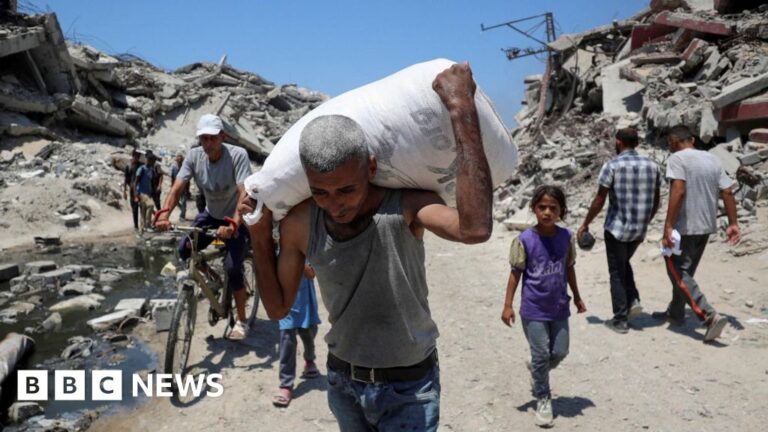
Reuters A Palestinian man carries a bag with aid supplies that entered Gaza, in Beit Lahia, northern Gaza (27 July 2025)Reuters

Tom Fletcher, UN humanitarian chief, said most of the UN’s food lorries were looted by desperately hungry Palestinians after entering Gaza on Sunday

There is “real starvation” in Gaza, Donald Trump has said, after Israeli Prime Minister Benjamin Netanyahu insisted there was no such thing.

Asked if he agreed with Netanyahu that it was a “bold-faced lie” to say Israel was fuelling hunger in Gaza, the US president replied: “I don’t know… those children look very hungry… that’s real starvation stuff.”

Speaking during a meeting with UK Prime Minister Keir Starmer in Scotland, Trump said: “Nobody’s done anything great over there. The whole place is a mess… I told Israel maybe they have to do it a different way.”

His comments came after the UN’s humanitarian chief said “vast amounts” of food were needed to stave off starvation.

Donald Trump says there “is real starvation” in Gaza

Tom Fletcher told the BBC he welcomed Israel’s measures over the weekend to allow more aid into Gaza in the form of airdrops, and military pauses to allow food convoys to reach people.

But he said what had been delivered so far was just “a drop in the ocean” of what was required.

“It’s the beginning, but the next few days are really make or break. We need to deliver at a much, much greater scale. We need vast amounts of aid going in, much faster,” he told BBC Radio 4’s Today programme.

Israel said 120 lorry loads were collected from crossings on Sunday during the first daily 10-hour “tactical pause” in military operations, and that Jordan and the United Arab Emirates airdropped 28 packages of food.

Hours after Mr Fletcher spoke, the territory’s Hamas-run health ministry said another 14 people had died as a result of malnutrition over the past 24 hours.

That brought the total number of malnutrition-related deaths since the war begin in October 2023 to 147, including 88 children, according to the ministry.

Israel, which controls the entry of all supplies to Gaza, has denied there is starvation in Gaza and rejected accusations of being responsible for food shortages.

On Sunday, the Israeli military began actions that it said would improve the “humanitarian response” in Gaza and disprove “the false claim of deliberate starvation”.

Israel announced there would be a “local tactical pause” in three areas of Gaza for 10 hours a day, as well the establishment of “designated secure routes” for aid convoys.

The military also allowed aid drops carried out by foreign countries to resume, despite humanitarian agencies warning that the method was ineffective and dangerous.

Israeli military body Cogat, which co-ordinates the entry of aid into Gaza, said more than 120 lorry loads of aid were collected from crossings by the UN and other international organisations on Sunday, and that hundreds more lorry loads were awaiting collection.

Mr Fletcher said the UN had collected fewer than 100 lorry loads in that time, and noted that 600 to 700 loads had entered Gaza daily on average during the two-month ceasefire between Israel and Hamas at the start of this year.

Asked to respond to Israel’s criticism of UN agencies for not collecting aid from crossings, he said: “We’re not going to leave on pallets if we can. But to get to it our drivers face bureaucratic constraints, they face massive security constraints.”

He also said that most of the UN’s food lorries were looted after entering Gaza on Sunday.

“Most of those lorries… were hit by desperate individual civilians, starving. The flour was taken off those lorries and its very, very dangerous for our drivers.”

Mr Fletcher also warned that UN teams on the ground believed the Israeli military’s pauses would only last a week or so, which he said would be “clearly insufficient when before our eyes we’re seeing this 21st Century atrocity on the ground”.

“We need a sustained period of delivery – weeks, months – to build up, to stop that starvation and build up the supplies again. Ultimately, we need a ceasefire. Pauses are a good step in the right direction, but stopping the conflict is the key.”

Netanyahu on Sunday savaged claims that Israel was deliberately starving civilians in Gaza, which would amount to a war crime.

“What a bold-faced lie. There is no policy of starvation in Gaza, and there is no starvation in Gaza.” he said.

“We enable humanitarian aid throughout the duration of the war to enter Gaza. Otherwise, there would be no Gazans. And what has interdicted the supply of humanitarian aid is one force, Hamas. Again, the reversal of truth,” he added.

Netanyahu said the Israeli military’s humanitarian pauses and corridors meant the UN had “no excuses left” not to collect and distribute all the aid from the crossings.

“Stop lying. Stop finding excuses. Do what you have to do.”

On Monday night, Netanyahu’s office said Israel would work with aid groups, the US and European nations to ensure “large amounts of humanitarian aid flows” into Gaza.

A statement said the “situation in Gaza is difficult” but that Hamas “benefits from attempting to fuel the perception of a humanitarian crisis”, by releasing “unverified numbers” and “circulating images that are carefully stage or manipulated”.

The Israeli government does not allow international news organisations, including the BBC, into Gaza to report freely on the situation there.

On Sunday, the World Health Organization warned that malnutrition was “on a dangerous trajectory in the Gaza Strip, marked by a spike in deaths in July”.

Of the 74 malnutrition-related deaths in Gaza in 2025, 63 had occurred this month, including 24 children under five and one child over five, the UN agency said.

“Most of these people were declared dead on arrival at health facilities or died shortly after, their bodies showing clear signs of severe wasting,” it added.

The WHO said the crisis was “entirely preventable” and condemned what it called the “deliberate blocking and delay of large-scale food, health, and humanitarian aid”.

Hamas has denied stealing aid, and on Sunday the New York Times cited senior Israeli military officials as saying that the military had never found proof that the armed group had systematically stolen aid from the UN. Reuters news agency also reported last week that US government analysis found no evidence of systematic theft by Hamas of US-funded aid.

On Monday, local hospital sources said Israeli attacks across Gaza had killed more than 30 people, including aid seekers.

The Israeli military launched a campaign in Gaza in response to the Hamas-led attack on southern Israel on 7 October 2023, in which about 1,200 people were killed and 251 others were taken hostage.

At least 59,821 people have been killed in Gaza since then, according to the territory’s Hamas-run health ministry.

Enterprise Products: Trump’s attempt to use ethane exports to China as a weapon against backfires on U.S.

0

Leading U.S. energy products exporter Enterprise Products Partners warned that the Trump administration continuing to “weaponize” fossil fuel shipments to China would only backfire against U.S. shippers.

Enterprise co-CEO Jim Teague issued his complaints during the July 28 earnings call about two months after the U.S. Commerce Department temporarily banned ethane exports to China as a trade agreement negotiating tool after China placed restrictions on the exports of certain rare earth metals to the U.S. Teague is frequently vocal about his right-leaning political allegiances and has personally donated to Trump.

Both countries in July lifted their restrictions as part of a trade truce while a longer-term trade agreement is negotiated, which remains pending.

“We’ve been clear about the risk of weaponizing U.S. energy exports,” Teague said on the earnings call. “These kinds of actions rarely hurt the intended target and often backfire, hurting our own industry more.”

China is by far the largest importer of American ethane—the most common building block for petrochemicals and plastics worldwide. The U.S. is the only major exporter of ethane, making China entirely dependent on America’s exports. Roughly half of all U.S. ethane exports go to China, and the cargoes are not easily redirected to other nations. Enterprise (No. 78 on the Fortune 500) is the leading ethane exporter from its Houston Ship Channel terminal.

“We are fortunate this administration understands the importance of energy and global trade, even if the Commerce Department may need a little reminder,” Teague said. “Unfortunately, we could face similar challenges in the future.”

Specifically, the Commerce Department temporarily required Enterprise and other exporters to apply for special federal licenses to export ethane and butane to China for the stated reason of the “unacceptable risk” the natural gas liquids could be utilized for a “military end use.”

Enterprise executive vice president Tony Chovanec said the Commerce Department’s actions cost Enterprise at least one ethane customer that wasn’t from China.

“What it has done and where it’s been a problem, you really compromised the U.S. brand for reliable supply and energy security when you just cut off a counterparty like that,” Chovanec said of the Commerce Department’s actions. “It’s been disruptive but, in the short term, we were able to manage through it with our diverse contract mix.”

Apart from China, he said, Enterprise ships ethane to Mexico, Brazil, Europe, India, Vietnam, and Thailand.

Seeking alternatives

In a new report, the East Daley Analytics firm said China may look to develop alternatives for U.S. ethane to avoid geopolitical disruptions. China could push Middle Eastern and European nations to further develop their own ethane exports to diversify supplies.

“In recent years, U.S. ethane was the quiet powerhouse of global petrochemicals—cheap, abundant, and presumably insulated from geopolitics. That assumption no longer holds,” East Daley stated. “The U.S.-China trade war has exposed a critical truth: There is no global substitute for U.S. ethane at scale. What was once a stable feedstock is now caught in the crosscurrents of trade policy and long-cycle demand risk.”

In the meantime, Enterprise is only doubling down on its ethane and propane exports businesses, including expanding its Houston Ship Channel facilities.

Enterprise this month also just opened the first phase of its new Neches River Terminal ethane export hub in Texas near the Louisiana border. The facility will initially be able to ship 120,000 barrels of ethane a day. A second phase coming online in the first half of 2026 will more than double the exporting capacity to 300,000 barrels daily.

Typically produced as a byproduct along with oil or natural gas, U.S. natural gas liquid volumes more than doubled in a decade to over 7 million barrels a day, nearly 6 million barrels of which are ethane, propane, and butane, according to the U.S. Energy Information Administration (EIA). That spike triggered a U.S. petrochemical plant construction boom, as well as burgeoning export markets because domestic supplies now far exceed demand. The ethane is typically converted into the petrochemical ethylene, which is used to make products such as polyethylene, the world’s most common plastic.

“The appetite for U.S. ethane and ethylene remains strong in both Asia and Europe,” Teague said.