9.9 C
New York
Wednesday, April 22, 2026
Home Blog Page 534

Shaw from Manchester United supports Amorim’s stance against ‘toxic’ dressing room | Soccer Updates

0

Luke Shaw says the atmosphere in the Manchester United dressing room has been ‘quite toxic’.

Manchester United defender Luke Shaw has backed manager Ruben Amorim’s uncompromising approach to improve standards in the dressing room, arguing the atmosphere had been “quite toxic” at times.

Amorim took charge at struggling United in November and demanded more commitment from the squad. He also froze out key figures like Marcus Rashford and Alejandro Garnacho, who were among five players seeking to exit the club in the close season.

“A lot of the time I’ve been here over the last few years it’s been extremely negative,” Shaw, a United player since 2014, said in an interview with the BBC published on Wednesday.

“It can be quite toxic. The environment, it’s not healthy at all. … We need an environment that’s healthy, that’s positive, that’s got good energy and happiness. When you have all those things, you feel free, and you express yourself more.

“Ruben brings demands. Mentality is a big thing. He talks a lot about it. … He demands 100 percent and doesn’t want anything less. If someone’s doing 85 to 90 percent, it’s not enough. I think, especially this year, if you’re not doing the right things, you won’t play.”

Luke Shaw, centre, joined Manchester United in 2014, a year after the club’s last Premier League title [Jason Cairnduff/Reuters]

Amorim was uncompromising as he questioned Rashford’s work rate, saying he would rather have the goalkeeper coach on the pitch than half-hearted players.

Rashford has joined Barcelona on loan while British media reports have linked Garnacho with a move to Chelsea or Aston Villa.

“The manager’s not bothered. He doesn’t care who the player is. That’s how it should be. Whatever he wants, as players, we have to be delivering, and we are fully behind that,” Shaw said.

United, who finished 15th last season and lost the Europa League final to Tottenham Hotspur, begin their new campaign at home against Arsenal on August 17.

TikTok’s ‘Add to Music App’ feature drives billions of streams and now partners with YouTube Music.

0

TikTok has been very busy lately expanding the platforms that are integrated with its ‘Add to Music App’ feature, which lets users save songs they found on TikTok to the music streaming service of their choice.

The latest addition, announced by TikTok on Tuesday (July 29) is YouTube Music. TikTok users who hit the ‘Add Song’ button next to a song name at the bottom of a video will have the song added to the ‘TikTok Songs’ playlist on their YouTube Music account.

Since it first launched the feature in the US and UK in November 2023, TikTok has rapidly expanded both the countries where the feature is available and the platforms integrated with it.

Beginning with Spotify, Apple Music and Amazon Music, the feature was expanded to include South Korea’s Melon and France-headquartered Deezer last fall, SoundCloud this past May and Middle East and North Africa-focused streamer Anghami just a few weeks ago.

Amid now-resolved recent clashes certain music industry giants and its ongoing potential shutdown in the US, TikTok has been playing up its growing role in the music business.

‘Add to Music App’ is a key aspect of this strategy.

“Add to Music App continues to deliver real results for the music industry, with hundreds of millions of track saves translating into billions of streams on music streaming services,” said Tracy Gardner, TikTok’s Global Head of Music Business Development.

“By partnering with YouTube Music, we’re expanding this impact globally, helping artists reach new audiences while giving fans a seamless way to engage with the music they discover on TikTok.”

In its Music Impact Report released in February, TikTok said that Add to Music App had already resulted in a billion track saves as of that time.

“It is already positively influencing artist success and chart placements, and the most exciting thing is that we are just getting started,” said Ole Obermann, at the time TikTok’s Global Head of Music Business Development.

Tracy Gardner

“Add to Music App continues to deliver real results for the music industry, with hundreds of millions of track saves translating into billions of streams on music streaming services.”

Tracy Gardner, TikTok

The integration with YouTube Music comes with a marketing campaign running in the US and UK, showing TikTokers how to use the feature.

The first time a user presses the ‘Add Song’ button at the bottom of a video in their ‘For You’ feed, they’re presented with a selection of music streaming services (YouTube Music now being one of them).

Whichever service they choose will become the default option and every time they press the ‘Add Song’ button, the song will be saved to that platform, but users can change the streaming service by going into ‘Settings’ and ‘Privacy’ in the TikTok app.

The latest expansion of Add to Music App shows TikTok is forging ahead with its music-focused strategy even as it faces a continuing legal headache in the US, where the “divest-or-ban” law requires the company to sell its US operations to non-Chinese owners or face an effective shutdown in the country.

President Donald Trump has extended the sale deadline three times since taking office, and the latest deadline stands at September 17. Speaking on Fox News Sunday (July 27), Commerce Secretary Howard Lutnick said the Trump administration wants to see the app under the control of a US-headquartered company.

According to a news report earlier this month, TikTok parent company ByteDance is working on a standalone app for US TikTok users. The new app is reportedly scheduled to launch in app stores on September 5.Music Business Worldwide

Live Recap of Day 4 Finals at the 2025 World Championships

0

By James Sutherland on SwimSwam

2025 World Championships

DAY 4 FINALS HEAT SHEET

Event Schedule:

  • Men’s 800 freestyle final
  • Women’s 200 freestyle final
  • Men’s 100 freestyle semi-finals
  • Women’s 50 backstroke semi-finals
  • Men’s 200 butterfly final
  • Men’s 50 breaststroke final
  • Women’s 200 butterfly semi-finals
  • Men’s 200 IM semi-finals
  • Mixed 4×100 medley relay final

The fourth night of finals from the 2025 World Championships promises to be another exciting one with an action-packed session of racing on the docket, including four individual finals and the first relay since the opening day of competition.

Things will kick off with the men’s 800 freestyle, which features reigning Olympic and defending world champion Daniel Wiffen and 2023 world champion Bobby Finke, though it’s Tunisia’s Ahmed Jaouadi and Germany’s Sven Schwarz holding the top seeds coming out of the prelims.

Jaouadi, the bronze medalist in this event at the 2024 Short Course Worlds, set a new personal best of 7:41.58 to lead the heats on Monday morning.

Lukas Märtens, who won gold in the 400 free on Day 1, will be lurking out in Lane 7 after clocking 7:45.54 in the prelims, while Wiffen will be in Lane 1 after he went 7:46.36. The Irishman has said he feels “really weak” and is working to figure out how to improve his form leading into the final. He recently dealt with appendicitis.

Sam Short, who was the #2 qualifier out of the prelims and won silver at the 2023 World Championships, was a shocking late withdrawal after suffering food poisoning. Aussie Benjamin Goedemans was moved into the final in his place.

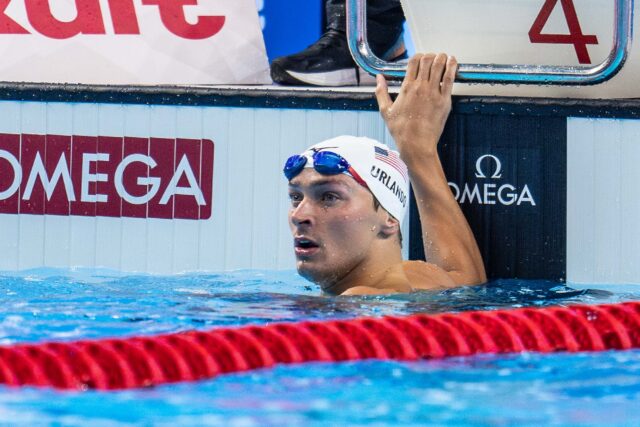
We’ll also see finals in the women’s 200 free, where Mollie O’Callaghan is the frontrunner, but American Claire Weinstein looks sharp, the men’s 200 fly, which American Luca Urlando headlines after he went sub-1:53 in both the prelims and semis, the men’s 50 breast, which is wide open but led by 100 breast winner Qin Haiyang, and the mixed 4×100 medley relay.

This morning, the U.S. team was a shocking 10th in the mixed medley prelims, knocking them out of the final, with Italy (3:42.19), the Netherlands (3:42.56) and China (3:42.81) holding the top three seeds.

Tonight’s session will also include Summer McIntosh back in the water in the semis of the women’s 200 fly, and Leon Marchand competing for the first time in the evening in the semis of the men’s 200 IM.

Men’s 800 Freestyle — FINAL

  1. Ahmed Jaouadi (TUN), 7:36.88
  2. Sven Schwarz (GER), 7:39.96
  3. Lukas Märtens (GER), 7:40.19
  4. Bobby Finke (USA), 7:46.42
  5. Victor Johansson (SWE), 7:47.00
  6. Kuzey Tuncelli (TUR), 7:49.09
  7. Benjamin Goedemans (AUS), 7:50.72
  8. Daniel Wiffen (IRL), 7:58.56

Ahmed Jaouadi made his move shortly after the halfway mark of the men’s 800 freestyle and ran away with the gold medal, putting up a time of 7:36.88 to shatter his lifetime best and move up to #3 all-time.

The 20-year-old, who placed 4th in this event at last summer’s Olympics, incredibly negative-split the event, turning in 3:48.92 at the 400 before closing in 3:47.96, with his time standing up as the fastest ever produced in a textile suit.

Jaouadi’s previous best time stood at 7:41.58, set in the prelims, while coming into the meet, his PB stood at 7:42.07.

He overtakes fellow Tunisian Ahmed Hafnaoui, the 2023 world champion who previously held the textile world record at 7:37.00, while Jaouadi still trails Tunisian legend Oussama Mellouli, who ranks #2 all-time with the African Record of 7:35.27 from 2009.

Tunisia now has the 2nd, 3rd and 4th-fastest performers ever in the event.

All-Time Performers, Men’s 800 Freestyle (LCM)

  1. Zhang Lin (GER), 7:32.12  – 2009
  2. Oussama Mellouli (TUN), 7:35.27 – 2009
  3. Ahmed Jaouadi (TUN), 7:36.88 – 2025
  4. Ahmed Hafnaoui (TUN), 7:37.00 – 2023
  5. Sam Short (AUS), 7:37.76 – 2023

The battle for silver came down to German teammates Sven Schwarz and Lukas Märtens after American Bobby Finke started to fall off the pace late in the race. Schwarz had enough in the tank to get his hand on the wall for silver, clocking 7:39.96, while Märtens claimed bronze in 7:40.19 after winning the 400 free on Sunday. Both swimmers hold slightly faster best times, with Schwarz having been 7:38.12 and Märtens 7:39.10, both done earlier this year.

Finke fell off the pace with about 250 meters to go and did just enough to hang on for 5th in 7:46.42, with Victor Johansson placing 6th in 7:47.00 after setting a Swedish Record in the prelims (7:44.81).

WOMEN’S 200 FREESTYLE – FINAL

  • World Record: 1:52.23 – Ariarne Titmus (AUS), 2024
  • World Junior Record: 1:53.65 – Summer McIntosh (CAN), 2023
  • Championship Record: Mollie O’Callaghan (AUS) – 1:52.85
  • 2023 World Champion: Mollie O’Callaghan (AUS) – 1:52.85
  • 2024 Olympic Champion: Mollie O’Callaghan (AUS) – 1:53.27
  1. Mollie O’Callaghan (AUS), 1:53.48
  2. Li Bingjie (CHN), 1:54.52
  3. Claire Weinstein (USA), 1:54.67
  4. Freya Colbert (GBR), 1:55.06
  5. Barbora Seemanova (CZE), 1:55.20
  6. Erika Fairweather (NZL), 1:55.61
  7. Jamie Perkins (AUS), 1:56.55
  8. Erin Gemmell (USA), 2:00.16

Mollie O’Callaghan delivered under pressure yet again in the final of the women’s 200 freestyle, overcoming a crowded field to roar home on the last 50 and win gold in the event for the second time.

The 21-year-old Aussie has been open about the difficulties she’s had this year coming back from a knee injury, but when the chips were down, she proved she’s still the best in the world. After jockeying with American Claire Weinstein early in the race, O’Callaghan began to distance herself from the field on the third 50, and then, holding a lead of two-tenths at the 150, she blasted off the wall and rocketed home with a 28.41 split to touch first in a time of 1:53.48.

The time marks the fourth-fastest of her career and the ninth-fastest all-time, with O’Callaghan’s lifetime best sitting at 1:52.48 from the 2024 Aussie Olympic Trials.

In an exciting race for silver, China’s Li Bingjie made a big move on the back half, turning 7th at the halfway mark in 56.69 before storming home with splits of 28.99/28.84 to overtake Weinstein and snag the silver medal in 1:54.52, crushing her personal best by exactly one second. Li moves into 12th all-time in the event and is within three-tenths of the Chinese Record (1:54.26) held by Tang Muhan.

Weinstein had a strong performance to win bronze in 1:54.67, knocking two one-hundredths off the lifetime best she set in the semis.

Freya Colbert had a phenomenal swim to place 4th in 1:55.06, breaking the super-suited British Record of 1:55.54 set by Joanne Jackson at the 2009 World Championships. Colbert’s previous best time stood at 1:55.76.

MEN’S 100 FREESTYLE – SEMI-FINALS

  1. Jack Alexy (USA), 46.81 AR
  2. David Popovici (ROU), 46.84
  3. Egor Kornev (RUS), 47.29
  4. Kyle Chalmers (AUS), 47.36
  5. Maxime Grousset (FRA), 47.39
  6. Matt Richards (GBR), 47.59
  7. Patrick Sammon (USA), 47.62
  8. Gui Caribe (HUN), 47.64

In a stunning turn of events, after a fairly business-as-usual type opening semi of the 100 free, things went haywire in the second heat.

Seven of the eight fastest times from the semi-finals came out of the second heat, meaning that Kyle Chalmers‘ 47.36 was the only swim from the opening semi good enough to advance to the final, shockingly bumping out world record holder and reigning Olympic and world champion Pan Zhanle.

Jack Alexy left nothing to chance in the second semi, going toe-to-toe with David Popovici as both men threw down sub-47 performances, with Alexy clocking 46.81 to break Caeleb Dressel‘s American Record of 46.96 set in 2019 while narrowly missing Pan’s Championship Record of 46.80 set last year.

Alexy moves into #3 all-time in the event, only trailing Pan and Popovici, after he previously ranked 6th all-time with his old PB of 46.99 set last month at U.S. Nationals.

  • Alexy: 22.45/24.36
  • Popovici: 22.57/24.27

Popovici had the fastest back half in the field (24.27) to close like a freight train and nearly run down Alexy, clocking 46.84 to come within 13 one-hundredths of his European Record of 46.71 set four weeks ago. The swim marks Popovici’s fifth under 47 seconds.

All-Time Performers, Men’s 100 Freestyle (LCM)

  1. Pan Zhanle (CHN), 46.40 – 2024
  2. David Popovici (ROU), 46.71 – 2025
  3. Jack Alexy (USA), 46.81 – 2025
  4. Cesar Cielo (BRA), 46.91 – 2009
  5. Alain Bernard (FRA), 46.94 – 2009

Russia’s Egor Kornev set a personal best time of 47.29 to qualify 3rd overall into the final, while Maxime GroussetMatt RichardsPatrick Sammon and Gui Caribe all threw down 47-mids from the second semi to crack the final and knock out Pan, who ended up 10th in 47.81 after he was 3rd in the first heat behind Chalmers and Hungarian Nandor Nemeth (47.72).

Placing 14th, 17-year-old youngster Luca Hoek le Guenedal clocked 48.04 to shatter his Spanish Record of 48.25 set earlier this month at the European Junior Championships.

WOMEN’S 50 BACKSTROKE – SEMI-FINALS

  • World Record: 26.86, Kaylee McKeown (AUS) – 2023
  • World Junior Record: 27.49, Minna Atherton (AUS) – 2016
  • Championship Record: 27.06, Zhao Jing (CHN) – 2009
  • 2023 World Champion: Kaylee McKeown (AUS), 27.08

Top 8 Qualifiers: 

  1. Regan Smith (USA), 27.23
  2. Lauren Cox (GBR), 27.26
  3. Katharine Berkoff (USA), 27.34
  4. Wan Letian (CHN), 27.44
  5. Ingrid Wilm (CAN), 27.48
  6. Kylie Masse (CAN), 27.50
  7. Analia Pigree (FRA), 27.52
  8. Alina Gaifutdinova (NAB), 27.57

Regan Smith and Lauren Cox won their respective semi-finals to lead the women’s 50 back field into tomorrow’s final, with Smith registering the top time in 27.23.

Smith’s time is 13 one-hundredths shy of her lifetime best of 27.10, set at the 2023 World Championships, while Cox was 11 one-hundredths off her PB in 27.26 to advance in 2nd.

American Katharine Berkoff, the 2nd-fastest performer ever after clocking 26.97 at last month’s U.S. Nationals, moved through comfortably in 3rd, clocking 27.34, while China’s Wan Letian sits 4th in 27.44, narrowly miss her PB of 27.41.

MEN’S 200 BUTTERFLY – FINAL

  1. Luca Urlando (USA), 1:51.87
  2. Krzysztof Chmielewski (POL), 1:52.64
  3. Harrison Turner (AUS), 1:54.17
  4. Ilya Kharun (CAN), 1:54.34
  5. Carson Foster (USA), 1:54.62
  6. Alberto Razzetti (ITA), 1:54.85
  7. Chen Juner (CHN), 1:55.25
  8. Federico Burdisso (ITA), 1:55.27

Luca Urlando looked smooth and comfortable as he assumed control of the men’s 200 fly final on the second 50 and never looked back, soaring to his first World Championship title in a personal best time of 1:51.87.

Urlando split 25.01/28.34/28.52/30.00 en route to the victory, improving his previous best of 1:52.37 while mainting his place as the fourth-fastest performer in history. He now sits just 36 one-hundredths back of Michael Phelps‘ American Record of 1:51.51—but he is quicker than Phelps ever was in a textile suit (1:52.09).

Krzysztof Chmielewski re-lowered his Polish Record from the prelims in 1:52.64 to win the silver medal, matching his result from the 2023 Worlds in Fukuoka. The swim is good enough to move Chmielewski up into 6th all-time in the event, having entered the competition ranked 14th with a PB of 1:53.62. He went 1:52.89 in the heats to break a 14-year-old National Record.

Australian Harrison Turner used an aggressive middle 100 to hold on for the bronze medal in 1:54.17, a new National Record, as he becomes the country’s first-ever medalist in the event. Turner’s time lowered the previous Aussie Record of 1:54.46, set by Nick D’Arcy in 2009, and narrowly missed the Oceanian Record of 1:54.15 held by Kiwi Moss Burmester.

Turner, 21, set a best time of 1:54.90 at the Australian Trials last month, which marked a drop of more than two seconds from his previous best (1:57.07).

Ilya Kharun, who won Olympic bronze last summer and broke 1:53, made up a bit of ground on Turner on the last 50 but didn’t have enough to catch him, placing 4th in a time of 1:54.34.

MEN’S 50 BREASTSTROKE – FINAL

  1. Simone Cerasuolo (ITA), 26.54
  2. Kirill Prigoda (NAB), 26.62
  3. Qin Haiyang (CHN), 26.67
  4. Ivan Kozhakin (NAB), 26.73
  5. Melvin Imoudou (GER), 26.74
  6. Chris Smith (RSA), 26.75
  7. Koen de Groot (RSA), 26.81
  8. Luka Mladenovic (AUT), 26.89

It wasn’t a particularly fast final, but Simone Cerasuolo was the one who came away with the glory as he wins gold in the men’s 50 breaststroke.

The 22-year-old Italian used his high-tempo stroke to power to a time of 26.54, snagging the world title after he had finished 5th, 9th and 6th at the last three World Championships. Cerasuolo owns a best time of 26.42, set here in Singapore in the prelims.

This is Cerasuolo’s first medal at a LC World Championships, having won five medals at SC Worlds, including an individual bronze in the 50 breast in 2022.

Russian Kirill Prigoda, representing Neutral Athletes B, did enough to win silver from Lane 1, clocking 26.62 to edge out China’s Qin Haiyang (26.67), the top seed from the semis and 100 breast gold medalist who settled for bronze. This marks Prigoda’s second individual LC World Championship medal and his first since 2017. He also won silver in this event (and the 100 and 200 breast) at the 2024 Short Course Worlds.

Russia’s Ivan Kozhakin, who among swimmers in the final, had the fastest time this year coming into the meet at 26.46, ended up 4th in 26.73, with 4th through 8th only separated by 16 one-hundredths.

WOMEN’S 200 BUTTERFLY – SEMI-FINALS

  • World Record: 2:01.81, Liu Zige (CHN) – 2009
  • World Junior Record: 2:03.03, Summer McIntosh (CAN) – 2024
  • Championship Record: 2:01.81, Liu Zige (CHN) – 2009
  • 2023 World Champion: Summer McIntosh (CAN), 2:04.06
  • 2024 Olympic Champion: Summer McIntosh (CAN), 2:03.03

Top 8 Qualifiers:

  1. Elizabeth Dekkers (AUS), 2:06.13
  2. Summer McIntosh (CAN), 2:06.22
  3. Regan Smith (USA), 2:06.96
  4. Ellen Walshe (IRL), 2:07.48
  5. Emily Richards (GBR), 2:07.71
  6. Caroline Bricker (USA), 2:07.86
  7. Helena Rosendahl Bach (DEN), 2:07.92
  8. Yu Zidi (CHN), 2:07.95

Elizabeth Dekkers had the fastest splits in the field on the second and third 50s as she claimed the top seed for tomorrow’s final of the women’s 200 fly.

Dekkers dominated the first semi in 2:06.13, marking her fastest swim of the year (previously 2:07.36) after she was a late addition to the Australian roster after a late withdrawal from Abbey Connor.

Dekkers ended up being one of just two swimmers who advanced to the final out of the first semi, as a similar scenario to the men’s 100 free occurred and only Dekkers and Caroline Bricker (2:07.86) managed to get through from the opening heat.

Summer McIntosh cruised through to comfortably take the second semi in 2:06.22, advancing 2nd into the final after dropping the fastest closing split in the field (32.64).

Shortly after leading the 50 back semis, Regan Smith did enough to easily qualify for the final in 2:06.96, good for 3rd overall, while Ellen Walshe broke her own Irish Record by nearly a full second to advance in 4th, touching in 2:07.48. Her previous mark stood at 2:08.42, set this past March.

Twelve-year-old phenom Yu Zidi qualified for her second final of these championships, putting up a time of 2:07.95 to sneak into the final in 8th. Yu has been as fast as 2:06.83 this year, done in May at the Chinese Nationals.

MEN’S 200 IM – SEMI-FINALS

  • World Record: 1:54.00, Ryan Lochte (USA) – 2011
  • World Junior Record: 1:56.99, Hubert Kos (HUN) – 2021
  • Championship Record: 1:54.00, Ryan Lochte (USA) – 2011
  • 2023 World Champion: Leon Marchand (FRA), 1:54.82
  • 2024 Olympic Champion: Leon Marchand (FRA), 1:54.06

Top 8 Qualifiers:

  1. Leon Marchand (FRA), 1:52.69 WR
  2. Shaine Casas (USA), 1:55.13
  3. Duncan Scott (GBR), 1:55.51
  4. Tomoyuki Matsushita (JPN), 1:57.11
  5. Hubert Kos (HUN), 1:57.22
  6. Lewis Clareburt (NZL), 1:57.29
  7. Wang Shun (CHN), 1:57.48
  8. Carson Foster (USA), 1:57.49

It took until the fourth night of racing for us to see Leon Marchand racing in the evening in Singapore, but it was worth the wait.

The French superstar delivered a stunning performance in the semi-finals of the men’s 200 IM, putting up an otherworldly time of 1:52.69 to shatter the 14-year-old world record by well over a second.

Marchand’s time knocked 1.31 seconds off Ryan Lochte‘s world record of 1:54.00, set in 2011, and chopped 1.37 off his own European and French Records of 1:54.06, set en route to winning gold at last summer’s Olympics.

Marchand was previously one of just four swimmers who had ever broken the 1:55 barrier, joined by Lochte, Michael Phelps and Wang Shun, and now he enters unprecedented territory as he not only becomes the first man ever under 1:54, but bulldozes his way through the 1:53 barrier as well.

Split Comparison

Lochte, 2011 Marchand, 2024 Marchand, 2025
24.89 24.74 24.10
53.48 (28.59) 53.57 (28.83) 52.50 (28.40)
1:26.51 (33.03) 1:25.93 (32.36) 1:24.63 (32.13)
1:54.00 (27.49) 1:54.06 (28.13) 1:52.69 (28.06)

Shaine Casas and Duncan Scott looked like they were miles behind Marchand in the second semi, but both delivered impressive swims as Casas clocked 1:55.13 to qualify 2nd to lower his personal best time and overtake Laszlo Cseh for 6th all-time in the event. Casas’ previous best stood at 1:55.24, set in 2022.

Scott put up a time of 1:55.51 to advance in 3rd, just over two-tenths shy of his lifetime best of 1:55.28 set in 2021.

Tomoyuki Matsushita, the reigning Olympic silver medalist in the 400 IM, used a quick 27.88 closing freestyle leg to claim the first semi in a time of 1:57.11, edging out Hungarian Hubert Kos (1:57.22), who looked fully in control throughout as they advanced 4th and 5th into the final.

Carson Foster, fresh out of the 200 fly final, placed 3rd in that first semi in a respectable 1:57.49, out-touching Japan’s Kosuke Makino (1:57.51), who was the #2 seed coming out of the heats. That finish ended up being crucial as Foster ended up 8th overall, two one-hundredths clear of Makino.

In addition to Marchand, Casas and Scott, Lewis Clareburt (1:57.29) and Wang (1:57.48) overtook Foster and Makino’s times in the second semi.

MIXED 4X100 MEDLEY RELAY – FINAL

  • World Record: 3:37.43, United States – 2024
  • World Junior Record: 3:44.84, United States – 2019
  • Championship Record: 3:38.56, United States – 2024
  • 2023 World Champion: China, 3:38.57
  • 2024 Olympic Champion: United States, 3:37.43
  1. Neutral Athletes B, 3:37.97
  2. China, 3:39.99
  3. Canada, 3:40.90
  4. Netherlands, 3:40.97
  5. Australia, 3:41.02
  6. Italy, 3:42.19
  7. Japan, 3:44.15
  8. Poland, 3:44.27

Read the full story on SwimSwam: 2025 World Championships: Day 4 Finals Live Recap

Reconstructing a War-Torn Country through 3D Printing

0

A bloody and protracted war like the one in Ukraine greatly affects human lives. However, the long-term damage also includes infrastructure, be it energy, residential or public works. And it is often not possible to wait until the end of the conflict to start reconstruction. Life goes on, even under heavy shelling. But how to tackle these projects amid considerable logistical and material constraints, and how to do it quickly so that daily life can resume as soon as possible? Technological breakthroughs such as 3D printing may be one of the answers, as demonstrated by the latest project to rebuild a school in the Ukrainian city of Lviv.

3D printing to rebuild an elementary school…

Ukrainian authorities report that approximately 277 schools have been obliterated nationwide since the conflict’s outset, casting a dire shadow over the prospects of future generations. In Lviv’s case, a school has fallen victim to shelling, with an added complication: this western Ukrainian city has evolved into a refuge for a sizable number of displaced individuals. Among them are 75,000 school-age children. Fortunately, the humanitarian organization Team4UA has launched an initiative to address this crisis—a primary school constructed through 3D printing, executed at unprecedented speed.

The new Lviv elementary school occupies an area of 370 m2, making it the largest 3D-printed educational facility built to date. Notably, 99% of the concrete was sourced locally, bolstering its sustainability credentials. Moreover, a mere trio of workers is required to manage the 3D printing robot, streamlining the construction process.

The completion of the 3D-printed structure is anticipated within two months, while additional equipment will be ready by the close of 2023. The medium-term aspiration extends beyond this project, envisioning 3D printing to reconstruct other vital infrastructures recycling existing debris to form the concrete mixture.

And helping out war amputees

While 3D printing is gradually finding its place within industrial domains, its adaptability, and cost-efficiency in crafting unique, custom projects have elevated it to a pivotal role in crafting human prostheses. A core advantage lies in its ability to seamlessly conform to the individual morphological attributes of users, delivering this adaptability at a notably lower expense compared to traditional prosthetics.

One specific arena where the need is profound resides in nations scarred by war. Such is the scenario in places like Ukraine, where an estimated ten thousand war-related amputations have occurred. In response, the Hands for Ukraine initiative, spearheaded by a Canadian NGO, employs advanced 3D printing methods to fabricate resilient human prostheses utilizing robust plastic materials. Facilitated by user-friendly software and hardware, the project is accessible to medical practitioners as well.

Post an initial pilot trial in early 2023, the project’s architects are laying the groundwork for establishing two production hubs within Ukraine. One of these will take root in Lviv, with the second planned for Vinnytsia. The endeavor encompasses machinery, manufacturing resources, and the training of personnel responsible for printing the components poised to enhance the lives of those grappling with the aftermath of war. Beyond prosthetic manufacturing, this technology’s transformative influence extends to biomedicine, even encompassing the realm of organ printing, as we recently discussed in this article on lung bioprinting.

3D printing in times of peace

Beyond military conflicts, the application of 3D printing in construction continues to exemplify its potential. A recent instance of this lies in creating a 3D-printed concrete bench within a real estate development in Seville. This distinctive piece of urban furniture showcases sinuous lines made possible by the precision of 3D printing, eliminating the need for conventional molds and formwork. Manufactured with a technique known as contour crafting, the bench has already found its permanent place in the central courtyard of the Puerta Barqueta building. Check out this article for deeper insights into the construction of the bench and other forthcoming applications of 3D printing technology in future urban planning – such as acoustic screens and green facades.


Source:

Russian forces target Ukrainian training unit, resulting in casualties among servicemen

0

Ukraine’s armed forces have confirmed a Russian missile strike hit a military training unit, causing a number of casualties.

Ukrainian ground forces said late on Tuesday that three service personnel were known to have been killed and 18 had been wounded.

The military did not say where the training ground was located, although one Ukrainian war reporter, Andrei Taplienko, said it was in the Chernihiv region north of Kyiv which borders both Russia and Belarus.

Russia’s ministry of defence released video of what it claimed was a strike by an Iskander ballistic missile in a wooded area that involved more than 20 cluster-type explosions.

The video could not be immediately verified but the Russian MOD claimed that the number of Ukrainian casualties was far higher than Ukraine’s military had said. There has been no further word from the military since late on Tuesday.

“Despite the security measures taken, unfortunately it was not possible to completely avoid losses among the personnel,” Ukraine’s ground forces said in a statement on social media.

It is the third Russian attack on a Ukrainian training unit in little more than two months.

An Iskander missile attack on a camp in the norther border region of Sumy killed six servicemen in May and another strike killed 12 people and wounded another 60 last month.

Protecting Ukrainian troops on exercises is particularly sensitive for the military, which said it would investigate whether the “actions or inaction of officials” had led to deaths or injuries in Tuesday evening’s missile strike.

The commander of ground forces Mykhailo Drapatyi resigned after last month’s deadly attack, saying that the victims had been “young guys from a training battalion” and that most of them had been in shelters at the time.

In a separate development, Russian forces targeted the regional military administration building in Sumy on Wednesday, wounding a 75-year-old woman, officials said. The same building was hit last Saturday when a drone smashed into the large office block, although nobody was hurt.

Meanwhile, Ukrainian authorities said a sixth person died in hospital from wounds he suffered during a Russian missile strike on a humanitarian aid point in the Kharkiv region on Tuesday.

Ukrainian reports said that four men and two women were fatally wounded while queuing for water. Officials said the missile started a fire that engulfed a shop in the village of Novoplatonivka.

Challenging Client

0


Client Challenge


JavaScript is disabled in your browser.

Please enable JavaScript to proceed.

A required part of this site couldn’t load. This may be due to a browser
extension, network issues, or browser settings. Please check your
connection, disable any ad blockers, or try using a different browser.

Having a Conversation with President Lula of Brazil

0

new video loaded: In Conversation with Brazil’s President Lula

By Alexandra Ostasiewicz, Christina Shaman, Laura Salaberry and Jon Hazell

In an interview with Jack Nicas of The New York Times, President Luiz Inácio Lula da Silva rejected President Trump’s demands for Brazil. Here’s how the United States and Brazil reached this point.

Recent episodes in Behind the Reporting

Bank of America anticipates the USD/CHF to face selling pressure as the end of the month nears.

0


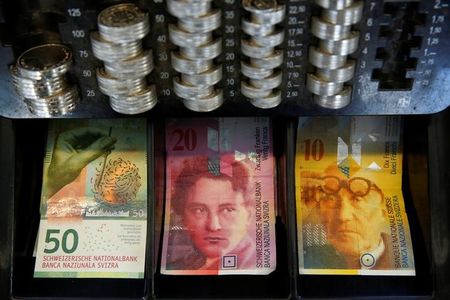
BofA expects USD/CHF selling pressure as month-end approaches

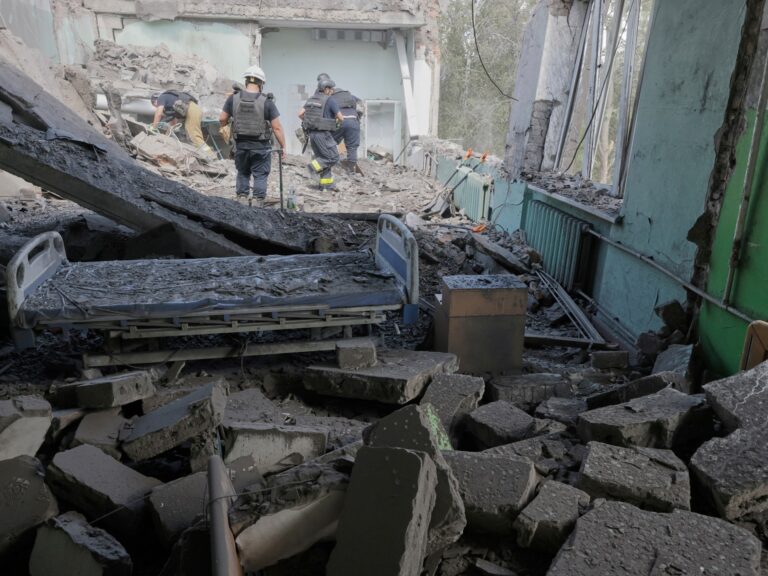
Russia’s relentless attacks on Ukraine’s healthcare: The ambulance-chasers of war

0

Kyiv, Ukraine – As luck would have it, emergency doctor Elina Dovzhenko was far enough from her vehicle when a Russian drone struck it, breaking the windshield and splattering pieces of shrapnel around.

It was getting dark on July 9 in the bombed-out, nearly-abandoned city of Kupiansk which sits less than 5km (3 miles) from the front line in the northeastern Ukrainian region of Kharkiv – and just 40km (25 miles) west of the Russian border.

But there was definitely enough light left for the Russian drone operator on the front line’s opposite side to see that Dovzhenko’s vehicle was a white ambulance with red stripes parked near a shelling-damaged hospital where she and her colleagues were.

“We heard the drone move, it swirled and swirled around [the building], then we heard the blast,” Dovzhenko, 29, told Al Jazeera.

She and her colleagues were shocked and angry – but not surprised. They have been hearing regularly about Russian drones targeting ambulances, rescue workers and the people they were rescuing, mostly the elderly who refused to leave their homes, pets, kitchen gardens and family graves.

“They chase ambulances every other day. They definitely targeted us,” Denys Raievskyi, a 30-year-old paramedic and Dovzhenko’s ambulance partner, told Al Jazeera.

Their job is among the most dangerous professions in wartime Ukraine – some 200 ambulances have been damaged or destroyed by Russian shelling attacks each year since the full-scale invasion began in 2022, the World Health Organization (WHO) said in April.

“Ambulance workers and other personnel servicing health transport face a risk of injury and death three times higher than that of other healthcare service workers,” it said.

Premeditated, systematic attacks on ambulances are part of the Kremlin’s wider strategy to destroy Ukraine’s medical facilities and deprive millions of access to healthcare exacerbating their stress as well as physical and mental health problems.

Some 68 percent of Ukrainians already report a decline in their health compared with the pre-war period, the WHO said, and 46 percent are concerned about their mental health.

The WHO did not specify the number of casualties among ambulance workers, but said that since 2022 it has verified 1,682 attacks on healthcare facilities and workers in Ukraine that have resulted in 128 deaths and 288 injuries of health professionals and their patients.

The ambulance damaged by a Russian drone in Kupiansk, Ukraine’s Kharkiv region, on July 9 [Project Hope/Al Jazeera]

Children in the line of fire

In an earlier assessment last August, it said the number of attacks was “the highest number WHO has ever recorded in any humanitarian emergency globally”.

“These attacks are a deliberate crime against humanity aimed at destroying civilians and those who stand on the front line fighting for [their] lives,” Ukraine’s Health Ministry said in July 2024.

The statement followed last year’s July 8 strike that killed two hospital workers, wounded eight children and injured hundreds in Okhmatdyd, Ukraine’s largest children’s hospital in Kyiv.

Russia used an X-101 missile that flies low to avoid detection and air defence, manoeuvres mid-flight and hits its target with a 10-metre (33ft) accuracy even if launched from 5,500km (3,420 miles) away.

Moscow routinely denies responsibility for deliberate attacks on healthcare, claiming it only strikes military sites and personnel.

International relief groups say they are aware of the gravity of the situation and are ready to keep supporting Ukraine’s healthcare.

“Unfortunately, these types of situation are not new,” Giorgio Trombatore, regional director for Eastern Europe with Project Hope, an international humanitarian group, told Al Jazeera. “But we are resilient, we’re going to continue.”

The group maintains 13 ambulances in four Ukrainian regions, five of them in Kharkiv – including the one struck by the drone in Kupiansk.

Other ambulances have also encountered drones in recent months, but the teams were not hurt.

“That’s something you cannot escape; eventually you need to be prepared,” Trombatore said. “Luckily, we didn’t report casualties from our team.”

His group also provides helmets and flak jackets, and some of the ambulances are bulletproof – something that helps counter Russia’s tactic of repeated strikes.

In one case, a Russian drone attack killed a civilian and wounded another in the village of Stetsivka in the northern region of Sumy on July 14.

After the ambulance team, supported by Project HOPE, arrived, a second drone exploded 2 metres (7ft) away from the vehicle.

“What saved them is that the vehicle was bulletproof,” Project HOPE’s spokesman Artem Murach told Al Jazeera.

Ukraine children's hospital
A view of the damage to Okhmatdyt children’s hospital in Kyiv, Ukraine, on Saturday, September 14, 2024. The hospital was destroyed during a Russian missile strike on July 8 [Anton Shtuka/AP]

‘Hope and faith’

The city of Kupiansk straddles both banks of the slow and strategically-located Oskil river, and once boasted a dozen factories, several colleges and a population of 22,000.

But days after the full-scale invasion of Ukraine began in 2022, the mayor surrendered the town and it became the de facto administrative centre of the Moscow-occupied chunk of the Kharkiv region.

The Russians were kicked out six months later during a daring Ukrainian counter-offensive.

But the town remained within reach of Russian artillery, drones and missiles, which have killed dozens of civilians, wounded hundreds and damaged almost every building.

Most of the residents – along with police officers, fire brigades and government officials – fled Kupiansk in early 2023 when Russian forces began approaching again.

But about 1,200 people – or about 7 percent of the pre-war population – remained.

“They’re scared to leave, they have no relatives to host them, they say, ‘I’d better die here, because it’s home,’” paramedic Raievskyi said.

He is no stranger to Russian pummelling – he lives with his wife in Saltivka, the most shelling-damaged region of Kharkiv, Ukraine’s second-largest city some 120km (75 miles) east of Kupiansk.

Raievskyi’s ambulance travels up to 1.5 hours to help the sick and the wounded, despite the almost constant shelling and omnipresent drones.

But no matter how severe their wounds are, he and his colleagues can’t treat their patients on the spot, especially if they have been hurt by a drone, because another strike is always a possibility.

One life-saving solution – a portable electronic jamming system that scrambles the drones’ navigation systems – no longer works in the Kharkiv region because Russians attach kilometres-long fibre-optic cables to their loitering munitions.

“Unfortunately, in Kupiansk all the Russian drones are fibre-optic,” his partner Dovzhenko said.

Mercedes-Benz introduces $60,000 luxury sedan with in-car camera for Teams meetings

0

Mercedes-Benz and Microsoft have teamed up to bring you more meetings. Now, with
“in-car productivity” you can join a Teams meeting while you drive to and from work.

The German automaker said its 2026 luxury sedan CLA model includes an in-car camera that allows Microsoft Teams meeting participants to see drivers that are streaming while on the road. The feature marks the latest attempt from Mercedes-Benz to offer “an even more efficient way to work within the vehicle,” according to the carmaker’s announcement. The $60 billion carmaker aims to revolutionize its in-house developed multimedia operating system that powers the central display screen in the new model. Pricing is expected to range from $55,000 to $65,000, depending on trim and options, according to Car and Driver.

The CLA is the first model of a completely new family of vehicles to utilize the technology, a Mercedes-Benz spokesperson told Fortune. The Meetings app for Teams was already available in previous car models—but the in-car camera used to display drivers in meetings is the first of its kind. The camera is built into the screen, above the central display. However, when the car is in motion, drivers can’t see the meeting but colleagues and bosses can see the driver. After pressing the gas, the driver sees a speaker’s contact icon, as if they were just in a hands-free phone call. The feature differs from Tesla’s in-car Zoom meeting feature, which requires the car to be in park for the video feature to display the driver.

The automaker will start the process of integrating the update of the Meetings app this summer for cars with the fourth-generation Mercedes-Benz User Experience (MBUX) initially in Europe and later this year in the U.S., according to the spokesperson. Vehicles with the third-generation MBUX will also receive these features soon.

To be sure, the video stream projected on the central display turns off automatically, as soon as the vehicle is in motion, to “minimize distraction and maximize safety,” the spokesperson said. This prevents drivers from viewing slides, shared screens or other participants of the meeting. 

Yet, the safety feature doesn’t stop them from being able to listen and contribute to a meeting, like any other hands-free phone call. 

The updated Meetings app comes with features including quick access to favorite contacts, the ability to jump directly from the calendar into a Teams meeting, an expanded chat function for reading and writing messages, and the integration of voice control for text input, the Mercedes-Benz spokesperson said. 

The National Transportation Safety Board says crash data and research indicate personal electronic devices, such as cell phones and tablets, are one of the greatest contributors to driver distraction, and calls distracted driving a “public health problem.”

“Hands-free is not risk free,” the NTSB said, adding that hands-free use of devices do not reduce driver distraction, but rather contribute to “cognitive distraction.”

The National Highway Traffic Safety Administration recognizes three categories of distracted driving: visual, manual, and cognitive distraction. Cell phones and navigation devices are “often the culprit when it comes to distracted driving,” according to the NHTSA. In 2023, 3,275 people were killed in distraction-affected crashes, according to the federal agency.

The built-in camera is used for other functions including tracking the driver’s eye movement, “to prevent the driver from distraction when the co-driver is watching video streaming content or gaming while on the move,” the spokesperson said.

No state has implemented the NTSB’s recommendation for a ban on the use of all personal electronic devices while driving except in case of emergency.

“Given the Mercedes-Benz’s commitment on safety, the use of the camera abides by the laws of each country and has been approved for use on the move,” the spokesperson said.