


Boeing's St. Louis union workers reject latest offer and will strike on Monday
Summer McIntosh Opts Out of 2026 Commonwealth Games to Concentrate on 2026 Pan Pacs
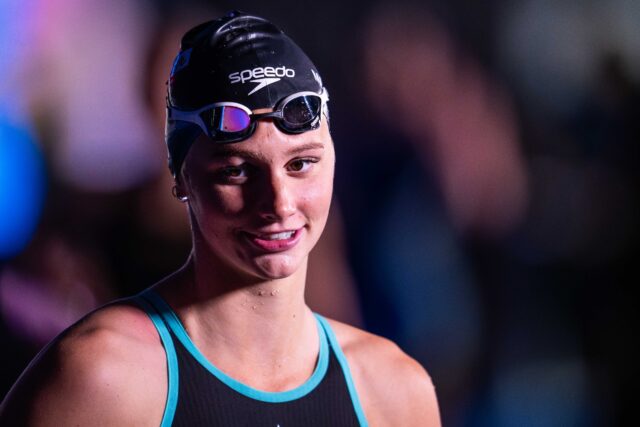
By Anya Pelshaw on SwimSwam

Canadian superstar Summer McIntosh will skip the 2026 Commonwealth Games, according to The Sydney Morning Herald. She instead will focus on the 2026 Pan Pac Games.
The 2026 Commonwealth Games are scheduled for July 23-August 2 in Glasgow, Scotland. This is just ten days before the 2026 Pan Pacific Championships begin in Irvine, California on August 12 and run through August 15. Glasgow is eight hours ahead of Irvine, so the time change would have been one obstacle.
McIntosh did swim at the 2022 edition of the Commonwealth Games in Birmingham, England when she was 15 years old. There she swam to gold medals in the 200 IM and 400 IM, setting World Junior records in the process. She also swam to a silver medal in the 400 free, finishing behind Australia’s Ariarne Titmus.
Not only will McIntosh impact Canada’s medal table at the individual level but her absence takes a hit on relays as well. She helped the team to silver medals in the 4×200 free relay and 4×100 medley relay while the 4×100 free relay earned bronze.
Pan Pacs in Irvine will mark McIntosh’s debut at the Pan Pac Championships as the last edition of the meet was in 2018, when McIntosh was just 11 years old.
This past week at the 2025 World Championships, McIntosh swam to four gold medals, winning the 400 free, 200 IM, 400 IM, and 200 butterfly. She also won bronze in the 800 freestyle.
McIntosh is set to change her training base as she will join Bob Bowman in Austin, Texas later this month. Austin is only two hours ahead of Irvine, California. It also is just over a three hour plane ride to get from Austin to Los Angeles, much closer than the trip from Austin to Glasgow.
Read the full story on SwimSwam: Summer McIntosh To Skip 2026 Commonwealth Games, Focus On 2026 Pan Pacs
Lung Preservation Uncovers Insights into 1918 Flu Genome
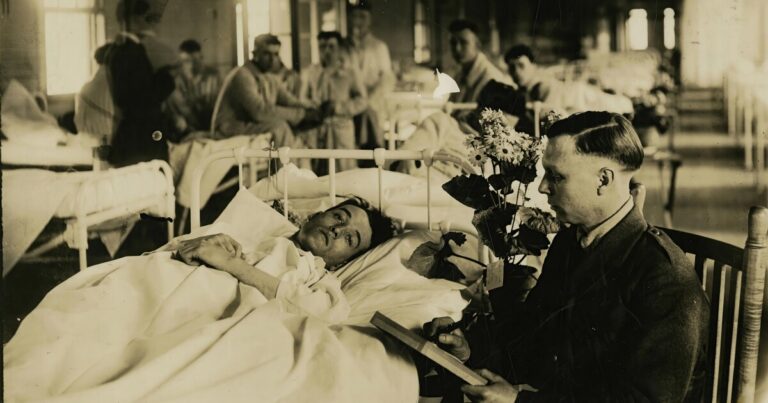
The preserved lung of an 18-year-old Swiss man has been used to create the full genome of the 1918 “Spanish flu,” the first complete influenza A genome with a precise date from Europe. It offers new insights into the deadly pandemic that claimed the lives of up to 100 million people.
An international research team led by the University of Basel has applied cutting-edge technology to extract traces of the virus from the formalin-preserved organ taken from the man who died of severe pneumonia at the Cantonal Hospital (now University Hospital) in Zurich. The teen’s lung had been kept in a university medical collection since his death in July 1918, during the first wave of the pandemic.
“This is the first time we’ve had access to an influenza genome from the 1918 to 1920 pandemic in Switzerland,” said Verena Schünemann, a paleogeneticist and professor of archaeological science at the University of Basel. “It opens up new insights into the dynamics of how the virus adapted in Europe at the start of the pandemic.”
Using a new RNA-sequencing protocol designed to extract genetic data from degraded, chemically fixed tissue, and comparing the completed genome with ones from Germany and North America, the team was able to show that this strain of the virus already had three important adaptations. These made it more deadly to humans – and they’d remain in the virus makeup until the pandemic’s end.
Two of the mutations helped the virus evade a key part of the human immune system known as MxA, an antiviral protein that normally blocks influenza from replicating. This protein is especially important in defending against bird-origin influenza viruses, so these changes made it easier for the virus to spread between humans.
The third mutation altered the shape of a surface protein called hemagglutinin, which the virus uses to attach to and enter human cells. This made the virus better at recognizing and binding to human-specific cell receptors, increasing its infection efficiency.
These mutations were previously thought to emerge later in the pandemic – so their presence in Switzerland’s first wave in spring 1918 suggests the virus had evolved rapidly and was widespread even before the pandemic’s second and most lethal wave in the fall.
Interestingly, the Zurich virus also showed unusual genetic diversity in its polymerase (PB2) segment, suggesting either strong natural selection or mixing between viral strains. When compared to, for example, 2009’s H1N1 virus, the 1918 bug had higher variability in key genes linked to replication and host adaptation. It also shows how quickly influenza viruses can adapt to bind to receptors in humans and evade immune system takedowns.
Not surprisingly, these rapid adaptations were also a hallmark of the coronavirus at the center of our most recent pandemic.
One of the most exciting parts of the study is the process by which the team was able to build this historic genome. Until now, this kind of wet specimen preserved in formalin had been considered unsuitable for RNA analysis. But the comprehensive genetic data that the researchers were able to extract from the lung tissue opens the door to unlocking the DNA secrets held in thousands of jars in medical and zoological collections around the world.
“Ancient RNA is only preserved over long periods under very specific conditions,” said Christian Urban, the study’s first author. “That’s why we developed a new method to improve our ability to recover ancient RNA fragments from such specimens.”
The researchers’ ligation-based method is able to capture shorter genetic fragments, and also preserves RNA strand orientation. And by discovering the kind of adaptations seen in viruses at the center of past pandemics, researchers can gain valuable evolutionary clues that can better prepare us in tackling future outbreaks. Seeing how viruses spill over from animals to humans will also be key in developing vaccine targets.
“A better understanding of the dynamics of how viruses adapt to humans during a pandemic over a long period of time enables us to develop models for future pandemics,” Schünemann said.
The study was published in the journal BMC Biology.
Source: University of Basel
Woman from New Zealand arrested following discovery of two-year-old in luggage

A woman in New Zealand has been arrested after a two-year-old girl was found in her luggage while she was travelling on a bus.
Police said officers were called to a bus stop in Kaiwaka, a small town in the north of the country, on Sunday after a passenger asked for access to the luggage compartment.
“The driver became concerned when he noticed the bag moving. When the driver opened the suitcase, they discovered the two-year-old girl,” New Zealand Police said a statement.
The woman, 27, has been arrested and charged with ill-treatment/neglect of a child.
“The little girl was reported to be very hot, but otherwise appeared physically unharmed,” police said.
She has been taken to hospital, where she is undergoing medical assessment, they added.
The relationship between the woman and the child has not been disclosed.
The woman is due to appear in the North Shore District Court on Monday.
“We would like to acknowledge and commend the bus driver, who noticed something wasn’t right and took immediate action, preventing what could have been a far worse outcome,” police said.
Erika McEntarfer, the former BLS head fired by Trump, receives bipartisan support from JD Vance and Marco Rubio in her 2024 confirmation.
The head of the agency that compiles the closely watched monthly jobs report usually toils in obscurity, but on Friday, the current holder of that job was loudly fired by the president of the United States.
Erika McEntarfer, a longtime government employee, bore the brunt of President Donald Trump’s unhappiness with Friday’s jobs report, which showed that hiring had slowed in July and was much less in May and June that previously estimated. He accused her without evidence of manipulating the job numbers and noted she was an appointee of President Joe Biden.
McEntarfer, a longtime government worker who had served as BLS head for a year and a half, did not immediately respond to a request for comment by The Associated Press. But her predecessor overseeing the jobs agency, former co-workers and associates have denounced the firing, warning about its repercussions and saying McEntarfer was nonpolitical in her role.
Here’s what to know about Erika McEntarfer:
McEntarfer has a strong background on economics
McEntarfer, whose research focuses on job loss, retirement, worker mobility, and wage rigidity, had previously worked at the Census Bureau’s Center for Economic Studies, the Treasury Department’s Office of Tax Policy and the White House Council of Economic Advisers in a nonpolitical role.
She has a bachelor’s degree in Social Science from Bard College and a doctoral degree in economics from Virginia Polytechnic Institute and State University.
She was confirmed as BLS head on a bipartisan vote
McEntarfer was nominated in 2023 to serve as BLS head, and the Senate Committee on Health, Education, Labor and Pensions recommended that her nomination go to the full Senate for a vote.
She was confirmed as BLS commissioner in January 2024 on a bipartisan 86-8 Senate vote. Among the Republican senators who voted to confirm her included then-Sen. JD Vance of Ohio, who is now Trump’s vice president, and then-Sen. Marco Rubio of Florida, who is now Trump’s secretary of state.
Before her confirmation hearing, a group called the Friends of the BLS, made up of former commissioners who served in both Democratic and Republican administrations, members of statistical associations and credentialed economists, said McEntarfer’s background made her a great choice for the job.
“The many reasons to quickly confirm Dr. McEntarfer as the new BLS Commissioner all boil down to this: the agency, like the entire statistical system, is undergoing an intense, significant period of change and Dr. McEntarfer’s wealth of research and statistical experience have equipped her to be the strong leader that BLS needs to meet these challenges,” Friends of the BLS wrote.
Her former associates and co-workers decry her firing
William Beach, who was appointed BLS commissioner in 2019 by Trump and served until 2023 during President Joe Biden’s administration, called McEntarfer’s firing “groundless” and said in an X post that it “sets a dangerous precedent and undermines the statistical mission of the Bureau.”
Former Labor Department chief economist Sarah J. Glynn, who received regular briefings from McEntarfer about BLS findings, said McEntarfer was generous with her time explaining what conclusions could or couldn’t be reached from the data.
If the data didn’t support something an administration official was saying, McEntarfer would say so, Glynn said. She also never weighed in on how the administration should present or interpret the data, Glynn said — she would simply answer questions about the data.
“She had a sterling reputation as someone who is concerned about the accuracy of the data and not someone who puts a political spin on her work,” Glynn said.
Heather Boushey, a senior research fellow at Harvard University, served with McEntarfer on the White House Council of Economic Advisers and said McEntarfer never talked politics at work.
“She showed up every day to focus on the best analysis and the best approach to her field and not get political. That is what I saw from her time and again. She is brilliant and well-respected among labor economists generally,” Boushey said. “She wasn’t coming into my office to talk politics or the political implications of something. She definitely wasn’t engaging on that side of things.”
What is Trump’s stance on Israel’s treatment of Palestinians in the Israel-Palestine conflict?
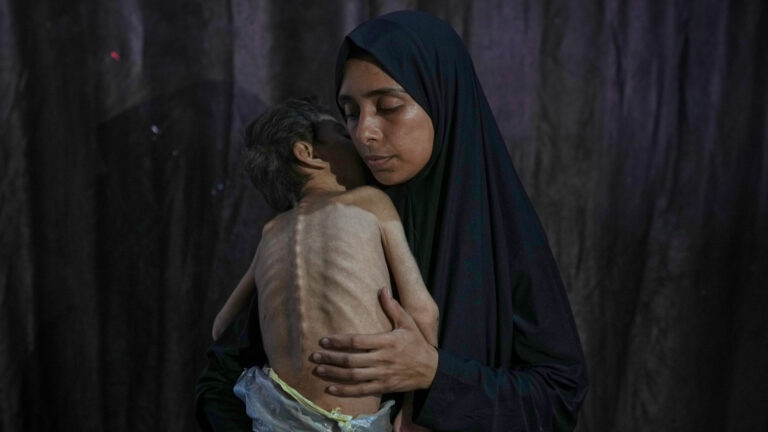
Western nations discuss Palestinian statehood, but Israel’s policy to starve the Palestinians in Gaza remains intact.
Despite some pushback from his party to deal with the genocide of Palestinians in Gaza – especially Israel’s starvation policy – the US governing Republican Party remains unmoved.
Republicans overwhelmingly support Israel’s tactics against the Palestinians, as support for Israel plummets among Independent and Democratic voters.
Trump says he wants more food to reach Gaza via the militarised distribution mechanism, the GHF. But he criticised Western countries that spoke of diplomatic moves, such as recognising Palestinian statehood.
Host Steve Clemons speaks with Republican analyst Mark Pfeifle and Democratic analyst David Bolger on Trump’s political calculations on Middle East policy.
Universal Music Group’s Q2 revenue reaches $3.38bn, showing a 4.5% YoY increase thanks to top artists like Morgan Wallen, timelesz, and Lady Gaga.
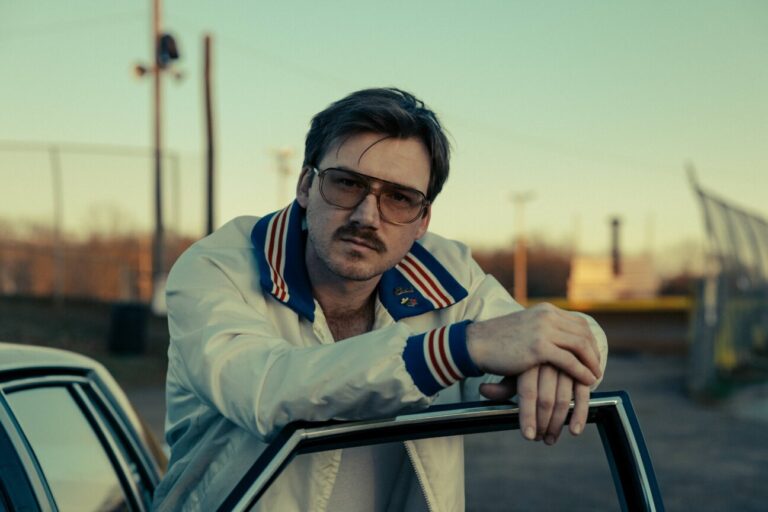
Universal Music Group generated revenues of €2.980 billion ($3.38bn) across all of its divisions (including recorded music, publishing and more) in Q2.
That’s according to UMG’s fresh set of quarterly results, published today (July 31).
They reveal that UMG’s overall Q2 revenue figure was up 4.5% YoY at constant currency, driven, according to UMG, by growth in the Recorded Music and Music Publishing segments.
Adjusted EBITDA weighed in at €676 million ($766m) – a margin of 22.7%.
One big highlight from UMG’s latest results was the company’s recorded music subscription streaming revenues, which grew 8.5% YoY at constant currency to reach €1.197 billion ($1.36bn) in Q2.
Commenting on the Q2 earnings announcement, UMG’s Chairman and CEO, Sir Lucian Grainge, said: “It is the powerful combination of our artists’ and songwriters’ creative excellence with our strategic vision and execution that continues to deliver UMG’s strong results.”
Boyd Muir, UMG’s COO, added: “The breadth and diversity of our business has positioned us to deliver solid growth in revenue and Adjusted EBITDA again this quarter.
“We remain confident in our growth trajectory as we continue to invest with a focus on maximizing long-term value and driving attractive returns in the coming years.”

RECORDED MUSIC
Universal’s overall Recorded Music revenue for the second quarter of 2025 was €2.224 billion ($2.52bn), up 3.9% YoY at constant currency.
Within the Recorded Music segment, UMG’s ‘Subscription and streaming revenues’ (including ad-supported and subscription streaming revenues) grew 8.7% YoY at constant currency to €1.555 billion ($1.76bn).
Breaking UMG’s recorded music streaming figure down further reveals that the company’s subscription streaming revenues specifically grew 8.5% YoY at constant currency to reach €1.197 billion ($1.36bn), driven primarily, according to UMG, “by the growth in global subscribers”.
Universal’s ad-supported recorded music streaming revenue, meanwhile, grew 9.1% YoY at constant currency to reach €358 million ($406m). According to UMG, this result was “supported by growth on several major platforms and an easier comparison”.
Within Universal’s recorded music business, Physical revenue decreased 12.4% YoY at constant currency to €310 million ($352m), due, according to UMG, to “a difficult comparison against last year’s strong release schedule”.
‘License and other’ revenue decreased 6.5% YoY at constant currency to €290 million ($329m), falling “on a difficult comparison against strong live and audiovisual revenue in the second quarter of 2024”.
Downloads and other digital revenue grew 50.0% YoY at constant currency to €69 million ($78m), due, according to UMG, to “a settlement with an internet service provider”.
Top sellers for the quarter included releases from Morgan Wallen, timelesz, Lady Gaga, Sabrina Carpenter and INI, while top sellers in the prior-year quarter included Taylor Swift, Billie Eilish, SEVENTEEN, Morgan Wallen and Ae! group.

MUSIC PUBLISHING
Universal’s overall Music Publishing revenue for the second quarter of 2025 was €570 million ($646.3m), up 14.5% YoY at constant currency.
Digital publishing revenue grew 16.2% YoY at constant currency to €351 million ($398m), due, according to UMG, to “the growth in streaming and subscription revenue”.
Performance revenue grew 13.3% YoY at constant currency to €111 million ($126m).
Synchronization revenue grew 11.9% YoY at constant currency to €66 million ($75m).
Mechanical revenue grew 7.7% YoY at constant currency to €28 million ($32m).
Other revenue grew 7.7% YoY at constant currency to €14 million ($16m).

MERCHANDISING AND OTHER
UMG’s ‘Merchandising and Other’ revenue in the second quarter of 2025 reached €192 million ($217.69m) in Q2, a decrease of 12.7% YoY at constant currency.
According to UMG, this decline was “on a difficult comparison that in the prior year benefited from very strong, release-driven direct-to-consumer sales”.

EBITDA ETC.
In Q2 2025, UMG’s EBITDA (earnings before interest, taxes, and depreciation) grew 8.5% YoY at constant currency to €611 million ($693m).
EBITDA margin expanded to 20.5%, compared to 19.8% in the second quarter of 2024.
Adjusted EBITDA for Q2 was €676 million ($766m), up 7.3% YoY at constant currency.
Adjusted EBITDA margin improved to 22.7% compared to 22.1% in the second quarter of 2024, “as a result of revenue growth, operating leverage and cost savings from the previously announced strategic organizational redesign”, said UMG.
UMG declared an interim dividend for the first half of 2025 of €440 million ($499m).
The dividend payment date will be on October 28, 2025.
All EUR-USD conversions made at the average rate of the relevant period according to the European Central BankMusic Business Worldwide
Aid group reports worker’s death in Israeli military attack on Gaza headquarters
 Palestine Red Crescent Society
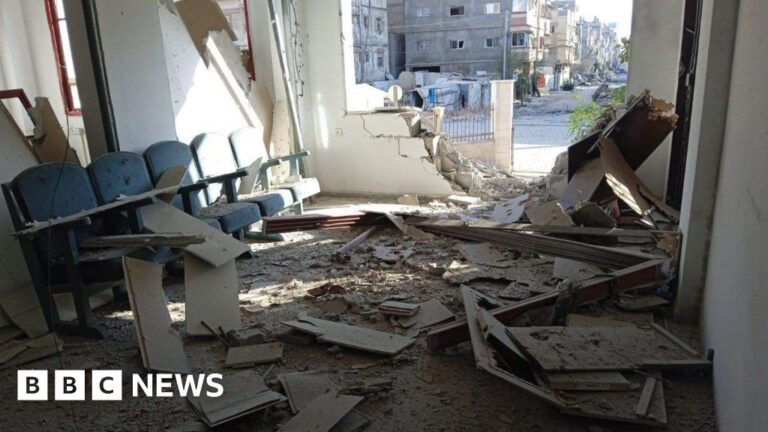
The Palestine Red Crescent Society (PRCS) has accused Israeli forces of attacking its headquarters in Gaza, killing one worker and injuring three others.
The humanitarian organisation said the attack “sparked a fire in the building” in the early hours of Sunday morning.
Describing the overnight attack on the facility in the southern city of Khan Younis as “deliberate”, the Red Crescent said its HQ’s location is “well known” to the Israeli military and is “clearly marked with the protective red emblem”.
The Israel Defense Forces (IDF) said it had “no knowledge about neither artillery nor any air strikes” when asked by the BBC about the accusation.
A video shared by the Red Crescent on social media showed parts of the building on fire and filled with clouds of smoke, while aftermath pictures showed heavy damage to the building and several large bloodstains.
In a statement, the aid agency named the killed worker as Omar Isleem and said it was “heartbroken” over his death. It said two other workers were injured, as well as a civilian who was trying to put out the fire.
“This was not a mistake,” the Red Crescent added. “We renew our call for accountability and for the protection of all humanitarian and medical personnel.”
The incident comes as warnings about the humanitarian situation in Gaza grow. Latest figures from the United Nations indicate that at least 1,373 Palestinians have been killed seeking food since late May.
The majority have been killed by the Israeli military near Israeli and US-backed Gaza Humanitarian Foundation (GHF) distribution sites, the UN says. The GHF denies the UN’s figure of at least 859 killed in the vicinity of its sites.
Israel has accused Hamas of instigating chaos near the aid centres and says its forces do not intentionally open fire on civilians.
Meanwhile, Egyptian state media has reported that two lorries containing much-needed fuel are waiting to enter Gaza.
Medics have been warning of shortages in vital medical facilities for weeks, after Israel began a months-long blockade of all aid and goods into Gaza.
This has since been partially lifted, but humanitarian agencies have said more aid must be allowed to enter to Gaza to prevent famine and malnutrition worsening.
The Hamas-run health ministry said 175 people, including 93 children, have died from malnutrition.
Israel denies it is deliberately blocking aid flowing into Gaza and accuses the UN and other aid agencies of failing to deliver it.
The IDF launched a campaign in Gaza in response to the Hamas-led attack on southern Israel on 7 October 2023, in which about 1,200 people were killed and 251 others were taken hostage.
More than 60,000 people have since been killed in Gaza, according to the health ministry.
Client Challenge: Overcoming Obstacles to Success

A required part of this site couldn’t load. This may be due to a browser
extension, network issues, or browser settings. Please check your
connection, disable any ad blockers, or try using a different browser.
80 Years Later, Art Still Requires the ‘Courage to Be Afraid’
なにもかもなくした手に四まいの爆死証明
なにもかもなくした手に
四まいの爆死証明
I have lost everything;
in my hand,
four atomic bomb death certificates
— Atsuyuki Matsuo, 1945
debug view
HIROSHIMA, Japan — For a few years, now, I’ve been turning over in my head one brief scene in a beautiful movie.
It comes two hours into “Drive My Car,” Ryusuke Hamaguchi’s Oscar-winning 2021 masterpiece of bereavement and artistic inspiration, when a troupe of actors steps outside the theater to rehearse in the fresh air. It is autumn. Leaves crunch beneath the feet of two actresses as they play one of the tenderest scenes of “Uncle Vanya.” They’d been struggling, up to now, as they recited Chekhov’s lines about sorrow and stagnation: lives not lived, dreams squelched and dreams maintained. But here in the park something clicks. We must live. The show must go on.
It’s never made explicit why this outdoor rehearsal unlocks the core of Chekhov — how this park, for these actors, opens a whole universe of grief and endurance. For a Japanese audience, at least, there was no need.
The park is the Hiroshima Peace Memorial Park, designed in 1954 by the great modernist architect Kenzo Tange. On Aug. 6, 1945 — 80 years ago this week — a new kind of bomb detonated, almost silently, some 1,900 feet overhead. The scene from “Drive My Car” came back to me when I stood, in a pouring rain, on the spot where it was filmed. Anyone standing there in 1945 was killed immediately; then came the fires, and the fallout. It started raining in the first days after Aug. 6 as well: viscous black drops, heavy with soot and debris. The survivors drank it desperately in the ruins of Hiroshima. The raindrops were radioactive.
“A scientific event,” wrote the painter Wassily Kandinsky in 1913, “removed one of the most important obstacles from my path. This was the further division of the atom. The collapse of the atom was equated, in my soul, with the collapse of the whole world.” At the start of the last century, after Ernest Rutherford, Pierre and Marie Curie, and Albert Einstein began to unravel the mysteries of nuclear physics, a periodic table of artists, authors and philosophers grew fixated on this new science’s cultural repercussions. Suddenly, the permanence of matter (the permanence of history, perhaps) appeared like an industrial relic. Objects that seemed stable actually vibrated with energy. Nuclear physics was confirming a suspicion, one at the core of modern art and literature, that the things we see are less solid than they look.
“Everything became uncertain, precarious and insubstantial,” Kandinsky had said.
I had come to Hiroshima to try to see, and to feel, where that argument led. The Peace Memorial Museum, crowded but quiet, showed the side of atomic power Kandinsky could not have envisioned. Metal fused with debris in ungodly heat. Singed student uniforms; singed children’s dresses. There is a six-panel folding screen, donated just recently by a Hiroshima family, whose gold expanses are streaked by black rain: the most terrifying abstract painting I have ever seen.
Modern art’s atomic optimism vanished outside a bank building in this city, about 850 feet from the hypocenter — its steps darkened by the permanent shadow of someone who died there, instantly, in heat that reached 7,000 degrees Fahrenheit or more. When the painter Yves Klein saw those steps in a documentary, he was moved to create one of his ghostly impressions of bodies in his signature blue. In a panorama called “Hiroshima” (circa 1961), the bodies of his models have receded from bright blue to ashy white. Flesh became negative space. “Everything physical and material could disappear from one day to another,” said Klein, “to be replaced by nothing but the ultimate abstraction imaginable.”
かぜ、子らに火をつけてたばこ一本
かぜ、子らに火をつけて
たばこ一本
The wind.
I light my children’s funeral pyre,
and then a cigarette
debug view
The ultimate abstraction: It is closer than you think.
In the decades after Aug. 6, 1945 — and the second bomb, dropped three days later on Nagasaki — the domains of painting, cinema and literature committed to envisioning the doomsday scenarios of mutually assured destruction.
“On the Beach,” following the last survivors of a third world war waiting for the radiation to reach Australia, turned melodrama into a radioactive genre. “Dr. Strangelove,” literalizing the paranoia and psychosis of nuclear confrontation, confirmed our daily survival as nothing but a black comedy. George Orwell, Philip K. Dick and Kim Stanley Robinson imagined life, or what was left of it, after atomic Armageddon. They were nuclear Cassandras. They found our institutions, our leaders, as unstable as plutonium.
Now, 80 years after Hiroshima, we have blundered into a new age of nuclear perils. In 2022, after Russia invaded Ukraine, President Joseph R. Biden Jr. said that the planet faced the greatest risk of nuclear confrontation since the Cuban Missile Crisis. Earlier this year President Trump’s director of national intelligence, Tulsi Gabbard, warned that we stand “closer to the brink of nuclear annihilation than ever before,” drawing a rebuke from the president. The U.S. and Israel bombarded Iran’s nuclear development sites in June. North Korea continues to modernize its nuclear-capable forces, while China is expanding its own arsenal so swiftly that students of deterrence must now account for three, not two, nuclear superpowers. The last arms control treaty between the U.S. and Russia is set to expire in just six months. The very principle of arms control may die with it.
All this with remarkably little outcry: little in our politics, less still in our culture. There were no “Daisy Girl” or “3 a.m. phone call” ads during last year’s presidential campaign. The bookshops and streaming studios fob off the burden for our own extinction onto outside antagonists: zombie invasions and errant asteroids and, most recently, killer A.I. There remain an estimated 12,000 nuclear warheads on earth today, per the Federation of American Scientists, and yet we have let the bomb be absorbed back into World War II dad history. An endless river of Manhattan Project dramatizations has conveyed some morally serious works, like John Adams’s opera “Doctor Atomic”; more often, from the TV series “Manhattan” to the self-satisfied “Oppenheimer,” I struggle to distinguish Hollywood offerings from Department of Energy propaganda.
I needed to come here, to Peace Memorial Park, to learn again how artists envisioned what we have been refusing to face — how they put into words, and images, our intertwined capacities for self-destruction and self-delusion. This is a city whose very name once authoritatively established a “nuclear taboo,” which was the political scientist Nina Tannenwald’s term for the implicit norm in all nuclear states not to launch a weapon. But the name “Hiroshima” has grown fainter, its impact weaker, and last month the Japanese health ministry reported that the number of survivors of the attacks here and in Nagasaki dropped below 100,000 for the first time.
To survive this second nuclear age we are going to need models from the first one: artists who faced up to what the bomb did, and what the bomb made of us.
あわれ七ヶ月の命の花びらのような骨かな
あわれ七ヶ月の命の
花びらのような骨かな
She was just
seven months old. Bones
like flower petals
debug view
Immediately after V-J Day, Americans looked to Hiroshima more in awe than in anguish or anger. The fundamental form of Aug. 6 was the mushroom cloud: an abstract amazement seen from miles above, miles away. Artists and scientists alike had misgivings about the Truman administration’s justifications for the destruction of Hiroshima, to say nothing of Nagasaki. But the bomb itself was a thing of wonder.
Barnett Newman, the Abstract Expressionist painter, would argue that Hiroshima was a moral summons with an aesthetic corollary: to boil art down to its tragic essence. The bomb, wrote Newman in 1948, “has robbed us of our hidden terror, as terror can exist only if the forces of tragedy are unknown. We now know the terror to expect. Hiroshima showed it to us.”
Detail would dissolve. The picture would become speechless. Newman, Rothko, de Kooning, Reinhardt: American postwar painting took on techniques of amorphousness and disintegration, laden with humanistic and universalist rhetoric, in part as a mirror of the bomb. Asked to justify his canvas-covering drips, Jackson Pollock told an interviewer in 1950, “The modern painter cannot express this age, the airplane, the atom bomb, the radio, in the old forms of the Renaissance or of any other past culture.”
With the exception of John Hersey’s “Hiroshima,” a work of reportage published as a special issue of The New Yorker in 1946, nuclear destruction was initially seen at a bird’s-eye view. Which was hardly just a matter of squeamishness. From 1945 to 1952, American occupying forces strictly censored images of the two destroyed cities. U.S. Army photographs of Hiroshima were clinical, depopulated documents. What civilians endured could not be seen; the photographer Yosuke Yamahata, who rushed to Nagasaki in the first hours after the attack, did not publish his records of blackened corpses and shellshocked children for seven years.
Hiroshima and Nagasaki remained invisible, in those first years, not only because of what the bomb did but what the bomb announced: a new stage of history, in which technology had removed human survival from human will.
Atsuyuki Matsuo was a high school teacher in Nagasaki, and in his leisure time he wrote haiku in a modern style that did not conform to the typical structure of five, seven, five syllables. On Aug. 9, 1945, he was exposed to the second bomb while working at a food distribution site by the port. He made it home, through the fires, at midnight. Two of his children had already died. A third succumbed the next day. His wife died within the week. Yet when he tried to publish his poetry about the blast in a Nagasaki journal in 1946, the editors told him no.
The occupation’s press codes were only the half of it. In the “dark era” of the first postwar decade, hibakusha (“bomb-affected people”) received no official recognition, and no medical relief. Survivors faced social discrimination for decades. To read Matsuo’s haiku, then, with its autumn clouds, its meager rice rations, its dragonflies buzzing above his dead sons and daughter, was to fear that the Japanese language itself had been irradiated — as if the poet’s invocations of the moonlight or the changing seasons divulged a larger contamination of literature and history.
So what Matsuo was doing, in his “A-Bomb Haiku,” was less public testimony than private grief work. He took the distanced gaze of the verse form, which poets since Basho had used to transcend the passions, and turned it in 1945 into a strategy for survival. Matsuo was keeping faith, in the privation of the postwar landscape, with the rigor and precision of language. He was wrenching uncontainable anguish into the strictures of Japanese poetry, in the hope that, through art, a ruined life might be still livable.
For almost a decade, Matsuo and Japan’s other artist-survivors worked in shadow. What made their grief politically palpable was another nuclear explosion, conducted once again by the Americans, a thousand times more powerful than the two they had survived. That was Castle Bravo, the disastrous U.S. hydrogen bomb test at Bikini Atoll on March 1, 1954, which spewed radioactive fallout — “ashes of death,” as the Japanese said — across 7,000 square miles. Twenty-three crew members of a Japanese fishing vessel succumbed to acute radiation sickness. In Japan, just two years after the end of American occupation, the outrage of Castle Bravo spurred a nationwide movement to ban nuclear weapons, and led to the first World Conference against Atomic and Hydrogen Bombs, in Hiroshima in 1955.
Hiroshima and Nagasaki, in other words, re-emerged in Japanese art in the shadow of a third mushroom cloud. Matsuo’s “A-Bomb Haiku” finally went into print in 1955. The painters Iri and Toshi Maruki, in the same year, added a folding screen of anti-nuclear demonstrators to their series of “Hiroshima Panels.” “Still, It’s Good to Live,” directed by Fumio Kamei in 1956, was the first documentary of life in postwar Hiroshima, intercutting orphanage rehabilitation programs with rallies against nuclear proliferation.
Three years later, the French director Alain Resnais would borrow footage from Kamei’s documentary for the opening sequences of his first feature, “Hiroshima Mon Amour.” The movie lingers over the scorched girders in the new Peace Memorial Museum as its French and Japanese lovers embrace and argue. It pauses before the bank steps with the shadow of the vanished man. It was the film that launched the French New Wave. The cinema was reborn, in 1959, from radiation.
降伏のみことのり、妻をやく火いまぞ熾りつ
降伏のみことのり、
妻をやく火いまぞ熾りつ
The imperial edict of surrender.
The fire that burns my wife
now flares
debug view
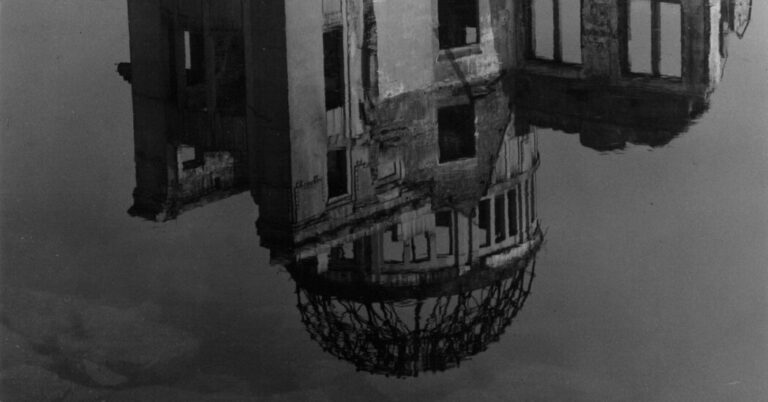
Across the river from the Peace Memorial Park, I stood in the rain in front of the most recognizable monument in Hiroshima: the steel-ribbed A-Bomb Dome, or what remains of the only building that remained standing this close to the hypocenter. You see it in the last moments of “Drive My Car,” a symbol for living on through the void, sheathed in scaffolding as the sun sets over the river. For 80 years now it has stood alone by the riverside, its denuded dome appearing like the canopy of an umbrella.
These days, you can’t go inside. But the young photographer Kikuji Kawada walked into the dome in July 1958, while on assignment here for a newsmagazine. He saw a collection of anomalous stains burned into its exposed walls — the stains of its carbonized occupants, turned now into swirling, roiling whirlpools on the stone. Unsettled, spellbound, gripped by a duty to witness, Kawada would return for years afterward to the A-Bomb Dome, photographing the stains in the raw, high-contrast black-and-white that would come to characterize Japanese photography.
The stains form the core of Kawada’s “Chizu (The Map)”: a book of photos first published in 1965, and to my eye one of most monumental achievements in 20th-century art. The images ripple and puddle, full of fear and formlessness, but they’re interwoven with mementos of Japanese families and records of the American occupation. (A crushed box of cigarettes in Hiroshima reads “Lucky Strike,” a brand name with a dreadful double meaning.)
His photographs, which illustrate this essay, took on the impossible task of mourning inconceivable death, but there was a more universal topography in Kawada’s “Map,” a vision of extinctions still to come. The stains bled outward, onward, into what Kawada, now 92, called “one big world I found in Hiroshima.”
In America, by contrast, the bombs that gripped artists in the 1960s and 1970s were not the ones the nation had dropped but the ones aimed its way. “Seven Days in May,” a 1962 novel and 1964 movie, proposed a too-plausible American coup d’état by generals opposed to U.S.-Soviet disarmament. “Fail Safe,” Sidney Lumet’s 1964 thriller of an accidental nuclear war, begins with a miscommunication and ends with the incineration of New York City. Like “On the Beach” and “Dr. Strangelove,” these were prospective nightmares, in which popular entertainment took on the moral responsibility that government seemed to have abdicated.
Later on, in the Reagan era, American artists and writers who had spent their school days hiding underneath desks came to the forefront of campaigns against nuclear weapons. Jessye Norman and Itzhak Perlman performed against nukes on the stage of Avery Fisher Hall. A genre-spanning coalition of Performing Artists for Nuclear Disarmament — Trisha Brown and Meryl Streep and Harry Belafonte — staged rallies and plays for arms abolition. The animated films of Hayao Miyazaki, now classics in both Japan and the United States, brimmed with antinuclear sentiment. Even cheesy popcorn movies seemed like acts of deterrence, whether “WarGames” (1983), with the young Matthew Broderick as a hacker who nearly triggers World War III, or “Superman IV: The Quest for Peace,” in which Christopher Reeve faced off with Nuclear Man.
Much of that ended when the (first) Cold War came to a close, and practically disappeared after the attacks of Sept. 11, 2001, downsized the nation’s anxieties from 25-megaton yields to 3 ounces of liquids. But nuclear weapons do not permit easy divisions into us and them; if destruction is mutually assured, then we must all live together or die together. I suppose that was what I was looking for, as I trundled through the rain from the cenotaph to Hiroshima Bay: the universal vulnerability that painters and writers and filmmakers discovered in this city, and turned from an incapacitation into a driving purpose. You begin from the past deaths you cannot represent. You confront the present absurdity you cannot even understand. You discover a future life still worth fighting for.
蕎麦の花ポツリと建てて生きのこっている
蕎麦の花ポツリと建てて
生きのこっている
The buckwheat is in flower.
A single stalk for a grave.
We have survived
debug view
You saw nothing in Hiroshima. Nothing. On the bullet train down from Tokyo, I started reading the work of Günther Anders, the foremost philosopher of humanity after Hiroshima. Too little known in the English-speaking world (you may know him as Hannah Arendt’s first husband), Anders was one of many German Jewish intellectuals who found refuge in the United States — and he was in New York on Aug. 6, 1945, when he heard the news on the radio with total incomprehension.
For years after he could not write. On one day, with one act, the core inquiry of philosophy for 2,500 years, the matter of how to live a good or righteous life, had been invalidated. “The basic moral question of former times must be radically reformulated” after Hiroshima, Anders would argue. “Instead of asking ‘How should we live?’, we now must ask ‘Will we live?’”
Anders came to conclude, in books such as “Hiroshima Is Everywhere,” that modern man had fallen into “a Promethean gap”: a chasm, grown wider by the year, between what our technologies can do and what we think they can do. Before Hiroshima, a Leonardo or a Voltaire could close his eyes and imagine futures far beyond contemporary capacities. The novelist, the opera composer, or the filmmaker could picture the end of the world as a low-risk cleansing fire presaging some purer rebirth. But as our destructive abilities have multiplied and Big Science got bigger, our cultural faculties failed to keep pace. “We are psychically unequal to the danger confronting us,” Anders wrote as early as 1956. And our principal moral failing, after Hiroshima, has been to neglect the development of our imagination — in the face of, or out of fear of, our final end.
The development of the imagination: This is one of art’s only functions. Generations of Americans were raised to fear fear itself. The writers and photographers and filmmakers who came to Hiroshima saw fear instead as a muse: saw how fear can draw universal dictates from a haiku’s specific adversities, how fear elevates a movie romance from a sob story into a call for action. As we slip into this second nuclear age, we have to put that fear in the service of something — to have “the courage to be afraid,” as Anders had it, and broaden our imagination to the scale of our arsenal. The alternative is to reduce our survival over the last 80 years to just dumb luck, and to tell the last remaining hibakusha, as some already are, that what they have endured and we still might is too much to imagine.