
A required part of this site couldn’t load. This may be due to a browser
extension, network issues, or browser settings. Please check your
connection, disable any ad blockers, or try using a different browser.

A required part of this site couldn’t load. This may be due to a browser
extension, network issues, or browser settings. Please check your
connection, disable any ad blockers, or try using a different browser.

US President Donald Trump said the tariff will not impact companies if they have already invested in US facilities.
United States President Donald Trump says he will impose a 100 percent tariff on foreign-made semiconductors, although exemptions will be made for companies that have invested in the US.
“We’ll be putting a tariff on of approximately 100 percent on chips and semiconductors, but if you’re building in the United States of America, there’s no charge, even though you’re building and you’re not producing yet,” Trump told reporters at the Oval Office on Wednesday evening.
The news came after a separate announcement that Apple would invest $600bn in the US, but it was not unexpected by US observers.
Trump told CNBC on Tuesday that he planned to unveil a new tariff on semiconductors “within the next week or so” without offering further details.
Details were also scant at the Oval Office about how and when the tariffs will go into effect, but Asia’s semiconductor powerhouses were quick to respond about the potential impact.
Taiwan, home of the world’s largest chipmaker TSMC, said that the company would be exempt from the tariff due to its existing investments in the US.
“Because Taiwan’s main exporter is TSMC, which has factories in the United States, TSMC is exempt,” National Development Council chief Liu Chin-ching told the Taiwanese legislature.
In March, TSMC – which counts Apple and Nvidia as clients – said it would increase its US investment to $165bn to expand chip making and research centres in Arizona.
South Korea was also quick to extinguish any concerns about its top chipmakers, Samsung and SK Hynix, which have also invested in facilities in Texas and Indiana.
Trade envoy Yeo Han-koo said South Korean companies would be exempt from the tariff and that Seoul already faced “favourable” tariffs after signing a trade deal with Washington earlier this year.
TSMC, Samsung and SK Hynix are just some of the foreign tech companies that have invested in the US since 2022, when then-President Joe Biden signed the bipartisan CHIPS Act offering billions of dollars in subsidies and tax credits to re-shore investment and manufacturing.
Less lucky is the Philippines, said Dan Lachica, president of Semiconductor and Electronics Industries in the Philippines Foundation.
He said the tariffs will be “devastating” because semiconductors make up 70 percent of the Philippines’ exports.
Trump’s latest round of blanket tariffs on US trade partners is due to go into effect on Thursday, but the White House has also targeted specific industries like steel, aluminium, automobiles and pharmaceuticals with separate tariffs.

General Motors, Hyundai to develop vehicles together amid China EV competition

Cleveland May Look to Reshape Frontcourt
The Cleveland Cavaliers could be exploring the idea of trading center Jarrett Allen within their own division. One proposed scenario has the Chicago Bulls landing Allen in exchange for Matas Buzelis and Ayo Dosunmu.
This trade concept, first floated by Bleacher Report’s Grant Hughes, gains relevance as the Cavaliers consider building around Evan Mobley in a full-time center role. After another early playoff exit in 2024-25, Cleveland may opt to adjust its roster.
“Another postseason disappointment… could spur the Cavaliers to reorient the roster around Evan Mobley as the full-time center,” Hughes wrote.
Allen Brings Immediate Impact to Chicago
Allen, 27, is coming off a strong season with Cleveland. He averaged 13.5 points and 9.7 rebounds while shooting 70.6% from the field—the highest percentage in the NBA. He also played all 82 games, proving his durability.
Two seasons ago, Allen recorded a career-high 16.5 points and 10.5 rebounds per game. That level of production shows the type of value he could bring to Chicago as a long-term starter.
Although Nikola Vučević remains on the Bulls roster, trade rumors have surrounded him this offseason. According to K.C. Johnson of Chicago Sports Network, Vučević is expected to begin the 2025-26 season with the team. However, adding Allen could signal an eventual move away from the veteran center.

Cavaliers Add Youth and Versatility
In return, Cleveland would receive Ayo Dosunmu, a versatile guard-forward who made the NBA All-Rookie Team in 2021-22. Dosunmu averaged 12.3 points, 4.5 assists, and 3.5 rebounds across 46 games last season.
Matas Buzelis, a promising rookie, would also head to the Cavaliers. He averaged 8.6 points while shooting 45.4% overall and 36.1% from three in his first NBA season.
Both players fit well alongside Mobley and do not conflict with his position on the floor. This trade would give Cleveland more flexibility and youth in the frontcourt without sacrificing defensive potential.
A Logical Move for Both Sides
If the Cavaliers are ready to pivot to Mobley at center, trading Allen for two young, floor-spacing forwards makes sense. Meanwhile, the Bulls would secure a reliable, efficient big man for the future.

What if rain could do more than irrigate fields or cool cities—what if it could power them too? A new technology based on the principle of segmented flow could transform rooftops and drainpipes into miniature renewable power stations, capturing every drop that falls from the sky. In Singapore, a research team has taken a key step towards this future. Meanwhile, another group of scientists is advancing triboelectricity to develop a new generation of hybrid solar panels.
Raindrops carry kinetic energy, but capturing it efficiently has long posed a technical challenge. The latest innovation is based on what researchers call “plug flow” or segmented flow—a configuration in which alternating segments of air and water move through a narrow tube.
As each droplet travels through the conduit, the interaction between water, air and the tube’s surface causes a separation of electrical charge. In short, electricity is generated from the contact and movement of different materials. Electrodes positioned at each end of the tube capture this energy and make it usable. The key lies in a precise combination of the tube’s internal design, its coating materials, and control over the flow itself.
Beyond the lab, the National University of Singapore has tested working prototypes capable of powering up to a dozen LEDs using a single installation. The tube, coated with an optimised polymer, allows droplets to generate small, repeatable bursts of electricity.
One of the most promising features is its modular design. These vertical units can be installed on gutters, rooftops, awnings or even façades—making use of existing structures already exposed to rain. Unlike micro-hydropower systems, which require flowing water, this design simply relies on rainfall.
Segmented flow is not the only way to harness rain’s kinetic energy. Another promising example is the integration of triboelectric systems into solar panels. On rainy or overcast days, photovoltaic generation usually drops. But the same raindrops that block the sun can become allies—if their impact on the surface of the panel is put to use.
A team at Tsinghua University in Shenzhen, China, has developed transparent triboelectric coatings that can be applied directly to solar panels without interfering with their optical performance. These coatings produce electricity when raindrops strike them, creating small but usable charges.
The result is a hybrid solar panel capable of generating power from both sunlight and rain. While the energy produced from rain is lower than that from the sun, it provides a complementary source of power—extending the panel’s performance into previously unproductive weather conditions.
These coatings also help reduce the build-up of dust and debris, improving the panel’s self-cleaning ability and delivering more consistent output over time.
The main hurdle is replicating laboratory results in natural settings. Rainfall speed, volume and frequency vary significantly between regions and seasons, so systems must adapt to a wide range of environmental conditions.
Materials also need to withstand prolonged exposure to water, thermal fluctuations and the accumulation of particles. Durability and ease of maintenance will be key to determining long-term viability.
Since this technology generates small amounts of power per module, real-world applications will rely on linking multiple units. However, connecting them in parallel can introduce complications, such as signal interference or energy loss—issues researchers are already working to overcome.
One proposed solution is the “bridge array” layout, where tubes are arranged in a way that prevents interference between modules and allows the energy from each unit to be combined with minimal loss.
The potential applications go far beyond domestic use. In public spaces—such as bus shelters or street furniture—these systems could power LED lights, air quality sensors or phone-charging points.
They could also play an important role in rural or remote areas where grid access is unreliable or non-existent. With minimal installation requirements and no need for hydraulic infrastructure, they offer a viable option for basic electrification in regions with frequent rainfall.
Even in agriculture and livestock farming—where many facilities lack access to the grid—rain-powered generation could support climate sensors, automated irrigation or warning beacons.
Source:

More than 400 additional deaths are estimated to be linked to the wildfires that ravaged Los Angeles earlier this year, according to a new study.
The figure, published on Wednesday in the medical journal JAMA, looks at deaths that have been attributed to factors caused by the wildfires, like poor air quality and delays in accessing healthcare.
It is a higher figure than the official death toll tallied by Los Angeles County, which counts deaths caused directly by the fires and jumped to 31 last month after additional human remains were found.
The study comes as hundreds of wildfires burn across the US and Canada, prompting air quality advisories in cities like Chicago, Buffalo and New York.
The Palisades and Eaton fires tore through the Los Angeles area in January, destroying thousands of structures and leading to the evacuation of more than 100,000 in the area.
The latest study revealed that around 440 people are estimated to have died as a result of the wildfires between 5 January and 1 February.
Researchers said they tallied the figure by looking at all deaths and their causes in Los Angeles during the period of the fires, and comparing it to similar data from previous years.
The results show that there were nearly 7% more deaths during the wildfires. Some are attributed to lung and heart conditions exacerbated by smoke or stress, while others are more indirect – like delayed healthcare treatment for dialysis or cancer patients as a result of fire-related disruptions.
The authors said that the findings underscore the need for officials to count both direct and indirect fatalities of wildfires and other climate-related emergencies when trying to quantify their impact.
“They also highlight the need for improved mortality surveillance during and after wildfire emergencies,” the authors said, noting that their figures are provisional as there may have been additional fire-related deaths beyond the scope of the study.
In response to an inquiry from the BBC, a spokesperson for Los Angeles County Department of Public Health said the agency had “no specific comment on the study”.
“However, it is not unusual for emergencies or disasters to unfortunately result in either premature or excess deaths,” the spokesperson said.
“These types of incidents often overwhelm systems, disrupt normal life-sustaining services, and often expose people to harmful environments, leading to earlier-than-expected and more-than-expected deaths.”
 Getty Images
Another study released on Wednesday in JAMA that looked at the aftermath of the 2023 Maui wildfires showed that 22% of adults in the region had reduced lung function, and half displayed symptoms of depression.
The fires, which broke out in August 2023 and were the worst to affect Hawaii in recent history, killed at least 102 people and destroyed more than 2,000 structures.
The authors of the Maui study said their results show the need for “sustained clinical monitoring and community-based mental health supports” months after a climate disaster.
A second study on the Hawaii fires suggests that Maui saw the highest suicide and drug overdose rates in the month of the 2023 wildfires.
Wildfires have become more frequent in recent years as a result of climate change, driven by hotter and drier weather that fuels fire spread.
In addition to directly threatening lives and structures, smoke from wildfires has been shown to have adverse health effects on people.
Wildfire smoke has been found to be harmful to certain immune cells in the lungs, with a toxicity four times greater than particulates from other types of pollution.
This can have a long-term impact on cardiovascular health, experts have said.
Older people, pregnant women and young children, as well as those with underlying health conditions, such as heart disease or asthma, are more likely to get sick, experts say. But the smoke can also impact healthy adults.
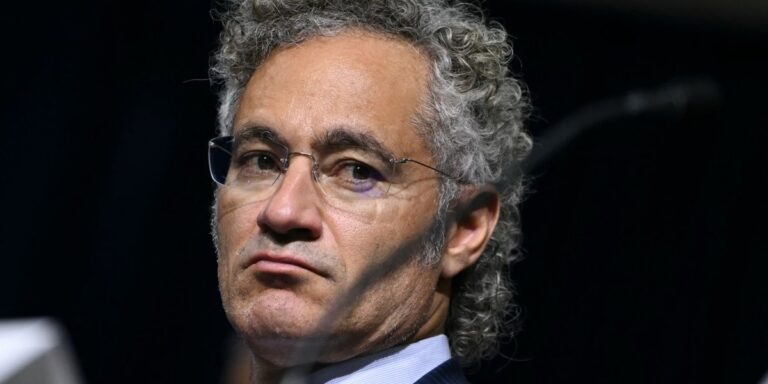
Alex Karp, the frizzy-haired CEO of defense software company Palantir, has become somewhat of a pro at deflecting criticism. As he sat for an interview in April at the tech policy-focused Hill and Valley Forum in Washington D.C. and a heckler started shouting at him from the balcony, Karp retorted rather calmly, telling the audience he believed it was her right to express her views.
But this week—after Palantir reported blockbuster earnings on Monday—Karp took a moment to bask in his company’s meteoric rise and take a jab at his critics.
Palantir, based in Denver, surpassed $1 billion in quarterly revenue for the first time this week, posting growth figures that blew past analyst estimates. Palantir’s stock soared to more than $160 a share, marking a 555% increase from this time last year. By market close on Tuesday, Palantir’s market cap had hit nearly $409 billion, making it the 23rd most valuable company in the world, just behind Johnson & Johnson, a company with more than 23 times Palantir’s revenue and more than 35x the number of employees.
As he started speaking on Monday’s earnings call, Karp, who has a PhD in neoclassical social theory, was absolutely delighted—and true to form, a bit snarky, too.
“Well, as usual, I’ve been cautioned to be a little modest about our bombastic numbers, but honestly, there’s no authentic way to be anything but have enormous pride and gratefulness about these extraordinary numbers,” Karp said. As he wrapped up the call, he gave a quippy message to retail investors about the analysts that have “been wrong about every quarter.” “Maybe stop talking to all the haters—they’re suffering,” he said.
Palantir, a software company co-founded by Peter Thiel, has many “haters,” as Karp puts it. As a tech company that got its start selling to the U.S. military during the War on Terror, Palantir has been fully embedded in some of the most polarizing political debates of modern geopolitics. Particularly now, Palantir has stirred criticism over its software being used by Immigration and Customs Enforcement, as well as the Israeli military.
On the financial side, there’s a different kind of critic: those who question how such a relatively small company—one whose revenue and profits are so small in comparison to peers that it doesn’t even qualify for the Fortune 500 list—could reasonably become one of the most valuable companies in the world.
For Palantir, it has been a slow, albeit volatile, climb to where it is now—marked by contentious legal battles, noisy protests and picket lines, and an eccentric leadership team and employee base who sometimes endearingly refer to one another as “hobbits,” in credit to the company’s Lord of the Rings nomenclature (Palantir is in reference to the seeing stones created by Elves that allow people to see far away or communicate with others). And, more recently, in the last two years, Palantir has ridden the generative AI wave.
“They’ve got their feet under them—they’ve got their sales cycle down a little bit more. They’re just making things really, really sticky for large multinational corporations,” says Evan Loomis, a venture capitalist who is close friends with Palantir cofounder Joe Lonsdale and whose construction technology startup, ICON, uses Palantir’s software platform Foundry.
While the company is currently one of the best-performing stocks in the S&P 500, Palantir’s stock has also been known to be incredibly volatile, and sometimes dramatically influenced by retail investor activity. Palantir is undoubtedly having a moment—but will it last?
There are a host of near-term data points analysts look at: sales, cash flow, profit, customer retention. If you look at most of these near-term fundamentals, Palantir is trading at a premium.
“They are trading at least two times more expensive on the traditional metrics,” says Mariana Pérez Mora, an equity analyst at Bank of America Securities, who has been following the company since 2022.
But, as we speak, Pérez Mora reminds me about another important, longer-term metric for SaaS companies that Karp has repeatedly reminded onlookers to pay close attention to. That metric is called the “Rule of Forty.”
The Rule of Forty figure is calculated by adding the year-over-year revenue growth rate and adjusted operating margin. If those percentages are collectively higher than 40%, you have sustainable growth.
If you look at Palantir’s last quarter, Pérez Mora points out, the rule of 40 was 94%.
“That is the type of growth they are having. And the reality is that growth is accelerating, and that accelerating growth is not at the expense of profitability. And that is pretty unique,” she says, adding: “Palantir is trading as the company that they are growing into, and this is why it’s more expensive.”
There are a few key contributors to these numbers. For one, new government contracts.
Palantir has been working with the government since the beginning—its first customer being the CIA—and government contracts still make up a majority of its business. At the end of July, Palantir signed a 10-year contract worth up to $10 billion with the U.S. Army. It was one of the largest software contracts the Department of Defense has ever signed and, by far, Palantir’s largest contract to-date. And, ironically, it is the same customer Palantir sued (successfully) almost 10 years ago, accusing the department of unlawfully excluding companies like Palantir from its procurement process.
There could be more contracts of this scale on the table, too. The Fostering Reform and Government Efficiency Act, or FoRGED Act, currently on the table would reshape the Department of Defense’s procurement process for private contracts, eliminating hundreds of statutes and making it easier for tech companies like Palantir to sell to the government. The legislation, which Palantir has publicly endorsed and which its executives have pushed for in public hearings, would likely cut into the advantage that some of the industry incumbents like Boeing, Lockheed Martin, RTX, and Northrop Grumman have gained over the years.
The Department of Defense has been making trims to its budget since Trump named Pete Hegseth to the top role. But Palantir is seemingly benefitting from that, too. Only a couple months after the Department of Defense said it had cut more than $5.1 billion in contracts to consulting agencies, including Accenture and Deloitte, both companies announced new strategic partnerships with Palantir to collectively deliver solutions to government clients.
But the lion share of growth at Palantir over the last year is coming from a newer segment of customers—the commercial side of the business. Revenue for the commercial side rose 93% year-over-year this past quarter. And nearly all of those contracts stem from the generative artificial intelligence platform it released in 2023, called “AIP” (which stands for the ever-original “artificial intelligence platform”).
Perez Mora says that while a lot of companies are building and offering large language models, Palantir has found a way to help companies make use of them—and drive real results for their businesses.
On this last earnings call, Karp said that Citibank was onboarding its customers and running the relevant know-your-customer and security checks in seconds, down from nine days. He said that residential mortgage enterprise Fannie Mae is uncovering mortgage fraud in seconds, versus two months. And he said that Lear Corporation is using Palantir’s platform to manage tariff exposure.
Investors seem to have taken note, as there is a direct correlation between the launch of AIP in 2023 and the steady upward trajectory Palantir’s stock has experienced since.
But generative AI is still new—and many companies and industries haven’t fully explored or realized just what jobs AI will be able to replace or make more efficient. Palantir itself doesn’t seem to have it sorted out either.
CEO Karp said in an interview on CNBC this week that he thinks Palantir could keep growing revenue while reducing headcount by 500 jobs to about 3,600 people. But if you look at Palantir’s headcount, it has been doing the opposite: adding about 200 people between 2023 and 2024, not cutting roles. For all that companies like Alphabet or Salesforce are boasting of the efficiencies they are adding within their ranks by using AI, those same companies have seen their workforces grow.
Palantir’s valuation may be climbing to new heights, but the company is as controversial as ever. They’ve been the target of sit-ins, picketings, and other protests that have pulled in hundreds of people in New York City, Palo Alto, Denver, Seattle, and Los Angeles, condemning Palantir’s contract with the ICE (Palantir has been running a six-month pilot contract “centered on enforcement prioritization and immigration lifecycle management,” the company says.) Palantir has a partnership with the Israeli Defense Forces for “war-related missions,” which has also come under fire. A report submitted to the UN Human Rights Council in June that singled out companies aiding Israel in the war in Gaza, including Lockheed Martin, said there was “reasonable grounds to believe” Palantir was providing automatic predictive policing technology and core defense infrastructure to Israel.
A Palantir spokeswoman said the company “does not provide the technology for Israel to conduct missile strikes or targeting operations in Gaza and has no involvement in the Lavendar or Gospel systems. These targeting capabilities are entirely independent of and predate our partnership with Israel’s Ministry of Defense.”
Tayfun Coskun—Getty Images
Karp addressed some of the criticism Palantir has received over the years on the last earnings call. “Palantir gets attacked just because we help make this country even better, because we support the values, because we defend it,” he said. Earlier this year, Karp and Palantir’s head of corporate affairs, Nicholas Zamiska, published The Technological Republic, which criticizes Silicon Valley for spending its time on consumer apps and dodging working with the government and playing a role in defending freedoms and democracy.
But there has also been some notable pushback even from former employees in the last couple years. In May, more than a dozen former Palantir employees signed an open letter to the tech community, alleging that Palantir had violated principles core to the company due to its work with the Trump Administration.
“Palantir prides itself on [a] culture of fierce internal dialogue and even disagreement on difficult issues related to our work,” a Palantir spokeswoman said. “The small number of former Palantir employees—13 of 4,000—raising concerns are certainly entitled to express their views.”
Despite heightened criticism on the public stage, Silicon Valley has come to not only accept, but embrace defense tech since 2022, when Russia invaded Ukraine. It’s one of the hottest sectors around right now, with companies like drone startup Anduril garnering a $30.5 billion valuation in the private markets.
Indeed, tech companies used to shy away from defense contracts. But under the Trump Administration, there’s been a tidal shift. Meta teamed up with Anduril to start working on helmet and headset projects for the U.S. military. Numerous LLM companies, including OpenAI, xAI, and Anthropic, started working with the Department of Defense on national security. Even Google, which famously stopped working with the government in 2018 after internal upheaval from its employees, has gotten into the military business.
In some ways, Palantir—and SpaceX, too—have been a catalyst for the shift. Palantir had initially been rejected from top Silicon Valley venture capital firms when the founders tried to raise initial capital, as Sequoia Capital and Kleiner Perkins both famously passed on the investment. Cofounder Thiel ended up putting in much of his own money and raising capital from former officials from President George W. Bush’s administration as well as the CIA’s venture capital firm In-Q-Tel.
Now, with Thiel protegee J.D. Vance as Vice President of the United States, and a defense-tech-friendly White House in charge, the company has access to the inner circle at the highest levels of power. And Karp, who pens a “letter to shareholders” that’s published on Palantir’s site in English, German, and French each quarter alongside the financial results, has a lot of thoughts to share. “The United States is not, and should not be permitted to become, a soft compromise and amalgam of global values and tastes,” Karp wrote in his most recent letter, referencing a 1943 work by C.S. Lewis which describes “men without chests.”
“Such men without chests,” Karp says, “promise to shepherd us forward yet lack much substance and content, even a flicker of an animating worldview or belief structure, other than their own self-preservation and advancement.” For now, at least, Karp’s worldview and Palantir’s business seem to be defying the critics, the haters, and the chestless.

new video loaded: Flash Flooding Devastates Himalayan Village in India
By Christina Kelso•
Recent episodes in Extreme Weather

MBW Views is a series of exclusive op/eds from eminent music industry people… with something to say. The following comes from Matt Jones, CEO of Medallion and former CEO of Songkick.
Jones has spent over 15 years building direct-to-fan platforms and has facilitated hundreds of millions in artist revenue through various fan engagement models.
Substack just raised $100 million by proving how well direct commerce works for its creators. A scalable direct-to-fan model could revolutionize music, but Substack’s subscription model won’t work for artists, says Jones…
Last week, Substack announced a $100 million Series C funding round, adding more fuel to a platform that’s already moving hundreds of millions of dollars directly from audiences to creators.
This funding round reinforces the fact that direct commerce in the creator economy is here to stay. It’s also a wake-up call for the music industry. Not because Substack is about to take over music (more on that below) but because Substack’s “magic dust” – the principles of its business model – so clearly resonate with musicians.
After all, Substack’s core customers (writers, journalists, podcasters, etc.) and musicians have historically faced similar challenges. They’ve struggled to monetize their work, their audiences are spread across multiple platforms, and they’ve been forced to participate in an ecosystem where intermediaries capture most of the value.
While the music industry has been debating (without end) streaming economics and artist compensation, Substack has quietly built a direct-to-fan platform that’s economically sustainable and grounded in three brilliant principles:
I’ve worked with artists – from small club acts to stadium artists – for nearly 20 years, and it’s hard for me to think of one that wouldn’t be excited by those three principles at the core of Substack’s business model.
So…why aren’t all musicians flocking to Substack?
After years of seeing artists trying to bring to life ‘paid subscriptions’, I think it’s because of Substack’s ‘1:1’ (i.e., creator-level) subscriptions.
After facilitating hundreds of millions of dollars in direct-to-fan commerce on behalf of artists and watching dozens of ‘paid fan club’ experiments across every artist tier, I’ve seen some patterns that reinforce why music is different from Substack’s core creator industries:
Our industry’s next breakthrough won’t come from incrementally improving streaming payouts or fighting over playlist placement. It will come from building systems that give artists what Substack gives writers: creative control, direct economic relationships with fans, and a platform that’s incentive-aligned with the creators it supports.
Music demands a unique platform, a unique product experience, and a unique economic model. Instead of Substack’s 1:1 creator-level subscriptions, we should explore models that create value through network effects, which is when a platform grows in utility as more people join.
Networks can create value through access and timing rather than siloed content gating. For fans, a networked experience can deliver a hub for engaging with all of the artists they love, along with other fans. For artists, a networked experience can respect creative cycles and reduce the constant pressure for content production.
This, in turn, could produce collaborative dynamics between musicians. Because of ‘network effects’, artists would become each other’s distribution channels. If we make it easy for fans to access all of their favorite artists, then overall engagement goes up and all artists benefit.
I built my career on the belief that artists deserve a much larger ‘share of wallet’ from every fan they have than what they’ve been getting. I still believe that. But after watching countless paid fan club offerings on a variety of platforms launch with excitement and quietly fizzle out, I’ve had to confront an uncomfortable truth: except for a very unique kind of artist, an artist-level paid subscription is a terminally broken monetization mechanic.
For 99.99% of musicians it doesn’t work and will never work at scale.
In my experience, artists don’t want to feel like they’re taking advantage of their fans. And they don’t want content creation to feel like subscription justification. They want authentic relationships that happen to generate revenue, not revenue streams that require manufactured authenticity.
The thing that will revolutionize music for artists and fans won’t be exactly like Substack. But the blueprint exists (and hats off to Substack for leading the charge). The technology works and fans are ready.Music Business Worldwide
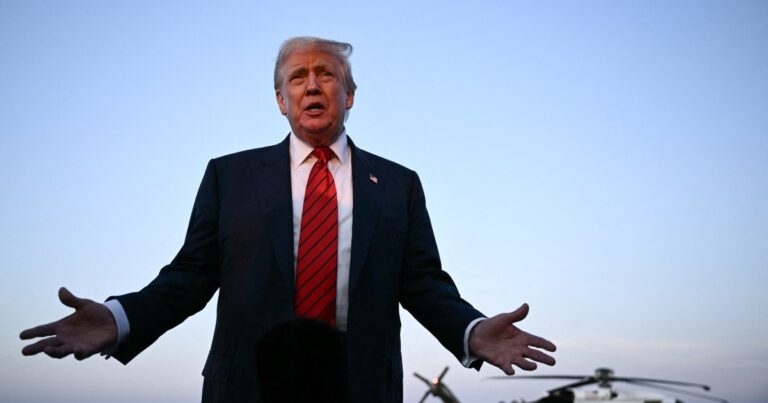
Administration says Russia expressed ‘desire to meet with President Trump’ and that the US wants war in Ukraine to end.
The White House has said that United States President Donald Trump is “open” to the idea of a meeting with Russian President Vladimir Putin and Ukrainian President Volodymyr Zelenskyy.
In remarks on Wednesday, White House Press Secretary Karoline Leavitt said that Russian officials had expressed interest in meeting with Trump. Leavitt did not say when or where such a meeting could take place, but AP quoted an anonymous White House official saying the meeting could happen within a week.
“The Russians expressed their desire to meet with President Trump, and the president is open to meeting with both President Putin and President Zelenskyy,” Leavitt told members of the press following reports in the New York Times that Trump could meet with Putin in Russia as soon as next week.
The US president has said that he is committed to helping bring the war in Ukraine to an end. He initially promised to stop the conflict on “day one” of his presidency, but has struggled to make progress. The statement comes after US envoy Steve Witkoff visited Moscow to speak with Russian officials earlier today.
In a social media post, Trump said Witkoff held a “highly productive” meeting with Putin and that “great progress was made!”
“Afterwards, I updated some of our European Allies. Everyone agrees this War must come to a close, and we will work towards that in the days and weeks to come,” he added.
The New York Times reported that Trump intends to meet first with Putin before later setting up a meeting that would also include Zelenskyy.
Secretary of State Marco Rubio said in a TV interview that the US now has a better understanding of what conditions would be required for Russia to end the war.
“For the first time perhaps since this administration began, we have some concrete examples of the kinds of things that Russia would ask for in order to end the war,” Rubio said in an interview with Fox Business Network’s “Kudlow,” adding that questions of territory would be a key part of any deal.
The news agency AFP reported that Trump also discussed the possibility of such a meeting during a phone call with Zelenskyy, citing an anonymous Ukrainian source. That call is also said to have included NATO Secretary General Mark Rutte and the leaders of Britain, Germany and Finland.
Trump has recently mulled steps to further increase pressure on Russia, which he has accused of not being sincerely interested in ending the war. Such steps could include heightened US sanctions.

Welcome to World Breaking News, your trusted source for fast, accurate, and impactful news coverage from around the globe. We are a dedicated team of journalists, editors, and news enthusiasts committed to delivering breaking stories, in-depth analysis, and real-time updates on politics, business, technology, sports, entertainment, and more.
© Copyright -World Breaking News -2025