
A required part of this site couldn’t load. This may be due to a browser
extension, network issues, or browser settings. Please check your
connection, disable any ad blockers, or try using a different browser.

A required part of this site couldn’t load. This may be due to a browser
extension, network issues, or browser settings. Please check your
connection, disable any ad blockers, or try using a different browser.

South Africa’s state prosecutor has officially withdrawn charges against one of the farm workers accused of killing two black woman and feeding their bodies to pigs.
Adrian de Wet was one of three men facing murder charges after Maria Makgato, 45, and Lucia Ndlovu, 34, were killed while allegedly looking for food on a pig farm near Polokwane in South Africa’s northern Limpopo province last year.
Their bodies were then alleged to have been given to the animals in an apparent attempt to dispose of the evidence.
Mr De Wet, 20, turned state witness when the trial started on Monday and says farm owner Zachariah Johannes Olivier shot and killed the two women.
Mr De Wet, a supervisor on the farm, will testify that he was under duress when he was forced to throw their bodies into the pig enclosure, according to both the prosecution and his lawyer.
William Musora, 50, another farm worker, is the third accused. He and Mr Olivier, 60, are yet to enter a plea and remain behind bars.
Mr De Wet’s lawyers say he has truthfully disclosed what transpired on the night Ms Makgato and Ms Ndlovu were killed in August 2024.
Shortly after court adjourned on Wednesday, he walked out of the court as a free man and was whisked away by his lawyers, while Ms Makgato’s brother Walter Makgato sobbed outside the court building.
He told the BBC that the release of one of the men allegedly involved in the killing of his sister means justice will not be served.
Mr De Wet will be taken into protective custody until the end of the trial.
The case has caused widespread outrage across South Africa which has exacerbated racial tension between black and white people in the country.
This is especially rife in rural areas of the country, despite the end of the racist system of apartheid 30 years ago.
Most private farmland remains in the hands of the white minority, while most farm workers are black and poorly paid, fuelling resentment among the black population, while many white farmers complain of high crime rates.
The trial is set to resume on 6 October.
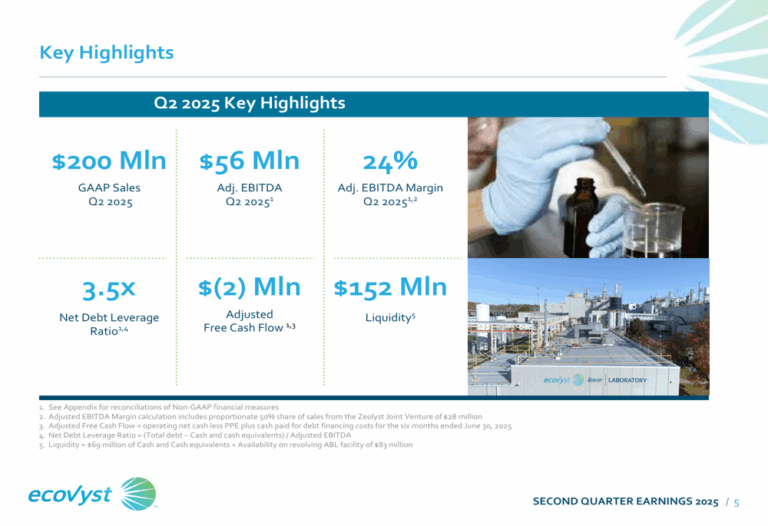
Ecovyst Q2 2025 presentation: Sales up 9.5% despite volume challenges, guidance maintained

By Charlotte Wells on SwimSwam

The second finals session of the 2025 U.S. Summer Championships is underway, and it is already off to an exciting start as athletes look ahead to next summer’s competitions.
This meet serves as a qualifying opportunity for swimmers to make the U.S. National Team roster for the 2026 Pan Pacific Championships, with tonight’s finals providing the first major shake-up to the projected roster that we have seen so far.
Carmel Swim Club’s Aaron Shackell posted a stellar performance in the men’s 400 free tonight, racing into the wall in a best time of 3:45.03 to claim the championship title. His race marks the 2nd-fastest time in the country this season, putting him in a provisional spot on Team USA’s Pan Pacs roster.
Shackell shaved .42 off of his previous best time of 3:45.45 from the Paris Olympics last summer and overtook Luka Mijatovic for the priority two ranking in the event. His time was .68 faster than Mijatovic’s 3:45.71 at the U.S. Nationals in June, bumping Mijatovic down to the priority four ranking in the event.
The Pan Pacs rosters can hold a maximum of twenty-six men and twenty-six women, and only the swimmers with the two fastest times in any event (besides the 100 and 200 free) within the qualifying period are eligible to be named to the roster.
Longhorn Aquatics’ Rex Maurer currently has a firm grip on the #1 roster spot in this event, having posted a 3:43.33 at the U.S. National Championships in June.
Shackell got off to a fast start in the 400 tonight, going out in 53.66 to take a commanding lead of over a second at the 100 mark. He was 1:50.42 at the 200, over two seconds ahead of runner-up Kieran Smith, who split 1:52.62 at the halfway mark. Shackell managed to hold on through the back half, posting a 1:54.61 on his second 200 to fend off Smith, who came close to chasing him down with a 1:53.11 on the back half.
In addition to logging a new lifetime best and landing himself on the Pan Pacs roster, Shackell bumped himself up to 11th in the world this season. He now ranks just behind Bulgaria’s Petar Mitsin (3:45.01).
The U.S. Summer Championships mark the fourth of five qualifying competitions for the 2026 Pan Pacific Championships, so it is getting down to the wire for swimmers to turn in a performance that could land them on Team USA’s roster for next summer. With one more meet to go before the roster can be finalized, there is still a chance that Shackell could be bumped from his priority two ranking in the 400 free, but he looks to be safely in the #2 spot for Pan Pacs at the moment.
Read the full story on SwimSwam: Aaron Shackell Swims 3:45.03 400 Free to Snag #2 Spot on Team USA’s Pan Pacs Roster
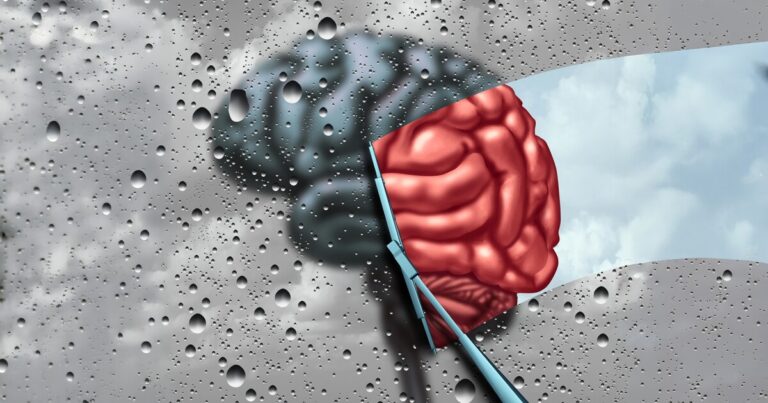
A green tea extract and vitamin B3 combo may hold the key to reviving the brain’s natural cleanup crew, restoring energy, clearing toxic Alzheimer’s proteins, and giving aging neurons a second wind, according to new research.
Although the largest risk factor for Alzheimer’s disease is age, the age-related mechanisms that contribute to that risk aren’t clear. While some propose that a buildup of toxic amyloid-beta proteins is to blame, others say the condition is caused by an imbalance in cellular energy supply and demand.
A new study by researchers from the University of California, Irvine has found that a combination of two natural compounds, readily available as dietary supplements, helps revive the brain’s natural cleanup system that removes damaged parts and toxic buildup.
“As people age, their brains show a decline in neuronal energy levels, which limits the ability to remove unwanted proteins and damaged components,” said the study’s lead author, Gregory Brewer, adjunct professor of biomedical engineering at UC Irvine. “We found that restoring energy levels helps neurons regain this critical cleanup function.”
Studying neurons from young, middle-aged, and old mice, including a special Alzheimer’s disease (AD) model, the researchers used a fluorescent sensor to directly measure guanosine triphosphate, or GTP. This high-energy molecule drives key cellular processes such as endocytosis (bringing substances into cells) and autophagy (clearing cellular waste). Think of it like the fuel that powers the cell’s garbage disposal system. Without it, waste builds up, especially in aging or diseased brains.
They tested the effects of two natural compounds: nicotinamide, a water-soluble form of vitamin B3, and epigallocatechin gallate (EGCG), the most abundant polyphenol, a category of plant-based compounds, found in green tea. The researchers evaluated GTP levels and location within cells, activation of autophagy-related pathways, accumulation of amyloid-beta protein and oxidative damage, and neuron survival. They found that free GTP was highest in middle-aged normal mice but dropped significantly in old mice and even earlier in AD-model mice. GTP reduction was linked to a decline in the mitochondria, the cell’s energy-producing machinery, particularly in AD-model neurons.
Autophagy requires GTP to power it. When a drug was used to block autophagy, free GTP increased (it wasn’t being used); when the process was stimulated using a different drug, GTP decreased, showing that it was being consumed. In AD-model neurons, stimulating autophagy had little effect on GTP, suggesting the neurons were already maxed out.
When neurons from old mice were treated in the lab with a combination of nicotinamide and EGCG, GTP levels were restored to youthful levels in older neurons, notably after only 16 hours of treatment. The number and size of GTP-labelled vesicles, fluid-filled sacs that accumulate when waste isn’t cleared, also returned to youthful norms. The treatment also activated Nrf2, a protein that regulates antioxidant genes, reduced amyloid-beta aggregates, decreased a marker of oxidative stress, and improved cell survival by 22%.
“This study highlights GTP as a previously underappreciated source driving vital brain functions,” Brewer said. “By supplementing the brain’s energy systems with compounds that are already available as dietary supplements, we may have a new path toward treating age-related cognitive decline and Alzheimer’s disease.”
The study has some limitations. Experiments were undertaken using lab-grown neurons, not in live animals. The AD-model mice overproduce amyloid proteins, which may not fully reflect human Alzheimer’s disease. The effects were observed after 16 hours, but long-term outcomes are unknown. And the study didn’t assess whether the treatment affected memory or learning.
Nonetheless, the study has real-world implications. Primarily, it identifies GTP depletion as a key aging and AD-related factor that disrupts normal cellular cleanup processes. Further, nicotinamide combined with EGCG shows promise as a low-risk, rapid-acting treatment to rejuvenate energy metabolism, reduce neurotoxic waste, and restore neuron function. It could lead to new dietary or pharmaceutical interventions for aging and Alzheimer’s that work by targeting cellular energy balance, not just amyloid plaques.
The study was published in the journal GeroScience.
Source: UC Irvine

new video loaded: How a Pro-Palestinian Group Got Banned in Britain
By Lizzie Dearden, Laura Bult, David Seekamp, David Jouppi and Melanie Bencosme•
Recent episodes in Terrorism and Attacks

Good morning. Everyone is talking about AI. Earlier this week, we hosted a dinner with 17 CFOs from some of the world’s largest companies, where they talked about how they’re now using AI in their jobs. Some are using it to highlight how different words are likely to impact sentiment on earnings calls, based on historical data. Many use it to create scenarios around earnings projections against the vagaries of tariffs, policy shifts, technology investments and more. They’re creating hyper-personalized data sets and go-to-market strategies that not only use AI agents but tailor interactions to customers’ AI agents. I also learned about their strategies for embedding AI knowledge throughout their organizations, from top-down learning to metrics for getting promoted into the senior ranks. And while most are not yet cutting jobs in response to AI, they’re also not adding to their overall headcount.
The dinner, sponsored by Deloitte and ServiceNow, was conducted under the Chatham House rule to encourage conversation by sharing highlights anonymously. But during my on-the-record chat with economist Rebecca Patterson, a senior fellow at the Council on Foreign Relations and former chief investment strategist at Bridgewater Associates, we heard about the impact of a shift in fiscal policy. “It’s not just the fact that Congress ignored the Congressional Budget Office and historical norms in enacting the reconciliation bill,” she noted. “It’s also the size of the increase to future deficits at a time when the economy has been growing above its long-term potential. I thought we would see some fiscal hawks push back more and water down the ultimate bill, or that there would be a longer fight. I was wrong.”
Patterson also said she expects policies under the Trump Administration to “lean towards” structurally higher inflation. And she talked about the continued strength of the U.S. relative to other economies and the transformative impact of AI.
Insights from leaders on the front lines are critical in shaping the themes of this column and underscore the unique role that Fortune plays in convening and creating connections. Next up is Brainstorm Tech, which Andrew Nusca will lead on Sept. 8 to 10 in Park City, Utah. One Strategy Group CEO David Meadvin told me yesterday that “there’s nowhere better for genuine relationship building.” I believe him. I’ll be going there to moderate some conversations and cohost a dinner for CEO Initiative members with Qualtrics CEO Zig Serafin. If you’d like to join us at Brainstorm Tech, you can apply here.
Trump’s tariffs are now in effect
Americans must now pay steep taxes if they want to import from countries like Syria (41%), Laos and Myanmar (40%) or Switzerland (39%). Swiss President Karin Keller-Sutter failed to change the White House’s mind over the last few days even though it remains unclear why Switzerland was singled out for such a harsh rate. Quote of the day: “We are now in a new world. Even to trade nerds, the complexity of this is just bonkers,” Chad Bown, of the Peterson Institute for International Economics, told the FT.
100% tariff on semiconductor chips
The president said he would double the price of imported computer chips but not for companies that are “building in the United States.” Few other details are available.
Apple pledges $600 billion U.S. investment
In an amazing coincidence, the iPhone maker yesterday said it would add $100 billion to its existing domestic “manufacturing” commitments and add 20,000 jobs to its payroll. Apple stock was up 4% on the news.
Palantir’s rise, explained
Palantir’s blowout earnings on Tuesday capped a 555% year-over-year stock surge, raising the defense-tech company’s market cap to over $400 billion. Here’s how the Alex Karp-led company became one of the 25 most valuable companies in the world.
AI will destroy jobs, ex-Google exec says
Google X’s former chief business officer Mo Gawdat says the notion AI will create jobs is “100% crap,” and even warns that “incompetent CEOs” are on the chopping block. The tech guru predicts that AGI will be better at everything than most humans. Only the best workers in their fields will keep their jobs “for a while,” and even “evil” government leaders might be replaced by the robots, he said.
Microsoft raids Google’s AI ranks
Mustafa Suleyman, one of the founders of Google’s DeepMind, who is now head of Microsoft AI, is raiding his old company for talent, calling them personally on the phone with the promise that life at Microsoft has more of a startup vibe than Google does. He has poached two dozen Googlers with compensation that far exceed those paid at DeepMind.
Trump favors meeting with Putin to end Ukraine war
The president told European leaders and U.S. reporters yesterday that he was open to meeting Putin soon to get a ceasefire in Ukraine. But he also sounded sceptical about Putin’s motives, saying he had “been disappointed before with this one.” White House spokesperson Karoline Leavitt said Trump was “open to meeting with both President Putin and President Zelensky” and “wants this brutal war to end.”
Disney earnings and NFL deal
Disney posted solid earnings on Wednesday, just a day after announcing that Disney’s ESPN sports network is acquiring major NFL media assets in exchange for a 10% equity stake in ESPN. The company raised its full-year guidance for fiscal 2025 and now believes it will finish the year with an 18% year-over-year gain in adjusted earnings.
S&P 500 futures were up 0.48% this morning, premarket, after the index closed up 0.73% yesterday. STOXX Europe 600 was up 0.5% in early trading. The U.K.’s FTSE 100 was down 0.33% in early trading. Japan’s Nikkei 225 was up 0.65%. China’s CSI 300 was flat. The South Korea KOSPI was up 0.92%. India’s Nifty 50 was down 0.48%. Bitcoin rose to $114.9K.
A bright spot for Tesla shareholders: Under Elon Musk’s new $27 billion comp package, their fate is now intertwined with his by Shawn Tully
Millennials lead the ‘coffee badging’ revolt to protest return to office as businesses push to fill empty seats by Nick Lichtenberg
Meta contractors say they can see Facebook users sharing private information with their AI chatbots by Dave Smith
Goldman Sachs economist warns Gen Z tech workers are first on the chopping block as AI shows signs of shaking up the labor market by Sasha Rogelberg
CEO Daily is compiled and edited by Joey Abrams and Jim Edwards.

Medical relief agency has treated more than 1,300 patients for gunshot wounds sustained near notorious GHF aid sites in Gaza.
Doctors Without Borders, better known by its French-language acronym MSF, has called for the immediate end to Israel’s militarised food distribution scheme in Gaza, which it described as “institutionalised starvation and dehumanisation”.
In a grim report released on Thursday, titled “This is not aid. This is orchestrated killing”, the medical nonprofit said that it operates clinics in Rafah, southern Gaza, near two GHF aid distribution sites under the control of the Israeli military and private US contractors.
Since those sites opened in May, they have become synonymous with “stampedes, suffocating crowd surges, violent looting and lethal ‘crowd control’ measures”, MSF said in its reports.
“The GHF distribution sites fall dangerously short of any recognised standard for safe and dignified humanitarian distributions,” the report said.
“Nowhere else in the world where MSF operates – including in the most volatile conflict zones – would this level of violence around an ‘aid distribution’ site be tolerated. This must stop now,” the organisation said.
MSF teams were “mentally prepared for responding to conflict – but not to civilians killed and maimed while seeking aid”, it said.
MSF’s primary care clinics have turned into mass casualty units since GHF took control of aid distribution in Gaza, it added.
Over a seven-week period in June and July, MSF received 1,380 injured people and 28 dead bodies at its two primary care clinics in Gaza’s al-Attar and al-Mawasi areas, which are close to two GHF distribution sites.
The patients included 174 suffering from gunshot wounds, among them women and children, the report said, but most patients were young men and teenage boys.
A significant number of patients from GHF sites in Khan Younis arrived with gunshot wounds to their lower limbs bearing a precision that “strongly suggests intentional targeting of people within the distribution sites, rather than accidental or indiscriminate fire”, MSF said.
The report noted that many patients had also sustained injuries from “crowd control” measures, including pepper spray and other kinds of physical assault.
Patients injured at GHF sites typically arrived covered in sand and dust “from time spent lying on the ground while taking cover from bullets”, the report adds.
“People are being shot like animals,” an MSF coordinator said in the report.
“They’re not armed. They’re not soldiers. They’re civilians carrying plastic bags, hoping to bring home some flour or pasta. And my question is: how high is the price they have to pay for one bag of food?”

Language learning giant Duolingo has acquired the London-based team behind hit music-based video game Beatstar.
Duolingo’s ‘acqui-hire’ of 23 staff from NextBeat signals the firm’s growing commitment to expanding its music education offerings.
According to a company announcement today (August 6), the ‘acqui-hire’ will see Duolingo absorb specialists in game design, user retention and monetization, sound design, and music licensing from NextBeat.
The expertise of NextBeat’s team will power the next chapter of Duolingo’s gamified learning experiences, with a focus on building upon Duolingo’s Music course.
“Learning should be just as engaging as playing a great game, whether you’re practicing a new language or playing a favorite song,” said Bob Meese, Chief Business Officer at Duolingo.
“This is a strategic bet on talent. The NextBeat team brings deep mobile gaming and music industry expertise, which will make our Music course and the entire Duolingo platform more delightful, immersive, and effective.”
NextBeat is a music gaming startup founded by serial entrepreneurs Simon Hade, Olly Barnes, and Joe Adams.
The company is best known for the hit games Beatstar and Country Star, which were spun out of Space Ape Games upon its acquisition by mobile gaming giant Supercell last year.
According to the firm, NextBeat’s hit mobile rhythm games have reached over 100 million downloads and generated nearly $200 million in revenue.
“From day one, it was clear that Duolingo and NextBeat share the same values: putting learners first, obsessing over great design, and never taking ourselves too seriously,” said Simon Hade, CEO of NextBeat.
“Joining forces means we can bring our passion for music and play to a platform that is redefining how people learn.”
MBW understands that a group of NextBeat employees will remain with the company to operate Beatstar and Country Star, which pay out an eight-figure sum in royalties to music rightsholders annually.
Pittsburgh-headquartered Duolingo has built a business around making learning feel like gaming, using features like streaks, achievements, and competitive elements to encourage daily usage among its 500 million-plus registered users.
Duolingo went public on the Nasdaq in July 2021, raising USD $521 million at a $3.7 billion valuation.
The company now has a market capitalization of approximately $15.6 billion.
In its first quarter 2025 results, Duolingo reported $230.74 million in revenue, representing 38% year-over-year growth, and surpassed 10 million paid subscribers.
The company’s flagship app has become the world’s most popular language learning platform and the top-grossing app in the Education category on both Google Play and the Apple App Store.
The financial terms of the NextBeat ‘acqui-hire’ were not disclosed.
Duolingo generates revenue primarily through subscriptions to its premium Duolingo Plus service, which has shown strong growth with a 46% YoY subscription revenue increase in the second quarter of 2025.
The company also earns revenue from advertising, its Duolingo English Test certification program, and in-app purchases.
Music Business Worldwide
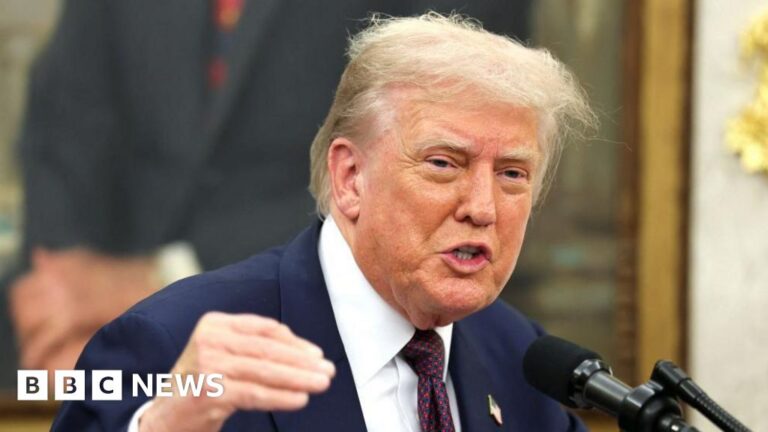
US President Donald Trump’s sweeping new tariffs on more than 90 countries around the world have come into effect.
“IT’S MIDNIGHT!!! BILLIONS OF DOLLARS IN TARIFFS ARE NOW FLOWING INTO THE UNITED STATES OF AMERICA!,” Trump said on social media minutes before the deadline in Washington, DC.
Earlier, the president hit India with a 50% tariff, which will take effect on 27 August unless it stops buying Russian oil.
Trump also threatened a 100% tariff on foreign-made computer chips as he pushes tech firms to invest in the US. It came as Apple announced a new $100bn (£75bn) US investment after coming under pressure from the White House to move more production to America.
Last week, the Trump administration announced a revised list of import taxes on dozens of trading partners and extended a deadline for countries to reach agreements with the US to 7 August.
Countries have been racing to strike deals with Washington to lower – or scrap – what Trump calls “reciprocal tariffs”.
His trade policies are aimed at reshaping the global trading system, which he sees as treating the US unfairly.
Export-dependent economies in South East Asia were among the hardest-hit by the new tariffs.
Manufacturing-focused Laos and Myanmar faced some of the highest levies at 40%. Some experts said Trump appears to have targeted countries with close trade ties with China.
But the latest set of tariffs will offer countries some stability after months of chaos, said economist Bert Hofman from the National University of Singapore.
“This is supposed to be it. Now you can start to analyse the impact of the tariffs.”
Some major economies – including the UK, Japan and South Korea – have already reached agreements to get lower tariffs than Trump threatened in April.
The European Union has also struck a framework deal with Washington, in which Brussels has accepted a 15% tariff on goods from the trading bloc.
Taiwan, a key Washington ally in Asia, was handed a 20% tariff. Its president Lai Ching-te said the rate is “temporary” and that talks with the US are still underway.
Last week, Trump boosted the tariff rate on Canada from 25% to 35%, saying the country had “failed to cooperate” in curbing the flow of fentanyl and other drugs across the US border. The Canadian government says it is cracking down on drug gangs.
But most Canadian exports to the US will dodge the import tax due to an existing trade treaty, the United States-Mexico-Canada Agreement (USMCA).
Higher tariffs on Mexico were paused for another 90 days as negotiations continue to strike a trade deal.
On Wednesday, Trump said he would impose a 100% tariff on foreign-made semiconductors.
Major chipmakers that have made significant investments in the US appear to have dodged the new tariff. Government officials in Taiwan and South Korea have said in separate statements that TSMC, SK Hynix, and Samsung would be exempt from the new levy.
The White House did not immediately respond to a BBC request for clarification.
The BBC has also contacted SK Hynix and Samsung. TSMC declined to comment.
Also on Wednesday, Trump raised the total tariff on India to 50% as he pushes the world’s third largest importer of energy to stop buying oil from Russia.
New Delhi has called the move “unfair, unjustified and unreasonable” and vowed to protect its national interests.
The move marks a “sharp change” in Trump’s approach to Moscow that could spark concerns among other countries in talks with the US, said market analyst Farhan Badami from financial services firm eToro.
“There is the possibility here that India is only the first target that Trump intends to punish for maintaining trade relations with Russia.”
Brazil’s exports to the US also face a 50% tariff. Trump imposed the levy after accusing President Luiz Inacio Lula da Silva of unfairly attacking US technology firms and calling the prosecution of former President Jair Bolsonaro for allegedly attempting a coup a “witch hunt”.
The US and China have held a series of talks as they tried to agree an extension to a 90-day tariffs pause that is due to expire on 12 August.

Welcome to World Breaking News, your trusted source for fast, accurate, and impactful news coverage from around the globe. We are a dedicated team of journalists, editors, and news enthusiasts committed to delivering breaking stories, in-depth analysis, and real-time updates on politics, business, technology, sports, entertainment, and more.
© Copyright -World Breaking News -2025