As if producing the world’s fastest electric enduro motorcycle wasn’t enough, Stark Future has gone ahead and updated the Varg MX with some crucial upgrades with the 1.2 trim.
The Swedish-owned, Spain-based bikemaker has been flying of late, reporting profitable numbers so early in its existence. And when you consider this Varg update, you really understand how serious Stark is about making it big.
The second-generation Varg gets “advanced updates in powertrain, chassis design, and software features, pushing the boundaries of what’s possible in the premium electric motorcycle industry,” per Stark. Enough for me to throw every last dime at the bike – fingers crossed I won’t need what’s left for a hospital bill. After all, it is the fastest electric motocrosser out there.
The original motor stays put
Stark Future
Right then, what does it get? The motor stays put – the same 80-horsepower and 717-lb-ft (973-Nm) electric drivetrain, but it now gives you the ability to customize the power distribution.
You can fine-tune the output from 10 to 80 horsepower in real time, thanks to fine control over the power curve and motor braking. Stark states that it “ensures a ride that’s perfectly adapted to every rider, track or terrain, all at the tip of your fingers.”
The chromoly-steel frame is completely redesigned to be lighter by about 2.2 lb (1 kg), while offering more flex around the shock mount to increase traction and rider comfort. The KYB suspension system has also been retuned, with new mid-valve shim stacks and 12.2 inches (310 mm) of travel. You can also choose the spring rates straight from the factory floor when you place your order. Neat!
The battery is upgraded to a 7.2-kWh unit
Stark Future
But perhaps most importantly, the battery is upgraded to a 7.2-kWh unit (up from 6.5 kWh) packed within a lightweight magnesium honeycomb casing, which Stark claims delivers up to 20% more range than its predecessor. That’s down to greater efficiency and improved thermal management.
I’ve always liked the tablet-like display unit on these bikes. Kinda goes really well with that whole enduro vibe. Now, Stark has added a new “Arkenstone” display. It features GPS-based lap timing and navigation technology that delivers real-time split times while riding the bike. As before, it can be removed from its bar mount and wirelessly synced to the bike’s management system.
Then, there are incremental upgrades like the new overmolded wiring harness that further enhances durability, a lighter and more efficient gearbox, new tires (which you can choose between Dunlop or Pirelli), and a stronger skid plate made of biodegradable materials.
As before, the tablet-like display can be removed from its bar mount and wirelessly synced to the bike’s management system
Stark Future
You also get to choose between a foot- or bar-operated rear brake while making that order. Famed Motocrosser Kevin Windham was one of the lucky few to have tested the real thing, and he noted, “I’ve ridden everything there is to ride, and this is the future.”
Stark is offering a full two-year warranty, though I hardly think you should be worried about the maintenance. It’s an electric, after all. The Varg MX 1.2 will be available in two configurations: Standard, with 60 horsepower, which will cost you US$12,490, and Alpha, with 80 horsepower, priced at $13,490.
Looks like that X-Games ban didn’t unsettle Stark, after all!
The proposed settlement is the highest yet, as Trump continues pressure universities to submit to wide-ranging demands.
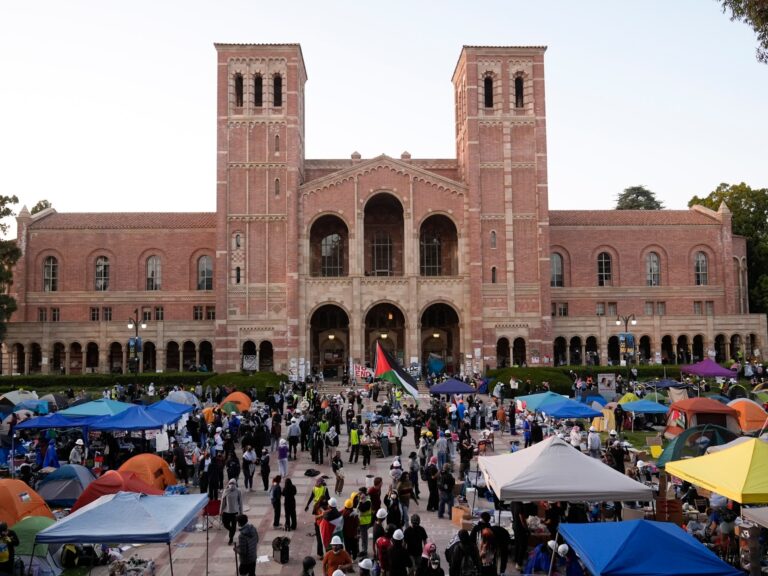
The administration of United States President Donald Trump has requested that the University of California, Los Angeles (UCLA), submit to a $1bn settlement to resolve accusations stemming from the school’s handling of pro-Palestine protests.
A White House official and the University of California system both confirmed the proposed settlement to news agencies on Friday.
The settlement proposal is notable for the massive sum requested, as the Trump administration seeks to pressure top schools into compliance with its policies.
The $1bn price tag would far exceed the payouts inked in previous agreements reached with Columbia University and Brown University last month. Columbia agreed to pay a fine of about $221m, and Brown confirmed it would pay $50m to a state workforce development programme.
“The University of California just received a document from the Department of Justice and is reviewing it,” University of California President James Milliken said in a statement.
He added that the institution had offered to have talks with the government earlier this week.
UCLA, which boasts the largest student body in the University of California system, had also announced this week that the Trump administration suspended $584m in federal grants to the school.
The Department of Justice’s Civil Rights Division explained that the funding would be frozen as a result of civil rights violations connected to pro-Palestinian protests since 2023. The school had acted “with deliberate indifference in creating a hostile educational environment for Jewish and Israeli students”, it said.
Free-speech advocates, however, have accused the Trump administration of willfully conflating pro-Palestine and antiwar advocacy with anti-Semitism in order to silence protesters.
Last month, UCLA reached a $6m settlement with three Jewish students and a Jewish professor who claimed their civil rights were violated by pro-Palestinian protesters blocking their access to class and other areas on campus during a 2024 protest encampment.
It was not immediately clear why the $1bn settlement sought by the Trump administration was so high.
UCLA is also the first publicly funded university to face a potential grant freeze from the Trump administration. In his statement, Milliken said the payment would have wide-ranging consequences.
“As a public university, we are stewards of taxpayer resources, and a payment of this scale would completely devastate our country’s greatest public university system as well as inflict great harm on our students and all Californians,” he said.
Civil liberties organisations have also underscored that students at publicly funded universities are typically afforded wider constitutional protections while on campus.
That stands in contrast to private institutions, where students are generally subject to whatever restrictions on speech are outlined by administrators in their enrollment agreement.
The First Amendment of the US Constitution restricts the government’s ability to limit free speech. Any future agreement between the University of California system and the Trump administration might face a legal challenge, should it be perceived to trample on free-speech rights.
Speaking on Thursday, California Governor Gavin Newsom, who has been one of Trump’s most vocal Democratic opponents, urged the state’s university officials not to kowtow to the administration’s demands.
“We’re not Brown, we’re not Columbia, and I’m not going to be governor if we act like that,” Newsom said, according to the Los Angeles Times. “Period. Full stop. I will fight like hell to make sure that doesn’t happen.”
A required part of this site couldn’t load. This may be due to a browser
extension, network issues, or browser settings. Please check your
connection, disable any ad blockers, or try using a different browser.
Benjamin Netanyahu’s office says a newly adopted five-point plan is aimed “defeating Hamas” and “concluding the war”
Israel has strongly rejected criticism from world leaders after its security cabinet approved a plan to take control of Gaza City.
Defence minister Israel Katz said countries that condemn Israel and threaten sanctions “will not weaken our resolve”.
“Our enemies will find us as one strong, united fist that will strike them with great force,” he added.
Israel’s decision to expand its war in Gaza sparked condemnation from the UN and several countries, including the UK, France and Canada, and prompted Germany to halt military exports to Israel.
The plan approved by the Israeli security cabinet lists five “principles” for ending the war – disarming Hamas, returning all hostages, demilitarising the Gaza Strip, taking security control of the territory, and establishing “an alternative civil administration that is neither Hamas nor the Palestinian Authority”.
Reports in Israeli media say the plan initially focuses on taking full control of Gaza City, relocating its estimated one million residents further south. Forces would also take control of refugee camps in central Gaza and areas where hostages are thought to be held.
A second offensive would follow weeks later in parallel with a boost in humanitarian aid, media say.
The move to escalate the conflict has drawn fierce opposition from some within Israel, including from military officials and the families of hostages being held in Gaza.
Hamas has said the plan to occupy Gaza City “constitutes a new war crime” and would “cost [Israel] dearly”.
Reacting to Israel’s decision, UN human rights chief Volker Turk warned that further escalation “will result in more massive forced displacement, more killing, more unbearable suffering, senseless destruction and atrocity crimes”.
Australia’s Foreign Minister Penny Wong urged Israel “not to go down this path”, stressing that it would “only worsen the humanitarian catastrophe in Gaza”.
Turkey’s foreign ministry urged the world community to prevent Israel’s plan, which it said aimed to “forcibly displace Palestinians from their own land”.
In China, a foreign ministry spokesperson told the AFP news agency that “Gaza belongs to the Palestinian people and is an inseparable part of Palestinian territory”.
Meanwhile, Netanyahu told German Chancellor Friedrich Merz he was disappointed with Berlin’s decision to suspend arms exports to Israel, saying it was “rewarding Hamas terrorism”.
In Israel itself, families of the remaining hostages in Gaza have warned that the lives of the 20 believed to have survived will be put in peril.
The Hostages Families Forum Headquarters said the decision “is leading us toward a colossal catastrophe for both the hostages and our soldiers”.
However, the US has been less critical. On Tuesday, President Donald Trump said it was “pretty much up to Israel” whether to fully occupy the Gaza Strip.
Watch: ‘Chilling’ aerial video shows Gaza in ruins
The IDF currently controls about three-quarters of Gaza, and almost all of its 2.1 million citizens are situated in the quarter of the territory that the military does not control.
The UN estimates some 87% of Gaza is either in militarised zones or under evacuation orders.
There are areas in central Gaza and along the Mediterranean coast that Israel does not occupy, according to the UN.
These include refugee camps, where much of Gaza’s population is now living after their homes were destroyed by Israel’s military action.
The vast majority of Gaza’s population has already been displaced by the war, many people several times over.
The war has created a humanitarian disaster in Gaza, most of which UN-backed experts say is at the point of famine.
The territory is also experiencing mass deprivation as a result of heavy restrictions imposed by Israel on what is allowed in – something it says is aimed at weakening Hamas.
The head of the World Health Organization, Tedros Adhanom Ghebreyesus, said July was the worst month for cases of acute malnutrition in children in Gaza, affecting nearly 12,000 under the age of five.
The war began after Hamas attacked Israel on 7 October 2023, killing about 1,200 people and taking 251 back to Gaza as hostages. Israel launched a massive military offensive in response, which has killed at least 61,158 Palestinians, according to Gaza’s health ministry.
Putin ally Lukashenko has ruled Belarus with an iron fist for more than than three decades and is now on seventh term.
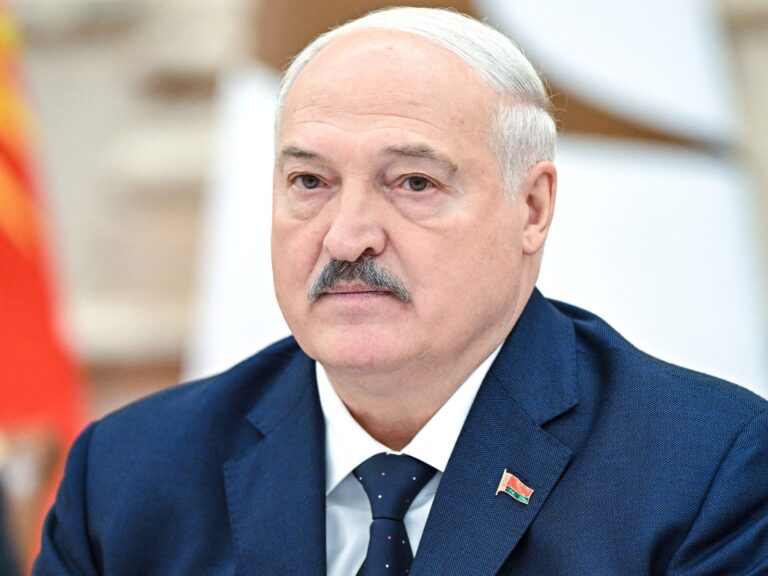
Belarus President Alexander Lukashenko has signalled he does not intend to seek another term in office, while rejecting speculation that he is lining up his son as successor.
The self-professed “last and only dictator in Europe” hinted at his intentions in an interview with TIME magazine, saying that whoever replaces him should “not break anything right away”, but keep developing the country in order to avoid any “revolutionary breakdown”.
The 70-year-old, a close ally of Russian President Vladimir Putin, has led Belarus through more than three decades of authoritarian rule and was re-elected in January for a seventh five-year term.
Asked by TIME’s interviewer whether he would stand in the next election, he said he was “not planning” anything, though he did teasingly add that his United States counterpart, Donald Trump, was “looking decent” at nearly 80.
Lukashenko also rejected longstanding speculation that he might be grooming his son Nikolai to succeed him.
“No, he is not a successor. I knew you would ask that. No, no, no. Ask him yourself, he may be really offended,” he said in excerpts from the conversation, published in Russian by Belarusian state news agency BelTA.
Lukashenko told TIME that he was actually ready to step down in the last election, but changed his mind after the public demanded he remain in his post because they were not ready for him to go.
But critics, including German Foreign Minister Annalena Baerbock, said at the time that the vote was neither free nor fair, largely because all leading opposition figures had either been jailed or forced to seek exile abroad.
Lukashenko was also accused of rigging the 2020 election, which ended with nationwide protests and a sweeping security crackdown.
Several hundred people convicted of “extremism” and other politically related offences have been released since mid-2024, but rights groups say nearly 1,200 are still behind bars.
Lukashenko denies there are any political prisoners in the country.
In 2012, Lukashenko told the news agency Reuters, “I am the last and only dictator in Europe. Indeed, there are none anywhere else in the world.”
Four former Intel board members are backing President Donald Trump’s surprise attack on the company’s CEO, but they’re pushing for a shake-up that is both more dramatic and wholly in line with their vocal criticism of late.
In a rare collective statement provided exclusively to Fortune, the former directors said the fate of CEO Lip-Bu Tan should be decided by Intel shareholders, but called for a radical restructuring that would spin off Intel’s manufacturing arm into an independent company to secure America’s chipmaking dominance.
Noting that this matter should rightly be decided by Intel’s current board and its shareholders, the group— Charlene Barshefsky, Reed Hundt, James Plummer, and David Yoffie,—pointed out that the company is on its fourth CEO in seven years with little improvement in results. They argued that only a dramatic break could restore Intel’s competitiveness, and they argued for special treatment for Intel’s “Foundry” business, the manufacturing assets from which Intel produces semiconductor chips for its own products and for third-party customers. These advanced chip fabrication facilities are increasingly top of mind for President Donald Trump, his Chinese counterpart Xi Jinping, and the entire tech industry watching as the drama unfolds.
Intel was long the leader in chips but has fallen behind Nvidia, TSMC and other players in recent years, as Barshefsky, Hundt, Plummer, and Yoffie argued in the pages of Fortune. Intel has two main businesses, one being the Foundry and the other being called simply Intel Products, which includes its flagship PC and server microprocessors, as well as networking equipment and software. Both are essential for computing, but only the Foundry is key to national security, which has been a key point in trade talks between Trump and Xi. The former directors group argued that splitting the chips manufacturing entity from the rest of Intel would directly address both market competitiveness and the nation’s strategic need for advanced semiconductors.
To make the new manufacturing company competitive with TSMC, the former directors called for remaining funds under the CHIPS Act to go towards acquiring Intel’s manufacturing assets and creating a new, independent manufacturing entity, as that would “persuade American design firms to place orders.” That would position the new company to be able to to provide an alternative to TSMC, “both for cutting edge chips needed for data center and other commercial purposes and for national security requirements.”
Mounting pressure
The statement comes as pressure on Intel intensifies, after President Donald Trump publicly called for CEO Lip-Bu Tan’s resignation over his “conflicted” status and alleged ties to Chinese technology firms. Trump’s demand, posted on Truth Social Thursday morning, sent shockwaves through U.S. tech circles and drew swift responses from the company.
Tan responded in a letter to staff, posted publicly on Intel’s website, claiming there has been “misinformation” about his career and his past leadership roles. The embattled CEO said that Intel is “engaging” with the Trump White House to “address the matters that have been raised and ensure they have the facts.” He added that he fully shares the president’s commitment to advancing U.S. national and economic security.
President Trump’s intervention followed Senator Tom Cotton’s warnings over reports of Tan’s prior investments in Chinese firms, some allegedly tied to China’s military. Trump’s demand for an immediate CEO change provoked a 3% drop in Intel’s stock Thursday, compounding board-level discord and market concerns about the company’s stagnation and loss of ground to rivals such as Nvidia and AMD.
In his note to staff on Thursday, Tan defended his integrity and claimed the current board was “fully supportive” of the work currently under way at Intel, while insisting that throughout his four decades in the industry, he has “always operated within the highest legal and ethical standards.”
Intel did not immediately respond to a request for comment.
In a previous statement to Fortune, however, the company pushed back on criticism, saying its board and CEO Lip-Bu Tan are “deeply committed to advancing U.S. national and economic security interests” and were making “significant investments aligned with the President’s America First agenda.”
Intel noted it has been manufacturing in the U.S. for 56 years and is investing billions of dollars in domestic semiconductor R&D and manufacturing, including a new Arizona fab that will run the most advanced process technology in the country. The company added that it was “the only company investing in leading logic process node development in the U.S.” and said it looked forward to “continued engagement with the Administration.”
Correction: A previous version of this story incorrectly stated that the four former directors called for the ouster of Intel’s CEO. The group of former directors said that Intel shareholders should make the decision about the CEO.
Introducing the 2025 Fortune Global 500, the definitive ranking of the biggest companies in the world. Explore this year’s list.
The Dardanelles Strait has been temporarily shut to maritime traffic due to forest fires raging in north-western Turkey, the country’s transport ministry has said.
The major international waterway was shut as a precautionary measure as the blazes spread near the city of Canakkale where a number of residents were evacuated.
Turkish firefighters have been deployed to try to contain the fires. Specialist firefighting planes and helicopters are also in use.
The Dardanelles links the Aegean Sea to the Sea of Marmara. Together with the Bosporus Strait, it serves as a vital route for commercial shipping between Europe and Asia.
Nearly 46,000 vessels crossed the Dardanelles in 2024, according to official data.
Strong winds fanned the wildfires, helping them spread in hot dry weather, local officials said. Efforts to extinguish the blazes from “both the air and ground” were ongoing, Canakkale’s provincial governor – quoted in Turkiye Today – said on Friday.
Canakkale’s main airport is closed to passenger flights, but firefighting and search and rescue aircraft are still operating from there.
Hundreds of wildfires have broken out across Turkey this summer, forcing tens of thousands of people to evacuate their homes.
MBW Explains is a series of analytical features in which we explore the context behind major music industry talking points – and suggest what might happen next. Only MBW+ subscribers have unlimited access to these articles. MBW Explains is supported by Reservoir.
Live Nation Entertainment posted revenue of USD $7.0 billion in Q2 2025, up 16% YoY, driven by what CEO Michael Rapino called “fan attendance hitting new highs and ticket buying strong at every price point… from VIP to the back row.”
The bulk of that revenue came from LN’s Concerts (concert promotion) segment, which generated $5.946 billion in Q2, up 19% YoY – representing its highest Q2 revenue on record.
The results marked a strong turnaround from Live Nation’s Q1 2025 performance, when revenue fell 11% to $3.38 billion amid foreign exchange headwinds and reduced non-concert activity.
What makes the company’s Q2 revenue growth especially impressive?
Live Nation actually promoted fewer events overall in the period (vs. Q2 2024), signaling a strategic shift towards larger, higher-value events… outside North America.
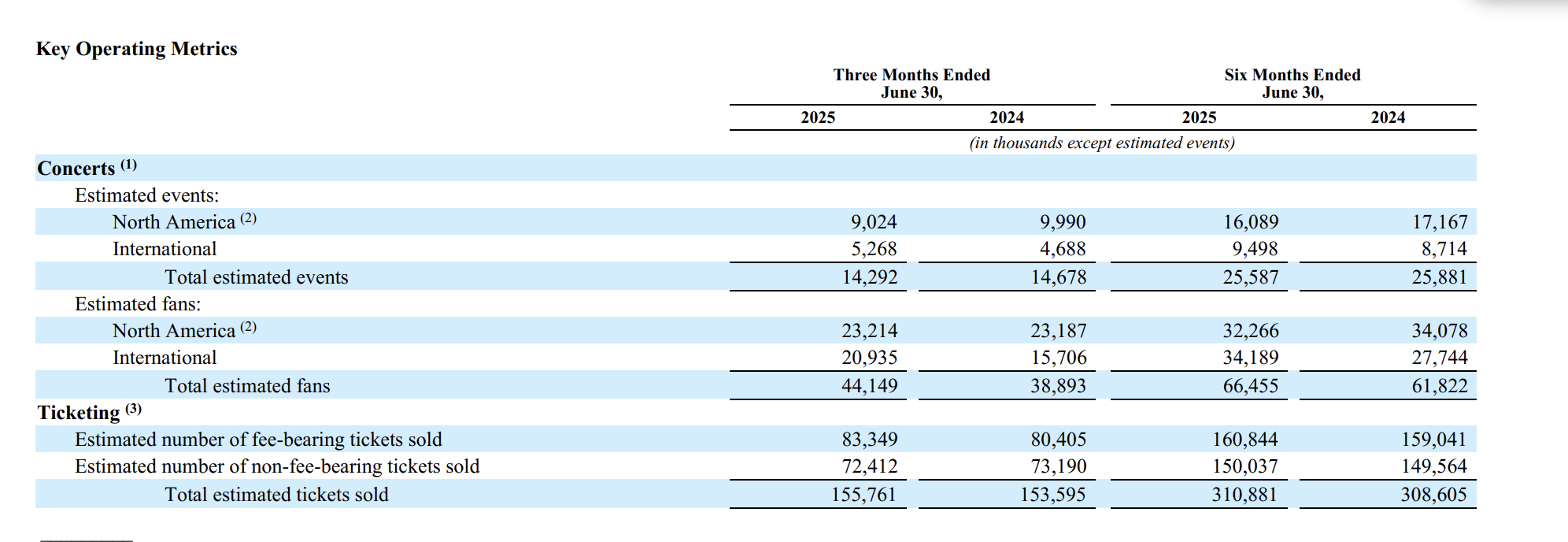
SEC filings show that Live Nation’s Concerts division promoted 14,292 events globally in the three months to end of June – down from 14,678 in the same quarter last year.
That decline was due to North America, where the number of quarterly LN music events fell significantly, down to 9,024 in Q2 2025 from 9,990 in Q2 2024 – a decline of 876 shows YoY.
Meanwhile, Live Nation’s volume of international events in Q2 2025 rose to 5,268 from 4,688 in the prior-year quarter (see below).
Source: Live Nation 10Q
Yet despite fewer total shows, global attendance at Live Nation concerts surged 14% YoY to 44.1 million fans in Q2.
The total amount of fans attending Live Nation events in North America was flat at 23.2 million.
But internationally (ex-NA), attendance exploded, up 33% YoY to 20.9 million.
Tellingly, global stadium attendance of Live Nation shows tripled YoY, the firm said – while attendance of international concerts at arenas, specifically, increased 20% YoY.
We can use some of these numbers to show how Live Nation’s ‘bigger is better‘ strategy has unfurled, especially outside North America, over the past year:
Don’t assume this growth is all about higher ticket prices, either.
When constant currency is applied, according to MBW’s analysis of LN earnings data, the average per-fan spend at a Live Nation concert in Q2 2025 was lower than it was in Q2 2024.
In Q2 2025, the average fan at an LN show spent $134.69 (this represents spending across ticket price, food/beverages, parking, VIP, and other ancillary revenue at each concert).
In Q2 2024, the equivalent spend (using constant currency) was over $16 per head higher, at $151.16 per fan.
What does this tell us?
LN’s rapid international expansion strategy – combined with a rise in per-show attendance – means it is accepting a lower average fan spend as a trade-off to dramatically expand its global reach.
Live Nation said that its growth in international concert attendance was “driven by strength across Europe, Asia-Pacific and Latin America”.
Discussing the Q2 results yesterday (August 8), Live Nation President & CEO, Michael Rapino, maintained his outlook that 2025 will be a “historic year for live music”.
Credit: Live Nation/press
“Global expansion continues to drive touring growth, with fan attendance hitting new highs and ticket buying strong at every price point from VIP to the back row.”
Michael Rapino, Live Nation
Said Rapino: “Global expansion continues to drive touring growth, with fan attendance hitting new highs and ticket buying strong at every price point from VIP to the back row. To meet this momentum, we’re expanding our global venue portfolio and investing in the artists who make it all possible.”
On that note: in an investor media release yesterday (August 8), Live Nation said it is investing $15 billion in artist events globally in 2025, making it the “largest financial supporter of the artist community” in the industry.
Added Rapino: “We’re continuing to deliver record revenue and concert ticket sales, and with investments focused on high-growth markets and fan experiences, we’re positioned to grow operating income and adjusted operating income by double-digits this year and for years to come.”
As you can see above, Live Nation operates three main divisions:
(i) its Concerts segment, which promotes and produces live events;
(ii)Ticketmaster, its ticketing platform that sells tickets for both Live Nation shows AND events by other promoters; and
(iii) its Sponsorship & Advertising division.
Q2: Ticketmaster and sponsorship growth
Ticketmaster revenue increased 2% YoY to $743 million in Q2, while gross transaction value (GTV) reached a record Q2 total of $9 billion, up 7% YoY.
Ticketmaster sold over 83 million fee-bearing tickets in the three months, up 4% YoY, with international ticket volume up double-digits.
Secondary ticketing GTV declined mid-single digits YoY due to “increased market-based pricing in concerts and sports”, along with several lower-performing sporting events, said Live Nation.
Concerts ticket volume was up high-single digits YoY, while sports and other content continued to trail 2024 levels.
The company’s sponsorship and advertising segment generated revenue of $341 million, in Q2, up 9% YoY.
Live Nation expanded its brand partner portfolio through new agreements with major consumer brands including Kraft Heinz, Airbnb, and Samsung, as well as a ticket access agreement with United Airlines.
Venue expansion accelerates
Live Nation has continued its venue expansion strategy, opening four amphitheaters across the US and adding one stadium in Canada year-to-date.
The company expects to bring additional venues online in the second half of 2025, with key projects underway in Mexico, Colombia, and Canada.
Live Nation’s venue development pipeline continues to grow, expecting ten new large venues to open next year – each with fan capacity of 3,000 and above – across the US and international markets.
Recent international expansion includes Live Nation’s first venue in Colombia, the 15,000-seat Arena Cañaveralejo in Cali, operated through partners OCESA and Grupo Páramo.
The company has also made moves into South Africa and Portugal, launching The Dome in Johannesburg and acquiring a majority stake in Lisbon’s MEO Arena.
Reservoir (Nasdaq: RSVR) is a publicly traded, global independent music company with operations across music publishing, recorded music, and artist management.Music Business Worldwide
Young Duo Returns After Strong Summer League Showing
The San Antonio Spurs have re-signed Harrison Ingram and Riley Minix to Two-Way contracts, the team announced. As is standard, the terms of the deals were not disclosed.
Both players contributed to the Spurs’ 4-1 record in the 2K26 NBA Summer League in Las Vegas. The re-signings reflect San Antonio’s continued investment in developing young talent through their system.
Harrison Ingram’s Growth
Ingram was selected by the Spurs with the 48th overall pick in the 2024 NBA Draft. He played in five NBA games last season while spending most of the year with the Austin Spurs, San Antonio’s G League affiliate. In Austin, he averaged 12.3 points, 8.9 rebounds, and 4.2 assists across 48 games, logging 32.6 minutes per contest.
During the Summer League, the Dallas native continued to show promise, posting averages of 9.6 points, 7.4 rebounds, and 3.6 assists in 23.5 minutes per game.
Ingram began his college career at Stanford, where he earned Pac-12 Freshman of the Year in 2021-22. He later transferred to North Carolina, where he played 37 games in the 2023–24 season and averaged 12.2 points, 8.8 rebounds, and 2.2 assists. He was named to the Third-Team All-ACC.
Riley Minix’s Resilience and Production
Minix played just one NBA game last season but made a strong impact with Austin in the G League. He averaged 19.3 points and 6.6 rebounds over 19 games, despite missing significant time due to injury.
In Las Vegas, Minix delivered solid performances, averaging 11.3 points and 5.3 rebounds in 26.5 minutes across four Summer League games.
Before joining the Spurs organization, Minix played four college seasons at Southeastern University before transferring to Morehead State. There, he started all 28 games in the 2023–24 season and averaged 22.4 points and 10.1 rebounds, earning Ohio Valley Conference Male Athlete of the Year honors.
Looking Ahead
The Spurs’ decision to bring back Ingram and Minix on Two-Way contracts underscores their focus on player development. Both athletes have shown potential and will look to carve out larger roles in San Antonio’s evolving rotation.