
11 C
New York
Saturday, April 25, 2026
Home Blog Page 501

BlueBeat music streaming service founder indicted for alleged $3.1m fraud scheme

0

A federal grand jury has indicted Hank Risan, the 70-year-old founder of purported music streaming service BlueBeat, on four counts of wire fraud in connection with alleged misrepresentations to investors totaling approximately $3.17 million.

BlueBeat operated as a consumer music streaming platform that claimed to offer “millions of songs” for streaming, competing with services like Spotify and Apple Music through $5-per-month Basic and $7-per-month Premium subscription tiers.

The platform featured prominent artists including The Weeknd and Taylor Swift on its artist pages.

The indictment, filed on July 31, 2025 and unsealed on August 7, alleges that Risan made false claims about BlueBeat’s copyright ownership of approximately 2.5 million songs by well-known artists to attract investors to his Santa Cruz-based companies Media Rights Technologies (MRT) and BlueBeat.

According to prosecutors, Risan provided investors with fabricated valuations of BlueBeat and MRT, falsely claimed that a multi-national media and entertainment conglomerate was in the process of acquiring BlueBeat, and made untrue statements about involvement from a former U.S. Department of Commerce undersecretary.

In one November 2020 communication to investors, Risan allegedly wrote that he “received a very favorable comparable regarding the BlueBeat Catalog” and noted “BlueBeat contains approximately 2.5 million songs and $10K per song brings music to my ears.”

The Department of Justice alleges that BlueBeat did not actually own the copyrights to the claimed 2.5 million songs, and that the company valuations were fictional.

Through these alleged misrepresentations about BlueBeat’s music catalog ownership and business prospects, Risan purprtedly induced investors to purchase approximately $1.96 million in stock and stock conversions, while also securing additional payments characterized as loans totaling approximately $3.17 million overall.

Prosecutors allege that Risan used the fraudulently obtained funds for personal expenses including credit card payments, mortgage payments on his residence, and purchasing collectibles.

Risan was arrested and made his initial court appearance in federal court in San Jose before being released on a $100,000 unsecured bond. He is scheduled to appear for a status conference on October 8, 2025 before U.S. District Judge P. Casey Pitts.

According to the DoJ: “If convicted, the defendant faces a maximum sentence of 20 years in prison and a fine of $250,000 for each count of wire fraud in violation of 18 U.S.C. § 1343.”

Assistant U.S. Attorneys Matthew Chang and Jeff Nedrow are prosecuting the case with assistance from Natachiana Burney and Susan Kreider, following an investigation by the FBI.

Media Rights Technologies has a history of legal disputes in the music industry.

The company reportedly paid a $950,000 settlement to EMI in 2011 after allegedly infringing on several Beatles tracks through soundalike recordings offered for 25 cents each on BlueBeat. MRT has also initiated intellectual property litigation against Microsoft, with one case filed as recently as December 2024 alleging “billions of copyright violations as well as trade secret theft.”

This latest case adds to a growing series of streaming fraud prosecutions targeting individuals who have allegedly defrauded the music industry. Earlier this year, North Carolina musician Michael Smith was indicted for allegedly generating over $10 million in fraudulent streaming royalties using AI-generated songs and bot accounts.Music Business Worldwide
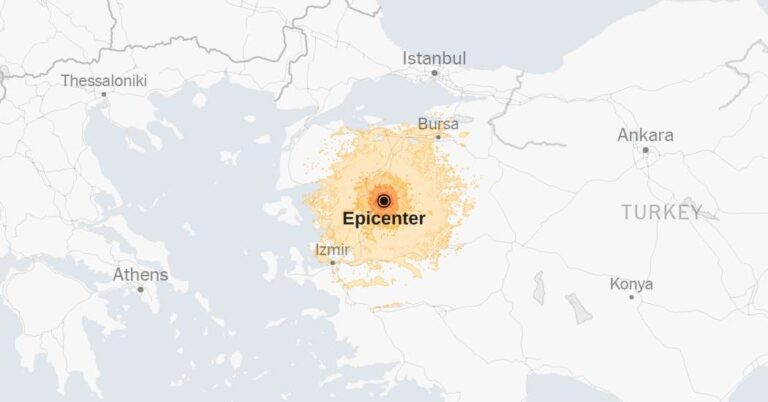
Map: Turkey Hit by 6.1-Magnitude Earthquake

0

Note: Map shows the area with a shake intensity of 4 or greater, which U.S.G.S. defines as “light,” though the earthquake may be felt outside the areas shown.  All times on the map are Eastern European time. The New York Times

A strong, 6.1-magnitude earthquake struck in Turkey on Sunday, according to the United States Geological Survey.

The temblor happened at 7:53 p.m. Eastern European time about 7 miles southwest of Bigadiç, Turkey, data from the agency shows.

As seismologists review available data, they may revise the earthquake’s reported magnitude. Additional information collected about the earthquake may also prompt U.S.G.S. scientists to update the shake-severity map.

Aftershocks in the region

An aftershock is usually a smaller earthquake that follows a larger one in the same general area. Aftershocks are typically minor adjustments along the portion of a fault that slipped at the time of the initial earthquake.

Quakes and aftershocks within 100 miles

Aftershocks can occur days, weeks or even years after the first earthquake. These events can be of equal or larger magnitude to the initial earthquake, and they can continue to affect already damaged locations.

When quakes and aftershocks occurred

Source: United States Geological Survey | Notes: Shaking categories are based on the Modified Mercalli Intensity scale. When aftershock data is available, the corresponding maps and charts include earthquakes within 100 miles and seven days of the initial quake. All times above are Eastern European time. Shake data is as of Sunday, Aug. 10 at 1:14 p.m. Eastern. Aftershocks data is as of Sunday, Aug. 10 at 6:54 p.m. Eastern.

Maps: Daylight (urban areas); MapLibre (map rendering); Natural Earth (roads, labels, terrain); Protomaps (map tiles)

Challenging Clients

0


Client Challenge


JavaScript is disabled in your browser.

Please enable JavaScript to proceed.

A required part of this site couldn’t load. This may be due to a browser
extension, network issues, or browser settings. Please check your
connection, disable any ad blockers, or try using a different browser.

The repercussions of a peace agreement between Azerbaijan and Armenia | Conflict

0

The United States brokered the agreement, giving it leverage and business opportunities.

There is a peace deal between Azerbaijan and Armenia, after nearly four decades of conflict.

The final stage was brokered by US President Donald Trump in the White House.

Crucial to the deal is a corridor to connect the main part of Azerbaijan with another part of its territory, which is cut off because it is on the other side of Armenia.

But how long will it take before the corridor becomes a reality?

And what will Washington’s growing presence in the South Caucasus mean for the region?

Presenter: James Bays

Guests:

Vasif Huseynov – Head of department at the Center of Analysis of International Relations (AIR Center)

Jamila Mammadova – Research assistant at the Henry Jackson Society

Vahram Ter-Matevosyan – Political analyst

Zelenskiy secures EU and NATO support in bid for inclusion in Trump-Putin talks

0

Zelenskiy wins EU, NATO backing as he seeks place at Trump-Putin talks

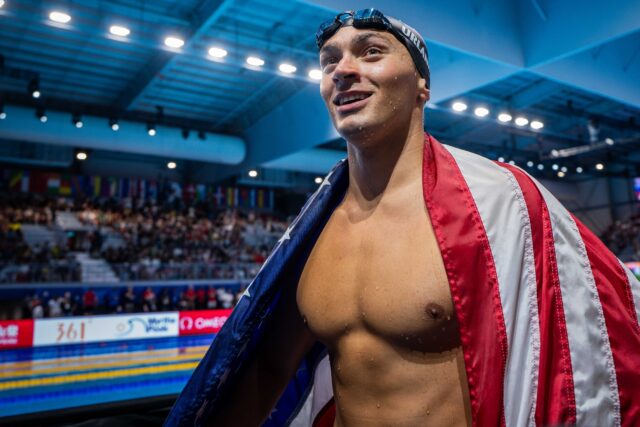
Luca Urlando’s Instagram Following Grows by 20% Following U.S. Men’s Medal Win

0

By Braden Keith on SwimSwam

The World Championships don’t offer the same opportunities for growth in fame for an athlete as the Olympic Games do – but that doesn’t mean there is no opportunity at all.

All but one member of the U.S. team (Emma Weyant) saw a net follower growth during the World Championships. Some of the breakout stars of the team saw the biggest growth. On the women’s side, that included Anna Peplowski, who is pretty active on social and had a really good leg on the American 800 free relay, saw the biggest growth. Claire Weinstein and first-time World Champion Katharine Berkoff also saw big follower growth, by percentage.

On the men’s side, the two American stars of the meet Luca Urlando and Jack Alexy were the breakouts on Instagram. Urlando, the only gold medalist for the American men, saw his following grow by more than 20%, while Alexy’s grew by almost 19% during the meet where he cemented himself as one of the world’s best sprinters – including a 45.9 to drag the men’s medley relay to bronze.

Notes & Caveats:

  • N/A means that athletes either don’t have ‘creator’ accounts on Instagram, or have changed their accounts to ‘creator’ accounts relatively recently. Updates to Instagram’s API don’t allow the third-party tools we use to track these things to pull Instagram followers from accounts that aren’t the ‘creator’ or ‘business’ type.
  • We used a timeline of July 15 through August 10 to capture the pre-World Championship period when there’s a lot of social posts flying around and interviews happening, plus the post-Worlds glow. For most of the athletes, the actual World Championship period was where most of the growth came from.
  • While it’s hard to get a good count on the number of stories each athlete posted in the period, there is definitely a correlation between swimmers who posted more and those who didn’t. The women’s team was much more active on social and have much higher follower counts, and saw way more growth, than the men’s team.
  • The women’s team (among swimmers we could track) grew by 55,327 followers, or 2.5%. The men’s team grew by 13,691, which is almost exactly the same percentage as the women’s team, but the men’s numbers would probably be impacted more significantly by the inclusion of the non-creator accounts.
  • Michael Andrew (240,151) has almost as many followers as the rest of the men’s team combined (307,930). He is by far the most active member of the men’s team on social media, both at Worlds and in general.
  • It is, generally, much harder to grow when your account is big, especially in the U.S. where there isn’t much penetration beyond the hardcore swim market. The Virginia swimmers Kate Douglass, Alex Walsh, and Gretchen Walsh, didn’t have the biggest growth by percentage, but growing 5-8% in a month when your account is in the six-figure range is huge.
  • For athletes with multiple accounts, we used their current account or the one where most of their swimming content appears. A handful have second accounts for side projects. Campbell McKean is a really talented photographer, and you can check out his photo page here.

Women’s Team

Swimmer Instagram Instagram followers pre-games Instagram followers post-games Total Increase Percentage Increase Individual Medals Won
Relay Medals Won
Anna Peplowski @anna_peplowski 11,082 13,020 1,938 17.49% 0 1
Claire Weinstein @claire_weinstein 17,178 19,000 1,822 10.61% 1 1
Katharine Berkoff @katharineberkoff 15063 16480 1417 9.41% 2 1
Kate Douglass @kaatedouglass 111,536 120,855 9,319 8.36% 2 3
Alex Walsh @alexwalsh7 121,085 129,030 7,945 6.56% 1 0
Gretchen Walsh @gretchwalsh2 133,269 140,580 7,311 5.49% 2 1
Jillian Cox @jilliantcox 2,871 3,015 144 5.02% 0 0
Erin Gemmell @eringemmelll 6,548 6,867 319 4.87% 0 2
Regan Smith @regansmith4 146,349 152,542 6,193 4.23% 4 1
Claire Curzan @claire.curzan 40,958 42,652 1,694 4.14% 1 1
Phoebe Bacon @baconswims 16,139 16,669 530 3.28% 0 0
Torri Huske @torri_huske 108,084 110,791 2,707 2.50% 1 3
Bella Sims @arabellagsims 33281 33943 662 1.99% 0 1
Lilly King @_king_lil 147,247 149,338 2,091 1.42% 0 1
Katie Ledecky @katieledecky 903,904 914,517 10,613 1.17% 3 1
Katie Grimes @_katie.grimes_ 50,109 50,574 465 0.93% 0 0
Mariah Denigan @mariahdenigan 5,486 5,507 21 0.38% 0 0
Simone Manuel @swimone 245,608 245,906 298 0.12% 0 4
Emma Weyant @emmaweyant 54,513 54,351 -162 -0.30% 0 0
McKenzie Siroky @kenzie_siroky N/A 3,905 N/A N/A 0 0
Anna Moech @_annamoesch N/A 3,376 N/A N/A 0 2
Caroline Bricker @brickercaroline N/A 2,946 N/A N/A 0 0
Brinkleigh Hansen @bringkleigh_hansen N/A 1845 N/A N/A 0 0
Brooke Travis @_btrav N/A 986 N/A N/A 0 0
Total Excluding N/A 2,170,310 2,225,637 55,327 2.55%

Men’s Team

Swimmer Instagram Instagram followers pre-games Instagram followers post-games Total Increase Percentage Increase Individual Medals Won
Relay Medals Won
Luca Urlando @lucaurlando 10,671 12,844 2,173 20.36% 1 0
Jack Alexy @jackalxy 22,912 27,246 4,334 18.92% 2 3
Campbell McKean @campbell.mckean 2709 3112 403 14.88% 0 1
Shaine Casas @shaine_casas 35,486 38,519 3,033 8.55% 1 1
Josh Matheny @josh_matheny 4,534 4,729 195 4.30% 0 1
Jack Aikins @jaikins0 3,849 3,980 131 3.40% 0 0
Luke Hobson @luke_.hobson 9,155 9,422 267 2.92% 1 0
Santo Condorelli @santo_condorelli 24,466 25,012 546 2.23% 0 0
Chris Guiliano @_chrisguiliano 14,190 14,500 310 2.18% 0 2
Carson Foster @carson24foster 49,254 49,913 659 1.34% 0 0
Thomas Heilman @thomas_heilman_ 23,036 23,290 254 1.10% 0 0
Bobby Finke @robert_finke 94,379 95,363 984 1.04% 1 0
Michael Andrew @swimmermichael 239,749 240,151 402 0.17% 0 0
Patrick Sammon @patrick.sammon N/A 15,528 N/A N/A 0 2
Luka Mijatovic @luka_mijatovic5 N/A 8,928 N/A N/A 0 0
David Johnston @davidjohnston14 N/A 6306 N/A N/A 0 0
Destin Lasco @destin_lasco N/A 5,249 N/A N/A 0 1
Dare Rose @d_rose1000 N/A 5,210 N/A N/A 0 1
Rex Maurer @rexmaurer N/A 5,160 N/A N/A 0 0
Jonny Kulow @jonny_kulow N/A 4,412 N/A N/A 0 2
Keaton Jones @keatonjones_swim N/A 3,600 N/A N/A 0 0
Gabriel Jett @gabrieljettt N/A 3,314 N/A N/A 0 0
Ivan Puskovitch @swimimp N/A 3306 N/A N/A 0 0
Charlie Clark @charlieswims32vsc N/A 2,797 N/A N/A 0 0
AJ Pouch @littlepouch N/A 2,788 N/A N/A 0 0
Joey Tepper @joey_tepper N/A 2,575 N/A N/A 0 0
Henry McFadden @henrymcfadden N/A 2,440 N/A N/A 0 0
Tommy Janton @t.janton23 N/A 1,810 N/A N/A 0 1
Dylan Gravley @dylan__gravley N/A 1,452 N/A N/A 0 0
Quintin McCarty @quintin__mccarty N/A 1,316 N/A N/A 0 0
Total Excluding N/A 534,390 548,081 13,691 2.56%

Read the full story on SwimSwam: Luca Urlando Saw 20% Growth in Instagram Followers After Winning Only U.S. Men’s Medal

NASA’s Rapid Electric Charge for EVs: Ready to Go in 5 Minutes

0

Electric cars are quieter, do not pollute (if they use renewable energy), and can be one of the key components of sustainable mobility when moving away from fossil fuels. However, of course, they are not exempt from their own challenges: from the raw materials required for batteries to charging speed, there are still uncertainties to be resolved on their path to mass adoption. Fortunately, technological advancements are offering solutions, whether through battery alternatives or fast charging systems, improving the efficiency of electric cars. We will tell you more about the latter in this article. Has NASA found the key to fast charging for electric cars?

What you will find in this article:

How long does it take to charge an electric car?

For over a century, internal combustion engines have reigned supreme due to their high range and refueling speed. Unless you encounter a queue at the gas station, filling up a gasoline tank takes two or three minutes. Electric cars have more nuances. Generally, an electric vehicle (EV) can take between twenty minutes and twelve hours to charge fully. But what factors influence these times?

  • Type of charging point: There are several types of charging points, defined by their power level, ranging from 1 to 3. Domestic charging points are usually type 1, while more powerful types 2 and 3 are reserved for public places.
  • Battery type and capacity: Battery capacity ranges from 6 kWh for urban cars to 100 kWh for high-range models, although the average is usually between 40 and 50 kWh.
  • Charge level: The initial and final 20% of the battery take the longest to charge.
  • Ambient temperature: Charging speed is reduced in very low temperatures.

Interestingly, the last point is one that NASA has taken advantage of with a prototype developed in collaboration with Purdue University. In their case, they have chosen extreme cooling as an ally.

How to accelerate fast charging for an electric car

There is a physical obstacle to increasing charging power. It is the same principle behind the operation of a stove or a hairdryer: electricity passing through a resistance emits thermal radiation. If you have ever noticed how thick the “hose” of fast charging points is, there’s your answer: it requires numerous braided cables to avoid overloading and usually incorporates a cooling liquid. These charging points typically offer a power of 350 amperes.

The new system proposed by NASA can multiply the electric current carried by the power cables of an electric charging station by 4.6 times, operating smoothly at 1400 amperes. Technically, it could reach 2500 amperes. They have employed a temperature control system designed to operate under microgravity conditions in outer space to achieve this. The physical principle behind it is known as subcooled flow boiling. Thanks to this technology, they have dissipated up to 24.22 kilowatts of heat.

The prototype was developed by Purdue University, which has taken NASA’s research on subcooled flow boiling and applied it to the field of fast charging for electric cars. In fact, the university’s laboratory announced another fast-charging technology below five minutes in 2022.

How does subcooled flow boiling work?  

You might be wondering how subcooled flow boiling exactly works. Well, this phenomenon occurs when a liquid is rapidly heated and begins to boil before reaching its average boiling temperature. If we place a pot of cold water on a ceramic hob or gas stove, the water will gradually heat up. As the water heats up, there comes a point where the surface temperature becomes high enough to form vapor bubbles, even before the entire liquid reaches its boiling temperature.

These vapor bubbles that form in water colder than normal are called “boiling nuclei.” As heat is transferred to the surrounding water, these vapor bubbles grow and detach from the surface, dissipating heat with them.

Subcooled flow occurs when a moving liquid, such as water flowing through a pipe, is cooled below its normal boiling temperature before it starts to boil. This can happen when there is a rapid transfer of heat to the liquid or when the liquid is under high-pressure conditions.

It is worth noting that this technology will initially be intended for space missions and the colonization of Mars. Furthermore, all elements – from the battery to the charging station and power cable – must be prepared for that level of power. However, who knows how long it will take until we see it applied to fast charging for electric cars here on our planet, contributing to a more sustainable economy.

Source:

Netanyahu stands by Gaza plans amid heavy criticism of Israel at UN Security Council

0

UN ambassadors have condemned Israel’s plans to “take control” of Gaza City as Prime Minister Benjamin Netanyahu insisted it was the “best way” to end the war.

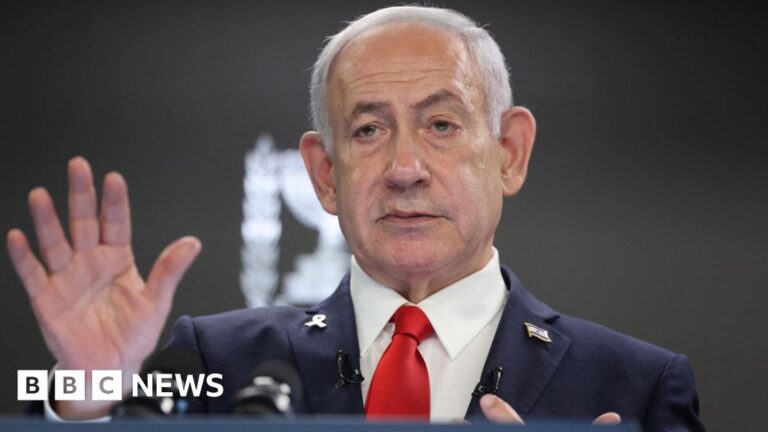
During a press conference, which Netanyahu said was intended to “puncture the lies”, the Israeli leader said the planned offensive would move “fairly quickly” and would “free Gaza from Hamas”.

He also claimed Israeli hostages held in Gaza were “the only ones being deliberately starved” and denied Israel was starving Gazans.

Meanwhile, Israel came under heavy criticism at an emergency meeting of the United Nations (UN) Security Council, with the UK, France and others warning the plan risked “violating international humanitarian law”.

Along with Denmark, Greece and Slovenia, they called for the plan to be reversed, adding it would “do nothing to secure the return of hostages and risks further endangering their lives”.

Other council members expressed similar alarm. China called the “collective punishment” of people in Gaza unacceptable, while Russia warned against a “reckless intensification of hostilities”.

UN Assistant Secretary General Miroslav Jenca told the meeting: “If these plans are implemented, they will likely trigger another calamity in Gaza, reverberating across the region and causing further forced displacement, killings, and destruction.”

But the United States defended Israel, with Ambassador Dorothy Shea telling the meeting the US had been working “tirelessly” to free hostages and end the war, and the meeting undermined those efforts.

She added the war “could end today if Hamas let the hostages go”, and accused other UN members of taking advantage of the meeting to “accuse Israel of genocide”, an allegation she insisted was “demonstrably false”.

Thousands of protesters have also taken to the streets across Israel to oppose Israel’s plan, fearing it puts the lives of hostages at risk.

In his presser, Netanyahu said the Israel Defense Forces (IDF) had been instructed to dismantle the “two remaining Hamas strongholds” in Gaza City and a central area around al-Mawasi.

He also outlined a three-step plan to increase aid in Gaza, including designating safe corridors for humanitarian aid distribution and more air drops by Israeli forces and other partners.

It would also include increasing the number of safe distribution points managed by the controversial US and Israeli-backed Gazan Humanitarian Foundation (GHF).

The UN reported earlier this month that 1,373 Palestinians had been killed seeking food since late May, when GHF set up aid distribution sites.

Netanyahu claimed Hamas had “violently looted the aid trucks”, and, when asked about Palestinians killed at GHF sites, said “a lot of firing was done by Hamas”.

Watch: Palestinian and Israeli representatives address UN Security Council meeting

Asked about the remaining Israeli hostages in Gaza – 20 of whom are still thought to be alive – Netanyahu said “if we don’t do anything, we are not going to get them out”.

The Israeli leader also took aim at the international press, saying it had bought into Hamas propaganda. He labelled some of the photos of malnourished children in Gaza that have run on newspaper front pages across the world as “fake”.

Throughout the war, Israel has not allowed international journalists into Gaza to report freely. But Netanyahu said a directive telling the military to bring in foreign journalists had been in place for two days.

Since Saturday, five people have died as a result of starvation and malnutrition in Gaza, bringing the total number to 217 deaths, according to the Hamas-run health ministry.

It also said that in total more than 61,000 people have been killed as a result of Israel’s military campaign since 2023.

Israel launched its offensive in response to the Hamas-led attack on southern Israel on 7 October that year, in which about 1,200 people were killed and 251 others were taken hostage.

In the past, figures from the Hamas-run health ministry were widely used in times of conflict and seen as reliable by the UN and other international organisations.

Trump orders immediate removal of homeless people from Washington, DC, with offered alternative accommodations outside the capital

0

President Donald Trump said Sunday that homeless people must be moved “far” from Washington, after days of musing about taking federal control of the US capital where he has falsely suggested crime is rising.

The Republican billionaire has announced a press conference for Monday in which he is expected to reveal his plans for Washington — which is run by the locally elected government of the District of Columbia under congressional oversight.

It is an arrangement Trump has long publicly chafed at. He has threatened to federalize the city and give the White House the final say in how it is run.

“I’m going to make our Capital safer and more beautiful than it ever was before,” the president posted on his Truth Social platform Sunday.

“The Homeless have to move out, IMMEDIATELY. We will give you places to stay, but FAR from the Capital,” he continued, adding that criminals in the city would be swiftly imprisoned.

“It’s all going to happen very fast,” he said.

Washington is ranked 15th on a list of major US cities by homeless population, according to government statistics from last year.

While thousands of people spend each night in shelters or on the streets, the figure are down from pre-pandemic levels.

Earlier this week Trump also threatened to deploy the National Guard as part of a crackdown on what he falsely says is rising crime in Washington.

Violent crime in the capital fell in the first half of 2025 by 26 percent compared with a year earlier, police statistics show.

The city’s crime rates in 2024 were already their lowest in three decades, according to figures produced by the Justice Department before Trump took office.

“We are not experiencing a crime spike,” Washington Mayor Muriel Bowser said Sunday on MSNBC.

While the mayor, a Democrat, was not critical of Trump in her remarks, she said “any comparison to a war torn country is hyperbolic and false.”

Trump’s threat to send in the National Guard comes weeks after he deployed California’s military reserve force into Los Angeles to quell protests over immigration raids, despite objections from local leaders and law enforcement.

The president has frequently mused about using the military to control America’s cities, many of which are under Democratic control and hostile to his nationalist impulses.

Introducing the 2025 Fortune Global 500, the definitive ranking of the biggest companies in the world. Explore this year’s list.

Israel’s Strategy: Suppress the Palestinians and Dominate the Region? | Israel-Palestine Conflict

0

Has Israel created a predicament it can’t escape with its zero-sum path for the Palestinians and regional overreach?

By offering nothing except continual massacre for the Palestinians, and attempting to subjugate the surrounding areas to its will, Israel finds itself “in a predicament of its own making”, argues former Israeli adviser Daniel Levy.

Levy, president of the US/Middle East Project, tells host Steve Clemons that Israel has put Arab leaders in a bind, as regional disgust grows towards Israel for its war crimes in Gaza.

And while Western governments and cultural institutions have been carrying water for Israel for decades, argues Levy, some have begun “acknowledging things they worked hard not to acknowledge for an awfully long time.”