


TotalEnergies awarded new exploration permit off Congo coast
TotalEnergies secures new exploration permit in the waters off the coast of Congo
Xi of China calls on regional leaders to resist ‘Cold War mindset’ at summit | News
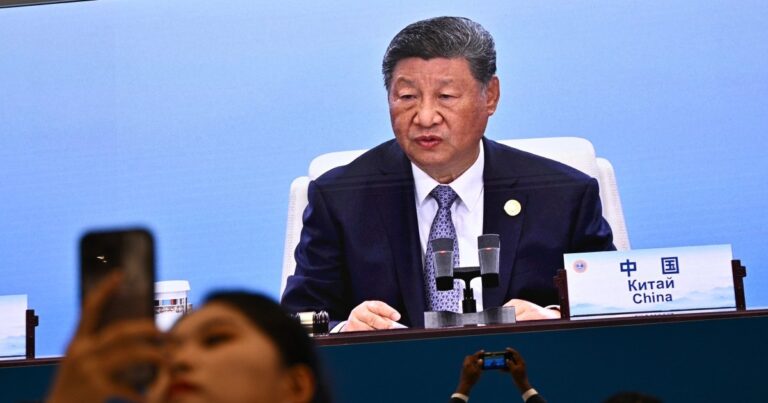
Chinese leader pledges $280m in aid to members of the Shanghai Cooperation Organisation at summit in Tianjin.
Published On 1 Sep 2025
Chinese President Xi Jinping has urged regional leaders to oppose “Cold War mentality” at a gathering of a security bloc that Beijing has touted as an alternative to the Western-led international order.
In a speech to attendees of the Shanghai Cooperation Organisation (SCO) summit on Monday, Xi said that member states are facing increasingly complicated security and development challenges as the world becomes “chaotic and intertwined”.
“Looking back, despite tumultuous times, we have achieved success by practising the Shanghai spirit,” Xi said.
“Looking to the future, with the world undergoing turbulence and transformation, we must continue to follow the Shanghai spirit, keep our feet on the ground, forge ahead, and better perform the functions of the organisation.”
Calling for an “equal and orderly multipolarisation” of the world, Xi said the bloc should work towards the creation of a “more just and equitable global governance system”.
The Chinese leader said Beijing would provide 2 billion yuan ($280m) in aid to member states this year and a further 10 billion yuan ($1.4bn) of loans to an SCO banking consortium.
“We must take advantage of the mega-scale market… to improve the level of trade and investment facilitation,” Xi said.
Russian President Vladimir Putin, Indian Prime Minister Narendra Modi, Iranian President Masoud Pezeshkian and Belarusian President Alexander Lukashenko are among the more than 20 world readers attending the two-day SCO summit, which opened on Sunday in China’s northern city of Tianjin.
Established in 2001, the Shanghai Cooperation Organisation began as a grouping of six Eurasian nations – China, Kazakhstan, Kyrgyzstan, Russia, Tajikistan and Uzbekistan – but has since expanded to comprise 10 permanent members and 16 dialogue and observer countries.
Analysts say that China intends to use the gathering to promote an alternative to the United States-led global order and repair ties with India amid a shifting geopolitical environment under US President Donald Trump.
What the rest of the world can learn from Asia’s advanced use of AI in combating fraud

The financial sector is going through a rapid digital transformation, but cybercriminals are adapting just as quickly. Banks are forced to spend heavily to keep ahead of surging financial fraud. Across the Asia-Pacific region, 98% of financial institutions have had to scale up their compliance operations, driving costs above $45 billion. This surge reflects a shift toward integrated anti-fraud strategies, with governments and industries rolling out targeted national responses to counter increasingly sophisticated threats.
Hong Kong authorities have launched Scameter, a mobile fraud alert system that that notifies users of high-risk transactions. Singapore has introduced the Shared Responsibility Framework, which allocates scam loss responsibilities to financial institutions and telecommunication operators, encouraging the implementation of anti-scam measures. Similarly, Australia’s Scam-Safe Accord is a cross-industry initiative across banks, building societies, credit unions aimed at elevating the standard of customer protection to counter scams.
These moves all represent a strong response to a growing regional threat, exemplified by Southeast Asia’s “scam compounds”: physical hubs where criminal syndicates orchestrate large-scale online scams, including identity fraud, phishing, fake investments and money laundering. Disguised as legitimate businesses, these sophisticated operations generate billions of dollars annually.
What’s driving this evolution in financial crime? Increasingly, it’s artificial intelligence. Criminal networks use AI to create synthetic identities, launch massive phishing campaigns, and bypass traditional security systems—and do so with fewer resources and in record time. While scam compounds are concentrated in Asia, the threat of financial fraud is global.
Yet as Asia’s crime syndicates make headlines, the region’s banks are quietly leading a shift in how to prevent fraud. Unlike other banks, which use AI for customers personalization and call center support, Asian banks are instead tapping AI to fight back against cybercriminals through fraud detection, identity verification, and anti-money laundering.
Why APAC is outpacing in AI-driven fraud defense
Asia’s greater focus on AI-powered fraud prevention is due to the region’s exposure to financial crime. Asian institutions are in the trenches when it comes to cybercrime, pushing them to rapidly adopt AI-driven strategies.
The scale of financial loss is staggering. In 2024 alone, the Asia-Pacific region lost an estimated $688 billion to fraud, nearly two-thirds of the world’s total. Asians’ rapid adoption of digital wallets and payment platforms makes matters worse: By outpacing the rollout of strong consumer protections, this usage opens doors for cybercriminals and is putting banks on the front lines.
Asian banks are leading the way in adopting ISO 20022, a new messaging standard that allows financial institutions to use AI to precisely detect anomalies and cut exposure to financial crime.
Same tech, different playbooks
Regional priorities are shifting as banks adopt AI. Asia-Pacific banks are focusing on fraud prevention and security, while European and U.S. institutions instead use AI to personalize products and customer service.
According to our research, just over half of organizations in the UK want to use generative AI to enhance the customer experience. That reflects the UK’s hyper-competitive market, where user-friendly interactions are key to winning customer loyalty. The U.S. is splitting its AI focus between customers experience and operational automation, supporting both consumer demands for frictionless banking and internal goals for efficiency.
In contrast, 58% of Asia-Pacific banks are focusing their AI investments on fraud detection and anti-money laundering, well above the global average. Asia-Pacific banks face a high-risk landscape where criminal networks use generative AI for identity fraud, phishing and financial scams. As a result, the region prioritizes cybersecurity, forging a sharper, security-focused AI strategy that views fraud prevention as a key competitive advantage.
Importantly, AI is blurring the distinction between security and service. Growing cyber threats means customers expect their banks to not just protect their money, but also provide clear, accurate answers in times of uncertainty. Our work with clients reveals that AI-powered chatbots and authentication systems can speed up queries from banking staff by sourcing information for them 30-40% faster than before. This has in turn had a knock-on effect for customer satisfaction, with customers now rating their experiences with chatbots 25% higher than their previous conversations with human agents.
What the next era of banking demands
Fraud detection can’t be isolated in today’s threat landscape. It must be embedded within financial infrastructure. Whether that’s through cross-industry accords like Australia’s Scam-Safe Accord, or through the blend of service and security seen in AI-powered chatbots that both authenticate users and resolve queries in real time, APAC is demonstrating how integrated systems can turn raw data into actionable defenses, driven by AI and aligned with operational needs.
Asia-Pacific’s experience highlights that financial security hinges on being proactive, not reactive. Faced with massive fraud losses and complex scam networks, Asian institutions have swiftly prioritized AI-driven fraud prevention. U.S. and European peers, on the other hand, treat fraud prevention as one possible AI application among many. That will be a mistake as AI-driven financial crime starts to spread globally.
AI’s role in fraud will grow. Asia-Pacific’s strategy shows the value of acting quickly to counteract it, integrating fraud prevention into financial infrastructure. As global threats escalate, the world should look to Asia, not just as a regional leader, but as a role model for secure, seamless financial transactions.
The opinions expressed in Fortune.com commentary pieces are solely the views of their authors and do not necessarily reflect the opinions and beliefs of Fortune.
Report suggests that Australia’s ban on teen social media could be effective

Australia could use a range of technologies to implement its social media ban for under-16s but all have risks or shortcomings, a report has found.
The government says its ban, which comes into effect in December, is designed to limit the harmful impacts of social media. The policy has been touted as a world-first and is being watched closely by leaders globally.
Under the new laws, platforms must take “reasonable steps” to prevent Australian children from creating accounts on their sites, and deactivate existing ones.
Though the move is popular with many parents, experts have raised concerns over data privacy and the accuracy of age verification technology.
The federal government commissioned the UK-based Age Check Certification Scheme to test the ways Australia could enforce the ban, and its final report was published on Sunday.
It looked at a variety of methods – including formal verification using government documents, parental approval, or technologies to determine age based on facial structure, gestures, or behaviours – and found all were technically possible.
“But we did not find a single ubiquitous solution that would suit all use cases, nor did we find solutions that were guaranteed to be effective in all deployments,” it said.
Verification using identity documents was cited as the most accurate method, but the report identified concerns that platforms may keep this data longer than required and was anticipating sharing it with regulators, both of which would leave users’ privacy at risk.
Australia – like much of the world – has in recent years seen a series of high-profile data breaches, including several where sensitive personal information was stolen and sold or published.
Facial assessment technology was 92% accurate for people aged 18 or over, but there is a “buffer zone” – about two to three years either side of 16 – in which is it is less accurate. The report said this would lead to false positives, clearing children for accounts, and false negatives, barring users who should be allowed.
There are also privacy and accuracy concerns with parental approval methods, it said.
It recommended that the methods should be “layered” to create the most robust system, and highlighted that many of the technology providers were looking at ways to address circumvention, through things like document forgeries and VPNs (virtual private networks) which obscure the user’s country.
Communications Minister Anika Wells said there was “no one-size-fits-all solution”, that the report showed age checks could be “private, efficient and effective”.
“These are some of the world’s richest companies. They are at the forefront of AI. They use the data that we give them for a bevy of commercial purposes. I think it is reasonable to ask them to use that same data and tech to keep kids safe online,” she told reporters on Monday.
“There is no excuse for social media platforms not to have a combination of age assurance methods in their platforms ready for 10 December.”
Under the ban, tech companies can fined up to A$50m ($32.5m; £25.7m) if they do not take “reasonable steps” to bar those aged under 16 from holding accounts. These steps are still to be defined.
Facebook, Instagram, Snapchat and YouTube are among the platforms affected.
Polling indicates most Australian adults support banning social media for children under 16.
However some mental health advocates say the policy has the potential to cut kids off from connection, and others say it could push children under 16 to even-less-regulated corners of the internet.
They suggest the government should instead focus on better policing of harmful content on social media platforms and preparing children for the reality of life on the web.
Client Challenge: Overcoming Obstacles for Success

A required part of this site couldn’t load. This may be due to a browser
extension, network issues, or browser settings. Please check your
connection, disable any ad blockers, or try using a different browser.
Russia-Ukraine Conflict: Overview of Major Events on Day 1,285 | Latest Updates on Russia-Ukraine War
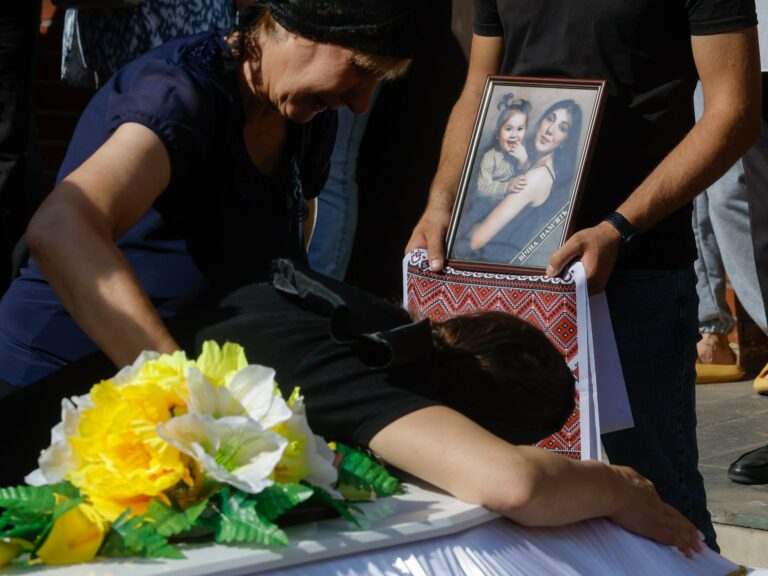
Here are the key events on day 1,285 of Russia’s war on Ukraine.
Published On 1 Sep 2025
Here is how things stand on Monday, September 1:
Fighting
- Russian attacks on Ukraine killed at least five people on Monday, including two in Kherson, one in Zaporizhia, and two in Donetsk, according to regional governors. The attacks wounded dozens more.
- In the Zaporizhia region alone, Russian forces launched 286 drone attacks, 10 missile attacks and five air strikes on 16 settlements in one day, Governor Ivan Fedorov wrote on Telegram.
- A Russian drone attack overnight damaged a power facility near the southern Ukrainian city of Odesa, leaving more than 29,000 customers without electricity on Sunday morning, the region’s governor said. The hardest hit city was the seaport of Chornomorsk.
- The Reuters news agency also reported that a civilian bulk carrier flying the flag of Belize sustained minor damage after hitting an unknown explosive device near Chornomorsk.
- Russian drones also targeted Ukraine’s northern Chernihiv region early on Sunday, damaging energy infrastructure and leaving 30,000 households without electricity, including part of the city of Nizhyn, said Governor Viacheslav Chaus.
- The Ukrainian military said Russia had attacked Ukraine with 142 drones overnight, and, while its air defence forces managed to shoot down most of them, the drones struck 10 locations.
- Ukrainian President Volodymyr Zelenskyy promised to retaliate to Russian attacks on his country’s power facilities with strikes deep inside Russia.
- Ukraine’s armed forces dismissed Russia’s claims of a successful summer offensive, saying Russian forces failed to gain full control of any major Ukrainian city and “grossly exaggerated” figures regarding captured territories.
- In Russia, four people were wounded injured in Ukrainian drone attacks on the Kursk region, including two Ministry of Internal Affairs employees, Kursk Governor Alexander Khinshtein said in a post on Telegram.
- Russia’s Ministry of Defence said that its forces shot down 112 Ukrainian drones, two aerial bombs and three rocket launchers in a 24-hour period, according to TASS.
- The capacity of Russia’s Kursk nuclear power plant’s third reactor was completely restored after it had been halved following a drone attack, TASS reported on Sunday, citing the plant.
Politics and diplomacy
- The Kremlin accused European powers of hindering United States President Donald Trump’s peace efforts and said that Russia would continue its operation in Ukraine until Moscow saw real signs that Kyiv was ready for peace.
- “The European warring party is maintaining its fundamental course; it is not giving in,” Kremlin spokesperson Dmitry Peskov said from the sidelines of the SCO summit in China.
- German Chancellor Friedrich Merz said he was bracing himself for the Russia-Ukraine war “to last a long time”. He told German public broadcaster ZDF that diplomatic efforts to bring the conflict to an end could not come “at the price of Ukraine’s capitulation”.
- Ursula von der Leyen, the president of the European Commission, announced additional funding for European Union member states bordering Russia and Belarus during a visit to Poland’s border, near Belarus, where she called Putin a “predator” who could only be kept in check through “strong deterrence”.
- Von der Leyen also told the Financial Times that Europe is drawing up “pretty precise plans” for a multinational troop deployment to Ukraine as part of proposed post-conflict security guarantees.
- She said Trump had assured Europe that “there will be [an] American presence as part of the backstop”.
- In an article published in the People’s Daily, China’s state newspaper, Turkish President Recep Tayyip Erdogan wrote that his country will “continue to pursue” its “peace diplomacy” between Russia and Ukraine “with patience”.
- Pope Leo called for a ceasefire and dialogue in the Ukraine war. “It is time for those responsible to renounce the logic of arms and to take the path of negotiation and peace with the support of the international community,” he said in his Sunday prayer with pilgrims in St Peter’s Square.
Weapons
-
- North Korean leader Kim Jong Un inspected a new missile production line and missile-manufacturing automation process, state media KCNA said on Monday. North Korea has sent missiles, as well as soldiers and artillery ammunition, to Russia to support Moscow in its war against Ukraine.
- Norway, which shares a border with Russia, said it will buy new frigates worth some 10 billion pounds ($13.51bn) from the United Kingdom, in its biggest ever military investment.
Man taken into custody following collision with Russian consulate in Sydney

Man arrested after car crashes into Russian consulate in Sydney
Rudy Giuliani, former mayor of New York City, injured in a car accident

Former New York City mayor Rudy Giuliani has been injured in a car accident in the US state of New Hampshire.
Giuliani was a passenger in a Ford Bronco when it was struck from behind in the city of Manchester on Saturday evening, according to local police.
“He was diagnosed with a fractured thoracic vertebrae, multiple lacerations and contusions, as well as injuries to his left arm and lower leg,” a statement from his security guard, Michael Ragusa, said.
Giuliani, 81, became known as “America’s Mayor” after leading New York through 9/11. He later became an adviser and then personal lawyer to Donald Trump, though the two have since parted ways.
All involved in the crash suffered non-life threatening injuries and were taken to hospital, police said.
The incident happened shortly after Giuliani had helped an alleged victim of domestic violence who had flagged him down on a road, Mr Ragusa’s statement added.
“Mayor Giuliani immediately rendered assistance and contacted 911,” he said.
New Hampshire police confirmed officers were investigating a reported domestic violence incident when they saw the crash on the opposite side of the road.
“As a result of the collision, both vehicles went into the median and were heavily damaged,” police added.
Investigators said they have identified the driver who allegedly struck Giuliani’s car, although no charges have been filed and the crash is under investigation.
First elected New York City mayor in 1993, Giuliani was in charge at the time of the 11 September attack on the World Trade Center in 2001.
In 2008, he made an unsuccessful run for US president, and later became one of Trump’s advisers during the latter’s 2016 campaign. He joined Trump’s personal legal team in 2018 and remained a part of it through to the 2020 election.
In the aftermath of Joe Biden’s 2020 election victory over Trump, Giuliani spread baseless claims the election was stolen.
Earlier this year, he reached a tentative settlement with two former election workers who won $148m (£120m) in damages after they successfully sued him for defamation over false election fraud claims.
Trump’s trade adviser reassures that tariffs are not permanent following court ruling against reciprocal duties
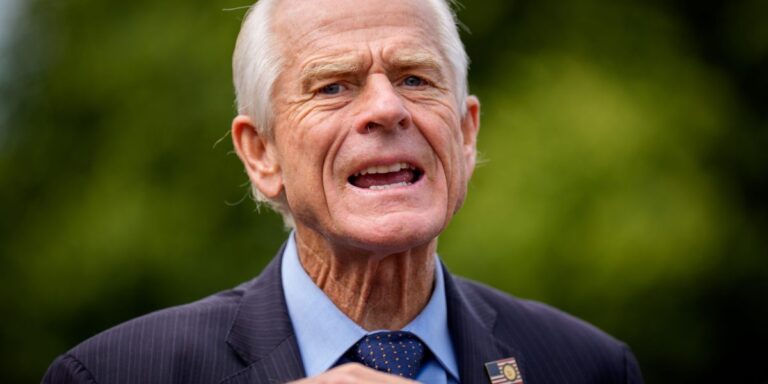
White House senior counselor for trade and manufacturing Peter Navarro said Sunday that President Donald Trump’s tariffs are not permanent as he sought to undercut a ruling from a federal court that dealt a major blow to the administration’s trade policy.
On Friday night, the U.S. Court of Appeals for the Federal Circuit ruled that most of Trump’s so-called reciprocal tariffs on global trading partners are illegal.
That upheld an earlier ruling by the Court of International Trade, which found that the tariffs’ legal basis under the International Emergency Economic Powers Act (IEEPA) wasn’t valid, saying that the administration’s argument for the tariffs didn’t constitute an emergency.
“Both the Trafficking Tariffs and the Reciprocal Tariffs are unbounded in scope, amount, and duration,” the majority wrote. “These tariffs apply to nearly all articles imported into the United States (and, in the case of the Reciprocal Tariffs, apply to almost all countries), impose high rates which are ever-changing and exceed those set out in the [U.S. tariff system], and are not limited in duration.”
The Trump administration is appealing the decision to the Supreme Court, and Friday’s ruling is on hold until mid-October to give the high court a chance to consider the case.
On Fox News’s Sunday Morning Futures, Navarro called the appeals court’s ruling “weaponized partisan injustice” and said the dissenting opinion in favor of the tariffs should give the White House a strong argument before the Supreme Court.
The judges who sided with the administration said IEEPA allows “broad emergency authority in this foreign-affairs realm, which unsurprisingly extends beyond authorities available under non-emergency laws.”
Navarro also said the trade deficit does indeed constitute an emergency because it is “absolutely devastating to this country.” And he pushed back against the appeals court’s characterization of the tariffs as unlimited in duration.
“Hey memo to the court: we never said they were permanent,” he said.
If the flow of illegal drugs from China, Mexico and Canada stop, the tariffs will go away, Navarro added, likewise if the trade deficit shrinks to nothing.
In April, Trump was asked about comments from administration officials who said tariffs could be negotiated and that they were permanent.
“They can both be true,” he replied. “There could be permanent tariffs, and there could also be negotiations, because there are things that we need beyond tariffs.”
In May, Trump also said auto tariffs are permanent, but those duties weren’t affected by Friday’s court ruling as they were invoked under a different law.
He has also touted the long-term benefits of his tariffs, recently pointing to the CBO’s 10-year projection that tariffs will reduce the deficit by $4 trillion and that they will bring in enough revenue to lower the U.S. debt, which tops $37 trillion.
“The purpose of what I’m doing is primarily to pay down debt, which will happen in very large quantity — but I think there’s also a possibility that we’re taking in so much money that we may very well make a dividend to the people of America,” Trump said earlier this month.
Introducing the 2025 Fortune Global 500, the definitive ranking of the biggest companies in the world. Explore this year’s list.
Freestyler Lindsey Schlegel Verbally Commits to Wisconsin–Green Bay for Fall 2026

By Sean Griffin on SwimSwam

Fitter and Faster Swim Camps is the proud sponsor of SwimSwam’s College Recruiting Channel and all commitment news. For many, swimming in college is a lifelong dream that is pursued with dedication and determination. Fitter and Faster is proud to honor these athletes and those who supported them on their journey.
Freestyler Lindsey Schlegel, a native of Muskego, Wisconsin, has committed to swim and study at the University of Wisconsin–Green Bay beginning in the 2026–2027 school year. She trains year-round with the Waukesha Express Swim Team and attends Muskego High School.
She confirmed the commitment in an email to SwimSwam, and provided the following quote:
I am so excited to announce my verbal commitment to continue my education and swim Division 1 at the University of Wisconsin-Green Bay! First, I want to thank God, because without Him, I wouldn’t have achieved this goal. Next, thank you to my coaches on Express and Muskego for believing in me and getting me to this point in my athletic career. Additionally, thank you to all the coaching staff at UWGB for giving me this opportunity! Finally, thank you to my friends, family, and teammates for supporting me throughout my entire swimming journey. Go Phoenix!
Schlegel’s target meets of the last high school season were the Wisconsin Interscholastic Athletic Association (WIAA) Division 1 Sectional 5 meet and the WIAA Girls Division 1 State Championships, both held a week apart in early November.
At Sectionals, Schlegel walked away with four gold medals around her neck. She tackled the 50 free (23.59) and 100 free (52.13) individually, with both times checking in as new career bests. She also anchored Muskego’s winning 200 medley relay in 23.19 as well as led off their first-place 400 free relay in 52.57.
Schlegel’s momentum continued into the State Championships, where she finished in the top eight of all four of those same events. She notched 23.50 en route to fifth and another best time in the 50 free, while she broke 52 for the first time in 51.86 to grab seventh. She anchored the second-place medley relay in the exact same time she did at Sectionals, 23.19, before producing another sub-52 effort of 51.94 leading off the silver medal-winning 400 free relay.
She concluded her season at the NCSA Spring Championships in March, where she hit the wall 50th in the 50 free (23.93), 107th in the 100 free (53.09), 130th in the 200 free (1:56.86), and 219th in the 100 back (1:02.88). She was once again strong on relays, splitting 23.35 on the 10th-place 200 free relay, 23.84 on the 35th-place 200 medley relay, 53.62 on the 38th-place 400 medley relay, 52.57 leading off the 12th-place 400 free relay, and a PB of 1:53.26 leading off the 10th-place 800 free relay.
Top SCY Times:
- 50 Freestyle: 23.50
- 100 Freestyle: 51.86
- 200 Freestyle: 1:53.26
Alex Lewis took the helm of the UWGB program in November 2021. He was able to hire a full-time assistant coach and a graduate assistant last season; in the first three years of his tenure as head coach, it was just him and a diving coach.
The UWGB women took sixth out of six teams at last year’s Horizon League Championships. A year prior, they finished last in the conference as well.
The conference meet scores ‘A’ and ‘B’ finals, and Schlegel’s best time in the 50 free would have situated her 8th out of prelims and into the ‘A’ final. In the 100 and 200 free, times of 51.21 and 1:52.58 were required to secure a lane in the championship heat. Her times in those events are quick enough for the ‘B’ final though, as it took 52.45 and 1:55.19 to qualify.
According to the team’s 2024-25 depth chart, Schlegel’s career bests in all three freestyle events would have ranked her second. Junior Emily Allen led the way with marks of 23.35, 51.18, and 1:50.27, respectively. She was 4th in the 200 free, 7th in the 100 free, and 9th in the 50 at the Horizon League Championships, but will be graduating a few months prior to Schlegel’s arrival on campus.
Schlegel joins Avelyn Brown, Hannah Tubbs, and Madeline Bichon in UWGB’s 2030 recruiting class.
The swimmers will arrive on a campus that has recently made several upgrades to its aquatic center, including a new $65,000 video board. The facelift at the pool comes amid other positive momentum for the NCAA Division I program, which included the reinstatement of athletic scholarships for the 2024-2025 season, four years after they were eliminated in a budget measure.
If you have a commitment to report, please send an email with a photo (landscape, or horizontal, looks best) and a quote to Recruits@swimswam.com.
About the Fitter and Faster Swim Tour
Fitter & Faster Swim Camps feature the most innovative teaching platforms for competitive swimmers of all levels. Camps are produced year-round throughout the USA and Canada. All camps are led by elite swimmers and coaches. Visit fitterandfaster.com to find or request a swim camp near you.

FFT SOCIAL
Instagram – @fitterandfasterswimtour
Facebook – @fitterandfastertour
Twitter – @fitterandfaster
FFT is a SwimSwam partner.
Read the full story on SwimSwam: 23.5/51.8 Freestyler Lindsey Schlegel Sends Verbal To Wisconsin–Green Bay For Fall 2026