We are all used to catching sight of wind farms dotted across hilltops while driving through the countryside. Offshore turbines, rising like silent giants out at sea, are also a familiar sight. But what you’re unlikely to have spotted is a flying wind turbine. The reason is simple: the technology has had little traction so far. Yet its potential to transform electricity generation is significant. In this article, we look at the alternatives being trialled in this field, and how the latest prototype works.
Airborne wind power: a brief history
The idea of harvesting energy from the skies is far from new. In fact, it was first proposed back in 1833 by Johann Adolphus Etzler, an American engineer who dreamt of using giant kites to power agricultural machinery. His efforts never quite took off, but the logic behind them persisted.
Since then, engineers have experimented with various approaches, most of which fall into two broad categories:
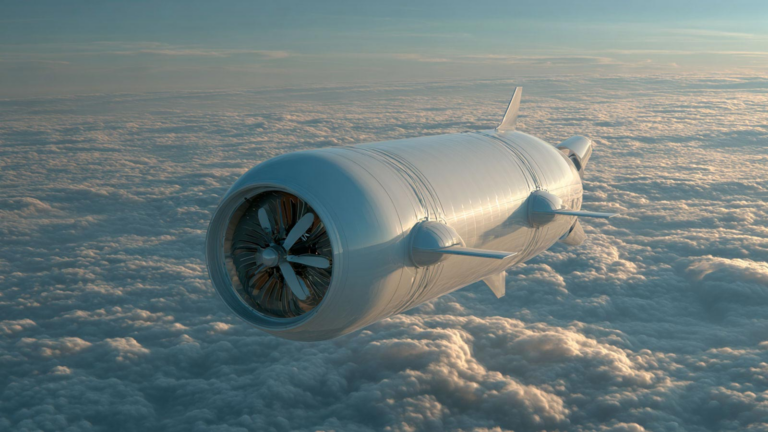
Aerostat turbines: These use an airship filled with a light gas (helium or hydrogen) to stay aloft. Operating at higher altitudes allows them to capture stronger and more consistent winds. In these models, the generators are always integrated within the airship itself. This is the turbine type we will focus on in this article, one that has just achieved a record-breaking 1 MW output in China.
Kite-based turbines: Instead of balloons, these systems rely on enormous computer-guided kites or wings. Their movements pull cables attached to ground-based generators, or occasionally to on-board devices. Google’s Makani project was a high-profile example, though it was ultimately abandoned after more than a decade of testing.
These airborne solutions aim to overcome the limitations of traditional turbines by harnessing faster and more reliable high-altitude winds that are inaccessible to conventional onshore and offshore systems. For now, however, they have had mixed fortunes. For example, Google’s Makani Airborne Wind Turbine project was ultimately scrapped after thirteen years of research. Will this time be different?
China’s record-breaking prototype
Developed by a Chinese company in partnership with Tsinghua University and the Chinese Academy of Sciences, the newest airborne wind turbine combines aerostat technology with wind turbines and delivers power at unprecedented levels.
The S1500 prototype, according to its developers, generates up to thirty times more energy than existing airborne models. The unit weighs about one tonne and contains twelve carbon-fibre microgenerators set into the hollow body of the airship.
The concept is similar to earlier projects: the goal is to access higher, steadier and faster winds than those blowing across land or open sea, thereby significantly increasing generation efficiency. More specifically, the researchers note that at its operating altitude wind speeds are about three times stronger than on the ground.
Main features of the new high-altitude turbine:
Operating altitude: up to 1,500 metres
Rated power output: 1 MW per turbine
Generation system: 12 microgenerators
Support system: helium-filled airship ensuring buoyancy and mobility
This form of airborne generation could prove especially valuable in remote mountainous areas, coastal zones where installing floating turbines is complex, and regions where mobility allows the technology to follow variable wind patterns. It could also provide renewable energy in humanitarian settings or refugee camps, similar to how other projects use solar power.
The challenges ahead
Despite the promise it shows, this technology faces notable technical challenges. Stability must be maintained against sudden gusts and pressure changes. Energy production must be optimised through real-time adjustments to blade orientation and speed. Safety is also critical, requiring high-resistance mooring cables and advanced electronic control systems.
United States President Donald Trump bristled on Wednesday when a Polish reporter suggested that he hadn’t done enough to pressure Russian President Vladimir Putin into ending Russia’s war on Ukraine, at a time when Europe and Ukraine are trying to convince Trump to impose sanctions or other punitive measures against Russia, as Moscow continues its assault on Ukraine.
He then pushed back at the reporter, listing measures he’d taken against Russian and threatening consequences if Moscow did not agree to peace.
Recommended Stories
list of 4 itemsend of list
The interaction came just a day before Trump spoke with Ukraine’s President Volodymyr Zelenskyy after he met with European leaders on Thursday in a separate European summit in Paris to discuss security reassurances for Ukraine in the event of a peace deal. The details of Trump and Zelenskyy’s meeting have not been made public yet.
Here is what we know about the action Trump has taken so far during his second US presidency to end this war.
Didn’t Trump promise to end the Russia-Ukraine war in just a day?
Yes. Indeed, the president has been keen to resolve several global conflicts, and has insisted that he is deserving of the Nobel Peace Prize for his efforts.
But, despite promising repeatedly during his election campaign last year that he would end the Russia-Ukraine warwithin 24 hours of resuming the US presidency, the war rages on.
Following several Trump-led meetings and calls with Putin and Zelenskyy, the two sides are still far apart from a truce as several disagreements remain over territory concessions.
Trump has pushed for a meeting between Putin and Zelenskyy, but that has not happened, with Ukraine accusing Russia of avoiding a two-way meeting in order to prolong the conflict.
At the end of his visit to China on Wednesday this week, however, Putin stated that while he was not against such a meeting, there might not be any point to it. He suggested that Zelenskyy visit him in Moscow, a proposal that Ukrainian Foreign Minister Andrii Sybiha has firmly rejected.
What did Trump say about Putin this week?
President Trump made the comments about Putin following a meeting with Polish President Karol Nawrocki, who was in the US to seek more American troop presence in his country, which borders Ukraine, in case of a Russian incursion into its own territory.
Trump recounted his efforts to end the Ukraine war at the press conference that followed the meeting. However, the US president visibly bristled when a reporter suggested that he had not done enough to pressure Russia’s Putin to end the war in Ukraine.
He pushed back at the suggestion, saying he had done several things. Trump added that he would continue to pressure Putin into making a decision, and that there would be consequences if Moscow failed to toe the line.
“Whatever his decision is, we’ll either be happy about it or unhappy,” Trump said, referring to Putin. “And if we’re unhappy about it, you’ll see things happen,” he said, without gving details of potential consequences.
Trump also repeated his past claims of having ended seven wars – including between Rwanda and the Democratic Republic of the Congo; Pakistan and India; Thailand and Cambodia; and Israel and Iran. He added that he’d initially believed pressuring Putin into ending the Ukraine war would be easier because of the warm relations both men enjoyed in the past.
“But you never know with war … I have no message to President Putin. He knows where I stand, and he’ll make a decision one way or the other,” Trump said when asked if he had any messages to pass on to the Russian leader.
What steps has Trump taken to pressure Russia?
Tariffs against India
At the press briefing on Wednesday, Trump cited the high trade tariffs he has levied on India for buying Russian oil as one way he has pressured Putin. The US initially slapped a 25 percent levy on India, the world’s fifth-largest economy and a close Russian ally, in July, as part of Trump’s ongoing tariff wars. That rate was then doubled as punishment for trading with Russia.
A woman works at a garment factory in Tiruppur, in the southern state of Tamil Nadu, India, April 21, 2025 [Francis Mascarenhas/Reuters]
The 50 percent tariffs, which took effect on August 27, have hit India hard. Experts say they will greatly reduce Indian exports to the US, its biggest trading partner, and potentially affect thousands of jobs. The cost to India’s economy could run to billions of dollars. India’s main exports to the US include pharmaceuticals, gemstones, carpets, apparel and jewellery. US levies on India are among the highest Trump has imposed.
India has not retaliated to Trump’s move. However, New Delhi has signalled its ire to Washington by deepening ties with Russia and China, both US adversaries. India’s Prime Minister Narendra Modi visited China this week for a security forum. He also shared a limousine ride with Russia’s Putin in China.
However, on Wednesday of this week, Trump told a radio show that he was not worried about a Russia-China axis against the US. He did express disappointment in Putin, however, adding that the US wanted to “help people live” in Ukraine.
Secondary sanctions on Russia’s allies
Trump has suggested that more “secondary sanctions” – such as the higher tariffs imposed on India – are in the works for other Russian allies as well.
“You’re going to see a lot more. So this is a taste,” Trump said in the Oval Office on August 8, after the initial tariffs were placed on India. However, the White House has provided no further details.
Experts say China could be targeted next. The US and China have already engaged in one intense trade war this year, with both levying more-than-100-percent tariffs on each other at one point. Following talks, the US is currently levying an average of 57.6 percent import levies on all Chinese goods, while China has imposed an average of 32.6 percent tariff on US imports.
(Al Jazeera)
Additional sanctions on Russia
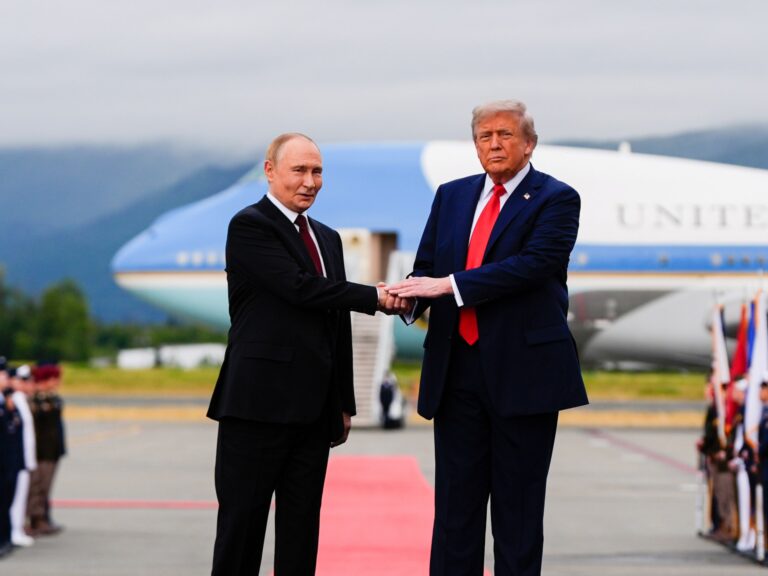
Trump has also threatened to pile more sanctions on Russia if Putin fails to agree to peace with Ukraine. He renewed that threat on August 22, a week after hosting Putin at talks in Alaska.
“I’m going to make a decision as to what we do, and it’s going to be, it’s going to be a very important decision, and that’s whether or not it’s massive sanctions or massive tariffs or both, or we do nothing and say ‘It’s your fight’,” Trump told reporters.
Since Trump took office this year, the US has not imposed more sanctions on Russia. There were extensive US sanctions in place on Russia already, however.
Some travel and business transaction bans on specific individuals, officials and entities go as far back as 2014, when Russia annexed the Ukrainian region of Crimea. Russia’s intelligence services, the Main Intelligence Directorate (GRU) and the Federal Security Service (FSB), as well as four unnamed individuals and three companies, were all sanctioned for their involvement in Russia’s interference in the 2016 US elections before President Barack Obama left office. Two “Russian compounds” in New York and Maryland, where some of the interference work was done, were also shut down.
In 2018, during Trump’s first term, the US sanctioned Russian hackers, officials and related organisations which were found to have been involved in the 2016 election interference and for other “malign” actions. High-profile names – such as Putin’s former son-in-law, Kirill Shamalov and a Russian state weapons company – were named.
In August 2019, Trump approved additional sanctions forbidding the granting of loans to Russian entities or other assistance from Western monetary bodies like the World Bank. Licensing restrictions were also introduced for chemical or biological weapons exported to Russia for fears of proliferation.
Following Moscow’s 2022 invasion of Ukraine, the administration of former US President Joe Biden expanded sanctions to include bans on Russian oil sales, transactions with Russian banks and the confiscation of Russian-owned property overseas. Export controls were further imposed on US-made high-tech material being exported to Russia to reduce Moscow’s access to Western technology.
Weapons sales to NATO
In July, Trump struck a deal with European NATO countries to sell more US weapons, such as Patriot missile air defence systems, for Ukraine’s use. Trump said the weapons would be rapidly sent to the front lines of the war and that Ukraine’s European allies would pay for them.
On August 28, the US State Department confirmed that the US is set to send weapons worth $825m to Ukraine as part of that deal. Ukraine, the statement read, had requested 3,500 extended-range cruise missiles and 3,350 GPS navigation systems, and those would be delivered, in addition to other equipment such as batteries and training software.
“This proposed sale will improve Ukraine’s capability to meet current and future threats by further equipping it to conduct self-defense and regional security missions. Ukraine will have no difficulty absorbing these articles and services into its armed forces,” the US statement read.
The sale, which was paid for by Denmark, Norway, and the Netherlands, as well as in part by the US, was pending approval from Congress, the statement added.
What happens next?
On Thursday, Zelenskyy spoke with Trump by phone following his meeting with European leaders in Paris.
The Paris summit aimed to gather consensus about security guarantees for Ukraine once a peace deal is reached. The so-called coalition of the willing discussed measures like deploying a peace force to Ukraine, but no concrete announcements were made after the meeting. US envoy Steve Witkoff was also present in Paris and met with Zelenskyy.
The Ukrainian leader earlier said he would push Trump for more sanctions on Russia. He also said there were “signals” that the US would act as a “backstop”, suggesting that the US may be willing to provide some form of protective support for Ukraine in the future. Zelenskyy made those comments earlier this week at a press briefing in Copenhagen where European ministers met to discuss security.
Reporting from the White House in Washington, DC, on Wednesday, Al Jazeera correspondent Alan Fisher said there was no confirmation of the sequence of events yet, but that it is likely that following Zelensky’s chat with Trump, the US president will then have a call with Putin to further push for a concrete peace package.
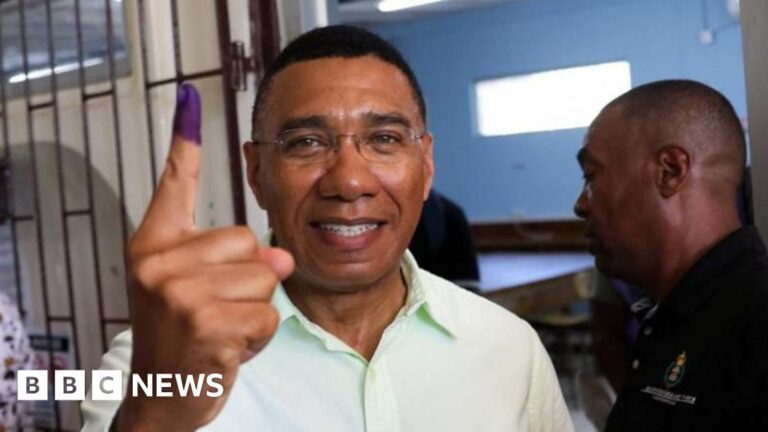
Jamaican Prime Minister Andrew Holness, 53, has won a rare third term in office after his Labour Party sailed to victory in Monday’s election.
The Caribbean nation’s electoral commission said the Labour Party had won 34 seats, beating the opposition People’s National Party (PNP), which secured 29 seats, according to preliminary figures.
The candidate for the PNP, Mark Golding, has conceded defeat.
Holness campaigned on a promise to lower the income tax rate from 25% to 15%, while Golding had said he would raise the income tax threshold.
The incumbent was also credited by many voters for bringing down the number of homicides in the country after the murder rate fell to its lowest in 25 years in the first quarter of 2025, according to official figures.
While there was some criticism of the measures used to bring about the drop in crime – such as states of emergency being declared in some regions – the increased sense of safety seems to have helped propel Holness to another term.
But the economy was at the centre of the election campaign with the Labour Party pointing to the low unemployment rate of 3.3% as one of its achievements in office.
The main opposition party, the PNP, accused the government of squandering money, citing the high cost of second-hand school buses it had purchased.
It also raised questions about the integrity of Prime Minister Holness, citing a report which had questioned his income and assets declaration.
Holness denied any wrongdoing and accused the PNP of using the report as a “distraction” because, he said, the government’s record was such that there was little the opposition could criticise.
While turnout was low at 39.5%, an observer mission sent by the Organization of American States (OAS) praised Jamaican voters for being “calm and orderly with a sense of civic maturity and pride”.
Holness thanked voters for “this historic third term” and for their “trust, your faith and your belief in the vision of a stronger, safer, more prosperous Jamaica”.
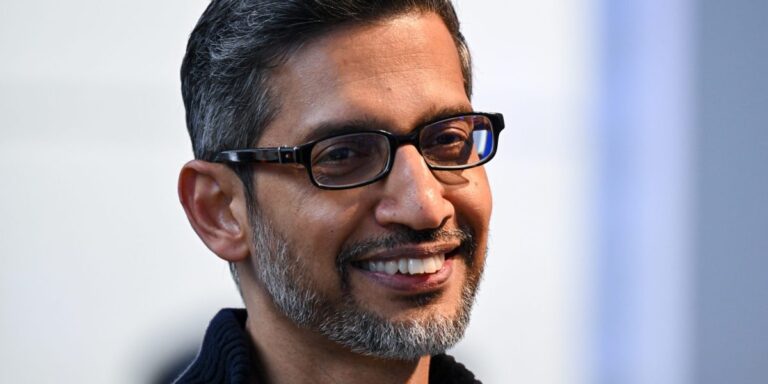
Alphabet’s shares surged to a record high Thursday, after U.S. regulators stepped back from a proposed set of new restrictions on large AI platforms — a decision that unexpectedly strengthened the hand of Google’s parent company. But while regulatory relief is one factor, analysts say the real driver behind Google’s market-breaking rally lies in the success of its competitors. In fact, that’s what the judge in Google’s antitrust case said, too.
In a 230-page ruling, District Court Judge Amit Mehta wrote that Google can no longer enter into exclusive distribution deals around making its search engine or its Gemini AI technology into a default option, and that it must share some search data with competitors, but stopped short of requiring it to spin off key assets, especially its Chrome web browser.
Mehta wrote that the emergence of generative AI has “changed the course of this case,” which began in 2020, several years before the mainstream release of ChatGPT fundamentally changed the tech sector. “The money flowing into this space, and how quickly it has arrived, is astonishing,” he wrote.
Alphabet’s stock closed up 8% Thursday at $231.10, its highest level ever.
Surprise on Wall Street
What surprised many on Wall Street was how much Google appears to benefit indirectly from the rapid progress of its rivals. Microsoft, OpenAI, and Anthropic have spent billions elevating user expectations in AI-powered search, work software, and creative tools. Each breakthrough has ignited wider adoption of AI across industries — demand that has spilled over into Google’s own ecosystem of services and cloud infrastructure.
Bank of America Research wrote that the ruling potentially cleared one of the two big stock “overhangs,” saying its “top takeaway is the judgment preserves Google’s ability to maintain its search distribution position.” The other overhang, competitive uncertainty for search query volumes, remains, although BofA’s thesis that AI is actually expanding the search market could also become a “potential net positive for Google.” The bank said it has noted an improving position for Google’s AI and search products year-to-date despite strong growth at emerging Gen-AI competitors.
To that point, after seeming to lag in the “AI race,” Google has shifted, embedding its Gemini model across Search, Docs, and Pixel devices. Investors once worried that AI chatbots could cannibalize Google’s core search advertising. But Google has released data showing ad engagement holding steady, and that AI-generated answer summaries actually drove more time spent inside the Google ecosystem.
For this story, Fortune used generative AI to help with an initial draft. An editor verified the accuracy of the information before publishing.
Fortune Global Forum returns Oct. 26–27, 2025 in Riyadh. CEOs and global leaders will gather for a dynamic, invitation-only event shaping the future of business. Apply for an invitation.
Secretary of State Marco Rubio said military operations against Venezuelan cartels would continue.
It’ll happen again. Maybe it’s happening right now. I don’t know. But the point is the president of the United States is going to wage war on narco terrorist organizations. This one was operating in international waters, headed towards the United States to flood our country with poison.
Recent episodes in Latest Video
Whether it’s reporting on conflicts abroad and political divisions at home, or covering the latest style trends and scientific developments, Times Video journalists provide a revealing and unforgettable view of the world.
Whether it’s reporting on conflicts abroad and political divisions at home, or covering the latest style trends and scientific developments, Times Video journalists provide a revealing and unforgettable view of the world.
MBW Views is a series of exclusive op/eds from eminent music industry people… with something to say. The following op/ed comes from Claire Hoffman, an associate at Michelman & Robinson, LLP, a national law firm headquartered in Los Angeles, with additional offices in Irvine, San Francisco, Dallas, Houston, Chicago and New York City. Hoffman specializes in corporate transactions in the entertainment industry.
In the summer of 1985, Tipper Gore and the Parents Music Resource Center held a Senate hearing to protest rising deviance in popular music. Gore railed against Prince, Madonna, and other headlining acts she deemed Trojan Horses, deceiving parents into buying music for their children that promoted drugs, violence, sex, and the occult.
By fall, the Recording Industry Association of America had agreed to place the now-infamous black-and-white “Parental Advisory: Explicit Content” sticker on selected releases deemed too distasteful. To preserve their “family-friendly” reputations, retail giants like Walmart refused to sell these “explicit” albums, opting instead to carry only “clean,” censored versions.
But what was meant as a scarlet letter quickly became a badge of honor. When the “Tipper Sticker” appeared on an album, it signaled subversion and cultural cachet. In his 1989 song “Freedom of Speech,” Ice-T reveled, “Hey, PMRC…The sticker on the record is what makes ’em sell gold…The more you try to suppress us, the larger we get.” Gore and the PMRC had forgotten the golden rule of the music industry: rebellion sells.
The Price of Rebellion in the Streaming Era
Parental Advisory warnings may have faded in relevance during the streaming era, but the story underscores a persistent tension in the music business: controversy drives sales — but it can also sink value. In the last decade, that tension has played out in the careers of some of the industry’s biggest names.
Sean “Diddy” Combs saw his streaming numbers spike, even as he faced lawsuits and a federal raid. After being shunned from radio playlists for using a racial slur, Morgan Wallen rebounded to score multiple No.1 hits. Kanye West lost a billion-dollar brand partnership after a string of antisemitic remarks — but still commands a massive audience and accompanying streams.
For music investors, this paradox represents a risk — one not easily managed. After all, artists do not have a fiduciary duty to maximize investor value. Left unchecked, misbehavior by musicians can result in a catalog being pulled from the radio, a Twitter campaign tanking streams, or an arrest postponing tour dates indefinitely.
In such cases, the investor’s only protection lies in the purchase agreement. For this reason, many have turned to morals and misconduct clauses.
Two Paths to Protection
Morals clauses are forward-looking. If an artist engages in behavior specified as harmful, the buyer may take action. Remedies can include monetary damages or termination of the contract and release from future obligations. In practice, this clause is more common when the deal includes an ongoing business relationship between artist and buyer.
By contrast, a misconduct clause is narrower and backward-looking. It addresses liabilities existing at the time of the deal, not future conduct. Sellers may be required to disclose pending claims or past settlements involving harassment or assault — or confirm that none exist. If undisclosed issues surface after closing, the buyer may be entitled to compensation or termination of the agreement.
When Bad Behavior Is the Brand
Even with these tools, quantifying and mitigating this risk remains a persistent source of friction between artists and investors.
As buyer’s counsel, when we propose a morals or misconduct clause, the pushback often echoes the same refrain: “He’s a rockstar.” The implication? Rebellion isn’t misconduct — it’s the brand. Sex, drugs, and chaos aren’t risks; they are the product.
Artist representatives argue that such provisions penalize the very qualities that drive catalog value. They also raise concerns about scope: that a vaguely worded clause could be triggered by an unproven allegation, an internet rumor, or a bad-faith claim from a publicity seeker. And in a business built on myth-making, they’re not wrong to be cautious.
Cancel Culture Meets Catalog Value
This debate has only intensified in the age of “cancel culture.” Sometimes public outrage delivers long-overdue accountability. Other times, it’s little more than a fleeting popularity contest.
For catalog investors, the distinction matters. Some scandals spark curiosity streams or galvanize fan loyalty. Others make music virtually unlicensable. Predicting which way it will go is guesswork.
And even when misconduct is clear, quantifying its commercial impact remains difficult. Morgan Wallen’s 2021 use of a racial slur triggered radio blacklists and widespread backlash. But months later, his album stayed at No.1 for eleven straight weeks. As of this writing, two of his songs sit in the Billboard Hot 100’s top 10. Yes, his conduct caused reputational harm — but not a measurable decline in core revenue.
Contrast that with R. Kelly. Allegations against him had circulated since the 1990s, yet his catalog remained largely untouched for decades. It wasn’t until a documentary exposé reignited public outrage that streaming platforms removed his music from curated playlists and licensing deals collapsed. Streams dipped, and his catalog became radioactive.
What’s forgivable today can be unforgivable tomorrow. The market moves with the culture — not the contract.
Balancing Edge and Exposure
The challenge isn’t whether to include misconduct provisions in catalog acquisitions — it’s how to draft them to reflect the tension between artistry and asset value. A few approaches help:
Tie to Material Impact. Limit triggers to events that demonstrably affect the assets — such as takedowns by streaming platforms, lost licensing opportunities, or measurable revenue decline.
Set a Time Horizon. Focus on misconduct within a defined period to avoid indefinite reach while still surfacing relevant risks.
Disclosure Warranties. Require sellers to disclose past allegations, claims, or settlements. Known risks can be priced. Hidden risks cannot be managed.
These strategies reframe morals and misconduct clauses away from abstract morality and toward commercial impact.
Investing in Culture, Investing in Risk
The music business has always thrived on risk — on the push and pull between rebellion and commercial appeal. As catalogs become billion-dollar assets, that risk carries larger consequences. For investors, the goal isn’t to sanitize the art or dull its edge. It’s to write deals that anticipate volatility and guard against scandals that can wipe out value overnight.
Morals and misconduct clauses aren’t about judging artists. They are tools for managing risk in a market where culture moves faster than contracts. The challenge is to draft with clarity — preserving the freedom that fuels creativity while protecting the investment in a business where popularity, morality, and profit are always in flux.Music Business Worldwide
A required part of this site couldn’t load. This may be due to a browser
extension, network issues, or browser settings. Please check your
connection, disable any ad blockers, or try using a different browser.
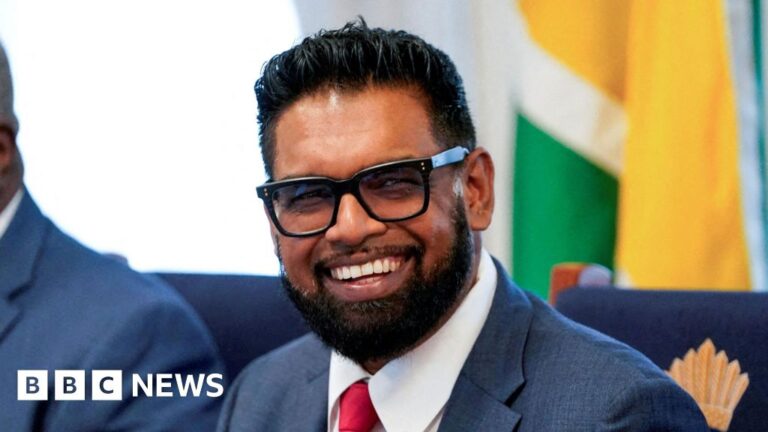
Guyanese President Irfaan Ali has claimed a second five-year term in office, even as official final results from Monday’s general election are yet to be published.
Ali’s People’s Progressive Party (PPP) secured at least 242,000 votes in the poll, claiming majorities in eight of the 10 districts in the South American country, according to Reuters news agency.
We Invest in Nationhood (WIN), a new political party founded just three months ago, came in second with around 109,000 votes.
Ali, 45, campaigned on a pledge to use the country’s vast oil reserves, discovered in 2019, to improve infrastructure and reduce poverty, while navigating territorial tensions with neighbour Venezuela.
It is not yet clear how many seats each party will have in the 65-member parliament, but the current vice-president, Bharrat Jagdeo, told local media that the PPP would have a “bigger majority” than at the last election in 2020.
Despite a lower turnout than at the last election, the PPP appeared to have increased its vote share – while the long-term opposition A Partnership for National Unity trailed in third.
Much of this election centred on how parties would manage revenues from massive oil reserves discovered by the oil giant ExxonMobil in 2019.
Since 2019, the company says it has found billions of barrels’ worth of oil in Guyanese waters and territory – causing the state budget to quadruple.
With a population of around 800,000, Guyana now has one of the highest levels of proven crude oil reserves per capita in the world – and is one of the region’s fastest-growing economies.
But opposition parties say there is unfair distribution of oil earnings to groups connected to the PPP, accusations the ruling party denies.
Businessman Azruddin Mohamed, leader of the WIN party, alleged voting irregularities in Monday’s election, even as he celebrated the party having “shaken the pillars of Guyana’s political establishment”.
Observers from the Organization of American States were deployed to Guyana for the election and have not yet reported any instances of electoral fraud.
The election came the day after Guyanese police said that a boat carrying election officials and ballot boxes was “shot at from the Venezuelan shore” – in the contested Essequibo region.
Venezuela denied being behind the incident – which came as the two countries are locked in a dispute over competing claims to the oil-rich region.