4.8 C
New York
Saturday, February 28, 2026
Home Blog Page 364

Court rules in favor of MLC allowing them to file amended complaint in ‘bundling’ lawsuit against Spotify

0

The Mechanical Licensing Collective has secured a crucial procedural ruling in its legal battle with Spotify over streaming royalty payments.

On Thursday (September 25), the Federal District Court in New York issued an order granting The MLC’s request to file an amended complaint in the case.

The original complaint, filed by the Mechanical Licensing Collective last May, alleged that Spotify significantly underpaid royalties after its decision to report its Premium subscription streaming offerings as bundles.

In her September 25 ruling, obtained by MBW, and which you can read in full here, Judge Analisa Torres wrote that “MLC should be given at least one opportunity to amend the complaint with the benefit of the Court’s reasoning in the Dismissal Order.”

The MLC must file its amended complaint by October 2, 2025.

The conflict between the MLC and Spotify began in March 2024 when Spotify reclassified its Premium subscription tiers as “bundles,” as they now include 15 hours of audiobook access each month.

The move controversially resulted in Spotify paying a lower mechanical royalty rate to publishers and songwriters in the United States.

Here’s a brief history explaining the context behind the move and how it led to a legal fight between the MLC and Spotify:

  • It stemmed from a 2022 US Copyright Royalty Board ruling on statutory precepts called “Phonorecords IV,” which established that bundled multimedia services could pay a lower mechanical royalty rate than standalone music subscription services.
  • SPOT subsequently added audiobooks to its Premium music service and claimed this qualified as a “bundle,” allowing it to cut mechanical royalty payments to publishers and songwriters in the US.
  • The move began affecting payouts in Spring 2024. The decision attracted legal action from the Mechanical Licensing Collective (MLC), which filed a lawsuit against Spotify in May 2024, alleging the platform was illegally underpaying royalties to songwriters and publishers.
  • The MLC’s lawsuit was dismissed in January 2025, with the court holding that the Premium Service is a bundle.
  • The following month, the MLC sought to reopen the case and amend its complaint.
  • Judge Torres has now ruled that the MLC should have the opportunity to do so.

‘The MLC welcomes this Order granting our motion to file an amended complaint and recognizing our right to seek recovery of underpaid royalties from Spotify,” the org told MBW.

“This is an important case. We brought it to ensure streaming royalties are properly paid under the law. We look forward to further demonstrating the merit in our claims.”

The MLC

It added: “This is an important case. We brought it to ensure streaming royalties are properly paid under the law. We look forward to further demonstrating the merit in our claims.”

A Spokesperson for the US-based National Music Publishers Association also commented on the court’s decision, noting that it arrives “on the heels of the historic $2.5 billion FTC settlement against Amazon, cracking down on its deceptive subscription schemes”.

“The judge today upheld the MLC’s ability to file a new complaint alleging Spotify improperly used the Audiobooks Access plan and that Spotify actually owes royalties on the Audiobooks Access plan because it comes with music.”

Spokesperson for the NMPA

Added the NMPA spokesperson: “We are extremely pleased that the case against Spotify by the MLC has new momentum. The judge today upheld the MLC’s ability to file a new complaint alleging Spotify improperly used the Audiobooks Access plan and that Spotify actually owes royalties on the Audiobooks Access plan because it comes with music.

“This means songwriters and publishers have reason to hope that Spotify’s deceptive practices will be stopped. You cannot unilaterally convert music subscribers to bundles including audiobooks – to pay a lower royalty rate – then raise prices and make it exceedingly difficult to return to a music-only plan.”


According to Thursday’s court filing, the MLC wants to make two main amendments to its complaint, both stemming from new theories about how Spotify allegedly violates Section 115 of the Copyright Act:

1. Artificial Price Manipulation: The MLC alleges that Spotify “created Audiobooks Access and artificially inflated its price for this purpose, never intending to seriously market Audiobooks Access as a ‘real’ plan.”

According to the filing, Spotify launched the plan “only in the United States, and it did so with hardly any advertising” and used the $9.99 price to reduce “the pro-rata portion of Premium’s revenue that is attributable to music streaming from 100 percent (prior to March 2024) to as little as 37 percent.”

2: Improper Reporting Classification The MLC contends that “Spotify has informed MLC that it combines the reporting and payment of royalties due in connection with Audiobooks Access with the reporting and payment of royalties due in connection with Spotify Free,” which “contravenes the plain language of the applicable regulations.”

The filing argues this allows Spotify to avoid higher “Bundled Subscription Offering” rates and instead pay lower rates for free services, thereby “sidestepping important royalty-calculation provisions under the Copyright Act.”


Spotify, in its most recent Form 6-K filed with the SEC last month for its Q2 financial results, pointed out that the MLC filed a request on April 1 to file an amended complaint alleging that the streaming company “improperly valued the components of the Premium Service bundle and improperly reported royalties for the Audiobook Access Tier product”.

SPOT noted that “the MLC is entitled to appeal the original decision after the resolution of its new claims” and that, “if the MLC were to appeal and ultimately be entirely successful in its case, the additional royalties that would be due in relation to the period March 1, 2024 to June 30, 2025 would be approximately €256 million, plus potentially penalties and interest, which [SPOT] cannot reasonably estimate.”

That €256 million estimate works out to USD $290 million according to the average exchange rate for Q2 published by the European Central Bank.

MBW has reached out to Spotify for a comment about the latest development in this case.


All three majors have now inked direct publishing agreements with Spotify that move beyond the traditional CRB model in the US.

Spotify signed an agreement with Sony Music Publishing earlier this month that includes a new direct licensing arrangement in the US, which the streaming company said will, “ensur[e] songwriters share more directly in the growth of streaming”.

Universal Music Publishing Group and Warner Chappell Music signed direct licensing deals with Spotify in January and February.

Spotify also signed a direct licensing deal with Kobalt covering the US last month.Music Business Worldwide

Recap of 2025 Florida vs Indiana Live: Gator Women and Hoosier Men Secure Convincing Wins

0

By James Sutherland on SwimSwam

Florida vs Indiana

The first marquee dual meet of the 2025-26 NCAA season will go off on Friday morning from the Counsilman-Billingsley Aquatic Center in Bloomington, as the Indiana Hoosiers host the Florida Gators in a matchup between two of the nation’s top teams.

Last season, the two teams squared off in January, with the IU men (163-13g7) and the Florida women (164-136) claiming victories. Historically, the Gator men own a 4-1 record against the Hoosiers, while the Indiana women have a 3-2 record against Florida.

At the 2025 Women’s NCAA Championships, Indiana placed 4th and Florida was 6th, while the Hoosier men took 3rd and the Gators were 4th at the men’s meet.

All four teams suffered some crucial losses in the offseason, most notably Bella Sims and Julian Smith for Florida, and Anna Peplowski for the Indiana women. The Hoosier men lost 11 of their 15 individual scorers from the 2025 NCAAs, including national champions Carson TylerQuinn Henninger and Jassen Yep.

Some of the key names competing this morning include reigning NCAA champions Josh Liendo (Florida) and Zalan Sarkany (Indiana), and 2025 world champion Ahmed Jaouadi (Florida) on the men’s side, while the women’s meet includes star breaststroker Anita Bottazzo for Florida and backstroker Miranda Grana for Indiana.

Women’s 200 Medley Relay

  • Florida Record: 1:33.92 (Sims, Bottazzo, Peoples, Cronk) – 2025
  • Indiana Record: 1:33.89 (Rockett, King, Jensen, Haskett) – 2018
  • CBAC Pool Record: 1:34.17, Indiana (Scott, King, Jensen, Koontz) – 2019
  1. Florida ‘A’, 1:37.86
  2. Indiana ‘A’, 1:39.30
  3. Indiana ‘B’, 1:41.98

The Florida quartet of Catie Choate (24.62), Anita Bottazzo (26.52), Beatriz Bezerra (23.95) and Addison Reese (22.77) kicked the meet off by claiming the women’s 200 medley relay in 1:37.86, giving them a comfortable margin over Indiana.

The Hoosiers placed 2nd in 1:39.30, with Mya Dewitt (25.02), Jonette Laegreid (28.76), Miranda Grana (23.62) and Liberty Clark (21.90) on their squad. The split for the freshman Clark is notably four-tenths under her flat start PB of 22.30.

Men’s 200 Medley Relay

  • Florida Record: 1:20.15 (Chaney, Smith, Liendo, McDuff) – 2024
  • Indiana Record: 1:20.92 (Barr, Benzing, Brooks, King) – 2025
  • CBAC Pool Record: 1:22.64, Indiana (Knedla, Benzing, Frankel, King) – 2025
  1. Indiana ‘A’, 1:26.33
  2. Florida ‘A’, 1:27.04
  3. Indiana ‘B’, 1:27.55

The men’s medley relay was a much closer affair, with the Indiana men prevailing in 1:26.33 over Florida’s 1:27.04. IU’s ‘B’ team was close behind in 1:27.55.

The Hoosiers were faster on three of the four legs compared to Florida, with Miroslav Knedla clocking 21.89 on the lead-off leg, Texas A&M transfer Travis Gulledge splitting 24.39 on breast, and Mikkel Lee anchoring in 19.36.

On butterfly, Josh Liendo split 20.06 for the Gators, while Owen McDonald was 20.69 for IU.

Along with Liendo, the Florida ‘A’ team also featured Jonny Marshall (22.17) on back, Aleksas Savickas (25.04) on breast and Alex Painter (19.78) on free.

Indiana had the three fastest breast splits in the field, with Alexei Avakov going 24.37 for the ‘B’ team and freshman Noah Cakir splitting 24.41 for the ‘C’ squad.

Women’s 1000 Free

  1. Julie Brousseau (FLOR), 9:55.79
  2. Gracie Weyant (FLOR), 10:06.66
  3. Camille DeBoer (FLOR), 10:07.50

It was a 1-2-3 sweep for Florida in the women’s 1000 free, with Canadian sophomore Julie Brousseau earning a decisive victory in a time of 9:55.79.

Brousseau, who opened the first 500 in 4:56.03 and closed in 4:59.76, didn’t race the 1000 at all last season, but was 9:37.86 to the feet at the SEC Championships in the 1650 free.

Sophomore Gracie Weyant was the runner-up in 10:06.66, just over nine seconds shy of her best time (9:57.34) set back in 2020.

Men’s 1000 Free

  1. Zalan Sarkany (IU), 9:03.67
  2. Gio Linscheer (FLOR), 9:16.66
  3. Eric Brown (FLOR), 9:17.21

Reigning 1650 free NCAA champion Zalan Sarkany rolled to victory in the men’s 1000 free in a time of 9:03.67, splitting 4:28.26/4:35.41 en route to the 13-second win.

The swim marks Sarkany’s first 1000 over 9:00–though all of his other ones have either come in November, January or February. He set a PB of 8:37.82 in January 2024 while at ASU.

Florida seniors Gio Linscheer (9:16.66) and Eric Brown (9:17.21) went 2-3, while Gator sophomore Luke Corey (9:22.96) was 4th.

IU freshman Luke Ellis clocked 9:30.82 for 5th in his Hoosier debut.

Women’s 200 Free

  1. Lainy Kruger (FLOR), 1:48.37
  2. Jo Jo Ramey (FLOR), 1:49.99
  3. Macky Hodges (IU), 1:50.15

Florida junior Lainy Kruger picked up the win in the women’s 200 free in a time of 1:48.37, going 1-2 with teammate Jo Jo Ramey (1:49.99).

Kruger, whose fastest 50 of the race came on the last one (26.58/27.66/27.56/26.57), was right on par with where she was last season during in-season meets, having gone 1:49.67 and 1:48.31 in a pair of January duals. Her best time stands at 1:43.64 from the 2025 NCAAs where she was 14th.

Men’s 200 Free

  • Florida Record: 1:29.48, Kieran Smith – 2021
  • Indiana Record: 1:29.63, Blake Pieroni – 2018
  • 2025 NCAA Cutline: 1:32.27
  • CBAC Pool Record: 1:31.88, Andrew Loy (OSU) – 2020
  1. Ahmed Jaouadi (FLOR), 1:37.42
  2. Brandon Fleck (IU), 1:38.04
  3. Cooper McDonald (IU), 1:38.10

Tunisian world champion Ahmed Jaouadi had a successful collegiate debut for the Gators, winning the men’s 200 free in 1:37.42.

Jaouadi split 22.64/24.55/25.53/24.70 in what was his first time racing in yards.

Indiana first-year Brandon Fleck (1:38.04) edged out teammate Cooper McDonald (1:38.10) for the runner-up spot. Fleck owns a best time of 1:35.99, set in May.

Aaron Shackell, who transferred to Indiana after spending some time with Texas last season, placed 6th in 1:40.01 in his IU debut.

Women’s 100 Back

  1. Miranda Grana (IU), 52.09
  2. Catie Choate (FLOR), 52.43
  3. Mya DeWitt (IU), 54.49

Indiana’s Miranda Grana nearly even-split the 100 back en route to a narrow victory over Florida’s Catie Choate, clocking 52.09 to Choate’s 52.43.

Grana split 25.89/26.20 to run down Choate, who held a narrow lead after the first 50 (25.62/26.81).

Grana, who set a PB of 49.62 at the 2025 NCAAs, was faster than she was during IU’s dual meet with Florida last season in January (53.50).

Men’s 100 Back

  1. Raekwon Noel (IU), 47.11
  2. Miroslav Knedla (IU), 47.38
  3. Jonny Marshall (FLOR), 48.38

Raekwon Noel and Miroslav Knedla gave Indiana a dominant 1-2 finish in the men’s 100 back, with Noel leading the way in 47.11.

The swim for Noel is his fastest ever at a non-taper meet, having only ever been faster at the 2024 Ohio State Invitational (46.78/46.97) and the 2025 Big Tens (46.13/46.33). Last season, he was 47.46 at the Eddie Reese Invite in November, which was his first time racing the event as a Hoosier.

Knedla, a 2025 World Championship semi-finalist in the 100 back, was a solid 47.38 for 2nd, while Florida’s Jonny Marshall rounded out the podium in 48.38.

Women’s 100 Breast

  • Florida Record: 57.49, Anita Bottazzo – 2024
  • Indiana Record: 55.73, Lilly King – 2018
  • 2025 NCAA Cutline: 59.51
  • CBAC Pool Record: 55.88, Lilly King (IU) – 2019
  1. Anita Bottazzo (FLOR), 59.07
  2. Anna Moore (FLOR), 1:03.10
  3. Molly Mayne (FLOR), 1:03.32

Sophomore Anita Bottazzo put on a clinic to lead a 1-2-3 sweep for Florida in the women’s 100 breast.

The Italian native put up a time of 59.07 (27.57/31.50) to win the event by four seconds, registering her fastest swim outside of the 2024 UGA Fall Invite, and the 2025 SECs and NCAAs. She was 1:00.63 in early January when these two teams last faced off.

Anna Moore (1:03.10) and Molly Mayne (1:03.32) solidified the Gator podium sweep, with Jonette Laegreid (1:03.84) giving IU their top finish in 4th.

Men’s 100 Breast

  1. Noah Cakir (IU), 53.89
  2. Alexei Avakov (IU), 54.41
  3. Travis Gulledge (IU), 54.95

After the Florida women dominated, the Indiana men responded in the 100 breast, sweeping the top four spots with freshman Noah Cakir pacing the field.

Cakir, making his individual college debut, clocked a time of 53.89, just over a second and a half shy of his personal best of 52.34 set in April.

Sophomore Alexei Avakov, who is coming off a breakout summer, took 2nd in 54.41, while fellow second-year Travis Gulledge rounded out the top three in 54.95.

Women’s 200 Fly

  1. Lainy Kruger (FLOR), 1:59.44
  2. Lily Hann (IU), 1:59.74
  3. Addison Reese (FLOR), 2:00.69

Lainy Kruger impressively came from behind to win the women’s 200 fly shortly after booking her first win of the morning in the 200 free.

Florida’s Kruger turned 4th at the 100 in 59.19, well back of Indiana’s Lily Hann (57.84), and then after the two both split 30.6 on the third 50, Kruger turned on the jets coming home in 29.65, out-touching Hann, 1:59.44 to 1:59.74.

The time is comparable to where Kruger was in her first meet of the season last year (1:59.53) and where she was against Indiana last January (1:59.16).

Hann, who set a best time of 1:56.30 last March at the IU Last Chance Meet, was 2:00.82 when these two teams raced in early January.

Men’s 200 Fly

  1. Max Cahill (IU), 1:48.08
  2. Drew Reiter (IU), 1:49.08
  3. Andrew Shackell (IU), 1:49.80

Indiana upperclassmen Max Cahill (1:48.08) and Drew Reiter (1:49.08) went 1-2 in the men’s 200 fly, and freshman Andrew Shackell (1:49.80) completed the podium sweep for the Hoosiers.

Cahill and Shackell were out fast at the 100, turning in 51.25 and 51.34, respectively, and then Cahill pulled away on the third 50 while Reiter started to make a move and came up on Shackell. On the last 50, Reiter overtook Shackell, but Cahill still had a comfortable lead and went on to win by exactly one second.

Last season, Cahill set a best time of 1:43.52, and he was 1:49.11 during the IU/Florida dual in early January.

Women’s 50 Free

  1. Liberty Clark (IU), 22.57
  2. Kristina Paegle (IU), 22.58
  3. Chiok Sze Yeo (IU), 22.79

Indiana freshman Liberty Clark followed up her 21.9 relay split with another impressive swim in the 50 free, winning the women’s event in 22.57, just 27 one-hundredths shy of her personal best.

Hoosier senior Kristina Paegle was one one-hundredth back for 2nd in 22.58, and fellow IU fourth-year Chiok Sze Yeo (22.79 finished off the podium sweep.

WOMEN’S SCORE UPDATE: FLORIDA 112, INDIANA 76

Men’s 50 Free

  1. Mikkel Lee (IU), 19.65
  2. Alex Painter (FLOR), 20.32
  3. Vidar Carlbaum (IU), 20.35

Indiana junior Mikkel Lee ripped his way to a time of 19.65 in the men’s 50 free, winning the race by more than two-thirds of a second and giving the Hoosier men their sixth victory in seven races thus far.

Last season, Lee set a PB of 19.07 at Big Tens, and during non-taper meets, was 20.13 against Florida, 19.76 against Michigan, and 19.82 against Purdue, all in January.

Alex Painter, who emerged as a relay horse for Florida last season, touched 2nd in 20.32, two-tenths slower than he was against IU last season.

MEN’S SCORE UPDATE: INDIANA 116, FLORIDA 53

Women’s 3-Meter Diving

  • Florida Record: 387.20, Kahlia Warner – 2016
  • Indiana Record: 437.75, Christina Loukas – 2009
  • CBAC Pool Record: 430.60, Sarah Bacon (MINN) – 2019
  1. Maria Garcia (FLOR), 308.48
  2. Lily Witte (IU), 285.38
  3. Camyla Monroy (FLOR), 284.33

Florida freshman and Mexican native Maria Garcia comfortably topped the women’s 3-meter diving event with a score of 308.48, putting her 23 points clear of Indiana’s Lily Witte (285.38) in the runner-up position.

Men’s 1-Meter Diving

  • Florida Record: 412.75, Conor Gesing – 2025
  • Indiana Record: 493.60, Michael Hixon – 2018
  • CBAC Pool Record: 453.90, Michael Hixon (IU) – 2018
  1. Joshua Sollenberger (IU), 289.65
  2. Jesus Gonzalez (FLOR), 288.08
  3. Max Weinrich (IU), 287.63

Indiana’s Joshua Sollenberger gave the Hoosiers the win in the men’s 1-meter diving event, scoring 289.65 to narrowly edge out Florida’s Jesus Gonzalez (288.08).

IU’s Max Weinrich, a 17-point scorer at NCAAs last season, was a close 3rd with a score of 287.63.

Women’s 100 Free

  1. Liberty Clark (IU), 48.29
  2. Kristina Paegle (IU), 50.20
  3. Grace Hoeper (IU), 50.47

Liberty Clark continued her impressive collegiate debut, winning the women’s 100 free for Indiana shortly after topping the 50 free.

Clark fired off a new personal best time of 48.29, knocking off her previous mark of 48.48 set last December at Winter Juniors.

Senior teammate Kristina Paegle was once again the runner-up to Clark in 50.20, while Grace Hoeper gave the Hoosiers another podium sweep in 50.47.

Men’s 100 Free

  1. Mikkel Lee (IU), 43.50
  2. Devin Dilger (FLOR), 43.64
  3. Dylan Smiley (IU), 44.78

Like Clark, Mikkel Lee followed up his 50 free win by topping the 100 free, giving the Indiana men yet another victory.

Lee trailed Florida’s Devin Dilger by nine one-hundredths at the 50, but ran him down coming home to touch first by 14 one-hundredths, 43.50 to 43.64.

Dylan Smiley (44.78) and Cooper McDonald (45.10) kept the pressure on for the Hoosiers as they claimed three of the top four spots.

Women’s 200 Back

  • Florida Record: 1:47.11, Bella Sims – 2025
  • Indiana Record: 1:49.92, Kate Fesenko – 2010
  • 2025 NCAA Cutline: 1:53.31
  • CBAC Pool Record: 1:48.47, Beata Nelson (WISC) – 2019
  1. Catie Choate (FLOR), 1:54.66
  2. Jo Jo Ramey (FLOR), 1:58.14
  3. Zoe Dixon (FLOR), 1:58.58

It was a clinical performance for Florida junior Catie Choate in the women’s 200 back, as she built a four-second lead over the field through 150 yards to cruise to victory in a time of 1:54.66, faster than she was at any other in-season meet last year (1:54.86).

Jo Jo Ramey earned her second runner-up finish in a backstroke event of the morning in 1:58.14, and their teammate Zoe Dixon clocked 1:58.58 to give Florida a podium sweep.

Men’s 200 Back

  1. Raekwon Noel (IU), 1:45.61
  2. Owen McDonald (IU), 1:46.21
  3. Jonny Marshall (FLOR), 1:47.03

Indiana’s Raekwon Noel completed a sweep of the men’s backstroke events as he edged out teammate Owen McDonald in the 200, using a 26.50 last 50 to pull ahead of Florida’s Jonny Marshall and McDonald.

Noel’s time of 1:45.61 is similar to where he was during in-season meets last year, though he got down to 1:44.65 in a December dual against Cincinnati before hitting a big best of 1:41.56 at Big Tens.

McDonald, who set the IU record last season in 1:37.15, overtook Marshall on the last 50 to place 2nd (1:46.21), while Marshall, who led early, fell to 3rd in 1:47.03.

Indiana’s David Kovacs notably posted the third-fastest time swimming exhibition (1:46.99).

Women’s 200 Breast

  • Florida Record: 2:06.55, Nina Kucheran – 2023
  • Indiana Record: 2:02.60, Lilly King – 2018
  • 2025 NCAA Cutline: 2:09.58
  • CBAC Pool Record: 2:03.60, Lilly King (IU) – 2018
  1. Grace Rainey (FLOR), 2:16.00
  2. Jonette Laegreid (IU), 2:16.36
  3. Molly Mayne (FLOR), 2:16.83

Florida junior Grace Rainey emerged victorious after a tight battle in the women’s 200 breast, clocking 2:16.00 to edge out Indiana’s Jonette Laegreid and teammate Molly Mayne thanks to a quick 34.63 last 50.

Rainey, who set a personal best of 2:09.51 last season, went 2:23.22 (October), 2:21.22 (January 3) and 2:16.54 (January 17) during in-season meets last year.

Laegreid, a Norwegian native and Drury transfer, clocked 2:16.36 for 2nd, having set a PB of 2:08.59 at the D2 NCAAs last season, where she won the title.

Men’s 200 Breast

  1. Noah Cakir (IU), 1:59.91
  2. Josh Bey (IU), 2:00.75
  3. Alexei Avakov (IU), 2:01.64

Indiana freshman Noah Cakir led from the get-go and held off his first-year teammate Josh Bey down the stretch to win the men’s 200 breast in what was a 1-2-3 sweep for the Hoosiers.

Cakir, who also won the 100 breast, splipped under 2:00 in 1:59.91, having gone out quick at the 100 in 57.13, while Bey snagged 2nd (2:00.75) and their sophomore teammate Alexei Avakov took 3rd in 2:01.64.

Cakir owns a personal best of 1:54.45, while Bey has been as fast as 1:53.74.

Women’s 500 Free

  1. Julie Brousseau (FLOR), 4:51.00
  2. Gracie Weyant (FLOR), 4:58.94
  3. Camille DeBoer (FLOR), 5:01.07

Florida sophomore Julie Brousseau followed up her early win in the 1000 free by cruising to victory in the 500 free, with the same three Gator swimmers going 1-2-3 like they did in the 1000.

Last season in her first time swimming the 500 free, Brousseau clocked 4:53.83 against Georgia on November 1.

Sophomore Gracie Weyant was 2nd in 4:58.94, and Camille DeBoer took 3rd in 5:01.07. Last season, Weyant was more than five seconds faster when she raced this for the first time (4:53.30), though that was in late October.

Men’s 500 Free

  1. Zalan Sarkany (IU), 4:21.28
  2. Ahmed Jaouadi (FLOR), 4:23.43
  3. Eric Brown (FLOR), 4:30.77

Zalan Sarkany jumped on the early lead in the men’s 500 free and then held Ahmed Jaouadi at bay the rest of the way, ultimately winning by just over two seconds for Indiana in 4:21.28.

Sarkany topped Jaouadi (4:23.43) by 2.15 seconds, and 1.79 of his advantage came from the first and last 50s, notably out-splitting him coming home 25.07 to 26.21.

Jaouadi, swimming the 500 for the first time, negative split the race, turning in 2:12.38 at the 250 and then closing in 2:11.05.

Florida’s Eric Brown out-sprinted freshman teammate Charlie Hutchison to snag 3rd, clocking 4:30.77 to Hutchison’s 4:31.10.

Women’s 100 Fly

  1. Miranda Grana (IU), 53.23
  2. Beatriz Bezerra (FLOR), 53.86
  3. Anita Bottazzo (FLOR), 54.62

Indiana’s Miranda Grana picked up her second win of the meet in the women’s 100 fly, clocking 53.23 to top Florida’s Beatriz Bezerra (53.86) by six-tenths.

The two swimmers had near-identical opening 50 splits, but Grana gained six-tenths coming home, splitting 28.03 on the way back after opening in 25.20 (Bezerra was 25.23/28.63).

Breaststroker Anita Bottazzo set a best time by two-tenths in 54.62 for 3rd.

Men’s 100 Fly

  1. Owen McDonald (IU), 47.96
  2. Scotty Buff (FLOR), 48.10
  3. Dylan Smiley (IU), 48.88

With no Josh Liendo in the field, Owen McDonald took full advantage and gave the Indiana men another win in the 100 fly, clocking 47.96 to narrowly hold off Florida’s Scotty Buff.

McDonald’s time was just under a second shy of his PB set in the fall of 2022 (46.99), while Buff clocked 48.10, which is comparable to where he was on November 1 last season (48.01) against Georgia.

IU went 1-3-4-5, with Dylan Smiley taking 3rd in 48.88, with David Kovacs (49.66) and Andrew Shackell (49.93) also sub-50.

Women’s 1-Meter Diving

  • Florida Record: 350.55, Maha Amer – 2022
  • Indiana Record: 437.75, Christina Loukas – 2009
  • CBAC Pool Record: 366.05, Jessica Parratto (IU) – 2019
  1. Kaylee Bishop (IU), 255.53
  2. Maria Garcia (FLOR), 254.78
  3. Camyla Monroy (FLOR), 252.90

Indiana’s Kaylee Bishop denied Maria Garcia the diving sweep as she edged out the Florida freshman by less than a point, 255.53 to 254.78, while Gator Camylra Monroy rounded out the podium just a few points back at 252.90.

Men’s 3-Meter Diving

  • Florida Record: 440.20, Sam Smith – 2017
  • Indiana Record: 522.50, Andrew Capobianco – 2023
  • CBAC Pool Record: 502.80, Michael Hixon (IU) – 2015
  1. Joshua Sollenberger (IU), 343.95
  2. Josh Hedberg (IU), 310.58
  3. Aiden Sadler (IU), 307.13

Indiana’s Joshua Sollenberger finished off his sweep of the men’s diving events by dominating platform with a score of 343.95, while freshmen Josh Hedberg (310.58) and Aiden Sadler (307.13) had successful debuts to make it a 1-2-3 sweep for the Hoosiers.

Women’s 200 IM

  1. Grace Rabb (FLOR), 1:59.56
  2. Miranda Grana (IU), 2:00.94
  3. Reese Tiltmann (IU), 2:03.41

Florida freshman Grace Rabb annihilated Indiana’s Miranda Grana on the breaststroke leg to solidify victory in the women’s 200 IM, clocking 1:59.56 to easily outpace Grana’s 2:00.94.

Rabb, trailing by 35 one-hundredths at the 100, out-split Grana by more than two and a half seconds on breast (34.68) to pull away and cruise to the win. Rabb owns a personal best of 1:55.64, set last December.

For Grana, the swim marked the conclusion of an impressive meet that included two individual wins, one runner-up finish and an additional relay 2nd-place showing.

Men’s 200 IM

  1. Owen McDonald (IU), 1:47.67
  2. Miroslav Knedla (IU), 1:49.87
  3. Noah Cakir (IU), 1:50.67

Owen McDonald wrapped up his busy meet with another win in the 200 IM, out-splitting teammate Miroslav Knedla by two seconds on breast as the two were ultimately just over two seconds apart. McDonald won in 1:47.67, while Knedla touched 2nd in 1:49.87.

Last season, McDonald and Knedla’s slowest 200 IM swims came against Florida in early January, with McDonald having clocked 1:46.20 and Knedla 1:48.62.

Hoosier freshman Noah Cakir wrapped up his successful college debut by placing 3rd in 1:50.67, having swept the 100 and 200 breast earlier on.

Women’s 400 Free Relay

  • Florida Record: 3:08.00 (Ivey, Sims, Kruger, Cronk) – 2024
  • Indiana Record: 3:10.47 (Peplowski, DeWitt, Grana, Paegle) – 2025
  • CBAC Pool Record: 3:10.29, Michigan (MacNeil, C. DeLoof, Pyshnenko, Haughey) – 2019
  1. Indiana ‘A’, 3:18.73
  2. Florida ‘A’, 3:23.98
  3. Indiana ‘B’, 3:24.08

The Indiana women ran away with the victory in the 400 free relay, earning a five-second win thanks in part to freshman Liberty Clark.

Clark, on fire all day, led off the Hoosiers in 48.43 after setting a PB of 48.29 in the 100 free earlier in the session, She was followed by Kristina Paegle (49.59), Grace Hoeper (49.82) and Mya DeWitt (50.89) as they clocked 3:18.73.

Florida was a distant 2nd in 3:23.98, with a 49.45 anchor leg from Lainy Kruger preventing an Indiana 1-2, as the Hoosier ‘B’ team (3:24.08) was more than two and a half seconds ahead of the Gators at the final exchange but were overtaken by Kruger at the touch.

Men’s 400 Free Relay

  • Florida Record: 2:43.60 (Liendo, Smith, Painter, Buff) – 2025
  • Indiana Record: 2:45.08 (McDonald, King, Smiley, Miroslaw) – 2025
  • CBAC Pool Record: 2:48.43, Indiana (Franzman, Blaskovic, Mathias, Samy) – 2020
  1. Florida ‘A’, 2:54.63
  2. Indiana ‘A’, 2:55.37
  3. Indiana ‘B’, 3:00.11

Josh Liendo didn’t race at all individually but proved to be the difference maker for the Florida men in the 400 free relay as they pulled out the win over Indiana.

After Devin Dilger led off in 43.56, Liendo split 42.36, swimming second, giving the Gators nearly a second-and-a-half lead on the Hoosiers at the 200. Alex Painter (44.20) and Scotty Buff (44.51) closed things out for Florida as they earned the win in 2:54.63.

Indiana was close behind in 2:55.37, with Mikkel Lee finishing off his impressive meet with a 43.28 on the lead-off leg. He was joined by Dylan Smiley (44.10), Cooper McDonald (43.82) and Kai Van Westering (44.17).

FINAL SCORES

The Florida women earned a 170-130 victory over Indiana, while the Hoosier men more than doubled up the Gators, 208-92.

Women

  1. Florida, 170
  2. Indiana, 130

Men

  1. Indiana, 208
  2. Florida, 92

Read the full story on SwimSwam: 2025 Florida vs Indiana Live Recap: Gator Women, Hoosier Men Earn Decisive Victories


Explore 16 Exciting Activities in Berkeley, California

0

We always love a college town for its youthful energy, creative thinking, and fun-loving vibes, but Berkeley, California, is next level. They are the activists who started the Free Speech Movement of the 1960s, the locavores who defined farm-to-table and California Cuisine in the 70s, and today, they are the creatives, movers, and shakers who make Berkeley one of a kind.

We’ve always been curious about this spunky Bay Area city, so it was finally time we made it across the Golden Gate Bridge to see what it’s all about. We spent four awesome days exploring its 10 distinct neighborhoods. Between their historic Telegraph Avenue, legendary food scene, ultra-biodiverse botanical garden, cutting-edge music venues, and the largest regional park district in the country, there is so much to explore! 

Whether you’re going to San Francisco for a city break or on your way to California wine country, this dynamic city is too close and too good to miss. To make the most of your time in the East Bay, follow our travel guide on the best things to do in Berkeley.

Explore Cal Campus’ Hidden Gems

UC Berkeley Campus things to do

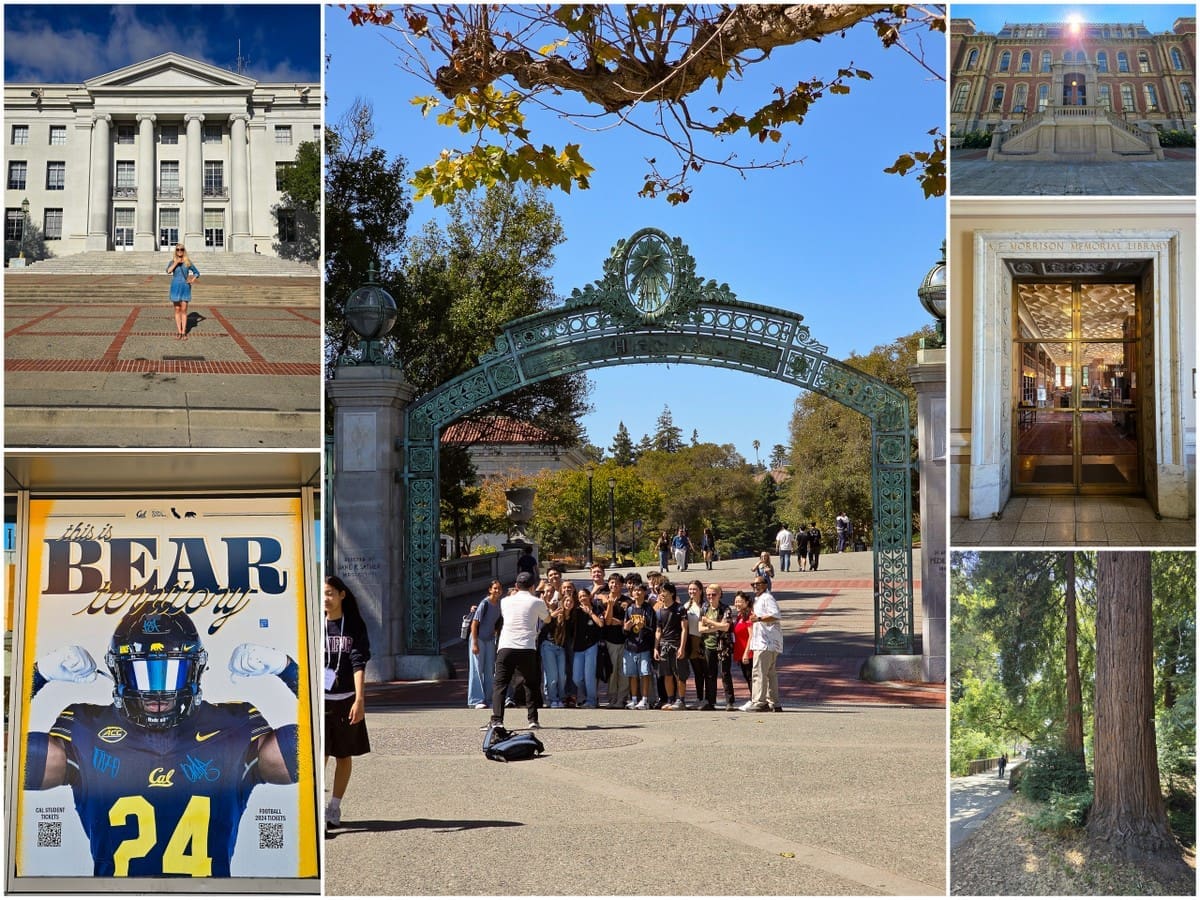
Considering the university was established before the town of Berkeley, the campus is a great place to start your trip. Founded in 1868, California’s first university boasts some beautiful historic buildings and redwood groves that evoke the early days and its path to being consistently ranked the #1 public university in the country. Of course, you can’t just saunter into a Poly Sci class, but there are many interesting attractions open to the public. 

Morrison Library

This is one of the coolest libraries we’ve ever visited, thanks to its architecture and ambiance. Built in 1928 as a traditional library reading room, it transports you back to the pre-digital era with a no-electronics policy, and an incredible collection of indie magazines, travel books, poetry collections, and a record player to listen to their LPs. Open to the public weekdays from 10am-5pm, plan accordingly and prepare to unplug.

Campanile Vistas

Campanile Sather Tower Berkeley campus

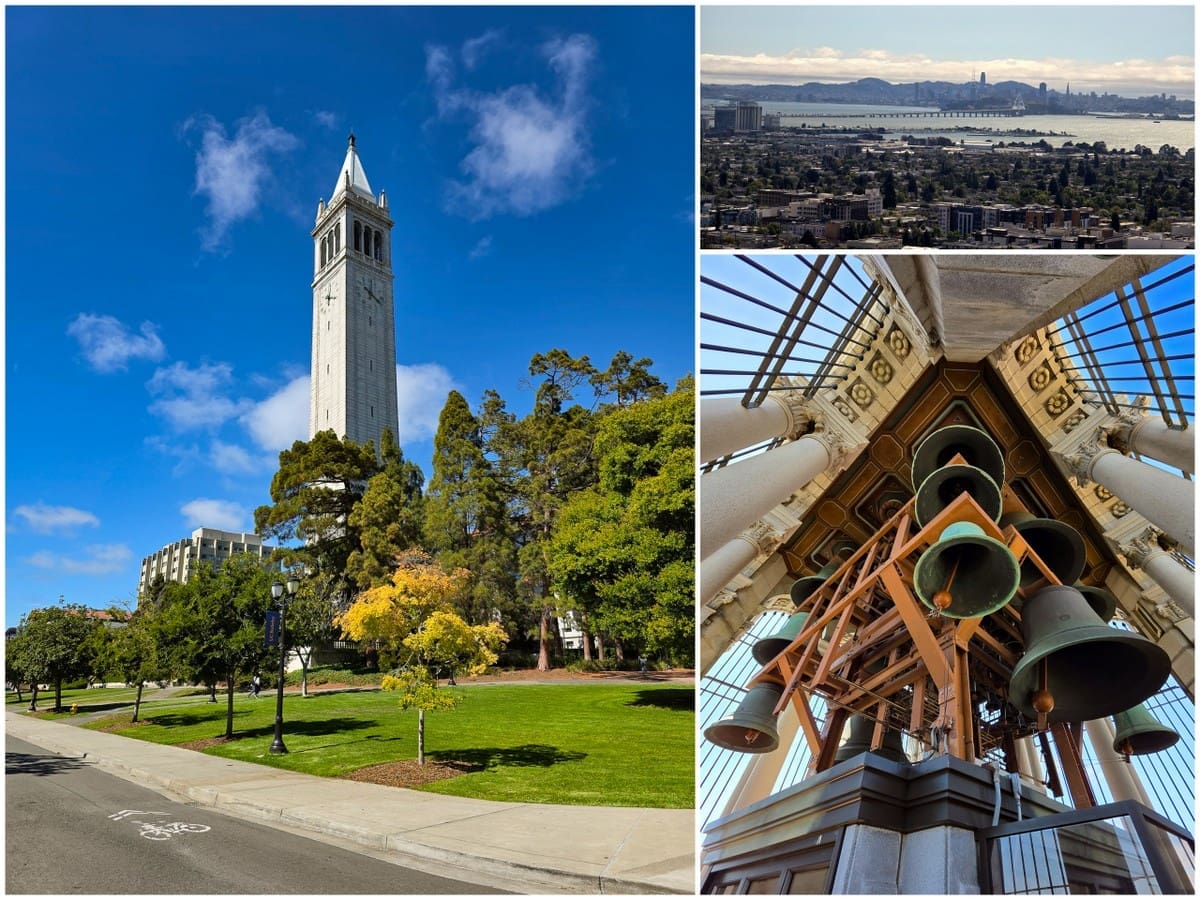
Head to Sather Tower (also known as the Campanile) and take the elevator to the view deck for an incredible panorama of the city, bay, campus, and the century-old bells overhead. At 307 feet, it is the world’s second-tallest freestanding clock and bell tower! Try to time your visit with the Carrion recitals, where the 61 bells ring in harmony for daily shows at 7:50am, 12pm, and 6pm, with a full 45-minute concert on Sundays at 2pm.

Sproul Plaza & The Free Speech Monument

This plaza is the epicenter of Berkeley’s political activism, past and present. The stairs of Sproul Hall are where student Mario Savio started the Free Speech Movement in 1964. Pay homage to Savio and exercise your voice by standing in the wonderfully quirky, Free Speech Monument: a 6-foot-diameter granite circle and the invisible 60,000-foot column of air above it, extending beyond the limit of US-controlled airspace. The inscription reads, “This soil and the air space extending above it shall not be part of any nation and shall not be subject to any entity’s jurisdiction,” and invites the chance to say whatever the heck you want!

Get (or Give) Hippy Vibes in Telegraph District

things to do on Telegraph Ave, Berkeley

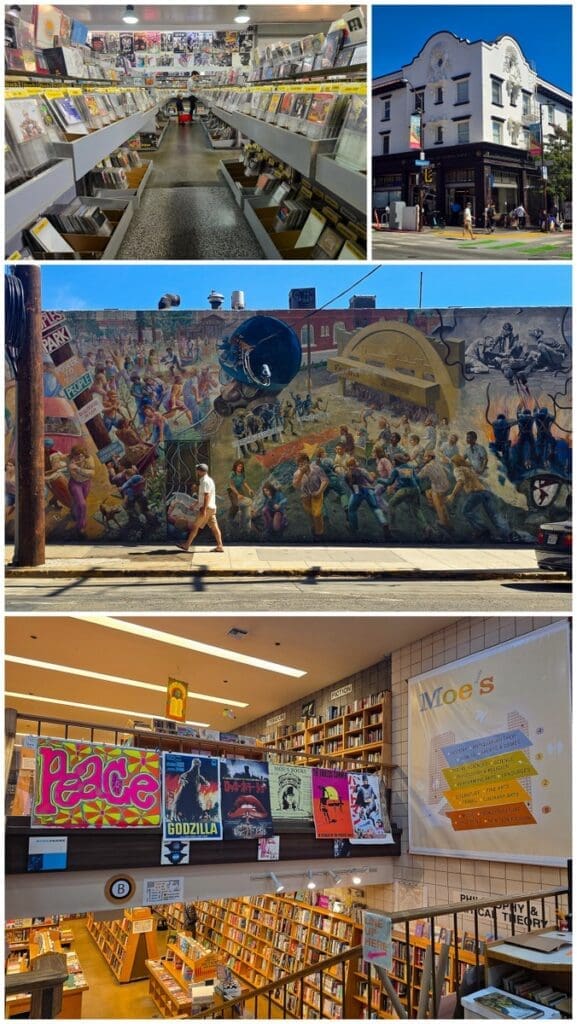
Telegraph Avenue begins at campus and extends 4.5 miles to the neighboring city of Oakland, but its hippie heart lies within the first five blocks in Berkeley. During the 1960s, when Civil rights protests were in full effect, students would move from Sproul Plaza down Telegraph to People’s Park. Businesses like Moe’s Books and Rasputin Records have stood strong ever since, serving as creative resources, gathering places, and symbols of free expression.

In addition to those two shops, be sure to stop in the legendary Amoeba Music (one of the world’s largest independent record stores) and linger outside to analyze their mural of Berkeley’s political history. Hungry? Durant Food Court offers a vast array of ethnic foods at student-friendly prices. Even if you’re not hungry, find some room for one of the best donuts at King’s.

Dine at the OG Farm-to-Table Restaurant, Chez Panisse

Best restaurant in East Bay

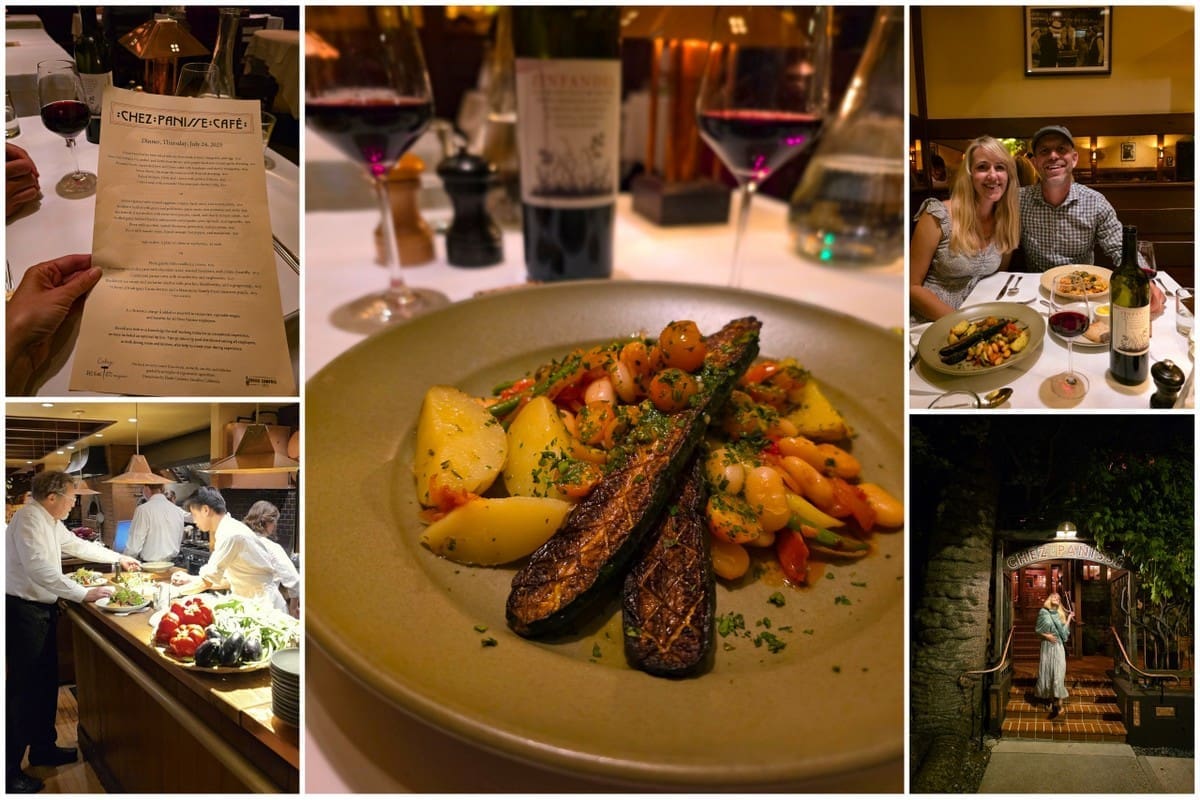
While this might be the most obvious place to eat in Berkeley, Chez Panisse is where the farm-to-table movement and California cuisine originated, and it deserves all the acclaim it has received (including a Green Michelin Star and recognition as one of the world’s Top 50 Restaurants) since its founding in 1971.

One tip to make this fine dining experience more affordable and easier to snag a reservation is to eat upstairs at Chez Panisse Cafe. Their à la carte menu was also a better option for us vegans than the pre-fixe menu. With such fresh local ingredients (sourced within 50 miles), our simple pasta dish with roasted eggplant, tomato, and basil was bursting with flavor. Plus, the open kitchen, full of busy chefs committed to their craft, added to the thrill of the meal.

Kayak the Berkeley Marina

kayaking berkeley marina
@honeytrek You might not think of Berkeley, California as a kayaking destination, but sitting pretty along the San Francisco Bay, with sheltered coves, a lush shoreline, and big city views…we had an epic day of paddling! Making it even better, my best friend from college joined me for this girl-powered adventure! To have your own SF Bay paddling excursion, head to the Berkeley marina and rent a tandem kayak or SUP for just $20 bucks/2 hours with the UC Berkeley Recreation & Wellbeing Department. @visitberkeley #partner @UC Berkeley #kayaking #visitberkeley ♬ Sunset Reflections – Cosmo Kuma

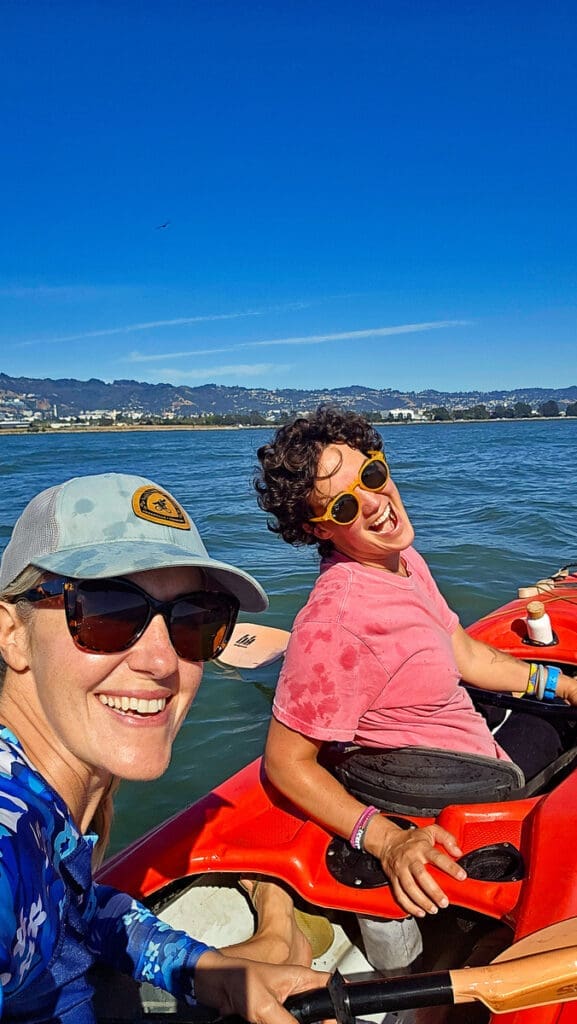
You might not think of Berkeley as a kayaking destination, but sitting pretty along the San Francisco Bay, with sheltered coves, a lush shoreline, and big city views…we had an epic day of paddling! Making it even better, one of my best friends from college lives in the East Bay, and she joined me for a girls’ adventure! In addition to the joy of paddling and gabbing, we enjoyed watching the sailors, windsurfers, and birdlife revel in the breeze. 

To have your own San Francisco Bay paddling adventure, head to the Berkeley Marina and rent a kayak or SUP from Cal Adventures for just $20 bucks/2 hours! The UC Berkeley Recreation & Wellbeing Department runs this highly subsidized operation on weekends from April to November and recommends booking your watercraft online 3-5 days in advance.

Get Your Probiotic Fix

Cultured Pickle Shop Berkeley CA

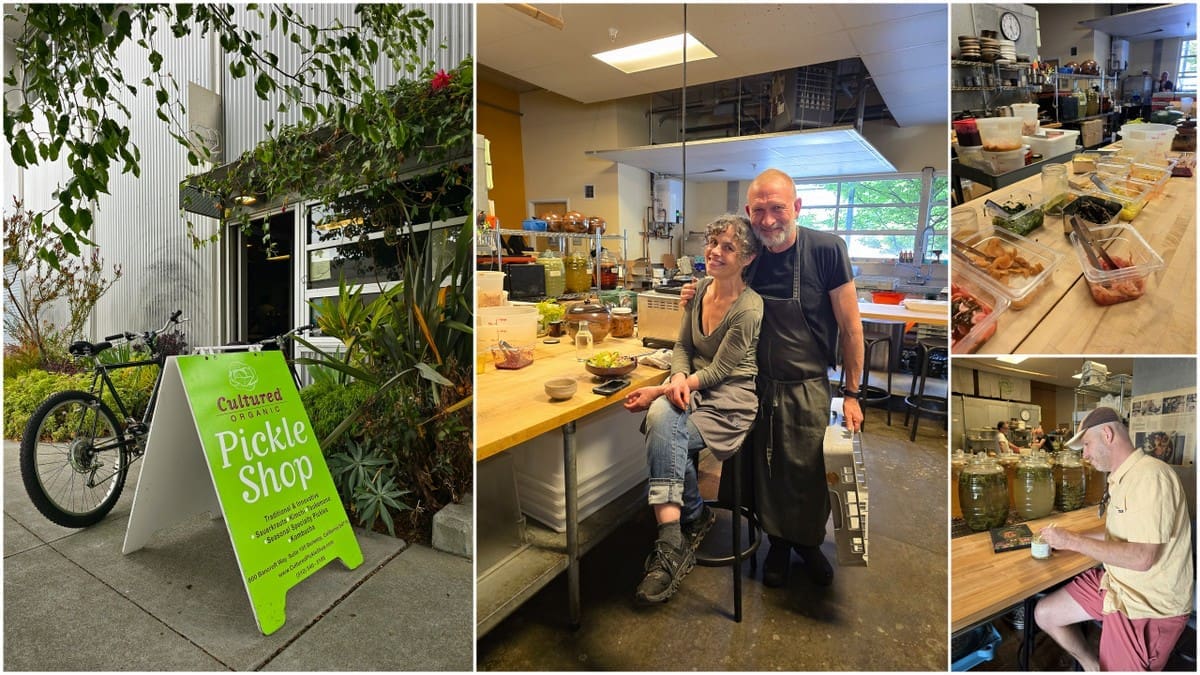
The mother of all California pickle shops, Cultured has been specializing in fermented foods for 28 years–from kimchi to kombucha. With huge jars lining the floor-to-ceiling shelves and a big open kitchen, this place feels like a science experiment in the best way. Come on a weekend to catch the husband-and-wife team’s “Rice & Pickles” three-course tasting event, where they talk through the process of the dozen lacto-fermented delicacies that will top your bowl. The only regret from our entire Berkeley trip is that we just missed this lunch offering, but we still had a fascinating chat with the founders, Alex & Kevin, and came away with some seaweed kimchi as a tasty souvenir.

Go Around The World in One Garden

UC Berkeley Botanical Garden best thing to do

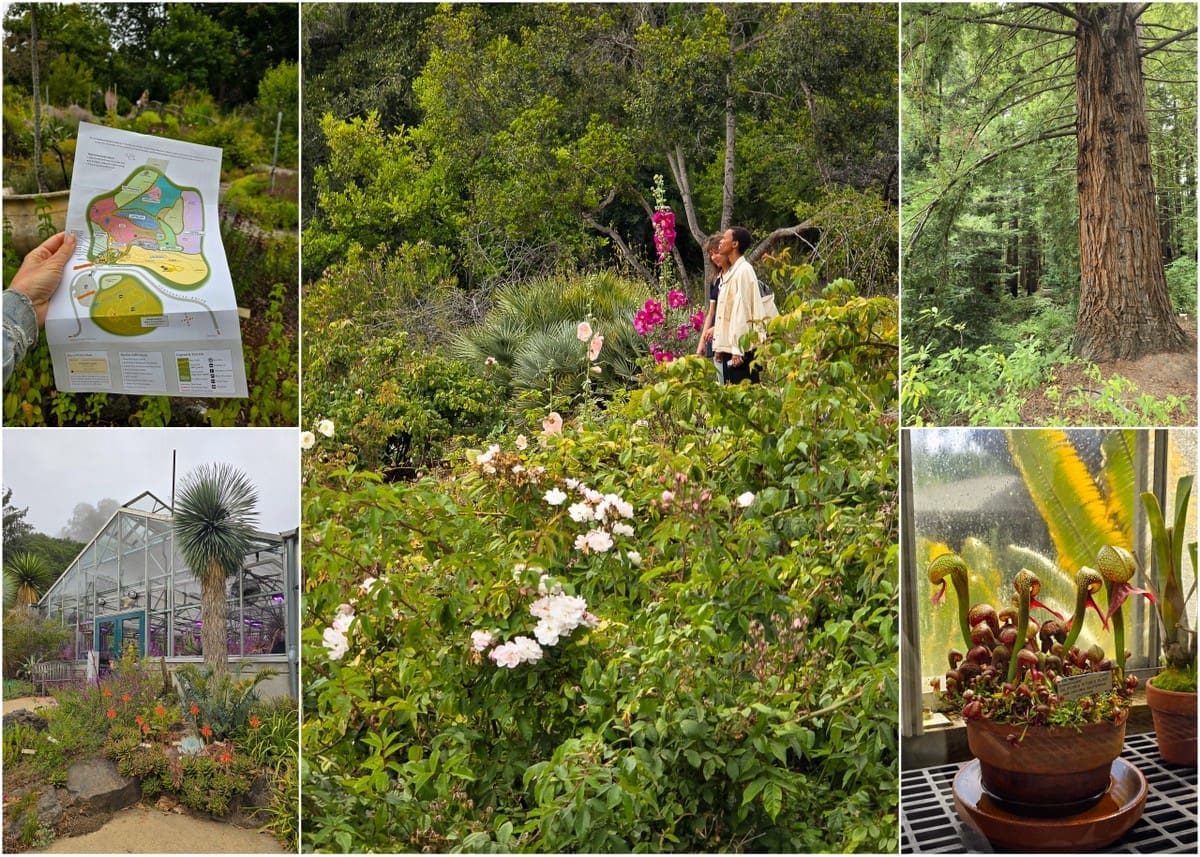
In the hills high atop Cal’s campus is the living laboratory and wonderland of the University of California Botanical Garden. With 10,000 species on just 34 acres, it has some of the most intense biodiversity of any garden in the country. Divided into regions of the world, the plants gave us the feeling of strolling the mountains of South America, the deserts of Australia, and the tropics of Asia. We also loved their Crops of the World Garden, giving a glimpse into the staples of different nations’ cuisines. 

Travel Tip: The gorgeous Mather redwood grove and exotic greenhouses (nurturing many of the 1,214 rare and endangered species) close an hour earlier than the rest of the garden, so don’t be late! 

Gilman Wine Block & First Fridays

Wine tasting berkeley

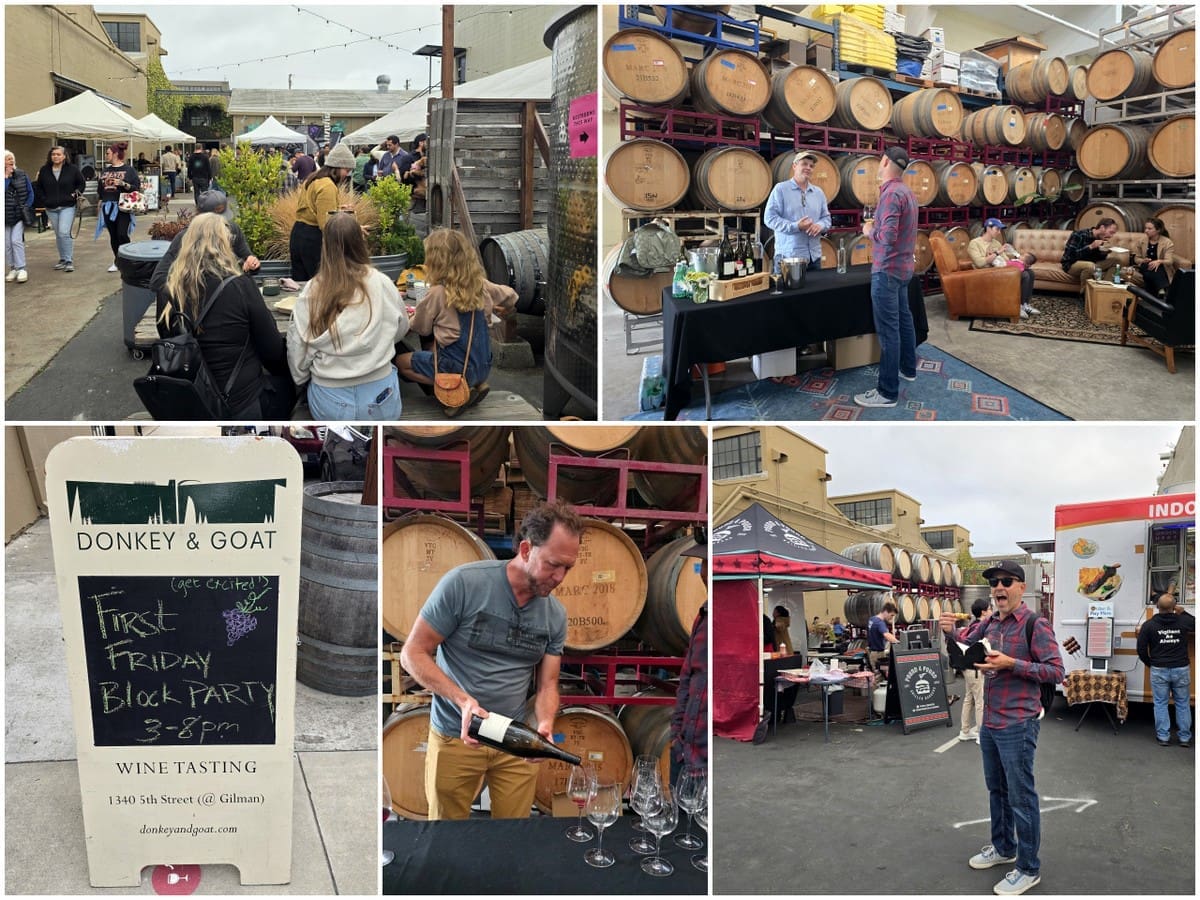
Sonoma and Napa may be just 45 minutes from Berkeley, but you don’t need to leave town to get world-class winemaking. Donkey & Goat pioneered the natural wine scene here in 2004, and this slice of West Berkeley is now home to eight stellar wineries. The Gilman wine block is fun any afternoon, but try to make it to their First Friday Wine Block Party. This is when these back-to-back wineries throw open their doors and fill the courtyard with food trucks, live music stages, and picnic tables for an extra happy crowd. 

Travel Tip: If you’re more of a beer drinker, the Gilman District also has three craft breweries. We adored the convivial vibe and live music at Fieldworks, and Gilman Brewing offers Sunday beer yoga if that makes you want to namaste.

Live Music at The Freight

The Freight Music Venue Berkeley

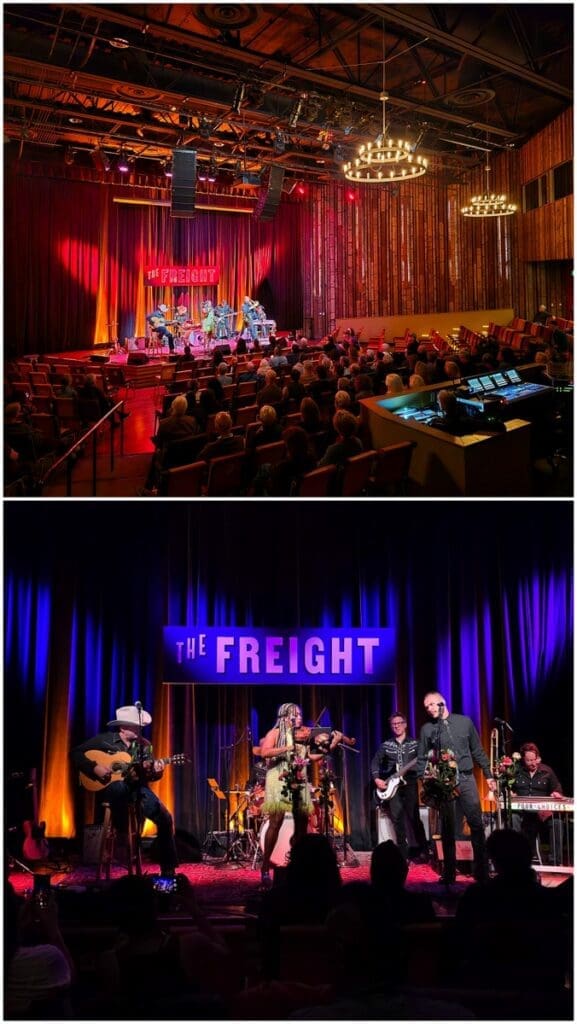
We love everything about this music venue – from its scrappy 1960s beginnings, when the building’s “Freight & Salvage” furniture sign was repurposed, to its commitment to music education for Bay Area Schools. Forget cover bands; The Freight is committed to creative expression from all corners of the world, fostering cross-cultural connection.

A perfect example is the band we caught, “Mireya Ramos & The Poor Choices.” A celebration of the 5,525-mile Mexican-American border and its shared musical traditions across ranchera, jarocho, bluegrass, jazz, and country genres. Mireya has a voice that can shake your soul and your tailfeather. Not to mention, the freshly renovated venue is gorgeous, and the audience is fully engaged, clapping, dancing, and enlivening the vibe of this arts non-profit and community space. 

Travel Tip: Within a five-minute walk from Freight are two great pre-show dinner options. Jupiter’s patio, anchored by a massive redwood tree and cafe lights, is a delight, and they serve fantastic wood-fired pizza and craft beer. It’s also a great place for post-show drinks. We swung by again, and there was a full house enjoying their live music. Revival Bar & Kitchen prides itself on California fare crafted with local and sustainable ingredients. Highly recommend their craft cocktails and mezze platter!

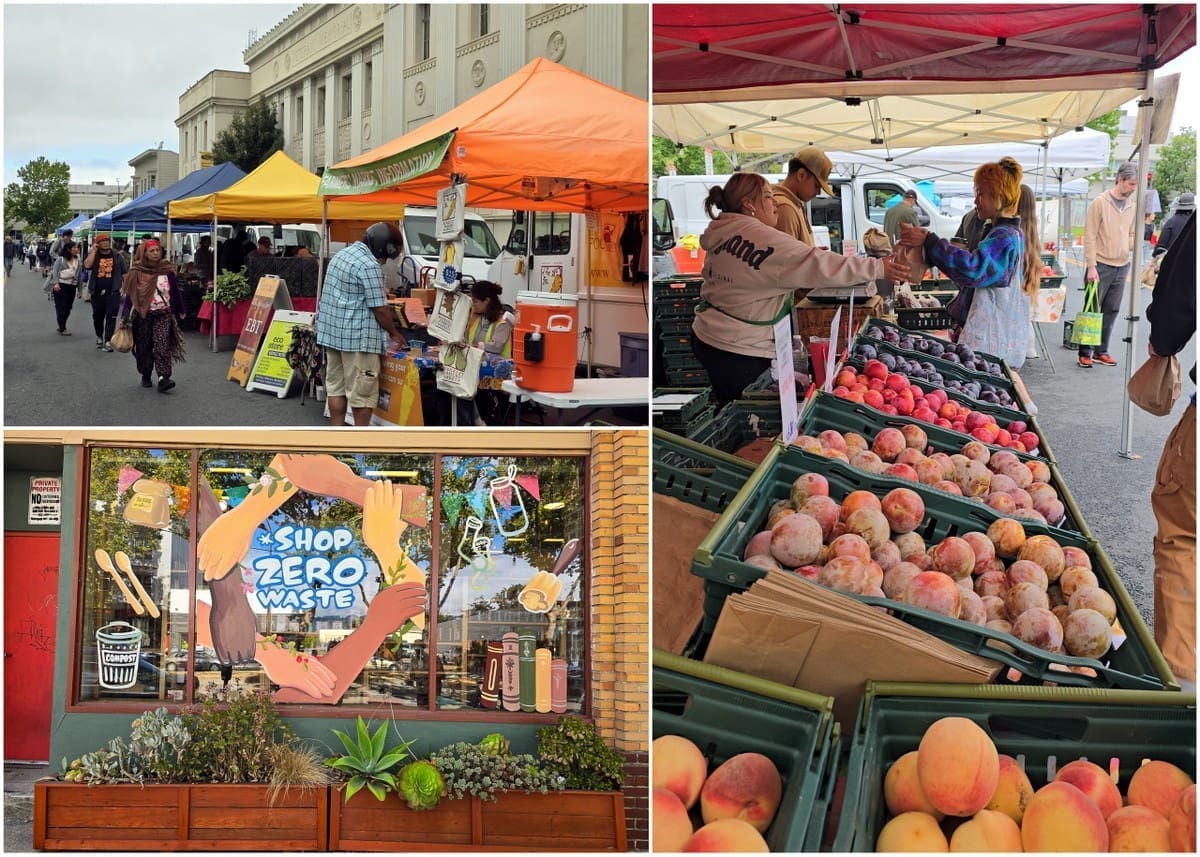
Graze The Country’s First Zero Waste Farmers’ Market

Berkeley Farmers markets

Being the birthplace of the farm-to-table movement, Berkeley is serious about their farmers’ markets. Hosted by the awe-inspiring Ecology Center in Downtown, North, and South Berkeley, they are committed to supporting small-scale farmers practicing sustainable agriculture and making sure none of their produce goes to waste! From accepting every type of food stamp to working with Food Not Bombs to turn unsold produce into meals for those in need, it’s an inclusive and mindful market.

Berkeley’s farmers’ market was the first in the country to ban single-use plastic bags and packaging, plus they recycle and compost everything possible. Come prepared, like a good Berkeleyite, with your tote, reusable cutlery, and tupperware, and eat up! To provision for your sunset picnic (see below), Obour Foods has fabulous Middle Eastern dips, and Kashiwase Farms has the sweetest peaches!

Travel Tip: The Ecology Store also runs a fantastic zero-waste shop, where you can refill most any household product and get a variety of hip recycled goods.

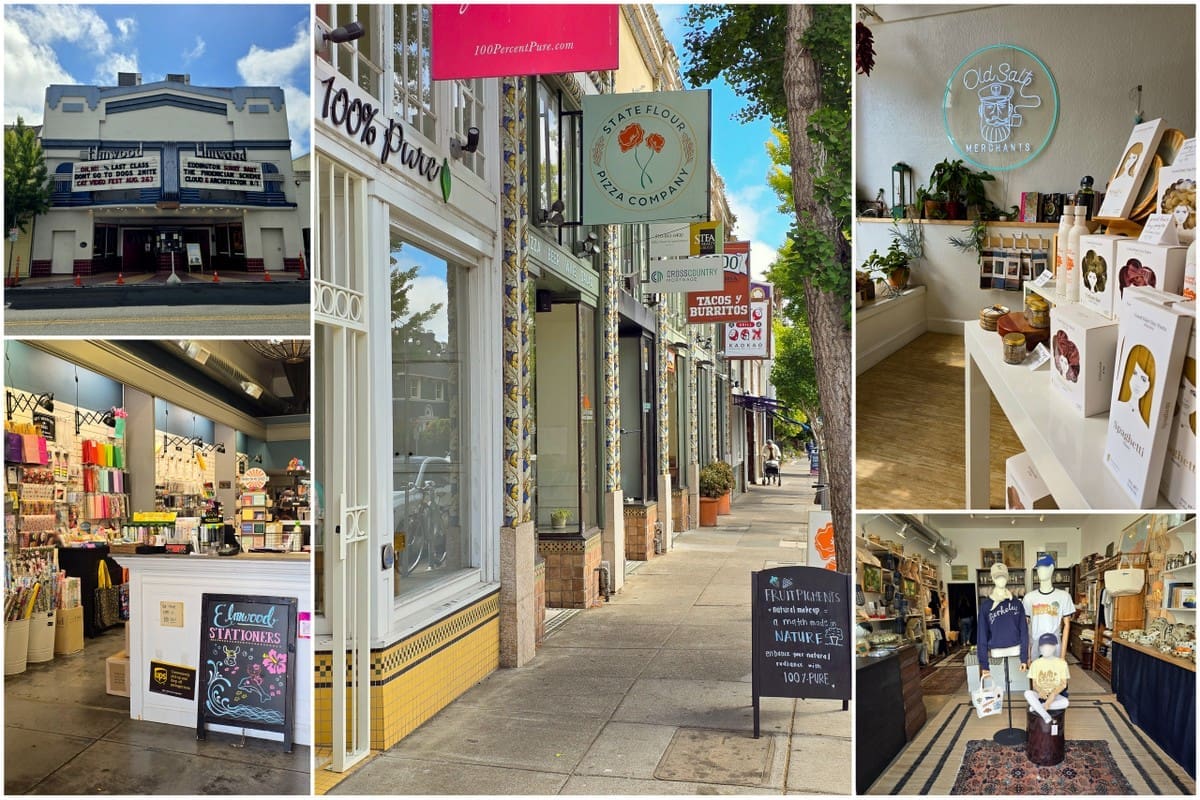
Shop Elmwood Neighborhood

Elmwood neighborhood berkeley

When we biked to the Elmwood neighborhood, I got the feeling…I could live here. Walking their section of College Ave, popping into charming boutiques, passing bustling cafes, checking the old-school Rialto cinema’s lineup, and trying to decide which cuisine of the world to choose for lunch, we felt the vibrancy of this community and wanted to be part of it. Be sure to check out Elmwood Stationers for local souvenirs, Old Salt Merchants for culinary delights, Cousin Home for chic decor and uniquely Cal clothing, and Casa de Chocolate for handmade Mexicana treats.

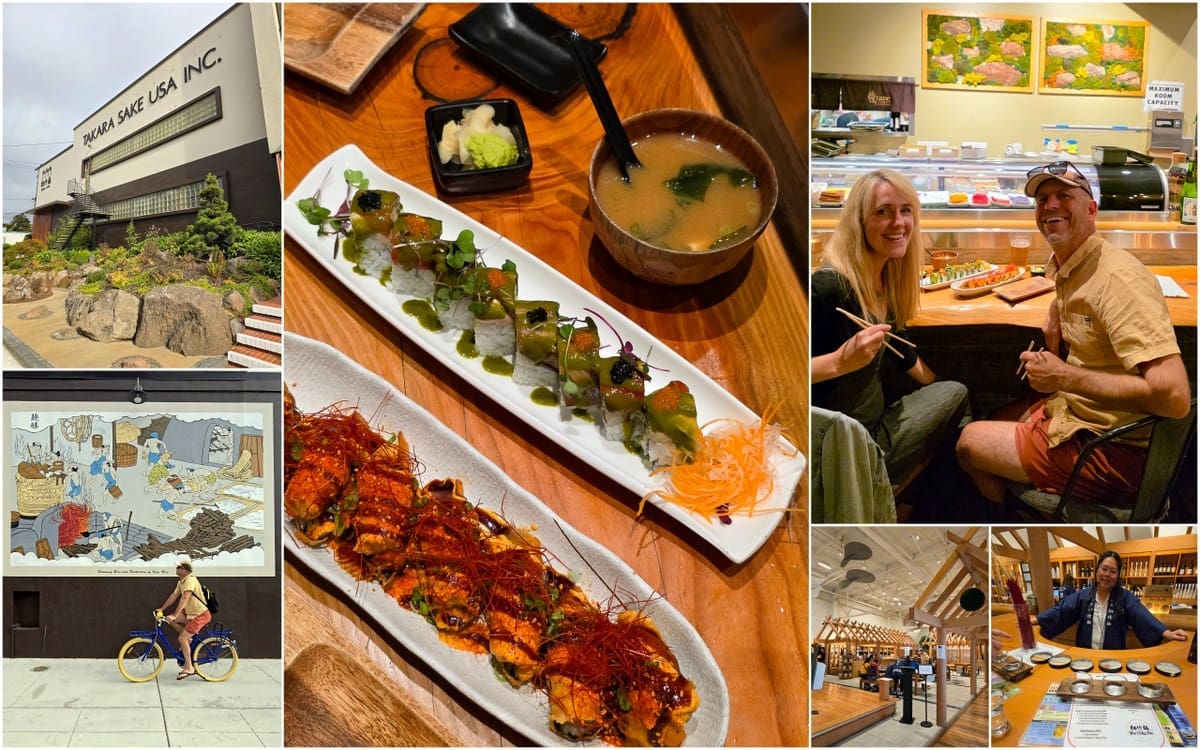
Japanese Date Night: Sake Distillery & Vegan Sushi

best japanese restaurants berkeley

This was total serendipity. We were biking to a Japanese restaurant, and we came across a massive sake distillery. The Kyoto-based Takara Sake has one US distillery, and it happens to be in Berkeley! Unlike most industrial buildings, this one had murals of samurai and a zen garden out front, and it lured us in. Their tasting room was decorated in old Nippon-fashion, as were their bartenders. We ordered a flight and thoroughly enjoyed the array of offerings and the self-guided museum.

From there, our Japanese date night continued to Tane Vegan Izakaya. We bellied up to the sushi bar to see the chefs slice, dice, ignite, and garnish our plant-based rolls. It was quite the show, and this meal brought us back to our raw fish-eating days, without harming a single Nemo.

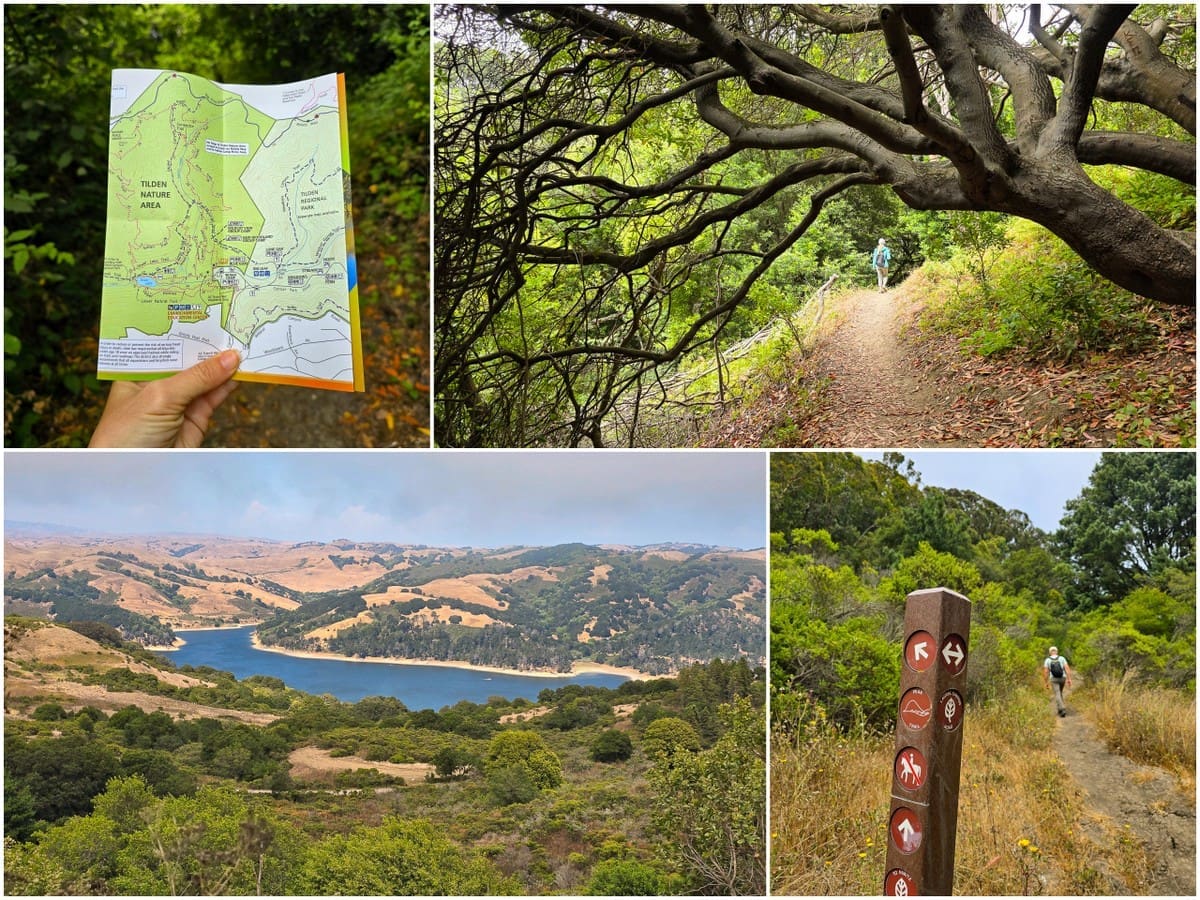
Hike The Gem of The East Bay Regional Parks

Tilden Regional Park

Berkeley is part of the largest regional park district in the nation, with 65 parks encompassing 120,000 acres and 1,250 miles of trails…and their very own Tilden Park is said to be the crown jewel. When we asked the staff which hike would give the best diversity of terrain and vistas, they mapped us a route from Laurel Canyon to Wildcat Cat Peak, returning via the Jewel Lake Trail.

Wild Cat Peak yielded a spectacular 360-degree view of Mount Diablo, the SF Bay, and San Pablo Reservoir. To make it an even more fitting Berkeley experience, this peak is also home to the International Peace Monument. If you have kids, they’ll love Tilden’s farm petting zoo, carousel, and Lake Anza swimming area.

Thai Temple Sunday Brunch

wat Mongkolratanaram

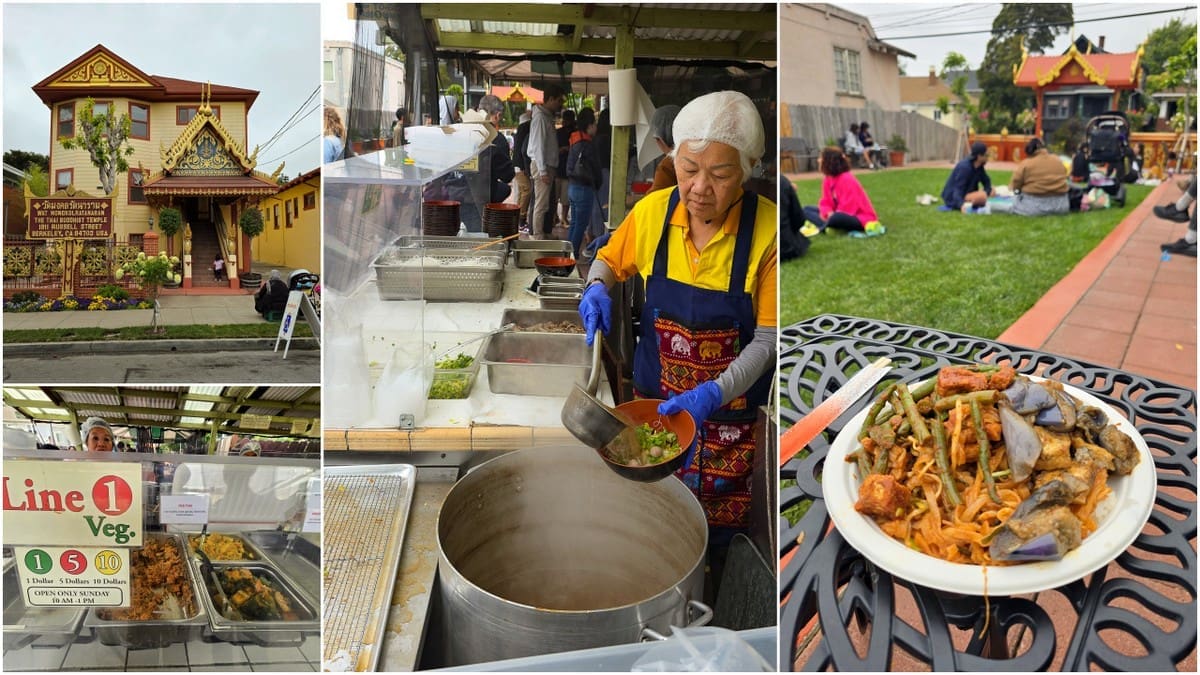
You can get Thai food in every city in the US, but not like this. The monks of Wat Mongkolratanaram devote three days of their week to preparing dozens of traditional Thai dishes for a Sunday-fundraising feast. Running for 45 years, the monks and their army of volunteers are well prepared to feed 300-500 guests in just a few hours (10am-1pm), with a token system and buffet-style servings.

In the courtyard of their beautiful temple garden, there were different lines for meat dishes, veg dishes, soups, Thai Tea, and dessert. We scored a towering plate of eggplant and tofu stir fry, plus Pad Thai for $10, and joined the hundreds of people happily picnicking together on the lawn.

Travel Tip: If you come towards the end of the bunch, fresh foods, like summer rolls and papaya salad, go on fire sale.

Sunset Panorama Picnic

berkeley sunset spots

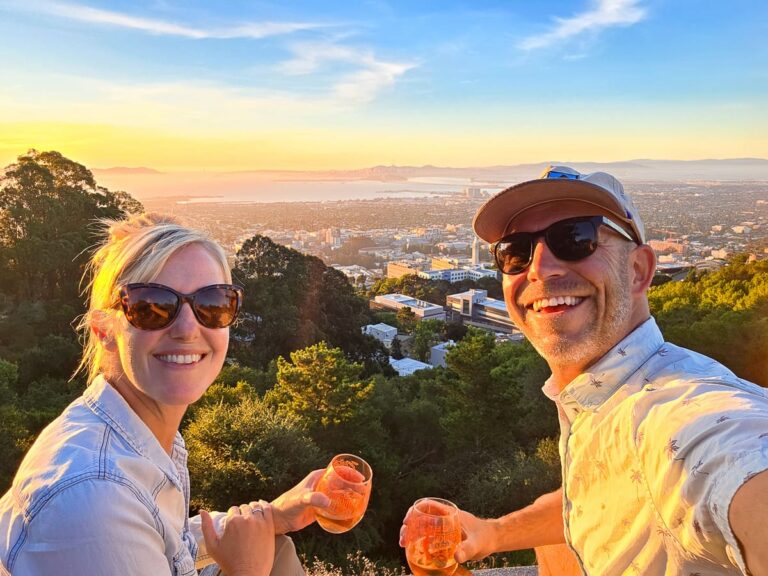
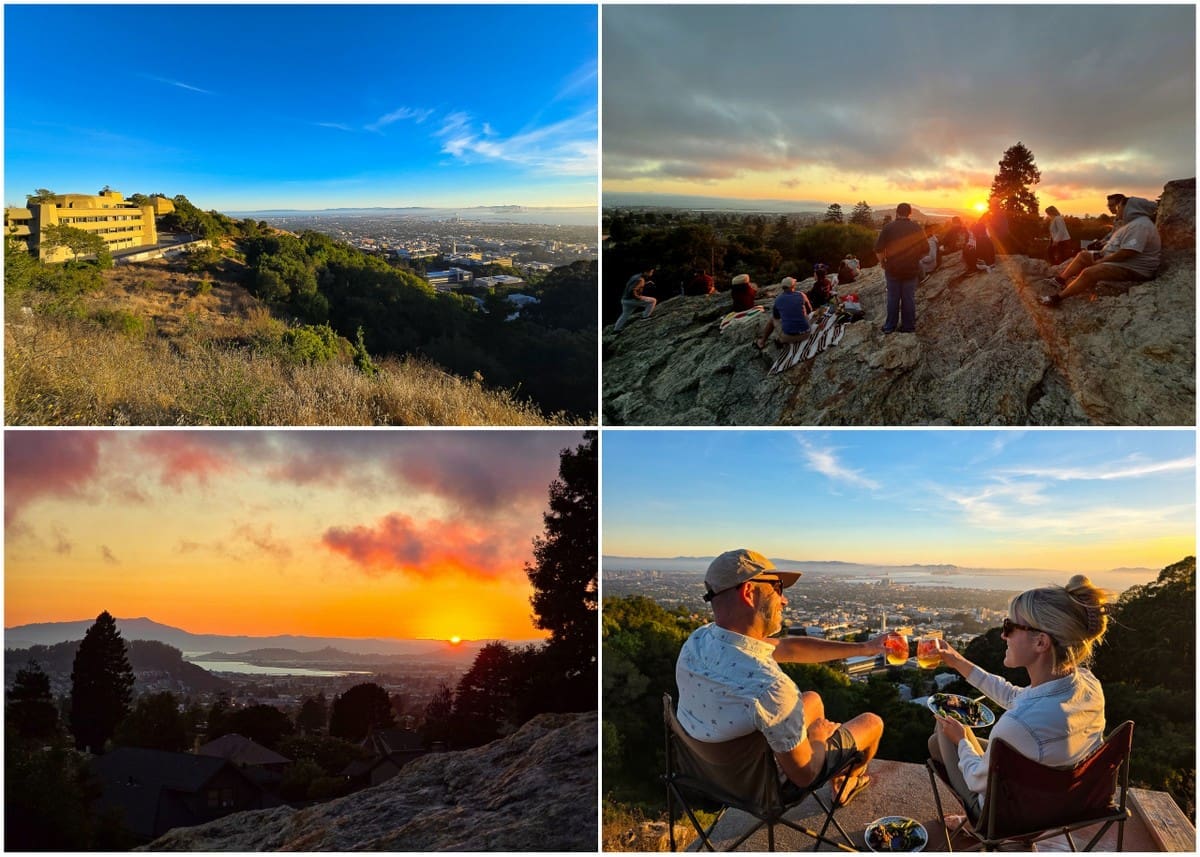
Berkeley faces west toward the bay, Golden Gate Bridge, and San Francisco skyline, making for incredible sunsets. To soak this up, we had two separate picnic dates during our trip. We ordered dinner to go from the farm-to-table Gather restaurant and brought it to the top of Cal’s campus. At Lawrence Hall of Science, there is an odd tower of concrete that makes for a perfect perch for sunset.

Another spot for epic vistas and unique geological features is Indian Rock Park. Tucked among the houses of posh North Berkeley, this hunk of rock’s hand-carved stairs has enough space for 20 sunset-seekers. Rather than feeling crowded, it felt like a delightful community experience as we opened a bottle of wine, nibbled on apps, and let out a soft sigh as the sun dipped behind the bay. 

Travel Tip: Indian Rock Park is also a popular bouldering spot if you want to try your climbing skills or just watch these Spidermen in action before the sun goes down.

Where to Stay in Berkeley

The Graduate

Where to stay in berkeley ca

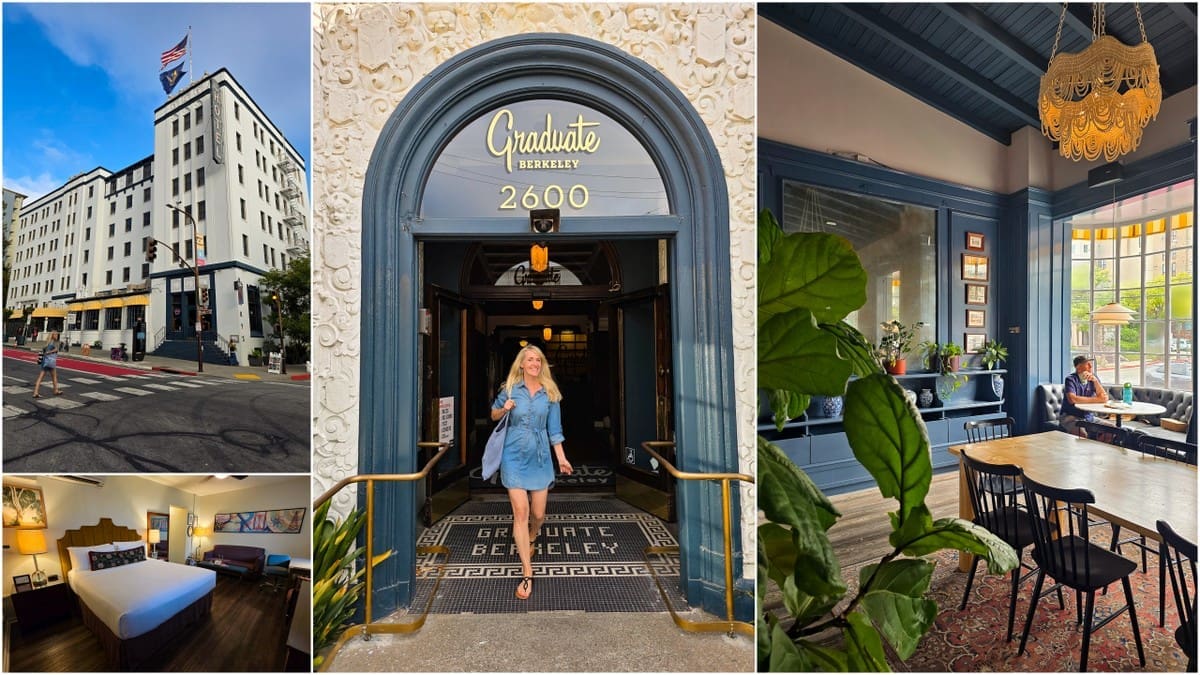
The concept of Graduate Hotels is brilliant. This boutique hotel chain is exclusively located in university towns, capturing the unique spirit of each institution. In Berkeley, that means your suite might be decorated with designer bong lamps, streaking hippy photos in the bathroom, and a Golden Bear with crib notes on your desk. Set in the 1928 Hotel Durant, the lobby features high ceilings, expansive windows, and a bar from a bygone era, serving craft cocktails and solid food.

Berkeley City Club

berkeley city club

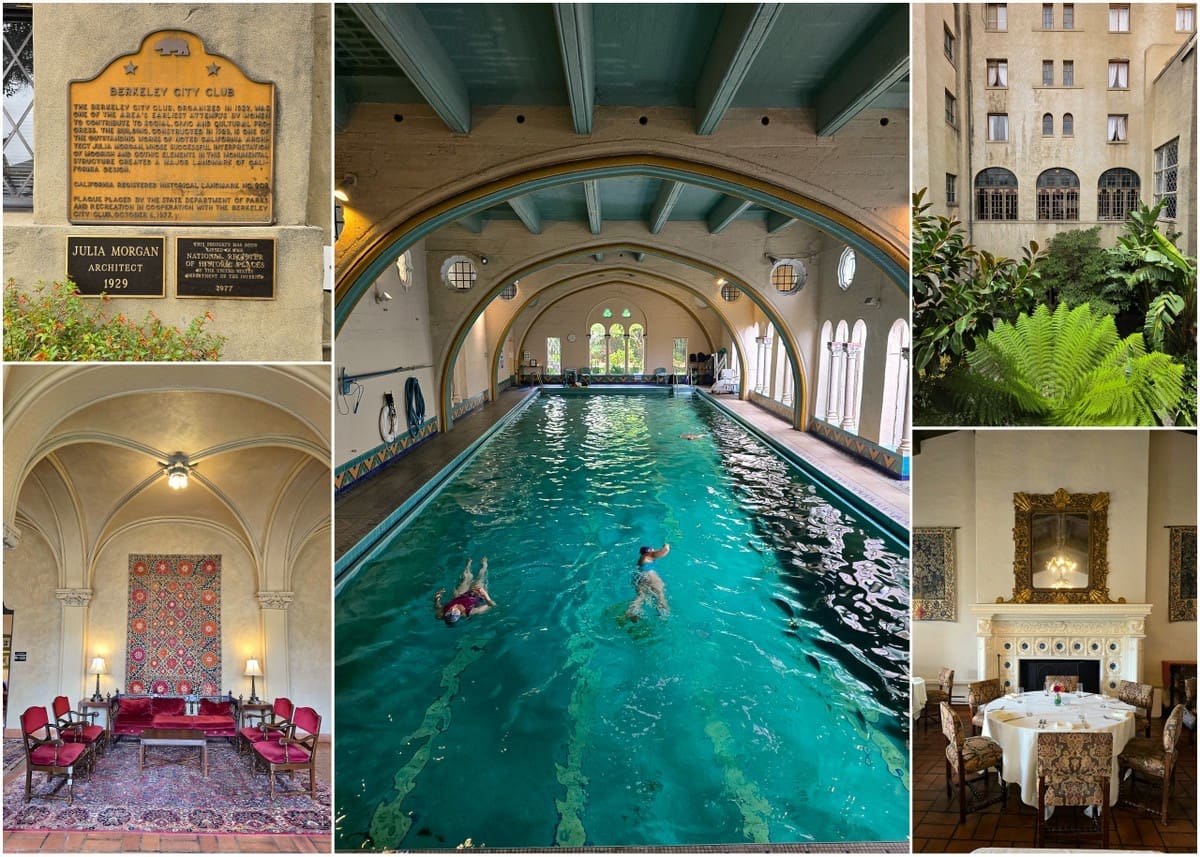
Architecture buffs will go ga-ga for this 1930 landmark hotel by Julia Morgan, the visionary California architect behind Hearst Castle. Blending Moorish and Gothic influences, it has vaulted ceilings, carved archways, leaded glass, and manicured courtyards. Even if you don’t stay at this hotel (getting access to their stunning indoor swimming pool is almost reason enough), make a reservation at Julia’s restaurant for an excellent meal and a reason to poke around. 

Getting Around Berkeley

getting around berkeley transit

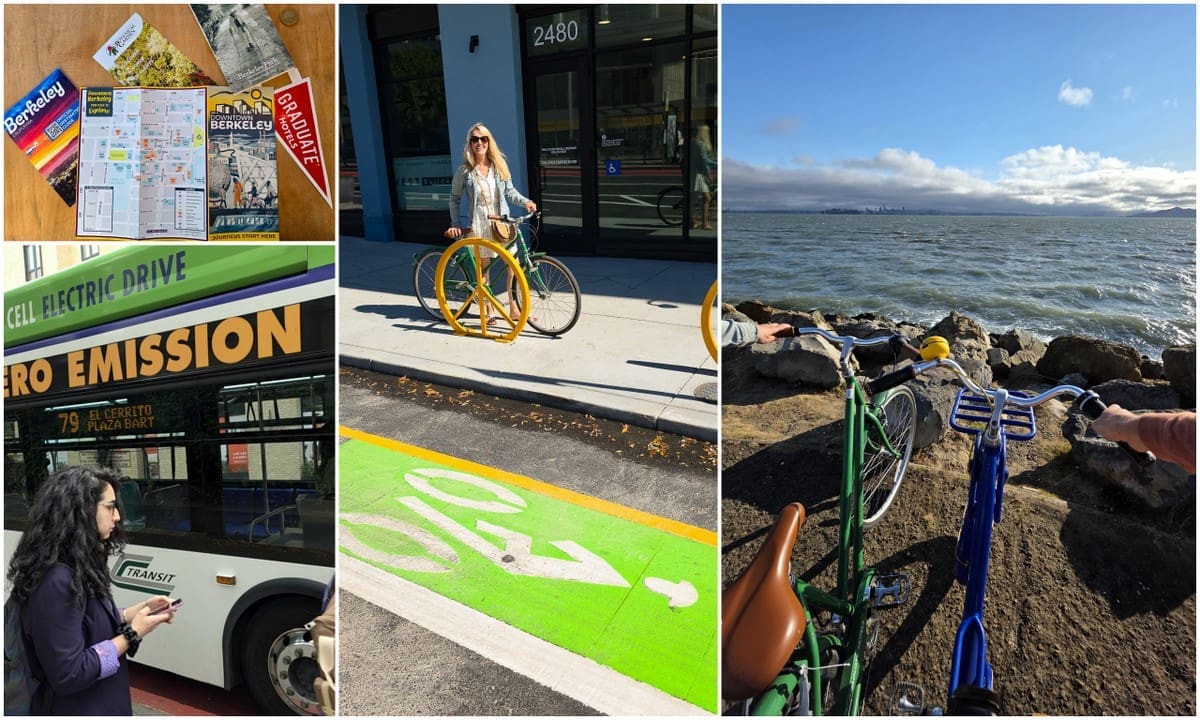
Not only is this city highly walkable, but it’s also very bike-friendly and well-connected by public transit. We used the Graduate’s complimentary bicycles to get around, following the Bike Boulevard signs for the best routes and added Cesar Chavez Park to enjoy the bayside paths. Berkeley is also connected to SF by the BART light rail, so you can easily pop into the city if you want to use it as your Bay Area base. Get a Clipper Card, it works for both BART and local buses.

More Things to Do in Berkeley

For more tips, photos, and videos from our Berkeley trip, check out our Instagram highlights and Visit Berkeley’s Calendar of Events; you’ll find block parties, movies in the park, flea markets, gallery openings, art workshops, wine tastings, and a myriad of ways Berkeley is celebrating its diverse community and helping visitors have a great time.

Not gonna lie, we didn’t really think of Berkeley as a vacation destination, but between its legacy of social good, sustainable cuisine, and everyone-is-welcome ethos, it’s exactly where we wanted to be!

Many thanks to Visit Berkeley for inviting us to explore their city and supporting our work. To show our gratitude to the community, we’ve donated to these incredible local nonprofits: The Ecology Center, The Freight, and Girls Garage.

Innovation in Eco-Friendly Composting Toilets Powered by Mushrooms

0

Composting toilets are a great idea, but no one likes to think of the waste just sitting there and slowly … fermenting. A new eco-friendly toilet gets around that problem by using mushrooms to facilitate the composting process, plus it requires no water or electricity to do the job.

Known as the MycoToilet, the proof-of-concept outhouse was designed and built by a team of scientists at Canada’s University of British Columbia (UBC). It was officially opened for use this Friday (Sept. 26) in the university’s Botanical Garden.

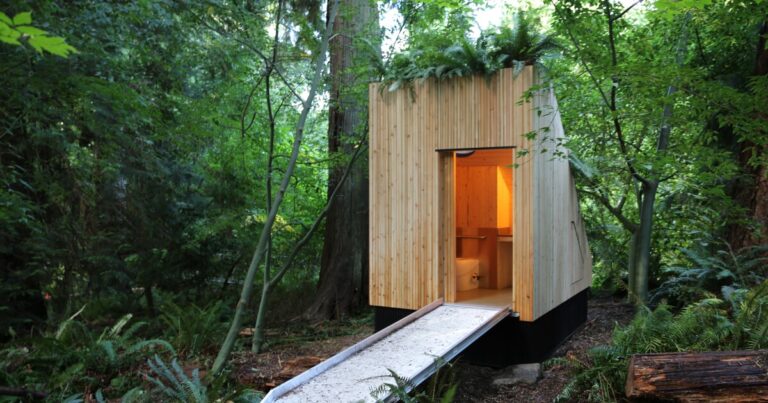
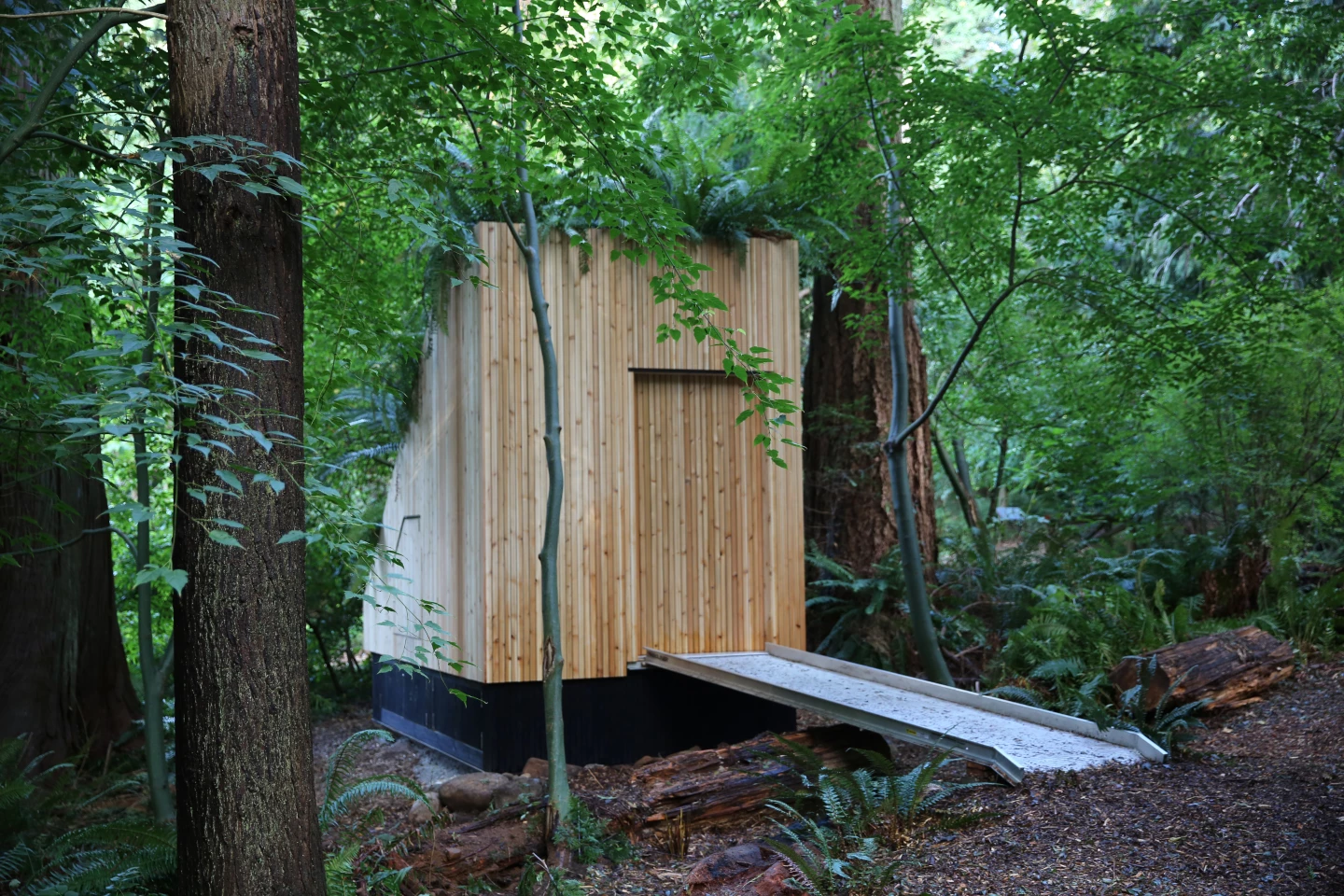
The transportable structure itself features cedar-clad timber walls, stainless steel fixtures, a planted roof with a skylight, a solar-powered ventilation system, and a ramp for wheelchair accessibility. It’s designed to be installed in areas such as parks, campgrounds and remote communities, where it can operate without plumbing or other infrastructure.

The MycoToilet’s rather deluxe-looking interior

Joseph Dahmen

Once the user’s waste has passed through the actual toilet itself, it goes into an area in the back of the MycoToilet where the solid and liquid waste are separated. The solid waste proceeds into a compartment lined with mycelium, which is the network of (ordinarily underground) root-like structures that link mushrooms and other fungi together. There, it’s transformed into soil.

“Fungi are very good at breaking down biomass, including human and animal waste,” says UBC’s Dr. Steven Hallam. “They produce enzymes that transform material into simpler compounds while supporting microbial communities that accelerate decomposition. No added water, electricity or chemicals are required.”

Importantly, lab tests have shown that use of the mycelium also removes over 90% of the odor-causing compounds from the composting process. The liquid waste, meanwhile, goes into a holding tank. We’re told that under ideal conditions, it will eventually become self-sterile so that it can be used for irrigation.

The MycoToilet has a sliding wooden door

Joseph Dahmen

This Friday’s launch marks the beginning of a six-week pilot project. It is hoped that once the MycoToilet subsequently enters permanent use, it will produce roughly 600 liters (158.5 US gal) of soil and 2,000 liters (528 US gal) of liquid fertilizer annually.

“We wanted to turn a daily routine everyone knows into a pleasant experience that reminds us of our connection to ecological cycles,” says the project leader, Assoc. Prof. Joseph Dahmen. “Composting toilets often carry negative associations. We aimed to create a system that’s clean, comfortable and easy to use.”

Source: UBC

Medical examiner finds NYC office shooter had low-level CTE

0

The gunman who killed four people in a Manhattan office building had chronic traumatic encephalopathy (CTE), a degenerative brain disease often linked to high-contact sports like American football, according to the New York City medical examiner’s office.

In July, Shane Tamura, 27, drove from Las Vegas to New York City with an assault-style rifle, shooting four in a Park Avenue skyscraper before killing himself.

Police believe he was targeting the offices of the National Football League (NFL), which were inside the building.

In notes left at the scene, Tamura reportedly blamed the NFL for concealing the effects of CTE and asked for his brain be studied.

CTE can only be diagnosed post-mortem.

New York City’s chief medical examiner said the shooter’s autopsy confirmed that he had “low-stage CTE” and the diagnosis was “unambiguous”.

The disease is caused by repeated blows to the head and has bee nfound in th ebrains of dozens of former NFL players. Science around it is evolving, the medical examiner said. It is associated with symptoms including memory loss, depression and progressive dementia.

“The physical and mental manifestations of CTE remain under study,” they said.

Tamura, a former high school football player who did not play in the NFL, opened fire in a building where the American football league headquarters was located. But he took the wrong lift and went to a different part of the building.

His alleged suicide note said “study my brain please”, according to a senior official who spoke to ABC News. “I’m sorry,” he also wrote.

Police say Tamura was known to have mental health issues.

Among those killed during the mass shooting were NYPD officer Didarul Islam; Wesley LePatner, an employee of finance giant Blackstone; and Julia Hyman, an employee at Rudin Management.

NFL employee Craig Clementi was also seriously injured.

Challenging Client Situation

0


Client Challenge


JavaScript is disabled in your browser.

Please enable JavaScript to proceed.

A required part of this site couldn’t load. This may be due to a browser
extension, network issues, or browser settings. Please check your
connection, disable any ad blockers, or try using a different browser.

U.K. Court Throws Out Terrorism Charge Against Rapper Accused of Kneecapping

0

new video loaded: U.K. Court Dismisses Kneecap Rapper Terrorism Charge

transcript

transcript

U.K. Court Dismisses Kneecap Rapper Terrorism Charge

A U.K. court dismissed a terrorism charge against the rapper Liam Óg Ó hAnnaidh, also known as Mo Chara, from the Irish-speaking group Kneecap. Prosecutors had accused him of displaying a Hezbollah flag.

“Free, free —” Crowd: “Palestine.” “This entire process was never about me. Never about any threat to the public. Never about terrorism. It was always about Gaza. About what happens if you dare to speak up.”

A U.K. court dismissed a terrorism charge against the rapper Liam Óg Ó hAnnaidh, also known as Mo Chara, from the Irish-speaking group Kneecap. Prosecutors had accused him of displaying a Hezbollah flag.

By Nader Ibrahim

September 26, 2025

Eastern EU countries agree on necessity of ‘drone wall’, says bloc’s defense minister

0

EU eastern states agree on need for 'drone wall', bloc's defence chief says

Netanyahu encounters diplomatic isolation at UN General Assembly meeting

0

NewsFeed

UN delegates walked out as Israeli Prime Minister Benjamin Netanyahu took to the podium at the UN General Assembly. Other world leaders condemned Israel’s genocide in Gaza, while a further 10 countries have recognised Palestinian statehood. Observers say Israel has never been more diplomatically isolated.

Now is the worst time in almost 20 years to flip a home

0

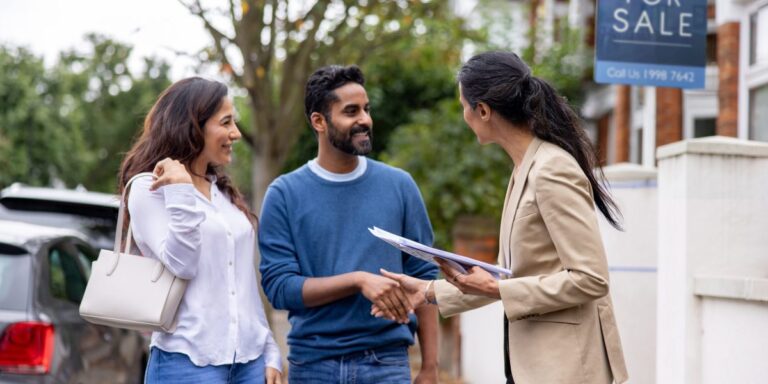
It pays less and less to buy and flip a home these days. From April through June, the typical home flipped by an investor resulted in a 25.1% return on investment, before expenses. That’s the lowest profit margin for such transactions since 2008, according to an analysis by Attom, a real estate data company.

Gross profits — the difference between what an investor paid for a property and what it sold for — fell 13.6% in the second quarter from a year earlier to $65,300, the firm said. Attom’s analysis defines a flipped home as a property that sells within 12 months of the last time it sold.

Home flippers buy a home, typically with cash, then pay for any repairs or upgrades needed to spruce up the property before putting it back on the market.

The shrinking profitability for home flipping is largely due to home prices, which continue to climb nationally, albeit at a slower pace, driving up acquisition costs for investors.

“We’re seeing very low profit margins from home flipping because of the historically high cost of homes,” said Rob Barber, Attom’s CEO. “The initial buy-in for properties that are ideal for flipping, often lower priced homes that may need some work, keeps going up.”

The median price of a home flipped in the second quarter was bought by an investor for $259,700, a record high according to data going back to 2000, according to Attom.

The median sales price of flipped homes was $325,000, unchanged from the first quarter, the firm said.

A chronic shortage of homes on the market and heightened competition for lower-priced properties are also helping drive up investors’ acquisition costs.

Home flipping profits have declined for more than a decade as home prices rose along with the housing market’s recovery from the housing crash in the late 2000s.

Consider, in the fall of 2012, the typical flipped home netted a 62.9% return on investment before expenses, Attom said.

Even as home flipping has become less profitable, such transactions remain widespread.

Some 78,621 single-family homes and condos were flipped in the April-June quarter, accounting for 7.4% of all home sales during the quarter — a slight decline from both the first quarter and the second quarter of 2024, according to Attom.

The U.S. housing market has been in a sales slump since early 2022, when mortgage rates began to climb from pandemic-era lows. Sales of previously occupied U.S. homes sank last year to their lowest level in nearly 30 years. Sales have remained sluggish this year as mortgage rates, until recently, remained elevated.

As home sales have slowed, properties are taking longer to sell. That’s led to a sharply higher inventory of homes on the market, benefiting investors and other home shoppers who can afford to bypass current mortgage rates by paying in cash or tapping home equity gains.

With many aspiring homeowners priced out of the market, real estate investors — whether those looking to buy and rent or home flippers — are taking up a bigger share of U.S. home sales overall.

Some 33% of all homes sold in the second quarter were bought by investors — the highest share in at least five years, according to a report by real estate data provider BatchData.

Between 2020 and 2023, the share of homes bought by investors averaged 18.5%.

All told, investors bought 345,752 homes in the April-June quarter, an increase of 15% from the first quarter, but a 12% decline from the same period last year, the firm said.

Even so, investor-owned homes account for roughly 20% of the nation’s 86 million single-family homes, the firm said.

Fortune Global Forum returns Oct. 26–27, 2025 in Riyadh. CEOs and global leaders will gather for a dynamic, invitation-only event shaping the future of business. Apply for an invitation.