9/18 vs Nansemond River- 2-0 W, 9/20 vs St. John’s School (TX)- 2-3 L, 9/20 vs Bryn Mawr School (MD)- 1-2 L, 9/21 vs Agnes Irwin School (PA)- 1-2 L, 9/25 vs Nansemond-Suffolk Academy- 8-0 W, 9/26 vs Trinity Episcopal School- 2-3 L
9/14 vs Glenelg- 2-1 W, 9/20 vs East Greenwich (RI)- 7-2 W, 9/20 vs Loudoun Valley (VA)- 4-1 W, 9/23 vs Georgetown Visitation- 4-1 W, 9/25 vs Mount de Sales- 4-1 W
9/15 vs Massaponax- 10-0 W, 9/16 @ Mountain View- 6-0 W, 9/18 @ North Stafford- 3-0 W, 9/20 vs Burnt Hills-Ballston Lake (NY)- 1-2 L OT, 9/20 vs East Greenwich (RI)- 4-2 W, 9/25 vs Riverbend- 1-0 W
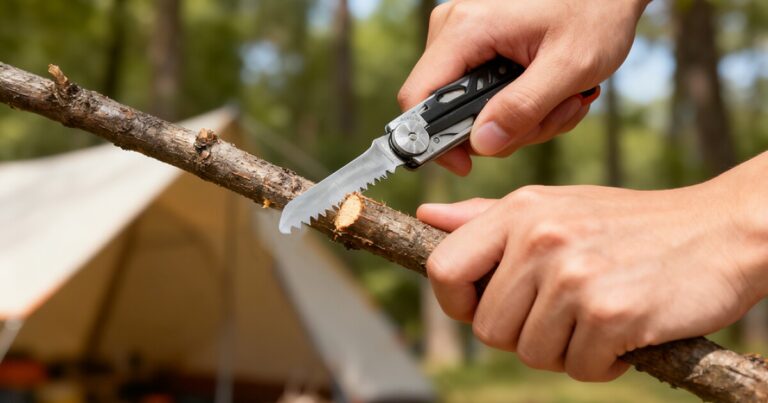
Multitools with 10 or so functions are all very well and good, but why stop there if you can go all the way up to 22? That’s exactly what XTrailor’s P22 offers, including pliers, multiple blades, plus even a whistle and a firestarter.
Currently the subject of a Kickstarter campaign, the clearly Leatherman-inspired P22 features an aluminum alloy body and hardened stainless steel tools. It measures 111 x 40 x 20 mm (4.37 x 1.57 x 0.78 in) when folded down, and is claimed to tip the scales at 169 g (5.96 oz).
The P22’s most prominent feature is its pliers, which include a built-in wire cutter. There’s a separate wire stripper tool, which also incorporates a can opener. Another tool combines a Phillips and flathead screwdriver (via a flippable bit), a tungsten steel automotive glass-breaking stud, a nail puller, a rope cutter, plus 5- and 7-mm hex wrench holes.
A diagram of the P22’s various features
XTrailor
Other tool combos include a small flathead screwdriver/bottle opener, a ruler/file, and a small blade/awl. Finally, there’s a larger 20-mm (0.8-in) cutting blade, a saw blade, a pair of scissors and of course … the removable whistle and sparking firestarter.
A belt clip holds the whole rig in place, while a safety lock mechanism keeps all of the tools from accidentally folding down on the user’s fingers.
Assuming the P22 reaches production, a pledge of US$79 will get you one in your choice of silver or black. The planned retail price is $119.
X Trailor P22 – 22-in-1 EDC Multi-Tool for Every Adventure
new video loaded: Collapse of School Traps Students in Indonesia
Rescuers raced to save students after a boarding school in East Java caved in. At least three students were killed, officials said, and dozens more were injured.
Thinking of using AI to write a job description for your company? Experts and recruiters are cautioning against it.
What’s wrong with automating this part of the often long, difficult hiring process, especially for highly specialized IT roles? While using AI might be a time-saver, according to many in the recruiting world, it also robs the company of the ability to think deeply about what a job requires, as well as an opportunity to connect in a more human way with candidates.
Paul DeBettignies, the founder of Launch Hiring as well as founder and strategist of Minnesota Headhunter LLC, said that he doesn’t have a lot of faith in the use of AI for crafting job descriptions.
“If we’re going to automate everything, then hiring, finding a job, and recruiting is going to become even more transactional than it’s already been,” DeBettignies said. “We all already say we don’t like it, so we’re just going to do more of it?”
DeBettignies added that recruiting has always relied heavily on tech tools. Many years ago, a time-strapped recruiter might have used cut-and-paste to slap together a job description from other job descriptions found online, such as Craigslist. AI might only make this trend worse.
“For years, job descriptions have always sucked, and now that we’re using AI, AI has been training on crappy job descriptions,” DeBettignies said.
Failure to launch. Creating a good job description relies on insightful questioning. Managers must articulate who they might need to hire and why. According to recruiting author, facilitator, and speaker Katrina Collier, “most of them get it wrong.”
Fortune reported last year that 66% of managers are “accidental”; Collier said accidental managers haven’t been trained in managing a team, let alone in replacing someone’s role within it.
“Unfortunately, the managers just want recruitment to go away, it’s their least favorite task,” Collier said. “When you’ve got the likes of any of the large language models, OpenAI, whatever it is, they can just type in…whatever, and up comes a job description and they go roll with that.”
Collier said the description generated by AI often isn’t specific to a company and team. Instead, she encourages recruiters to have an internal conversation to work it out.
If a company chooses to lean into the AI description, DeBettignies can ask the model why someone might not want to apply for the role. He often gets the same three answers: There are too many bullet points, there isn’t information on why someone would want to work at a company, or there isn’t enough information on salary or benefits.
“My advice is to not fully automate this,” DeBettignies said. “I do appreciate speed and I appreciate efficiency. Hopefully it does get us to…where we are now able to do the human things more and better and deeper than we’ve been able to do.”
AI as a spackle of sorts. To some, like Steve Visconti, the CEO of cybersecurity company Xiid, AI is a tool that could be used to help fill gaps in job descriptions.
Visconti said he believes AI is a good tool for help with job postings, “because you don’t want to overlook something that should have been obvious.”
“I would write the job description—which I do, by the way, I do this—and then I generate an AI version,” Visconti said. “Then I try and merge the two and see how I can make it better. So, in a sense, AI didn’t save me a lot of time, it just made it better in that specific case. I think it’s a great tool, very valuable.”
Visconti pointed out how AI could help fill in required skills for a vital IT position, including cloud native, Kubernetes, OpenShift, and so on.
Collier agreed that the tool could be helpful if “you really know who you need to hire” and AI is used to help flesh out a description.
“It can be amazing if you’ve done all the research, but often it’s just a case of, I need a quick win,” Collier said. “They just go and ask, and then [AI is] pulling in all the badly-written job descriptions that exist in the world and going, ‘Yeah, here’s a great one.’”
Fortune Global Forum returns Oct. 26–27, 2025 in Riyadh. CEOs and global leaders will gather for a dynamic, invitation-only event shaping the future of business. Apply for an invitation.
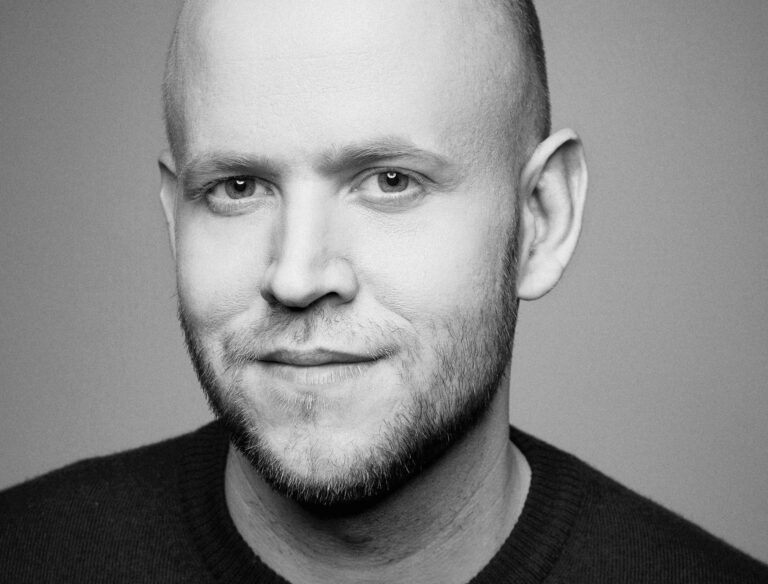
This morning (September 30), Spotify revealed that its founder and Chief Executive Officer, Daniel Ek, is stepping back from the CEO role and will transition to Executive Chairman.
The company has named Gustav Söderström (co-President and Chief Product and Technology Officer) and Alex Norström (co-President and Chief Business Officer) as its new co-Chief Executive Officers.
According to the announcement, Spotify’s new Co-CEOs will report to Daniel Ek and will also serve on the company’s Board of Directors, subject to shareholder approval.
These changes will all be effective January 1, 2026.
In a memo sent to employees today, which you can read in full here, Ek confirmed that “with full confidence in Gustav and Alex, on January 1, 2026, I will move to Executive Chairman”.
He also said that “Alex and Gustav have clearly demonstrated that, with the support of this remarkable team, they are readytoleadSpotify as co-CEOs.”
The three execs, Ek, Söderström, and Norström, participated in a Q&A with analysts on Tuesday to explain the strategic thinking behind the leadership transition.
MBW listened in on the call. Here’s what stood out…
1. Why Now? Daniel Ek says that Söderström and Norström “are truly delivering exceptionally well already.”
When asked why now was the right time for the leadership change, Ek explained that the decision was driven by the strong performance of Söderström and Norström rather than any external pressures.
“It’s less a function of really anything except the fact that Alex and Gustav are truly delivering exceptionally well already,” Ek said. “And I feel like this is a natural evolution of what we already do as a leadership team.”
Ek noted that since taking over as co-Presidents in 2023, the two executives “have really stepped up in a material way, taking much of the day-to-day responsibilities”.
“As they’ve been growing, I’ve been handing them more and more of the tasks,” he added. “I feel like this is actually more of a natural reflection of how the company actually works and operates already.”
“This is a natural evolution of what we already do as a leadership team.”
Ek described his own role evolution as moving “from being more of a player to more of a coach type model”, adding that he “will work with Gustav and Alex on the big strategic decisions that we face in the long arc of the company”.
Before joining the Company in 2009, Söderström was director of product and business development for Yahoo! Mobile from 2006 to 2009.
In 2003, founded Kenet Works, a company that developed community software for mobile phones and served as the company’s Chief Executive Officer until it was acquired by Yahoo! in 2006. Söderström is a startup seed investor and founder of 13th Lab (acquired by Facebook’s Oculus).
Norström, meanwhile, was Chief New Business Officer at King.com Ltd prior to joining Spotify in 2011. He was a member of the board of directors of Circle from 2016 through December 2019.
He was previously Spotify’s Chief Freemium Business Officer and, prior to that, the company’s Chief Premium Business Officer, Vice President of Growth, and Vice President of Subscriptions.
2. Ek says he will be “more involved than a typical US chairman” and will retain an office with the co-CEOs
Addressing questions about what his Executive Chairman role would entail, Ek clarified that it would be more active than what investors might expect from a typical US-style chairman.
“I think most investors may come at it from a US perspective, where it’s mostly a ceremonial role,” Ek said. “In Europe, it isn’t. In fact, a chairman is someone who’s quite active in the business; sometimes even represents the business to different stakeholders, like, for instance, governments or key partners.”
“We wanted to make it clear that this role is more in line with the European one than American one,” he explained.
Ek emphasized that the “executive” part of the title was significant: “I am still retaining an office here with Gustav and Alex, working on various types of problems with them.”
However, he was clear about the power structure: “I do want to make it clear, this is really they’re in charge. They’re the ones making the decision, but I will be there as a friend, a coach, a cheerleader, whatever I’m needed to do for the day in making this happen.”
3. Ek says Spotify is “early on this journey” and pointed to massive geographical opportunities ahead
Looking toward the company’s long-term strategy, Ek remained bullish on Spotify’s future growth potential.
“I still believe, with every fiber of my being, that we’re early on this journey,” Ek said. “And when you sort of look out and you sort of see what’s still left on the table for Spotify, there’s some amazing opportunities.”
“I still believe, with every fiber of my being, that we’re early on this journey.”
He highlighted several key growth areas: “There’s the next generation of consumers that are now coming online in a very big way. We have a huge part of the world that still isn’t really accustomed to streaming as much as we take it for granted today, with everything from Asia to Africa, [which have] incredibly populous regions and very young demographics.”
Ek also pointed to technological advancement as a driver: “We have new technology advancements, new form factors, AI, all of these other things.”
He invoked a Bill Gates quote to frame his thinking: “People tend to overestimate the short term and underestimate the long term, and that’s certainly one of the things that Alex, Gustav and I talk a lot about.”
“I’m gonna keep pushing for us to look around the corner, stay focused on the long term, and keep showing up every day and make gradual improvements, because that’s long term what leads to the best results,” Ek added.
4. On Spotify’s success to date, Ek said: “Overnight success doesn’t happen overnight”
When asked about key initiatives to drive long-term growth, Ek reflected on the company’s two-decade journey.
“As I reflect back on two decades of Spotify, there’s a few phrasings that come to mind,” Ek said.
“One of them is that overnight success doesn’t happen overnight. It is actually just sort of waking up, going to work, work really hard, and making gradual improvements over 20 years. That is the results of the company that we’re sitting here today with.”
He emphasized that this approach would continue: “Yeah, I’m gonna keep pushing for us to look around the corner, stay focused on the long term, and keep showing up every day and make gradual improvements, because that’s long term what leads to the best results and that I know is the product of what Spotify is today.”
5. Ek says he will bring an “outside in perspective” from his work with other companies
Discussing how he would be most beneficial in his new role, Ek pointed to the value of external perspectives.
“One of the sort of future-looking aspects is also the outside-in perspective,” Ek said. “One of the amazing things that I feel now having been involved with companies like Neko Health, is that you do get a different perspective about different operating environments, different cultures.”
He acknowledged both the strengths and potential limitations of Spotify’s long-tenured team: “We have a team of extremely tenured [employees]. A lot of folks have been here for 10, 15 years and really grown up with the company.
“I think that is 99% a superpower that we have here as a company. And Spotify would not have been what it is today if it weren’t for all the ‘Spotifiers’ past and present that helped build the company into what it is today.”
“But with all that said,” he continued, “one of the real things as well is it is important to be able to draw on inspiration from the outside.”
Ek explained that one of his “new superpowers is that I do get to sit on the inside on some of the other businesses as well that I’m helping build, and seeing what it truly is like to start a new startup, for instance, in 2025 and what are some of the tools and decisions you can make, and how can that impact Spotify in a positive way”.
He added: “We’ve already seen some of those lessons, and are applying them now at Spotify.”
6. Alex Norström says Spotify has “never been more excited than we are right now” and pointed to the company serving just 3% of the world’s population
When asked what they were most excited about in the next chapter, Norström emphasized the company’s momentum and untapped potential.
“We can’t be more excited than we are right now,” Norström said. “It’s just with so much momentum. We’ve been shipping at an increasingly higher pace.”
He cited recent achievements: “You saw us sort of see the completion of renewals happen this year. We rolled out audiobooks to more markets. We just improved the free tier, which is going well. We shipped messaging, we shipped mixing tools, lossless, DJ, and on it goes, and we’ll continue to ship even more things.”
Norström put Spotify’s current scale in perspective: “We’re lucky that we started with music, because planet Earth has some relationship with music. And today, at Spotify, we see 3% of the world’s population paying us on a recurring basis for product that they’re loving.”
According to Spotify’s Q2 2025 earnings report, the platform saw its global Premium Subscriber base grow to 276 million paying users in the three months ended June 30, up by +8 million net subs versus the prior quarter (Q1 2025).
Spotify’s total Monthly Active Users, which combine paying users and ad-supported users, grew 11% year over year to 696 million.
Looking ahead, he said: “It’s not unimaginable that we’ll be at 10%, 15% [of the world’s population paying for Spotify].”
7. Gustav Söderström says AI represents “the most exciting time” for product development “in probably 15 to 20 years”
Asked about his priorities and what excited him most, Söderström focused on artificial intelligence and technological transformation.
“We’re in the middle of a macro wind called AI. There are better recommendations, more personalization, but we also think it’s going to eventually end up in new form factors,” Söderström said.
He added: “My top priority, my one, two and three, is to make sure that we capture this opportunity [of AI] and make it a tailwind [that] accelerates us.”
Söderström also drew parallels to Spotify’s previous major platform shift: “I’m a product guy and a technologist. I’ve been here long enough that I went through the previous big macro change, which was shifting [to] mobile, and that was certainly scary.
“All macro shifts are scary, but as a product person and technologist, [it] was the most exciting time I’ve ever had, until AI, because now everything is about to change again.”
“Back in the shift to mobile, we managed to position the company to actually [use] that macro wind as a tailwind instead of a headwind. And this is what we want to do now as well,” he explained.
Söderström concluded: “I think if you ask anyone in product, this is the most exciting time in probably 15 to 20 years, and then you want to be at a company that has massive impact. So that’s why I’m excited.”
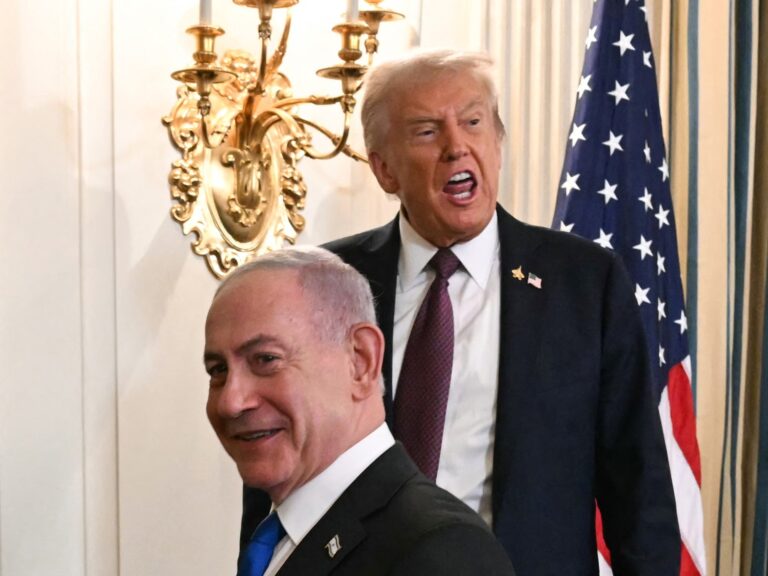
President Trump has announced a 20-point peace plan to end the war in Gaza, showing various lines of Israeli troop withdrawal should President Trump’s plan go ahead.
BBC Verify has analysed this map alongside the latest satellite imagery and the Israeli military’s control of Gaza. Merlyn Thomas reports.
Produced by Katerina Karelli. Verification by Benedict Garman. Graphics by Waleed al-Temimi and Mesut Ersoz.
A required part of this site couldn’t load. This may be due to a browser
extension, network issues, or browser settings. Please check your
connection, disable any ad blockers, or try using a different browser.
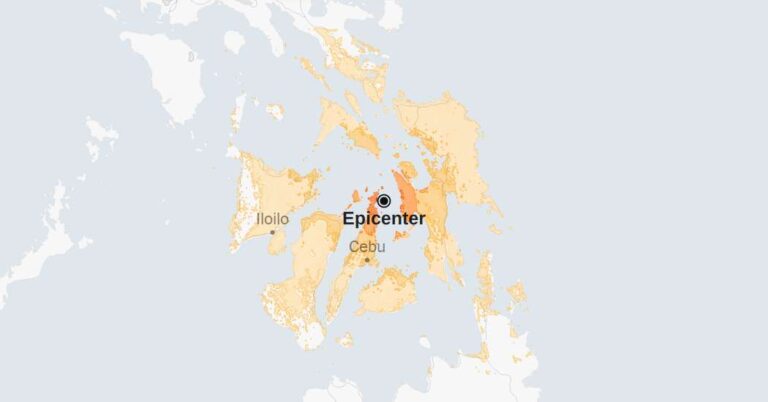
Note: Map shows the area with a shake intensity of 4 or greater, which U.S.G.S. defines as “light,” though the earthquake may be felt outside the areas shown. All times on the map are Philippine time.The New York Times
A strong, 6.9-magnitude earthquake struck in the Visayan Sea on Tuesday, according to the United States Geological Survey.
The temblor happened at 9:59 p.m. Philippine time about 7 miles southeast of Calape, Philippines, data from the agency shows.
U.S.G.S. data earlier reported that the magnitude was 7.
As seismologists review available data, they may revise the earthquake’s reported magnitude. Additional information collected about the earthquake may also prompt U.S.G.S. scientists to update the shake-severity map.
Aftershocks in the region
An aftershock is usually a smaller earthquake that follows a larger one in the same general area. Aftershocks are typically minor adjustments along the portion of a fault that slipped at the time of the initial earthquake.
Quakes and aftershocks within 100 miles
Aftershocks can occur days, weeks or even years after the first earthquake. These events can be of equal or larger magnitude to the initial earthquake, and they can continue to affect already damaged locations.
When quakes and aftershocks occurred
Source: United States Geological Survey | Notes: Shaking categories are based on the Modified Mercalli Intensity scale. When aftershock data is available, the corresponding maps and charts include earthquakes within 100 miles and seven days of the initial quake. All times above are Philippine time. Shake data is as of Tuesday, Sept. 30 at 10:19 a.m. Eastern. Aftershocks data is as of Tuesday, Sept. 30 at 12:14 p.m. Eastern.