

2.4 C
New York
Friday, February 27, 2026
Home Blog Page 339

DMT demonstrates potential in decreasing stroke-induced harm in animals

0

A natural psychedelic may do more than alter perception. A new study found that at sub-hallucinogenic doses, DMT shielded the brain from stroke damage in animal models, reducing inflammation, preserving the blood-brain barrier, and speeding recovery.

The effects of an ischemic stroke, where blood supply to the brain is blocked, can vary depending on the area that’s affected, but commonly include physical impairments like one-sided weakness and balance issues, and cognitive challenges such as problems with speech and memory.

A new study by researchers in Hungary has investigated whether DMT, a naturally occurring psychedelic compound, could protect brain cells from damage caused by stroke in animal models. The results hold great promise for the development of a human treatment.

Produced by various plants and animals, the hallucinogen dimethyltryptamine (DMT) is known for its rapid, intense, and relatively short-lived effects among those who take it for its psychedelic effects or use it in religious rituals. In the present study, the researchers used a mix of lab-grown cell models and animal models that mimic the effects of ischemic stroke.

Neurons and other brain cells, which modeled the blood-brain barrier (BBB), were subjected to oxygen and glucose deprivation to simulate the conditions of a stroke. DMT was added either before or after this deprivation to test both preventive and therapeutic effects. In animal studies, rodents had their middle cerebral artery occluded, a standard stroke model in animals.

After stroke onset, DMT was administered intraperitoneally (into the abdominal cavity), followed by a continuous infusion for 24 hours, to see if it reduced brain damage and improved recovery. The researchers examined post-stroke cell survival and death rates, the size of areas of dead brain tissue (infarct), behavioral outcomes such as motor coordination and cognitive function, and inflammatory and neuroprotective signaling pathways activated by DMT.

DMT has the potential to become a groundbreaking new stroke treatment

What they found across cell and animal models was encouraging. DMT-treated cells exposed to stroke-like conditions showed significantly less cell death compared to untreated controls. In animals, brain damage was reduced – infarct volumes were notably smaller when DMT was administered after a stroke. Treated animals recovered motor function and cognitive performance more quickly and more fully than untreated, control animals. DMT appeared to suppress harmful inflammatory responses while promoting protective cellular pathways that helped cells resist stress and programmed cell death (apoptosis). The researchers found that DMT stabilized the BBB, reduced leakage of damaging molecules into brain tissue, and moderated the activity of microglia, the brain’s immune cells, all of which contributed to reduced inflammation and secondary damage.

There was also evidence that DMT promoted neuronal growth and repair processes, potentially aiding long-term recovery. Importantly, the beneficial effects were observed even when DMT was given after the stroke occurred, suggesting potential therapeutic use in emergency settings rather than just a preventive effect.

Of course, these experiments were conducted in labs, so a major limitation of the study is that we don’t yet know if these results will translate to humans. Further, the optimal dose, timing, and delivery method for DMT therapy have not yet been established, and effects may vary significantly. DMT’s hallucinogenic properties could complicate its clinical use. However, because beneficial effects were observed at sub-psychedelic doses, this may be manageable.

If the results translate to humans, DMT could become a groundbreaking new treatment for stroke, particularly ischemic stroke, where rapid intervention is critical. Potential clinical uses included emergency stroke therapy, as an adjunct to rehabilitation, and as a neuroprotective agent, which may expand the treatment’s relevance to traumatic brain injury and cardiac arrest.

Phase 2 human clinical trials are planned for later in 2025 to investigate the use of DMT as a treatment for stroke.

The study was published in the journal Science Advances.
Source: HUN-REN Biological Research Center Szeged

Zelensky confirms five fatalities in deadly Russian missile and drone strike

0

Alex Boyd,

Stuart Lau and

Gary O’DonoghueKyiv

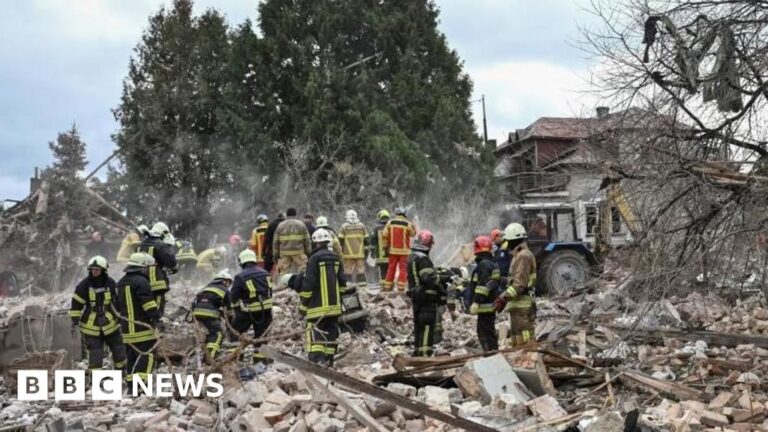
Reuters A number of rescuers in protective clothing can be seen working around a destroyed house. They are surrounded by rubble and are clearing away bricks and other pieces of debris.Reuters

Rescuers work at the site of a house that was destroyed in Lapaivka, near Lviv

Five people have died and tens of thousands have been left without power in Ukraine after intense Russian missile and drone attacks overnight, Ukrainian President Volodymyr Zelensky has said.

Ukraine’s neighbour Poland scrambled fighter jets in order to ensure the safety of Polish airspace, the Polish military confirmed. Allied Nato aircraft were also deployed.

Four members of one family, including a 15-year-old girl, were killed by a strike in the village of Lapaivka as attacks focused on the nearby western city of Lviv.

Russia’s defence ministry said it had successfully carried out a “massive” strike on Ukrainian military and infrastructure targets.

Another family member was injured, as were two neighbours, in the strike that killed their relatives in Lapaivka.

One person also died in Zaporizhzhia. Zelensky said Russia fired more than 50 missiles and around 500 attack drones.

Lviv endured several hours of strikes, leading to the suspension of public transport services and the cutting of electrical supplies.

The Ivano-Frankivsk, Chernihiv, Sumy, Kharkiv, Kherson, Odesa, and Kirovohrad regions were also targeted as well as Lviv and Zaporizhzhia, according to Zelensky.

He added: “We need more protection and faster implementation of all defense agreements, especially on air defense, to deprive this aerial terror of any meaning.

“A unilateral ceasefire in the skies is possible – and it is precisely that which could open the way to real diplomacy.”

State Emergency Service Of Ukraine via Reuters Flames rising from a car on fire in front on an apartment building, during the night. State Emergency Service Of Ukraine via Reuters

A car burns in front of an apartment building in Zaporizhzhia

The Russian assaults came days after a US official said the US would support Ukraine launching deep strikes inside Russian territory.

“Polish and allied aircraft are operating in our airspace, while ground-based air defence and radar reconnaissance systems have been brought to the highest state of readiness,” Poland’s operational command said in a post on X.

At 05:10 (02:10 GMT), all of Ukraine was under air raid alerts following Ukrainian Air Force warnings of Russian missile and drone attacks.

Russia continues to focus its attacks on Ukraine’s energy infrastructure as winter approaches.

Kyiv’s energy ministry said overnight attacks caused damage in Zaporizhzhia, Chernihiv and Sumy.

In Zaporizhzhia, Russia’s overnight attack left “more than 73,000 consumers… without electricity” after a power plant was struck, according to Ivan Fedorov, the regional governor.

A woman was killed and several others injured in the region.

A 16-year-old girl was among those receiving medical assistance, Fedorov added, posting photos apparently showing a partly destroyed multi-storey block and a burnt-out car from the site of the attack.

Emergency outages were implemented in Chernihiv and Sumy, the energy ministry added.

Lviv’s mayor Andriy Sadovyi said part of the city – 70 km (43 miles) from the border with Poland – had no power, adding that city’s air defence systems were engaged heavily in repelling first a drone and then a Russian missile attack.

Map: Poland and Ukraine are marked on a map, with Poland shaded in dark yellow. A circular point marks Lviv, in western Ukraine. The map is meant to show the proximity of Lviv to Poland

Public transport in Ivano-Frankivsk, another western city, would “start running later than usual” on Sunday, its mayor said.

At around 06:00 (03:00 GMT), Ukraine’s Air Force said all of the country was under the threat of fresh Russian missile attacks, following hours of air raid alerts and warnings of drone and missile attacks.

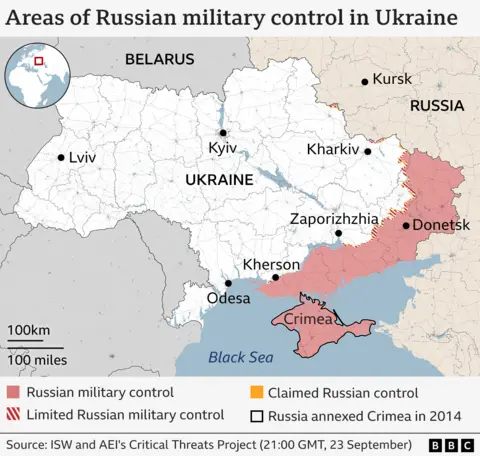
Since the start of Russia’s full-scale invasion of Ukraine in 2022, its forces have occupied most of Ukraine’s eastern Donbas region, including Luhansk and Donetsk.

Russia currently controls around a fifth of Ukrainian territory, including the Crimean peninsula, which it annexed in 2014.

In Russia, air defence units destroyed 32 Ukrainian drones overnight, the state-owned RIA news agency reported on Sunday, citing data from Russia’s defence ministry.

Ukraine has also been stepping up strikes on Russian oil refineries, leading to petrol shortages in parts of the country.

Last week, US Special Envoy to Ukraine Keith Kellogg said on Fox News that the US would support Ukraine launching deep strikes inside Russian territories.

“The answer is yes, use the ability to hit deep, there are no such things as sanctuaries,” Kellogg said when asked if it was US President Donald Trump’s position that Ukraine could conduct long-range strikes.

Map showing which areas of Ukraine are under Russian military control or limited Russian control

Meanwhile, another Nato member – Lithuania – had to close its airspace briefly after objects were spotted, following recent incidents in Denmark, Norway and Germany.

Lithuania suspended flights at its largest and busiest Vilnius airport for several hours, before reopening it at 04:50 (01:50 GMT) on Sunday.

The airport’s operator said the flight suspensions and diversions were “due to a possible series of balloons heading toward Vilnius Airport”.

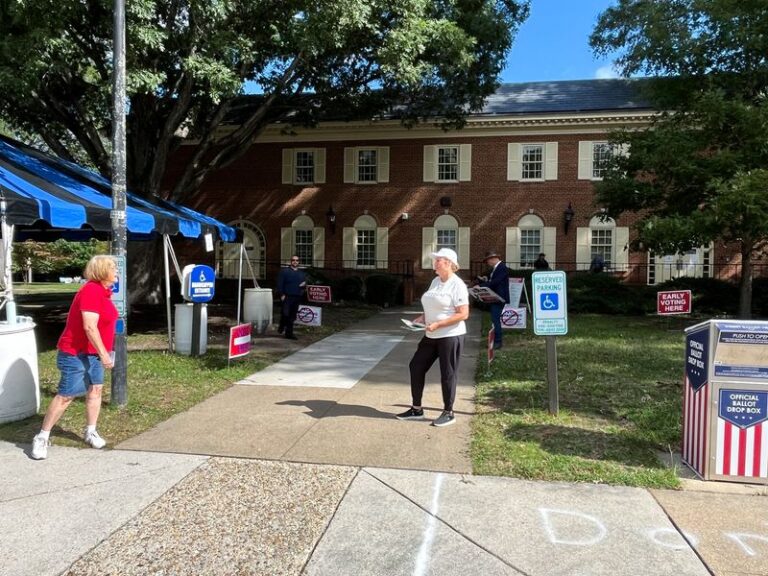
Democrats and Republicans face backlash as shutdown continues

0

As shutdown drags on, US voters see blame game threatening Democrats and Republicans

A Unique Spin on Oktoberfest Fashion

0

The trends endure long after Oktoberfest ends. Bavarians wear tracht while bird hunting, partying or visiting a biergarten.

At the Lorenz Ganter tailor, north of Munich, women sew vests and jackets from Bavarian wool and other local fabrics. “We have tradition for all days,” says Dieter Ganter, whose grandfather founded the shop 80 years ago.

Customers today are drawn to lighter weight, brighter fabrics than just traditional green and brown, he said. 

Stellantis plans to invest $10 billion in U.S. turnaround efforts

0

Stellantis NV is planning to invest about $10 billion in the US as the troubled maker of Jeep sport utility vehicles and Ram pickups refocuses on the market that’s pivotal to its profits, according to people familiar with the situation.

The carmaker may announce in the coming weeks about $5 billion in fresh money on top of a similar amount earmarked earlier in the year, said the people, who declined to be identified discussing information that’s not public. The investments over several years could be funneled into plants — including re-openings, hiring and new models — in states such as Illinois and Michigan, the people said.

Stellantis is focused on reclaiming the past success of the Jeep brand and is considering fresh investments into Dodge, which could result in a new Dodge V8 muscle car, and possibly even the Chrysler brand in the long term, some of the people said. Talks are ongoing, no final decision has been made and the amount and targeted projects could still change, the people said.

The new spending reflects efforts by Chief Executive Officer Antonio Filosa, who was appointed to the top job in May, to recalibrate investments across regions, the people said. Under former CEO Carlos Tavares, Stellantis had aggressively pushed to shift its production and engineering operations to lower-cost countries like Mexico. He also invested heavily in Europe, where car demand is weak and profitability low, in the years that followed the group’s 2021 creation. 

“As part of the preparations for the company’s strategy update and capital markets day next year, the CEO is leading a thorough evaluation of all future investments. This process is ongoing,” a media representative said in emailed comments, declining to elaborate further.

Stellantis’ actions would mirror those of companies across industries unveiling big investmentplans in the world’s biggest economy to curry favor with President Donald Trump and also help mitigate the impact of tariffs. South Korea’s [hotlink]Hyundai Motor[/hotlink] Group in August said it would increase its investment in the US by $5 billion to $26 billion through 2028, and several big European pharmaceutical companies have also pledged billions of dollars of new spending. 

The money may also help make good on a pledge by Chairman John Elkann, who has met Trump previously to discuss American investments, to manufacture a new midsize pickup vehicle at its idled plant in Belvidere, Illinois, where the company has committed to return around 1,500 employees to work. Such a move could help appease the United Auto Workers union, who have held previous talks on the matter with Stellantis.

Stellantis is preparing the announcement while it has been lobbying the administration in recent days to waive or soften a possible 25% tariff that could otherwise hit medium-duty Ram pickups the company makes in Mexico.  

Filosa, an industry veteran from Stellantis’ predecessor company Fiat Chrysler Automobiles, is struggling to stabilize a group that’s suffered steep market share losses in the US and Europe following a series of strategic missteps under Tavares. He’s also trying to navigate the fallout from Trump’s tariffs, which are reshaping the global automotive landscape. 

Some of those efforts are starting to pay off, with a gain in third-quarter US deliveries that helped fuel investor optimism on Thursday.

The new CEO has started scrapping some European investments, including a decision to withdraw support for a joint hydrogen-vehicle venture with Michelin and Forvia SE. Stellantis also is mulling a sale of its Free2move car-sharing business, Bloomberg reported this week. Earlier this year, it hired McKinsey & Co. for strategic advice on Maserati and Alfa Romeo. It has repeatedly denied any plans to sell Maserati.

Read More: How Stellantis Became Global Auto’s Cautionary Tale

The increased US focus is alarming unions in Europe, where the owner of brands including Fiat and Peugeot suffers from manufacturing overcapacity. Like its rivals, Stellantis is contending with excess capacity as Chinese manufacturers led by BYD Co. expand in the region with competitively priced cars. Stellantis is temporarily pausing production at eight of its plants in Europe amid lagging demand for models including the Alfa Romeo Tonale sport utility vehicle and the Fiat Panda. 

Filosa is scheduled to meet Italian labor union representatives on Oct. 20 as worries about possible plant closings mount. Late last year, the company presented an ambitious production plan for Italy, which adds pressure on Filosa to make good on those pledges.

Fortune Global Forum returns Oct. 26–27, 2025 in Riyadh. CEOs and global leaders will gather for a dynamic, invitation-only event shaping the future of business. Apply for an invitation.

A Snapshot of the Week: Pro-Gaza Demonstrations in Europe and Flooding in Sudan

0

A global roundup of some of last week’s events.

European Union introduces new AI strategy to decrease dependence on US and China in technology sector

0

Stay informed with free updates

The EU must promote homegrown artificial intelligence platforms and decrease its reliance on foreign providers, Brussels has said, as it prepares to set out a new plan to compete against the US and China in the global race for the revolutionary technology.

According to a draft proposal seen by the Financial Times, the European Commission’s new “Apply AI strategy” will promote European-made AI tools to provide security and resilience while boosting the bloc’s industrial competitiveness. The strategy highlights the need to improve AI usage in sectors including healthcare, defence and manufacturing.

The Commission aims to “strengthen EU AI sovereignty” by accelerating the development and use of homemade artificial intelligence technologies, including policies to “accelerate the adoption of European scalable and replicable generative AI solutions in public administrations”, the draft says.

The strategy, which could change before it is made public, is set to be presented by the EU’s tech chief Henna Virkkunen on Tuesday.

It warns of “external dependencies of the AI stack” — the infrastructure and software needed to build, train and manage AI applications — which it says “can be weaponised” by both “state and non-state actors”, posing a risk to supply chains.

Such concerns have risen since Donald Trump’s return to the US presidency, which has sparked widespread concerns about the bloc’s reliance on American tech and calls for digital independence in Europe.

Meanwhile, China is challenging the US as a global leader in AI development, stoking fears that Europe may have little influence over future use of the technology.

In recent years, Europe has become home to a number of promising AI companies, from French model maker Mistral to German defence tech group Helsing. But the EU still relies on the US and Asia for much of the software, hardware and critical minerals needed to develop AI.

According to the draft, public administrations have a central role to play to “help AI start-ups grow through increased demand for European-made open source AI solutions”.

European Commission President Ursula von der Leyen said at an event on Friday that the bloc wants to “speed up AI adoption across the board” via the Apply AI strategy in order to ensure that Europe doesn’t miss out on the new technology.

Brussels wants to position AI not merely as a productivity tool, but as a “strategic asset” that must be tightly integrated into the EU’s institutional, industrial and security systems.

To implement the actions in the strategy, such as supporting AI adoption in manufacturing and the health sector, the commission is mobilising €1bn from existing financing programmes.

The bloc also wants to prioritise implementation of European AI-enabled tools in defence, as European capitals rapidly increase their defence spending in response to the threat from Russia and fears of US disengagement from European security under Trump.

Brussels plans to “accelerate the development and deployment of European AI-enabled” command and control (C2) capacities.

C2 systems, which are used to instruct troops and manage battlefield operations, are one of the so-called critical enablers that European militaries currently rely heavily on the US to provide through Nato.

The Commission also wants to “support the development of sovereign frontier models” for space defence technology.

The United States’ Lag in the Global Electric Vehicle Competition

0

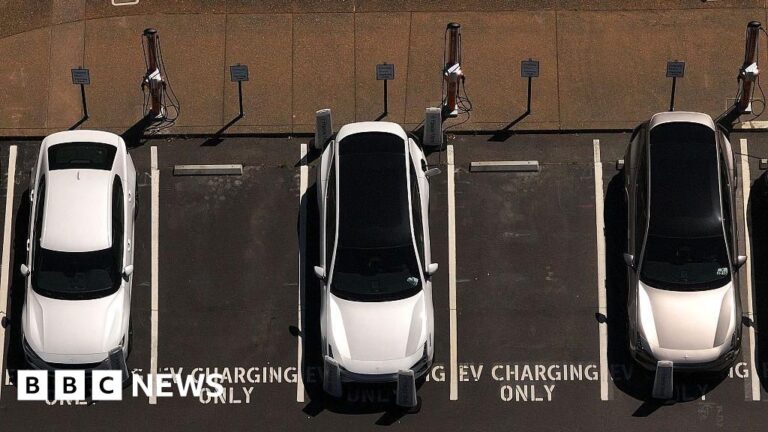
Getty Images In an aerial view, three white electric cars sit parked at a charging station, with 'EV Charging Only' signs painted on the groundGetty Images

You could be forgiven for thinking that electric cars might finally be gaining momentum in the US.

After all, sales of battery cars topped 1.2 million last year, more than five times the number just four years earlier. Hybrid sales have jumped by a factor of three.

Battery-powered cars accounted for 10% of overall sales in August – a new high, according to S&P Global Mobility.

And in updates to investors this week, General Motors, Ford, Tesla and other companies all reported record electric sales over the past three months.

This marked a bright spot in an industry wrestling with the fallout from still high interest rates and buyers on edge over inflation, tariffs and the wider economy.

But analysts say the boom was caused by a dash to buy before the end of a government subsidy that helped knock as much as $7,500 (£5,588) off the price of certain battery electric, plug-in hybrid or fuel cell vehicles.

With that tax credit gone as of the end of September, carmakers are expecting momentum to shift into reverse.

“It’s going to be a vibrant industry, but it’s going to be smaller, way smaller than we thought,” Ford chief executive Jim Farley said at an event on Tuesday.

“I expect that EV demand is going to drop off pretty precipitously,” the chief financial officer of General Motors, Paul Jacobson, said at a conference last month, adding it would take time to see how quickly buyers would come back.

Even with the recent gains, the US, the world’s second biggest car market, stood out as a laggard in electric car sales compared to much of the rest of the world.

In the UK, for example, sales of battery electric and hybrid cars made up nearly 30% of new sales last year, according to the International Energy Agency (IEA), while in Europe, they accounted for roughly one in five sales.

In China, the world’s biggest car market, sales of such cars accounted for almost half of overall sales last year, according to the IEA, and they are expected to become the majority this year.

Take-up in some other countries, like Norway and Nepal, is even greater.

Electric vehicles (EVs) tend to account for a smaller share of sales in Latin America, Africa and other parts of Asia – but growth there has been surging.

Policy differences

Analysts say adoption in the US has been slowed by comparatively weak government support for the sector, which has limited the kinds of subsidies, trade-in programmes and rules that have helped the industry in places such as China, the UK and Europe.

Former President Joe Biden pushed hard to increase take-up, aiming for electric cars to account for half of all sales in the US by 2030.

His administration tightened rules on emissions, boosted demand through purchases for government fleets, nudged carmakers to invest with loans and grants for EV investments, spent billions building charging stations and expanded the $7,500 tax credit as a sweetener for buyers.

Supporters cast those efforts in part as a competitive imperative, warning that without these US carmakers would risk losing out to competitors from China and other countries.

But President Donald Trump, who recently called climate change a “con job”, has pushed to scrap many of those measures, including the $7,500 credit, arguing that they were pushing people to buy cars they would not otherwise want.

“We’re saying … you’re not going to be forced to make all of those cars,” he said this summer, while signing a bill aimed at striking down rules from California, which would have phased out sales of petrol-only cars in the state by 2035. “You can make them, but it’ll be by the market, judged by the market.”

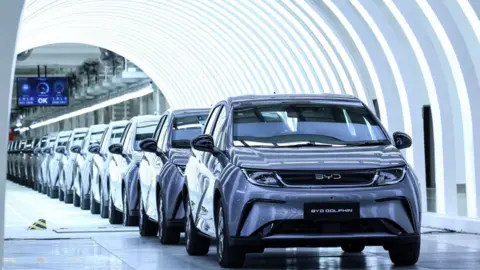
Bloomberg via Getty Images A row of BYD Dolphin compact hatchback electric vehicles illuminated by fluorescent lights at a manufacturing plantBloomberg via Getty Images

Electric cars have become more affordable in the US in recent years – but they still cost more than comparable petrol-powered vehicles.

And Chinese carmakers like BYD, which have made rapid inroads in other markets thanks to low prices, have been effectively shut out of the US, due to high tariffs targeting cars made in China, backed by both Biden and Trump.

As of August, the average transaction price of an electric car in the US was more than $57,000, according to auto industry research firm Kelley Blue Book, about 16% higher than the average for all cars.

The least expensive battery car on offer, a Nissan Leaf, costs about $30,000 (£22,000). By comparison, several models can be found for under £20,000 in the UK.

Analysts say what buyers do next hinges on how carmakers set prices in the months ahead, as they contend not only with the end of the tax credit but also tariffs on foreign cars and certain car parts that Trump introduced this spring.

Hyundai said this week it would offset the loss of the tax credit by lowering the price for its range of Ioniq EVs. But Tesla said the cost for monthly lease payments of some of its cars would rise.

Stephanie Brinley, associate director of S&P Global Mobility, said she did not expect to see many firms follow Hyundai’s example, given the pressures from tariffs.

While some buyers may opt for EVs anyway, “next year is going to be hard,” she warned, noting that her firm is calling for overall car sales to fall by roughly 2% in 2026.

“It would have been difficult enough if all you had to deal with is new tariffs, but with new tariffs and the incentive going away, there’s two impacts.”

Carmakers had already been scaling back their investments in electric cars.

Researchers say Trump’s policy changes could reduce those investments even more.

“It’s a big hit to the EV industry – there’s no tiptoeing around it,” said Katherine Yusko, research analyst at the American Security Project

“The subsidies were initially a way to level the playing field and now that they’re gone the US has a lot of ground to make up.”

However Ms Brinley said she was hesitant to declare the US behind in an industry still testing out technology alternatives.

“Is [electric] really the right thing?” she said. “Saying that we’re behind assumes that this is the only and best solution and I think it’s a little early to say that.”

Judge in the US halts Trump’s plan to send Oregon National Guard to Portland temporarily

0

US judge blocks Trump's deployment of Oregon National Guard to Portland for now

Vinicius Jr shines as Real Madrid defeat Villarreal with two goals, Mbappe suffers injury | Football News

0

A Vinicius Jr brace helped Madrid reclaim top spot in La Liga after Kylian Mbappe limped off with an ankle sprain.

Vinicius Jr scored twice as Real Madrid wrapped up a 3-1 home victory over 10-man Villarreal on Saturday, but lost Kylian Mbappe to injury after the star forward limped off minutes before full-time.

Real now sit atop the La Liga standings on 21 points, two clear of Barcelona, who visit Sevilla on Sunday. Villarreal are third on 16 points.

Recommended Stories

list of 4 itemsend of list

The game was deadlocked in the early stages, but Real began to pile on the pressure as the clock ticked past 20 minutes.

Aurelien Tchouameni rose to meet a cross, but his header drifted just wide of the post.

Moments later, Mbappe pounced on a loose pass as the visitors tried to play out from the back. The Frenchman squared the ball to Franco Mastantuono, whose shot from point-blank range was deflected over the bar by defender Renato Veiga.

Villarreal also had chances in the first half as Tani Oluwaseyi broke into the box and found himself one-on-one with goalkeeper Thibaut Courtois, who produced a sprawling save.

Vinicius Jr scores Real Madrid’s second goal against Villareal from the penalty spot in the 69th minute [Juan Medina/Reuters]

Xabi Alonso’s Real side eventually broke the deadlock just after the break when Vinicius picked up the ball near the left byline, drove into the box and squeezed a shot in from a tight angle that deflected off Villarreal midfielder Santi Comesana.

The Brazilian forward doubled his tally from the penalty spot in the 69th minute, having been brought down by Rafa Marin, with his effort just squeezing under goalkeeper Arnau Tenas.

However, four minutes later, Villarreal proved they had come to the Santiago Bernabeu to fight as Georges Mikautadze pulled one back with a low strike from the edge of the box.

The drama continued in the 77th minute, when Villarreal defender Santiago Mourino was sent off after a second booking for a foul on Vinicius, leaving the visitors on the back foot.

The impact was immediate as Mbappe scored Real’s third in the 80th minute after Brahim Diaz broke through and laid the ball back for the striker to complete the victory. A short time later, Mbappe went down with an ankle injury and was replaced by Rodrygo as Madrid saw the game out.

Kylian Mbappe reacts.
Kylian Mbappe will be assessed after suffering an ankle sprain late in the match, Real Madrid coach Xabi Alonso confirmed [Juan Medina/Reuters]