
Live MatchLive Match,
Follow our live build-up, with team news, ahead of our full text commentary stream of the FIFA 2026 World Cup qualifier.
Published On 11 Oct 2025

Follow our live build-up, with team news, ahead of our full text commentary stream of the FIFA 2026 World Cup qualifier.
Published On 11 Oct 2025

The S&P 500 sank 2.7% in its worst day since April 10. The Dow Jones Industrial Average dropped 878 points, or 1.9%, and the Nasdaq composite fell 3.6%.
Stocks had been heading for a slight gain in the morning, until Trump took to his social media platform and said he’s considering “a massive increase of tariffs” on Chinese imports. He’s upset at restrictions China has placed on exports of its rare earths, which are materials that are critical for the manufacturing of everything from consumer electronics to jet engines.
“We have been contacted by other Countries who are extremely angry at this great Trade hostility, which came out of nowhere,” Trump wrote on Truth Social. He also said “now there seems to be no reason” to meet with China’s leader, Xi Jinping, after earlier agreeing to do so as part of an upcoming trip to South Korea.
Trump’s sudden announcement of new tariffs recalled April’s big swoon in stock markets, when the president announced “Liberation Day” with a list of “reciprocal tariffs” for a large number of countries worldwide, sending global markets plunging. Within just four days, the S&P 500 fell about 12% and the Dow Jones Industrial Average lost nearly 4,600 points, but the U.S. indexes regained all the lost ground within a month or so as the tariffs played out very differently from Trump’s announcement.
Still, as of October, Federal Reserve Governor Chris Waller, who confirmed to CNBC that he had a “great interview” as a potential replacement for Chairman Jerome Powell, revealed how the tariffs had played out so far: price increases for higher-income consumers as tariffs were passed through, and companies swallowing the cost for any lower-income and price-sensitive shopper. Moody’s Analytics found that nearly 50% of consumer spending in the economy came from the top 10% of wealthiest Americans, meanwhile, and the tariff revenue is “very significant,” according to Apollo Global Management chief economist Torsten Slok.
The ratchet higher in tensions between the world’s largest economies led to widespread drops across Wall Street, with roughly six out of every seven stocks within the S&P 500 falling. Nearly everything weakened, from Big Tech companies like Nvidia and Apple to stocks of smaller companies looking to get past uncertainty about tariffs and trade.
The market may have been primed for a slide. U.S. stocks were already facing criticism that their prices had shot too high following the S&P 500’s nearly relentless 35% run from a low in April. The index, which dictates the movements for many 401(k) accounts, is still near its all-time high set earlier in the week.
Critics say the market looks too expensive after prices rose much faster than corporate profits. Worries are particularly high about companies in the artificial-intelligence industry, where pessimists see echoes of the 2000 dot-com bubble that imploded. For stocks to look less expensive, either their prices need to fall, or companies’ profits need to rise.
Levi Strauss dropped 12.6% for one of the market’s larger losses, even though it reported a stronger profit for the latest quarter than analysts expected.
Its forecast for profit over the full year was also within range of Wall Street’s estimates, but the jeans and clothing company could simply be facing the challenge of heightened expectations after a big run. Its stock price came into the day with a surge of nearly 42% for the year so far.
All told, the S&P 500 fell 182.60 points to 6,552.51. The Dow Jones Industrial Average dropped 878.82 to 45,479.60, and the Nasdaq composite sank 820.20 to 22,204.43.
Some of Friday’s strongest action was in the oil market, where the price of a barrel of benchmark U.S. crude sank 4.2% to $58.90.
It fell as a ceasefire between Israel and Hamas came into effect in Gaza. An end to the war could remove worries about disruptions to oil supplies, which had kept crude’s price higher than it otherwise would have been.
Losses accelerated following Trump’s tariff threat, which could gum up global trade and lead the economy to burn less fuel. Brent crude, the international standard, dropped 3.8% to $62.73 per barrel.
In the bond market, the yield on the 10-year Treasury sank to 4.05% from 4.14% late Thursday.
It had already been lower before Trump made his threats, as a report from the University of Michigan suggested that sentiment among U.S. consumers remains in the doldrums.
“Pocketbook issues like high prices and weakening job prospects remain at the forefront of consumers’ minds,” according to Joanne Hsu, director of the Surveys of Consumers. “At this time, consumers do not expect meaningful improvement in these factors.”
The job market has slowed so much that the Federal Reserve cut its main interest rate last month for the first time this year. Fed officials have penciled in more cuts through next year to give the economy additional breathing room. But Chair Jerome Powell has also said they may change course if inflation stays high. That’s because lower interest rates can push inflation even higher.
One potentially encouraging signal from the University of Michigan’s preliminary survey said consumers’ expectations for inflation in the coming year edged down to 4.6% from 4.7% the month before. While that’s still high, the direction of change could help the Fed and limit upward pressure on inflation.
In stock markets abroad, indexes fell across much of Europe and Asia.
Hong Kong’s Hang Seng fell 1.7%, and France’s CAC 40 dropped 1.5% for two of the bigger moves. But South Korea’s Kospi leaped 1.7% after trading reopened following a holiday.
___
AP Writer Teresa Cerojano contributed.

At least 60 people have been killed in a drone strike at a displacement shelter in el-Fasher, a besieged Sudanese city on the brink of collapse.
The resistance committee for el-Fasher, made up of local citizens and activists, said the paramilitary Rapid Support Forces (RSF) hit Dar al-Arqam camp, located within a university, with two drone strikes and eight artillery shells.
“Children, women and the elderly were killed in cold blood, and many were completely burned,” a statement from the group said.
Eyewitnesses described scenes of panic as rescuers pulled bodies from the rubble.
Hospitals already struggling under months of siege have been overwhelmed, with doctors treating the wounded on floors and in corridors.
The RSF has surrounded el-Fasher for the last 17 months, in an attempt to take control of the Sudanese army’s last stronghold in the Darfur region.
The situation in el-Fasher has “gone beyond disaster and genocide”, the resistance group said.
Sudan has been ravished by conflict since 2023, after top commanders of the RSF and Sudanese army fell out and a vicious power struggle ensued – creating one of the worst humanitarian crises.
In recent weeks, the RSF has intensified its assault on el-Fasher, leading experts to believe the city could soon fall unless the army receives immediate reinforcements.
Research showed the RSF had finished building an earthen wall around el-Fasher, bolstering their siege and making it even harder for civilians to escape.
The UN said there were 250,000 civilians trapped in el-Fasher, and warned that continued strikes on civilian areas may amount to war crimes.
Hunger and disease has spread across the city as residents contend with constant bombardment and dwindling food and medical supplies.
Two days ago, at least 13 people were killed after the RSF shelled one of the last remaining hospitals in el-Fasher.
UN High Commissioner for Human Rights Volker Türk condemned the continued killing and injuring of civilians on Friday.
“I am appalled by the RSF’s endless and wanton disregard for civilian life,” he said.
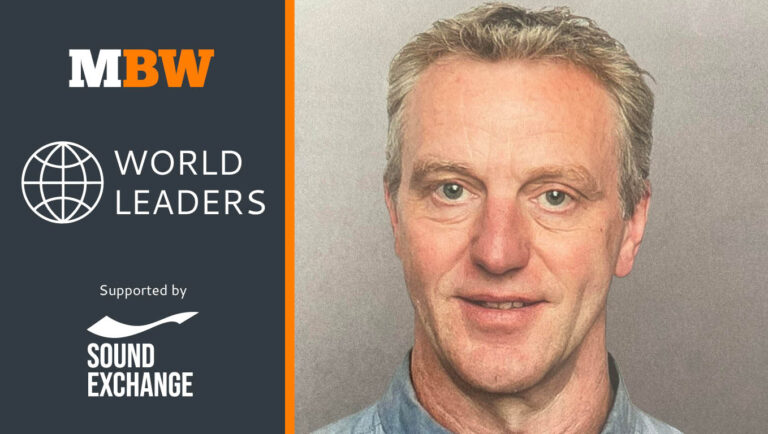
MBW’s World Leaders is a regular series in which we turn the spotlight toward some of the most influential industry figures overseeing key international markets. In this feature, we speak to Berlin-based Konrad von Löhneysen, Founder & CEO of Embassy of Music and Co-CEO of Zebralution. World Leaders is supported by SoundExchange.
Some music industry executives talk a good game about trusting their instincts. Konrad von Löhneysen leads two successful companies on that philosophy.
The Berlin-based entrepreneur founded Embassy of Music in 2008 after a management buyout transformed what was then Ministry of Sound Germany into an independent operation.
Over the past two decades, Embassy has worked with everyone from Calvin Harris and David Guetta to Kid Cudi, Passenger, Simply Red, and Simple Minds, building a longstanding reputation as one of Germany’s most respected independent labels.
But it’s von Löhneysen’s other hat, as Co-CEO of digital distribution powerhouse Zebralution, that’s really turning heads in the industry.
With 85 employees across nine locations, the company works with over 1,000 record labels and audiobook publishers from around the world.
Zebralution has undergone significant ownership changes in recent years.
Founded by von Löhneysen, Kurt Thielen, and Sascha Lazimbat in 2004, it was acquired by Warner Music Group in 2007.
Warner then sold Zebralution in 2017 to a consortium of independent music industry execs – von Löhneysen included – as part of WMG’s post-Parlophone disposals.
The distributor then changed ownership again in December 2019 when German PRO GEMA bought a majority stake in the company.
Subsequent to GEMA’s acquisition, Von Löhneysen stepped in as Zebralution’s Co-CEO alongside Tina Jürgens, following Kurt Thielen’s departure in early 2023.
Now, under the duo’s leadership, Zebralution is on track to become a EUR €100 million revenue-a-year business, fueled by growth in audiobooks alongside its core music distribution services.
While Zebralution has traditionally operated as a B2B distribution company serving labels, von Löhneysen is also steering the business toward working directly with artists who have built substantial audiences on their own.
The company’s also eyeing expansion in the UK market, where von Löhneysen sees a significant gap for Zebralution.
Von Löhneysen cut his teeth as a label owner during the early 2000s – “basically the worst time to start from scratch” as CD sales collapsed – yet managed to build Embassy into a thriving business with a string of hits.
His approach has always been intuitive rather than algorithmic. “I’m a bit like a mini algorithm in a way,” he explains. “If I like something, maybe someone else will like it, too. Or if I like it, [I try to figure out] ways to reach like-minded people.”
“I’m a bit like a mini algorithm in a way. If I like something, maybe someone else will like it, too.”
That instinct served him well during his earlier roles at Logic Records, Jive Germany, and Universal Records. It’s also shaped his philosophy at both Embassy and Zebralution, where he’s built teams that can move quickly on opportunities while maintaining the personal touch that many artists crave from independent partners.
As the industry grapples with AI-generated content flooding streaming platforms and major consolidation reshaping the distribution landscape, von Löhneysen combines old-school music industry instincts with modern business acumen.
His companies are growing while staying true to what he calls “respect for creativity”.
Here, von Löhneysen sits down with MBW in London and recounts his journey from record shop employee to running two successful global music businesses from Germany.
He also explains why he believes the cost of streaming music is “just way too cheap,” why he’s bullish on the UK market, and why he’s “not fazed” about Universal Music Group’s proposed acquisition of Downtown Music Holdings…
You always try to make your passion your job. My passions were football and music, and my football skills just weren’t good enough. So there was only music left. When I was at school, I worked in a record shop, and I was DJing. And at some point, I got a job offer from BMG and moved to Munich. I never went to university or anything. I don’t have a degree. I only know a lot about music.
“My passions were football and music, and my football skills just weren’t good enough. So there was only music left.”
Working in a record shop and as a DJ, I always thought that I had an idea of what people like, or if they like this, they might also like that – what we now call curation. I’m a bit like a mini algorithm in a way.
With that knowledge, when I worked for a record company, I always kept in mind that, if I like something, maybe someone else will like it, too. Or if I like it, what are the ways to reach like-minded people? And this has been at the root of what I’m doing my whole life.
I didn’t have a mentor, but I looked up to iconic label heads, like Terry Ellis from Chrysalis, Chris Blackwell from Island, or Seymour Stein from Sire Records.
I got to meet these people at music seminars in the late 1980s in New York or the Winter Music Conference in Miami. I’ve always had quite a strong international focus. I was very interested in what was going on in America.
Leadership is about making decisions. I make a lot of decisions per day, per hour, whatever. You just try to make more right than wrong decisions. But it’s also about how you communicate the decisions you make to your partners, to the artist and manager, to your own staff. You make a decision because you think it’s right, so everybody backs it.
“Leadership is about making decisions. You just try to make more right than wrong decisions.”
In terms of our business, it’s still the drive, the excitement for listening to music, hearing new songs, meeting new people, and having an idea of why you want to be involved in something. How do I reach people who could like that kind of music? I think that’s always been at the core.
First, the company from Frankfurt that was supposed to [invest] money went bust. They were a publicly listed company, but a whole segment of the Frankfurt Stock Exchange called Neuer Markt was under a lot of pressure, so they couldn’t cough up the money they were supposed to provide, and they went bankrupt.
So we basically seized the shares. Ministry of Sound also changed direction. Matt Jagger was gone at that point; he went on to run Mercury Records with Steve Lillywhite in London.
And the new regime at Ministry wasn’t really that interested in having a company in Germany. So I just bought it from them. To this day, I am still very grateful that Ministry’s CEO Lohan [Presencer] helped me to accomplish this.
Yes, CD sales tanked. It was basically the worst time to start from scratch. But I had nothing else, and I made that commitment that this is what I wanted to do. In the first two years, we already had five, six, seven Top 10 hits, plus we had albums by Simply Red, Carla Bruni and Crazy Frog, even though the market was under a lot of pressure, we did okay.
“It was basically the worst time to start from scratch. But I had nothing else.”
We also did a lot of work for FIFA and UEFA, resulting in two No.1 hits from Bob Sinclar, Love Generation, and Shaggy’s Feel the rush.
But it was very stressful because of what was going on with the record business.
The market was contracting. The people who remained in the business were the ones who really knew what they were doing. A lot of people just got pushed out.
It comes back to what I said in the beginning – do I like it? Do I see where this fits? Who else would like it? What’s the way to get there? There’s a lot of my personal taste included in it, the people that work for me, their taste, but then at the end of the day, it’s also an economic decision as well.
We worked with Avicii before he became big. And then he had that track Levels, and he got a massive advance for one track from Universal.
That’s when we knew we were out. Dance music became very corporate all of a sudden. That sector of the market just became too overhyped and too expensive. I couldn’t compete with advances of that size..
There have always been two different ways of attracting talent. One is just sniffing it out somewhere – whatever was big in the clubs 25 years ago, everybody would try to sign. Now it’s whenever a big track is going viral on TikTok. It’s the same mechanism. Something is bubbling up, and everybody is trying to run after it.
So there has always been that [part of the A&R] world which has nothing to do with artist development.
But then there’s also the artist development side, and that has always been done by a combination of people. Sometimes people in both big and smaller labels sign people from scratch and develop them. I think it always goes in parallel – this “Okay, there’s something bubbling up, let’s throw money at it,” like Levels from Avicii, or “Yeah, I can see something in you, and let’s go a long way together.” I’ve always done both.
I have a really good team within both companies. With my experience, I can make decisions a lot quicker and also have an idea of what we should not do. There are certain things we just don’t do, where sometimes people take forever to discuss something or revisit it again.
For example, for Zebralution, I think the UK is definitely a market where we should invest more time. So that’s why I’m here [in London] now.
We hired another person to do DSP Relations, because there’s no real independent digital distribution company in the UK anymore. They all got bought up, or they’re doing something else. So I think there’s really room for us.
In terms of digital distribution, we’re completely independent. We have our own supply chain.
I don’t think having affiliates in every territory is necessary. From the beginning of a career, is it helpful for an artist or a smaller label? If you say, “I’m gonna be signed to a major in Finland or Portugal,” and the major has an office in every country – are they all gonna work on my release because I sing in English? No. If you don’t have any success in your home territory, no one at an affiliate in another country will look at it.
Whereas at an independent, they say, “Yeah, it’s great. It works internationally. I’m gonna hire a promoter in England or in France, because we want to make this record at least a little bit successful in these territories.”
Absolutely instrumental. If it’s in a local language, the market [for that release] is only in that territory most of the time. But if it’s an international record, if it doesn’t work in your home market, no one would touch it anywhere else. There are exceptions, especially with talent from the UK coming to Germany. My wife signed Passenger, and that broke through . . Holland and Germany were the first markets, and he’s English.
“The UK market is sometimes a little bit too nervous about FOMO.”
I think the UK market is sometimes a little bit too nervous about FOMO. So sometimes music that is a little bit more mainstream gets neglected in the UK. That’s why some of these acts took the detour via continental Europe.
What drives it is that the market is still growing worldwide. In the more saturated traditional music markets, the growth this year is a lot slower than the last two, three years. So the higher growth comes from developing markets in Southeast Asia, like South Korea. Japan is also big.
“There will be price increases coming. Music is just way too cheap.”
We are growing in terms of signing new labels, signing artists directly, and also in the second half of our business, audiobooks. That business is really on fire. It’s growing by double digits. More people are willing to pay a certain amount for a subscription.
In Germany, close to 30 million people use a paid subscription. But there will be price increases coming. Music is just way too cheap. Of course, we had to come in cheap at the beginning of streaming when we were under fire from piracy. Today the competition is more digital entertainment like gaming or Netflix, rather than piracy, so we can expect price rises.
When we started Zebralution, we always saw it as a distribution company for labels. But now the market is different, and artists do artist development first. So they come to a certain point where they just say, “Oh no, I don’t want to go and give my rights away. I just want distribution.”
For example, I have one guy right now that we signed. He’s 20 years old. He’s got 6.7 million followers on TikTok, 3.5 million followers on YouTube. Why would he go license his masters?
We’re now a distribution company for labels, but also individually for certain artists where they just wouldn’t want to sign to a label because they don’t need it.
I think there’s a lot of competition. If you look at Merlin, there’s definitely a lot of capable, good distribution companies out there. Coming to Fuga… Fuga is a competitor to us, but they are more just a supply chain, a platform that delivers to the DSPs. We have our own supply chain, so we’re not fazed about Fuga being taken up by Universal, because we control our own delivery.
I know it will be tough for a lot of independents, asking, “Do I really want this to go through Universal? Do I want a Universal-owned company to do my royalties?”
Yes, absolutely. If the Fuga/Virgin/Downtown setup isn’t an appealing offering for independent labels, some might say, “That’s great, I’ll continue because I like the people,” but there will definitely be people out there who aren’t happy about it. We’ll make sure they know about us.
It’s not a secret – people are approaching us who are currently there, and we’re talking to them. They’re in situations where they don’t know if that new setup is right for them.
You know how it always is when a bigger company acquires a smaller one: The smaller clients are afraid they’ll just fall through the cracks. They say, “In this new big setup, I might only be client number 189, whereas in the small unit, I was a top 50 client.” So they might look for new opportunities.
We get approached all the time by companies that say, “Oh, we want to do more Afrobeats music and start a YouTube channel with Afrobeats or with chill house sleep music.” We can spot it right away: If this is only AI music, we don’t enter into a contract.
“We don’t distribute labels where music is generated purely by AI.”
We’re pretty clear with that. We don’t distribute labels where music is generated purely by AI. Now, on a broader perspective, I don’t get the point of this status quo from the DSPs. Why do they let all that content in? Why isn’t there a bouncer at the door? In the physical world, just imagine that you have 400 trucks pulling up in front of your record shop every day and dumping 4 million CDs. A record shop owner would say : No, I don’t want these CDs. I don’t know who’s going to buy that.”
I think the pushback has to come from the DSPs, because then the business model for the companies that are flooding the market with this kind of music is gone.
From a label perspective, it’s acquiring rights. I think I would like to buy some of the music that I adore. I would have signed Levels because we knew it was going to be a hit, but we didn’t have the money.
On the distribution side, I think I would [expand] faster, and I would go into markets like here in England, with a bigger UK team right away.
I would definitely exclude a lot of content from the DSPs. What we also need is more real curation for music.
What drives me now is not much different than what drove me 25 years ago: making records happen, having success with something that wasn’t super obvious. That hasn’t changed. Legacy is a very big word. Richard Branson had Virgin Records. He built a legacy.
For me, the legacy is that my companies deal with people with respect, with a lot of integrity, with respect to creativity.
I always compare myself to a gallerist. We need to bring people into the room, and they need to see the art. We don’t tell the artist, “Why don’t you paint a sunset? Because I can sell sunsets.”
It’s about having respect for creativity. That’s the legacy.
SoundExchange was independently formed in 2003 to build a fairer, simpler, and more efficient music industry through technology, data, and advocacy. The only organization designated by the U.S. government to administer the Section 114 sound recording license, SoundExchange collects and distributes digital performance royalties on behalf of 700,000 music creators and growing.
Music Business Worldwide

North Korea showcased its newest intercontinental ballistic missile, the Hwasong-20, during a military parade in Pyongyang overseen by leader Kim Jong Un. The missile is believed to be capable of reaching anywhere on the US mainland.
Published On 11 Oct 2025

By Will Baxley on SwimSwam

While the world’s top pool athletes battle it out in North America, open water’s elite names are making a splash in the Mediterranean waters of Golfo Aranci, Italy.
The first day of the final 2025 World Cup saw Ginevra Taddeucci eclaim her first World Cup 10k gold. The overall world cup point race ended on that race, with Taddeucci also taking the overall trophy from the four-stop Cup.
For Taddeucci, this win represented her first ever world cup gold while finishing in front of a home country crowd. The 28-year-old said she abandoned her pacing strategy in favor of just going for it, which paid off. Taddeucci touched the wall in 1:58:56.50 to bring the crowd to its feet. It’s her first 10k first place in any major meet this year, bettering the silver medal she earned at the World Championships in Singapore.
“I’ve never been first, so I decided that this time I was going to do that because I’ve always seen everyone do it and I wanted to do it as well,” Taddeucci said post-race.
Continuing a red-hot streak of fall races, Poland’s Klaudia Tarasiewicz made it a nail-biter finish for a second place effort that she described as the best race of her life. The winner of the last two stops of the European Open Water Cup, Tarasiewicz said adrenaline and emotion carried her to her first World Cup medal, just .7 behind the winner. At 21 years of age, she further cements her case for being open water’s breakout star of 2025.
Rounding out the podium was a familiar face in Germany’s Lea Boy. The two-time World Champion showed consistency this season, racking up three medals in a total of four stops.
In a large top pack of swimmers (just 16 seconds separated the top 17), many prominent names didn’t make the top five. The event’s defending World Champion, Moesha Johnson, finished 11th, while defending European Champion Viktoria Mihalyvari finished 13th. Recently-crowned overall European Cup Champion Lisa Pou turned in an 8th place effort, ranking just one below Ana Marcela Cunha, who is the field’s most decorated athlete.
The Stars and Stripes’ two representatives, Mariah Denigan and Brooke Travis, came in 12th and 16th, respectively.
Most of these women will return today to race the 4×1500 relay and the 3k knockout sprint race.
Read the full story on SwimSwam: Ginevra Taddeucci Claims 10k, Overall Open Water World Cup Title On Home Terf

I know it’s only a concept, but there are a lot of clever ideas crammed into the new Dacia Hipster electric vehicle (EV) that have me wishing I could run out and buy one right away. There’s a lot more to this Kei car-inspired mockup than components built to a cost.
The overarching thought behind the Hipster is a focus on just the essentials for everyday mobility – bringing down overall size, componentry, weight, and eventually cost.
I also appreciate the thinking behind the boxy and bold look of the Hipster. “Our ambition in reinventing the true people’s car was to give it a distinctive and memorable design,” Dacia’s head of advanced design Romain Gauvin, explained. “A car that can be sketched in three strokes of a pencil.”
2025 Dacia Hipster Concept: Reveal Video
The concept measures less than 10 ft (3 m) in length, which means you should be able to park it most anywhere without a thought. It weighs only about 1,765 lb (800 kg) and should be able to do just about 125 miles (200 km) on a single charge. That’s not much by today’s EV standards, but then again, this is about simplifying your commutes, and not taking you across the country.
Dacia UK
The door handles are really just canvas straps you can tug at to enter the space-agey, utilitarian cabin. It’s surprisingly roomy, with a a high roof and slim-backed seats to comfortably carry four tall adults.

Dacia UK
In the driver’s seat, you’ll notice a portrait-style dashboard screen behind the wheel displaying your car’s vitals, and… not a lot else. That’s on purpose, as Dacia looked for as many ways as possible to keep costs down.

Dacia UK
To that end, it’s implemented its YouClip system with 11 points where you can fit accessories that simply snap into place around the interior. That includes your phone for infotainment, cup holders, fans, a cabin light on the roof, and a wireless speaker. The airbag module is exposed on the passenger side, adding to the spartan aesthetic.

Dacia UK
At first glance, the split tailgate at the back reveals a miniscule 70-liter trunk: but fold the rear headrests off to each side and drop the rear seat, and you’ve got a cavernous 500 liters of storage.

Dacia UK
There are a few more neat details, like the simple LED clusters for the headlights and tail lamps that ditch custom lenses and simply sit behind glass panels, the Dacia logo stamped into the roof panel, and the high hood and flat side bodywork.

Dacia UK
I love the idea of an inexpensive EV that’s purpose-built to just get you around town without a fuss, and the Hipster could well be what the market needs.

Dacia UK
The fact that Dacia made a working prototype of the Hipster gives me hope that it could one day roll off the assembly line in some form. Hopefully it will figure out the economics to make that happen pronto – or at the very least, inspire more automakers to think about pared-back EVs.
Source: Dacia UK

A required part of this site couldn’t load. This may be due to a browser
extension, network issues, or browser settings. Please check your
connection, disable any ad blockers, or try using a different browser.

Eighteen people are missing after a blast at a military explosives manufacturing facility in Tennessee on Friday.
Humphreys County Sheriff Chris Davis said one person initially believed to be on site had been located at home. Four or five people were taken to a nearby hospital after the enormous explosion that levelled the factory.
“There’s nothing to describe, it’s gone,” he said.
The plant in Bucksnort, Tennessee – roughly 56 miles (90km) south west of Nashville – specialises in the development, manufacture, handling and storage of explosives. The cause of the blast remains unclear.
Aerial video from the scene showed charred debris, smouldering vehicles and little remaining of the facility, which is owned by Accurate Energetic Systems.
Sheriff Davis, who was visibly emotional during his first media briefing of the day, declined to say exactly how many people died.
But he noted that the plant had been up and running when the explosion happened and that secondary blasts forced first responders to keep their distance from the site.
Workers who had just started their day “now may be missing or deceased”.
“A lot of times, when I have these types of situations, I refer to them more than just a person…we’re missing 19 souls,” Davis said.
During a second briefing hours later, Davis confirmed that 19 people were still unaccounted for and that the explosion happened in a large building. It flung debris across a half square mile, he added.
“This was a massive enough explosion that I can tell you that folks in Waverly felt and heard this explosion,” he said, referring to a town about 15.5 miles (25km) north west of the facility.
Davis declined to answer whether he believed the explosion was accidental or intentional, saying that “we have to make the worst assumption in order to find the truth”.
Tennessee Governor Bill Lee in a social media post said his office was monitoring the ongoing situation, and referred to it as a “tragic incident”. State and local authorities were working with federal agencies to respond to the explosion.
Casey Stapp, director of media relations at TriStar Health in nearby Dickson, said two walk-in patients were treated for “minor injuries” from the explosion and have been released.
A third walk-in patient, Stapp said, is still being treated for minor injuries.
Local news media said patients were also being treated at other hospitals in the area and that residents who lived more than 20 miles away from the site could feel the explosion.
The factory, which sat on about 1300 acres of land, produced C-4, TNT and other high-grade military and commercial explosives and stored them there.
Accurate Energetics Systems has now ceased operations, the sheriff said. It is believed that the company employed about 75 people.
“They are focusing on their families, their employees,” Davis said.
The explosion took place on the border of Hickman and Humphreys Counties and prompted a massive response from local and federal agencies, including the Federal Bureau of Investigation and the Bureau of Alcohol, Tobacco, Firearms and Explosives.
The FBI and ATF secured the scene and declared it stable, Davis said.
Officers are expected to remain on the scene for several days, with a number of teams trying to figure out what happened, Davis said, promising a “slow and methodical” investigation.
Another blast took place at the same location in 2014. at a unit which was being operated by a company called Rio Ammunition.
Reports from the time said one man was killed and three were injured in that blast.
Mixing explosives and filling munitions is a “high-hazard, low-probability industry” when properly regulated, Ken Cross, former President of the Institute of Explosives Engineers, told the BBC.
“Competent staff are essential, and the majority of organisations provide relevant training and supervision for their explosives worker,” he added.
He also noted that, globally, there are reports of explosions in factories most weeks, but those are often in places that make fireworks or “that might be considered to have less than ideal explosives safety legislation and official oversight in place”.

Gazans trek to ruined homes as Israeli forces pull back under ceasefire

Welcome to World Breaking News, your trusted source for fast, accurate, and impactful news coverage from around the globe. We are a dedicated team of journalists, editors, and news enthusiasts committed to delivering breaking stories, in-depth analysis, and real-time updates on politics, business, technology, sports, entertainment, and more.
© Copyright -World Breaking News -2025