The slowdown in India’s music market has slowed revenue growth at Mumbai-headquartered Tips Music, but the prominent label predicts strong momentum ahead as it expects live music and paid streaming continue to expand in the South Asian market.
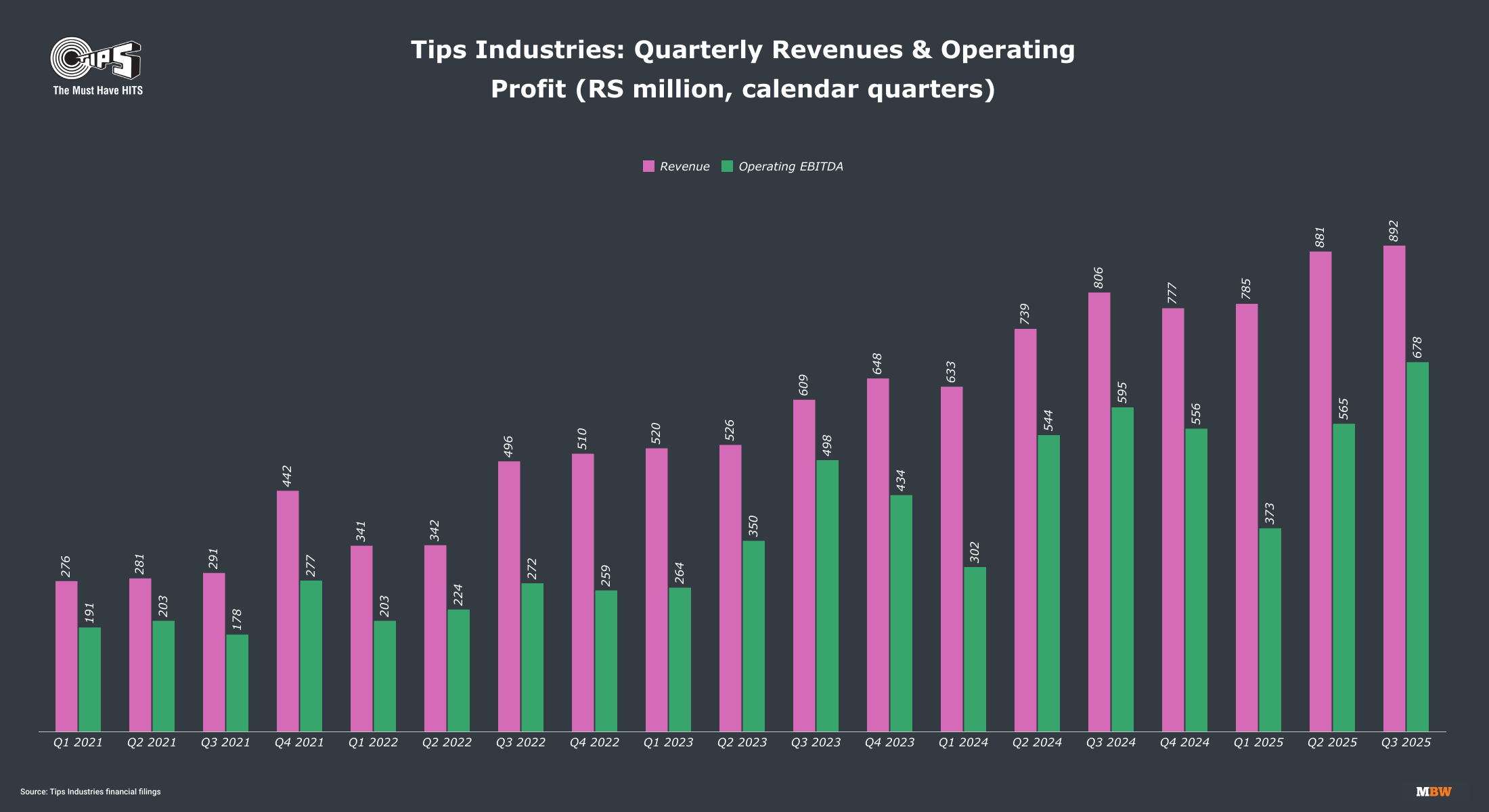
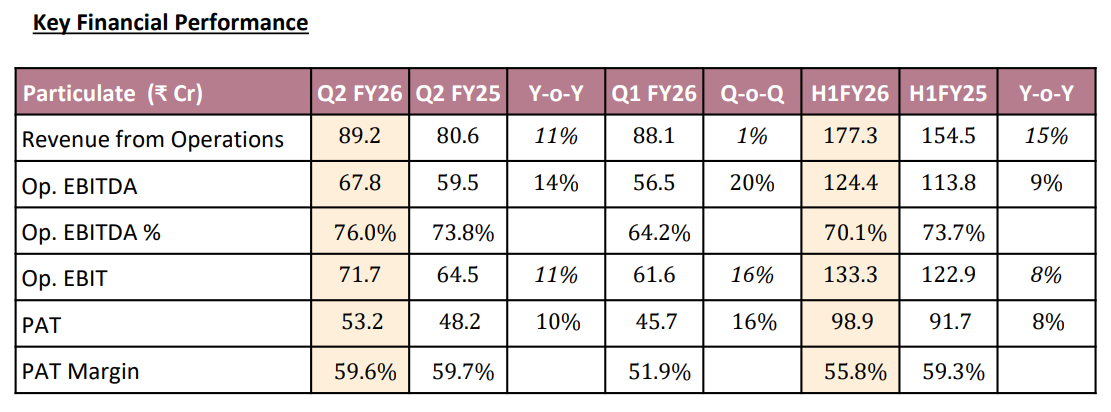
Tips reported 11% year-over-year revenue growth in Q2 of its fiscal 2026 (calendar Q3 2025), which ended on September 30, reaching INR ₹892 million, or USD $10.2 million at the average exchange rate for the quarter.
That represents a slowdown for Tips, which recorded 19.1% YoY revenue growth in Q1 of fiscal 2026, and in the same quarter a year earlier, the company reported32% YoY revenue growth.
Tips Chairman and Managing Director Kumar Taurani noted that despite a “challenging industry environment,” the company’s revenue still grew around 15% YoY in the first half.
“Over the longer term, we expect strong business momentum, supported by sustained paid subscriber growth, beginning of ad revenue sharing from short-form content platforms, and robust expansion in the public performance segment,” Taurani said in a statement.
India has seen a slowdown in the growth of its music market that is surprisingly steep for a country known to have been among the fastest-growing music markets in recent years.
According to IFPI data, recorded music revenues in the country grew at an anemic 3% YoY pace in 2024. The country remains well behind many other markets in paid subscription adoption, with just 20 million of India’s 192 million music streaming subscribers paying for an account, or slightly above 10%.
Tips’ Operating EBITDA for the quarter came in at INR ₹678 million ($7.8 million), up 14% YoY. Operating EBITDA margin expanded to 67.8%, from 59.5% a year earlier.
After-tax profit came in at INR ₹532 million ($6.1 million), up 10% YoY, while the after-tax profit margin stayed steady at 59.6%.
“Over the longer term, we expect strong business momentum, supported by sustained paid subscriber growth, beginning of ad revenue sharing from short-form content platforms, and robust expansion in the public performance segment.”
Kumar Taurani, Tips Music
The company, which boasts a catalog of 34,000 “must-have hits,” including some going back to its early days as a prominent label for Bollywood movie music, said it released 133 songs during the quarter, of which 76 were film tracks and 57 were non-film tracks. Tips highlighted Telugu’s Vibe Undi as one of its biggest hits of the quarter.
Tips said its YouTube channels’ subscriber base grew to 134 million, up from 108 million in the same quarter a year earlier.
The company announced a second dividend of INR ₹4 ($0.045) per share this fiscal year, bringing the total divided payout to INR ₹1.023 billion ($11.7 million).
The company’s earnings numbers reflect a growing consumer appetite for music in India – but slowing revenue growth.
At the All About Music conference in Mumbai this past summer, IFPI CEO Victoria Oakleyurged India’s music industry to tackle the challenges that face it despite its “extraordinary potential” to drive the next wave of global music growth.
Oakley pointed to several risks threatening sustainable growth, including the misuse of generative AI, streaming fraud, and the overwhelming dominance of free, ad-supported streaming over paid subscriptions.
“These risks are real,” Oakley said. “Music has worth, and paying for it sustains the artists and cultures we love. The decisions we make now will shape the next decade of music.”
For its part, Tips Music has been extending and expanding its partnerships with music majors internationally, including a recent expansion of its publishing partnership with Sony Music Publishing. The deal entails administration, synchronization, and expanded promotion of Tips Music’s repertoire across global digital platforms.
Tips also last year extended its distribution deal with Warner Music India and ADA.
The company has also been expanding its business through acquisitions, most recently buying the complete music catalog of Studio Radha, which added more than 4,000 Gujarati and Kutchi tracks to Tips’ portfolio.
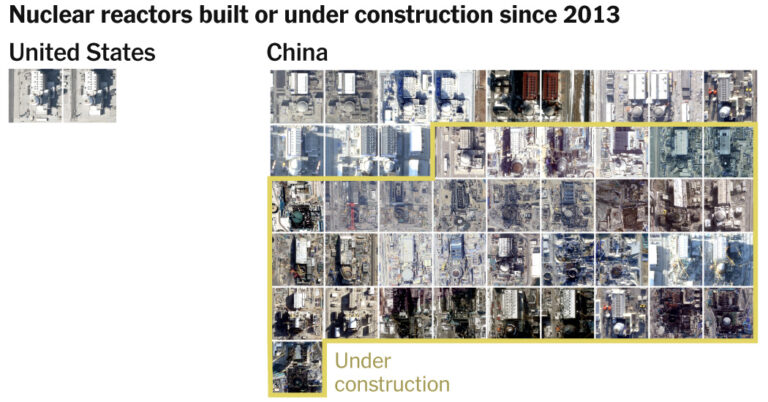
China is quickly becoming the global leader in nuclear power, with nearly as many reactors under construction as the rest of the world combined. While its dominance of solar panels and electric vehicles is well known, China is also building nuclear plants at an extraordinary pace. By 2030, China’s nuclear capacity is set to surpass that of the United States, the first country to split atoms to make electricity.
Many of China’s reactors are derived from American and French designs, yet China has overcome the construction delays and cost overruns that have bogged down Western efforts to expand nuclear power.
Beijing’s ultimate objective is to become a supplier of nuclear power to the world, joining the rare few nations — including the United States, Russia, France and South Korea — that can design and export some of the most sophisticated machines ever invented.
A dome being placed on the Unit 1 reactor building of the Zhejiang San’ao nuclear power plant on Zhejiang Province, China, in 2022.
Visual China Group, via Getty Images
“The Chinese are moving very, very fast,” said Mark Hibbs, a senior fellow at the Carnegie Endowment for Peace who has written a book on China’s nuclear program. “They are very keen to show the world that their program is unstoppable.”
As the United States and China compete for global supremacy, energy has become a geopolitical battleground. The United States, particularly under President Trump, has positioned itself as the leading supplier of fossil fuels like oil, gas and coal. China, by contrast, dominates the manufacturing of solar panels, wind turbines and batteries, seeing renewable power as the multi-trillion-dollar market of the future.
Nuclear power is enjoying a resurgence of global interest, especially as concerns about climate change mount. That’s because nuclear reactors don’t spew planet-warming emissions, unlike coal and gas plants, and can produce electricity around the clock, unlike wind and solar power.
The Trump administration wants to quadruple U.S. nuclear power capacity by 2050, even as it ignores global warming, and it hopes to develop a new generation of reactor technology to power data centers at home and sell to energy-hungry countries overseas. Officials fear that if China dominates the nuclear export market, it could expand its global influence, since building nuclear plants abroad creates deep, decades-long relationships between countries.
Yet in the race for atomic energy, China has one clear advantage: It has figured out how to produce reactors relatively quickly and cheaply. The country now assembles reactors in just five to six years, twice as fast as Western nations.
While U.S. nuclear construction costs skyrocketed after the 1960s, they fell by half in China during the 2000s and have since stabilized, according to data published recently in Nature. (The only two U.S. reactors built this century, at the Vogtle nuclear plant in Waynesboro, Ga., took 11 years and cost $35 billion.)
Construction costs of nuclear reactors
Hover to explore the data
Note: Reactors are placed according to the date they entered or are expected to enter commercial operation. Chart shows inflation-adjusted overnight costs, which exclude interest payments. Trend lines show linear regression slope.
“When we first got this data and saw that declining trend in China, it surprised me,” said Shangwei Liu, a research fellow at the Harvard Kennedy School of Government who led the paper.
The big questions, Mr. Liu said, are how China got so good at nuclear power — and whether the United States can catch up.
How China mastered nuclear power
A modern nuclear power plant is one of the most complex construction projects on Earth.
The reactor vessel, where atoms are split, is made of specialized steel up to 10 inches thick that must withstand bombardment by radiation for decades. That vessel, in turn, is housed in a massive containment dome, often three stories high and about as wide as the U.S. Capitol dome, made of steel-reinforced concrete to prevent dangerous leaks. Thousands of miles of piping and wiring must meet exacting safety standards.
Financing these multibillion-dollar projects is staggeringly difficult. Even minor problems, like needing regulator approval to modify a component midway through, can lead to long delays and can cause borrowing costs to skyrocket.
Over time, China has conquered this process.
Construction on a transmission tower of the Tianwan Nuclear Power Plant in Jiangsu Province in 2023.
Shi Jun/Visual China Group, via Getty Images
It starts with heavy government support. Three state-owned nuclear developers receive cheap government-backed loans to build new reactors, which is valuable since financing can be one-third of costs. The Chinese government also requires electric grid operators to buy some of the power from nuclear plants at favorable rates.
Just as importantly, China’s nuclear companies build only a handful of reactor types and they do it over and over again.
That allows developers to perfect the construction process and is “essential for scaling efficiently,” said Joy Jiang, an energy innovation analyst at the Breakthrough Institute, a pro-nuclear research organization. “It means you can streamline licensing and simplify your supply chain.”
The fact that the Chinese government has a national mandate to expand nuclear power means that companies can confidently invest in domestic factories and a dedicated engineering work force. In a sprawling complex near Shanghai, giant reactor pressure vessels are being continuously forged, ready to be shipped to new projects without delay. Teams of specialized welders move seamlessly from one construction site to the next.
It’s been different in the West.
In the 1970s and 1980s, U.S. nuclear construction slowed to a trickle as interest rates rose and regulators frequently tightened safety rules, causing delays. Worries about the disposal of nuclear waste and fears after the 1979 partial meltdown of a reactor at Three Mile Island, in Pennsylvania, didn’t help. At the same time, private developers kept experimenting with new reactor designs that required different components and introduced fresh complications. U.S. nuclear power died from a lack of predictability.
Demonstrators at the Three Mile Island nuclear power plant near Harrisburg, Pa., in 1979.
Bettmann, via Getty Images
The contrast became glaring in the late 2000s, when U.S. utilities tried to revive nuclear power with a new reactor model called the AP1000, with improved safety features. Developers struggled with the novel technology, leading to repeated delays and soaring costs. By the time the two reactors in Georgia were finished last year, most utilities were hesitant to try again.
As it happened, China built AP1000s at the same time. It, too, faced severe challenges, such as difficulties in obtaining coolant pumps and unpredictable cost spikes. But instead of giving up, Chinese officials studied what went wrong and concluded they needed to tweak the design and develop domestic supply chains.
“What the Chinese did was really smart,” said James Krellenstein, the chief executive of Alva Energy, a nuclear consultancy. “They said, we’re going to pause for a few years and incorporate every lesson learned.”
China is now building nine more copies of that reactor, known as the CAP1000, all on pace to be completed within five years at a drastically lower cost, an Energy Department report found.
At the Haiyang nuclear power plant, China keeps building
Satellite image from Feb. 15, 2025. Source: Airbus DS via Google
Nuclear proponents in the United States sometimes argue that overly strict safety regulations drive up costs.
China’s safety requirements are similar. But in China the approval process is more predictable, and opponents have fewer ways to challenge a project. Most reactors in China break ground weeks after receiving final approval from the safety regulator, according to research by Ms. Jiang. In the United States, by contrast, projects often need additional permits from state governments that can take months or years.
“China is practiced at building really big things, everything from dams to highways to high speed rail, and those project management skills are transferable,” said David Fishman, a power sector consultant at Lantau Group, a consulting firm.
As China, the world’s biggest emitter of greenhouse gases, seeks to curb pollution, it is counting on nuclear power to play an important role.
Solar and wind power are growing fast and account for most of China’s clean electricity, but the country also burns enormous amounts of coal to supply power when the sun isn’t shining and the wind isn’t blowing. More nuclear power could help backstop renewables and displace coal.
Note: “Clean” includes low-carbon sources such as wind, solar, hydroelectricity and bioenergy. “Fossil fuels” includes coal, natural gas, and oil.
China’s nuclear expansion still faces hurdles. One of China’s plants suffered a smaller radioactive leak in 2021, and a bigger accident could trigger a public backlash. The country is still figuring out where to bury its nuclear waste, and some cities have seen impassioned protests over plans for waste reprocessing plants. Beijing has also blocked new reactors in much of China’s interior over concerns about their water use. If that moratorium persists, it could limit the industry’s growth.
For now, though, the country is barreling ahead, with plans to build hundreds of reactors by midcentury.
Can the U.S. catch up?
In the United States, nuclear power is one of the rare types of energy that has support from Republican and Democratic politicians alike, especially as demand for electricity rises. Even environmentalists like Al Gore who once fretted about catastrophic accidents and radioactive waste are warming to the technology.
Yet the U.S. is pursuing a starkly different path to nuclear expansion, one that leans more heavily on private innovation than government backing.
Dozens of start-ups are working on a new generation of smaller reactors meant to be cheaper than the hulking plants of old. Tech companies like Google, Amazon and OpenAI are pouring billions into nuclear start-ups like Kairos Power, X-Energy and Oklo to help power their data centers for artificial intelligence. Early projects are underway in Wyoming, Texas and Tennessee, though few, if any, new reactors are expected before the 2030s.
The Trump administration wants to accelerate this work by reducing regulations at the Nuclear Regulatory Commission, which certifies the safety of reactors before they are built. The agency’s critics say it has become too hidebound to handle advanced reactors that are less prone to meltdowns.
Energy Secretary Chris Wright speaking during the 69th annual International Atomic Energy Agency meeting in Vienna last month.
Thomas Kronsteiner/Getty Images
Energy Secretary Chris Wright said that the administration is betting that the private capital flowing into nuclear projects will spark American ingenuity and catapult the U.S. ahead of China. “Entrepreneurial capitalist competition is where the U.S. thrives, and I think it’s an advantage over China,” he said in an interview.
Yet some worry that the United States is betting too heavily on technological breakthroughs instead of focusing on the financing, skills and infrastructure needed to build plants, as China has. The U.S., for instance, has lost almost all of its heavy forging capacity to make large reactor components. A new generation of advanced reactors could also take years to perfect, leaving America behind.
“You look at the number of designs, particularly in the U.S., you think, Oh, God, help us,” said Philip Andrews-Speed, a senior research fellow at the Oxford Institute for Energy Studies. “I would think narrowing down is the sensible thing to do.”
While the Trump administration has moved to speed up nuclear permitting and increase domestic supplies of nuclear fuel, some important government tools for advancing new reactors, such as the Energy Department’s loan office, have been hampered by staffing cuts. Efforts to slash safety regulations could be contentious. There is also a risk that interest by tech giants could fizzle if the A.I. boom slows.
“There’s no reason the United States couldn’t expand nuclear power,” said Stephen Ezell, vice president for global innovation policy at the Information Technology and Innovation Foundation. “But are we just going to see a few small reactors power a few data centers, or are we going to see a serious whole government approach to bring back nuclear power as an essential source of electricity?”
A race to power the world
A core module of a ACP100 multi-purpose, small modular pressurized water reactor — also called the Linglong One — a new nuclear power prototype rolling out facility in Liaoning Province in 2023.
Liu Xuan/Visual China Group, via Getty Images
China’s fast-paced nuclear program is a prelude to a larger goal: dominating the global market. Chinese companieshave already built six reactors in Pakistan and plan to export many more.
At the same time, China is working to surpass the United States in technological innovation. China has built what it calls the world’s first “fourth generation” reactor, a gas-cooled model that can provide heat and steam for heavy industry in addition to electricity. The Chinese are also pursuing technologies that use less uranium, such as thorium reactors, or recycle spent nuclear fuel. It’s a recognition that China doesn’t have enough domestic uranium for a massive build-out of traditional reactors.
Even if U.S. companies and labs remain at the forefront of innovation, one recent report warned that China was 10 to 15 years ahead of the United States in its ability to deploy next-generation reactors widely.
It’s a familiar story: The United States invented solar panels and batteries, only to watch as China scaled those technologies and now controls global markets.
“Maybe we can convince some of our allies not to buy Chinese reactors, but there are going to be plenty of other countries out there with growing energy demands,” said Paul Saunders, president of the Center for National Interest, a conservative-leaning think tank. “And if America isn’t ready, we won’t be able to compete.”
A required part of this site couldn’t load. This may be due to a browser
extension, network issues, or browser settings. Please check your
connection, disable any ad blockers, or try using a different browser.
Kentucky hosted Indiana for mid-week dual meet at the Lancaster Aquatic Center today. The Hoosiers handled the Wildcats, emerging victorious by 98 points in the men’s team scoring and 75 points in the women’s meet.
Indiana freshman Liberty Clark showed off her versatility today. Though Clark is primarily a freestyler, already having clocked career bests of 22.03, 47.39, and 1:42.43 in the free events this season, she proved today that she can be an asset in many strokes. Her first individual race of the day was the 100 back, where she came in 2nd with a huge career best of 54.63. That performance blew away Clark’s previous best of 57.44, which she set in February of this year.
Clark then went on to win the women’s 100 fly in 54.48, marking another career best. She clipped her previous best of 54.72 with that swim. Clark then concluded her meet with another win and another huge personal best time. She won the women’s 200 IM in 1:59.94, crushing her previous best of 2:03.03.
Clark also helped the Indiana ‘A’ 200 medley relay to victory at the start of the meet. Mya DeWitt (25.39), Clark (29.15), Sze Yeo (24.65), andKristina Paegle (22.01) teamed up to clock a 1:41.20, winning the race handily.
DeWitt was the winner of the women’s 100 back, beating out Clark with a 53.78. She posted her season best of 52.34 at the USC Invite about 2 weeks ago.
Another IU freshman, Luci Gutierrez, swept the women’s distance events today. Gutierrez kicked things off with a 10:14.46 in the women’s 1000 free, winning the race by 5 seconds. She then went on to win the 500 free in 5:00.09, touching out Kentucky’s Katy Jost by 0.11 seconds.
Yet another Indiana freshman, Grace Hoeper, put up a pair of event wins. Hoeper began her meet with a 1:50.16 to win the women’s 200 free. She then went on to take the women’s 100 free in 50.33.
On the men’s side, Indiana’s Raekwon Noel was tied for the biggest winner of the day, claiming victory in 3 individual events and helping a relay to victory. Noel picked up a win in the men’s 100 back with a 46.96, touching 1st by nearly 2 full seconds. That was a strong performance out of Noel, who posted his career best of 45.87 at the USC Invite 2 weekends ago.
Noel then went on to take the 200 back with a 1:45.22, winning that race comfortably as well. He made it 3-for-3 on individual event wins with a 47.47 in the 100 fly, which was yet another race which he won by over a second.
Noel’s meet kicked off with the 200 medley relay, where he helped IU’s ‘A’ team to victory. He led off in 21.76, followed by Travis Gulledge with a 24.43 breast split, Andrew Shackell with a 21.78 fly split, and Dylan Smiley with a 19.69 anchor leg. The Hoosiers finished in 1:27.66, beating Kentucky’s team by just 0.28 seconds.
Indiana’s Toby Barnett matched Noel with 3 individual event wins on the day. Barnett clocked a 54.45 to win the men’s 100 breast to kick off his meet today. He narrowly touched out teammate Alexei Avakov (54.68) to win that race. Barnett then made it a sweep of the breaststroke events on the day, swimming a 1:59.01 in the 200 breast. Avakov was 2nd there as well, swimming a 1:59.76.
Barnett concluded his meet with a 1:48.49 in the 200 IM, winning the event by nearly a full second.
Carson Hick was excellent for Kentucky, sweeping the men’s distance events. He kicked things off with a 9:01.65 in the men’s 1000 free, leading teammate Levi Sandige, who came in 2nd with a 9:02.19. Hick and Sandige were then 1-2 in the men’s 500 free, seeing Hick go 4:24.53 and Sandige 4:24.66.
Kentucky’s Falemana Tuufui swept the men’s sprint free events on the day. Tuufui first won the men’s 50 free in 19.84, then went on to win the 100 free in 44.00.
In a world-first breakthrough, scientists have discovered how a sugary “cloak” helps bowel cancer hide from the immune system, and how stripping it away could turn the body’s anti-cancer defenses back on.
Bowel tumors are made up of more than cancer cells. They also contain stromal cells, normal support cells that help build the tumor’s structure. In aggressive bowel cancers, these stromal cells are found in large numbers and have a strong influence over how the immune system behaves.
In a new study led by the University of Galway, Ireland, researchers have looked at why some bowel cancers can evade the immune system and resist treatments like immunotherapy, and found that a kind of “sugar coating” on stromal cells within a tumor plays a key role in shutting down immune attack. Importantly, they found that removing or blocking this coating reawakened immune defenses.
“While immunotherapy has revolutionized care in cancers such as melanoma and lung cancer, it has shown very limited benefit in bowel cancer, leaving patients with advanced disease with few treatment options and poor survival outcomes,” said corresponding author Professor Aideen Ryan, Professor in Tumor Immunology at the University’s College of Medicine, Nursing and Health Sciences.
Sialylation is the addition of sugar molecules called sialic acids to a cell’s surface. These sialic acids act like a “sweet disguise,” helping cells communicate but also, in the case of cancer, helping tumors hide from the immune system. When too many sialic acids are added, a condition called hypersialylation, the tumor effectively cloaks itself from immune cells like macrophages (which eat harmful cells) and natural killer (NK) cells (which destroy infected or cancerous cells).
Using bowel cancer tissue samples and mouse models, the researchers compared normal and cancerous tissues and tested what happened when they altered sialylation. This was done in two main ways. The first method blocked a sialylation enzyme, ST6GALNAC6, which adds sialic acids to cells. The second method removed sialic acids using enzymes called sialidases. Then they observed how immune cells reacted in the lab and in living mice when this “sugar shield” was taken away.
Removing the cancer’s sugary disguise enables natural killer cells like this one to target tumors
The researchers found that tumor stromal cells are heavily sugar-coated, with much higher levels of sialic acids than regular cancer cells. This hypersialylation was linked to worse survival outcomes for patients. Macrophages and NK cells exposed to these sugar-coated stromal cells produced more Siglec-10, a receptor that suppresses immune activity, and became inactive or “tolerant” instead of attacking the tumor.
When sialic acids were removed or when ST6GALNAC6 was blocked, macrophages regained their ability to engulf and destroy cancer cells. NK cells became more aggressive again, producing attack proteins. Additionally, tumor growth slowed, cancer spread (metastasis) was prevented, and immune activity increased throughout the body. The effect was reversible and potentially treatable. By targeting the sialic acid/Siglec axis – the interaction between the sugary cell coating and the immune “off switches” – the researchers could restore anti-tumor immunity in lab and animal models.
“Our research is a clear breakthrough in our understanding of bowel cancer and how immunotherapy could be more successful,” Ryan said. “This world-first findings shows that some of the bowel cancer cells are not just passive bystanders, they are actively reprogramming the body’s immune cells, preventing them from doing their job. We have uncovered an entirely new checkpoint and by focusing on it we can reactivate the immune system and improve our body’s ability to fight the disease, and even target metastasis.”
Of course, the findings need to translate from lab and animal models to humans, but they’re very promising. Many bowel cancer patients don’t respond to current immune-boosting therapies, so combining them with treatments that block sialylation could make immunotherapy more effective. The research has also identified that ST6GALNAC6 and Siglec-10 are promising new drug targets.
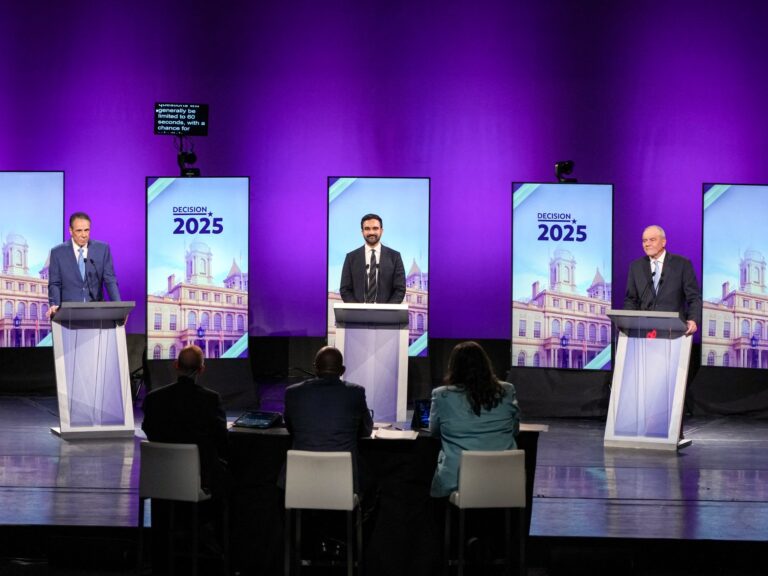
Frontrunner Zohran Mamdani, former Governor Andrew Cuomo and Republican Curtis Sliwa faced off in the final debate of the New York City mayoral race on Wednesday, in a final push to woo voters before the November 4 vote.
But the attack lines they deployed against each other, and their defences, were mostly along predictable lines, as their track records, United States President Donald Trump and Israel’s war on Gaza dominated their clash at LaGuardia Community College in the borough of Queens.
Recommended Stories
list of 3 itemsend of list
Mamdani, the Democratic nominee, maintains a sizeable lead in the polls, after surging to a surprise victory in the June primary on a platform of affordability: pushing free buses, rent freezes, and universal childcare, paid for, in part, by raising taxes that favour the wealthy.
Cuomo has sought to portray Mamdani’s promises – most of which would require buy-in from state lawmakers – as unrealistic and has repeatedly taken aim at the 34-year-old Democratic Socialist’s lack of experience in governing. The race has narrowed since the current mayor, Eric Adams, exited the race, leaving just Mamdani, Cuomo and Sliva in the contest.
Here were the top takeaways from the debate:
Experience versus the future
The night began with Cuomo and Mamdani hammering home the themes that have defined the final stretch of the race.
Cuomo called himself the candidate who “can get it done, not just talk about it”.
“He’s never run anything, managed anything. He’s never had a real job,” he said of Mamdani.
Mamdani called himself the “sole candidate running with a vision for the future of this city”.
“He is a desperate man lashing out because he knows that the one thing he’s always cared about, power, is now slipping away from him,” Mamdani said of Cuomo.
Later in the night, Sliwa took a swipe at both his opponents: “Zohran, your resume could fit on a cocktail napkin, and Andrew, your failures could fill a public school library in New York City.”
Countering Trump
The US president has loomed large over the New York City mayoral race. Wednesday’s debate also came hours after immigration agents raided Manhattan’s Chinatown, an escalation of federal enforcement measures in America’s largest city.
Trump has pledged to deploy the National Guard and to cut federal funding to the city if Mamdani is elected. Cuomo, who shares many of the same donors as Trump, has seized on those threats to portray a win for his rival as dangerous for the city.
“[Trump] has said he’ll take over New York if Mamdani wins, and he will, because he has no respect for him. He [Trump] thinks he’s a kid, and he’s going to knock him [Mamdani] on his tuchus,” Cuomo said.
“I believe [Trump] wants Mamdani, that is his dream, because he will use him politically all across our country, and he will take over New York City,” he said. “Make no mistake, it will be President Trump and Mayor Trump.”
Mamdani called Cuomo “Donald Trump’s puppet”.
“You could turn on the TV any day of the week, and you will hear Donald Trump share that his pick for mayor is Andrew Cuomo, and he wants Andrew Cuomo to be the mayor, not because it will be good for New Yorkers, but because it will be good for him,” he said.
Support for Palestine again looms large
Mamdani was again asked about his staunch support for Palestinian rights, which Cuomo has repeatedly decried, baselessly, as anti-Semitic.
Mamdani said he “will be the mayor who doesn’t just protect Jewish New Yorkers, but also celebrates and cherishes them”. He said Cuomo was using false claims of anti-Semitism to “score political points”.
Cuomo accused him of stoking “the flames of hatred against Jewish people”.
Sliwa falsely accused Mamdani of endorsing “global jihad”.
“That is not something that I have said and that continues to be ascribed to me,” Mamdani responded, “and frankly, I think much of it has to do with the fact that I am the first Muslim candidate to be on the precipice of winning this election.”
Mamdani announces pick for police commissioner
The leading candidate also broke some news during the debate, announcing he would ask current Police Commissioner Jessica Tisch to stay on in her post if he wins.
That may upset some of Mamdani’s supporters, who could see the police chief, who is serving under current Mayor Adams, as out of step with the police reforms he has promised.
Tisch, whose family is worth billions, has championed increasing so-called “quality of life” enforcement that critics say disproportionately harms minority communities. She has also pushed to make some criminal laws stricter.
Cuomo grilled on sexual assault
Cuomo was repeatedly asked by his opponents about the sexual misconduct allegations from his employees that saw him leave his post as New York governor early in 2021.
Investigators with the state attorney general later found that Cuomo had “sexually harassed a number of current and former New York State employees”.
Cuomo has claimed the cases have been closed “legally”, but litigation in several cases continues.
During the debate, Mamdani revealed that one accuser, Charlotte Bennett, who Cuomo is currently suing for defamation, was in the audience.
“What do you say to the 13 women who you sexually harassed?” he asked Cuomo.
Cuomo pushed back, arguing that the sexual harassment cases have been dropped. “What you just said was a misstatement, which we’re accustomed to,” he responded to Mamdani.
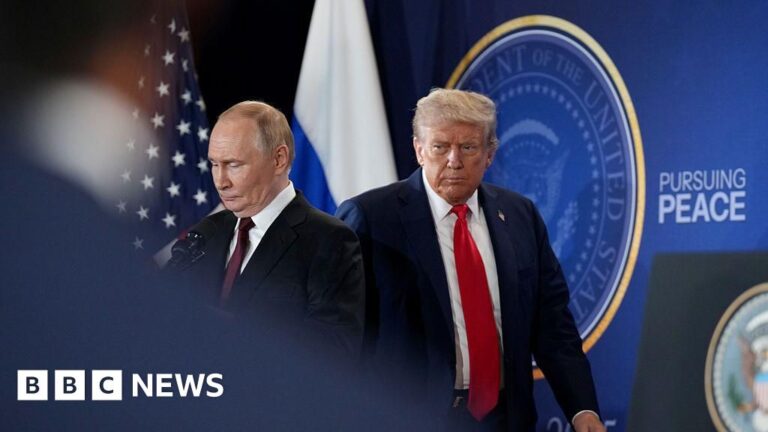
‘It was time’, says Trump on increase in Russia sanctions
The US has announced new sanctions targeting Russia’s two largest oil companies – Rosneft and Lukoil – in an effort to pressure Moscow to negotiate a peace deal in Ukraine.
“Every time I speak to Vladimir, I have good conversations and then they don’t go anywhere. They just don’t go anywhere,” President Donald Trump said, after a meeting with Nato Secretary-General Mark Rutte to discuss peace negotiations.
The sanctions announcement came one day after Trump said a meeting planned with Russian President Vladimir Putin in Budapest would be shelved indefinitely.
Earlier Wednesday, Russia unleashed an intense bombardment on Ukraine that killed at least seven people, including children.
US Treasury Secretary Scott Bessent said the new sanctions were needed due to “Putin’s refusal to end this senseless war”. He said these oil companies fund the Kremlin’s “war machine”.
“Now is the time to stop the killing and for an immediate ceasefire,” Bessent said in a statement.
Speaking alongside Rutte in the Oval Office on Wednesday, Trump criticised Putin for not being serious about making peace and said he hoped that the sanctions would help force a breakthrough.
“I just felt it was time. We waited a long time,” Trump said.
He called the sanctions package “tremendous”, and added that he hoped they could be swiftly withdrawn if Russia agrees to stop the war.
Rutte also praised the move, saying it was “putting more pressure” on Putin.
“You have to put pressure, and that is just what he did today,” Rutte said.
Getty Images
Trump and Putin met in Alaska in August in hopes of ending the war in Ukraine. A second meeting has now been shelved.
The move comes as key differences between US and Russian proposals for peace became increasingly clear this week. Trump has indicated that a key sticking point has been Moscow’s refusal to cease fighting along the current front line.
“There is no place for Russian oil on global markets,” UK Chancellor Rachel Reeves said while announcing the move.
Responding to the UK, Russia’s embassy in London said targeting its country’s major energy companies would disrupt global fuel supplies and drive up costs worldwide.
It also said the sanctions would have “a detrimental impact on the energy security” of developing and underdeveloped countries, adding “pressure only complicates peaceful dialogue and leads to further escalation”.
The two Russian oil firms export 3.1 million barrels of oil per day. Rosneft is responsible for nearly half of all Russian oil production, which makes up 6% of the global output, according to estimates from the UK government.
Oil and gas are Russia’s biggest exports, and Moscow’s biggest customers include China, India and Turkey. Trump has also urged these countries to halt purchases of Russian oil in a bid to put economic pressure on the Kremlin.
Trump’s move was praised by UK Foreign Secretary Yvette Cooper, who said the US sanctions are “strongly welcome”.
EU Commission President Ursula Von der Leyen posted on X that she spoke by phone to Bessent on Wednesday about “Russia’s lack of commitment to the peace process”.
She also praised a new sanctions package approved by the European Union on Wednesday, which includes a ban on Russian liquefied natural gas imports.
“With the imminent adoption of the EU’s 19th package, this is a clear signal from both sides of the Atlantic that we will keep up collective pressure on the aggressor,” she wrote.
At the White House, Rutte was expected to discuss a 12-point plan formulated by European NATO allies and Kyiv, which would see the current front lines frozen, a return of deported children as well as a prisoner exchange between the two warring countries.
The plan also includes a war recovery fund for Ukraine, as well as security pathways and a clear pathway for Ukraine to join the EU, as well as increased military aid to Kyiv and economic pressure on Moscow.
Earlier this week, Trump said he did not want a “wasted meeting” with Putin in Budapest, and suggested a main point of contention is Moscow’s refusal to cease fighting along the current front lines of the war.
He last met with Putin in Alaska for a summit the White House hoped would lead to the end of the conflict. Instead, the fighting has continued.
A preparatory meeting between US Secretary of State Marco Rubio and Russian Foreign Minister Sergei Lavrov was also shelved. The meeting this week was no longer “necessary” after a “productive” call, the White House said.
Trump has repeatedly endorsed proposals to freeze the fighting along current frontlines.
“Let it be cut the way it is,” he said on Monday. “I said: cut and stop at the battle line. Go home. Stop fighting, stop killing people.”
Russia has pushed back against that idea, with Kremlin spokesperson Dmitry Peskov saying that “the consistency of Russia’s position doesn’t change” – a reference to its desire for Ukrainian troops to leave the Donbas region in Ukraine’s east.
On Wednesday, Trump also pushed back against reporting in the Wall Street Journal that the US had approved Ukrainian long-range missile strikes into Russia, calling it “fake news”.
Ukrainian President Volodomyr Zelensky has expressed a desire for the US to supply long-range US Tomahawk missiles to his forces and suggested that the threat of their introduction to the war theatre may bring Russia to the negotiating table.
Pritti Mistry and Danielle Kaye contributed to this report
Tesla’s Q3 2025 update reports record vehicle deliveries and record energy storage deployments, alongside higher revenue, but earnings pressure persisted due to margin headwinds and a likely pull-forward of demand before U.S. EV tax credits expired in September.
Shares dipped about 1.4% in after-hours trading as investors appeared to brace for softer demand through the remainder of the year.
CEO Elon Musk is expected to give more detail on the company’s quarterly earnings call at 5:30 p.m. Eastern time.
Q3 results
Tesla delivered 497,099 vehicles in Q3 2025, a new quarterly record, with total production at 447,450 units, reflecting inventory drawdown to meet demand surge before tax credit expiry.
Management materials and coverage indicate revenue reached about $28.1 billion, exceeding many previews, while non-GAAP EPS was around 0.50, below year-ago levels as automotive margins remained compressed.
U.S. buyers accelerated purchases ahead of the federal EV tax credit expiration on Sept. 30, boosting Q3 but setting expectations for a potentially softer Q4 demand backdrop, per media and analyst commentary.
Segment performance
Automotive: Record deliveries were led by Model 3/Y at 481,166 deliveries (production 435,826) with “Other Models” at 15,933 deliveries (production 11,624), and about 2% of deliveries under operating lease accounting, pointing to mix and pricing dynamics supporting volume at the expense of margin.
Energy: Storage deployments hit 12.5 GWh, an all-time high, with analysts and coverage noting energy’s role as a stabilizer given higher margins versus automotive during price-competitive periods.
Services/Other: Not detailed numerically in coverage, but typically benefits from fleet growth and software; investors focused more on FSD/AI and energy momentum per previews and media.
Profitability and margins
Third-party coverage highlights earnings pressure despite record revenue, with non-GAAP EPS ~0.50 and commentary that auto gross margins (ex-credits) were likely in the mid-to-high teens, reflecting continued price competition and cost pressures.
The Wall Street Journal noted net income fell about 37% year-over-year, attributing margin compression and one-time demand pull-forward effects tied to tax policy timing, underscoring the near-term profitability challenge.
Consensus previews set expectations around revenue in the mid-to-high $26 billion range and EPS in the mid-0.50s, which Tesla largely met or exceeded on revenue but trailed on profitability, per Electrek and other outlets.
Guidance and outlook themes
Management directed investors to the update letter on the IR site, framing discussion around results and outlook following the tax credit expiration.
Analysts and media emphasized watch items: post-credit demand trajectory, automotive margins, and energy growth durability, with particular attention on how Q4 shapes up after the pull-forward.
Strategic focus remains on AI/FSD and robotaxi initiatives to support long-term valuation; several reports noted investor sensitivity to credible timelines and capability updates in these areas.
Notable context
Tesla confirmed a record quarter for both deliveries and storage deployments, thanking stakeholders and cautioning deliveries and deployments alone are not proxies for full financial performance, with details in the 10-Q to follow.
Investor materials hub lists the Q3 2025 documents and webcast access; several outlets hosted live coverage and recaps of the update letter and call.
Broader coverage connected the quarter’s stock setup to AI narratives and macro/policy dynamics, including the timing around U.S. incentives and investor expectations for autonomy progress
Musk’s earlier warning
In July, CEO Elon Musk cautioned Tesla could face “a few rough quarters” spanning Q4 into the first half of next year as U.S. federal EV tax credits expire and volumes normalize post-pull-forward, a dynamic echoed in Fortune’s reporting on tax-credit-driven demand timing and the risk of a second annual sales decline.
In the last earnings call, Musk reiterated autonomous service coverage could reach about half of the U.S. by year-end pending approvals, even as the current pilot in Austin remains small and supervised; investors are left without concrete milestones.
On AI hardware: Musk previously said Tesla’s next “AI5” inference chip would be so capable it might require performance limits outside the U.S. due to export restrictions, reinforcing the pitch that every Tesla is an AI device even as commercial autonomy metrics remain sparse.
For this story, Fortune used generative AI to help with an initial draft. An editor verified the accuracy of the information before publishing.
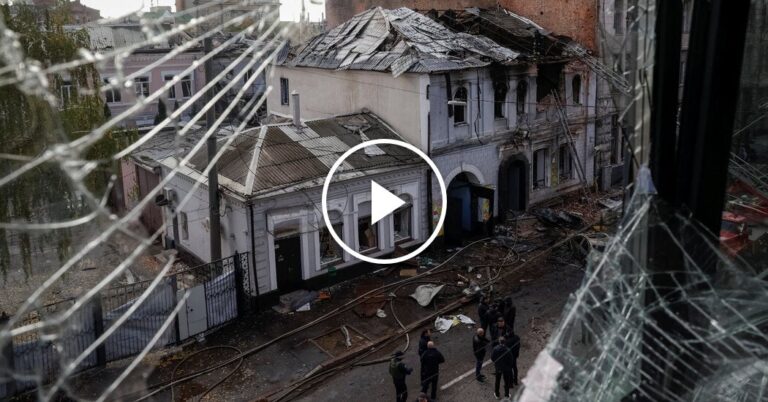
new video loaded: Russian Missiles Hit Apartments, School and Power Plant in Ukraine
The barrage came hours after President Trump said he was putting off a planned meeting with President Vladimir Putin of Russia to avoid a “wasted” effort toward ending the war.