
-1.5 C
New York
Monday, February 23, 2026
Home Blog Page 283

Old DNA Discloses Napoleon’s Army Overcome by Novel Diseases

0

One of the first events to signal the collapse of Napoleon’s reign was his crushing defeat after an invasion of Russia in 1812. Researchers have long thought that the disease typhus played a role, but modern DNA analysis paints a different picture.

On June 24, 1812, Napoleon Bonaparte led a massive army of over 600,000 troops across the Niemen River in present-day Lithuania in what has become known as his Russian Campaign. His goal was to get Russia to rejoin the embargo of Great Britain from which Tsar Alexander I had withdrawn because of the economic impact to his own empire.

By December of that year, less than 100,000 of Napoleon’s soldiers remained alive. Many had fallen from cold exposure brought on by the brutal Russian winter, while others died from starvation as a result of Russian forces carrying out a scorched earth campaign as they retreated. The other large portion of deaths was caused by disease, which until now was believed to be typhus, a lice-borne disease that thrives in unsanitary conditions such as military battlefields.

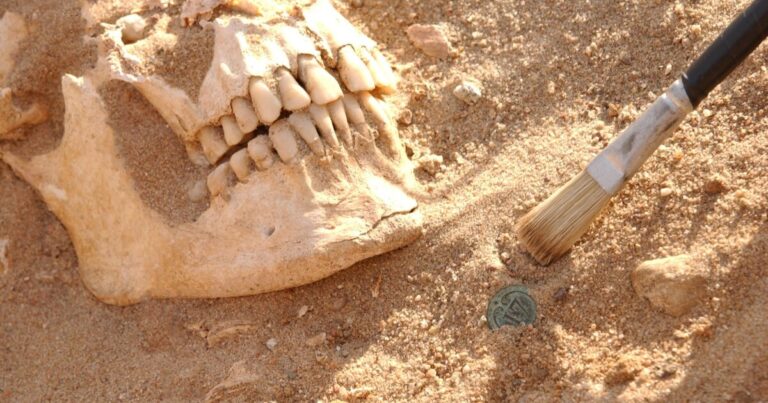
The typhus theory stemmed from the discovery of body lice on the remains of Napoleon’s soldiers along with the DNA of a bacterium known as Rickettsia prowazekii, which causes the disease. However, a new DNA analysis of the teeth of soldiers found in a mass grave in Vilnius, Lithuania failed to find any pathogens for typhus, including R. prowazekii. The analysis was part of a study led by researchers at the Institut Pasteur in Paris.

Instead, the team found two other bugs in the soldiers’ teeth: Salmonella enterica, which causes enteric fever, and Borrelia recurrentis, the cause of a disease known as relapsing fever. Enteric fever is spread through contaminated food and, like typhus, causes fever, headache and weakness. Enteric fever is also like typhus in that it is spread by lice and shares similar symptoms. Both diseases would have been deadly in the early 1800s in the absence of sanitary conditions and antibiotics.

“It’s very exciting to use a technology we have today to detect and diagnose something that was buried for 200 years,” says lead author Nicolás Rascovan.

Interestingly, the team did discover that the B. recurrentis found in the soldiers’ teeth was the same as an ancient strain found in Britain 2,000 years ago during the Iron Age. That bug must have died out soon after it ravaged the army because the strains found today all belong to a different lineage.

“This shows the power of ancient DNA technology to uncover the history of infectious diseases that we wouldn’t be able to reconstruct with modern samples,” says Rascovan.

The discrepancy between what the researchers found and the conventional wisdom regarding typhus’ impact on Napoleon’s army likely has to do with the DNA analysis tools now available to researchers. Previous studies relied on a process known as polymerase chain reaction (PCR), which amplifies small or degraded fragments of DNA, allowing scientists to analyze genetic material even from old or damaged organic matter.

In this study, the researchers used cutting-edge ancient DNA (aDNA) analysis tools to more thoroughly analyze the samples and reach their conclusion.

“Ancient DNA gets highly degraded into pieces that are too small for PCR to work,” says Rascovan. “Our method is able to cast a wider net and capture a greater range of DNA sources based on these very short ancient sequences.”

The team’s findings have been reported in the journal, Cell Press.

Source: Université de Paris Cite via Scimex

Man detonates explosive device at Ukraine train station, resulting in the death of four individuals | Crime News

0

The suspect, a 23-year-old Kharkiv resident who recently attempted to cross into Belarus, was among the dead.

A man has detonated an explosive device at a railway station in northern Ukraine, killing himself and three women, the State Border Guard Service has said.

Twelve others were hurt on Friday at the station in Ovruch, close to the border with Belarus.

Recommended Stories

list of 3 itemsend of list

Among the dead were a border guard and two civilians, aged 29, 58 and 82, the service said in a statement.

The man who detonated the explosive device was a 23-year-old resident of Kharkiv, in northeastern Ukraine, who had recently been detained for trying to cross the border. He died while being treated in an ambulance after the blast.

The statement made no mention of any link with Russia’s war in Ukraine.

The internet portal Ukrainska Pravda quoted Ministry of Internal Affairs spokesperson Marjana Rewa as saying that the man detonated the device during an identity check on a train in the northwestern Zhytomyr region.

An image from the scene posted on Telegram by the Ukrainian border guard service showed rescuers helping casualties from the blast on the platform.

The background to the incident remains unclear, as well as the motives behind the 23-year-old’s actions.

Martial law has been in force for the past three and a half years, since Russia invaded Ukraine in February 2022.

Men between the ages of 22 and 60 are not allowed to leave the country without special permission and can be drafted into the military.

It is unclear how many Ukrainian soldiers have been killed in the war against Russia, as Kyiv does not disclose official figures. According to some estimates, more than 400,000 Ukrainian troops have been killed or wounded since the war began.

CMO Music Nation, based in the UAE, officially commences operations

0

United Arab Emirates-based collective management organization Music Nation Copyrights Management has formally started operations.

The company received approval from the UAE government in June to operate a CMO in the country.

Music Nation will now administer public performance and mechanical rights across the UAE, drawing on its partnership with US-based PRO Broadcast Music, Inc. (BMI). Additionally, US-based CMO SoundExchange provides Music Nation with neighboring rights administration.

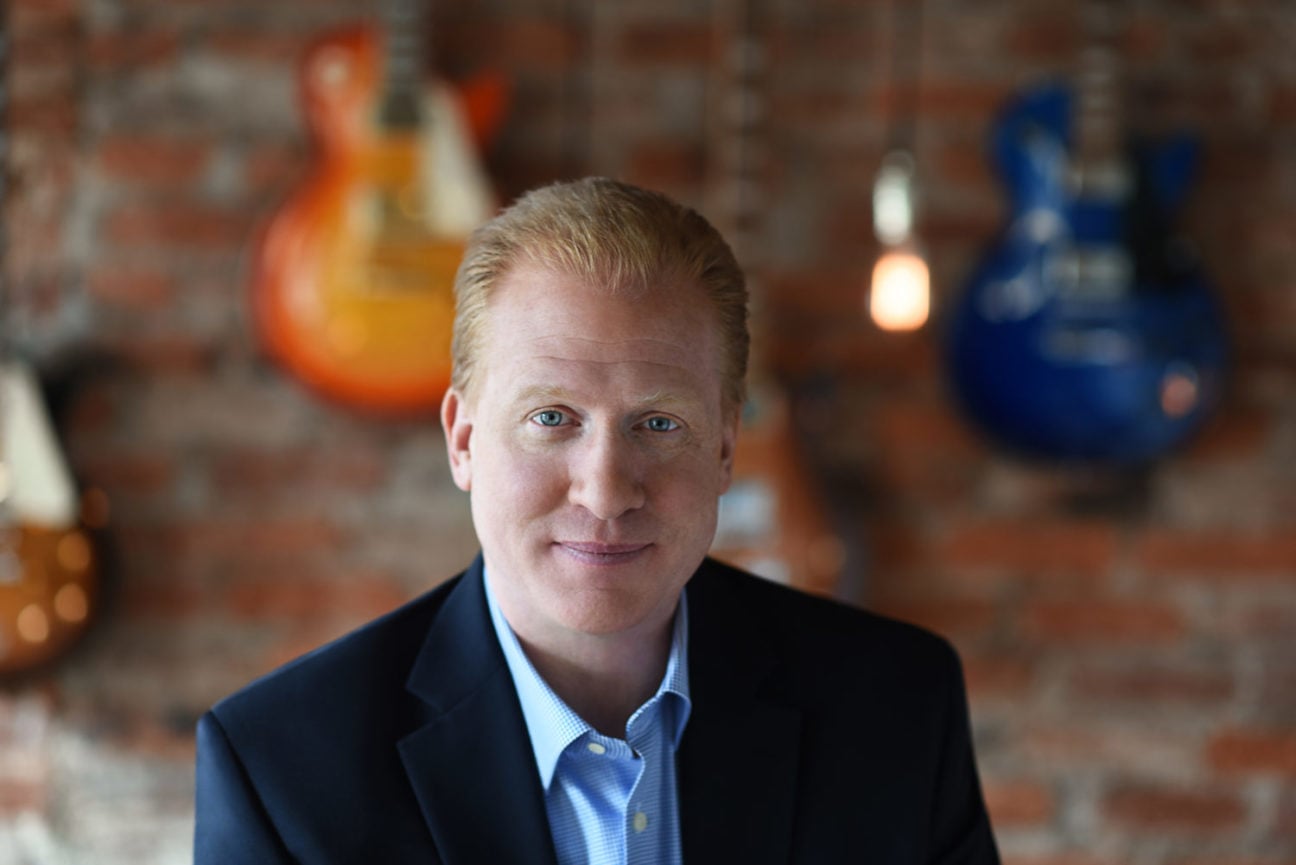
As part of the launch, Amer M. Samhoun has been appointed Chief Executive Officer, James K. Petrie as Chief Operating Officer, and Ali Dee as Chief Creative Officer.

They report to Rasha Khalifa Al Mubarak, Founder and Chairwoman of Music Nation, and will work from offices in Abu Dhabi and Dubai.

In a note sent to publishers, rights societies, and industry partners regarding the launch, Al Mubarak, noted that “with the tireless support of the UAE Ministry of Economy and Tourism, and in partnership with BMI and SoundExchange, beginning today, Music Nation is licensing, collecting, distributing, and protecting royalties across public performance, mechanical, and neighboring rights”.

Al Mubarak added: “This means creators, songwriters, composers, publishers, artists, and sound recording owners will finally be fairly and transparently compensated, in line with the UAE’s legislative framework, for the use of their work in the Emirates.”

“Our mission is clear: make licensing simple and provide accurate and timely royalty distributions to creators and rightsholders.”

Rasha Khalifa Al Mubarak

Elsewhere in the note, Al Mubarak said: “By building a modern rights infrastructure, we’re also laying the foundation for local creatives to establish lasting careers in music. Around the world, rights organizations serve as the heart and soul of a thriving music economy and Music Nation will proudly fill that role for the UAE, ensuring our artists are both recognized and rewarded for their creativity.

“Our mission is clear: make licensing simple and provide accurate and timely royalty distributions to creators and rightsholders. To deliver on that promise, some of you have already met my leadership team with many decades of experience in business and music.”

Music Nation launches with what it claims to be “advanced song matching accuracy by integrating with the global databases of BMI and SoundExchange, reducing unmatched royalties and accelerating payouts”.

The company claims to be the first rights organization in the region to provide a “single platform uniquely capable of combining streamlined licensing for public venues, broadcasters, and events, with transparent reporting and on-time distributions for creators”.

Music Nation offers multilingual support and outreach, and says it “will continue to serve as an education and onboarding partner, helping businesses obtain proper licenses and enrolling rightsholders to receive comprehensive royalty payments”.

“Today marks the start of a new era for artists in the UAE,” said Rasha Khalifa Al Mubarak, Founder and Chairwoman of Music Nation.

“With Music Nation’s technology and a leadership team that understands both the UAE’s cultural fabric and global music operations, we’re delivering a simple, transparent, and modern licensing solution that easily licenses businesses and quickly pays creators.”

“BMI is proud to partner with Music Nation as it builds the foundation for a thriving, transparent music rights ecosystem in the UAE.”

Mike O’Neill,  BMI

Said Michael O’Neill, President & CEO, Broadcast Music, Inc: “BMI is proud to partner with Music Nation as it builds the foundation for a thriving, transparent music rights ecosystem in the UAE.

“Our shared mission is to ensure that songwriters, composers, and publishers are properly compensated for the use of their music—wherever it’s played. Music Nation’s launch represents a major step forward in expanding that mission globally and empowering creators across the region.”

Michael Huppe

“SoundExchange shares Music Nation’s mission to build a fair and efficient rights management system for recording artists and rights holders in the UAE.”

Michael Huppe, SoundExchange

Michael Huppe, President & CEO, SoundExchange, added: “SoundExchange shares Music Nation’s mission to build a fair and efficient rights management system for recording artists and rights holders in the UAE.

“We’re proudly partnering with Music Nation and BMI to ensure artists and rights holders everywhere are properly compensated for the value their music creates in the global marketplace.”

“Music Nation’s mandate is clear: make licensing easy for businesses and ensure artists are paid quickly and fairly.”

Amer M. Samhoun

“Music Nation’s mandate is clear: make licensing easy for businesses and ensure artists are paid quickly and fairly,” Samhoun said.

“With our ongoing hands-on education for the business and creative communities, an artist-first mentality and best-in-class partnerships and data, Music Nation stands ready to deliver on day one.”Music Business Worldwide

Guinea citizens outraged by $100,000 fee required to run for election to replace junta

0

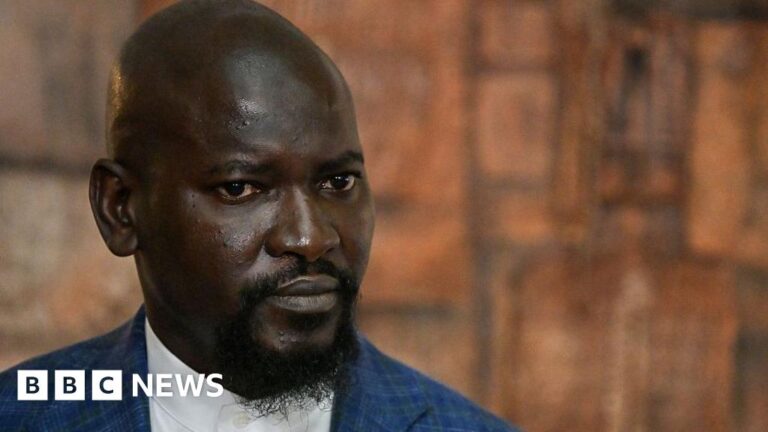
Guineans have reacted with shock after it was announced that presidential candidates would need to pay a deposit of 875m Guinean francs ($100,000; £75,000) to contest December’s election, which should see the military leaders hand power to civilians.

Guinea has been under military rule since Colonel Mamady Doumbouya seized power in a 2021 coup.

The elections are being held under a new constitution that allowed Doumbouya to run for the presidency – although he has not announced if he plans to.

While the previous deposit was almost as high – 800m francs – some analysts had hoped it would be reduced to encourage more people to stand in these historic elections.

“This amount is huge,” political analyst Kabinet Fofana told the BBC. “This decision adds to the growing criticism against the general direction of elections.”

Candidates who get more than 5% of the vote in the first round of the election will get their deposit repaid.

The authorities say the high amount is needed to ensure only credible candidates take part.

But presidential candidate Faya Millimono says the deposit used to be much lower.

“Until 2005, the deposit never exceeded 50 million [Guinean francs]. The madness began in 2010, when it was thought necessary to block certain candidates. The amount went from 50 million to 400 million, and today we’re talking about 900 million.”

The costs of participating in the elections are some of the highest in the region.

In 2022, the Nigerian electoral commission set a fee of 100m naira ($67,000 at the current rate – at the time it was more than $200,000) sparking widespread criticism.

In Cameroon, the deposit is $53,000 and Ivory Coast $90,000.

The electoral body also set a campaign spending limit of 40bn Guinean francs ($4.6m; £3.5m) per candidate.

One candidate believes these amounts “send a clear signal – only the very wealthy or those who have already benefited from state resources can truly compete”.

Some 50 candidates from political parties and 16 independent candidates have been approved so far.

The largest opposition parties, the Rally of the People of Guinea (RPG Arc-en-Ciel), led by former President Alpha Condé, and the Union of Democratic Forces of Guinea (UFDG), headed by former Prime Minister Cellou Dalein Diallo, are not included on the provisional list but they still have time to register.

Guinea is heading into an election without Condé, who was ousted by Doumbouya, as well as Diallo and former Prime Minister Sidya Touré of the Union of Republican Forces (UFR).

All three leaders are currently living outside the country.

Challenging Client

0


Client Challenge


JavaScript is disabled in your browser.

Please enable JavaScript to proceed.

A required part of this site couldn’t load. This may be due to a browser
extension, network issues, or browser settings. Please check your
connection, disable any ad blockers, or try using a different browser.

The Louvre Heist Ladder: A Rising Star in the Ad Campaign

0

new video loaded: New Star of an Ad Campaign: The Louvre Heist Ladder

transcript

transcript

New Star of an Ad Campaign: The Louvre Heist Ladder

After thieves stole more than a hundred million dollars’ worth of jewelry from the Louvre using a lift truck, the manufacturer decided to capitalize on the connection.

My wife and I got to know about the Louvre robbery on Sunday. Luckily for us, most of the people got the humor and know that we are not involved in the robbery.

After thieves stole more than a hundred million dollars’ worth of jewelry from the Louvre using a lift truck, the manufacturer decided to capitalize on the connection.

By Shawn Paik

October 24, 2025

Central North Airport Group announces growth in earnings for the third quarter of 2025 and updates to the board

0


Central North Airport Group reports 3Q25 earnings growth and board changes

RSF drones continue to attack Khartoum in fourth consecutive day of bombardment

0

Explosions were heard in the vicinity of Khartoum International Airport amid uncertainty over its reopening.

The paramilitary Rapid Support Forces (RSF) have targeted Sudan’s capital Khartoum and its main airport with drones for a fourth consecutive day, as the government-aligned Sudanese Armed Forces (SAF) attempts to resume air traffic after regaining control of the city several months ago.

Drones and surface-to-air missiles were heard above the capital in the early hours of Friday morning, residents living close to the Khartoum International Airport told Al Jazeera, before loud explosions went off.

Recommended Stories

list of 3 itemsend of list

It is unclear whether the capital’s main airport was successfully hit and the extent of the damage.

The attack marks the fourth consecutive day of attacks that began on Tuesday, a day before the airport was scheduled to become operational after at least two years of war.

A single plane operated by the local Badr Airlines landed on Wednesday, before an airport official told AFP on condition of anonymity that the airport’s reopening has been postponed “under further notice” because of incoming attacks.

Al Jazeera’s Hiba Morgan, reporting from Khartoum, said that “despite authorities saying that operations are scheduled to start on October 26, there are concerns that this will not happen”.

The war, which started in April 2023, has killed tens of thousands of people, displaced about 12 million more and left 30 million people in need of humanitarian assistance, making it the world’s largest humanitarian crisis.

Return to Khartoum

The Sudanese military retook the capital from the paramilitary force in March. Since then, residents have been tentatively returning to their homes, often to find them destroyed.

Alfatih Bashir’s house in Omdurman, which he built using all his savings, has collapsed ceilings and damaged walls. “I built it when I was working abroad,” Bashir told Al Jazeera, adding that now he did not posses the necessary funds to repair the damage.

“I’m not working, I’m just sitting idly with my wife and two children. We sometimes barely have enough to eat. How can I even start to rebuild?” he said.

Authorities are still assessing how many houses have been damaged in the conflict, but the scars of the battle between the military and the RSF are visible across the capital.

Another resident, Afaf Khamed, said she fainted when she saw the extent of the damage.

“This house is where we were born, where all our family members got married. I now live here with my sister, and we can’t rebuild because we don’t have anyone to help us,” she told Al Jazeera.

The collapse of the local currency makes reconstruction an impossible feat even for those who have retained a job during the war. While salaries have remained stable, the Sudanese pound spiked from 600 pounds to the US dollar in April 2023, when the conflict started, to 3,500 pounds.

Goods are also hard to come by in the war-torn country, hampering reconstruction. Shop owner Mohammed Ali said materials take too long to arrive because of security checks, and that makes them more expensive. As a consequence, “fewer and fewer people are coming to buy building materials”, he said.

Sudan’s government has pledged to rebuild the capital, but its focus as so far has been on state institutions, while residents are left to figure out how to rebuild on their own.

Elon Musk criticizes influential firms as ‘corporate terrorists’ for urging shareholders to reject $1 trillion pay package

0

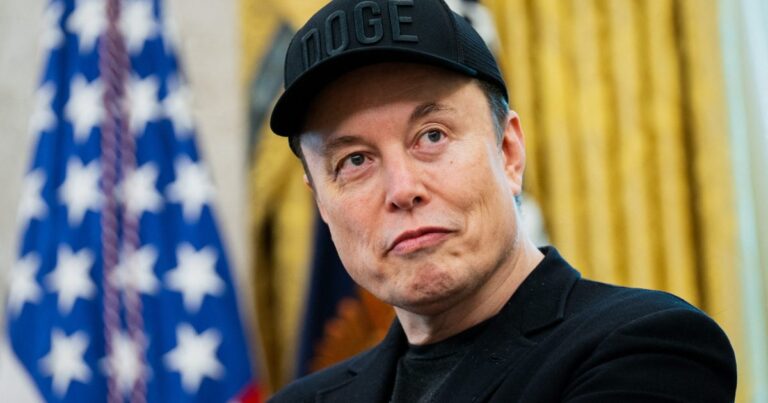
Elon Musk stole the show in the final minutes of Tesla’s Wednesday earnings call to label the advisory firms pushing shareholders to reject his $1 trillion pay package “corporate terrorists.”

After months of being relatively quiet following his resignation from the Department of Government Efficiency and subsequent fallout with President Donald Trump, Musk slammed proxy advisory firms Institutional Shareholder Services (ISS) and Glass Lewis.

“I just don’t feel comfortable building a robot army here and then being ousted because of some asinine recommendations from ISS and Glass Lewis, who have no freaking clue,” Musk said. “I mean, those guys are corporate terrorists.”

Musk, in a separate X post on Wednesday, also called into question the role of proxy advisory firms generally. The Tesla CEO echoed criticism from ARK Invest CEO Cathie Wood by saying these firms—which issue recommendations to shareholders for how they should vote on proposals at public companies’ annual shareholder meetings—have too much sway, especially with passive investors like index funds, which have substantial voting power because of the shares they hold for clients.

“ISS and Glass Lewis have no actual ownership themselves and often vote along random political lines unrelated to shareholder interests! This is a major problem that is not just limited to Tesla,” Musk wrote on X.

However, advisory firms do not vote directly in annual shareholder meetings and merely recommend positions that are also individually analyzed by some of the biggest institutional investors, including BlackRock, Vanguard, and State Street, which do their own in-house research. Both ISS and Glass Lewis twice recommended voters reject Musk’s previous 2018 pay package. Shareholders ultimately approved the package twice.

A spokesperson for Glass Lewis told Fortune in a statement its job is to provide analysis and recommendations to its clients. 

“Those that are Tesla shareholders will ultimately make their own decisions about Mr. Musk’s pay proposal and the Board directors that put it forward for shareholder vote,” the statement read.

ISS declined to comment. Tesla did not immediately respond to a request for comment.

Musk, who has a net worth of $455 billion, said he needs an ownership stake “in the mid-20s approximately” to achieve his goals at Tesla. The pay package in question would give Musk about $1 trillion over 10 years if he meets performance metrics, one of which includes boosting the company’s market cap more than 500% to $8.5 trillion. 

ISS and Glass Lewis both issued reports earlier this month questioning Musk’s pay package, in part because of the package’s size and because it would dilute existing shareholders’ holdings. 

While Tesla claimed regular benchmarking doesn’t apply to Musk’s pay, because no other company has “remotely similar goals embodied in their compensation programs,” Glass Lewis wrote in its report that Musk’s 2025 performance award is “unprecedented” compared with that of other public companies, and around 33.5x larger than its predecessor from 2018.

“It is clear that the quantum, on a realizable and granted basis, outpaces all other pay packages.”

Trump cancels trade negotiations with Canada following anti-tariffs advertisement

0

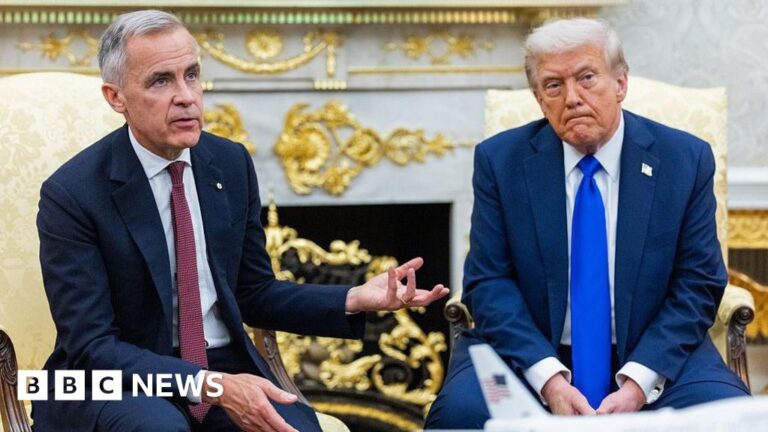
US President Donald Trump has announced an immediate end to all trade negotiations with Canada over an advert critical of the tariffs he has imposed on the nation.

The advert, sponsored by the government of Canada’s province of Ontario, quoted Trump’s predecessor, Ronald Reagan, an icon of US conservatism, saying tariffs “hurt every American”.

Trump wrote on social media that the advert was “FAKE” and “egregious”, adding that trade talks were “HEREBY TERMINATED”.

His administration has imposed a 35% levy on many Canadian imports, as well as individual tariffs targeting particular industries like car and steel manufacturing. Ontario has been particularly hard-hit by these.

Trump has allowed exemptions for goods that fall under a free trade agreement with Mexico and Canada that he negotiated during his first term.

But Canada’s Prime Minister Mark Carney has since his election earlier this year attempted to strike a deal that would ease the US tariffs.

This has been complicated by Ontario Premier Doug Ford, who is one of the most vocal critics of the taxes levied on US firms buying Canadian products.

In the minute-long advert published last week, Reagan’s voice can be heard narrating over images that include the New York Stock Exchange and cranes adorned with both US and Canadian flags.

The video excerpts a 1987 national radio address by Reagan that focused on foreign trade.

“When someone says ‘let’s impose tariffs on foreign imports’, it looks like they’re doing the patriotic thing by protecting American products and jobs. And sometimes, for a short while it works, but only for a short time,” Reagan says.

“But over the long run, such trade barriers hurt every American, worker and consumer.

“High tariffs inevitably lead to retaliation by foreign countries and the triggering of fierce trade wars… Markets shrink and collapse, businesses and industries shut down and millions of people lose their jobs,” Reagan adds.

The Ronald Reagan Foundation – which is charged with preserving his legacy – released a statement on Thursday saying the advert had used “selective” audio and video of the former president’s remarks.

It said the advert “misrepresents” the former president’s address, without specifying why, and accused the Ontario government of not seeking permission to use and edit the remarks.

The foundation said it was “reviewing its legal options”.

Trump referenced this statement, and said the video was designed to “interfere with” the US Supreme Court’s upcoming decision in November on whether Washington’s sweeping tariffs on many nation’s products are legal.

The court’s decision represents the biggest test of Trump’s presidential authority and signature economic policy, potentially forcing the US to refund billions collected in tariffs.

The advert was run as part of a campaign worth $75m Canadian dollars (£40m; $54m) on mainstream TV channels in the US.

In the post accompanying the advert, Ford wrote that “we’ll never stop making the case against American tariffs on Canada”.

China’s embassy in Washington also used a similar Reagan clip in a post on X to cast doubt on Trump’s global tariffs earlier this year.

Ontario is Canada’s most populous province and its largest regional economy, and has suffered the most as a result of the US tariffs.

Ford hit back at Trump’s earlier tariff threat against Canada by saying he was willing to cut off power supply to the US.

He had also described Washington’s trade policies against Canada as having pulled a knife and “yanked it into us“, and called on US lawmakers to put pressure on Trump.

Trump’s sector-specific levies on Canadian goods include a 50% levy on metals and 25% on automobiles.

The White House’s global tariffs – particularly on steel, aluminium and cars – have hit Canada hard, forcing job losses and putting pressure on businesses.

Carney and Ford have not yet commented on Trump’s announcement.

It is the second time Trump has said he was ceasing trade talks with Canada, after Ottawa announced it would impose a digital services tax on US technology firms earlier this year.

When Canada rescinded the tax, the White House said Carney had “caved” to pressure from Trump.