


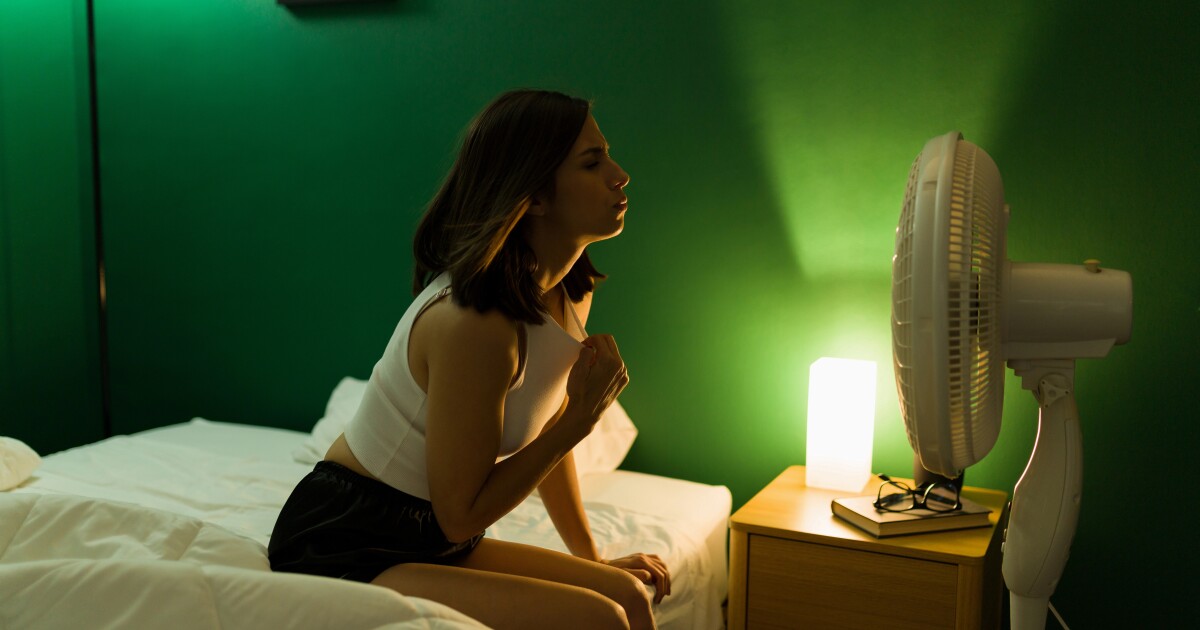
When nights stay warm, the body struggles to cool down, a key signal for drifting into deep sleep. Heat doesn’t just shorten sleep; it disrupts its rhythm, sparks dehydration, and keeps the nervous system on alert.
Studies show that hotter days and nights cut sleep hours for both adults and children. And it’s not just about duration; quality matters too. Broken sleep stages and poor continuity can ripple into heart problems, mental health struggles, and reduced cognitive performance.
While we know hot nights can cut sleep short, the science on how heat affects sleep quality is still thin, especially in the United States. No large-scale studies have yet tracked how outdoor heat exposure shapes sleep patterns across diverse populations.
Even more gaps remain: researchers haven’t fully explored who is most vulnerable, nor how seasonality and regional climate differences might shape future risks.
Rising outdoor temperatures not only make nights uncomfortable but also deteriorate the quality of our sleep, according to a recent University of Southern California (USC) study. Researchers looked at the effects of heat on several aspects of sleep, such as duration, stages, continuity, and structure.
The findings are sobering: higher nighttime temperatures are tied to shorter sleep and poorer sleep quality, with the most significant impact on people with chronic health conditions, lower incomes, or those living on the West Coast.
The new study, conducted with Harvard Medical School and Brigham and Women’s Hospital, took a big-data approach to bedtime. Researchers linked long-term sleep records from 14,232 US adults, collected through digital wearables over a decade, with detailed meteorological grids.
“This work is an important step toward understanding how sleep is affected by environmental stressors like heat, which can increase the risk of disease and even death,” Jiawen Liao, the study’s first author explained. “If we can help people sleep better, we may be able to reduce illness and save lives.”
To understand how heat reshapes our rest, researchers didn’t just rely on surveys. Alongside demographic, socioeconomic, and health information, participants shared their FitBit data, offering a vivid snapshot of sleep over time. The scale was enormous: 12 million nights of sleep duration and ease of falling asleep, 8 million nights charting sleep stages and interruptions, all matched with location and meteorological records to see how rising temperatures influence our sleep.
Researchers found that every 10 °C (18 °F) rise in daytime or nighttime temperature trims sleep time by between two and three minutes. And the ripple effects go deeper: higher nighttime temperatures were linked to lower sleep efficiency, longer periods of wakefulness after drifting off, and delays in falling asleep.
Adults between 40 and 50 years old lost more sleep than younger participants, with their total sleep duration dropping by 2.76 minutes per 10 °C increase in nighttime temperature. Women, too, were more vulnerable, losing 2.65 minutes compared to men, a difference of almost 23%.
“This may seem like a small amount, but when it adds up across millions of people, the total impact is enormous,” Liao added.
The study revealed that the toll of heat on sleep is not evenly spread across the calendar or the map. The warmest months, from June through September, were the most punishing, with people losing more sleep during this stretch than at any other time of year. Those living on the West Coast were hit hardest, losing nearly three times as much sleep as people in different regions.
Looking ahead, the projections are sobering. By the end of the century, US adults could lose between 8.5 and 24 hours of sleep each year due to rising nighttime temperatures, depending on where they live. The losses are not uniform; marine climate zones, for example, showed effects nearly twice as significant as other regions. Compared to the period from 1995 to 2014, researchers estimate that by 2099, people in these zones could face up to a full day’s worth of additional sleep reduction annually.
“A key takeaway from the study is that some populations face higher risks than others,” Liao said. “Targeting interventions and policy changes to those groups may be particularly impactful.”
Liao and his colleagues are not stopping at documenting the problem; they are already looking toward solutions. Their next step is to investigate whether practical interventions can soften the blow of hot nights on sleep. There are concepts like organized sleep hygiene programs, green roofs that reduce ambient temperatures, and indoor cooling systems. The team wants to see if these tactics can do more than just improve the comfort of the night.
The study is published in the journal Environment International.
Source: Keck School of Medicine

