


“Gamification” is one of software design’s hottest buzzwords. The idea is to leverage the mechanics of video games–points, high scores, win streaks and leaderboards–to keep users engaged over a longer period of time.
But Lee Schuneman, chief product officer at edtech firm Efekta Education Group and a former game designer, thinks that’s a simplistic way to think about how the video game industry can help other industries.
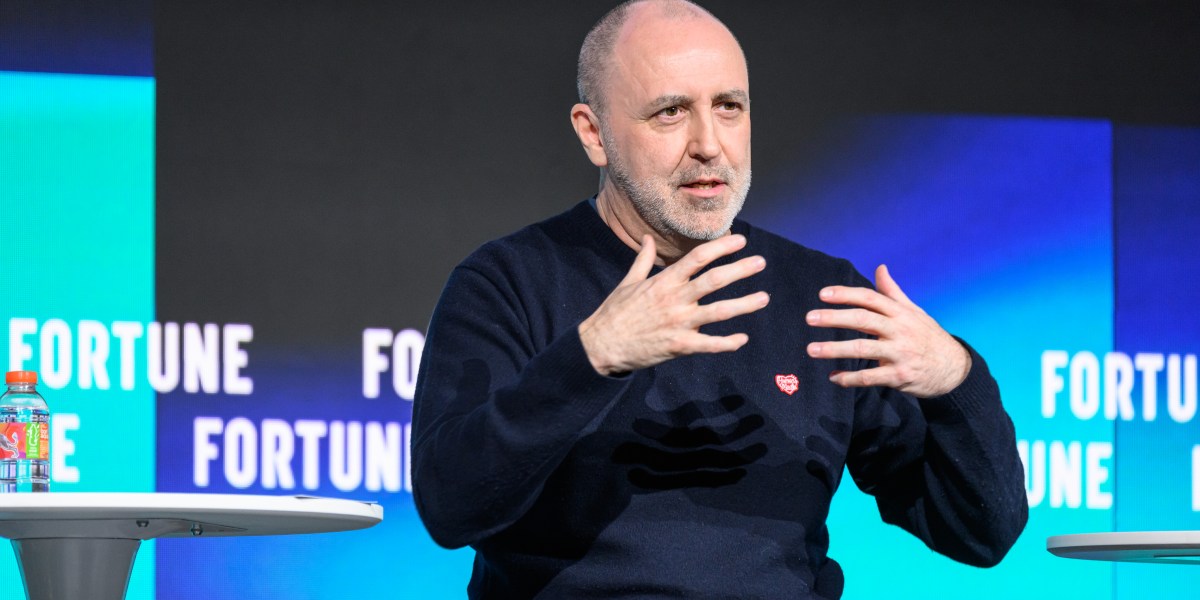
“Gamification tends to manifest itself as high score streaks,” Schuneman said Tuesday at Fortune’s Brainstorm Design conference in Macau. “All of these things are meaningful for certain social media products, but at the end of the day, if you’re there to learn, you have to put in the time and effort.”
Before moving to Efekta, Schuneman spent years working for UK video game studio Rare, developing games like 1997’s Diddy Kong Racing and 2002’s Star Fox[/hotlink ignore=”true”] Adventure.
Today, even as he cautions organizations about embracing simplistic form of gamification, he also makes the case that game design holds important lessons for education.
“[The key is] to keep you in the learning experience—the same as keeping you in a gaming experience—and find ways to keep you motivated as a student,” he said.
Schuneman said he’s now exploring how to integrate agentic AI into Efekta’s education service and “blending it with different gaming elements” to keep students engaged. A “huge shortage” of English-language and STEM teachers in the so-called Global South means there’s a huge need for AI tutors, he said.
Efekta has rolled out its AI learning assistant to 4 million students across Latin America.
‘The future of play’
Other panelists shared how the gaming industry was exploring the use of AI.
AI can “spark imagination about the future of play,” said Haiyan Zhang, the general manager and partner of gaming AI at Xbox. “Creators across the world [need] to think about what new things that they can do with gaming through the use of AI, and I think that will really help us drive this new capability.”
Zhang cited a hypothetical example: game preservation.
Researchers found that to introduce arcade classics like Pac-Man, Dig Dug or Q*bert to new audiences, designers need to take the essence of each game and create new experiences.
“There is now capability for AI to learn the back catalog of games, to allow new generations to experience these games in new ways,” Zhang said.
Beta Liu, an AI lead from NetEase Games, shared how the Chinese company was using the new technology in one of its flagship products: Sword of Justice, an MMORPG (massively multiplayer online role-playing game) centering on wuxia, a genre of Chinese fiction about martial artists in ancient China.
What sets the game apart is its AI engine, which spawns countless non-player characters (NPCs) with unique storylines and characteristics. The NPCs don’t just dole[/hotlink ignore=”true”] out quests, but remember players’ decisions and act accordingly after.
Since its launch in China in 2023, the game—set in the late Northern Song Dynasty and powered by DeepSeek’s technology—has garnered millions of players. On Nov. 7, NetEase launched Sword of Justice in global markets.
“AI is not only a tech buzzword, but also [powers] their [players’] companion and their creation tools in our game,” explained Liu. For example, he noted, players can animate their characters to follow popular social media trends, like dances or China’s famed micro-dramas.
Ultimately, game designers hope that AI will help “elevate the player experience,” said Zhang of Xbox.
Two months ago, Xbox introduced an AI co-pilot on mobile and PC. Players can boot it up while they game, and ask it questions about how to win a boss battle or what active missions there are.
“That might seem like a super simple idea, but I think it really brings gaming to life, and [encapsulates] what gaming is about,” she added. “We want to make gaming even more fun, [and] even more exciting.”

