


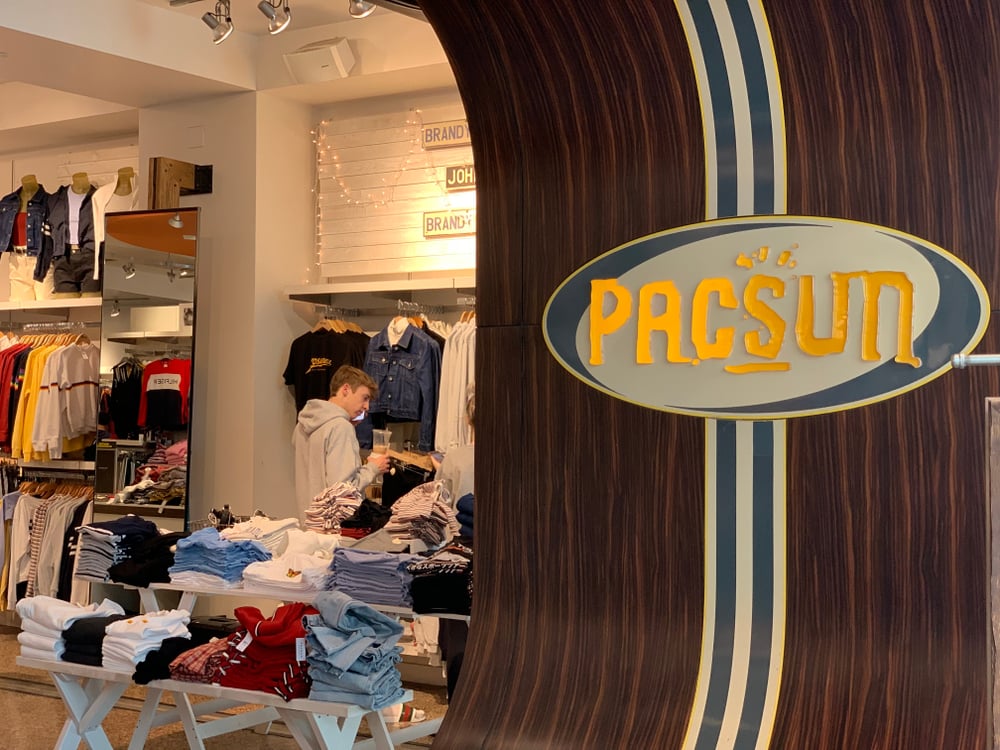
Warner Music Group has filed a copyright infringement lawsuit against US fashion retailer Pacific Sunwear of California, LLC (PacSun).
The complaint alleges the company has “misappropriated at least 290” of Warner’s recordings and compositions in social media posts without permission.
The lawsuit, filed on Monday (December 1) in a California court and obtained by MBW, accuses PacSun of using tracks by artists including Dua Lipa, Bruno Mars, Lizzo, Cardi B, and Ariana Grande in promotional videos posted to TikTok and Instagram.
Warner is seeking statutory damages up to the maximum amount of $150,000 per infringed musical work. With PacSun alleged to have infringed over 290 tracks, the potential damages could exceed $43 million.
The lawsuit names 15 Warner Music Group subsidiaries as plaintiffs, including Atlantic Music Group, Warner Records, and Warner Chappell Music.
According to the complaint, PacSun operates approximately 350 stores across the United States and sells casual apparel, accessories, and footwear “designed to appeal to teenagers and young adults.”
The complaint notes that PacSun is privately owned by Golden Gate Capital, a private equity firm with $20 billion in assets under management.
“Defendants have been wildly successful employing this marketing strategy, garnering millions of followers across social media platforms and as a result, earning hundreds of millions of dollars in annual revenues.”
WMG’s Legal complaint against PACSUN
According to the filing, “PacSun itself has acknowledged that it earns hundreds of millions of dollars annually, including $797.8 million in 2023 and over $900 million in 2022.”
The lawsuit highlights PacSun’s reliance on social media for driving sales, citing an example where “PacSun sold 200,000 pairs of jeans on TikTok after an influencer’s post caused the product to go viral, generating $20 million in revenue.”
“Defendants have been wildly successful employing this marketing strategy, garnering millions of followers across social media platforms and as a result, earning hundreds of millions of dollars in annual revenues,” the complaint states.
“However, Defendants achieved that success through their blatant, willful, and repeated copyright infringement.”
The lawsuit states that “key to PacSun’s continued growth and success has been its strategic use of social media platforms to engage with Generation Z and Generation Alpha audiences, and to promote its brand and products on platforms such as Instagram, TikTok, YouTube, and X (formerly Twitter).”
The complaint alleges that PacSun both creates its own promotional content and partners with social media influencers who receive “compensation or other rewards in exchange for promoting PacSun and its products.”
“The PacSun Videos—those produced and posted directly by PacSun and those produced by influencers and reposted by PacSun—are distributed to (among others) PacSun’s over 5.1 million cumulative social media followers, and are a significant means by which PacSun promotes its brand and products,” the complaint states.
Warner alleges that its “Musical Works are an essential and inseparable component of the PacSun Videos, which frequently feature an influencer lip-syncing to the work.”
The complaint states that “Defendants have not paid to use the copyrighted sound recordings and musical compositions that are featured” in the videos.
Warner also alleges that by using these works without consent, PacSun “deprived Plaintiffs, their recording artists, and their songwriters of the ability to control how and where their musical works are used.”
The complaint argues that PacSun’s alleged infringement was “clearly willful,” noting that both Instagram and TikTok expressly prohibit commercial use of music without proper authorization.
Warner cites Instagram’s Music Guidelines, which state: “Use of music for commercial or non-personal purposes in particular is prohibited unless you have obtained appropriate licenses.”
The complaint also quotes TikTok’s Terms of Service, which state: “No rights are licensed with respect to sound recordings and the musical works embodied therein that are made available from or through the service.”
Elsewhere in the lawsuit, Warner alleges that PacSun ignored a cease-and-desist letter sent on February 13, 2024.
“Yet, for months after receiving the cease-and-desist letter, PacSun not only continued to exploit many of the infringing PacSun Videos, but also posted new infringing PacSun Videos,” the complaint states.
The lawsuit notes that PacSun “is not unfamiliar with intellectual property laws and actively enforces its own intellectual property rights,” pointing to a previous case in which PacSun took legal action against an alleged infringer.
The complaint references previous cases involving similar allegations against energy drink company Bang Energy, in which both Universal Music Group and Sony Music Entertainment won judgments.
“On July 11, 2022, United States District Judge William P. Dimitrouleas granted partial summary judgment to another music company, Universal Music Group, in its action against Bang Energy,” the filing states.
“In its order, the court found that it was ‘undisputed that [Bang Energy] posted approximately 140 TikTok videos utilizing portions of [Universal Music Group’s] copyrighted works,’ and concluded that the Bang defendants were liable for direct copyright infringement as a matter of law.”
Warner also sued Bang Energy in September 2022 over similar allegations.
The lawsuit is the latest in a series of legal actions by major music companies against businesses accused of using copyrighted music in social media marketing without permission.
In April, Warner Music Group sued cookie company Crumbl over alleged copyright infringement in TikTok posts.
Earlier this year, Warner also filed a lawsuit against shoe retailer DSW Designer Shoe Warehouse over similar allegations involving more than 200 works.
Other recent cases include Sony Music’s lawsuit against the University of Southern California and UMG’s lawsuit against the owner of US Tex-Mex restaurant chain Chili’s.
Music Business Worldwide

