


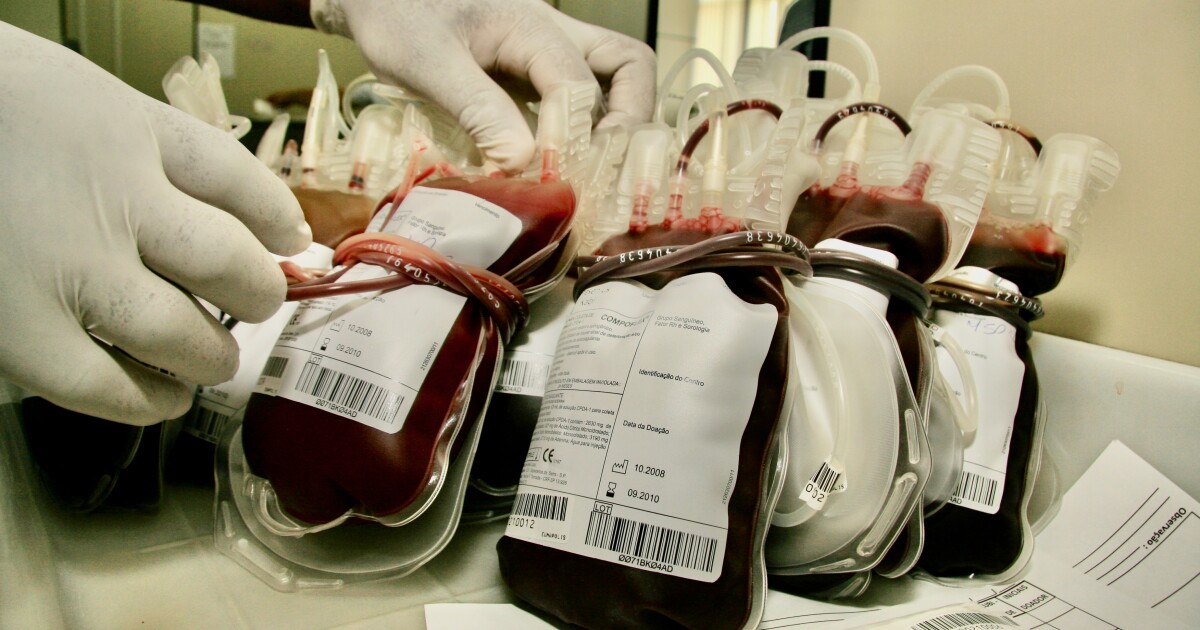
Millions of people donate blood each year, saving countless lives. After a donation, plasma and white blood cells are separated from red blood cells, which are the most commonly transfused blood product. In most countries, red blood cells can be stored under refrigeration – as a liquid solution – for up to 42 days.
Over time, red blood cells undergo structural changes: their membranes become weaker, and harmful metabolic by-products build up. Essentially, it means the red blood cell solution becomes less suitable for transfusion, which is why it can’t be used after six weeks.
Here’s the catch: even when stored under the same conditions for the same amount of time, not all donated blood ages at the same speed. The quality of red blood cells and how quickly they decline can vary a lot depending on donors’ metabolism, lifestyle, weight, sex, and age. And these variations often get overlooked in hospitals and blood centers. The main reason for that is a lack of fast and affordable methods for measuring the quality of stored blood right before transfusion.
Researchers at the University of Colorado Boulder and University of Colorado Anschutz have developed a compact, inexpensive, and easy-to-use device to solve this problem.
“Our vision is to have a chip the size of a dime that you can plug into your cell phone,” explained Xiaoyun Ding, associate professor in the Paul M. Rady Department of Mechanical Engineering at Boulder. “It could use your phone’s camera and an app to read out the results in just two minutes.”
So how does it work? The chip generates acoustic waves – similar to sound waves, but moving only the very top layer of the chip, which contains electrodes. A tiny drop of blood is placed on the surface, and when an electric current runs through the chip, the acoustic waves make the red blood cells vibrate and heat up until they break. It’s essentially a tiny stress test for blood cells: the faster they break, the less healthy the blood is.
Xiaoyun Ding
During the experiments, blood samples from multiple healthy donors were tested weekly during the 42-day period. The results showed that as blood aged, red blood cells from some donors broke at lower temperatures sooner than others, causing a significant decrease in quality even before its official expiration date.
Creating vibrations on a tiny chip is not simple, so the researchers checked if the heat alone could do the job. They carefully controlled the temperature during testing, so the results could be fairly compared between donors and over time. But that didn’t work. Without the acoustic vibrations, donor-specific differences in red blood cells were not possible to detect.
This technology shows that both storage time and biological differences between donors affect red blood cell quality. By identifying lower-quality blood samples, hospitals can prioritize using them sooner, ensuring better treatment for patients. The device also makes it possible to predict how well transfused blood will perform.
There is still a lot of work to be done before this method can be widely adopted in hospitals, but in the future, the researchers hope to apply the same approach for measuring different factors that affect blood cells or protein levels in blood.
A paper on the research was published in the latest issue of the journal Lab on a Chip.
Source: University of Colorado Boulder

