


Jessica ParkerBerlin correspondent
 BBC
BBCPower is being restored to the last homes hit by a five-day blackout in Germany’s snow-covered capital, Berlin.
The outage was caused by a suspected arson attack and came as temperatures dipped below freezing.
It is reportedly the longest blackout in the capital’s post-war history. A far-left militant group has admitted being behind.
This weeks’ images of residents – young and old – living through a prolonged blackout in the country’s capital has reignited a debate about Germany’s vulnerability to sabotage attacks, whether by domestic or foreign actors.

Schools, hospitals and care homes are among the tens of thousands of properties which were affected in south-west Berlin.
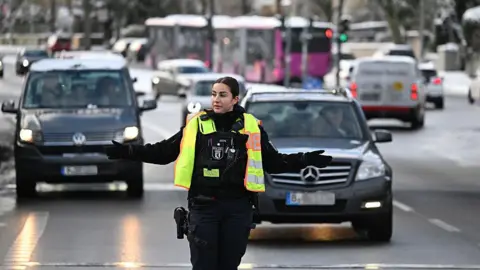
In Berlin’s Steglitz-Zehlendorf district, on Mexikoplatz, a police van drove around announcing the imminent return of power over a tannoy.
Residents regularly approached a group of emergency service workers for the latest information.
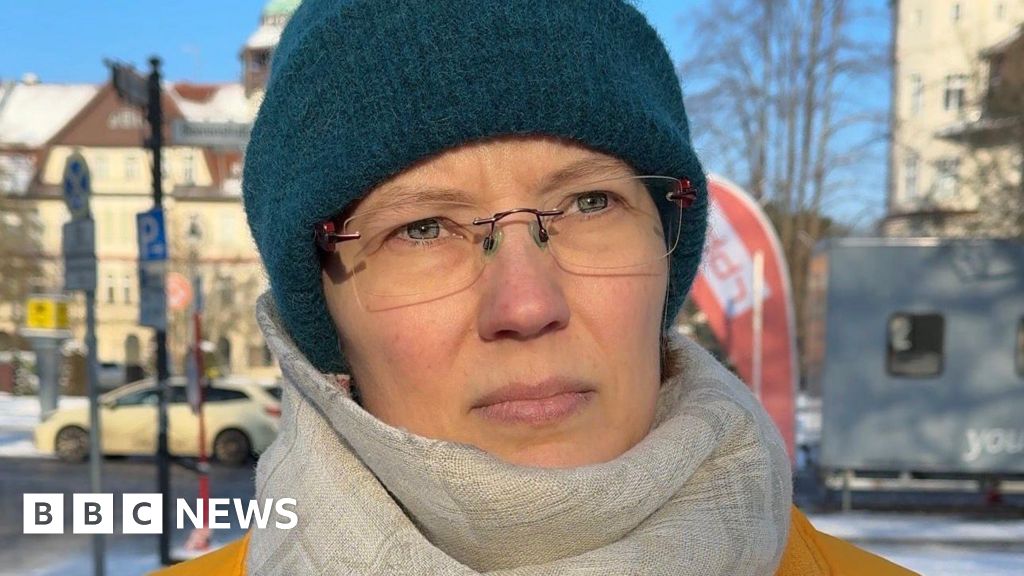
Lena said her family had felt “lost” – relying on a battery-powered radio for updates.
They have been cooking on a camping stove at home while trying to make sure their water pipes don’t freeze.
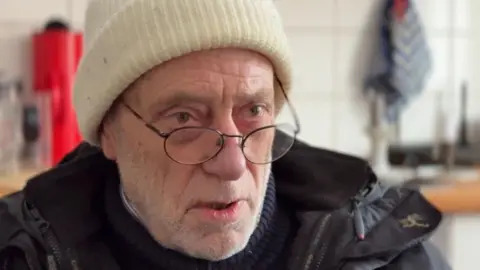
Reinhold, 79, was still without power on Wednesday morning and going to his daughter’s house to get warm.
“But I always came back to sleep here even in the cold weather with a bobble hat on and sweater and a woollen blanket.”
The retired architect said that he was used to hardship having been born in post-war Germany.
“I was born in 1947. When my mother and I came from the hospital… it was -20C in our shack.”
“My parents took turns every hour to see whether my hands were tucked in under the cover so my fingers wouldn’t freeze off.”
Restoring electricity is happening on a “step-by-step basis,” said fire service spokesman Adrian Wentzel.
Resources have been pulled in from across Germany, he told me, with an estimated 100,000 people affected.
Hospitals have had to rely on emergency generators while some schools have had to close.
It was early on Saturday when several cables on a bridge were spotted burning near the Lichterfelde gas-fired power plant.
Subsequently, the far-left Vulkangruppe or Volcano Group appeared to claim responsibility, saying its target was the fossil energy industry.
“We apologise to the less wealthy people in the southwest of Berlin,” a lengthy statement read.
“With the many owners of villas in these districts, our sympathy is limited,” they added, likely referring to the fact that Steglitz-Zehlendorf is one of Berlin’s wealthiest neighbourhoods.
However, a different statement was later published online on the Indymedia site – purportedly from Vulkangruppe’s founders.
“We expressly distance ourselves from all actions of recent years,” it said.
 AFP via Getty Images
Another recent high-profile incident saw activists admit being behind a suspected arson attack that halted production at the huge Tesla factory, just outside Berlin, in 2024.
The exact structure and workings of Vulkangruppe is not known.
But German authorities describe them as left-wing extremists and say attacks have happened at irregular intervals since 2011 in Berlin and the surrounding state of Brandenburg.
Domestic intelligence state that the group’s aim is to disrupt “the day-to-day functions in order to harm the hated capitalist system”.
Federal prosecutors are investigating the latest incident as a terrorism offence, with possible charges including “membership in a terrorist organisation, sabotage, arson and disruption of public services”.
This week’s outage was larger and lasted longer than a similar incident in September.
Plans for a federal law to protect critical infrastructure have been in the works for years but were only presented to parliament in November.
The “Kritis” bill sets out plans to identify key critical infrastructure transport as well as introduce minimum protection standards.

