


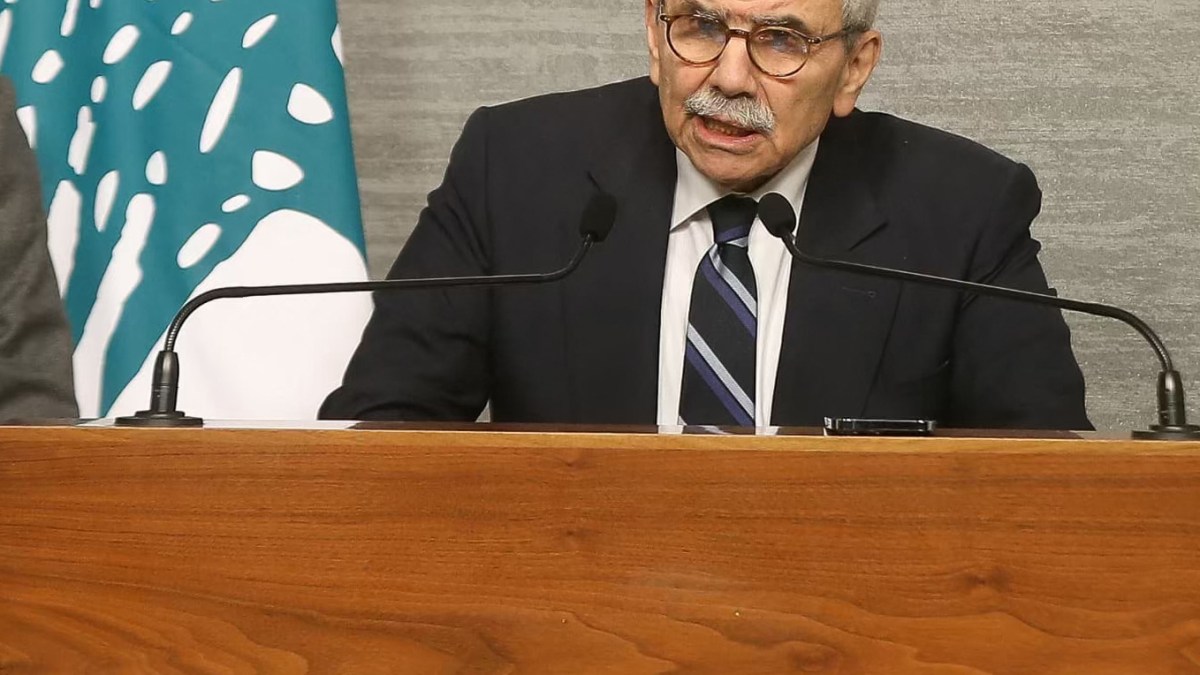
After six years of one of the world’s worst financial crises, Lebanon’s cabinet has approved a draft law that could give depositors back their money.
In 2019, the Lebanese currency began spiralling. Banks locked their doors and prevented depositors from accessing their money.
Recommended Stories
list of 3 itemsend of list
Some depositors were forced to hold up bank branches to get their own money.
By the time the currency had been regulated, the Lebanese Lira had lost 98 percent of its value.
To fix the situation, Lebanon’s cabinet is passing a so-called “gap law” that’s expected to be signed by the prime minister and president before heading to parliament for debate.
Here’s everything you need to know about the so-called “gap law”.
What’s good about the law?
Depositors will be getting some of their money back.
Under the law, anyone who deposited up to $100,000 will be reimbursed within four years. This is an improvement on past proposals, where the same amount would be repaid over more than a decade.
However, observers noted that plans proposed in 2020, under the government of former Prime Minister Hassan Diab, had depositors receiving up to $500,000 back.
“This was probably the biggest lost opportunity, and it was done to protect the banks,” Fouad Debs, a lawyer and member of the Depositors Union, told Al Jazeera.
There is also supposed to be a full financial audit, according to Prime Minister Nawaf Salam.
“A forensic audit … means [the banks] will open all their operations – their dividends and the bonuses they paid executives – basically all the financial engineering they’ve done,” Debs said.
He added that an audit is important because “there are a lot of discrepancies between what they say and what the state is saying.”
What’s bad about it?
Plenty.
First off, the $100,000 figure is per depositor and not per account. So if someone had two accounts with a figure more than $100,000, they would still only get $100,000 back.
For depositors who have more than $100,000 in their account or accounts, they will be given $100,000 in cash, and the rest will be paid in bonds backed by the Central Bank, according to PM Salam.
Who is the draft law good for? Who does it penalise?
The bankers, the banks, and politicians aligned with them get off fairly easily under the current draft law, while the state will bear most of the burden for the financial collapse.
Under the current version of the draft law, banks are responsible for paying only 40 percent of withdrawals, despite their major roles in engineering the financial crisis.
But banks, bankers, and affiliated politicians are still waging media campaigns and lobbying parliament to attack the law and make it even more favourable for them.
Under the new draft law, banks are being asked to pay much more than they are currently paying – but still significantly less than critics say they should be paying.
There is a lack of clarity over the claims.
During the crisis, banks were still able to pay out dividends to shareholders and pay executives bonuses, while regular depositors were blocked from accessing their money for daily expenses like buying food or paying bills.
“Depositors should be last on the list to have to pay,” Debs said.
How much would the state have to pay?
The state would have to make up the “gap” between what is owed by Lebanese banks to depositors and what the Lebanese financial system can pay out.
Estimates currently say there is a gap of $70bn.
Who do the bankers say should pay all this?
They say the state should pay. Many bankers and banks say that they entrusted their money to the Central Bank of Lebanon (BDL) and that BDL gave the money to the state, which lost it. Therefore, the state should pay.
But critics argue that many of the banks gave depositors’ money to BDL without asking the depositors.
“They put it there because banks made so much money and benefitted from it a lot,” Debs said. “They put all their eggs in the same basket … and the banks knew this very well.”
How would the state pay?
With public funds, essentially. After the cash is given to depositors, everything else will be paid back in bonds backed by the state and its assets, including Lebanon’s gold reserves.
Critics say this is problematic because many of Lebanon’s current bonds were sold to vulture funds abroad. So state assets could essentially be used to pay back vulture funds or to pay back big depositors at the expense of the entire Lebanese population.
What is the IMF saying?
The International Monetary Fund (IMF) is usually calling for austerity, but for once, civil society and the IMF are on the same page.
“The IMF is saying… ‘how can you make depositors pay before bankers?’” Debs said, adding that the IMF’s position shows “how greedy and vicious the ruling elites are here”.

