


Breaking Rust, an AI-generated ‘Outlaw country’ act, scored a semi-hit in the US last month with Walk My Walk – a track that’s been streamed over 7 million times on Spotify and topped Billboard’s Country Digital Song Sales chart.
But earlier this week, Walk My Walk briefly disappeared from Spotify following an impersonation claim.
A Spotify representative has confirmed to MBW that the track was temporarily removed but has since been reinstated. MBW has discovered that the claim was likely filed by independent country artist Bryan Elijah Smith, who accuses Breaking Rust of stealing elements of his music, style, and image.
Smith isn’t the only one crying foul. Grammy-nominated rapper Blanco Brown says Breaking Rust’s track rips off his vocal style – and an Associated Press investigation has drawn a line between Walk My Walk‘s credited songwriter and a former Brown collaborator.
Here are three things you need to know about the ballooning Breaking Rust saga – and how it fits into a bigger story about AI music fakery…
1. An independent artist says Breaking Rust has been “stealing elements of my music, my style and even my image”
Bryan Elijah Smith is a real-life artist who writes, records, and produces his own music. He says he plays nine instruments and has been building his career independently for 17 years.
MBW actually referenced Smith back in June in a report on AI artists, noting that he appeared under the ‘Fans Also Like…’ section on Spotify for AI-generated Outlaw country artist Aventhis.
In an email to MBW this week, Smith accused Breaking Rust and other AI acts, including Aventhis, of “stealing elements of my music, my style, and even my image.”
He claimed: “They have been copying niche genre descriptions, branding language, and visual identity I have built over the last seventeen years. These acts are presenting themselves as original creators when the songs are fully generated by Suno AI in seconds.”
Smith says he filed a rights claim against Walk My Walk with Spotify, which he believes led to the track’s removal earlier this week.
According to Spotify’s FAQs, artists can submit an impersonation claim if they “believe someone is impersonating [their] voice on Spotify without [their] authorization”.
Spotify says it “review[s] every submission and will take action as appropriate, including removing the content from Spotify if it violates this policy.”
“I am pursuing the removal of these accounts entirely, because this issue is bigger than just me.”
Bryan Elijah-Smith
MBW understands that tracks can be reinstated on Spotify following an appeal by the artist or rightsholder, or after an internal review.
Smith claims that AI-generated acts like Breaking Rust are “deceiving the public and using my likeness and artistic identity to generate streams that cut into the same limited revenue pool independent musicians and songwriters rely on to survive.”
He adds: “I am pursuing the removal of these accounts entirely, because this issue is bigger than just me.
“Every independent artist is at risk when anonymous creators can use AI to imitate real artists, hijack algorithms with a flood of releases and climb charts without transparency or accountability.”
2. Blanco Brown also says Walk My Walk ripped off his sound – and he’s fighting back
Separately, the Associated Press reports that Walk My Walk has been accused of mimicking the sound of Grammy-nominated US artist Blanco Brown.
Brown, whose 2019 hit The Git Up peaked at No.14 on the Hot 100, told the AP he “didn’t even know about the song until people hit me up about it”.
“My phone just kept blowing up,” Brown said. “Somebody said: ‘Man, somebody done typed your name in the AI and made a white version of you. They just used the Blanco, not the Brown.’”
Brown has responded to the situation by recording a cover version of Walk My Walk.
His manager, Ryan McMahan, Co-Founder at Oath Management, said in a statement on LinkedIn: “Blanco Brown just made history as the first major artist to cover an AI-generated song. He showed the world exactly what happens when real soul, real craft, and real art stand next to something built by AI. There is no comparison.”
McMahan says the cover was “a calculated move with purpose behind it,” adding: “Blanco and I built this plan together. We talked about what AI means for music, legal, the industry, what it means for the next decade, and how this moment could shift the entire conversation. This was not about chasing attention. It was about drawing a clear line between something generated and someone who has fought, survived, grown, and turned life into art.”
“AI CAN RUN A FORMULA. IT CANNOT RECREATE BLANCO’S LIFE EXPERIENCE THAT HE PULLS FROM. IT CANNOT RECREATE THE HUMANITY, THE CONVICTION, OR THE LIFETIME OF EMOTIONS THAT SHAPED HIS ARTISTIC VOICE.”
RYAN MCMAHAN, OATH MANAGEMENT
McMahan added: “This moment gives hope to artists who excel and take the craft seriously. Today everyone calls themselves an artist, but very few earn that title. Blanco’s move proves that real artistry still rises above noise, trends, and algorithms.”
Brown has also released a reworked derivative of the track with new lyrics and a new arrangement.
“If someone is going to sing like me, it should be me,” Brown said.
The AP’s Jonathan Landrum Jr. notes that the situation is both “a legal and cultural issue” for Brown, who “spent years navigating country music as a Black artist who blends gospel, hip-hop, pop and twang” but has struggled to get consistent traction on country radio despite his Grammy nomination.
3. The credited songwriter on Walk My Walk appears connected to a former Blanco Brown collaborator
All 10 tracks on Breaking Rust’s Spotify page, including Walk My Walk, list an individual named Aubierre Rivaldo Taylor as their songwriter.
The AP notes that Taylor is also credited as the songwriter behind Defbeatsai, an ‘X-rated’ AI-generated country act that went viral on social media last year.
Significantly, the AP’s investigation draws a line between Defbeatsai and a former Blanco Brown collaborator named Abraham Abushmais, whom Brown apparently nicknamed “Abe Einstein” due to his studio abilities.
Abushmais has co-writing credits on Brown’s 2019 album Honeysuckle & Lightning Bugs.
The AP suggests that Abushmais is identified as the developer of an AI music generation app called Echo, promoted via a Defbeats.ai Instagram page urging visitors to “make your own hit country song.”
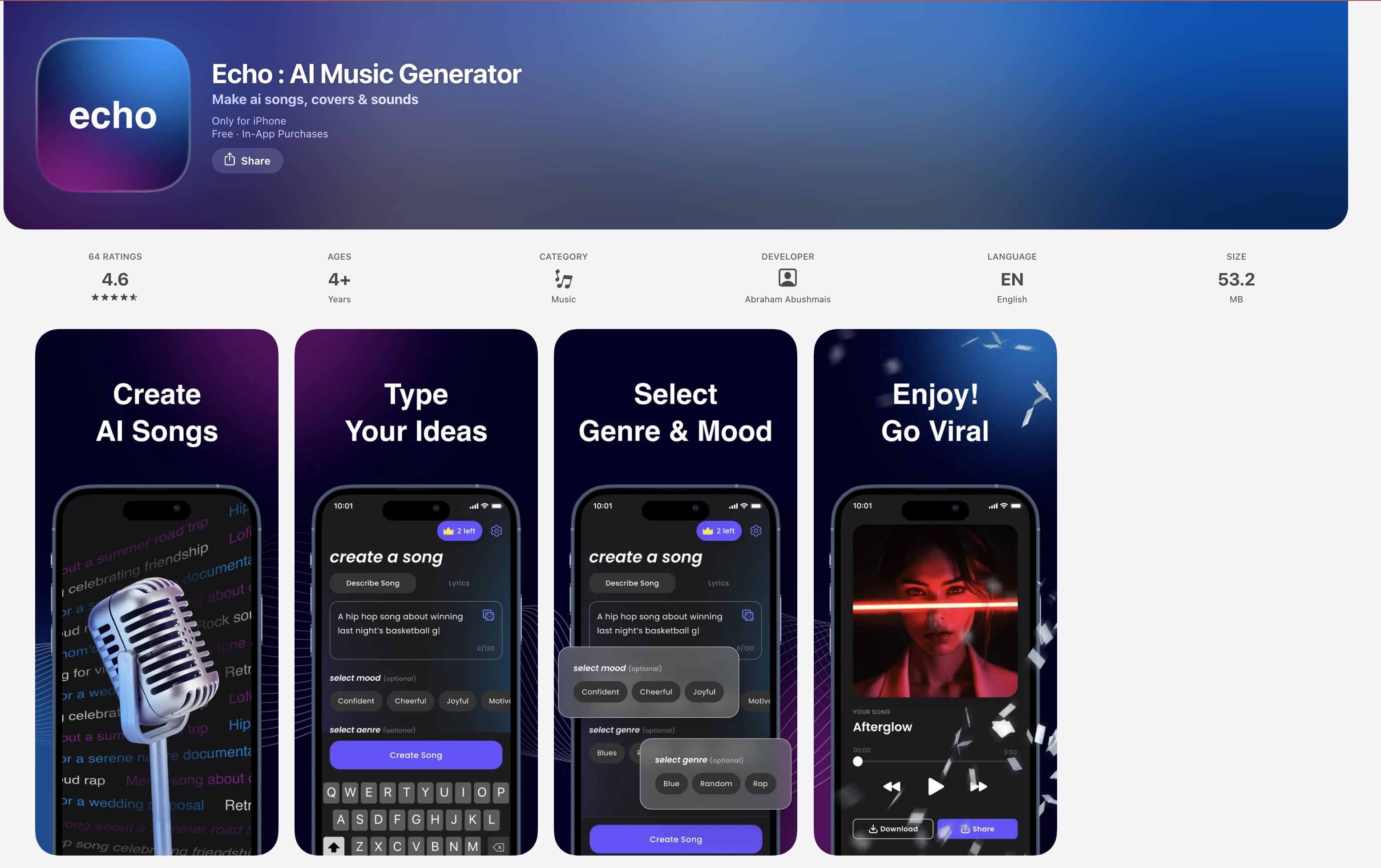
Brown told the AP that nobody informed him about any connection between his former collaborator and the AI track that mimics his style. He added that Abushmais has become impossible to reach.
“Abe’s number changed,” Brown said. “We used to talk. I ain’t heard from him in a year or two.”
The AP reports that Abushmais did not respond to its request for comment.
The bigger picture: Breaking Rust isn’t an isolated case – and that’s where things get complicated
The Breaking Rust saga is part of a growing pattern of real artists accusing AI-generated tracks of ripping off their work, voice, or image.
In late November, FAMM – the independent label of British singer Jorja Smith – alleged that the viral dance track I Run was created using AI trained on Smith’s music.
The track, credited to producer Haven (Harrison Walker), had been on course to chart in both the UK and US before being removed from streaming services following takedown notices.
FAMM alleged that Walker “used AI to make his voice sound like Jorja’s and had used Jorja’s name (without permission) suggesting to the public that it was actually Jorja singing.”
The label is pursuing compensation, and has called for mandatory labelling of AI-generated content.

Separately, Grammy-winning singer Victoria Monét recently spoke to Vanity Fair about Xania Monét, an AI-generated artist signed to Hallwood Media whose name bears a striking resemblance to her own. Monét acknowledged she couldn’t definitively say the AI was trained on her music, but noted the resemblance felt “uncanny.”
“It’s hard to comprehend that, within a prompt, my name was not used for this artist to capitalise on,” Monét said. “I don’t support that. I don’t think that’s fair.”
What’s notable about Breaking Rust is that two separate artists – Bryan Elijah Smith and Blanco Brown – both believe the same AI act has directly ripped off their work. One claims vocal mimicry; the other claims visual identity, branding language, and more.
This points to a looming challenge for the music industry: AI-generated music may trigger simultaneous claims from multiple artists, all of whom may struggle to definitively prove they were the training source, despite legitimate grievances.
As FAMM put it in its statement on the I Run dispute: “We are in uncharted territory. AI is all around us and already impacting the way we consume music. We need to talk about what that means for creatives.”
Music Business Worldwide

