


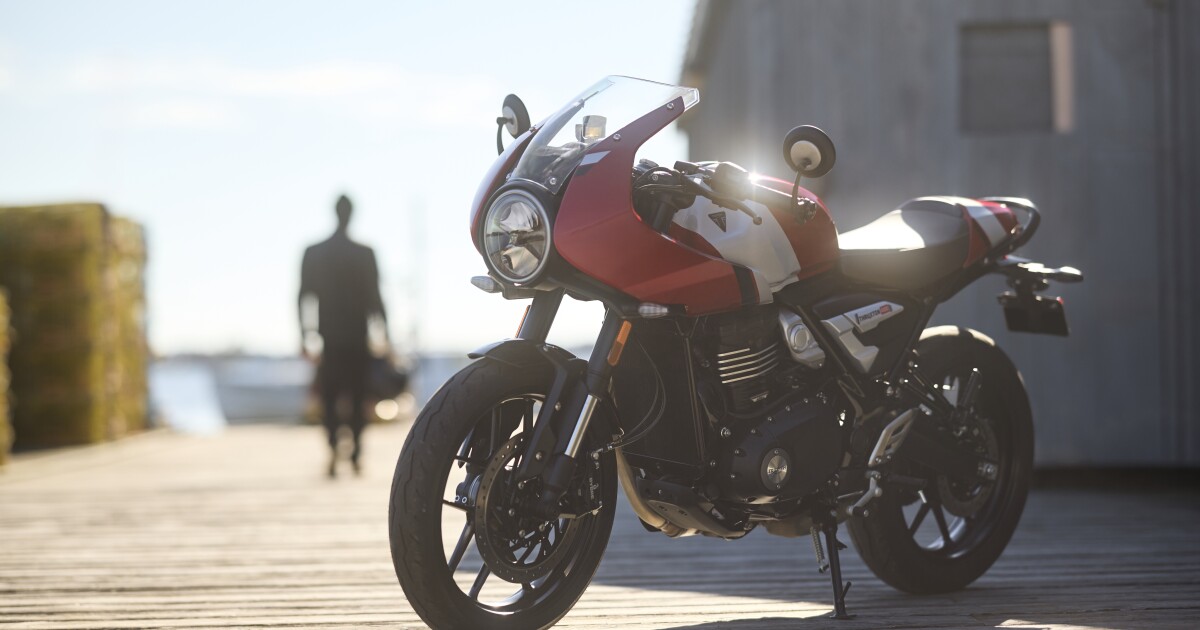
When Triumph released its first-ever 400cc motorcycles last year – the Speed 400 and Scram 400 – very few people would have foreseen the success that followed. Many at the time termed them as the most value-for-money motorcycles on the market, and it seems like the bikemaker has taken note of that success.
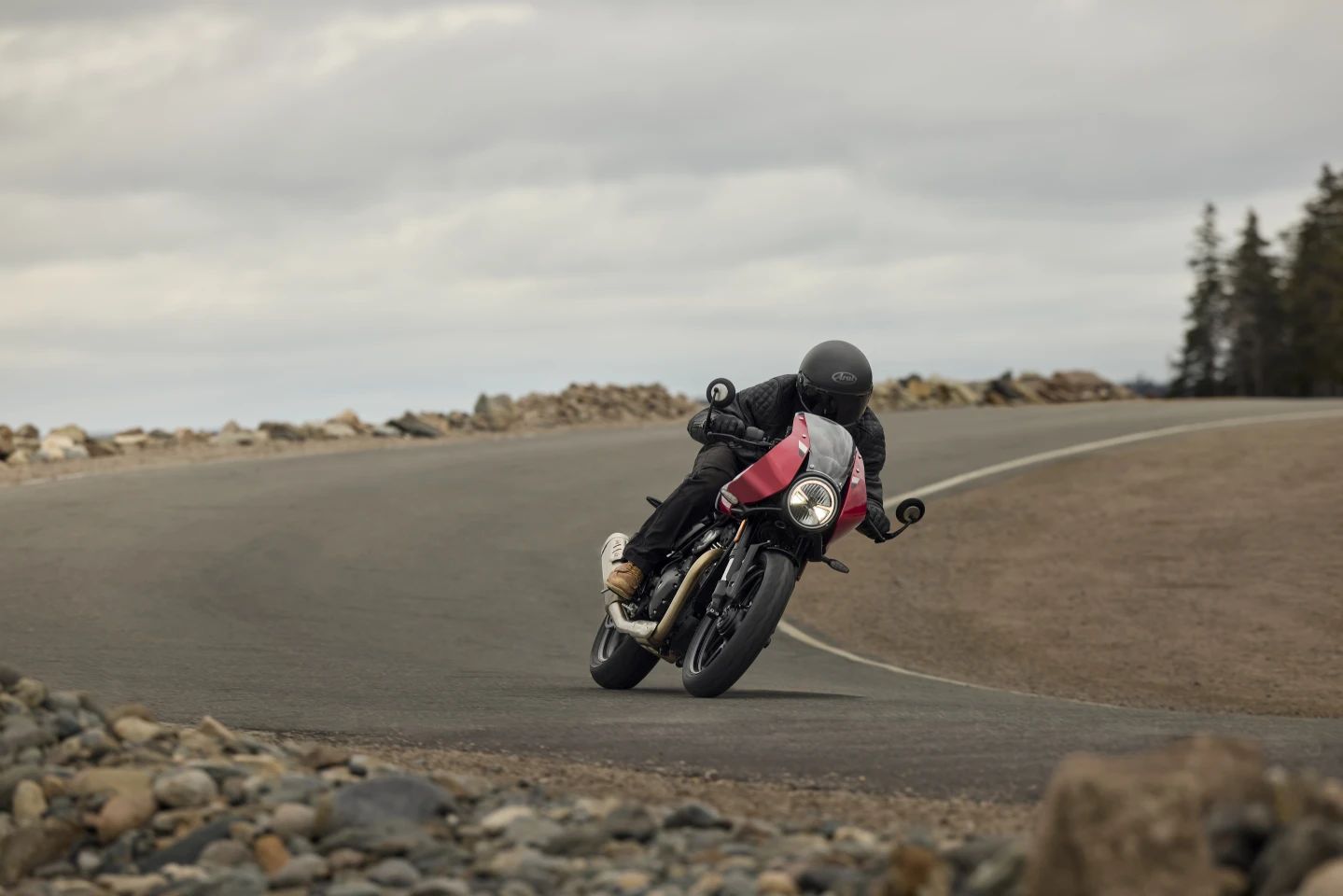
Now, the British brand has followed up with two new motorcycles built on the same 400cc platform – the Thruxton 400 and Tracker 400. The Thruxton is a café racer-esque bike, while the Tracker is more of a flat track-inspired motorcycle – both, built as roadsters, in essence.
We’ll start with the engine: you get a revised version of the 398cc TR Series engine used in the Speed and Scrambler 400. It’s more powerful than before, producing 5% more peak power – 41.4 horsepower compared to 39.5 hp of the Speed and Scram 400s.
Triumph
As for torque, you get the same 27.7 lb.ft (36.7 Nm) as before. But Triumph claims that 80% of that torque comes at around 3,000 revs, which means there’s more low-end torque now than before.
Now, a small Thruxton hasn’t exactly been a well-kept secret. We’ve known for a while that Triumph had been working on one. Many even pondered if it would simply be a Speed 400 clothed in café-racer fairings. Well, I’m glad to say that’s not the case.
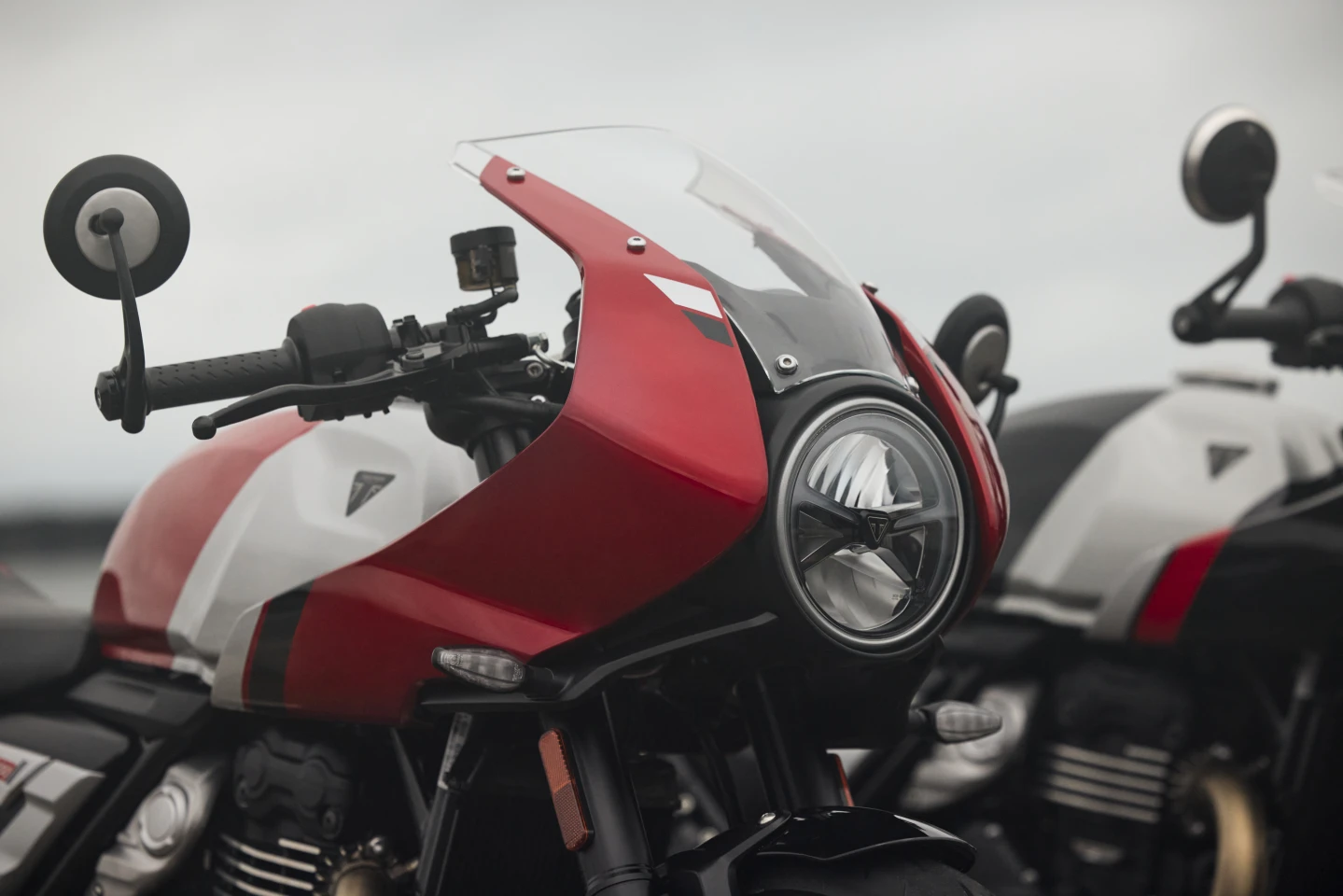
Triumph has done much more. For starters, the Speed 400’s handlebars are replaced with more café-racer-styled clip-ons, while the footpegs have been pushed up and back. The suspension setup is different, too – 43-mm front forks offer 5.3 in (135 mm) of travel up front, and a preload-adjustable rear monoshock comes with 5.1 in (130 mm) of travel.
As you can see, there’s a rear cowl in place of a passenger seat. Don’t worry, there’s actually a seat hidden beneath that cowl in case your buddy is hellbent on tagging along for a ride – although, judging by its size, don’t expect it to offer much in terms of passenger comfort.
Triumph
Then, there’s the design. It’s an absolute peach, which considering it’s lifted off of Triumph café racers of the past, is not even surprising. There are some beautiful, flowing lines from the half-fairing to the fuel tank, which features scalloped cutouts, all the way to the short rear fender.
Triumph also includes a Monza-style fuel cap, while touches like the brushed heel guards, the blacked-out engine, and the classic round headlamp are all appreciable. Definitely not what most entry-level singles offer.
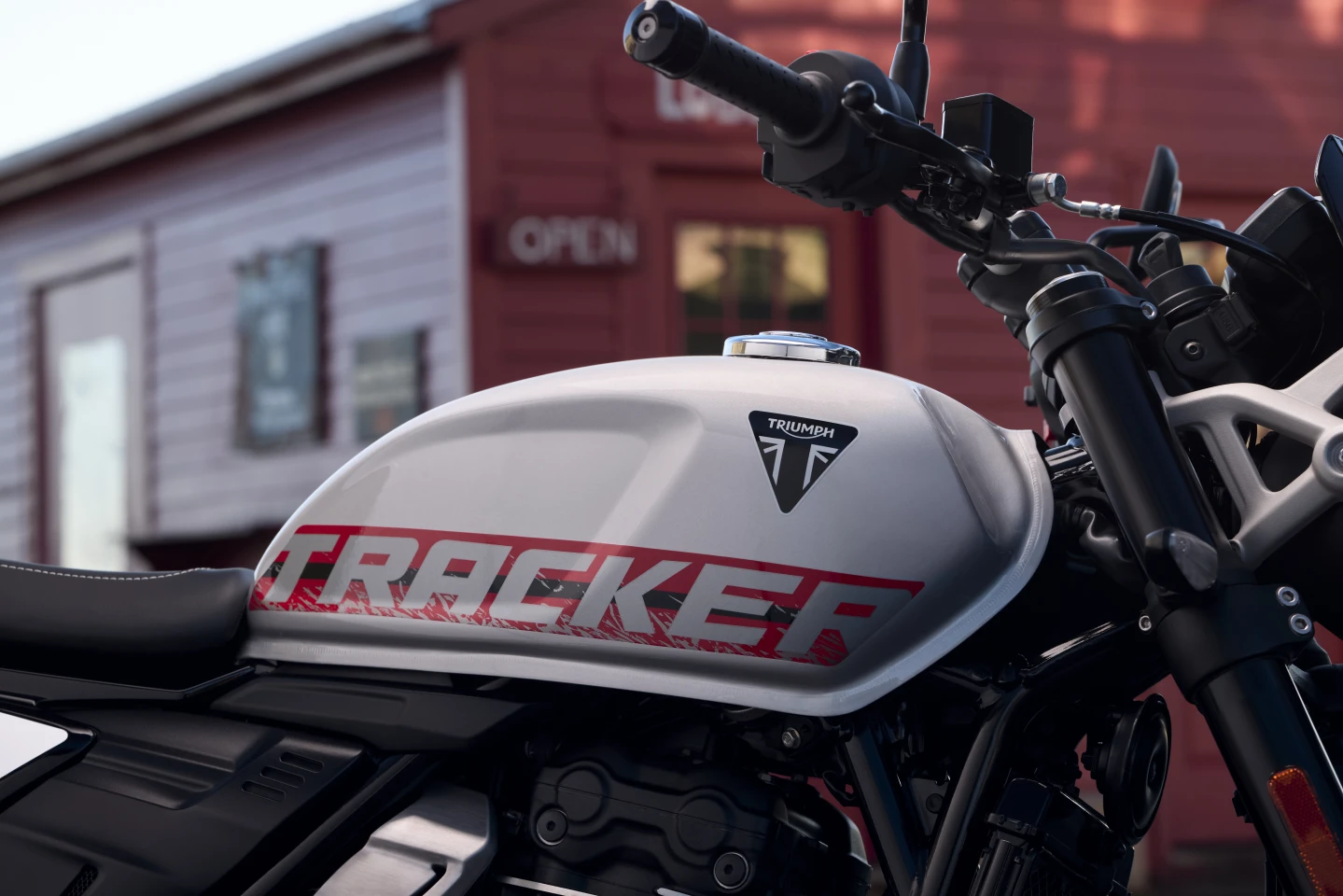
Now, let’s talk about the aptly-named Tracker 400. I say so because it’s based on flat trackers of the past. And although I don’t expect to see people racing with the bike, at least it does a good job at looking the part.
Triumph
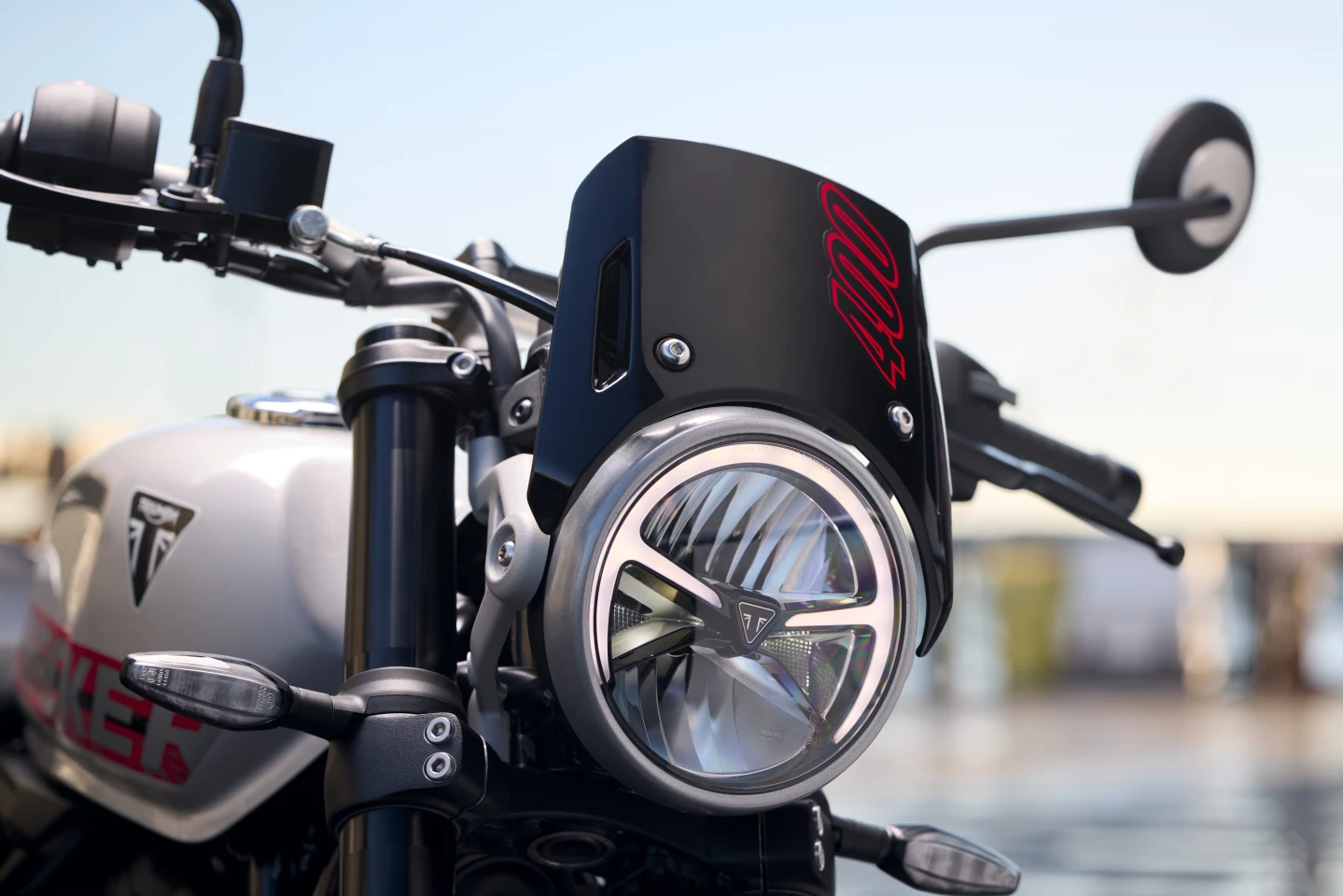
The design journey starts with the race-inspired logos and the fuel tank, which sport crisp creases. The angular flyscreen and color-matched rear cowl further enhance the tracker appeal, as do the 17-inch cast aluminum wheels that are wrapped in Pirelli MT60 RS tires with a blocky tread pattern.
As for the handlebars, they’re wider and flatter than the Thruxton, and go really well with the redesigned footpegs. Which, by the way, are moved 3.4 in (86 mm) farther back and 1 in (25 mm) higher than the Speed 400, offering a more aggressive stance.
The chassis is shared with the Thruxton, and it is somewhat tweaked from the earlier 400s. It sports a similar steel tube front frame as the Speed 400, but there’s a new rear subframe and a shorter wheelbase. The suspension setup, though, is similar to its predecessor, with 43-mm upside-down Showa Big Piston forks with 5.5 in (140 mm) of travel and a gas monoshock rear suspension unit giving 5.1 in (130 mm) of travel.
Triumph
Similar to the Speed and Scram 400s, Triumph has kept rider aids to a minimum on both these new bikes. You only get ride-by-wire, traction control, and ABS. The cockpit is fairly similar, too, with a single analog speedo and LCD, and there’s LED lighting with daylight running. That’s about it.
The new Thruxton 400 will start at US$6,295, and bears a 2026 model year. On the other hand, the Tracker 400 is priced at a MSRP of $5,995 and comes as a 2027 model year. We’ve been quoted a March-April 2026 US launch timeline for the two bikes.
Triumph
Most motorcycle brands have realized that the boom in the small-displacement segment is not merely a fad, but it’s here to stay. In fact, it is one of the biggest categories of motorcycles in terms of sales (and margins) right now. And that has led even the most traditional bikemakers to change their strategy.
Take the likes of BMW, Kawasaki, and Honda – all big-scale global manufacturers, and when you look at some of their latest releases, there’s one common pattern: increasingly more sub-500cc motorcycles. Is that a coincidence?
Triumph’s move surely suggests not. What we have here are small, functional motorcycles that look cool. Another success story brewing for Triumph?
Source: Triumph

