


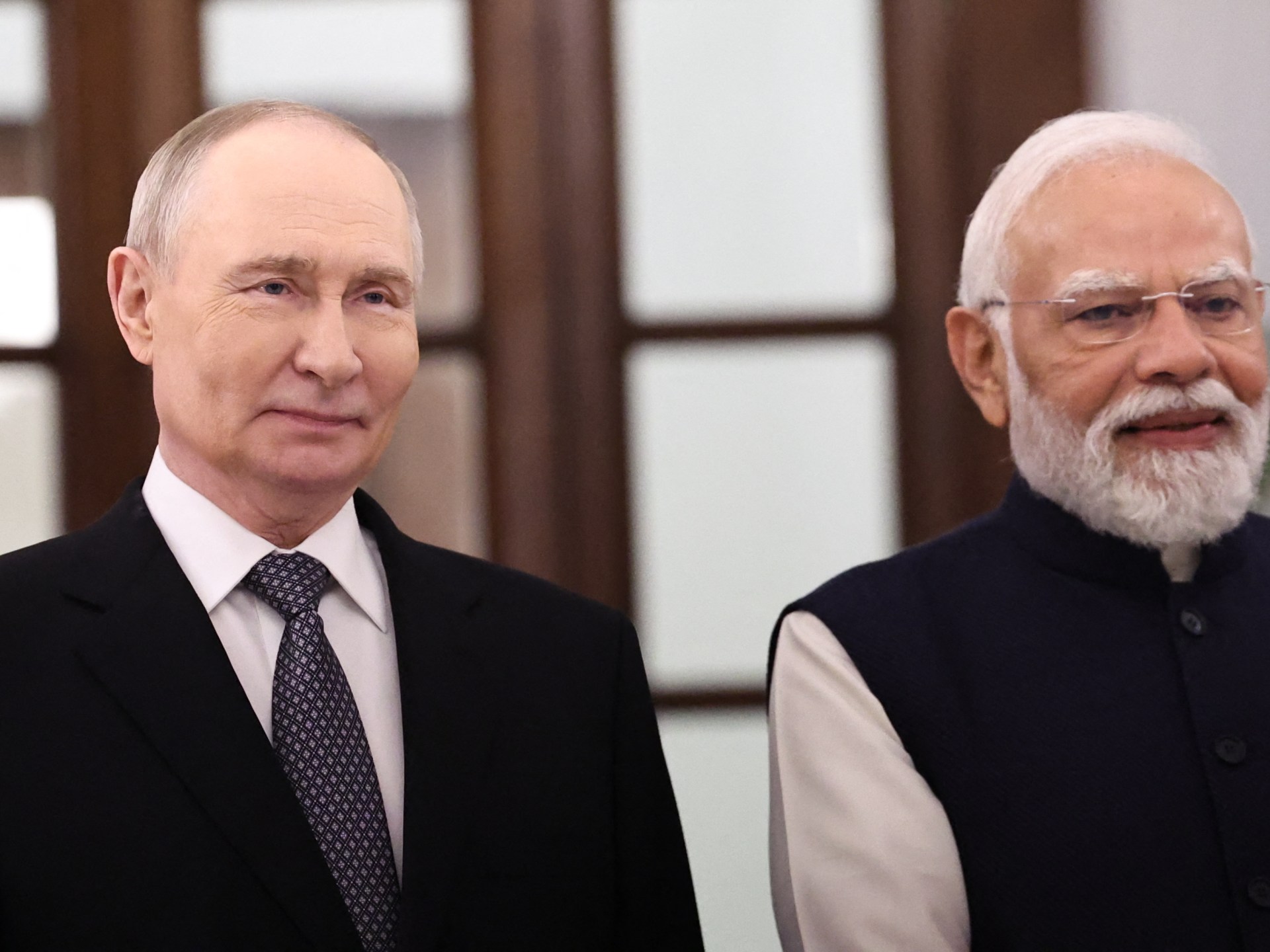
India plans to continue buying cheap crude oil from Russia, despite sanctions imposed on major Russian oil companies by the United States and Europe.
Indian Prime Minister Narendra Modi met with Russian President Vladimir Putin for the Russia-India annual bilateral summit in New Delhi last week, during which Putin said: “Russia is ready for uninterrupted shipments of fuel to India.”
India is the second-largest consumer of Russian oil after China and is facing intense pressure from the US to stop buying it. Earlier this year, the administration of US President Donald Trump doubled trade tariffs on Indian goods to 50 percent, in part because of this issue, Trump said at the time.
Here is what we know about India’s imports of Russian oil, and how New Delhi has managed to keep its petroleum purchases from Moscow afloat in spite of sanctions and pressure.
How did India become such a big consumer of Russian oil?
In 2021, prior to Russia’s full-scale invasion of Ukraine in February 2022, Russian oil constituted around 2.5 percent of India’s total oil imports, according to figures from the US Energy Information Administration published in February this year.
After the war began, Europe and the US began placing sanctions on Russian companies to economically isolate Moscow.
Overall, since the beginning of the war, the US and its allies have imposed more than 21,000 sanctions on Russia, targeting individuals, media organisations, the military, and sectors that include energy, aviation, shipbuilding and telecommunications.
Crucially, however, in December 2022, the Group of Seven (G7), the European Union and Australia placed a cap on the price of Russian oil at $60 per barrel, ostensibly to reduce Russia’s ability to fund its war in Ukraine. The cap was later reduced to around $48 by the EU and the United Kingdom. This made Russian oil more attractive to purchasers, particularly India and China. Russia has sold crude oil to India at steeply discounted rates, dropping as low as $35 per barrel in March 2022.
By contrast, Brent crude oil is currently trading at around $62.50 per barrel.
How much oil is India buying from Russia?
In October 2024, India’s purchases of Russian crude petroleum reached a historic high of $5.8bn.
At the end of that month, the US imposed new sanctions on hundreds of Russian individuals and entities. These include Russian shipowners, vessels and traders involved in shipping Russian crude.
In November 2024, India’s crude petroleum imports from Russia dropped to $3.9bn and by December 2024, India was importing even less oil from Russia, worth $3.2bn.
However, in January 2025, Indian imports of Russian oil from Russia bounced back up to $3.6bn. Since then, volumes of imports have fluctuated.
What pressure is India facing to stop buying Russian oil?
In August this year, White House trade adviser Peter Navarro said India’s purchases of Russian crude oil were funding Moscow’s war in Ukraine and must stop.
“India acts as a global clearinghouse for Russian oil, converting embargoed crude into high-value exports while giving Moscow the dollars it needs,” Navarro wrote in an opinion piece published in the Financial Times.
In August, Washington also doubled trade tariffs on Indian goods to 50 percent as a punishment for India buying Russian oil.
In October, Trump claimed that Modi had pledged to stop buying oil from Russia.
“So I was not happy that India was buying oil, and he assured me today that they will not be buying oil from Russia,” Trump told reporters during a White House event.
“That’s a big step. Now we’re going to get China to do the same thing.”
But during an interview with Indian broadcasters during the Russia-India annual bilateral summit on December 4, Putin scoffed at Trump’s claim. “The United States itself still buys nuclear fuel from us for its own nuclear power plants,” he said. In 2023, US imports of enriched uranium from Russia hit a record high in over a decade, worth about $1.2bn.
If the US has the right to buy Russian fuel, he added, India should enjoy “the same privilege”.
Kremlin spokesman Dmitry Peskov repeated this sentiment during a call with reporters on Monday this week, when he said: “India, as a sovereign state, conducts foreign trade operations and purchases energy resources where it is beneficial for India, and as far as we understand, our Indian partners will continue this policy to ensure their economic interests.”
Why have sanctions on Russian oil caused a spike in Indian imports?
On October 22 this year, Trump imposed US sanctions on two of Russia’s largest oil producers, Rosneft and Lukoil. It was the first time during his second term as US president that Washington had imposed sanctions related to Russia’s war in Ukraine.
The US sanctions came the same day that the EU approved its own 19th package of sanctions on Russia, and one week after the UK also sanctioned Rosneft and Lukoil.
The US sanctions were set to come into effect on November 21, after which purchases from US-sanctioned entities Rosneft and Lukoil would be restricted, giving Indian importers a window to ramp up purchases ahead of the deadline.
One day after the US sanctions were announced, state refiners in India, including Indian Oil Corp, Bharat Petroleum Corp and Hindustan Petroleum Corp, began reviewing their Russian oil purchases, Reuters reported, citing an unnamed source with direct knowledge of the matter.
In October, India imported $3.55bn worth of crude petroleum from Russia, according to figures from the Ministry of Commerce and Industry, reported in Indian media. While this was not as high as the $5.8bn value of crude petroleum India purchased from Russia in October 2024, it showed that India was still buying more oil than it was before the war in Ukraine broke out.
In early November, however, India ramped up its imports of Russian oil. India’s crude oil imports increased by 220,000 barrels per day, reaching 5 million barrels per day, according to energy market intelligence firm Vortexa. This was a seasonal peak, nearly matching the record high of 5.05 million barrels per day set in March 2025.
India’s refining sector consists of three main categories of operators: National Oil Companies (NOCs), which are state‑owned, public sector refiners; Reliance Industries, which is privately owned, with a diverse crude sourcing strategy; and Nayara Energy, a Russian‑majority‑owned private refiner.
The EU sanctioned Nayara in July 2025 over its links to Russia. Since then, however, it has doubled down on buying exclusively Russian crude, significantly increasing its intake.
With sanctions already in place, the company appears to see little downside in deepening its reliance on Russian oil. By late October, Nayara had ramped up crude processing at its Vadinar Refinery in Gujarat to 90-93 percent of capacity, Reuters reported, citing unnamed sources. That fell to 70 to 80 percent of capacity in July following the EU sanctions.
Overall, however, it is clear that India is continuing to import Russian oil. While sanctions have led to India scaling back on Russian oil purchases to some degree, New Delhi is still projected to buy 600,000 barrels of oil per day in January. This may be well below the 1.6 million to 1.8 million barrels it has been importing in recent months, but not zero, Bloomberg reported.
How will India continue to import Russian oil?
Rosneft and Lukoil account for around 60 percent of the Russian oil purchased by India, Reuters reported in October, citing Prashant Vashisht, vice president at ICRA Ltd, an Indian credit rating agency. Citing Russian government agencies, S&P Global said Rosneft accounts for almost half of all Russian oil production and 6 percent of global output.
India, therefore, will have to turn to other sources for its Russian oil imports. This is likely to include companies such as Surgutneftegaz, which was never fully affected by sanctions.
India has also purchased oil from Gazprom Neft, which faces sectoral sanctions rather than being fully sanctioned. This means that the US has put limits on some activities, but has not completely banned doing business with the company.
India could also purchase Russian oil via a shadow fleet of older tankers using non-Western insurance and flags, which can often bypass sanctions.
Between January and September this year, India imported 5.4 million tonnes of Russian oil carried by 30 vessels sailing under false flags, according to a report published in November by the European think tank the Centre for Research on Energy and Clean Air (CREA).

