


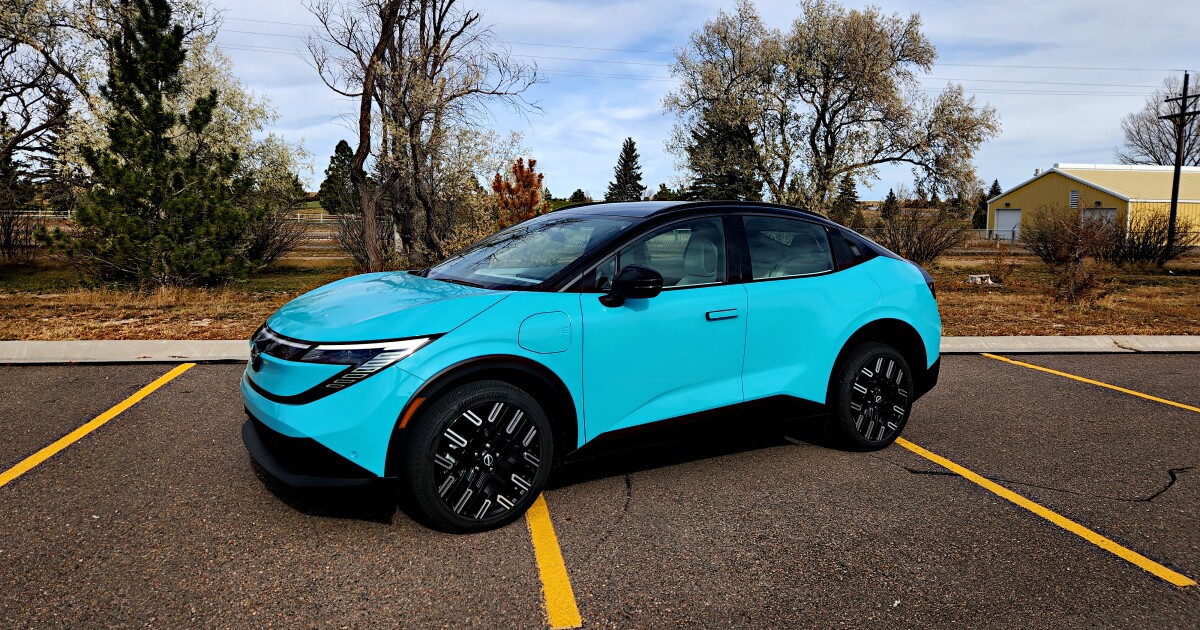
The Nissan Leaf is, in its own way, a big part of modern automotive history. It’s the first affordable EV. And this all-new 2026 model keeps that groundbreaking premise, but updates it to relevance in today’s more saturated market.
At a glance
- Changes from an awkwardly outdated hatchback to a crossover
- More premium interior with better design
- Better range and both NACS and J1772 charging on board
- Still a cheap buy compared to others
I’ve driven the Nissan Leaf several times since it was introduced for the 2011 model year. It’s always been a good, practical car, but it began to stagnate after its 2017 update to a second generation. After years of drifting toward irrelevance as rivals appeared, Nissan has taken its once-groundbreaking EV and redesigned it from the ground up, transforming the Leaf from an aging hatchback into a compact crossover with the range and tech to finally feel contemporary.
Gone is the awkward, egg-shaped hatchback that defined the Leaf’s first two generations. In its place, the 2026 Leaf rocks a cleaner, more SUV-like silhouette that looks like a shrunken Ariya. That’s a good thing, as this is a look that should help the model shed its previously clunky “Prius wannabe” image. It’s sharper, sleeker, and more aerodynamic (Cd ~0.26) – and Nissan has clearly aimed for mainstream appeal rather than quirky (aka polarizing) individuality.
Aaron Turpen / New Atlas
Inside, the crossover transformation continues with a cabin that nods toward premium with widescreen digital displays and minimalist design cues. NissanConnect’s integration with Google services and wireless smartphone connectivity adds a level of modernity the Leaf sorely needed. And it mostly works, especially for Android users.
Interior comfort and cargo utility have both seen meaningful improvement as the new model’s cargo space grows dramatically over the old Leaf’s cramped hatch. Rear legroom remains adequate, though not generous.
Where I found that the new Leaf finally begins to feel like a “real” EV for 2026 is in its larger 75-kWh battery. Nissan claims up to 303 miles (488 km) of EPA-rated range, which is a giant leap from the old model and into territory that can handle real road trips without range anxiety. I was easily able to see efficiency returns that would put the Leaf in the 300-mile range for real-world everyday driving and in the 250+ (402+ km) range for highway road tripping.

Aaron Turpen / New Atlas
Charging tech brings another long-overdue upgrade: traditional J1772 for Level 2 and a Tesla-style NACS port on the other side for DC fast charging, including access to Tesla Superchargers. Nissan even throws in “Plug & Charge” support, letting the car handle payment and authentication without fiddling with apps. This means plugs aplenty without any extra converters being required. And the Leaf is still small enough that if you forget which side which port is on, the cord will reach regardless. Hint: NACS is on the passenger side.
On paper this places the Leaf on par or ahead of some new arrivals like the Equinox EV, Kona Electric, and Niro EV in pure range. That’s a meaningful nod to the reality of a now-crowded sub-$40K EV segment. A segment that belonged only to the Leaf until recently.
The Leaf’s drivetrain remains front-wheel-drive only, with up to 214 horsepower in higher trims. It’s quick enough off the line, but sustained spirited driving isn’t its forte. Suspension and steering are tuned for comfort over precision, which fits the Leaf’s mission and intended buyer: A to B dailies. Those wanting muscle and performance aren’t in the Leaf’s market. Most of the newer crop of usable, everyday EVs fit in this category, where sprint speeds aren’t really relevant bragging rights.

Aaron Turpen / New Atlas
A compelling entry price (around US$31,500 for the S+ trim in the US) keeps the Leaf among the more affordable EV choices. The SV+ and Platinum+ trims add tech and comfort without straying too far from that value proposition, although Nissan’s three trim options leave some of the nicer bits off the base model. The Leaf’s top-most trim, the Platinum, however, is barely over $40k anyway. So even a fully-loaded Leaf is about on par with most mid-level trims for its competition.
The 2026 Leaf doesn’t rewrite the EV rulebook the way the original did in 2011. But it does finally bring Nissan’s once-iconic electric car into the modern era in a way that’s genuinely competitive. The Leaf began the era of affordable EVs 15 years ago and is now competitive with current-generation options in its now-crowded segment.
Product page: 2026 Nissan Leaf

