
A required part of this site couldn’t load. This may be due to a browser
extension, network issues, or browser settings. Please check your
connection, disable any ad blockers, or try using a different browser.

A required part of this site couldn’t load. This may be due to a browser
extension, network issues, or browser settings. Please check your
connection, disable any ad blockers, or try using a different browser.
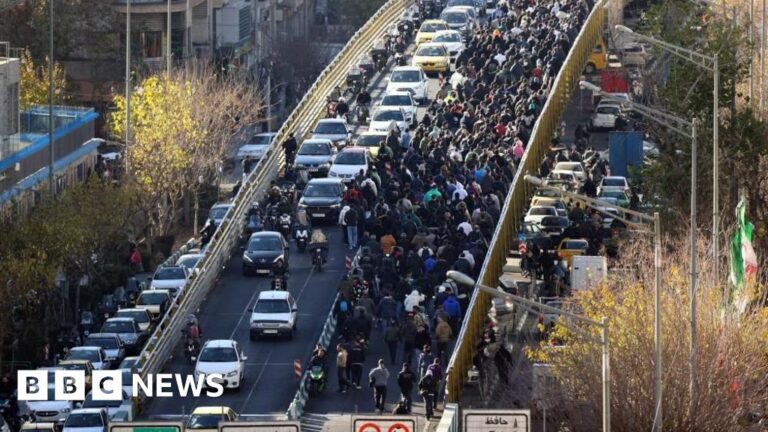
Growing unrest in Iran is reported to have claimed more lives on a fifth day of protests over the soaring cost of living.
Both the semi-official Fars news agency and human rights group, Hengaw, said two people had died during clashes between protesters and security forces in the city of Lordegan, in south-western Iran. Three more people were killed in Azna and another in Kouhdasht, Fars reported, all in the west of the country.
On Thursday videos posted on social media showed cars set on fire during running battles between protesters and security forces.
Many protesters have called for ending the rule of the country’s supreme leader. Some have also called for a return to the monarchy.
As the day wore on more reports came in of unrest up and down the country, on the fifth day of the protests, sparked by a currency collapse.
Videos verified by BBC Persian show protests in the central city of Lordegan, the capital Tehran and Marvdasht in the southern Fars province taking place on Thursday.
Fars reported that in Lordegan two people were killed, citing an informed official. The report did not specify whether those killed were protesters or members of the security forces. It also reported the three deaths in Azna, in neighbouring Lorestan province, without specifying if there were protesters or security officials.
Rights group Hengaw said the two killed in Lordegan were protesters, naming them as Ahmad Jalil and Sajjad Valamanesh.
BBC Persian has not been able to independently verify the deaths.
Separately state media said a member of the security forces linked to Iran’s Revolutionary Guards (IRGC) was killed in clashes with protesters on Wednesday night in the city of Kouhdasht, in the western Lorestan province.
The BBC has not been able to verify this and protesters say the man was one of their number and was shot dead by the security forces.
A further 13 police officers and Basij members were injured by stone throwing in the area, the state media report said.
Schools, universities and public institutions were closed across the country on Wednesday after a bank holiday was declared by authorities in an apparent effort to quell the unrest.
It was ostensibly to save energy because of the cold weather, though it was seen by many Iranians as an attempt to contain the protests.
They began in Tehran – among shopkeepers angered by another sharp fall in the value of the Iranian currency against the US dollar on the open market.
By Tuesday, university students were involved and they had spread to several cities, with people chanting against the country’s clerical rulers.
The protests have been the most widespread since an uprising in 2022 sparked by the death in custody of Mahsa Amini, a young woman who was accused by morality police of not wearing her veil properly. But they have not been on the same scale.
To prevent any escalation, tight security is now reported in the areas of Tehran where the demonstrations began.
President Masoud Pezeshkian has said his government will listen to the “legitimate demands” of the protesters.
But the prosecutor general, Mohammad Movahedi-Azad, has also warned that any attempt to create instability would be met with what he called a “decisive response”.


Gervonta Davis appears to have made up his mind on his boxing return.
It was a difficult period for ‘Tank’ in 2025, with the year beginning with a controversial majority decision draw to Lamont Roach in his WBA lightweight title defence in March.
The main talking point from the fight came when Davis voluntarily took a knee and retreated to his corner claiming he had grease in his eyes, with many onlookers claiming that should have led to a knockdown being scored, and Terence Crawford even thinking he should have been disqualified.
An immediate rematch was then expected to take place, but instead ‘Tank’ opted for an exhibition bout with YouTuber-turned-boxer Jake Paul, which was scheduled for November.
It never went ahead after Davis was named in a civil lawsuit regarding domestic allegations, and after the Baltimore man had previously stated that he had plans to retire at the end of the year, it appeared that his time in a boxing ring may have been up.
Davis seems to have now made a U-turn on those comments though, after revealing he is targeting one man in particular for his return.
Taking to social media after Isaac Cruz and Roach recently fought to a majority decision draw, ‘Tank’ said he wants to take on Cruz.
“I’m taking him next, soon as my knee gets better.”
Davis previously fought Cruz back in December 2021, claiming a unanimous decision victory. Cruz is a former WBA super-lightweight champion, and currently holds the WBC interim crown at 140lbs, which he retained with that draw against Roach in December.
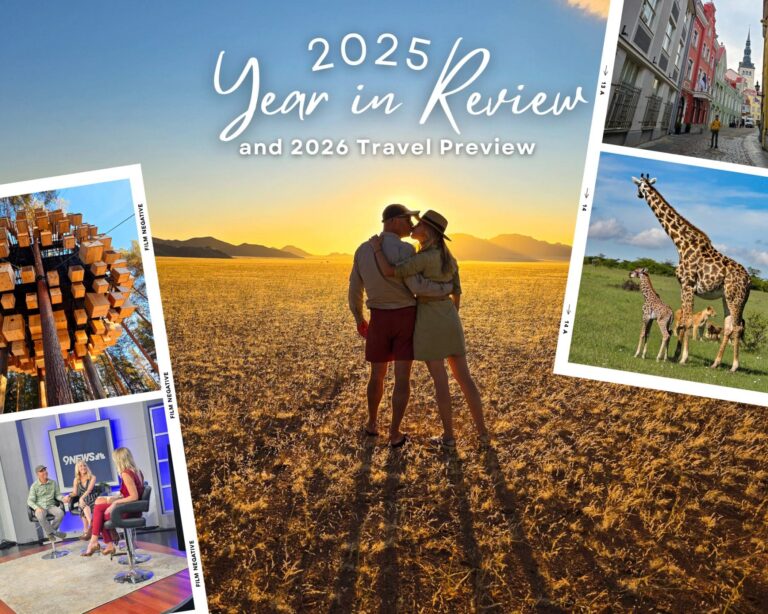
2025 was a record-breaking year of travel in HoneyTrek Land. Traveling to 29 countries across Europe, Africa, the Middle East, North America, and South America, we took on the world with as much gusto and gumption as we did the day we left on our honeymoon. Why such a whirlwind tour? We’ve been diligently researching our next book on the World’s Best Glamping Destinations and trying our darndest to experience as many leading eco-resorts as possible. Seeking properties with creative accommodations, immersion in nature, sustainable practices, experiential dining, uncommon adventures, and inspiring proprietors (to name a few of our criteria)…we are so thrilled with what we found! From Aurora Safaris, which made us realize the bliss of Scandinavian ice bath culture, to Wolwedans, whose commitment to the Namib Desert’s environment and local community brought us to tears, this global glamping journey reminded us how proud we are to be part of the outdoor hospitality industry. As Sarah Dusek, one of the true glamping pioneers, said to us, “We desire not just to create access to extraordinary places in nature, but to move the needle on solving some big world problems.” This idea of regenerative travel as a catalyst for positive change kept us motivated as we schlepped our backpack on to yet another overnight bus, waited for a hitchhike in the beating sun, and forked over another $800 for a long-haul flight, and happy to share a great camp’s story.
From a sustainable travel perspective, we are quite proud to say that of the 29 countries we explored in 2025, we entered 20 of them without a flight…and clocked a grand total of 15,534 miles (two-thirds of the circumference of the earth) of overland travel! And we’ve upheld our commitment to never buying single-use plastic water bottles—14 years strong!
In addition to sharing our favorite places and a sampling of the world’s best glamping destinations, this Year in Review blog includes a bunch of behind-the-scenes shenanigans, travel fails, and heart-warming moments that made 2025 one-of-a-kind!

Baja is our happy place, and road trips down the peninsula have become one of our favorite ways to kick off the new year. For our 4th annual journey, we leveled it up and caravanned with two of the most badass RVers we know. JP & Elena have been proper nomads for nearly 20 years, and when you put all our travel experience and three vintage rigs together, we were a dream team on wheels. Pooling our favorite places in Baja, we created an epic itinerary through Mexico’s premier wine country, a Pacific coastline that rivals Big Sur, cardon cacti labyrinths, and beach camping on a spit of paradise. Ssee video above.

Travel conferences are always a great way to line up our year’s route and partnerships (aka, how we make a living), so we set out to Ireland for “Meet the Media.” Plus, we’ll take any excuse to visit charming Dublin and hang out with our Irish friends Rose & Conor. After meetings, we wandered the cobblestone streets with our buds and ducked into cozy pubs to have a good craic with some Guinness, dueling fiddles, and Irish hospitality.
Now to get glamping! The Scandinavian leg of our global glamping journey kicked off with a bang in Sweden, one of the world’s most sustainable countries and an absolute fairytale in wintertime. We lined up four incredible eco-retreats in the far north to experience the best of the northern lights, snowshoeing, dogsledding, and Lapland cuisine & culture. From Grano Becksin, once a dwindling village and now a beacon of hope for rural tourism, to the world-famous Treehotel, an architectural retreat that has hosted the likes of Kate Moss and Sweden’s Crown Princess, we struck glamping gold!
@honeytrek As glamping fanatics, we have long dreamt of staying at the Treehotel in Swedish Lapland. Commissioning Scandanvia’s leading architects, this family-run inn reimagined the simple treehouse into accommodations that have swept the travel awards and attracted celeb guests, from Justin Beiber to the Crown Princess of Sweden. Now it was our turn, but which room to choose? The disappearing Mirrorcube, the UFO flying saucer, woven twig Bird’s Nest, or the new Biosphere made of 350 birdhouses…see where we perched and what it’s like to stay at one the world’s most creative eco-retreats. @Treehotel #visitsweden #glamping #treehouse #lapland #swedishlapland #comfortablywild ♬ original sound – HoneyTrek
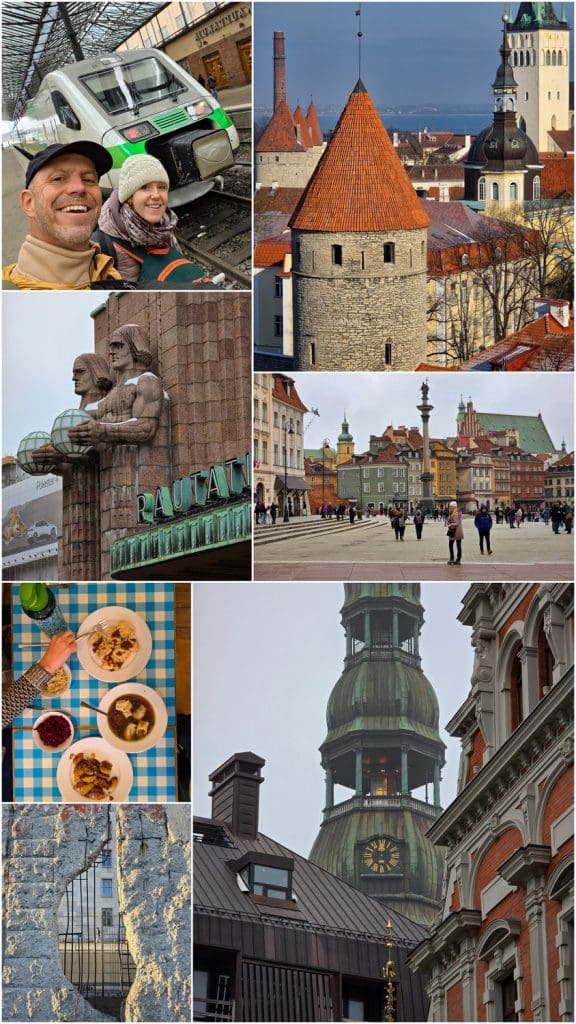
Sure, taking a plane from Swedish Lapland to Berlin would have been faster, but where’s the fun in that? We got a Eurail pass, and it offered us a chance to see a new part of the world…eastern Scandinavia, the Baltic States, plus our beloved Poland (in non-pandemic times), and arrive in Germany with more memories (and a much lower carbon footprint) than we’d ever get from a flight. Staying a few nights in each country’s capital, we got a taste of their national history, culture, architecture, cuisine, and cosmopolitan living before taking our next train trip through the countryside.
While we always planned to visit Tallinn, Estonia (one of the best-preserved medieval cities in Europe), we might never have visited the fabulous cities of Riga, Latvia, or Vilnius, Lithuania if they weren’t on our train route. Turns out Riga has the densest concentration of Art Nouveau architecture in the world, and Vilnius is home to an independent republic of artists and free thinkers with its own constitution, currency, and zest for life!
Each leg of the journey led to a greater appreciation of train travel…gazing out the window, walking the aisles, dining in a sit-down restaurant, working on free wifi, and even getting a full night’s rest in a private sleeper cabin. Two weeks and 3,878km later, we arrived in Berlin, so grateful we took the rail less traveled. Watch the video above of our 7-country train adventure and highlights from Sweden, Finland, Estonia, Latvia, Lithuania, and Poland.
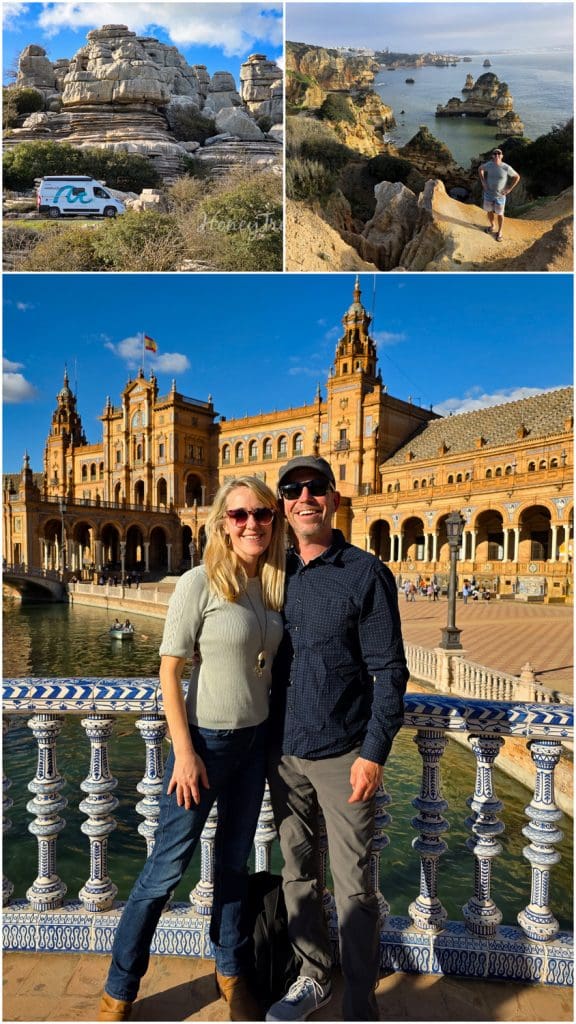
Who doesn’t love the Iberian Peninsula, with its UNESCO cities, stunning beaches, charming countryside, and vibrant culture?! Having lived in both Spain and Portugal, and traveled there extensively over the years, we can now say this region is even more incredible as a campervan trip!
We rented a house on wheels from the Roadsurfer office in Madrid and headed south for Andalucia and the Algarve. With the freedom to take the backroads at our own pace, we discovered so many incredible places and met lovely locals along the way. When it came to finding campsites each night, we’d open the handy Roadsurfer Spots app and find such unique places to stay…like Alqueria de Los Lentos, a 16th-century grain mill at the foot of the Sierra Nevada Mountains with friendly horses and a hot tub, or Monte Das Louzeiras in Alentejo, a winery bringing back the ancient tradition of amphora natural wine-making and sharing it with campers, and Global Tribe, an eco-living community and biodynamic farm in Huelva, who hosted a women’s circle that got me to dance, cry, and laugh with ladies I now call friends.
So much more immersive than renting a car and staying at city hotels, this camper trip helped us get off the beaten track, connect with locals, and fall deeper in love with one of our favorite parts of the world.
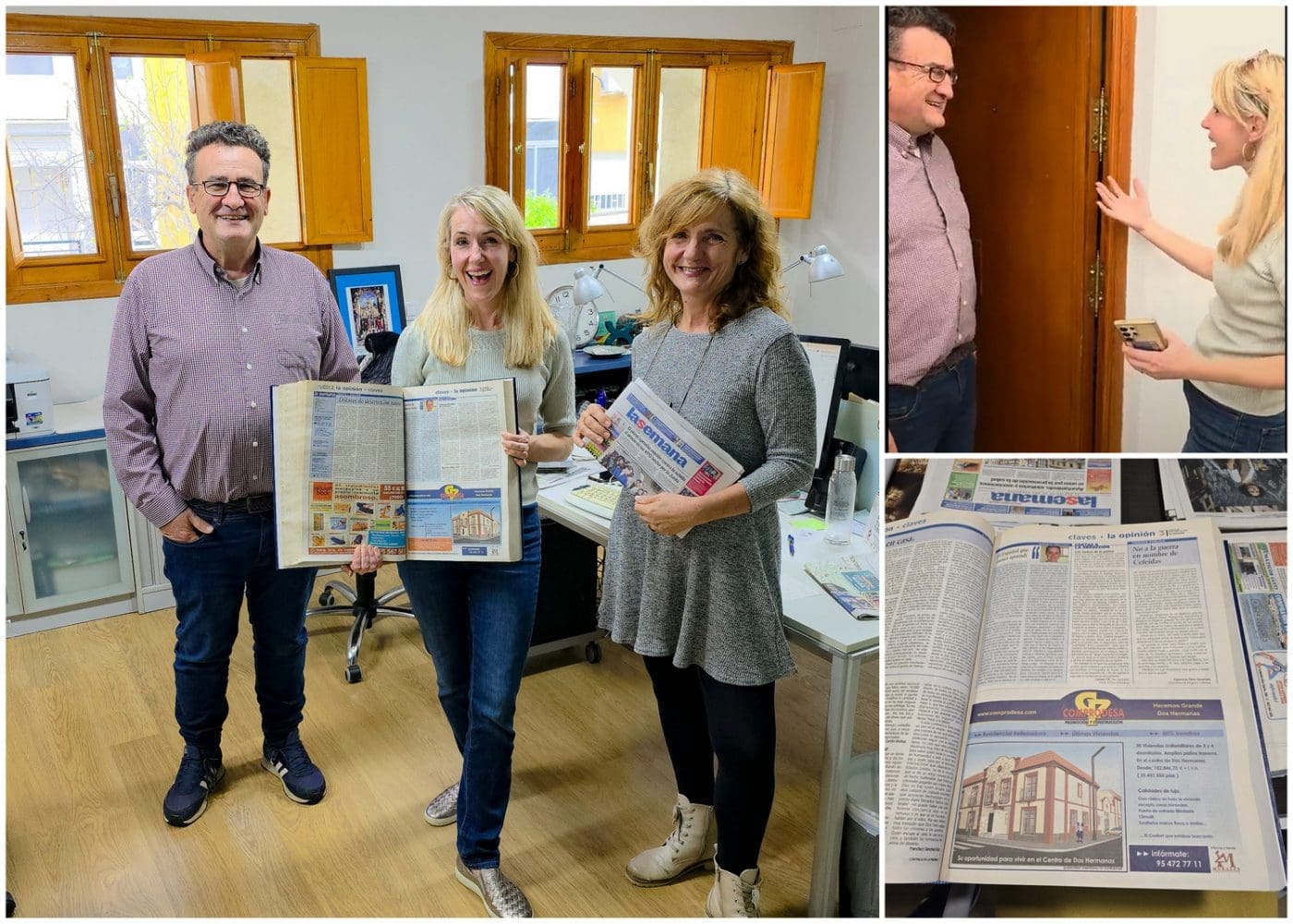
On a whim, we went to the office of my first newspaper job on the odd chance that my same editor from 20 years ago might still be there. I pressed the buzzer: “Hola, ¿Editor José Luis está en la oficina?” I waited anxiously, thinking it was slim-to-none that he’d be there or even remember me. The door opened, and he gave me a huge hug. We spent an hour chatting, flipping through my article archives, and laughing about that experimental column we pulled off as a team. This day was such a great reminder, it’s never too late or too risky to reach out to an old friend! To see this encounter and more memory-lane moments from Sevilla, see the full gallery.
Morocco has always fascinated and intimidated us in equal parts. We had no doubts it would be beautiful, with its towering sand dunes, ancient cities, and lavish riads–but we had heard enough shady stories of medina mishaps that we weren’t sure it was worth the hassle. Well, after two weeks in Morocco, we never encountered a single unsavory character. Even in the most touristy areas, hawkers would make a concerted effort to give travelers deference, going as far as to say “I won’t push you…feel free to have a look,” and another cheekily showed us his menu and said, “Don’t panic, I’m organic.” This heightened politeness and self-awareness almost seemed as if word had gotten back to Morocco that it wasn’t cool to harass tourists, and it was time to make things right.
From the artist in Aït Benhaddou, who gifted us an extra painting after we supported his work, to a random plane passenger who bravely ferried our confiscated drone from Fes to the Marrakesh airport and wouldn’t accept a dirham…the spirit of the Moroccan people shines bright. Not to mention their legacy of artistic talents can make a typical house feel like a palace and turn a mud village into a UNESCO wonder.
So, whether the bad stories we’d heard about Morocco were blown out of proportion or not, this trip reminded us to never judge a place on hearsay. Just as important as traveling with your street smarts is bringing an open mind and heart. With that, you will find good in every place, especially in dazzling Morocco. See our favorite pics from Fes, the Sahara, Aït Benhaddou (you’ll recognize it from Game of Thrones), and Marrakesh in the gallery above.
We landed at the Fes airport, and the customs officer asked us, “Do you have a drone?” We had been carrying one in our bag for months and sauntered into Morocco not knowing that they were illegal! They subsequently confiscated our flying camera and said, “You can pick it up at the airport when you leave Fes.” The only problem was that we were departing Morocco from an airport on the other side of the country. Getting our drone back became a two-week saga, between it getting muled to Marrakesh by a kind stranger (huge love to my boy Jad!), getting the customs paperwork (which included Mike literally scaling an 18-foot wall to get out of the locked medina at 2am), and then praying it would get released from the clutches of airport security. The whole experience was so ridiculous and miraculous that we turned it into its own YouTube video (above).
When given the option of a three-hour layover in the Doha airport or a day and a half to explore a new city with a local friend…we chose the latter, of course! See our whirlwind tour of the capital of Qatar, with its ultramodern skyscrapers, dhow boats bobbing in the bay, Middle Eastern markets, World Cup stadiums, and gracious hospitality.

Kenya’s Maasai Mara is arguably the world’s greatest safari destination. The acacia-dotted savanna offers a daily wildlife special starring 2.5 million herbivores and apex predators, showcasing the circle of life in all its drama. A host of safari camps offer a front-row seat to this biodiverse ecosystem and ancestral homelands of the Maasai people, but the best ones are those actively conserving it, like Great Plains Conservation.
We had the privilege of staying at two of their Kenya properties, the adventure-focused Mara Expedition Camp and the Relais & Châteaux-accredited Mara Toto Tree Camp. While most safari companies are all about the animals, Great Plains believes the Maasai people are at the heart of the Mara and has a multitude of impact projects that benefit locals and guests. From joining the Naboisho Women Craft Centre for a jewelry-making lesson to spending an afternoon in Nkoilale village, visiting the local school, a soccer match, and the bridges GPC has built for the community, we got to know the people who make this place so special and the various projects Great Plains does to support them.
And when it comes to wildlife sightings, our trip was action-packed, including a family of 25 elephants surrounding our car and a pride of lions leading us on a giraffe hunt! Moving from the riverine forest to the open grasslands over the course of our stay, we spotted 27 species of mammals (cheetah, zebra, leopard, hyena, elephant, topi, hippo, and Cape buffalo, to name a few), and thousands of animals in total! But the best part about staying with Great Plains? The proceeds of their luxe camps help protect 1.1 million acres of wilderness across three African countries. If safari is a once-in-a-lifetime experience, make it count for you, the locals, and the planet!
See our top 20 photos in this gallery and the videos below for Mara Expedition Camp in action and the craziest wildlife encounter as a mama giraffe takes on nine lions in this battle royale!
We’ve always believed that tourism has the power to strengthen the environment and local communities, but we have never seen an example as awe-inspiring as Wolwedans. In the 1980s, when few recognized the beauty and biodiversity of the Namib Desert, wildland philanthropist Albi Brückner & his son Stephan risked everything to protect it. Working with landowners to tear down their cattle fences and take a pledge of conservation, they created Namib Rand, one of Africa’s largest private nature reserves, and the Wolwedans Collection of lodges to support their efforts.
What started as a simple camp in the dunes has evolved into four eco-lodges offering the ultimate luxury: 2,500 acres of pristine wilderness per guest! We had the joy of staying at both Dune Camp and Desert Lodge, each with sweeping views of the mountains, a sea of red sand, and their twinkling International Dark Sky Reserve (1 of just 3 in all of Africa). Days were packed with adventures, from fat biking to nature walks with San Bushmen. Along the way, we found zebra, oryx, and the majestic beauty of the oldest desert on Earth.
For more on their revolutionary conservation and community impact projects (protecting 518,000 acres of wilderness and raising $1.7 million for charity) and one of the coolest places you can stay in Africa, see this behind-the-scenes video and Instagram Gallery above for our Namib Rand Adventures.
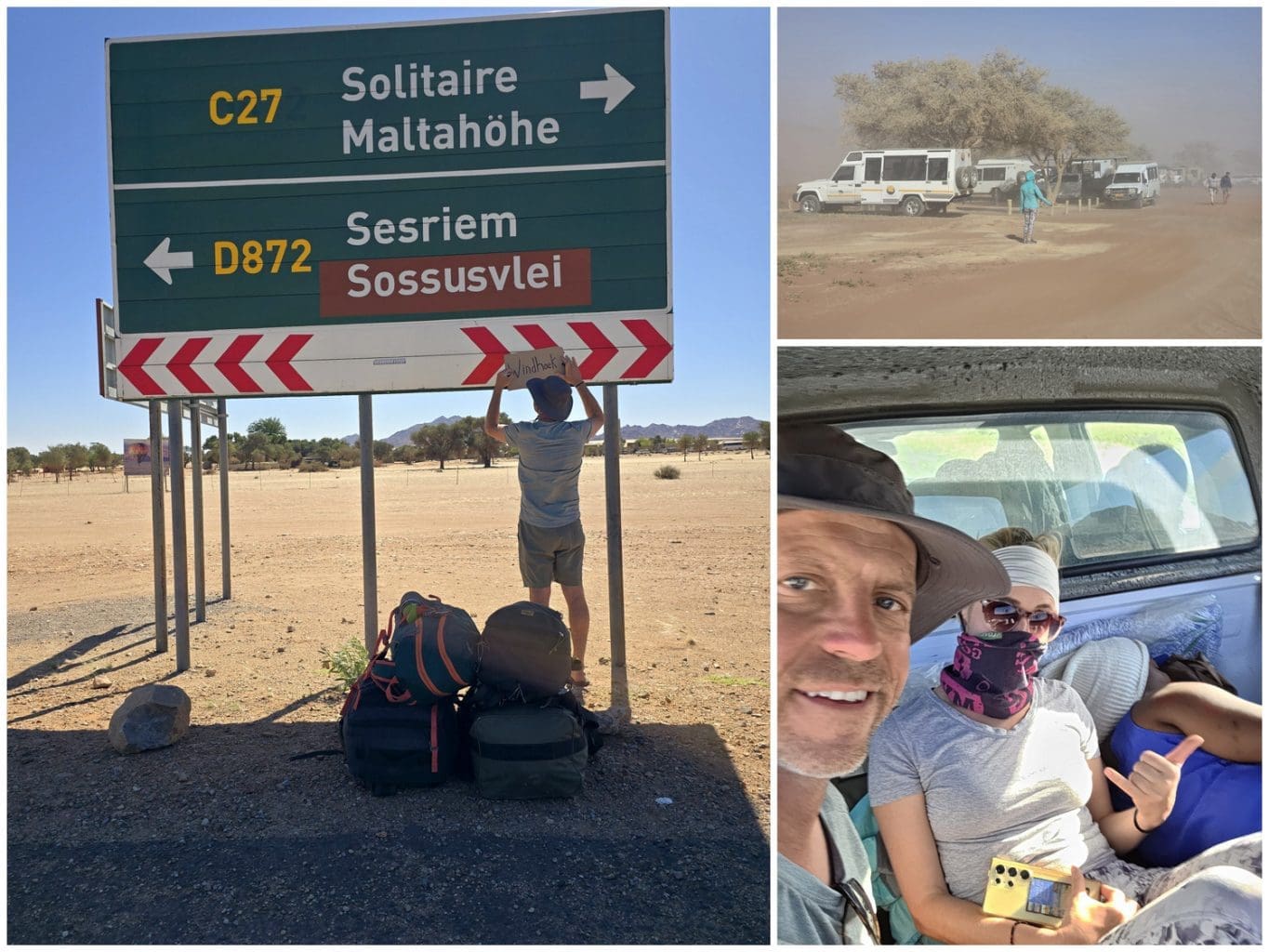
We couldn’t leave the Namib Desert without seeing the famed Soussleivei, a 900-year-old petrified forest nestled between massive red dunes. The only problem was that there was no public transportation to get there! It took a grand total of seven hitchhikes (including one spooning with two locals in the truckbed of a jalopy), 10+ hours standing on the side of two desolate desert roads, and one nervous breakdown to get where we needed to go, but we made it! With patience, optimism, and a bit of masochism, there is always a way!
Overlanding from Namibia to Angola was a total wild card. All we really knew was that this southern African country was a Portuguese colony for ~400 years and was embroiled in a decades-long civil war until 2002. To plan this trip, we figured we’d get to the border town of Rundu, Namibia and gather some local intel on going to the neighboring town of Calai, Angola…but we couldn’t find anyone who had been! Google Maps made it seem like you had to drive eight hours out of the way to cross the river, and Booking.com pulled up zero results for hotels…but this only made us more curious and eager to explore Southern Angola!
We walked across a floating bridge over the Okavango River into the great unknown, got our passports stamped, and hopped on a mototaxi until we found a guesthouse–and a fantastic one at that! We took a canoe trip that even the maritime police were skeptical about, but it turned into an incredible adventure for us and the fisherman who had never taken passengers in his dugout.
The rugged Calai village was an adventure enough, but we didn’t want to leave Angola without exploring the countryside. We knew the sandy roads hadn’t been touched since the colonial days, and the prospects of hitching a ride were slim, but if we’ve learned anything in travel…it’s to be bold and lead with a smile. We found an Angolan guy at our guest house with a 4×4 pickup truck (a total rarity in town) and asked if he wanted to go on a road trip, and he said he was planning one for the following day and we could join. It turned into a 12-hour scenic tour, with a special stop to meet the regional queen, sunset beers over the river confluence, and an invaluable cultural exchange.
We came to Angola with zero expectations (even a few jitters) but were met with pure kindness and unbridled adventure…exactly what we dream of in travel! Read our blog all about it.
Botswana has two UNESCO World Heritage Sites, but there wasn’t a great way to combine the best of the country’s wilderness and ancient culture…until this epic new Desert & Delta trip.
Starting in the Okavango Delta, one of the world’s most pristine and unique wetlands, we cruised through the river of grass and lilies to Nxamaseri Island Lodge. With rooms connected by boardwalks over the water and through the forest canopy, this historic lodge is in total harmony with nature. Waking up to a chorus of hippos, we’d go on safari each day by flat-bottom boat or mokoro canoe through the flooded land. Our guide and river bushman, Nine, taught us the ways of the delta—from the many uses of waterlilies to spotting the elusive sitatunga antelope.
While there is plenty of wildlife in the Okavango Panhandle, its real beauty lies in its access to age-old cultures. This brings us to our second UNESCO World Heritage Site…Tsodilo Hills, one of the highest concentrations of rock art in the world by Africa’s oldest living culture! “The Louvre of the Desert,” “The Land of the Gods,” Tsodilo Hills is where 4,500 ancient paintings can be found in just 10 square kilometers. Going back 20,000 years, the San Bushmen are the primary artists, illustrating scenes of their lives as hunters and gatherers and the shamanic visions that guided their way. It is remarkable that the color and detail of the art haven’t faded away, and neither have the artists.
In collaboration with the local San tribe, Desert & Delta created the Tsodilo Hills Sleep-Out experience as a launchpad for cultural exchange. Inspired by the Bushmen’s traditional dwellings, conical twig huts were simple yet elegant accommodations. Dinner was cooked over the fire with ingredients that the San would hunt and gather. Time around the fire was storytelling through song and dance, against the backdrop of Botswana’s most sacred mountain. We watched in awe, thinking about the tens of thousands of years of tradition that went into each step and what a privilege it was to share even a grain in the sands of time with the oldest living culture in Africa. Watch this video for our unforgettable Tsodilo Hills experience.

The tourism industry wants you to believe that an African safari should run you $1,000 a night. But we booked one on the fly through our guesthouse in Botswana’s legendary Chobe National Park for under $100! That price included a riverboat safari, game drive, national park fees, teatime, dinner, and lodging…and we had the same wildlife sightings as a luxury outfitter. Now, this is not to discredit the value of luxury lodges which have exceptional hospitality, exquisite accommodations, highly trained staff, and many that admirably put their profits towards conservation and community development; they are certainly worth the splurge! We just want ALL wildlife lovers and travelers to know…If you dream of going on an epic African safari, it’s within your reach! Watch this video to see for yourself.
Africa by train? Yes! It’s called Rovos Rail, and it’s one of the most luxurious in the world. For the past 36 years, the Vos family has been restoring historic trains to their most glamorous days and adventurous routes. Starting our four-day trip in Victoria Falls, one of the Seven Natural Wonders of the World, our locomotive and its 36 well-appointed suites rolled from Zimbabwe to the capital of South Africa.
During our 1,400 kilometers of travel, we took in incredible scenery, from the spray of Vic Falls to the rugged cliffs of the Soutpansberg Mountains…whether we were enjoying a four-course meal in the dining car or lounging in our suite. While there was ample time to relax, there was just as much opportunity for adventure, with a safari in Hwanage National Park and a cultural excursion to Motobo: a rhino sanctuary, rock art haven, and burial place of Rhodesia’s founder, Cecil John Rhodes. At the end of each day’s excursions, we were always met with champagne and nights spent reminiscing with new friends.
While most people think getting around Africa requires bush planes or rugged overland vehicles, Rovos Rail was just the connection we were looking for.
Not just an eco-resort, Few & Far Luvhondo, in South Africa’s “Forgotten Mountains,” is a 100,000-hectare conservation and carbon-sequestration project. Open for less than a year, this ground-breaking getaway has already become an international media darling and earned a spot on Time Magazine’s "World’s Greatest Places." We’re not sure how many of those travel writers have had the privilege of staying at this six-suite resort in the Soutpansberg Range, but after hiking into the 2-billion-year-old mountains, tracking leopards, swimming in secret waterfalls, volunteering with ecologists, and sleeping in a plush bed under the stars, we can confirm that Few & Far Luvhondo is a transformative experience. See the gallery from our stay and read our full account in our article in Glamping Business Americas Magazine.The Kingdom of Eswatini, the last absolute monarchy in Africa and one of the continent’s smallest nations, is often overlooked. We’ll admit we also skipped it on our first trip to Southern Africa (back when it was called “Swaziland”)…but now we know it deserves a lot more attention!
Crossing the border at the edge of the 3.6-billion-year-old mountains of the Barberton UNESCO World Heritage Site, we were instantly impressed. Just outside the capital, they have a monolith, only second in size to Australia’s Uluru! As for safari in Eswatini, we went to Hlane Royal National Park and saw more rhinos in the wild than the other 14 African countries we’ve visited–combined! Making this safari experience (filled with giraffes, zebras, nyalas, hippos, and elephants) all the more special…we were able to do it as a self-drive, and did not see a single other car on our 6-hour adventure.
Eswatini tries to court tourists, particularly South Africans, with a nightlife district, casinos, and craft markets, but that was our least favorite part. Instead of going to these staged cultural villages, we ate at local markets and stayed at Swazi Dreams, a community-based project bringing back the traditional beehive dwellings and inviting travelers to break bread with an overnight stay.
Eswatini was an unexpected grand finale to our 2.5-month journey through Africa, and a continued reminder to take the road less traveled.
Upon reuniting with Buddy the Camper after five months in storage, we realized our car keys had fallen out of our backpack somewhere in Africa. Good news is that we had a hidden spare to the front door, bad news we didn’t have one for the padlock, so Anne had to squeeze through a 1.5-foot-wide gap in the trunk to get into the house. Watch the epitome of a struggle bus in this hysterical video.
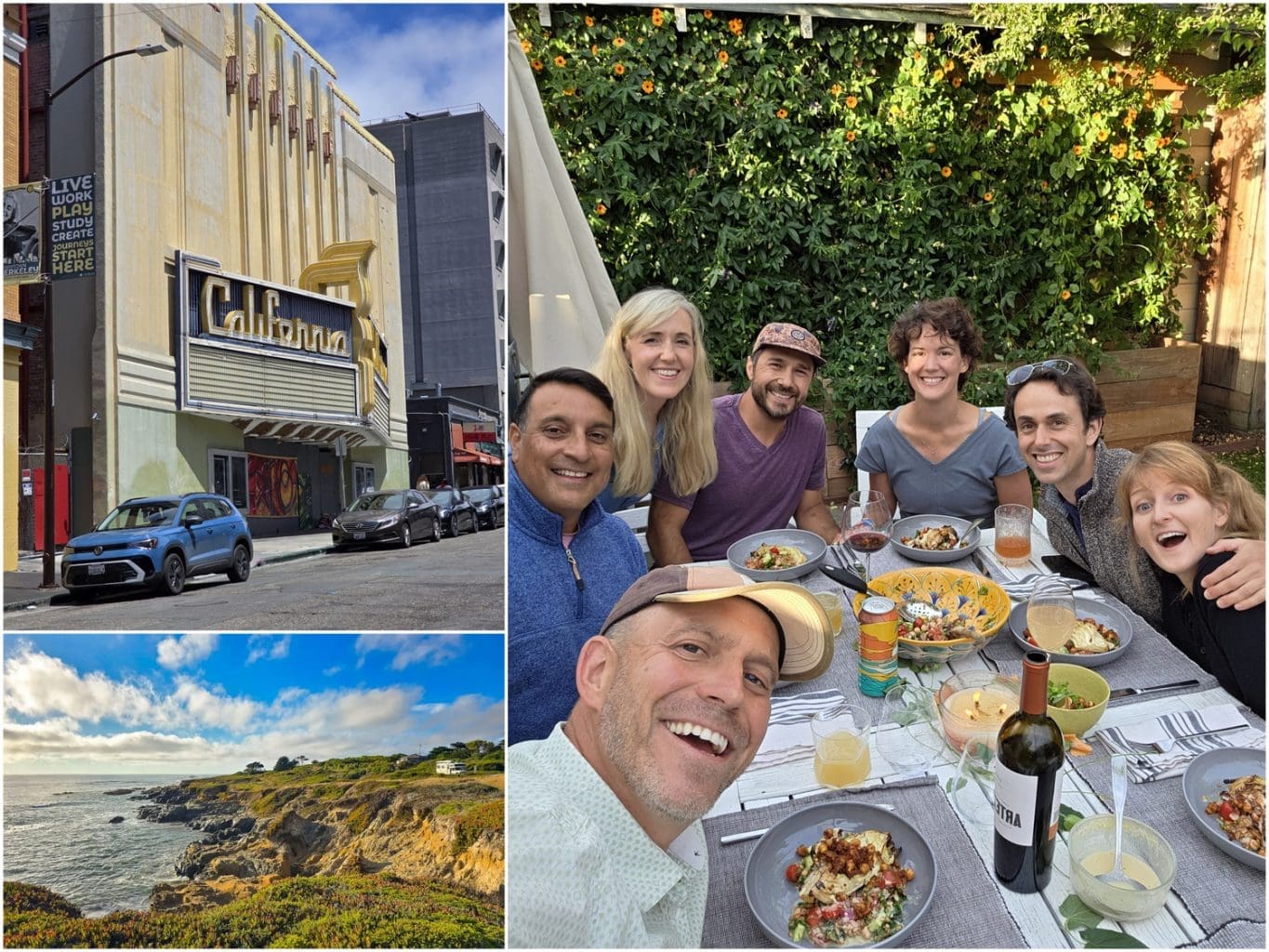
After five months of hardcore travel through Europe and Africa, we needed a moment to recharge our batteries. We went to Anne’s home state of California to catch up with her family in LA, then dear friends in the Bay Area, all while doing two housesits to give ourselves some time and space to ourselves. We also needed to refill our travel coffers, so we landed storytelling gigs with Visit Berkeley and Visit the SF Peninsula! For our best tips and stories on the Bay Area, watch the videos below and read Things to Do in Berkeley and our SF Peninsula Road Trip Guide.We first experienced Burning Man in 2018 and never forgot the extreme joy and inspiration we felt from this protopian gathering. Now, feeling the weight of 2025’s political climate, it was time to return to The Playa. The only problem was that Burning Man started in two days, we didn’t have tickets or bikes, and Buddy the Camper was far from ready for his maiden voyage into the dust. But with that Burner can-do spirit, we drove towards Nevada with a “Need Tickets” sign on our back window. Eventually, we scored a pair, got Buddy dialed in, and made it through the gates to a big welcome-home hug.
It was an incredible nine days, partaking in as many of the 3500+ events as we could, from live-music yoga to jewelry making with playa dust, and reveling in the 400 larger-than-life artworks on display. On the closing night, standing with 70,000 new friends around the Temple Burn, watching our handwritten prayers and woes waft into the universe, we left with a new hope for humanity and a goal to make it last until next year. If you’ve ever wondered about Burning Man, don’t miss our video, above.
This September, we crossed 5,000 days on our HoneyTrek! Continuously traveling for over 13 years without a homebase, we find ourselves at home wherever we go and among family in every culture we meet. Seven continents and 91 countries later, the beauty, knowledge, and kindness in the world inspire us to keep exploring. And there couldn’t be a better way to celebrate our 5,000-day milestone than with our family, friends, and NBC! Watch this fun segment, where 9News anchors Sam & Alexandra interview us about our journey and the things we’ve learned along the way.
For the fourth continent on our glamping quest, we planned a 3-month, 8-country tour of South America, perfectly kicking it off with the Adventure Travel World Summit in Patagonia! Hosted by the Adventure Travel Trade Association. The largest global network of adventure travel leaders, this is much more than a conference; it’s a week-long event to learn, play, connect, and mobilize for a better travel industry.
This year, 700 adventure outfitters, eco-lodges, tourism boards, travel advisors, conservationists, and 30 hand-selected media were in attendance. It was not only an honor to be on the short-list of journalists, but also to be a speaker on the mainstage panel: “Content Creation & Storytelling: The Great Debate in Adventure Travel.”
ATTA knows you can’t confine adventurers to a conference hall, so half of the event was spent in the fjords, glaciers, subpolar forests, high desert, and volcanic mountains of Chile. Mid-conference, all 700 of us embarked on a “Day of Adventure.” For Mike, this meant sailing to the southern end of the Patagonic Icefield to watch Grey Glacier calve cannonballs of blue ice. While Anne plied a fjord to reach Bernardo O’Higgins National Park to explore two more awe-inspiring glaciers, followed by a farm-fresh feast at a third-generation estancia. Plus, we extended our ATTA adventures with a trip to Chile’s corner of the Polynesian Triangle, the mysterious Rapa Nui, and a four-day trek in Torres del Paine National Park–both epic (see galleries below).
In pinpointing the “best glamping, we have to balance the tried and true five-star eco-resorts with the next hot thing. With our finger on the pulse of the outdoor hospitality industry, we heard about a glamping camp-meets-conservation project in the depths of Salta, Argentina. Where the Juramento River cuts through the Andes, a 19th-century estancia has been quietly protecting 65,000 acres of wilderness. Few have set foot on this pristine landscape, beyond their 6 species of cats, 264 bird species, and a handful of families who’ve been caretaking the land for generations.
To continue as a private conservation area, the owner, Hank, had to find a partner who appreciated Condor Valley’s beauty, history, and potential for adventure…enter Sentio Camps. This fabulous new glamping destination is set to open in the winter 2026, but we got a sneak peek of their outdoor hospitality offerings–from river rafting through a 60-million-year-old canyon to wine tasting at South America’s first solar-powered vineyard. See the gallery above for Northern Argentina’s next great getaway…
Not many travelers go to Paraguay or know much about this landlocked South American country, but we were fascinated by it! Did you know 90% of Paraguayans speak an indigenous language (more than any other South American country)? That 40% are of Italian descent? Or that it’s a digital nomad mecca with zero percent tax on foreign income? Find out more surprising and fun facts about Paraguay in this gallery from our recent trip.
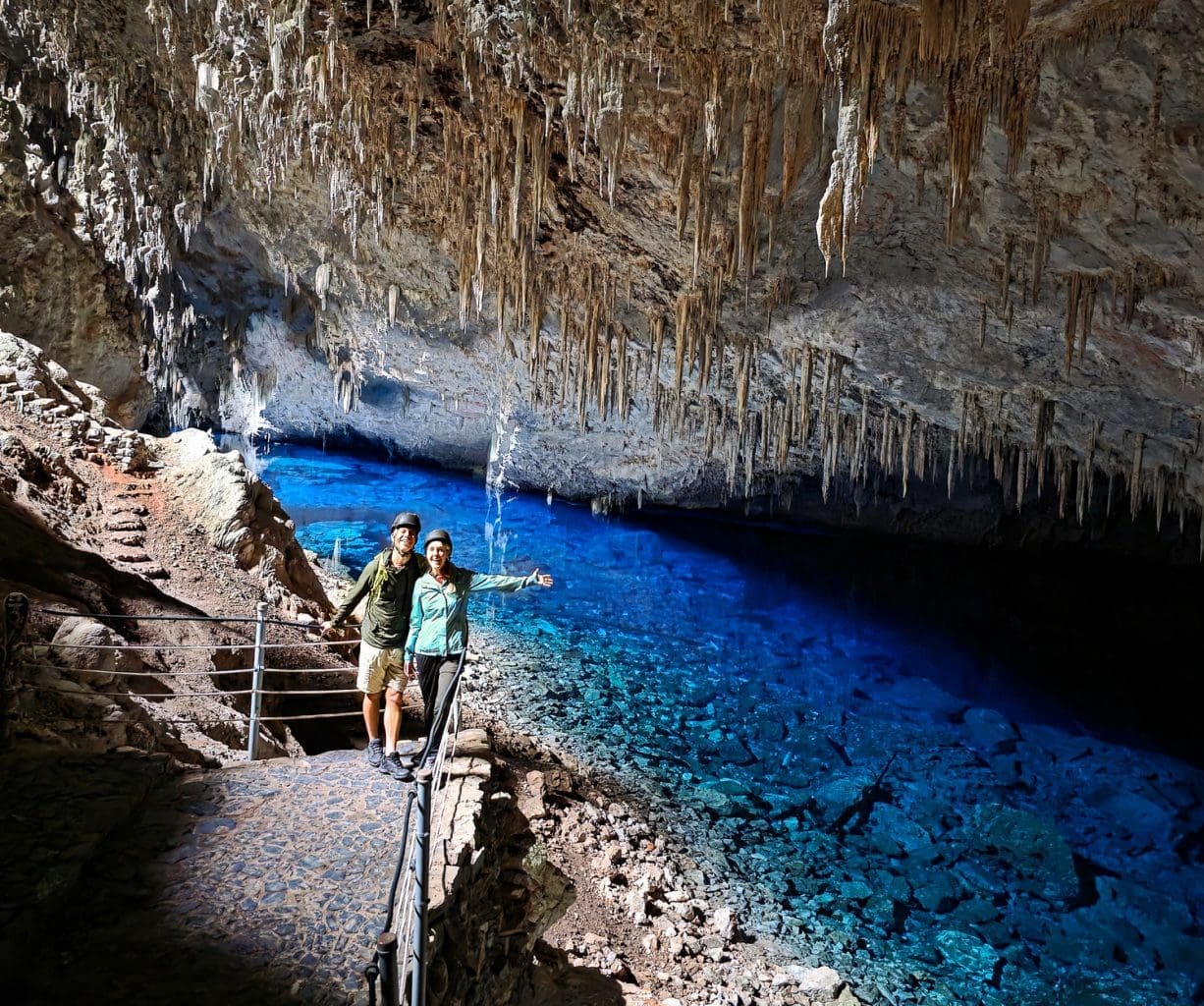
As the first country on our HoneyTrek, Brazil will always hold a special spot in our hearts. Back in 2012, we traveled here for six weeks and overlanded 6,000 kilometers, but we were always bummed that we never made it to the state of Mato Grosso do Sul and the Pantanal, the world’s largest tropical wetland! Flash forward 14 years, and the region has only gotten better…with Bonito becoming the adventure capital of Brazil and the world’s first certified carbon-neutral ecotourism destination!
We just spent ten days in Mato Groso do Sul, and it was even more beautiful and adventurous than we imagined. From abseiling into blue grottos to river safaris in jaguar habitat, not to mention reconnecting with Brazilians…some of the most vibrant and fun-loving people we’ve met in our on HoneyTrek…we love this place and know you will too. See our Instagram Highlights for all our adventures and our posts on Bonito and The Pantanal, below.
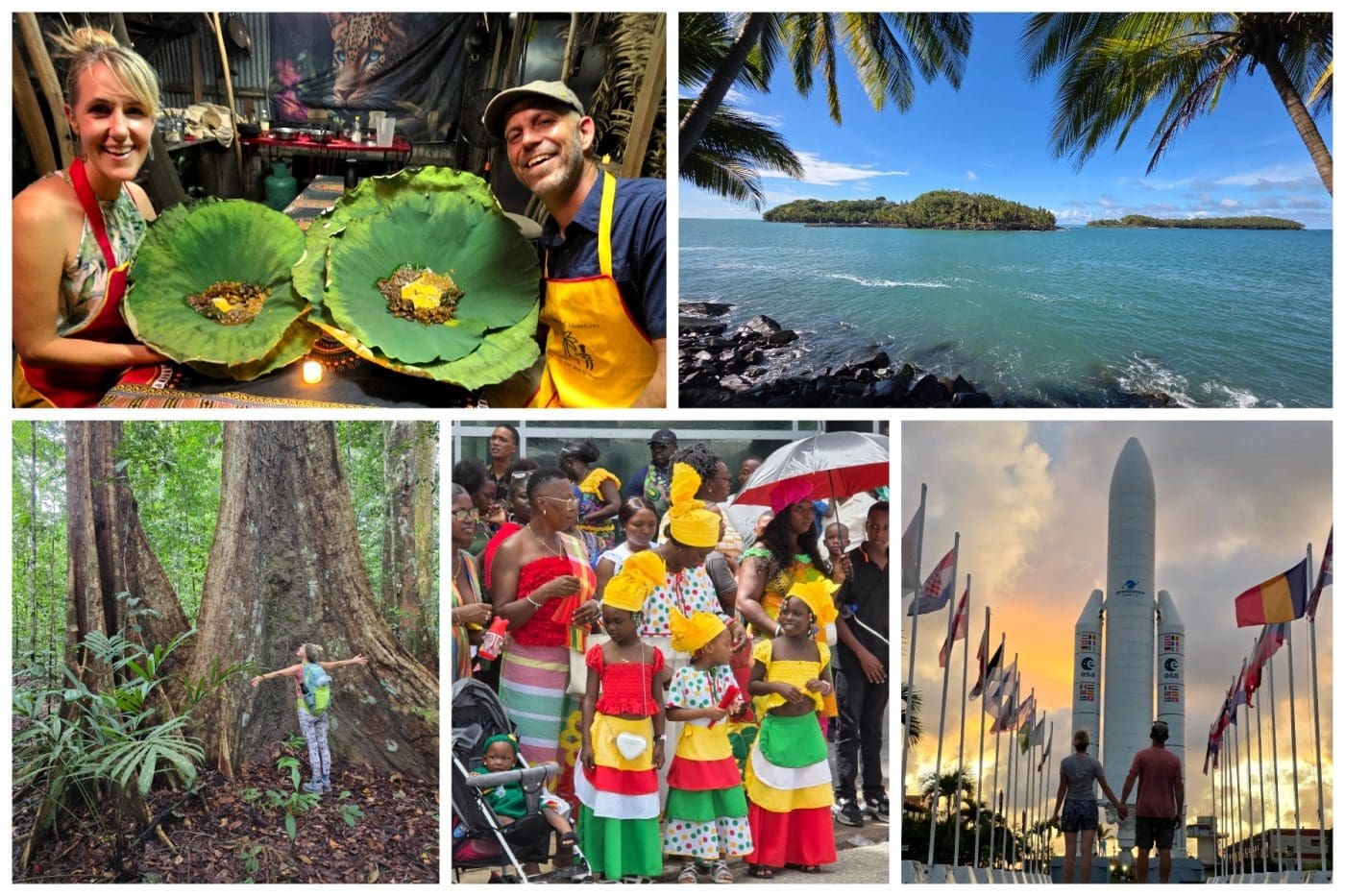
The Guianas? You know, that pack of three countries in the top right corner of South America that’s covered in over 80% rainforest, don’t speak Spanish (or Portuguese), and are basically land-locked Caribbean islands? Barely anyone has heard them. So on a whim, we decided to overland French Guiana, Suriname, and Guyana by hitchhike and local bus (on their one connecting road) to see what they were all about!
First off, French Guiana; it’s not a former colony of France, it is a literal part of the European Union with Euro currency, 220-volt outlets, and good wine. While being France’s second largest region, it feels like a forgotten outpost of wooden 17th-century maisons, boulangeries, and palm-lined promenades. Then, as a total counter to its lost-in-time vibes, French Guiana is home to Europe’s beacon of technology and innovation: The Guiana Space Center and Europe’s Spaceport, the continent’s primary rocket launch site. Its other claim to fame? Devil’s Island, the Alcatraz of South America, and the subject of the movie Papillon.
We can’t wait to share more about our time in French Guiana, celebrating Suriname’s 50th anniversary of independence from the Netherlands, and our Amerindian cultural immersion in the rainforest of Guyana. Be sure to follow along here.
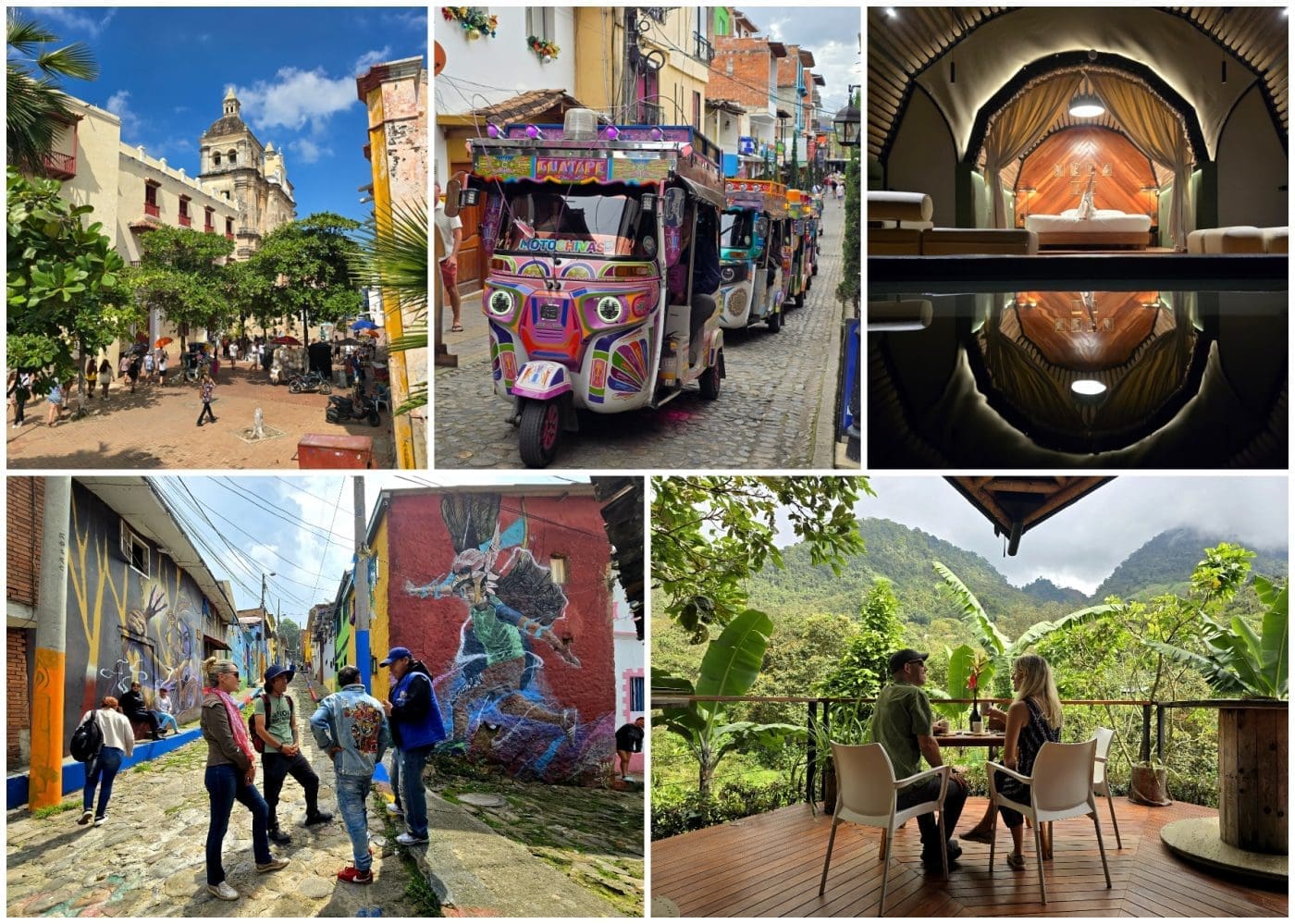
And last but not least, Colombia! From Bogota to Cundinamarca, Cartagena, Medellin, and Guatape, we took our first bite out of this dynamic country and loved it! We found a divine coffee-plantation farmstay for our “Cultivate” chapter, we did a mind-blowing Impulse Travel tour led by gang members in one of Bogota’s most dangerous neighborhoods, we lived like locals with our Colombian buddies in Medellin, went gaga for colonial architecture and caribbean vibes in Cartagena, and blissed out at one of the most unique glamping camps in the world on the shores of Peñol-Guatapé Lake. As you can imagine, being our 29th country of the year, we haven’t quite gotten to this one yet on Instagram, but keep an eye out for our posts in mid-January…so we have many incredible moments and travel tips to share!
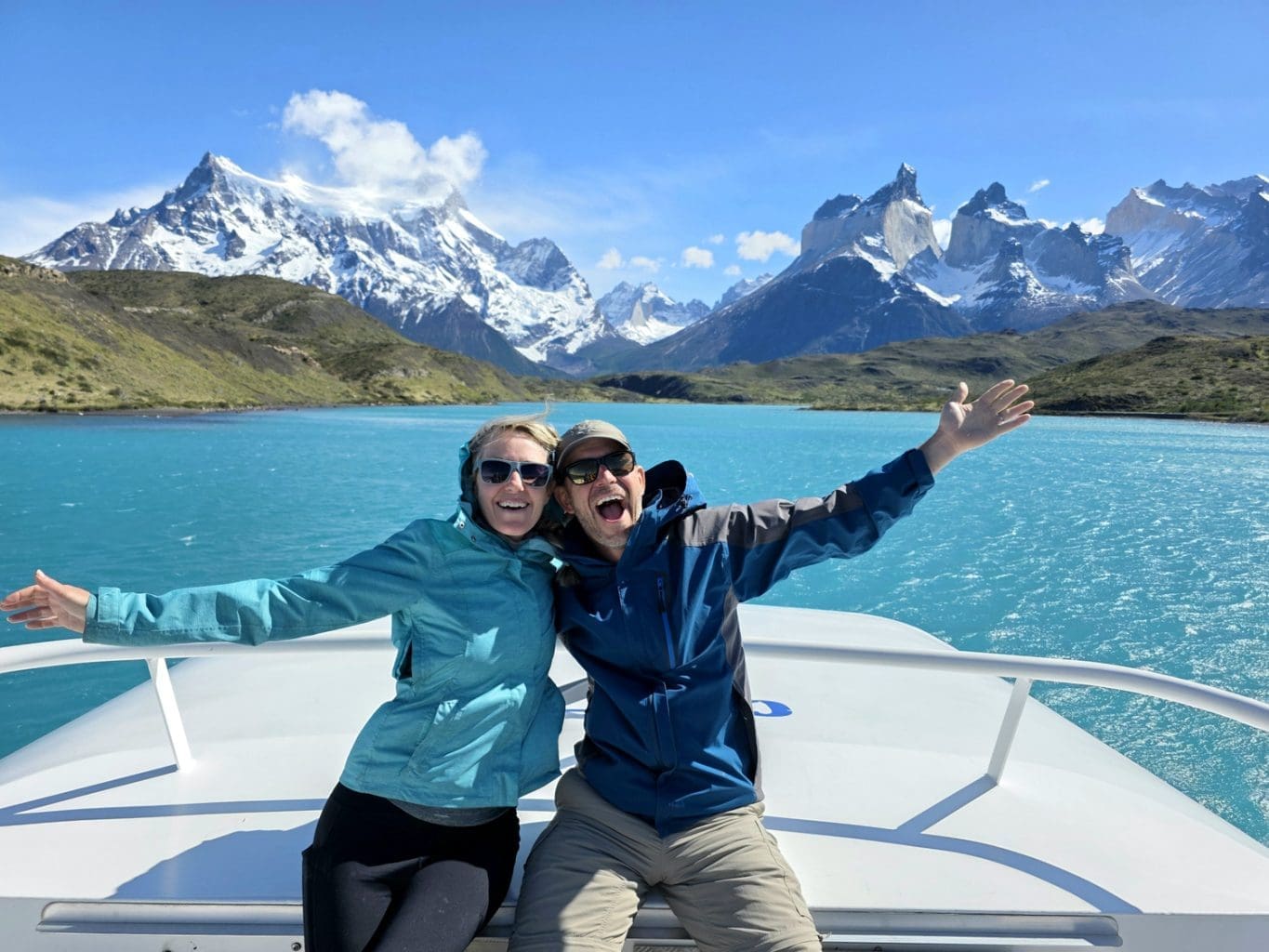
Diving into the last leg of our glamping book research, we’re heading to Asia and Oceania! We have awe-inspiring properties lined up in Cambodia, Sri Lanka, Nepal, Mongolia, and New Zealand, but we are still culling our list, so if you have any eco-resort suggestions, please send them our way! Come May, we’ll likely tuck away somewhere in Southeast Asia to catch our breath and get writing! By June, Buddy the Camper will be very lonely, having lived in a storage unit most of the year, so we’ll take him for a spin around the American West and move our writer’s den between the woods and a couple of housesits (we write better with a cat on our lap). That said, the year can’t be all about Comfortably Wild, so we’re scheming a family trip to Alaska and are always looking for travel storytelling gigs to help pay the bills for all this world exploration!
Thank you to everyone who made it to the end of this monster blog and to everyone who’s followed our HoneyTrek over the years. The journey continues!!!

The rise in popularity of GLP-1 receptor agonist drugs like Ozempic is causing a wider societal shift that is now rocking the food industry. And some are feeling the pain more than others, as people make fundamental changes to their lives and health.
In one of the most comprehensive looks yet at how GLP-1 medication impacts everyday food purchasing, Cornell University researchers used transaction records from Numerator, a market research firm that tracks grocery and restaurant purchases for about 150,000 US homes, and matched those records with repeated surveys asking whether household members were taking these weight-loss drugs, when they started and whether they later stopped. This allowed the team to compare each household’s food spending before and after GLP-1 use, and to compare those changes with otherwise similar households with no-one on the medication.
What they found was surprising in its scope: Within six months of starting on a GLP-1 drug, households reduce grocery spending by an average of 5.3%, with higher-income shoppers spending 8% less. In addition to this, fast-food restaurants, coffee shops and other specialized eateries also experienced a drop of about 8%.
“The data show clear changes in food spending following adoption,” said Sylvia Hristakeva, from the Cornell SC Johnson College of Business. “After discontinuation, the effects become smaller and harder to distinguish from pre-adoption spending patterns.”
And the drop at the grocery store wasn’t uniform, signaling a change in eating habits among those taking GLP-1 medication. Ultra-processed and calorie-dense foods took the biggest hit, with sweets and savory snacks down around 10%. While these are most often associated with cravings – something that GLP-1 drugs curb – sales of staples like eggs and meat also dropped.
Meanwhile, some products have experienced a growth in sales, with yogurt having the most significant before-and-after increase. Fresh fruit, nutritional bars and meat-based snacks have also become more popular.
“The main pattern is a reduction in overall food purchases,” Hristakeva said. “Only a small number of categories show increases, and those increases are modest relative to the overall decline.”
Meanwhile, GLP-1 use continues to rise. The number of US households in which at least one person is on the medication rose from 11% in late 2023 to more than 16% by mid-2024.
The researchers also pointed out that of those surveyed, around a third stopped taking GLP-1 drugs during the study period. This was reflected in their purchasing habits, too – they essentially went back to how they were shopping before medication, buying less healthy food and more of it.
This shift in demand isn’t likely to just be a short-term change, considering that researchers predict the number of Americans on a GLP-1 drug by 3035 will reach 24 million. Not surprisingly, food-makers are already looking at how to keep hold of their customers and are expected to market products specifically to people on medication.
“These medications are both a risk and opportunity for the food industry,” said Justin Shimek, CEO of food innovation firm Mattson whose clients include PepsiCo, General Mills, McDonald’s and Starbucks, during a webinar. “Clearly, we believe this is going to be a time of disruption.”
According to Mattson research, GLP-1 users are drinking 66% less soda and alcohol, 93% are eating smaller meals and more than 60% say they think about food less.
Food giant Conagra Brands has already begun listing “GLP-1 Friendly” on its Healthy Choice packaging, even though it hasn’t changed anything else about its frozen meals. So it’s safe to say you can expect to see more superficial marketing strategies on shelves as companies try to position themselves as makers of GLP-1-approved products.
The Cornell researchers believe it’s likely that package sizes, formulations and marketing strategies will be tweaked to reflect the growing GLP-1 market.
“At current adoption rates, even relatively modest changes at the household level can have meaningful aggregate effects,” Hristakeva said. “Understanding these demand shifts is therefore important for assessing food markets and consumer spending.”
The researchers said that while they weren’t able to confirm the GLP-1 drugs were solely responsible for the drop in food spending, they believe that the body of evidence from clinical trials to date – as well as how people’s shopping habits rebounded once medication was stopped – suggests that appetite suppression plays a key role in the shift.
In a Morgan Stanley report, analysts remained optimistic when it came to restaurants and specialty outlets, predicting that these experiences are about more than basic needs being met.
“Many chains will evolve over time to respond to consumer tastes,” said Brian Harbour, who leads coverage of US restaurants and food distributors at Morgan Stanley. “Some have invested billions of dollars in stores and concepts to serve these changing preferences.
“Restaurants are never just about the food,” he added. “They sell convenience, in the case of limited service, or an experience, in the case of full service. But they could face declining sales in the medium term.”
The study was published in the Journal of Marketing Research.
Source: Cornell University

Asia’s factories end 2025 on firmer footing as orders pick up
These are the key developments from day 1,408 of Russia’s war on Ukraine.
Published On 2 Jan 2026
Here is where things stand on Friday, January 2:
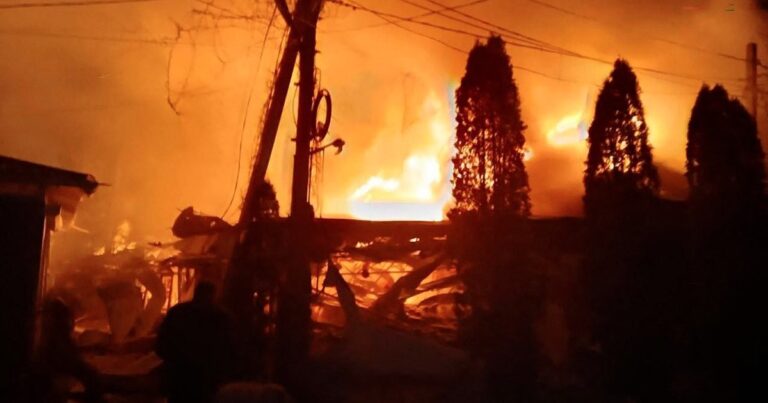
Ukraine and Russia have traded allegations of attacks on civilians and civilian infrastructure over the New Year, with Kyiv saying there had been another broad attack on its power supplies, and Moscow reporting a deadly strike on a hotel in territory it occupies in southern Ukraine.
Asked about the strike on Kherson, a Ukrainian military spokesperson told the Interfax-Ukraine news agency that Kyiv’s forces exclusively targeted Russian military or energy sites.
Russian air defence units have downed a total of 29 Ukrainian drones headed for Moscow over a 20-hour New Year period, Mayor Sergei Sobyanin said. Restrictions were in place on the evening of New Year’s Day for two Moscow airports. Sobyanin made no mention of casualties or damage.
Ukrainian drones struck energy and industrial targets across the Russian regions of Krasnodar, Tatarstan and Kaluga overnight, Russian officials said on Thursday. The Ukrainian military confirmed it had carried out two of the three attacks.
A senior Russian military chief, Admiral Igor Kostyukov, said he had given a United States military attache what he claimed to be part of a Ukrainian drone. He said data from the drone proved that the Ukrainian military targeted a residence of President Vladimir Putin in Russia’s northern Novgorod region this week.
Ukraine has denied Russia’s claim. US intelligence sources told reporters on Wednesday Kyiv was not behind the attack.
Ukraine’s top negotiator in US-brokered peace talks, Rustem Umerov, said he met with Turkish Foreign Minister Hakan Fidan in Ankara. Umerov said he discussed with Fidan the negotiation process and next steps, with particular attention to humanitarian issues and the return of Ukrainians held by Russia.
In his New Year’s address to the nation, Ukraine’s Zelenskyy said he wanted the war to end, but not at any cost. He added he would not sign a “weak” peace agreement that would only prolong the war.

Happy New Year, from all your friends at Fortune. As you know, New Year’s Day has fallen on a Thursday for 2026, which means banks, government offices, and postal services will be closed across North America while many retailers, restaurants, and attractions will either modify their schedules or open up completely.
The most direct impact is on federal services. Non-essential federal offices are closed, according to the U.S. Office of Personnel Management. This includes Social Security Administration field offices, passport agencies, and most administrative government buildings. If you have business with the IRS or need to visit a federal building, you will need to wait until Friday.
Financial markets will also take the day off, with major U.S. exchanges including the New York Stock Exchange and Nasdaq shuttering for the first day of the new year. Schools and public libraries will remain closed, and in most places, garbage collection will be postponed by one day.
But what about the retail landscape? Food, transit, and the rest? Here’s what’s open and closed today.
The U.S. Postal Service will not operate on New Year’s Day. Post office locations will be closed, mail will not be collected from blue collection boxes, and regular deliveries will not be made. Only Priority Mail Express, a service that comes at an extra cost, will be delivered. USPS operations will resume as normal on Friday, January 2.
Private carriers are similarly pausing operations. FedEx will be closed for New Year’s Day, except for its Custom Critical service. UPS will not offer pickup or delivery on January 1, though UPS Express Critical service will remain available for urgent shipments.
Wall Street is closed for the holiday. The New York Stock Exchange and Nasdaq will not trade on New Year’s Day, and all U.S. bond markets will be shuttered. There will be no pre-market or after-hours sessions. Trading will resume on Friday, January 2, when U.S. exchanges reopen for the first session of 2026.
Most major banks will remain closed to observe the federal holiday. Bank of America and Wells Fargo locations will be closed on New Year’s Day. While some smaller community banks or credit unions might follow suit, mobile banking services and ATMs will remain available.
For the private sector, major retailers will largely remain open. Walmart stores will operate from 6 a.m. to 11 p.m., and Target will maintain regular hours. Best Buy will be open from 10 a.m. to 8 p.m., while Kohl’s will operate from 10 a.m. to 8 p.m.. Macy’s will be open during standard business hours.
Grocery stores show a mixed picture. Large chains including Kroger, Whole Foods, Wegmans, and Safeway will be open, though some may operate with modified hours. Publix locations will close early at 7 p.m.. However, warehouse clubs diverge sharply: BJ’s Wholesale Club will operate from 9 a.m. to 7 p.m., while Costco and Sam’s Club will close entirely.
Discount grocers also split. Aldi and Trader Joe’s will remain closed on New Year’s Day. Convenience stores and pharmacies will generally stay open. CVS Pharmacy and Walgreens locations will be open, though some pharmacy hours may vary by location.
Home improvement stores will maintain reduced schedules. Home Depot will operate from 9 a.m. to 8 p.m., while Lowe’s hours will vary by location but generally run from 9 a.m. to 6 p.m..
Fast-food chains will largely remain operational. McDonald’s, Wendy’s, and Burger King will have many locations open, though franchisee-operated stores may maintain varying hours. Starbucks will be open, as will chains like Chick-fil-A, Subway, Olive Garden, and Chili’s.
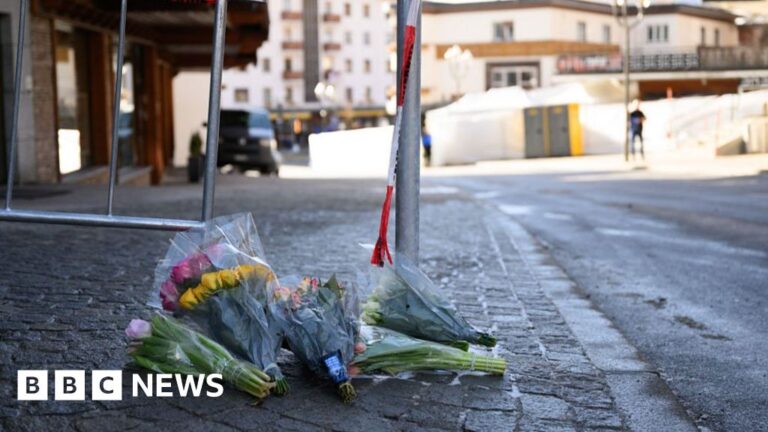
Around 40 people have died and 115 people are injured following a fire in a ski resort in south-west Switzerland, police say.
Authorities said several nationalities were likely involved in the New Year’s Day fire, which happened at 01:30 local time (00:30 GMT) in a bar called Le Constellation in the resort of Crans-Montana.
It is being treated as a fire and there is “no question” of an attack, the region’s chief prosecutor said.
Switzerland’s President Guy Parmelin has called it “one of the worst tragedies that our country has experienced”.
A helpline has been set up for concerned families: +41 848 112 117
Here’s what we know so far.
At a news conference on Thursday afternoon police said around 40 people were killed in the fire and 115 people were injured, many severely.
The injured have been transported to hospitals across Switzerland. A burns unit in Milan in neighbouring Italy has also been made available.
The director of Lausanne University Hospital told a Swiss newspaper that 22 patients had been transferred to her centre’s care so far, mostly aged 16-26.
Work is ongoing to identify the victims and return bodies to families as quickly as possible, the region’s chief-prosecutor Beatrice Pilloud said.
But the Italian ambassador to Switzerland warned it could take weeks to identify the dead. Earlier, Italy’s foreign minister said identification would be difficult due to the severe burns.
People from several countries are believed to be involved. The Italian Foreign Ministry has told the BBC that 16 Italian nationals are currently missing, and between 12 and 15 others are receiving treatment in hospital.
Three Italian nationals – a woman in her twenties and two boys under 16 – were being taken to Milan to be treated at Niguarda hospital’s major burns unit, local councillor Guido Bertolaso said.
The French foreign ministry said eight of its citizens were missing and that it could not rule out that French nationals were among the dead.
French media earlier reported that at least two of the injured are French nationals.
French football club FC Metz said one of its youth players was “severely burned” in the fire. Tahirys Dos Santos, 19, has been airlifted to a hospital in Germany for treatment, the club said in a statement.
President Emmanuel Macron said France was “ready to provide any assistance” and that people injured in the fire were welcome to be treated in French hospitals.
The EU is also providing medical assistance to the victims, the bloc’s President Ursula von der Leyen said.
The UK embassy in Switzerland says it is monitoring the situation but it has not been approached for assistance.
Consular staff are on standby to support any British nationals affected, a Foreign Office statement said.
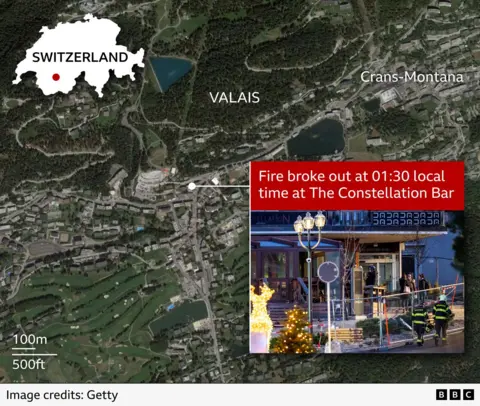
The cause is currently unknown but authorities say initial evidence does not suggest an attack.
Asked about earlier reports of an explosion, regional security official Stéphane Ganzer said it “is not the detonation of an explosive device that causes the fire, it is the fire which, as it develops, causes an explosion and a general conflagration of the premises”.
Two French nationals who said they were in the bar at the time described seeing a waitress put a birthday candle on top of a champagne bottle.
“One of the candles was held too close to the ceiling, which caught fire. In a matter of seconds, the entire ceiling was ablaze. Everything was made of wood.” Emma and Albane told French media outlet BFMTV.
They described the evacuation as “very difficult” because the escape route was “narrow” and the stairs to get outside “even narrower”.
In a news conference on Thursday, Ms Pilloud also said the staircases appeared to be narrow, but investigations will assess whether they were in line with requirements.
The regional police commander Frédéric Gisler said smoke was first seen emanating from a bar at around 01:30 local time, at which point emergency services were called.
The first police officers were quickly on the scene followed by a major deployment of rescue teams, Mr Gisler said.
Le Constellation is a large bar in the the Swiss ski resort of Crans-Montana which has been around for many years.
Although the resort itself is quite upmarket, Le Constellation was not particularly posh, the BBC’s Silvia Costeloe reported from the resort.
Upstairs, there is an area with TV screens where people go to watch football matches. Downstairs is a big bar where people were likely drinking and dancing.
It could hold up to 300 people and had a small terrace, although it is unknown how many people were there at the time of the fire.
The Christmas and New Year holidays are one of the busiest times of the year for Alpine ski resorts, and it is likely the bar was full of Swiss people and tourists celebrating the start of 2026.
A promotional video posted on YouTube for Le Constellation bar, published in May 2024, showed women in motorcycle helmets walking through the bar while carrying sparklers in alcohol bottles above their heads.
The caption, written in French, read: “The Constellation Crans-Montana welcomes you every day from 9am to 2am, 365 days a year without interruption.”
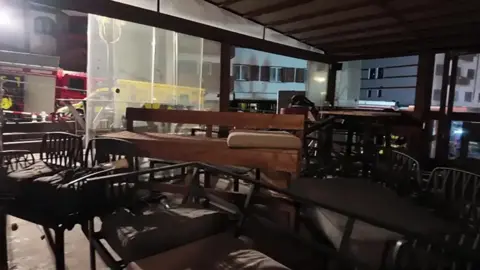 Police Cantonale Valaisanne
A required part of this site couldn’t load. This may be due to a browser
extension, network issues, or browser settings. Please check your
connection, disable any ad blockers, or try using a different browser.

Welcome to World Breaking News, your trusted source for fast, accurate, and impactful news coverage from around the globe. We are a dedicated team of journalists, editors, and news enthusiasts committed to delivering breaking stories, in-depth analysis, and real-time updates on politics, business, technology, sports, entertainment, and more.
© Copyright -World Breaking News -2025
