
6.1 C
New York
Sunday, March 29, 2026
Home Blog Page 688

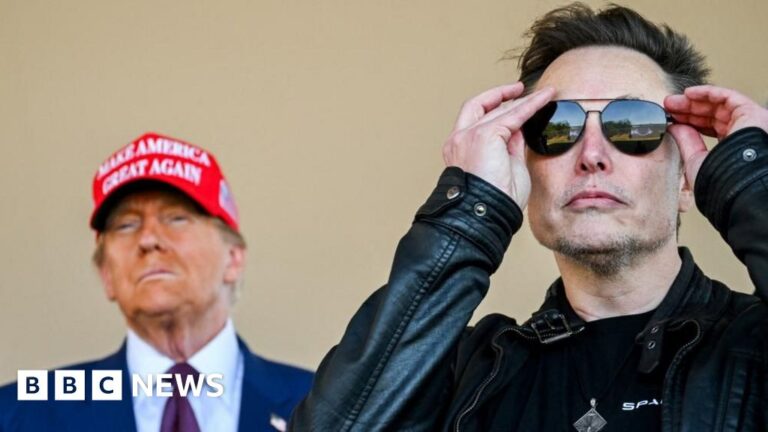
Trump and Musk engage in heated confrontation

0

Anthony Zurcher

North America Correspondent

Reporting fromWashington DC

Watch: How Trump and Musk’s fall out played out in real time

What happens when the richest person and the most powerful politician have a knock-down, drag-out fight?

The world may be about to find out.

A disagreement between Elon Musk and Donald Trump started at a simmer last week, began bubbling on Wednesday and is now in full-on boil. And like everything these two men do, the implosion of their relationsip is spilling into public view. Trump and Musk have two of the world’s biggest megaphones, and they have now turned them on each other.

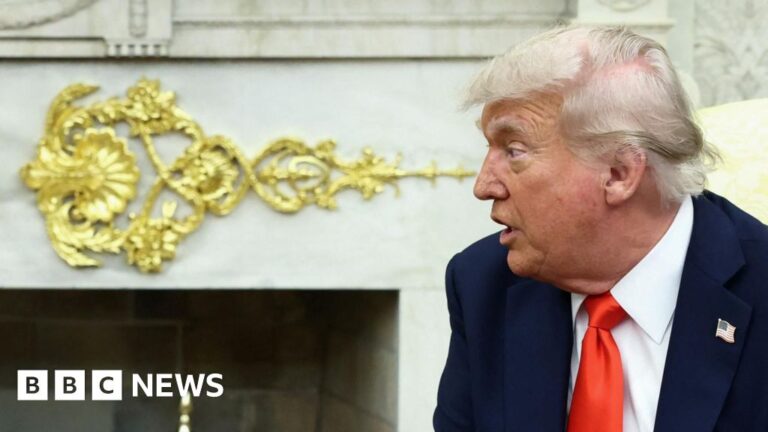
In remarks at the Oval Office on Thursday afternoon, Trump sounded a bit like a spurned lover.

He expressed surprise at Musk’s criticism of his “big, beautiful” tax and spending legislation. He pushed back against the notion that he would have lost last year’s presidential election without Musk’s hundreds of millions of dollars in support. And he said Musk was only changing his tune now because his car company, Tesla, will be hurt by the Republican push to end electric vehicle tax credits.

Musk took to his social media site, X, with a very Generation X response for his 220 million followers: “Whatever”. He said he didn’t care about the car subsidies, he wanted to shrink the national debt, which he says is an existential threat to the nation. He insisted that Democrats would have prevailed in last year’s election without his help. “Such ingratitude,” he told Trump.

The billionaire launched a series of extraordinary attacks throughout the afternoon, including suggesting without evidence that Trump appears in unreleased files related to late sex offender Jeffrey Epstein. The White House dismissed that last comment an “unfortunate episode from Elon”.

Musk and Trump had formed a powerful but unlikely alliance , culminating in the tech billionaire having a key position of budget-slashing authority in the Trump administration. Musk’s Department of Government Efficiency, or Doge, became one of the biggest stories of Trump’s first 100 days, as it shuttered entire agencies and dismissed thousands of government workers.

It wasn’t long, however, before speculation began over when – and how – the two outsized personalities would ultimately fall out.

For a while, it seemed like those predictions were off the mark. Trump stood by Musk even as the latter’s popularity dropped, as he feuded with administration officials and as he became a liability in several key elections earlier this year. Every time it appeared there would be a break, Musk would pop up in the Oval Office, or the Cabinet room or on the president’s Air Force One flight to Mar-a-Lago.

When Musk’s 130 days as a “special government employee” ended last week, the two had a chummy Oval Office send-off, with a golden key to the White House and hints that Musk might someday return.

It’s safe to say that any invitation has been rescinded and the locks have been changed.

“Elon and I had a great relationship,” Trump said on Thursday – a comment notable for its use of the past tense.

There had been some thought that Trump’s surprise announcement on Wednesday night of a new travel ban, additional sanctions on Harvard and a conspiracy-laced administration investigation of former President Joe Biden were all efforts to change the subject from Musk’s criticism. The White House and its allies in Congress seemed careful not to further antagonise him after his earlier comments.

Then Trump spoke out and… so much for that.

Trading insults and threats

Now the question is where the dispute goes next. Congressional Republicans could find it harder to keep their members behind Trump’s bill with Musk providing rhetorical – and, perhaps financial – air for those who break ranks.

Trump, who takes pride in being a devastating counterpuncher, will have plenty of opportunity to lay into Musk. What will happen to Musk’s Doge allies still in the Trump administration or government contracts to Musk-related companies or Biden-era investigations into Musk’s business dealings?

“The easiest way to save money in our budget, billions and billions of dollars, is to terminate Elon’s governmental subsidies and contracts,” Trump posted menacingly on his own social media website.

If Trump turns the machinery of government against Musk, the tech billionaire will feel pain. Tesla’s stock price plunged by 14% on Thursday.

But Musk also has near limitless resources to respond, including by funding insurgent challengers to Republicans in next year’s elections and primaries. He may not win a fight against the whole of Trump’s government, but he could exact a high political price.

Meanwhile, Democrats are on the sidelines, wondering how to respond. Few seem willing to welcome Musk, a former donor to their party, back into the fold. But there’s also the old adage that the enemy of an enemy is a friend.

“It’s a zero-sum game,” Liam Kerr, a Democratic strategist, told Politico. “Anything that he does that moves more toward Democrats hurts Republicans.”

At the very least, Democrats seem happy to stand back and let the two men exchange blows. And until they abandon this fight, the din is likely to drown out everything else in American politics.

But don’t expect this spat to end anytime soon.

“Trump has 3.5 years left as president,” Musk wrote on X, “but I will be around for 40-plus years.”
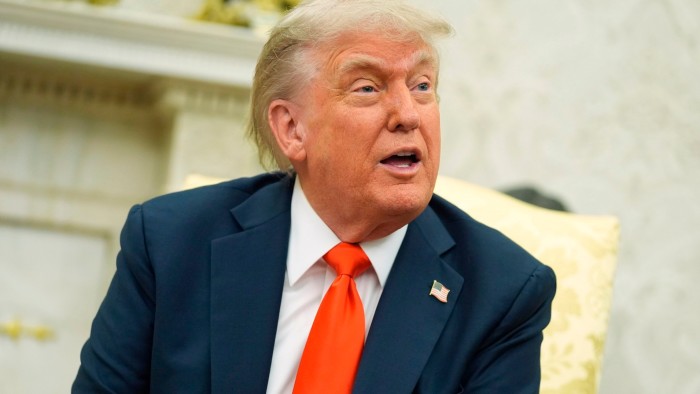

Donald Trump criticizes Elon Musk as their relationship deteriorates

0

Donald Trump has attacked Elon Musk as “crazy” and threatened to rip up his government contracts, as the spat between two of the world’s most powerful men erupted into an all-out public feud.

In a flurry of bitter comments in the Oval Office and online on Thursday, the US president said he was “very disappointed” in Musk for criticising his signature tax bill, suggested he had “become hostile” after being turfed out of government, and accused the billionaire of intervening in politics to serve his business interests.

Musk, who spent more than $250mn bankrolling Trump’s re-election bid last year and said in February that he loved the president “as much as a straight man can love another man”, returned fire on X.

The billionaire called for Trump to be impeached, suggested his trade tariffs would cause a US recession, threatened to decommission SpaceX capsules used to transport Nasa astronauts and insinuated the president was associated with the late paedophile Jeffrey Epstein.

The enmity deepened through the day, opening a breach that could widen long into Trump’s presidency and even influence US electoral politics, with Musk talking of starting a new party and removing Republicans from office.

Trump, who had previously defended Musk against charges of corruption and self-dealing, said the Tesla boss had soured on his “big beautiful bill” because it would end policies that benefited the electric-car maker.

“I took away his EV Mandate that forced everyone to buy Electric Cars that nobody else wanted (that he knew for months I was going to do!), and he just went CRAZY!” Trump wrote on Truth Social on Thursday afternoon.

“The easiest way to save money in our Budget . . . is to terminate Elon’s Governmental Subsidies and Contracts,” he added, in an apparent threat to end billions of dollars’ worth of business between the US government and Musk’s companies, including SpaceX and Starlink.

Musk, who is upset that the tax bill now before the Senate would increase the US deficit, accused the president of lying about his motives.

The exchanges were an extraordinary escalation of the feud between Trump and Musk, who had refrained from criticising the president directly even as he opposed the White House’s trade and tax policies.

The billionaire, who in April began his retreat from politics because of the “blowback” against his businesses, also suggested that he now regretted backing Trump during last year’s White House race.

“Without me, Trump would have lost the election, Dems would control the House and the Republicans would be 51-49 in the Senate,” he posted on his social media site X soon after the Oval Office tirade. “Such ingratitude.”

Shares in Tesla fell by almost 11 per cent following Trump’s remarks and were down 13.5 per cent on the day, wiping more than $150bn from its market valuation — its biggest one-day drop in value ever.

Musk, the US’s largest political donor, also suggested that Republican lawmakers should side with him over the president.

“Some food for thought as they ponder this question: Trump has 3.5 years left as President, but I will be around for 40+ years,” the billionaire wrote on X.

He also hit back at Trump’s suggestion that he had opposed the “big beautiful bill” because it axed tax credits for electric vehicles and clean energy, which have long benefited Tesla in the US.

“Keep the EV/solar incentive cuts in the bill, even though no oil & gas subsidies are touched (very unfair!!), but ditch the MOUNTAIN of DISGUSTING PORK in the bill,” Musk posted.

The deepening discord between Trump and “first buddy” Musk has in recent days spread through Washington.

Last week, Trump pulled the nomination of billionaire astronaut Jared Isaacman, a close ally of Musk, to lead Nasa, ostensibly over contributions he had made to Democratic candidates in the past.

Isaacman, who was on track to receive bipartisan support from the Senate, disputed the White House’s justification for the decision.

“I don’t think the timing was much of a coincidence,” Isaacman told the All-In podcast on Wednesday. “There [were] some people that had some axes to grind, I guess, and I was a good, visible target.”

Musk had already announced that he was stepping back from his involvement in the Trump administration, where he had led the so-called Department of Government Efficiency (Doge).

Steve Davis, one of Musk’s lieutenants at SpaceX who led Doge on a day-to-day basis, had also now left the administration, according to a government official.

More senior figures close to the billionaire were set to abandon the initiative in the coming days, the official said.

Musk himself has suggested that the tax bill would wipe out any savings made by Doge, which claims to have identified roughly $180bn in cuts to date. On Wednesday, the congressional fiscal watchdog said the legislation would add $2.4tn to the US debt by 2034.

China Protests COVID Lockdowns Following Xinjiang Fire Incident

0

Protests are continuing in China against strict COVID lockdown restrictions after a deadly apartment fire brought some people closer to a breaking point.

Across the country, demonstrators took to the streets — a mass movement that is rare in China — and defied laws designed to curb the spread of COVID-19. Some appeared with sheets of blank white paper, in place of traditional protest signs, as a criticism of the censorship limiting citizens from speaking freely.

After the fire in Xinjiang that left at least 10 people dead, which critics say was due to the stay-at-home measures that resulted in the building’s doors being locked, protests intensified Sunday. In major cities like Shanghai, protestors gathered to demand the end of the country’s ruling party and the resignation of the president. In clips circulating social media, some demonstrators can be heard repeatedly chanting, “Communist Party step down, Xi Jinping step down.”

Dotdash Meredith plans to offer $400 million in senior notes.

0


Dotdash Meredith to issue $400 million in senior notes

Head of Reform UK party resigns following controversy over burqa incident | Political News

0

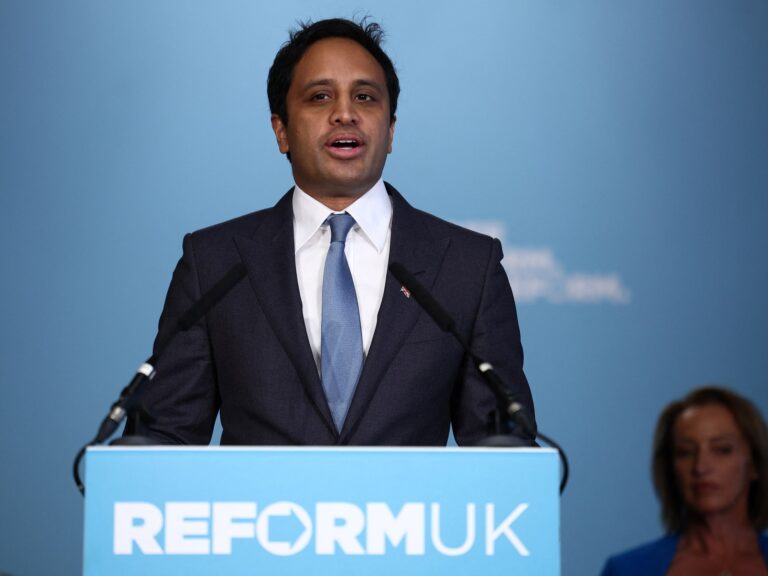
Zia Yusuf, a self-described ‘British Muslim patriot’, leaves a party accused of fuelling Islamophobia after 11 months.

The Muslim chairman of the United Kingdom’s radical right-wing Reform UK party has quit after denouncing a call from within party ranks to ban the burqa as “dumb”.

“I no longer believe working to get a Reform government elected is a good use of my time, and hereby resign the office,” Zia Yusuf announced on X on Thursday, hours after hitting out at Reform UK lawmaker Sarah Pochin for asking Prime Minister Keir Starmer whether his government would consider banning the burqa.

Pochin won her seat in a by-election last month that saw the anti-immigration party, some of whose members have been accused of Islamophobia, make significant gains in a political landscape traditionally dominated by the governing Labour Party and the opposition Conservatives.

The new lawmaker had urged Labour’s Starmer during her debut appearance at Prime Minister’s Questions on Wednesday if he would consider the move “in the interests of public safety”, according to the BBC.

“I do think it’s dumb for a party to ask the PM if they would do something the party itself wouldn’t do,” Yusuf said on X amid an ensuing flare-up over whether banning the burqa should be party policy.

Yusuf, a former banker and self-described “proud British Muslim patriot”, became Reform UK chairman after last year’s general election, having jumped ship from the Conservative Party.

Reform UK, led by Brexit campaigner Nigel Farage, won four parliamentary seats in a breakthrough result last year, going on to gain a fifth parliamentary seat, its first mayoralty and a number of council seats in local elections last month.

It currently leads national opinion polls, ahead of the Labour Party.

Farage said on X that Yusuf was “a huge factor in our success on May 1st and is an enormously talented person”.

Divisions in the party’s upper ranks have been made public before.

In March, Reform referred one of its lawmakers, Rupert Lowe, to police over a number of allegations, including threats of physical violence against Yusuf.

Prosecutors later said they would not bring charges against Lowe, who was suspended by the party.

Despite lack of trust, nearly 90% of CFOs still utilize AI in their roles.

0

CFOs are in a pickle. The efficiency side of their brains wants to incorporate AI, but the risk sides are flashing red.

A new survey from Kyriba, a finance AI platform, interviewed 1,000 CFOs and found 96% are prioritizing integrating AI—even though many still have major concerns about doing so.

AI often functions like a “black box,” creating uncertainty about how it arrives at its final outputs. Additionally, there are concerns around data privacy and security as well as whether AI compliance.

But even with these risks, it seems like the promise of improved efficiency is winning out;according to the study, 86% of CFOs are already using AI in some or most aspects of their job.

So how should companies and CFOs prepare for AI adoption to mitigate risk?

Black box. According to Bob Stark, global head of enablement at Kyriba, there are ways to combat these concerns that could ease CFOs’ comfort with integrating AI.

“Every CFO that we talk to, they say the same thing,” he said. “‘It needs to be our data. [We] need to understand how it works, and we need to ensure that the outputs are our own and only our own, and that they can work within [our] own organization’s policy.’”

While even some software engineers building AI may not entirely understand how it works, the AI products could at least be more open about their work so CFOs could independently validate the outputs, according to Stark. On the security side, there should be guardrails in paid AI products that can be turned on to prevent data from being saved, used to train models, or exposed to others, he added.

According to Glenn Hopper, head of AI research and design at Eventus Advisory Group, the same security rules for services like Google, Snowflake, or AWS should apply to the enterprise versions of AI products.

“The security concerns have gotten overblown a little bit,” he said. “The danger with data being uploaded into the models is very easy to overcome.”

As for compliance, an industry that isn’t known for moving quickly might have to if it wants to keep up with the proliferation of AI and get in front of these risks, according to Hopper.

Know your goals. Before deploying AI, Stark recommends that CFOs really understand what their aims are. .For example, AI could help with exposure management, hedging, and accounting processes, according to Stark.

After identifying the goals for AI use, its accuracy should be tested. Stark suggests starting by comparing previous methods of forecasting with the new AI-powered results.

“That’s the kind of journey that can help build trust,” he said.

Create a policy and train employees. Once organizations are clear on the scope of the AI’s work, it can roll it out to employees with clear policies and thorough training.

Hopper advises CFOs to work with the senior management to create AI usage policies that everyone can agree on, which should state which AI systems employees can use, what they’re allowed to upload, how to use it, and when to integrate a human into the process. Stark also urges companies to explain what compliance under the policy actually would look like.

AI is more flexible than traditional tools, according to Hopper. Managers tell employees how to use traditional software packages, whereas with AI, employees will shape how the tools are used in the workplace.

“They’re going to figure out on their own how to automate parts of their job,” he said. “And you want it to be out in the open. Because if it’s out in the open and someone’s using it improperly, you can figure it out. You don’t want people to be scared of it, but you also don’t want them to be reckless.”

Hopper calls for basic training on prompt engineering, outlining specific tasks best suited for AI, explaining how to verify data, and checking for hallucinations with a structured employee rollout.

“In finance, we don’t anticipate roles being replaced, but we do recognize that people with AI may replace people that don’t have AI,” Stark said.

This report was originally published by CFO Brew.

This story was originally featured on Fortune.com

Trump expresses disappointment over Elon Musk’s criticism of budget bill

0

US President Donald Trump says he was “very surprised” and “disappointed” with former ally Elon Musk’s criticisms of his centrepiece budget bill.

“Elon and I had a great relationship. I don’t know if we will anymore,” Trump told reporters in the White House on Thursday.

It was the president’s most direct criticism yet of Musk’s lobbying efforts against the proposals to cut taxes and slash government spending – a plan that has drawn criticism from Musk and some Republicans.

In response, Musk doubled down on X and accused the president of “Such ingratitude”, adding: “Without me, Trump would have lost the election”.

Musk left his post at the Department of Government Efficiency last week after 129 days on the job, and Trump presented him with a with a golden key during a congratulatory news conference on 30 May.

But in the days since, he has repeatedly criticised Trump’s budget bill currently working its way through Congress, calling it a “disgusting abomination” and posting “Shame on those who voted for it: you know you did wrong.”

The bill passed the House with the backing of most Republicans, with a handful of representatives from Trump’s party and all Democrats opposed.

Speaking to reporters during a news conference with German Chancellor Friedrich Merz on Thursday, Trump said: “We are doing things in that bill that are unbelievable.

“I’m very disappointed because Elon knew the inner workings of this bill better than almost anybody sitting here,” he said. “All of a sudden he had a problem.”

“He hasn’t said bad about my personally, but I’m sure that will be next.”

Put in charge of radically slashing government spending, Musk initiated mass sackings and wholesale elimination of departments such as the US Agency for International Development (USAID).

Doge claims to have saved $180bn, although that number has been disputed, and is well short of Musk’s initial aim to cut spending by up to $2 trillion.

Streaming platforms need to take on more responsibility in combating fraud.

0

MBW Views is a series of op-eds from eminent music industry people… with something to say.

That’s certainly the case with this latest edition, with one important difference: the person who has penned the below commentary has requested anonymity.

We can tell you, however, that this individual is a reputable figure in the world of independent music distribution and services, running a company with global influence.

They’ve cloaked their identity due to obvious business sensitivities, to speak openly and honestly on a matter that worries every legitimate music rightsholder: streaming fraud.

In an email accompanying the below op/ed, our anonymous executive said: “I detest fraudsters… [and] we should do everything in our power to clamp down on them.”

He continued: “The twist is that those very DSPs who have forced us into the role of policing streaming are not giving us – and companies like ours – the most basic tools to fight that fight.”

Read on for his full views on the matter…


The Invisible Epidemic of Artificial Streaming

Streaming fraud remains one of the most persistent and destructive challenges in the digital music ecosystem.

From bot-driven artificial streams to the unauthorized distribution of unlicensed content, the result is distortion of royalty distribution, chart inflation, and the diversion of revenue from legitimate creators. While the music industry has advanced Know Your Customer (KYC) processes and fraud detection tools, the platforms who could do the most to solve the problem remain largely passive.

“The current system is not working. Artists and label distributors are being hurt by the fraud, while the fraudsters are not being punished.”

Fraudulent streaming is not just a nuisance; it’s a systemic problem that undermines the legitimacy of stakeholders across the ecosystem. Yet the parties most often penalized aren’t the bad actors themselves — but rather the distributors and labels who rely on good faith relationships with these platforms.

The current system is not working. Artists and label distributors are being hurt by the fraud, while the fraudsters are not being punished.

Streaming platforms, meanwhile, have the power to significantly change this reality. Why aren’t they helping?


An Uneven Playing Field

Streaming platforms have full visibility into behavioral data — IP addresses, device types, listening patterns, app sources, geographic and OS consistency — but they choose not to share it.

They can detect:

  • A single user looping a track 200 times from a high-risk region
  • 90% of a song’s plays originating from one app source in two days
  • Whether streams are organic or synthetic

This makes platforms the only entities with a panoramic view of the entire ecosystem. They can trace anomalies to specific devices, accounts, or locations — but they don’t act consistently on this insight.

Instead, they push the burden of responsibility downstream. Distributors and labels must cobble together manual KYC checks, ISRC scans, and metadata vetting — without access to the behavioral data which actually reveals fraud.

And when fraud is flagged, it’s these partners who face takedowns, withheld royalties, or account suspensions.

Despite lacking critical data and working in the dark, many distributors work hard to prevent fraud:

  • Authenticating documentation;
  • Verifying social and streaming presence;
  • Vetting ISRCs and content rights;
  • Analysing royalty data for anomalies.

They often exceed platform standards — rejecting unauthorized remixes, spotting metadata red flags, and reviewing geographic inconsistencies.

But without visibility into anonymized user behavior, they can’t detect patterns or repeat offenders.

So why are the entities with the least insight the ones held most accountable?


A Broken Model

Here’s the core injustice: platforms hold the keys to fraud prevention but expect labels, distributors, and rights managers to police an ecosystem they can’t fully see. The data needed to identify and block bad actors sits in platform silos, locked away behind proprietary APIs and opaque review processes.

Distributors are expected to run sophisticated KYC/AML processes, audit metadata, verify rights, artist authenticity, cross-reference catalog ownership, track ISRC reuse, and analyze earnings for anomalies. Some even reject content based on metadata that suggests sped-up/slowed-down versions, mashups, or suspicious derivative works.

But when the most critical indicators — real-time streaming behavior, user demographics, device concentration — are withheld or delayed, these efforts are only half-effective.

When fraud is detected, the takedowns hit the distributors – the very companies that exist in service of labels and artists. The account suspensions land on their heads. Royalties are withheld. Reputations are damaged. Trust is eroded.

All while the platforms (and sometimes the fraud) quietly continue business as usual, often refusing to even explain the reason behind enforcement actions.

This system punishes compliance and undermines trust instead of incentivizing collaboration.


What Needs to Change: A New Shared Responsibility Framework

Platforms must match the efforts they demand of labels and distributors and become active partners in the fight against activity which damages the credibility of the entire music ecosystem… which includes DSPs.

Just a few things they could do:

  • Offer real-time dashboards: Provide real-time artificial streaming data.
  • Share fraud signals (e.g., device uniformity, OS concentration)
  • Give transparent feedback: Provide data when taking down tracks or withholding royalties.
  • Share intelligence: Enable cross-platform fraud flagging. Create shared fraud libraries for flagged ISRCs and metadata patterns
  • Enforce fairly: Align accountability with data access. Shift from reactive strikes to proactive alerts

The Bottom Line: Platforms Must Stop Being Passive Observers and Join Music’s Collective Fight Against Fraud

Music is fighting an uphill battle against streaming fraud — but that fight could be so much more effective if every part of the legitimate supply chain played their part.

DSPs need to recognise that it is fraudsters, not legitimate labels and distributors who are the enemy.

It’s not enough to wash your hands and pretend it’s somebody’s else problem. Platforms have a duty not only to their users, but to the entire music value chain. That starts with transparency, timely data, and shared accountability. Without it, the wrong people will continue to pay the price.

Fraud isn’t just a distributor issue. It’s also a platform problem — and platforms need to start acting like it.Music Business Worldwide

New Zealand Parliament Punishes Lawmakers for Haka Dance Protest

0

new video loaded: New Zealand Parliament Suspends Lawmakers for Haka Dance Protest

transcript

transcript

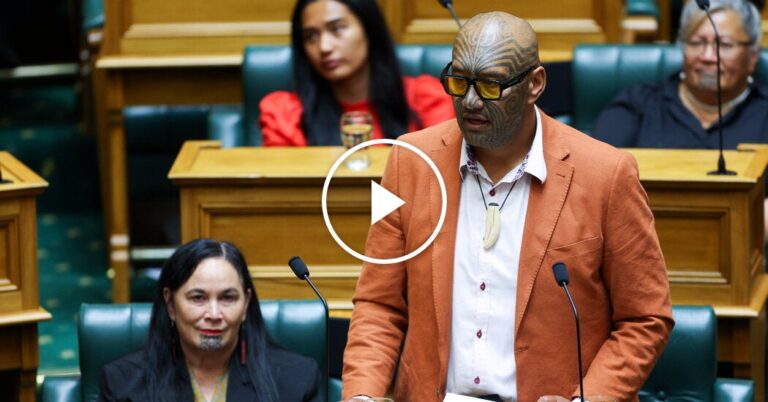
New Zealand Parliament Suspends Lawmakers for Haka Dance Protest

Co-leaders of the Te Pāti Māori party, Rawiri Waititi and Debbie Ngarewa-Packer, were suspended on Thursday without pay for 21 days, and another member of the party, Hana-Rawhiti Maipi-Clarke, was suspended for seven days.

“And he uttered the words: [Speaking in Maori] Take the noose from around my neck so that I may sing my song. The silencing of us today is a reminder of the silencing of our ancestors of the past.” “Now, Haka have been done countless times in this Parliament. But after first consulting the speaker so that the House and its timing is not disrupted, that’s what happened here. There was no attempt whatsoever — worse still, they told the media they’re going to do it and didn’t tell the speaker, did they?”

Recent episodes in Latest Video

Whether it’s reporting on conflicts abroad and political divisions at home, or covering the latest style trends and scientific developments, Times Video journalists provide a revealing and unforgettable view of the world.

Whether it’s reporting on conflicts abroad and political divisions at home, or covering the latest style trends and scientific developments, Times Video journalists provide a revealing and unforgettable view of the world.

Christine Lagarde suggests ECB rate-cutting is coming to an end

0

Unlock the Editor’s Digest for free

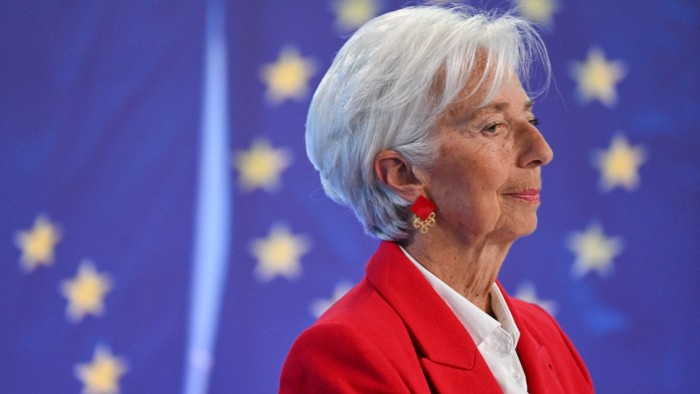
The European Central Bank has signalled it is nearing the end of its rate-cutting cycle as it lowered borrowing costs by a quarter point to 2 per cent in response to uncertainty over the impact of Donald Trump’s trade war.

With the latest widely expected cut, ECB president Christine Lagarde said the Eurozone would be in a “good position to navigate the uncertain conditions” facing the bloc, as she also insisted she was “determined” to complete her term at the Frankfurt-based institution.

In a recent interview with the Financial Times, World Economic Forum founder Klaus Schwab said Lagarde had discussed cutting short her term at the ECB to join the body behind the annual meetings of business and political leaders in Davos in Switzerland.

Lagarde said the central bank had “nearly concluded” the latest monetary policy cycle, which has led to rate-setters halving borrowing costs from a peak of 4 per cent since June 2024.

The euro climbed following Lagarde’s remarks, trading 0.5 per cent higher against the dollar at $1.147. Traders reined in their bets on rate cuts, with swaps markets pricing in just one further reduction in the second half of the year. Prior to a press conference on Thursday at the ECB’s headquarters, markets had implied a small chance of two further cuts.

“She said several times ‘we are well positioned at the moment’,” noted Andrew Kenningham at Capital Economics. “[This] perhaps implies that interest rates don’t need to [fall] any more.”

“For the time being, the ECB can claim to have achieved a soft landing for Europe and the last mile seems to have come to an end,” said Kaspar Hense, a portfolio manager at RBC BlueBay Asset Management.

The central bank lowered its inflation outlook for this year to its medium-term 2 per cent target, down from the 2.3 per cent it predicted in March. It also revised its estimate for 2026 to 1.6 per cent from 1.9 per cent previously, which Lagarde said was purely driven by volatile oil and gas prices and the stronger euro, which has unexpectedly strengthened since the US president’s “liberation day” tariff announcements.

Core inflation, which strips out those volatile factors, is “hardly moving”, Lagarde said. The bank expects inflation to return to its 2 per cent target in 2027.

Lagarde acknowledged that “uncertainty surrounding trade policies” risked weighing on “business investment and exports, especially in the short term”.

The bank has not changed its expectations for GDP growth of 0.9 per cent in 2025 and 1.1 per cent in 2026, arguing higher real incomes and a “robust” labour market “will allow households to spend more”.

Additional reporting by Alan Livsey in London