B2B music distributor FUGA has partnered with fan app Single to enable FUGA’s artist and label clients to deliver music and merch directly to their Shopify storefronts.
FUGA, owned by Downtown Music, announced the new integration on Thursday (June 5), calling it the company’s “first step” into direct-to-consumer e-commerce.
“Traditionally, artist and label teams have had to manage their D2C sales, streaming, and digital distribution through separate platforms, leading to friction and missed opportunities,” FUGA said in a statement.
The integration with Shopify, via Single, means artists and labels will have “a starting point to grow their DSP presence and direct-to-fan business in one place.”
Ottawa, Canada-headquartered e-commerce platform Shopify invested in Nashville-headquartered Single in 2022, resulting in the fan app launching a number of e-commerce-related features, such as token-gated sales and the ability to mint NFTs.
Through the new partnership, artists and labels with FUGA will be able to place their music in their Shopify storefront alongside merch and access to listening parties and exclusive communities. Sales made through the storefronts will be reported to US, UK and Australian charts.
“Artists thrive when they have multiple ways to build deeper relationships with their fans across multiple channels.”
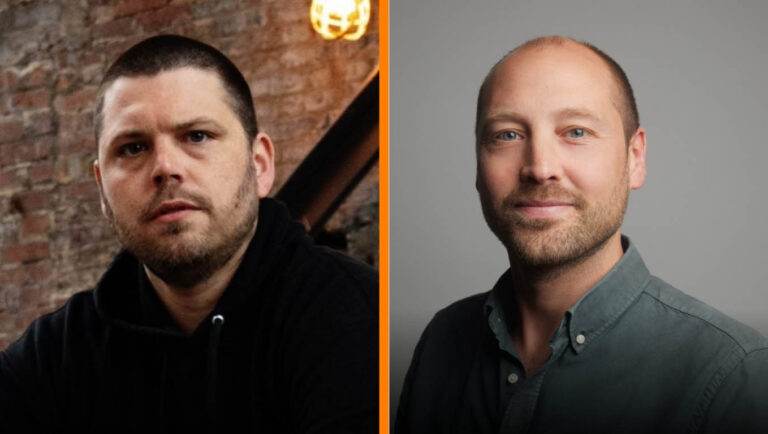
Tommy Stalknecht, Single
“Our partnership with FUGA isn’t just about sales – it’s about transforming distribution into a direct fan connection,” said Tommy Stalknecht, Co-founder and CEO at Single.
“No other platform gives artists and labels this level of control, turning every release into an opportunity to engage fans, capture first-party data, and drive direct revenue. Artists thrive when they have multiple ways to build deeper relationships with their fans across multiple channels.”
“Artists today need full-scale business solutions. The music industry is becoming more complex, with evolving revenue streams and growing demands for direct fan relationships,” FUGA President Christiaan Kröner said.
“We understand these challenges and always try to remain ahead of the curve in addressing them. By integrating Single’s powerful direct-to-fan app into our platform, we’re providing artists with the tools they need to monetize content, engage fans, and optimize revenue – everything they need, all in one place.”
“By integrating Single’s powerful direct-to-fan app into our platform, we’re providing artists with the tools they need to monetize content, engage fans, and optimize revenue.”
Christiaan Kröner, FUGA
Over the past year, Amsterdam-headquartered FUGA has been busy signing distribution and marketing deals with labels, including with L.A.-based indie Mind Of A Genius Records, Paris-based Record Makers, Belgium’s Potion Records, and UK labelsOne House, Critical Music and Berry’s Room.
The company has also expanded its global footprint, moving into the Asia-Pacific region through partnerships with labels in Indonesia, India and the Philippines, as well as into the Australia/New Zealand market through a partnership with Australia-born UNIFIED Music Group.Music Business Worldwide
“It works like a pyramid,” said Nemer, whose research focuses on Bolsonarism, misinformation, and social media, and the “human infrastructure” behind political misinformation that spreads through WhatsApp. “At the top, you have people who produce misinformation. In the middle, you have Bolsonaro supporters who work like a swarm of bees to spread misinformation on the platform. At the bottom, it’s average Brazilians who are in groups where this misinformation ends up, and they, in turn, spread it to other groups they are in.”
Communities, Nemer fears, will make it easy for the people at the top to manage these misinformation networks.
Experts like Nemer are right to be concerned. When WhatsApp announced in April that it wouldn’t launch the feature until later in the year, Bolsonaro was reportedly angry that the company wasn’t launching it immediately. In July, Brazil’s federal prosecutors reportedly asked the company to delay its launch until after the country’s October elections to avoid the spread of fake news and misinformation.
WhatsApp ultimately rolled out the feature four days after Bolsonaro’s defeat. When BuzzFeed News asked if Meta had waited after the election to launch Communities, a WhatsApp spokesperson simply replied, “No.”
After this story was published, a WhatsApp spokesperson told BuzzFeed News that the feature wasn’t available in Brazil yet and wouldn’t be until January.
Over the years, WhatsApp has put guardrails in place to slow down the spread of misinformation on its platform, such as clearly labeling forwarded messages, a major source of misinformation, and restricting forwarding messages to only five groups at a time. Now, the company is putting in an additional limitation: People can only forward messages that are forwarded to them to just one group at a time, instead of five.
“We believe this will meaningfully reduce the spread of potentially harmful misinformation in community groups,” a WhatsApp spokesperson told BuzzFeed News.
Still, Nemer is skeptical. “The idea — having a group of groups — is great,” he said. “But what is the point of forwarding limits when you can now post something to a single Announcement group and still reach way more people than if you were to send a single forward to a single group?”
It was their sixth attempt in a week, a perilous trek down Gaza’s southern coast towards a US-backed food distribution site. Abed Zaydan, 14, and his mother Reem hoped that, this time, they would arrive before the food ran out.
Eight hours into their walk on Tuesday, as they neared the centre, the sound of tank and gunfire erupted. Zaydan saw dead bodies at his feet. He lay face down on the ground next to them with his sister and mother, waiting for first light. People began to whisper that it might be safe to move.
From the ground, Zaydan saw his mother start to stand up, before a sniper bullet felled her with a shot to the head. “Because I’m young, I got scared and left my mother,” he said. “I ran away.”
Zaydan is one of eight Palestinians who spoke to the Financial Times about their attempt to reach the Gaza Humanitarian Foundation site in western Rafah over the past week. Their twilight journeys thronged with thousands of people, hoping to get close to the aid centre before its 5am opening time so they might have a chance to get food.
For Palestinians, desperate for supplies after Israel imposed a more than two-month blockade on the strip, their attempts to get food from GHF brought more horror than relief. Each day was different, but the dangers they described were the same.
Tanks, quadcopter drones, and snipers, which they said came from the Israeli army, fired on Palestinians waiting for the site to open.
For telecoms worker Ehab Jomaa, it was 4am on Sunday when shooting flared up at Al-Alam roundabout, the final point at which people waited before sprinting to the distribution site.
He and five friends took cover in the ruins of a bombed-out beach hotel. They turned off their phones, and stayed quiet.
Then a quadcopter appeared, and started to fire warning shots. “It turned on its microphone and said: ‘You must leave, we’ll shoot you.’ As soon as we stood up and got ready to leave, it moved to a different area,” Jomaa said. “It shot a boy seven metres away from us in the chest.”
Witnesses who spoke to the FT said the run down the final stretch to the distribution site began around 5am. Those who arrived at the site often found all the food already gone.
Many tried to reach the distribution site several days in a row, despite the killings. They were so hungry after Israel’s siege that they kept trying.
The casualties were heaviest on two days. Israeli forces killed 27 people and injured 161 waiting for aid on Tuesday morning, Gaza’s ministry of health said. On Sunday it said 35 people were killed and over 150 injured by Israeli fire on crowds gathered in the Al-Alam area. All of those killed Sunday were shot in the head or chest, the ministry said.
The ICRC said its Rafah field hospital received around 180 patients on each of the two days, with the majority suffering gunshot wounds. All of them said they were trying to reach a distribution site.
Israel disputed the health ministry’s characterisation of the shootings, but acknowledged it had fired “warning” — and on Tuesday “additional” — shots at people who it said had strayed from the designated access route or approached troops.
An Israeli security official said some shootings had taken place outside the hours of operation of the GHF sites, when the surrounding areas were classified as “a war zone that [civilians] are not meant to be in”.
The official added that changes to the access routes were being made to make them safer. The IDF has also claimed some of the shots were fired by Hamas.
On his fifth journey to the distribution site, 45-year-old Hossam Zorab on Tuesday watched as his friend was shot in the head a short distance ahead of him. Zorab could not save him, and he was determined to find food for his eight children, so he waited with others to rush to the site.
There was no check-in system or effective entrance, he said. The crowds were instead kept at bay by the gunfire. “There is no gate, but from 2am to 5am there is constant shooting. The shooting is the gate.”
Inside the distribution centres, boxes of cans and oil on the sandy floor were ripped open and people took what they could. Foreign mercenaries laughed as they observed the scene, according to two witnesses. Palestinian contractors in fluorescent vests looked on.
GHF did not respond to a request for comment, but has previously said the shooting occurred outside its distribution sites.
Ashraf Abu Shbaker, a father of six, went to the site three times: Sunday, Monday, and Tuesday. But every time he reached the site, everything was already taken.
He tried to ask one of the security contractors on Tuesday why there was nothing left. He said the contractor pepper sprayed him in the face. Three other witnesses, including one who was sprayed himself, said the contractors used spray and sound grenades within the site.
“Today, I didn’t want to go. I’m tired,” Abu Shbaker said. “If you want to starve people, go ahead, but don’t debase us like this.”
Abed Zaydan scoured hospitals hoping to find his wounded mother, imagining her face alive and in an ICU bed. He was at Nasser hospital when a paramedic arrived with three unidentified dead women. Zaydan knew one of them.
“This isn’t aid,” Zaydan said. “It’s a mouse trap.”
Additional reporting by James Shotter in Jerusalem
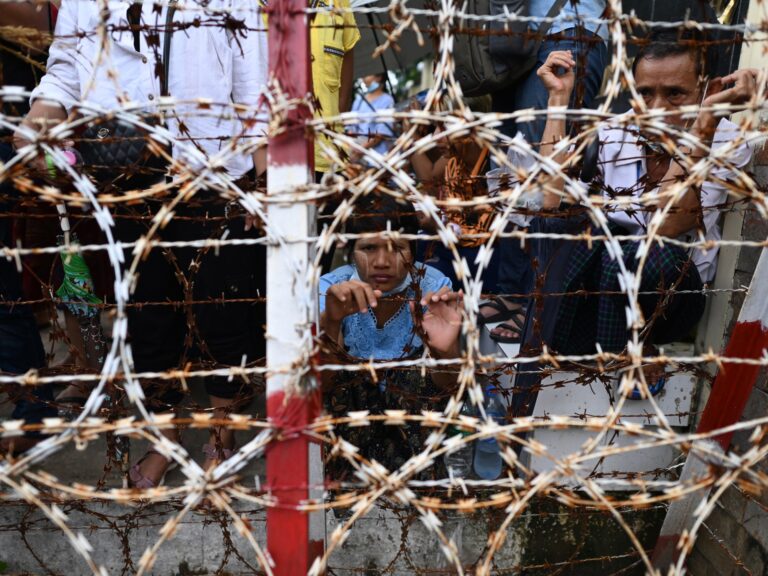
Lin Latt Shwe, 6, was detained along with her mother and other suspects in the killing of a retired general in Yangon.
Security forces in Myanmar have arrested a six-year-old girl, along with 15 other people suspected of involvement in the assassination of a retired army officer last month, state-run media report.
The 16 suspects – 13 males and three females – were arrested in four different regions of the country late last month, the state-run Global New Light of Myanmar said on Friday.
Those arrested include Lin Latt Shwe, the six-year-old daughter of the alleged assassin, Myo Ko Ko, who was reported to have at least three other aliases. The newspaper report said the child and her parents were arrested in the central city of Bagan.
A little-known armed group calling itself the Golden Valley Warriors claimed responsibility for killing retired Brigadier General Cho Tun Aung, 68, who was shot outside his home in Yangon, the country’s commercial capital, on May 22.
Other detainees include the owner of a private hospital, which is alleged to have provided treatment to the assassin, who, according to the newspaper report, suffered a gunshot wound during the attack.
Independent news outlet The Irrawaddy said the Golden Valley Warriors have denied that the 16 people detained were part of their operation.
The junta has arrested 16 people including a 6-year-old girl on suspicion of involvement in the assassination of retired Brig-Gen Cho Tun Aung in Yangon on May 22. Golden Valley Warriors claimed responsibility and said the 16 are not related to them. #WhatsHappeningInMyanmarpic.twitter.com/dtTCEJ1bF0
— The Irrawaddy (Eng) (@IrrawaddyNews) June 6, 2025
The killing of Cho Tun Aung, who was a former ambassador to Cambodia, is the latest attack against figures linked to the ruling military who launched a takeover of the country in 2021 after deposing the democratically elected government of Aung San Suu Kyi.
Since the coup and the outbreak of the civil war in Myanmar, targeted assassinations have been carried out against high-ranking active and retired military officers, as well as senior civil servants, local officials, business associates of the ruling generals and suspected informers.
Soon after carrying out the assassination, the Golden Valley Warriors said in a statement posted on Facebook that Cho Tun Aung had been teaching internal security and counterterrorism at Myanmar’s National Defence College and was, by his actions, complicit in atrocities committed by the military in the ongoing civil war.
An earthquake of magnitude 6.4 struck during a live TV broadcast in Chile’s northern city of Copiapó.
Chilean politician and presidential candidate, Carolina Toha, was speaking about her campaign proposals with two journalists when the studio began shaking.
The interview was cut short as all three quickly left the studio as the tremors continued, knocking down equipment on the set.
For more than a decade, China’s aspirational shoppers, spurred by a fast-growing economy and rising wages, snapped up products from cosmetics giants like L’Oreal, Estee Lauder, and Shiseido. Before the COVID pandemic hit, China appeared set to overtake the U.S. as the world’s largest makeup market.
Those boom times are over, as more Chinese consumers now turn to up-and-coming local brands, like Mao Geping and Florasis.
L’Oreal’s sales in Mainland China dropped last year, shrinking its overall North Asia sales by around 3%. The Chinese market, the bulk of the firm’s North Asia revenue, now accounts for 17% of group sales, down from 23% in 2022. The French firm continues to call China an important market, but has reportedly started cutting its retail workforce due to slower Chinese demand.
As China stagnates, L’Oreal is now looking to regions, like the Middle East and Southeast Asia, as a source of growth.
SAPMENA—L’Oreal’s term for “South Asia Pacific, Middle East, and North Africa”—will soon “play a much bigger role” when it comes to beauty, says Vismay Sharma, who oversees the region for the French cosmetics firm.
L’Oreal, No. 91 on Fortune’s Europe 500, reported sales of 1.1 billion euros ($1.19 billion) for the first quarter of 2025, up 12.2% year-on-year, across SAPMENA and Sub-Saharan Africa (SSA).
That’s still small compared to other regions, sitting far behind Europe, North America and North Asia. But while SAPMENA-SSA only contributed9.2%of L’Oreal’s quarterly revenue, it was the only region to log double-digit growth.
SAPMENA covers a huge swathe of the globe, stretching from Morocco all the way down to New Zealand just under 19,000 kilometers away. The region’s 35 markets cover 3 billion people, or about 40% of the world’s population, yet only accounts for 10% of global beauty sales. “It has to come together, and eventually demographics have to win,” Sharma says.
SAPMENA’s quick growth doesn’t surprise Sharma. “The consumers in this part of the world are about 5 years younger than the rest of the world, live in aspirational societies and in economies that are growing fast,” he says.
China has proved to be a tricky market for global cosmetics firms post-pandemic. Sluggish China sales have dragged down the financial results of U.S. firm Estee Lauder and Japan’s Shiseido.
A sluggish economy and stagnant consumption are partly to blame. But there’s also new competition. “C-Beauty” brands are starting to pick up steam among Chinese shoppers, with new brands going viral on Douyin, the Chinese version of TikTok, and other social media platforms. (L’Oreal is paying attention, investing in local Chinese brands like To Summer)
Still, Sharma thinks China offers lessons for SAPMENA.
Southeast Asia, like China, has highly connected consumers who are used to e-commerce and livestreaming. For example, Sharma notes that over 50% of L’Oreal’s business in Vietnam comes from e-commerce.
This is less true of the Middle East and North Africa.
“When you look at the ecosystem of beauty over there, you still don’t have TikTok Shop. They’re still a few years behind platforms like Shopee, like Lazada,” he says.
Yet consumers in the Middle East share similar preferences to those in Southeast Asia. “Expectations for beauty are very similar. We can see aspirations in terms of kind of hair, skin, lips, and eyes,” Sharma says, pointing to a preference for longer black hair as an example.
That gives L’Oreal a chance to grow in the region. “Our ability to create content at scale in the GCC becomes a huge advantage,” Sharma says.
After the conclusion of the 100 backstroke tonight, all four stroke 100’s have come and gone in Indianapolis. The 100 freestyle and butterfly saw no surprises in top spot, as the #1 seed took the win, but the 100 breaststroke and backstroke tonight were far more open – especially after top seed Shaine Casas scratched the backstroke heats.
So, what does all this mean for Team USA’s 4×100 medley relay this summer? We looked at this before the start of the championships, but now know who will be on the team – and kudos to you if this was the quartet you had down.
Stroke-By-Stroke
Last year’s Olympic Trials featured a familiar face winning three of the four stroke 100s. Ryan Murphy, Nic Fink and Caeleb Dressel took the wins in backstroke, breaststroke and butterfly and were subsequently on the finals relay in Paris.
All three are skipping the National Championships and by extension worlds this year. This introduced a considerable amount of uncertainty, which came to the fore today – both of the event winners in the 100 backstroke and 100 breaststroke are first time National Teamers this year.
Jack Alexy and Shaine Casas are a world-class back half, although of the four swimmers now projected to be on the relay only Alexy has swum on a summer medley relay before for the US.
Casas swam fly on the men’s relay at the 2024 Doha World Championships, splitting 50.99 at a meet where he was only 52.21 individually, so a 50-low could be on the cards. However, the swimmers that tend to benefit more from a flying start on fly are those with a strong second 50.
For Casas, who was out in 23.40 yesterday and 23.31 in his PB (50.40), there isn’t really half-to-three-quarters of a second to drop on the first 50. All of the swimmers in Paris who broke 23 on the way out have 50 PBs at least three-tenths faster than Casas, other than Ilya Kharun, who can bemuch quicker than 23.09 (or even his unofficial 22.93) in the 50.
However, by forgoing the 100 backstroke he has made his intentions clear that the 100 fly will be a focus. He’s 4th in the world so far this year, is quick enough to be in the World final and he can without a doubt be 50-flat on this relay. He will need to be.
McKean is the bolter of the squad, dropping over two seconds in the last 12 months. He has one swim under the 1:00-barrier, one swim under the 59-second barrier, is #T-6 all-time with Eric Shanteau among US men and the second-fastest man in the World so far this year.
It’s hard to believe all that comes from the same swimmer, and by virtue of his rapid rise will be the least predictable part of this relay. He was no worse than his flat -start time on relays at Junior Pan Pacs last year, splitting 1:01.15 and 1:00.35 after going 1:01.13 individually.
He is precisely the kind of swimmer who will benefit from the need-for-speed first 50 on a flying split. He had a wicked second 50 tonight of 31.29 and was 31.63 this morning. The first of those is about on par with peak Nic Fink, and it would not be a shock if he was in the 58-mid range at Worlds.
Tommy Janton is probably the shock of the Championship so far. He was 8th at last year’s Olympic Trials, setting his previous best of 53.61 in the semi-finals, and snuck into tonight’s final by just over a tenth.
The outside smoke paid off for him as he was around half a second faster tonight on both 50s, splitting 25.61/27.39 to go 53.00, a big drop, but that is the slowest national Champion since 2015 when Nick Thoman went 53.23.
For Championships held in years where a National Team was selected, this was the slowest winning time since David Plummer won the 2008 Olympic Trials in 53.60.
For the US, who in World and Olympic finals have hit the wall at the end of the backstroke leg no lower than third since the 2001 World Championships (when they were DQed), this year will come as a shock.
There are five countries who should comfortably touch the wall ahead of the US after leg 1 this year. All have swimmers who have been under 52.5 in the last 12 months.
If either of Poland or Hungary make the final you can add them to the list as well. The breaststroke leg will be a gauntlet for McKean to run, likely starting in the wash of swimmers much bigger than he is, unsurprising given the age difference.
Jack Alexy is the one bona-fide 100m star on this relay, #6 all-time in freestyle and the fastest man in the last five years not named David Popovici or Pan Zhanle. He is the fastest man in the world so far this season, and the only one under 47 seconds
There is of course a caveat with him too – he has been better individually than on relays at his two major long course meets, and his best-ever split (47.00) is a hundredth slower than his flat-start best.
He changed that at Short Course Worlds, over half a second faster on the relays than his gold-medal-winning time from the individual final. Now on his third international team in a row, he’s got the pace and the power to fight through the wash on the final leg.
Even with the star power of Alexy, the U.S. will almost certainly not have the fastest of any of the four legs in the final. They have had at least one in every summer final since 2015.
In Paris, for the first time since the boycotted 1980 Moscow Games, the United States did not win the 4×100 medley relay at the Olympics. China were champions there behind Pan Zhanle’s 45.92 freestyle split, and will return three of their four legs from last year, with the fourth (butterfly) looking stronger with Chen Juner on after he was 51.03 at Chinese Nationals.
Russia will also return to the World stage under the guise of ‘Neutral Athletes B’, and look like the only nation to potentially challenge China this year. Their National Record was recently broken – by the St Petersburg team, not the National Team – at the recent Russian Championships in 3:28.49. Notably, that did not feature Kliment Kolesnikov or Andrei Minakov.
By the look of things the U.S. will be in a scrap for bronze. Their add-up from Trials here is 3:29.64 – the slowest it has been since 2018. With France, Great Britain, Italy and Australia all in the fight as well, they will be glad of the World’s experience of Jack Alexy and Shaine Casas.
Once again, we’ll have a brief look back at the drops that the medley relay team has made from their Trials add-up, and a very rough prediction for what they may go in Singapore.
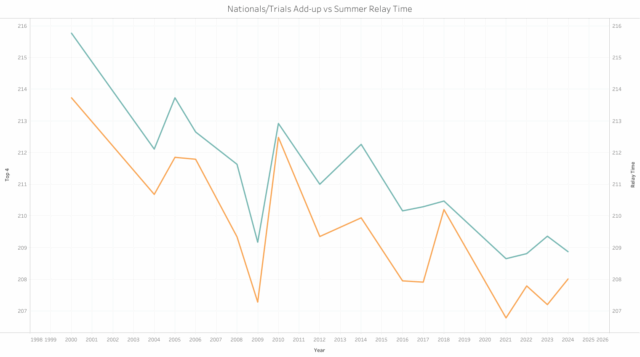
Here was what the gaps look like between the add-up from the top four at Nationals and the relay times swum later that summer since 2000.
The Numbers
Fastest three flat-start times of the four stroke 100 champions:
Fastest international three relay splits of the four stroke 100 champions:
Flat-start add-up (last 24 months):
Flat-start + relay split add-up (last 24 months):
You can tell this is a very new relay team – not one has a flying split faster than their flat-start best.
The medley relay team is one of the most consistent at dropping time – they have done so at every major summer meet in in the 21st Century
And then just for fun, here are the U.S. Nationals/Trials to summer relay drops since 2000 based on location. The circles get darker as the year gets later, and any hollow circles indicate a negative drop – that is, an increase.
A 2025 study in the UK revealed that the country loses the equivalent of 1,200 Olympic-sized swimming pools of drinking water every day due to leaks and ageing infrastructure. In a world where increasingly frequent droughts and extreme weather events make it harder to guarantee a stable and reliable water supply, technology has become a vital ally in improving the efficiency of sanitation and distribution networks. In this article, we highlight some of the latest innovations helping to monitor and protect infrastructure that often remains invisible to the average city dweller.
Technological solutions that safeguard every drop of water
Progress in the sector spans both software—such as artificial intelligence and big data—and hardware, including robotics, sensors and IoT-based technologies.
Robotic inspectors supporting sewerage networks
One example comes from northern Spain, where ACCIONA has deployed drones and robotic dogs to inspect Bilbao’s sewer network, starting with a pilot across eleven kilometres of pipes. The drones are equipped with high-resolution cameras, while the robotic dogs boast 360-degree vision and artificial intelligence, enabling them to detect blockages, leaks and structural defects even in hard-to-reach areas.
These technologies not only improve the accuracy of inspections but also enhance safety by reducing the need for human operators to enter hazardous environments. They provide real-time data, allow potential faults to be identified early, and help optimise resources — all of which contributes to more efficient and sustainable maintenance.
Joey, pipe inspections on wheels
A similar initiative, though at an earlier stage of development and focused on water distribution systems, is the Joey robot. This small autonomous vehicle weighs just 70 grams and uses rotating legs to move through pipes, identifying leaks or structural issues along the way. Joey forms part of Pipebots, a collaborative project involving UK universities and water providers, which envisions swarms of robots eventually being deployed by a larger “mother” robot known as Kanga.
Acoustic sensors that detect leaks in real-time
Robots and drones are not the only tools making a difference. One particularly effective solution in the UK involves acoustic sensors installed along water distribution networks. One utility has placed more than 24,000 of these sensors across 15,000 kilometres of pipework, cutting water losses by 15%—the equivalent of 17 million litres saved each day. These sensors detect minute changes in the sound of flowing water, allowing leaks to be identified the moment they occur.
The countless applications of AI
As noted, innovation in water management is not limited to hardware. Artificial intelligence offers wide-ranging applications in the sector. We recommend this article, which explores how AI can help reduce chemical use in water treatment, predict leaks before they happen, and improve energy efficiency in water pumping systems.
Digital twins for infrastructure (and rivers)
Another software-driven solution, supported by IoT sensors, is the use of digital twins. These virtual models replicate sanitation infrastructure and enable monitoring, simulations and interventions using AI and immersive reality tools. In addition to use in built infrastructure, digital twins of rivers can be developed to forecast flooding and manage other river-related risks.
If you are interested in learning more about the potential of digital twins, check out this in-depth article on their features and applications.
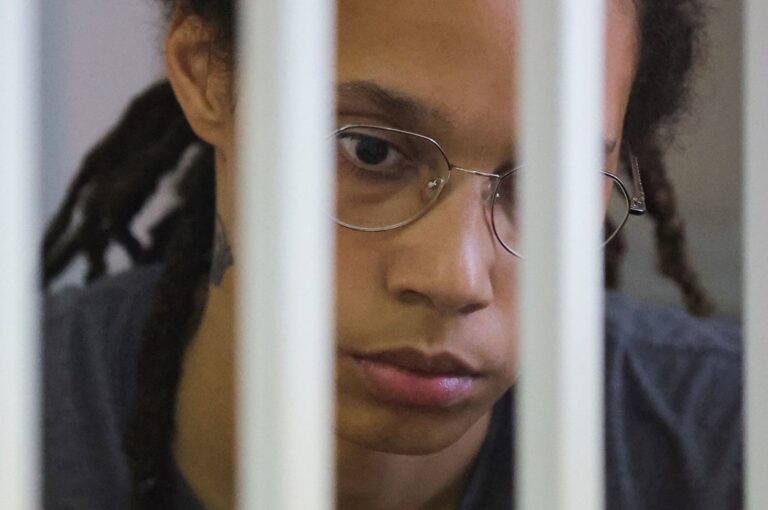
The two-time Olympic gold medalist, 32, was arrested in February as she tried to leave Russia, where she had been playing basketball in the WNBA offseason.
She testified in court that she used prescribed cannabis oil to treat pain from sports injuries, but had forgotten the cartridges were in her luggage when she hastily packed for her trip.
US diplomats are under intense pressure to negotiate a prisoner swap for Griner and Paul Whelan, who was arrested in 2018 and accused of being a spy.
Speaking to reporters at the White House after Tuesday’s midterm elections, President Joe Biden said there had been a number of discussions to try to secure Griner’s release.
“I’m hopeful that now that our election is over there’s a willingness to negotiate more specifically with us,” Biden said. “I’m determined to get her home and get her home safely.”
Advocates say the Americans are being kept as political pawns by the Kremlin amid the ongoing fallout from Russia’s invasion of Ukraine.
“We are thankful for everyone’s support, and hope that as we near nine months of detention, that BG and all wrongfully detained Americans will be shown mercy and returned home to their families for the holidays,” Colas said.