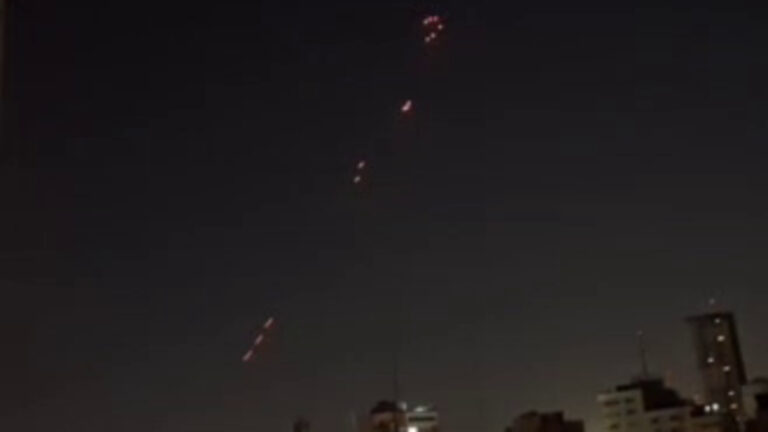
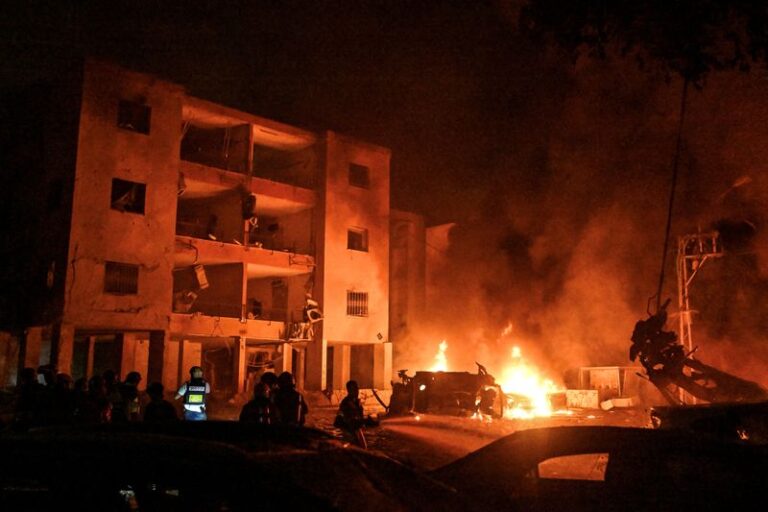
Iran’s air defence batteries have been firing overnight in the capital Tehran to counter a fourth night of Israeli strikes. Iranian officials say Israeli attacks have killed more than 224 people, including 70 women and children.
A survivor of Saturday’s deadly attacks on two Minnesota lawmakers says she and her husband are both “incredibly lucky to be alive” after they were hit by 17 bullets.
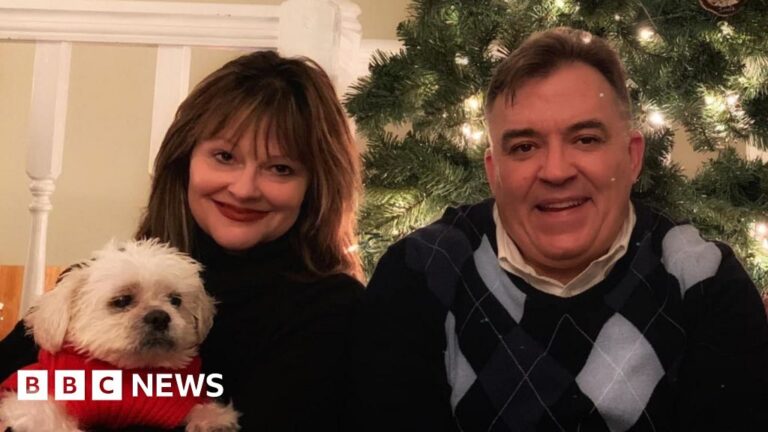
State Senator John Hoffman and his wife, Yvette, were gunned down at their home early on Saturday morning, but lived. Melissa Hortman – the top Democratic legislator in the state House – and her husband, Mark, were shot and killed.
Yvette Hoffman said in a statement that she and her husband John were “devastated” by the Hortmans’ deaths.
Police are hunting for the suspect, Vance Luther Boelter, who wore a latex mask and posed as an officer to shoot the victims at their homes in suburban Minneapolis, before escaping on foot.
Mrs Hoffman’s statement was shared on Instagram by Minnesota Senator Amy Klobuchar.
“John is enduring many surgeries right now and is closer every hour to being out of the woods,” Mrs Hoffman wrote.
“He took 9 bullet hits. I took 8 and we are both incredibly lucky to be alive.
“We are gutted and devastated by the loss of Melissa and Mark. We have no words. There is never a place for this kind of political hate.”
Police have not disclosed the killer’s motive.
A Facebook post from someone identifying as Mrs Hoffman’s nephew said she had thrown herself on her daughter during the assassination attempt, “using her body as a shield to save her life”.
According to the Minnesota Star Tribune, the daughter, Hope, is in her 20s and was born with spina bifida, which her father previously cited as motivating him to get into state politics.
Getty Images
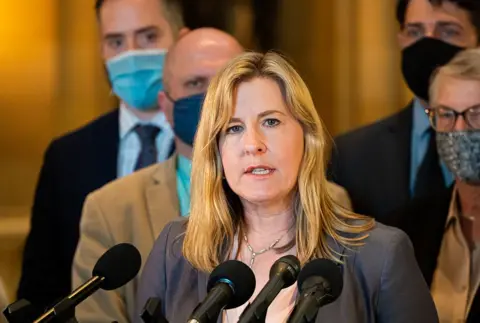
Minnesota Legislature House Speaker Melissa Hortman
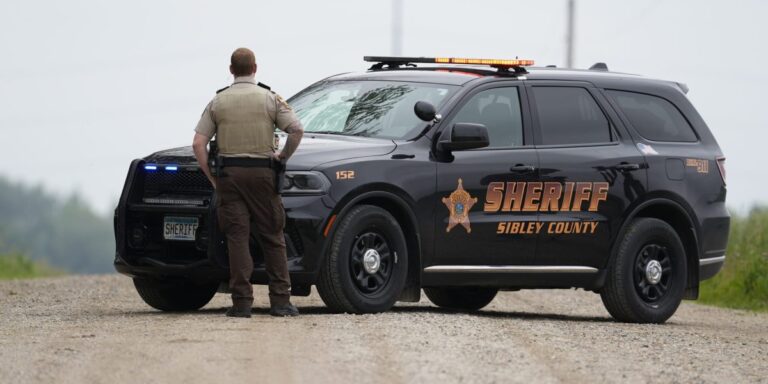
On Sunday, police said they had found an unoccupied car linked to the suspect in Sibley County, about 50 miles (80km) from the murder scene.
The discovery of the black sedan was alerted to local residents’ mobile phones in a message that said: “Suspect not located. Keep your doors locked and vehicles secured.”
A cowboy hat, similar to what Boelter, 57, was believed to have been wearing, was found nearby.
Police also said on Sunday that Boelter’s wife had been detained in a traffic stop along with three relatives in a car in the city of Onamia, more than 100 miles from the family home in the rural community of Green Isle, on Saturday morning.
Jenny Boelter was released without being taken into custody because she was co-operative, Drew Evans, of the Minnesota Bureau of Criminal Apprehension, told a news conference on Sunday evening.
EPA
The manhunt began on Saturday
Police have extended the search over state lines to South Dakota and the FBI has added Boelter to its most-wanted list, issuing a $50,000 reward.
Both of the targeted lawmakers belonged to Minnesota’s Democratic–Farmer–Labor Party, which is affiliated with the national Democratic Party.
Authorities said they recovered a target list that included the names of Minnesota Democratic politicians from another vehicle used by the suspect.
Governor Tim Walz, congresswoman Ilhan Omar, Klobuchar and another US Senator, Tina Smith, were on the list – along with state Attorney General Keith Ellison, people familiar with the investigation told local media.
“Clearly, this is politically motivated,” Klobuchar told NBC News’ Meet the Press on Sunday morning.
President Donald Trump, a Republican, told ABC News on Sunday the attack was “a terrible thing”.
Reuters
Bullet holes mark the front door of the Hoffman home
Investigators say Boelter was disguised as a police officer when he carried out the attacks and had a vehicle that looked like a police car, equipped with flashing emergency lights.
The gunman first targeted the Hoffmans at their home in Champlin at around 02:00 local time on Saturday, authorities said.
Soon afterwards, Hortman and her husband, Mark, were shot and killed at their home in Brooklyn Park, eight miles away.
Officers arrived at the Hortmans’ home and exchanged gunfire with the suspect at around 03:35. The suspect managed to flee, leaving behind his car, authorities said.
According to Boelter’s CV, he has a background in security and military training and had also been a pastor.
The city of Brooklyn Park was silent on Sunday morning as the neighbourhood came to terms with a suspected political assassination on its doorstep.
A police car was parked outside the Hortmans’ house and bright yellow caution tape surrounded the property.
Police have issued images of the suspect
Taha Abuisnaineh, who lives across the street, said he and his wife had known the family for more than 20 years.
“They were very nice neighbours in a very quiet neighbourhood,” he told the BBC. “You don’t see police activity in this neighbourhood. We are very shocked.”
Two other nearby residents who did not want to be named said the suburban community was reeling.
“My next-door neighbour heard the shots,” said one. “We’ve all been texting back and forth.”
She and her husband described how they received an annual Christmas card from the Hortmans.
“What a big loss for Minnesota,” she said.
In Sibley County, where the suspect’s car was found, local resident Brian Liebhard also told the BBC of his shock.
“This guy needs to get caught,” he said. “I don’t agree with everything they [the two politicians] vote for, but this is sad – the guy went wacko.”
The man suspected of killing a Minnesota lawmaker and wounding another has been taken into custody, two law enforcement officials said, bringing an end to a nearly two-day search that put the state on edge.
Vance Boelter was arrested Sunday evening. The arrest was confirmed to The Associated Press by law enforcement officials were who were not authorized to publicly discuss details of the ongoing investigation and spoke to AP on condition of anonymity. Former Democratic House Speaker Melissa Hortman and her husband, Mark, were killed in their Brooklyn Park home early Saturday in the northern Minneapolis suburbs. Sen. John Hoffman, also a Democrat, and his wife, Yvette, were injured at their Champlin home, about 9 miles (about 15 kilometers) away.
Boelter was captured in Minnesota, though officials didn’t immediately say where.
A criminal complaint unsealed Sunday night says Boelter faces two counts of second-degree murder and two counts of attempted second-degree murder in the deaths of the Hortmans and the wounding of Hoffman and his wife.
The Hoffmans were attacked first at their home in Champin early Saturday. After police in nearby Brooklyn Park learned of that shooting, they sent patrol officers to check on the Hortmans’ home.
Brooklyn Park police officers arrived just in time to see Boelter shoot Mark Hortman through the open door of the home, the complaint says. It says they exchanged gunfire with Boelter, who fled inside the home before escaping the scene.
The complaint indicates the shooting at the Hoffmans’ home was called in by their adult daughter.
This photo made available by the Ramsey County Sheriff’s Office shows Vance Luther Boelter, the man accused of assassinating the top Democrat in the Minnesota House, as he was arrested late Sunday.
Ramsey County Sheriff’s Office via AP
A massive search
Earlier Drew Evans, superintendent of the Bureau of Criminal Apprehension, said authorities found a car very early Sunday they believed Boelter was using, a few miles from his home in Green Isle, in the farm country about an hour west of Minneapolis. He also said they found evidence in the car that was relevant to the investigation, but did not provide details.
Authorities named Boelter, 57, as a suspect, saying he wore a mask as he posed as a police officer, even allegedly altering a vehicle to make it look like a police car.
Evens confirmed that investigators found a cowboy hat near the vehicle and believe it belonged to Boelter. The superintendent also said authorities interviewed Boelter’s wife and other family members in connection with Saturday’s shootings. He said they were cooperative and were not in custody.
The FBI had issued a reward of up to $50,000 for information leading to his arrest and conviction.
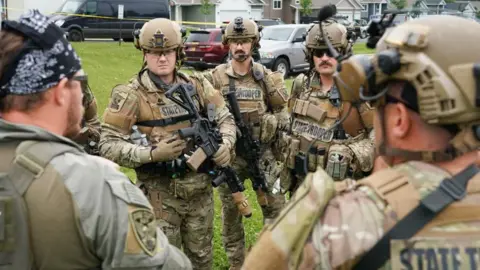
More than 100 law enforcement officers including SWAT teams were searching the area, including nearby homes, Evans said. He also said they had received more than 400 tips from the public.
The earlier search happened in rural Sibley County, roughly 50 miles (80 kilometers) southwest of Minneapolis, where Boelter had a home with his wife and five children. Residents in the area received an emergency alert about the located vehicle that warned them to lock their doors and cars.
Brightly colored flowers and small American flags were placed Sunday on the gray marbled stone of the Minnesota State Capitol along with a photo of the Hortmans. People scrawled messages on small notes including, “You were our leader through the hardest of times. Rest in Power.”
Pam Stein came with flowers and kneeled by the memorial. An emotional Stein called Hortman an “absolute powerhouse” and “the real unsung hero of Minnesota government.”
No details on motive
Authorities have not yet given details on a motive.
A list of about 70 names was found in writings recovered from the fake police vehicle that was left at the crime scene, the officials said. The writings and list of names included prominent state and federal lawmakers and community leaders, along with abortion rights advocates and information about healthcare facilities, according to the officials.
Evans clarified that while he described the materials on Saturday as a “manifesto,” the papers were not a political or ideological treatise. He said it was more of a notebook, listing lawmakers and other people, with various thoughts mixed in. He declined to give details.
A Minnesota official told AP lawmakers who had been outspoken in favor of abortion rights were on the list. The official spoke on the condition of anonymity because the investigation was ongoing.
The attacks prompted warnings to other state elected officials and the cancellation of planned “No Kings” demonstrations against President Donald Trump, though some went ahead anyway, including one that drew tens of thousands to the State Capitol in St. Paul. Authorities said the suspect had “No Kings” flyers in his car.
Boelter is a former political appointee who served on the same state workforce development board as Hoffman, records show, though it was not clear if or how well they knew each other.
Around 6 a.m. Saturday, Boelter texted friends to apologize for his actions, though he didn’t say what he had done.
“I’m going to be gone for a while. May be dead shortly, so I just want to let you know I love you guys both and I wish it hadn’t gone this way. … I’m sorry for all the trouble this has caused,” he wrote in messages viewed by AP.
Two Democrats targeted
On Sunday evening, U.S. Sen. Amy Klobuchar shared a statement from Yvette Hoffman expressing appreciation for the outpouring of public support.
“John is enduring many surgeries right now and is closer every hour to being out of the woods,” Yvette Hoffman said in a text that Klobuchar posted on social media. “He took 9 bullet hits. I took 8 and we are both incredibly lucky to be alive. We are gutted and devastated by the loss of Melissa and Mark.”
On social media, Gov. Tim Walz remembered Hortman on Sunday as, “The most consequential Speaker in state history.”
Hortman, 55, had been the top Democratic leader in the state House since 2017. She led Democrats in a three-week walkout at the beginning of this year’s session in a power struggle with Republicans. Under a power-sharing agreement, she turned the gavel over to Republican Rep. Lisa Demuth and assumed the title speaker emerita.
Hortman used her position as speaker in 2023 to champion expanded protections for abortion rights, including legislation to solidify Minnesota’s status as a refuge for patients from restrictive states who travel to the state to seek abortions — and to protect providers who serve them.
The couple had an adult son and an adult daughter.
Hoffman, 60, was first elected in 2012 and was chair of the Senate Human Services Committee, which oversees one of the biggest parts of the state budget. He and his wife have one adult daughter.
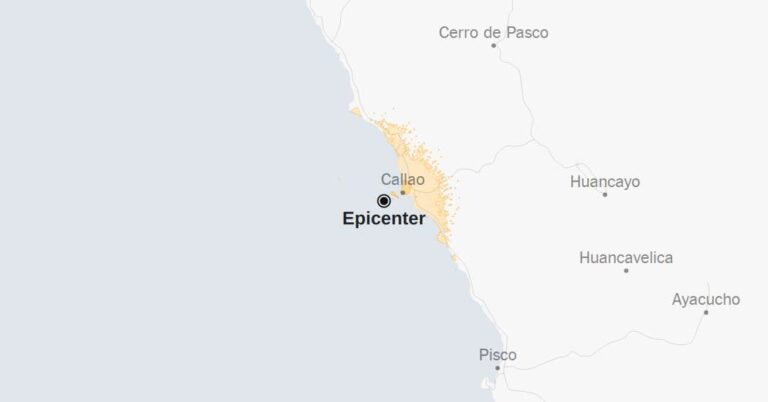
Note: Map shows the area with a shake intensity of 3 or greater, which U.S.G.S. defines as “weak,” though the earthquake may be felt outside the areas shown. All times on the map are Peru Standard Time.The New York Times
A moderately strong, 5.6-magnitude earthquake struck near Lima, Peru on Sunday, according to the United States Geological Survey.
The temblor happened at 11:35 a.m. Peru Standard Time about 14 miles southwest of Callao, Peru, data from the agency shows.
As seismologists review available data, they may revise the earthquake’s reported magnitude. Additional information collected about the earthquake may also prompt U.S.G.S. scientists to update the shake-severity map.
Source: United States Geological Survey | Notes: Shaking categories are based on the Modified Mercalli Intensity scale. When aftershock data is available, the corresponding maps and charts include earthquakes within 100 miles and seven days of the initial quake. All times above are Peru Standard Time. Shake data is as of Sunday, June 15 at 11:53 a.m. Peru Standard Time. Aftershocks data is as of Sunday, June 15 at 11:06 p.m. Peru Standard Time.
Roula Khalaf, Editor of the FT, selects her favourite stories in this weekly newsletter.
The writer is author of ‘Blood and Treasure, the Economics of Conflict from the Vikings to Ukraine’
Worries over geopolitical risks have regularly featured towards the top of polls of investor concerns over the past year. In recent months, “geopolitical risk” has often been a polite euphemism for unpredictable American tariff policies, preferred by US institutions which do not want to annoy the White House too much. But now the geopolitical risk which is materialising, is a more traditional one, the threat of long-running conflict in the Middle East putting global oil supplies at risk.
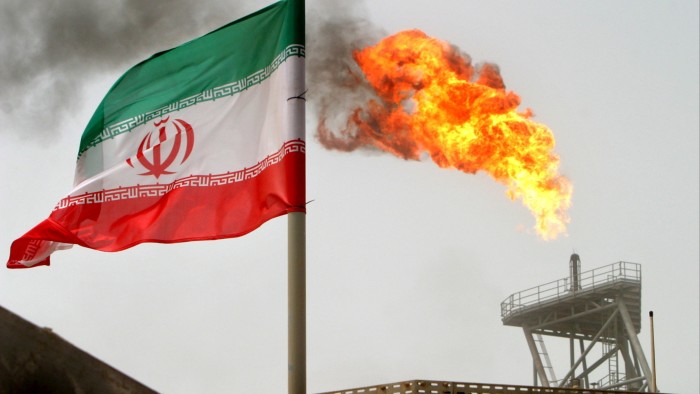
Oil prices rose as much as 12 per cent in the immediate aftermath of Israel’s attacks on Iran’s nuclear facilities. Over the weeken,d the conflict escalated further with Israel hitting, among other targets, a major oil terminal in Tehran. Iran produces around 3.3mn barrels per day of crude, of which 2mn are exported. Given global oil demand is estimated at 103.9m bpd by the International Energy Agency and that Saudi Arabia and the UAE are reported to be capable of raising production quickly by more than 3.5m bpd, even a severe disruption in Iranian production is likely manageable. The spike in the oil price following the first Israeli strikes reflected wider concerns that the conflict could spiral to a point where Tehran attempted to close the Straits of Hormuz to tankers or even attack the oil facilities of its neighbours.
The interplay of geopolitical uncertainty, oil prices, and macroeconomics is rarely straightforward, as some useful research from the European Central Bank published in 2023 indicates. It points out Brent crude prices leapt by 5 per cent in the immediate aftermath of 9/11 terrorist attacks in New York as investors priced in the chance of war in the Middle East disrupting supplies. But they were down by 25 per cent within 14 days as fears that a slowing global economy would weaken oil demand came to the fore. In the two weeks following Russia’s invasion of Ukraine in February 2022, Brent prices rose by 30 per cent. But they were back at their pre-invasion level eight weeks later.
The ECB research suggests geopolitical shocks impact the global economy through two channels. In the short term, the most important of these is usually the risk channel. As financial markets price in the chance of further disruptions to global oil supplies, it causes an increase in the cash value of holding oil contracts — known as the convenience yield — putting upward pressure on oil prices. But in the longer term, the economic activity channel comes into play. Higher geopolitical tensions tend to act as negative shock to global demand as increased uncertainty weighs on investment and consumption and potentially disrupts trade. This channel usually dampens global oil demand and prices. In other words, oil price pressures resulting from geopolitical shocks have tended to be short-lived.
This has not always been the case. The oil price shocks of 1973 and 1979 were both followed by US recessions and the potential for a geopolitically driven oil price spike to capsize the global economy still tends to concern both policymakers and investors. They can perhaps take some solace from research published earlier this year by the Federal Reserve Bank of Dallas. The authors of this study adopted a novel approach, attempting to separate out oil price uncertainty from wider macroeconomic uncertainties. They found that geopolitically driven oil price risks are unlikely to generate sizeable recessionary effects. Even a large increase in the risk of a production shortfall on the scale of 1973 or 1979 would only, according to the model, lower economic output by 0.12 per cent.
While high uncertainty about future oil supplies can raise crude prices in the short term, unless those risks materialise, the global macroeconomic fallout is likely to be limited. A similar impact is evident in asset prices more generally. According to the IMF’s most recent Global Financial Stability Report, geopolitical risk events since the second world war have usually been associated with a modest fall in equity prices in the short term but, in most cases, with no lasting impact. Global equity markets eventually shrugged off both Iraq’s invasion of Kuwait in 1990 and Russia’s of Ukraine in 2022. Again though 1973 stands out as an exception, with the oil embargo of that year leaving global equity markets sharply lower 12 months later.
Much will, of course, dependent on how long the Israel-Iran conflict lasts and how it escalates. It should be remembered that even during the “Tanker War” of the 1980s, in which during the Iran-Iraq more than 200 oil tankers passing through Hormuz were bombed, oil prices stabilised after an initial spike. The effects of anything short of a major disruption in Middle Eastern oil output are likely to be contained.
Fitter and Faster Swim Camps is the proud sponsor of SwimSwam’s College Recruiting Channel and all commitment news. For many, swimming in college is a lifelong dream that is pursued with dedication and determination. Fitter and Faster is proud to honor these athletes and those who supported them on their journey.
Jack Troy from Mount Pleasant, South Carolina has announced his commitment to continue his academic and athletic careers at Arizona State beginning in fall 2025.
Troy swims for South Carolina Swim Club and just finished his senior year at Academic Magnet School.
He most recently competed at Sectionals in Cary, NC, swimming numerous personal best times. He finished 2nd in the 200 free swimming a lifetime best 1:38.09 as well as 2nd in the 200 IM in a lifetime best 1:50.05. He also touched 2nd in the 100 fly (48.66), 200 back (1:43.94), and 100 back (47.40). His 100 fly and 200 back were best times as well. His 100 back was just off his lifetime best of a 47.33 that he swam for 4th at Winter Juniors-East last December.
Troy’s Best SCY Times Are:
100 back: 47.33
200 back: 1:43.94
200 free: 1:38.09
200 IM: 1:50.05
100 fly: 48.66
200 fly: 1:49.44
The Arizona State men captured the 2025 Big 12 Title and went on to finish 6th at 2025 NCAAs under first year head coach Herbie Behm. Ilya Kharun led the team with 48 individual points at NCAAs highlighted by a 2nd place finish in the 100 fly.
Based on his best times, Troy brings plenty of momentum to Tempe. His 200 backstroke would have made the Big 12 ‘A’ final while his 100 back would have made the ‘B’ final.
Jack Wadsworth led the team in the 100 back this past season with a 45.01 while Quinlan Gould led with a 1:41.70 200 backstroke. Also joining the backstroke group this fall is Adam Chaney, who arrives for his fifth year after spending his undergraduate career at Florida.
If you have a commitment to report, please send an email with a photo (landscape, or horizontal, looks best) and a quote to [email protected].
About the Fitter and Faster Swim Tour
Fitter & Faster Swim Camps feature the most innovative teaching platforms for competitive swimmers of all levels. Camps are produced year-round throughout the USA and Canada. All camps are led by elite swimmers and coaches. Visit fitterandfaster.com to find or request a swim camp near you.
The human spine, with its distinctive “S” shape, enables upright posture and bipedal locomotion, which freed the upper limbs for tool use, artistic pursuits, and technological advancements. However, this evolutionary adaptation comes at a cost. The upright posture subjects the spinal column to significant biomechanical stress, particularly during heavy lifting or repetitive movements. Over time, these stresses can result in debilitating conditions such as lower back pain, intervertebral disc herniation, and other musculoskeletal disorders. A while ago, we discussed the use of exoskeletons across various fields and their rapid technological advancements. Now, Korean researchers have unveiled a state-of-the-art exoskeleton designed to mitigate these risks, offering an innovative solution to protect spinal health during physically demanding tasks.
BBEX: an exoskeleton for safe working conditions
Unlike conventional exoskeletons, the device developed by researchers at Seoul National University replicates the human spine, providing direct support to the vertebrae. Named the Bilateral Back Exoskeleton Extensor (BBEX), the prototype was presented in Science Robotics, accompanied by a study explaining its development and testing.
Inspired by the human spine and its muscular system, the BBEX features a multi-degree-of-freedom structure and connected linear actuators. This design allows it to naturally follow the movements of the spine, providing continuous support at every angle. The device significantly reduces muscle fatigue and joint loading during lifting tasks, whether performed symmetrically or asymmetrically.
In addition, the BBEX incorporates advanced sensors that monitor user posture and exertion in real time. These sensors enable adaptive assistance, optimizing both support and comfort for the user. The exosuit’s ergonomic and lightweight design enhances its usability in work environments where agility of movement is critical.
To evaluate the prototype, the research team conducted trials with eleven healthy participants. Designed for environments requiring heavy lifting, the BBEX demonstrated its ability to reduce muscle fatigue, decrease joint compression forces, and provide multidimensional assistance. These features could significantly reduce workplace injuries. The developers highlighted its potential in industries like construction, where safety is paramount, but acknowledged the challenge of creating customizable models to suit users with different heights and body builds.
Exoskeletons that walk the walk
In addition to their use in work environments, exoskeletons are being explored to restore mobility for individuals with physical disabilities. A French company specializing in wearable robotics has proposed the use of these devices for people with conditions such as paraplegia.
During the Paris Olympics, a torchbearer showcased the viability of this technology by carrying the Olympic flame while walking with the assistance of an exoskeleton called Atalante, despite having been paralyzed since the age of eleven.
Kevin Piette, a Paralympic tennis player, was among the first athletes to test the Atalante, which is already being used in rehabilitation programs in the United States. The exoskeleton, which supports the legs, features a motor and battery system worn on the back like a backpack. Users operate it via a remote control that adjusts both direction and the level of assistance, from mild to total.
If the BBEX exoskeleton prototype for injury-free work piques interest, further advancements in exoskeleton technology are worth exploring. For instance, some exosuits are capable of lifting up to 200 hundred pounds with ease. Additionally, we have previously covered other safety innovations for the construction sector, such as wearable devices for on-site protection.
Tehran, Iran – Iran has promoted several commanders to the top of its military leadership after Israel killed their predecessors in a series of air attacks.
The leadership of Iran’s General Staff of the Armed Forces and the Islamic Revolutionary Guard (IRGC) has shifted significantly as the country defends against Israeli attacks and launches retaliatory strikes.
Let’s take a look at which commanders were killed, who replaced them, and what this means for the deadly conflict going forward.
How senior were the killed commanders?
Some of Iran’s top military leaders were killed during Israel’s multipronged assault, which started early on Friday.
Iran’s highest-ranking military commander, General Mohammad Bagheri, was among those killed. The veteran of the Iran-Iraq war of the 1980s was the chief of staff of the armed forces and only answered to Supreme Leader Ayatollah Ali Khamenei.
Other members of the general staff were also among the dead, including Deputy for Operations Mehdi Rabani and Deputy for Intelligence Gholamreza Mehrabi.
The IRGC also lost a considerable number of top figures in its command chain, chief among them being Hossein Salami, the leader of the force.
The elite aerospace division of the IRGC, which is tasked with developing Iran’s sprawling missile programme, confirmed the killing of eight senior commanders who were convening in an underground bunker in Tehran.
Longtime aerospace chief Ali Akbar Hajizadeh was among those killed, as were commanders leading the missile defence and drone wings of the force.
Who are the new commanders?
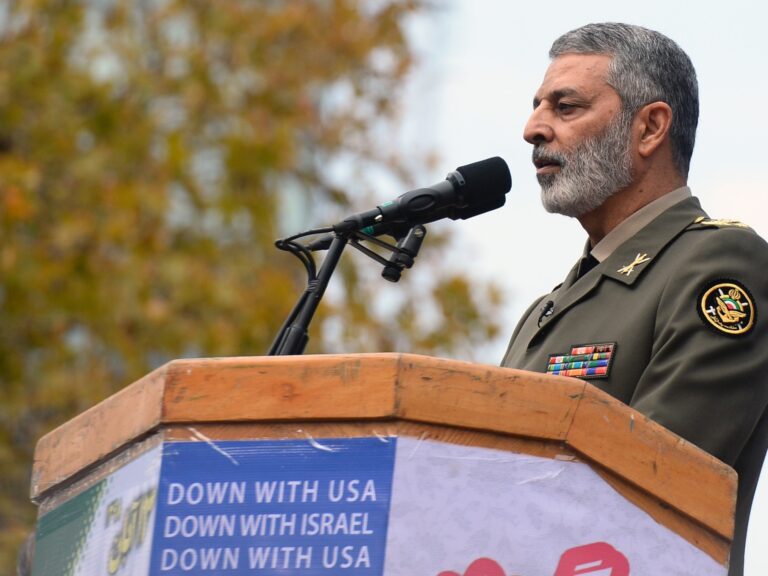
Khamenei tapped Abdolrahim Mousavi, the commander-in-chief of Iran’s army, to become the new chief of staff of the armed forces.
The 65-year-old brigadier general has now become the first army commander to assume the position. Previous figures who held the post came from within the IRGC.
Mousavi is also a war veteran and completed his military training and studies at the Supreme National Defense University in the aftermath of Iran’s Islamic revolution of 1979.
To lead the IRGC, Khamenei selected Mohammad Pakpour, a veteran commander who started and made his career within the elite force. He led the IRGC’s armoured units and then a combat division during the war with Iraq in the 1980s.
General Mohammad Pakpour is the new head of Iran’s Revolutionary Guard [File: AFP]
Pakpour led the IRGC ground forces for 16 years before he was appointed commander-in-chief. He was also a deputy for operations at the IRGC and used to lead two major headquarters of the force.
Iran’s supreme leader also promoted Amir Hatami to the rank of major-general, appointing him as commander of the army.
The 59-year-old is another career military man who rose through the ranks during the Iraq invasion, particularly after Operation Mersad. That was when the Mojahedin-e Khalq (MEK), a group that had helped win the revolution but later fell out with the theocratic establishment, led a ground assault on Iranian soil with Iraqi forces – and was dealt a resounding defeat.
Brigadier General Majid Mousavi is the new aerospace chief of the IRGC. He is believed to have been a prominent figure working to develop Iran’s ballistic missiles, drone systems and Western-criticised space launches. He also worked closely with Hassan Tehrani Moghaddam, known as the “father of Iran’s missile programme”, who died in an explosion at a missile depot in 2011, which Iran ruled as accidental.
All the newly promoted commanders have proclaimed their commitment to the retaliation against Israel, with slogans on banners across the country reading: “You started the war, we will finish it.”
Hatami said in a statement that under his command, the army will “deal decisive and effective blows to the fake and child-killing Zionist regime”, referring to Israel.
Continuation
The new commanders have overseen the launch of hundreds of explosive-laden drones and ballistic and cruise missiles fired at Israel over the past three nights, and signalled their readiness for a prolonged campaign.
Iran’s projectiles have so far hit military bases and residential buildings in Israel, killing at least 14 people and wounding dozens more.
Commanders in Tehran also started hitting Israel’s energy infrastructure overnight into Sunday after Israeli warplanes attacked Iran’s oil and gas facilities, petrochemical, steel and automotive plants, as well as many residential buildings.
Iranian authorities have said that more than 220 people, including at least 25 children, were among the victims of Israeli strikes across Iran.
Sounds of explosions continuously rang out across Tehran on Sunday as the Israeli military bombed Niavaran to the north, Saadat Abad to the west, and the Valiasr and Hafte Tir neighbourhoods in downtown Tehran.