
A young boy in Gaza was filmed wailing over the boy of his father, who was killed in an Israeli air attack on Jabalia. Israel’s bombing of Gaza has not subsided despite it’s escalating military campaign on Iran.
Published On 21 Jun 2025

A young boy in Gaza was filmed wailing over the boy of his father, who was killed in an Israeli air attack on Jabalia. Israel’s bombing of Gaza has not subsided despite it’s escalating military campaign on Iran.
Published On 21 Jun 2025

Two days of terror: How the Minnesota shooter evaded police and got caught
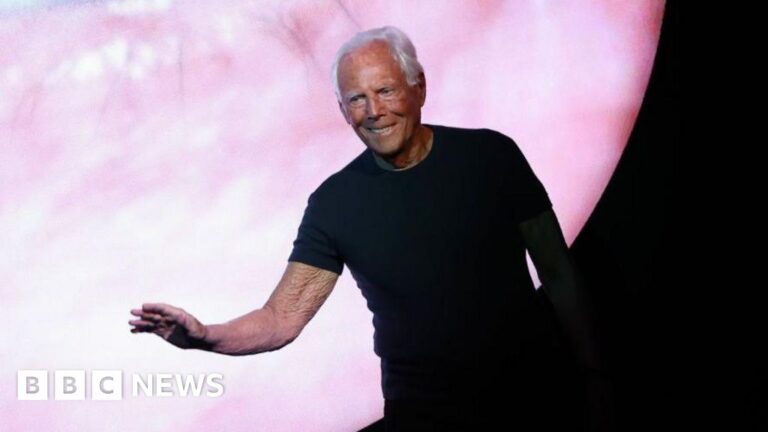
Fashion legend Giorgio Armani will miss his two shows at Milan Fashion Week for the first time in his career.
The 90-year-old Italian designer is “currently recovering at home”, his company said in a statement. His recovery follows a brief hospital stay in Milan, Italian media reported.
He had “worked with usual dedication on the collections” and would follow the menswear shows on Saturday and Monday remotely, the company added.
It is thought to be the first time that Armani has missed one of his catwalk events, in a career that spans over five decades. Last year he said he could retire in coming years.
The shows next week will present the Spring-Summer 2026 collections of his self-titled luxury brand.
Armani’s long-time collaborator and head of menswear design, Leo Dell’Orco, is now set to give the closing bows.
Armani is said to be in good spirits and is expected to attend the brand’s upcoming shows in Paris at the end of June.
Founded in 1975, the brand celebrates its 50th anniversary next month – as Armani also celebrates his 91st birthday.
Armani, also known as ‘Re Giorgio’ – King Giorgio – has built an empire in the luxury fashion industry.
Born in the northern Italian town of Piacenza in 1934, he studied medicine before embarking on a career in fashion and eventually launching his label with his late partner, Sergio Galeotti.
His fashion house has several different lines which have also expanded into haute couture, ready-to-wear fashion, accessories, beauty products and make-up, jewellery, interior design and luxury hotels in cities such as Milan, Paris, New York, Tokyo, Seoul and Shanghai.

When it comes to swim training, real swimmers know that not all suits are created equal. Thick strap training suits are the workhorses of the pool—designed for mileage, built for durability, and cut for athletes who live and breathe chlorine.
These aren’t fashion-first suits you see on summer vacation. These are the day-in, day-out training tanks worn by swimmers grinding through threshold sets, getting after it on the back half of a 10×400 IM, or just chasing a :29 on repeat in practice.
And while there are a lot of options out there, a few brands consistently deliver performance and longevity. Speedo is still the cultural and market leader, worn by Olympians and age groupers alike. But other brands—like Nike, Arena, Jolyn, and Sporti—are earning more traction with bold designs and dependable fabrics.
Here’s our roundup of the best women’s thick strap one-piece training suits—designed for swimmers who take the sport (and their gear) seriously.
🏊♀️ 10 Thick Strap Training Suits for Women
1. NIKE Women’s Drippy Check Fastback One Piece Swimsuit
💰 Approx Price: $86
Nike’s Fastback cut offers reliable coverage and support for high yardage training, and the “Drippy Check” brings some fun to the grind.
 2. SPEEDO Women’s Disco Boom Super Pro One Piece Swimsuit
💰 Approx Price: $46
Speedo’s classic Super Pro back—comfortable, durable, and trusted by thousands of swim teams. Bonus points for the retro graphic.
3. SPORTI Molecule Wide Strap One Piece Swimsuit (22-44)
💰 Approx Price: $31
Budget-friendly, chlorine-resistant, and ready to go the distance. Sporti’s Molecule design punches above its price point.
4. SPORTI HydroLast Solid Wide Strap One Piece Swimsuit (22-44)
💰 Approx Price: $36
Built with HydroLast fabric, this one’s made to last for a full season of two-a-days.
5. SPEEDO Women’s Learn To Swim Pro LT Superpro One Piece Swimsuit
💰 Approx Price: $39
Ideal for beginners and younger age groupers—affordable, flexible, and comes in tons of color options.
 6. SPEEDO Women’s PowerFLEX Eco Solid Super Pro One Piece Swimsuit
💰 Approx Price: $51
Eco-friendly performance. Same Super Pro cut, made with recycled materials for a greener swim.
7. ARENA Women’s Seabed O Back One Piece Swimsuit
💰 Approx Price: $60
Arena’s O-Back offers more range of motion than it gets credit for. Great fit, plus a unique seabed-inspired design.
8. ARENA Women’s Simone Manuel Collection Jungle Cat Tech Back One Piece Swimsuit
💰 Approx Price: $54
Designed with input from Olympic champ Simone Manuel. Eye-catching design, athlete-tested performance.
9. SPEEDO Women’s Movement Back One Piece Swimsuit
💰 Approx Price: $68
A modern update on the classic training suit. Slightly more fashion-forward without compromising function.
10. JOLYN Women’s Breeze Caroline Printed One Piece Swimsuit
💰 Approx Price: $78
JOLYN makes suits that hold up to the toughest practices—and their Caroline cut has become a cult favorite among elite women.

NOTE: SwimSwam is independently owned and operated. We are not owned by a nonprofit, governing body, or a retail company. SwimSwam is partners with most—but not all—brands we review. If you order via the affiliate links in this post, you help support our mission of unbiased, athlete-first journalistic swim coverage. Thank you for your support.
🛒 ORDER YOUR THICK STRAP SUIT HERE
Looking for more product reviews and swim gear guides? Don’t miss these:
Whether you’re just starting out or heading into your tenth straight week of doubles, these suits are built for the work. Pick your favorite, get in the water, and put in the laps.

Wind power is already a vital component of our energy supply. As this sector matures, many wind turbines are reaching the end of their operational lives after years of producing clean energy. Others are becoming less efficient and need to be replaced, a process known as repowering. In both scenarios, the wind blades need to be recycled. Now, a new material is emerging to make this task simpler.
What this article covers:
The good news is that more than 90% of wind turbines, including the tower and nacelle, are easily recyclable once they’ve reached the end of their lifespan. After the structure is dismantled, the metal components can be reused. However, the main challenge lies in recycling the wind blades. Built to last for decades, they are made from composite materials, including resin and fiberglass.
At today’s recycling plants, mechanical, thermal, or chemical methods are used to recover the raw materials and give them a second life. This can involve grinding, heating, or using chemicals to process the materials.
Another option the wind industry is exploring is repurposing blades into urban furniture like canopies or even structures like bridges.
A recent initiative aims to make wind blade recycling easier by taking a different approach: replacing traditional resins with a biodegradable alternative. This research, recently published in Science, has resulted in a material called PECAN, which has properties similar to synthetic resins but is derived from biomass.
Scientists at the U.S. National Renewable Energy Laboratory (NREL) have developed this new resin from bio-based sugars, which offers the same strength as the materials used in conventional blades. One concern was whether PECAN would deform and affect the blade’s aerodynamic properties, but tests have confirmed its strength.
Additionally, this resin can undergo a mild chemical treatment that enables it to be recovered and reused indefinitely. In laboratory tests, researchers successfully decomposed a prototype blade in just six hours, promoting circular economy principles in wind energy and integrates recycling considerations into the preliminary design phases.
The team has also conducted tests with nine-meter-long blades, showing promising results regarding the material’s durability. However, it’s still too early to predict how it will hold up under real-world conditions.
And now for some excitiung blade recycling applications.
Do you like what you see? Download the PDF here
Even without biodegradable resin, wind blade materials can be recycled through chemical, thermal, or mechanical separation processes. A striking example of this is the transformation of blades from ACCIONA Energía’s wind farm in Aibar, Navarra, into the soles of a special edition of sneakers by a well-known fashion brand.
In this case, the resin from the blades was crushed and micronized into powder. The powder was then mixed with rubber and molded into soles using thermocompression. You can read more about this fascinating initiative on this page.
Lastly, beyond wind blade recycling, we recently covered a new technique capable of recycling up to 99% of solar panels. To stay up to date with the latest developments in renewable energy, subscribe to our newsletter below.
Source:
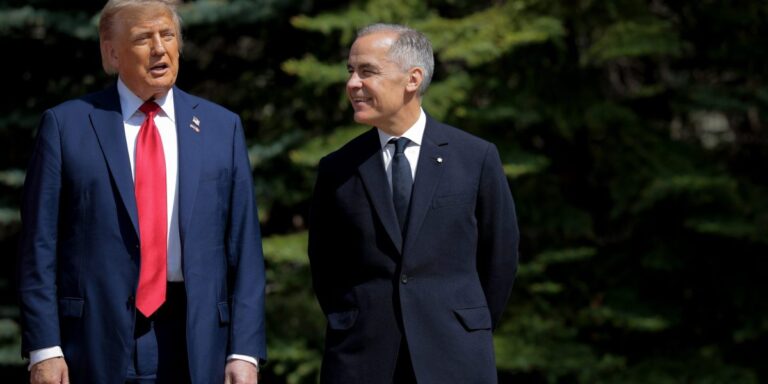
Canadians have been ditching all-things American after having enough of U.S. President Donald Trump’s threats about tariffs and making their country the “51st state.”
Boycotts of U.S. products from whiskey to dog food to Teslas—and a huge pullback in travel across the border—haven’t stopped Canadian investors from buying Uncle Sam’s debt, though. Trump’s chaotic tariff rollout in April marked the high point of the “Sell America” trade as stocks, bonds, and the dollar all sank. But despite the turmoil in fixed-income markets, Canadians purchased a net $9.2 billion of U.S. government bonds in April, the biggest monthly surge since November 2023.
However, the value of Canada’s overall holdings fell by roughly $58 billion that same month, according to the most recent data from the Treasury, by far the biggest swing for any of the top 20 foreign owners of U.S. debt.
The drop likely reflects that month’s massive bond selloff, which may have forced Trump to back off on his so-called reciprocal tariffs. Long-term yields, which spike when bond prices fall, have remained stubbornly elevated with the Federal Reserve—unlike other central banks around the world—patient to cut interest rates.
“You’ve got this gap emerging with the Fed on hold and the Bank of Canada cutting rates, along with everyone else,” Rob Haworth, a senior vice president and investment strategist at U.S. Bank, told Fortune.
The Bank of Canada has slashed rates by 225 basis points over the past nine months, including 25-point cuts in January and March. The Fed, meanwhile, reduced rates by 100 points from September to December last year but has held rates steady so far in 2025.
As a result, the 10-year U.S. Treasury yield was 4.38% as markets closed on Friday, while Canada’s was at 3.30%.
Higher interest rates in the U.S. can make Treasuries appealing to Canadians and other foreign investors, Haworth said, provided they can effectively hedge the risk presented by a weakening U.S. dollar.
At the end of January, Canada’s private and public sector held a combined $351 billion worth of Treasury securities. That number surged to $426 billion at the end of March before falling to $368 billion in April, the most recent data available.
As Federal Reserve economists explained last year, this type of data has long been used as a gauge of foreign demand for Treasuries, particularly among the top three holders: Japan, the U.K., and China. The example of Canada, the seventh-largest owner of U.S. debt, illustrates why this approach is shortsighted, however.
After all, Canadian investors bought more Treasuries in April, even as the total value of their holdings declined after revaluing the bonds at current market prices. The big drop suggests America’s northern neighbor has heavy exposure to long-dated Treasury notes and bonds, which are much more volatile than short-term Treasury bills.
“Valuation changes often move in the opposite direction of net U.S. sales/purchases and are often large enough to drive overall changes in holdings,” Fed economists wrote last year. “As such, changes in holdings alone are an unreliable measure of cross-border demand for U.S. or foreign securities.”
Foreign investors account for roughly 30% of the U.S. Treasury market, according to Apollo chief economist Torsten Sløk, and their behavior is being closely monitored as the Trump administration pushes for big shifts in global trade and international finance.
The U.S. borrows at much better rates than its underlying finances would normally allow, thanks to the dollar’s status as the world’s reserve currency and confidence that America will always pay its bills.
If foreign buyers sour on U.S. Treasuries, however, that could force the Treasury to pay higher yields to bring back buyers. Such a move would put upward pressure on interest rates for mortgages, small-business loans, and other common types of borrowing throughout the economy.
Foreign investors held just over $9 trillion worth of Treasuries at the end of April, down only slightly from the record set in March. The decline in the dollar this year, Haworth said, has been much more pronounced than any offloading of Treasuries.
That makes sense, he added, because a slowdown in trade affects the flow of dollars first as greenbacks are used in fewer transactions. Changes in the allocation of Treasuries, often held as investments or bank reserves, happen much more slowly.
“There’s probably still some fundamental pressure as we suss out where trade and tariffs end up,” he said.
The Treasury data from April showed foreign private investors were net sellers of long-term U.S. debt. Government institutions like central banks and sovereign wealth funds were net buyers.
More current data suggests the latter trend may have reversed in the months since, though. Holdings by these official entities in the custody of the New York Federal Reserve have declined by $48 billion since late March, prompting Bank of America credit strategists to suggest that “cracks” in demand from these investors are now visible.
Still, it doesn’t seem foreigners are dumping U.S. debt just yet. Even angry Canadians.
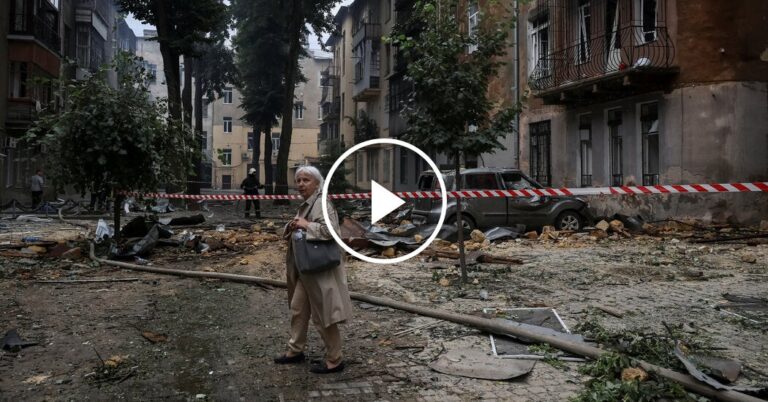
During an annual economic conference in St. Petersburg, Russia, President Vladimir Putin did not rule out his forces taking the Ukrainian city of Sumy.

Welcome to Music Business Worldwide’s weekly round-up – where we make sure you caught the five biggest stories to hit our headlines over the past seven days. MBW’s round-up is supported by Centtrip, which helps over 500 of the world’s best-selling artists maximize their income and reduce their touring costs.
This week, the European Commission set a provisional deadline of July 22 to make its initial decision in the Phase 1 investigation of Universal Music Group‘s proposed acquisition of Downtown Music Holdings.
Elsewhere, HarbourView Equity Partners is leading an $85 million investment in Animaj, a kids and family content-focused entertainment company which uses “proprietary GenAI tools”.
Also this week, a copyright lawsuit between a group of music publishers and Elon Musk’s X has been paused for 90 days while they try to settle out of court.
Meanwhile, the US Supreme Court has rejected an attempt at a rehearing in a copyright infringement case over Ed Sheeran’s hit Thinking Out Loud.
Finally, US President Donald Trump extended ByteDance‘s deadline to sell TikTok’s US operations by another 90 days, pushing the latest deadline to mid-September.
Here’s what happened this week…
Europe’s competition watchdog – the European Commission – revealed in April that it was preparing to investigate Universal Music Group‘s proposed acquisition of Downtown Music Holdings.
UMG was required to formally notify the EU about the deal, which would kickstart a Phase 1 investigation, at the end of which we’ll find out if the deal has been approved or raises serious competition concerns. We won’t have long to wait…
2) HARBOURVIEW LEADS $85M INVESTMENT IN AI-POWERED KIDS ENTERTAINMENT COMPANY ANIMAJ
HarbourView Equity Partners is leading an $85 million investment in Animaj, a kids and family content-focused entertainment company.
Animaj uses proprietary GenAI production tools and what it calls a “multi-platform franchise-building model”.
The Paris-headquartered company says that it “acquires and scales high-potential IPs by using data-driven insights, automating animation pipelines through AI,” and then distributing that content to platforms like YouTube, Roblox, TikTok, and Spotify.
The many music publishers who sued Elon Musk’s X over alleged copyright infringement are aiming to settle the matter out of court.
That’s according to an order for a stay of proceedings filed by the court on Wednesday (June 11), and obtained by MBW.
According to the order, the judge has temporarily frozen all legal proceedings in this case for 90 days after both parties jointly requested the pause to try to settle the dispute outside of court
4) US SUPREME COURT REJECTS APPEAL IN ED SHEERAN COPYRIGHT CASE OVER ‘THINKING OUT LOUD’
The US Supreme Court has rejected an attempt at a rehearing in a copyright infringement case over Ed Sheeran’s hit Thinking Out Loud.
On Monday (June 16), the Supreme Court refused to hear an appeal from Structured Asset Sales (SAS) – which lost a case in a lower court, where it claimed that Thinking Out Loud violated the copyright on Marvin Gaye’s 1973 song Let’s Get It On…. (MBW)
5) TRUMP GRANTS THIRD TIKTOK EXTENSION AS US SALE TALKS STALL
US President Donald Trump will extend ByteDance‘s deadline to sell TikTok’s US operations by another 90 days, pushing the latest deadline to mid-September.
White House Press Secretary Karoline Leavitt said in a statement to multiple news outlets on Tuesday (June 17): “President Trump will sign an additional Executive Order this week to keep TikTok up and running.”
MBW’s Weekly Round-Up is supported by Centtrip, which helps over 500 of the world’s best-selling artists maximise their income and reduce their touring costs.Music Business Worldwide

German giants Bayern Munich beat Argentina’s Boca Juniors 2-1 to seal progress at FIFA Club World Cup.
Michael Olise’s 84th-minute goal was enough to give Bayern Munich a 2-1 win over Boca Juniors in Miami Gardens, as the reigning German champions clinched a spot in the knockout phase of the Club World Cup.
After a scramble in the penalty area, Harry Kane sent the ball back to Olise, who blasted a shot into the bottom left corner of the net.
Boca had levelled Friday’s match in the 66th minute on a goal from Miguel Merentiel after Kane gave Bayern a first-half lead.
Bayern (2-0-0, 6 points) faced a much stiffer test than in their Group C opener, a 10-0 rout of semi-pro Auckland City (0-2-0, 0 points).
Boca Juniors (0-1-1, 1 point) still have a chance to advance, but they would need to rout Auckland City on Tuesday in Nashville and have Benfica (1-0-1, 4 points) lose to Bayern the same day in Charlotte.
For Boca’s tying goal, Alan Velasco delivered a pass from midfield into space for Merentiel to chase.
Merentiel beat Bayern defender Jonathan Tah to the ball, then rounded defender Josip Stanisic before firing a 12-yard, right-footed shot over the head of goalkeeper Manuel Neuer and into the net.
Bayern also produced an impressive goal. Konrad Laimer fired an entry pass to the centre of the Boca penalty area.
Kingsley Coman knocked the ball back to Kane, who took a heavy touch but still reached the ball in time to fire in a 12-yard shot with his left foot.

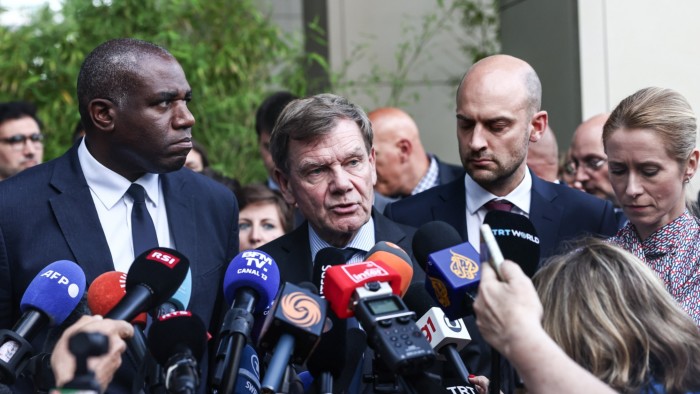
European foreign ministers have urged Iran to resume negotiations with Donald Trump’s administration to ensure the US does not join Israel’s war against the Islamic republic.
A person briefed on Friday’s negotiations in Geneva said the French, German and UK ministers warned their Iranian counterpart that Tehran may have to give up its red line of refusing to negotiate with Washington while under Israeli attack to “prevent the US from joining the operation”.
“Both Israel and the US have agreed with our position that peace can only be achieved through diplomacy,” the person said. “However, we told [the Iranians] that US military intervention is something that is actually being planned right now.”
The person added that “we sent them away to think very carefully about their red line”.
The negotiations — the first direct contact between western and Iranian officials since Israel launched its attack a week ago — were held a day after the White House said Trump would decide “within the next two weeks” whether Washington would enter the war.
The US president said after the European-Iranian talks that he would not ask Israel to stop its air strikes on Iran to accelerate negotiations for a nuclear deal with Tehran and avert Washington’s involvement in the war.
Although Trump did not rule out a ceasefire, he said “it’s very hard to stop when you look at it, Israel’s doing well in terms of war and I think you would say that Iran is doing less well”.
He also appeared to criticise Europe’s mediation efforts. “Iran doesn’t want to speak to Europe, they want to speak to us,” Trump said. “Europe is not going to be able to help with this.”
The European ministers — David Lammy of the UK, Germany’s Johann Wadephul and Jean-Noël Barrot of France — said after the talks they shared their “grave concerns” about the escalation in the Middle East, adding “all sides should refrain from taking steps which lead to further escalation”.
Tehran had been holding indirect talks with the US over its expansive nuclear programme. But Israel’s decision to launch a large-scale attack against the Islamic republic last week upended those diplomatic efforts, 48 hours before a sixth round of negotiations were due to be held.
Iran has since insisted it would not negotiate with the US while under fire.
After the talks in Geneva, Iran’s foreign minister Abbas Araghchi said Tehran was “ready to consider diplomacy once again, once the aggression is stopped and the aggressor is held accountable for the crimes committed”.
He added the Islamic republic’s “defence capabilities were not negotiable”, but said Tehran supported continued discussions with the European countries.
As the talks were taking place on Friday, Israel’s military chief, Lieutenant General Eyal Zamir, told soldiers “the campaign is not over” despite strikes that have targeted Iran’s nuclear sites, missile launch capabilities and killed many of its military commanders.
“We have embarked on the most complex campaign in our history to remove a threat of such magnitude, against such an enemy, we must be ready for a prolonged campaign,” Zamir said.
Israeli Prime Minister Benjamin Netanyahu, who has always opposed western diplomatic efforts, has vowed to maintain the assault on Iran as long as necessary to destroy Tehran’s nuclear programme and missile capability. Iran has maintained its uranium enrichment is part of a peaceful energy programme.
Ahead of the talks, Emmanuel Macron, president of France, said the European countries had prepared a “comprehensive negotiation offer”.
But in a sign of the challenges the diplomatic push faces, Macron said the negotiations had to move towards zero uranium enrichment, which Iranian officials have also insisted was a red line.
The French president said the talks would also include limiting Iran’s missile activity and financing of terrorist groups.
The stance means the European position was now closer than before to Trump, who has called for the complete dismantlement of Iran’s nuclear programme. France, Germany and the UK are signatories to the 2015 nuclear accord Tehran signed with world powers, which Trump abandoned in his first presidential term.
Israel and Iran continued to exchange fire on Friday, with Israeli strikes hitting western Tehran. The Islamic republic fired 20 missiles at Israel that targeted the northern port city of Haifa and central parts of the nation, according to the Israeli authorities, but there were no reports of deaths.
The head of the UN’s atomic watchdog on Friday warned Israel’s attack on Iran’s nuclear sites had caused a “sharp degradation in nuclear safety and security in Iran”.
Rafael Grossi, director-general of the International Atomic Energy Agency, said although the strikes had “not so far led to a radiological release affecting the public, there is a danger this could occur”.
Israel has targeted Natanz, one of the two Iranian sites at the centre of the nuclear dispute, causing damage to its underground facilities.
But Grossi said the level of radioactivity outside Natanz, in central Iran, had “remained unchanged and at normal levels”.
He said the IAEA was not aware of any damage at Iran’s Fordow site, which is buried deep beneath a mountain and where the country was enriching uranium close to weapons-grade.
Analysts say it was unlikely Israel would have the military capability to destroy Fordow without the US’s intervention.
Additional reporting by Leila Abboud, Nikou Asgari and Anne-Sylvaine Chassany

Welcome to World Breaking News, your trusted source for fast, accurate, and impactful news coverage from around the globe. We are a dedicated team of journalists, editors, and news enthusiasts committed to delivering breaking stories, in-depth analysis, and real-time updates on politics, business, technology, sports, entertainment, and more.
© Copyright -World Breaking News -2025