An extended conflict in the Middle East is now the “most likely” scenario after the US escalation over the weekend, commodities analysts at ANZ said on Monday morning.
“Risks of supply disruption in the crude oil market have risen sharply following an escalation in the Israel-Iran conflict,” Daniel Hynes and Soni Kumari, commodity strategists at the Australian lender, wrote in a note.
“The most likely scenario . . . in our view is an extended conflict. This would see supplies come under direct threat,” they said.
“However, the oil market is better equipped to respond to that than it has been in the past,” they added, noting that Opec has more than 6mn barrels a day of spare capacity that can be quickly activated.
They expected a price range of $75-$85 a barrel “for this scenario”.
Xabi Alonso gets his first victory as Madrid manager, despite his football side playing most of the game with only 10 players.
Jude Bellingham and Arda Guler scored late in the first half to help 10-man Real Madrid to a 3-1 victory over Pachuca in a Group H clash played amid sweltering conditions in Charlotte, North Carolina, the United States.
Federico Valverde’s sliding volley in the 70th minute sealed Xabi Alonso’s first victory as Madrid manager on Sunday.
The result puts his side’s FIFA Club World Cup campaign back on track after a dramatic 1-1 draw against Al Hilal in Wednesday’s opener, and despite Sunday’s early dismissal of defender Raul Asencio.
Real Madrid can clinch a place in the last 16 with a win or draw against RB Salzburg on Thursday in Philadelphia. Al Hilal play Salzburg later on Sunday in Washington, DC.
Thibault Courtois made 10 saves for the victors, though he could do little on Elias Montiel’s 80th-minute deflected effort that provided Pachuca with a consolation goal.
The Mexican side was beaten despite leading their Spanish foes by 25-8 in shots overall and 11-3 in efforts on target.
But as in Pachuca’s 2-1 Wednesday loss to Salzburg, it was their opponents who had more quality in their attacks.
Referee Ramon Abatti showed no hesitation in dismissing Asencio in the seventh minute for denying an obvious goal-scoring opportunity after the Madrid defender hauled down Salomon Rondon just beyond the penalty area.
Real Madrid’s Raul Asencio walks off the pitch after being shown a red card [Susana Vera/Reuters]
But after absorbing pressure for most of the opening half-hour, the Spaniards raced out to a 2-0 lead in the half’s final 15 minutes.
In the 35th, Gonzalo Garcia’s quick flick-on freed Fran Garcia down the left. The latter then picked out the late run of Bellingham, who collected a square ball and slid his low finish past Carlos Moreno from 15 yards.
In the 43rd, it was Guler providing the finishing touch from inside the area on another flowing Madrid move, this time with Gonzalo Garcia providing the final square pass after Trent Alexander-Arnold’s first-touch cross.
Pachuca continued to apply pressure after the break, with Courtois forced to push Bryan Gonzalez’s early-second-half effort over the bar and John Kennedy’s 61st-minute strike from distance well clear of his left post.
But Valverde’s well-taken goal effectively killed the game and Real Madrid held on for an impressive win.
Bellingham, who was named the player of the match, hailed the spirit of his teammates after the game.
“We stayed together well [after the red card]. Obviously, Raul [Asencio] made a mistake. He is young and it will happen,” he told DAZN.
“It was impressive to see how the team came together and won the game.”
Alonso singled out Courtois for praise.
“We are so happy to have [Courtois] in goal,” he told DAZN after the match.
“He was so reliable, especially when we had one player less. We defended with a lot of sacrifice and waited for our chances.”
In the earlier Club World Cup game on Sunday, Kenan Yildiz scored two goals and had a hand in another as Juventus beat Wydad Casablanca 4-1 to close in on a place in the last 16.
A bride was shot dead on her wedding night in a village near the south-east French city of Avignon after masked gunmen opened fire, local officials say.
One suspected attacker was also killed in an apparent exchange of fire, and the groom and a child of 13 were seriously wounded during the incident in the village of Goult.
A manhunt involving dozens of police officers and a helicopter is under way for an unknown number of suspects who managed to flee.
French media report that the violence may be linked to drug-related score-settling.
The authorities have opened an investigation into murder and attempted murder.
At about 04:30 (02:30 GMT) on Sunday the bride, 27, and groom, 25, were leaving the wedding party in the village hall when unidentified assailants opened fire, AFP news agency reports.
Initial reports suggested one of the attackers had been run over by the couple’s car but Avignon prosecutor Florence Galtier referred to the supect as having been hit “in the exchange”.
The surviving attackers, who had arrived by car, fled on foot after the shooting, the prosecutor said.
A total of 28 people were present in the hall at the time of the attack, police say. One woman was also lightly injured in the incident.
The hall was booked in March “for a wedding by people who don’t live in the commune”, local mayor Didier Perello said.
“I’m outraged,” he added. “We’re close to towns, I won’t name them, where unfortunately, we’ve seen this kind of thing before.”
Guillaume Molinas, a 50-year-old restaurant owner, said he feared the deadly attack would give the village of some 1,000 residents a “bad name”.
“The last major incident in the village was 125 years ago,” he was quoted as saying by AFP without giving details.
U.S. stock futures signaled anxiety Sunday night as Wall Street weighed the implications of deepening U.S. involvement in the Middle East with its attack on Iran’s nuclear facilities.
Trump administration officials stressed that the airstrikes on Saturday night were targeted at Tehran’s nuclear program and not aimed at regime change nor the start of a wider war that would require boots on the ground.
But the direct involvement in offensive operations—which included massive “bunker busters” dropped from stealth bombers—in what had been a conflict primarily between Israel and Iran still marked a major escalation.
Futures for the Dow Jones Industrial Average fell 153 points, or 0.36%. S&P 500 futures were down 0.39%, and Nasdaq futures slipped 0.52%.
Earlier on Sunday before premarket trading began, Wedbush Securities Managing Director Dan Ives had a bullish take for Wall Street in the wake of the U.S. attack on Iran.
“The market will view this Iran threat as now gone and that is a positive for growth in the broader Middle East and ultimately the tech sector,” he posted on X. “It will take some time for this conflict to settle, but the market will view the worst is now in the rear-view mirror. Expect stocks up.”
U.S. oil prices were up 2.8% at $75.84 per barrel after paring gains, and Brent crude leapt 2.7% to $79.07.
While global markets had been expecting to see an initial jolt for oil, energy analytics firm Kpler pointed to other mitigating factors that could soften the blow eventually.
“Expect oil to open with a sharp 7–10% gap up as risk premiums surge. But don’t be fooled, this may not last,” it posted on X.
Iran’s ability to retaliate is constrained, Kpler noted, saying a shutdown of the Strait of Hormuz is unlikely. Meanwhile, an early OPEC+ output boost for August of 411,000 barrels per day or more is increasingly likely, it added.
Escalation of the Middle East conflict could be a test of whether U.S. bonds and the dollar are still seen as safe-haven assets in times of crisis.
The yield on the 10-year Treasury edged up 1.4 basis points to at 4.389%. The dollar fell 0.32% against the euro and 0.25% against the yen. Gold, which is emerging as an alternative to the dollar, gave up gains to trade flat at $3,385.00 per ounce.
The coming week will feature several key events and economic reports. Several Federal Reserve officials will speak throughout the week, including Chairman Jerome Powell who is appearing on Capitol Hill on Tuesday and Wednesday.
Data for existing home sales, new home sales, and pending sales are due Monday, Wednesday, and Thursday, respectively, as the housing market shows signs of oversupply and weak demand.
Also on Thursday, an initial reading on the trade deficit will come out amid Trump’s tariffs along with durable-goods orders.
On Friday, the Fed’s preferred inflation gauge, the personal consumption and expenditures price index, is due.
Tensions soar at UN as Iran, allies condemn US military action, while US, Israel reject censure.
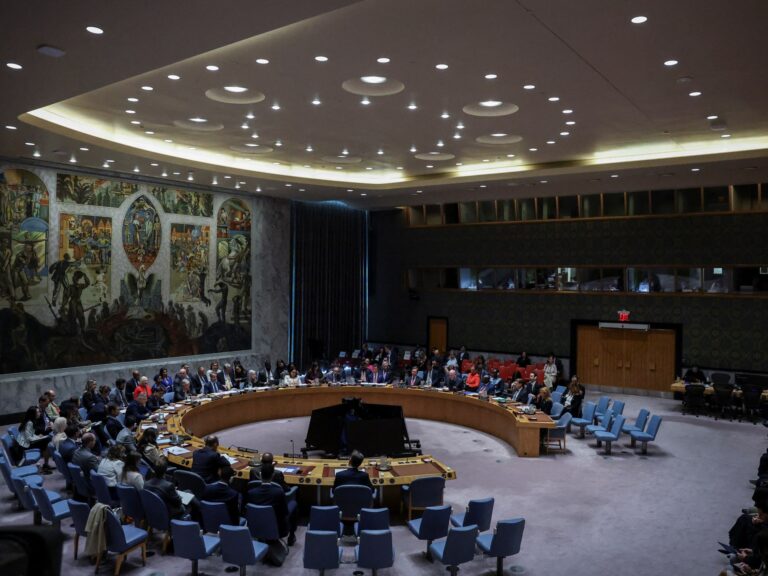
The United Nations Security Council has convened an emergency session following US-led strikes on Iranian nuclear sites, prompting sharp rebukes from several member states and renewed calls for a ceasefire in the Middle East, as allies Israel and the US lauded the attack.
Russia, China and Pakistan have proposed a resolution demanding an “immediate and unconditional ceasefire”, according to diplomats familiar with the draft circulated on Sunday. While the proposal does not explicitly name the United States or Israel, it condemns the attacks on Iranian nuclear facilities. A vote has not yet been scheduled.
To pass, the resolution requires the backing of at least nine members and no vetoes from the five permanent members — the US, UK, France, Russia and China, which makes it a non-starter since the US will not censure itself.
Speaking to the Council, UN Secretary-General Antonio Guterres warned the region stood “on the brink of a deadly downward spiral.”
“The bombing of Iranian nuclear facilities by the United States marks a perilous turn in a region that is already reeling,” Guterres said. “We now risk descending into a rathole of retaliation after retaliation. We must act – immediately and decisively – to halt the fighting and return to serious, sustained negotiations on the Iran nuclear programme.”
Acting US ambassador Dorothy Shea defended the military action, stating that Washington had moved to dismantle Iran’s enrichment capacity in order to protect both its citizens and allies.
“The time finally came for the United States, in defence of its ally and our own interests, to act decisively,” Shea told the chamber. “Iran should not escalate… any Iranian attack, direct or indirect, against Americans or American bases will be met with devastating retaliation.”
Iran’s Ambassador Ali Bahreini said the Israeli and US attacks on Iran did not come about “in a vacuum”, adding that they are the result of “politically motivated actions” of the US and its European partners.
He said the US “decided to destroy diplomacy” and pointedly made it clear that the Iranian military will decide on the “timing, nature and scale” of its response.
Meanwhile, Israel’s UN envoy Danny Danon said the attacks had made the world “a safer place”, rejecting calls for condemnation. “That’s for the Iranian people to decide, not for us,” he said when asked whether Israel supported regime change in Tehran
China’s ambassador Fu Cong condemned the US strikes and urged restraint. “We call for an immediate ceasefire,” he said. “China is deeply concerned about the risk of the situation getting out of control.”
Russia’s UN envoy Vasily Nebenzya described the attacks as yet another sign of Washington’s disregard for global norms. “The US has opened a Pandora’s box,” he said. “No one knows what catastrophe or suffering will follow.”
Pakistan’s ambassador Asim Iftikhar Ahmad also condemned the US bombing, calling it deeply troubling. “The sharp rise in tensions and violence as a result of Israeli aggression and unlawful actions is profoundly disturbing,” he said. “Pakistan stands in solidarity with the government and brotherly people of Iran during this challenging time.” This came the day after Pakistan suggested US President Donald Trump be nominated for the Nobel Peace Prize.
Trump’s announcement that American forces had “obliterated” Iran’s key nuclear sites marked the most significant Western military action against Tehran since the 1979 revolution.
The head of the International Atomic Energy Agency (IAEA), Rafael Grossi, told the Council that while the scale of underground damage remains unclear, impact craters were visible at the Fordow enrichment site. The entrances to tunnels at Isfahan appeared to have been struck, while Natanz — long a target of Israeli sabotage — had been hit again.
Iran has castigated Grossi for being complicit in paving the way for Israel and the US to attack it.
The United Nations nuclear watchdog’s Board of Governors approved a resolution declaring Iran was not complying with its commitment to international nuclear safeguards the day before Israel launched its initial attack on June 13.
Roula Khalaf, Editor of the FT, selects her favourite stories in this weekly newsletter.
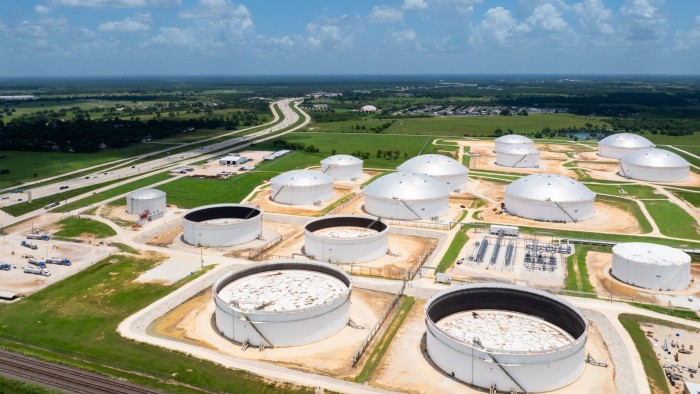
Oil prices jumped to a five-month high after the US bombed Iran’s nuclear facilities, increasing the likelihood that Tehran will respond by attacking energy infrastructure in the region or shipping in the Strait of Hormuz.
Brent crude, the international benchmark, soared as much as 5.7 per cent after the market opened on Sunday evening, but later cut its gains to about 3 per cent to trade at $79 a barrel. US marker West Texas Intermediate rose by a similar margin to $76.83.
Further moves in the oil price this week will depend on exactly how the Islamic republic or its proxies such as the Houthis choose to retaliate, analysts said.
“A clear red line has been crossed,” said Jorge León, head of geopolitical analysis at energy consultancy Rystad, noting the weekend’s bombing raids marked the first time the US has directly attacked Iranian territory.
“In an extreme scenario where Iran responds with direct strikes or targets regional oil infrastructure, oil prices will surge sharply,” he said. “Even in the absence of immediate retaliation, markets are likely to price in a higher geopolitical risk premium”.
Oil prices have already risen about 14 per cent since Israel launched its first surprise attack on Iran 10 days ago. Higher oil prices are likely to ripple through to other energy markets, such as petrol, something that could prompt a fresh burst of inflation across the world.
The entry of the US into the war has introduced “a new layer of volatility into energy markets” leaving traders waiting for “Tehran’s next move,” León said.
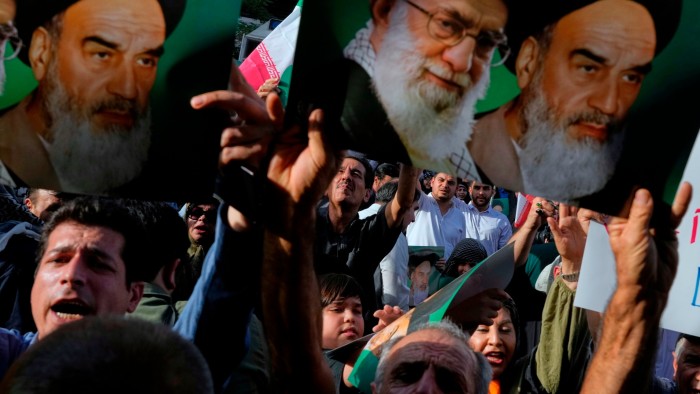
US President Donald Trump has said Iran of further attacks if Tehran does not “make peace”, but the Islamic republic had previously pledged to retaliate if the US became involved. Hardliners in Iran were already calling for action on Sunday, with the influential editor of the Kayhan newspaper demanding that the country attack the US naval fleet in the Gulf and stop western ships moving through the Strait of Hormuz.
About a third of the world’s seaborne oil supplies pass daily through the narrow waterway separating Iran from the Gulf states, and any attacks on shipping in the strait would immediately cause energy prices to soar, analysts said.
Iran has previously threatened to shut the strait though analysts believe that it would struggle to completely block the waterway due to the presence of the US Navy’s Fifth Fleet in Bahrain.
“Security officials maintain that it would be difficult for Iran to fully close the Strait of Hormuz for an extended period,” said Helima Croft, a former CIA analyst who is now at RBC Capital markets. “That said, multiple security experts contend that Iran has the ability to strike individual tankers and key ports with missiles and mines,” she said.
Iran also uses the waterway to ship its oil to China and other importers.
An alternative response could see Iran attack oilfields and infrastructure in US allies in the region, such as Saudi Arabia and Qatar. Anxious about getting drawn into the conflict, Gulf countries have repeatedly called for an end to hostilities and a return to dialogue.
In a statement on Sunday morning, Doha’s foreign ministry warned that the “dangerous tension” in the region could have “catastrophic repercussions”. Saudi Arabia said it was following developments in Iran with “great concern”.
Analysts at S&P Global Commodity Insights said the rally in oil prices could ease by Monday morning if there was no immediate Iranian response.
“The key question is what comes next,” James Bambino and Richard Joswick at S&P said. “Will Iran attack US interests directly or through allied militias? Will Iranian crude exports be suspended? Will Iran attack shipping in the Strait of Hormuz?”
Even if Iranian crude exports are disrupted, increased production from the Opec+ cartel and current global inventories mean the oil market will remain sufficiently supplied, so long as the Strait of Hormuz remains open, they added.
Iran exports about 2mn barrels of oil a day, while about 21mn barrels from Iran, Iraq, Kuwait, Saudi Arabia, Qatar and the United Arab Emirates pass daily through the Strait of Hormuz.
Analysts said the longer geopolitical tensions in the Middle East stay elevated the greater the risk of a prolonged period of high oil prices, which would lift inflation and dent global economic growth.
“The Trump administration will likely find it difficult to balance crippling Iran’s nuclear ambitions while avoiding a prolonged spike in crude oil prices, in turn, elevating inflation and weakening the US economy,” said Michael Alfaro, chief investment officer at Gallo Partners, a hedge fund focused on energy and industrials.
A continuous flight over 18 hours, multiple mid-air refuelings, and a series of decoys – this is how the mission to bomb Iran’s nuclear facilities played out, according to four-star General Dan Caine, the Chairman of the Joint Chiefs of Staff, the highest-ranking officer in the US military.
Although the full impact of what the US is calling ‘Operation Midnight Hammer’ is still unclear, a timeline of how the complex mission unfolded was laid out in a Pentagon briefing on Sunday morning, mere hours after the strikes.
American bombers went “in and out and back without the world knowing at all”, US Secretary of Defense Pete Hegseth told reporters.
It all began just after midnight when Secretary Hegseth joined US President Donald Trump, Vice-President JD Vance, Secretary of State Marco Rubio, and elite Pentagon staff in the Situation Room at the White House to watch as a fleet of aircraft departed an American airbase in rural Missouri.
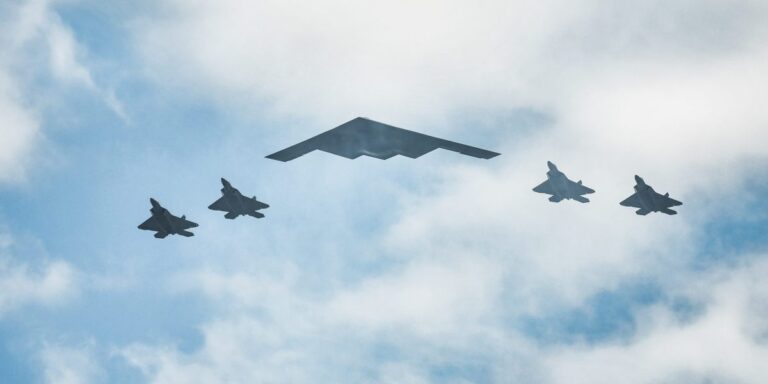
Under the cover of darkness, B-2 stealth bombers took off from Whiteman Air Force Base at 00:01 EDT (05:01 BST), according to the Pentagon.
Their ultimate target: Iran’s most secure nuclear sites.
The subsonic jets, which travel just below the speed of sound, flew over the Atlantic Ocean loaded with powerful “bunker buster” bombs capable of penetrating concrete over 18m (60ft) deep.
It’s the kind of weaponry needed to hit Iran’s nuclear enrichment facility at Fordo, which is buried below a mountain deep underground and considered to be the epicentre of the country’s nuclear programme. The US is the only country in the world known to possess this type of weapon.
“While the deployment is not being officially connected to discussions around the US joining Israel’s war on Iran, few will doubt the link,” the BBC wrote at the time.
But it was just a ruse – according to the account delivered by the Pentagon – a decoy to distract from the top-secret flights heading straight for Iran over the Atlantic.
The planes that flew west over the Pacific were “a deception effort known only to an extremely small number of planners and key leaders,” Gen Caine said.
“The main strike package comprised of seven B-2 spirit bombers, each with two crew members, proceeded quietly to the east with minimal communications,” he added.
Those military planes don’t show up on flight tracking websites, making it difficult for the BBC to independently verify the Pentagon’s description of the events.
When the fleet made it to the Middle East, sometime around 17:00 EDT (22:00 BST), it was joined by support aircraft that helped protect the bombers by sweeping in front of them to look for enemy fighters and surface-to-air missile threats, in what Gen Caine called a “complex, tightly timed manoeuvre”.
But Iranian fighter jets didn’t take off and no air defences appeared to fire a shot, according to US officials.
“Israeli dominance over Iranian airspace primed the pump for American bombers to operate with impunity,” Patrycja Bazylczyk, a missile defence expert at the Center for Strategic and International Studies in Washington DC, told BBC Verify.
The next hour and forty minutes were described by Gen Caine during the Pentagon briefing in a level of detail not normally disclosed to the public.
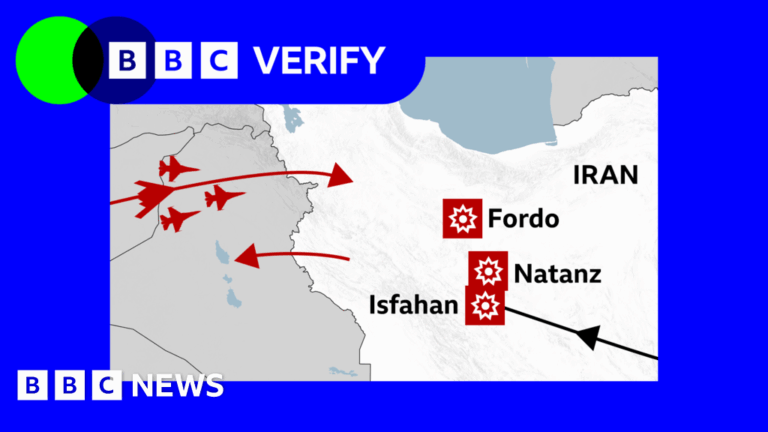
Although the briefing provided timings for certain events, the map showing the bombers’ journey wasn’t a specific flight path and differed slightly in two versions presented.
The Trump administration has proclaimed the subsequent events as a total victory, claiming the US had “obliterated” Iran’s nuclear regime. But the true extent of the damage, and its aftermath, has yet to be measured.
While Iran has confirmed the attacks, it has minimised the extent of the damage and has not provided a specific account of the sequence of events.
At around 17:00 EDT (22:00 BST) US officials say more than two dozen Tomahawk land attack cruise missiles were launched from a US submarine stationed in the Arabia Sea towards the nuclear site near Isfahan, a city of about two million people.
While the nuclear facility there is hundreds of kilometres inland, the submarines were close enough to enable the cruise missiles to impact at roughly the same time as the stealthy B-2s dropped their “bunker buster” bombs over the other two nuclear sites, said Dr Stacie Pettyjohn, a defence expert at the Center for a New American Security.
It all meant that the US was able to provide “a coordinated surprise attack on multiple sites”, she told BBC Verify.
Meanwhile, the fleet of bombers entered Iranian airspace, where the US employed several other deception tactics, including more decoys, according to the Pentagon.
Then the air strikes began.
The lead bomber dropped two GBU-57 Massive Ordnance Penetrator weapons – known as MOPs – on the first of several targets at Fordo at about 18:40 EDT (23:40 BST), just after 02:00 in the morning in Iran.
The MOP bomb is able to drop through about 18m (60ft) of concrete or 61m (200ft) of earth before exploding, according to experts. This means that although it’s not guaranteed success, it is the only bomb in the world that could come close to impacting the depth of tunnels at the Fordo facility – thought to be 80-90m (262-295ft) below the surface.
It was the first time the “bunker buster” bombs were ever dropped in a real combat operation.
The remaining bombers then hit their targets – with a total of 14 MOPs dropped on Fordo and a second nuclear facility at Natanz, according to the Pentagon. And at the Isfahan nuclear site, over 200km away from Fordo, the Tomahawk missiles hit their targets.
After the planes spent 18 hours in the air, all the targets were hit in just about 25 minutes before they exited Iran at 19:30 EDT (00:30 BST) to return to the US, according to the Pentagon.
In total, about 75 precision guided weapons and more than 125 US aircraft were used, and Secretary Hegseth claimed the mission provided “powerful and clear” destruction of Iran’s nuclear capabilities.
But evidence of the full scope of the strikes will take time to assess – with more footage needed to see how deep underground the bunker buster bombs were able to penetrate at the key nuclear sites.
“This was an incredibly complicated and very sophisticated attack that no other country in the world could have performed,” Dr Pettyjohn said.
“Despite the success of the operation tactically, it is unclear if it will achieve the goal of permanently setting back Iran’s nuclear program.”
Fitter and Faster Swim Camps is the proud sponsor of SwimSwam’s College Recruiting Channel and all commitment news. For many, swimming in college is a lifelong dream that is pursued with dedication and determination. Fitter and Faster is proud to honor these athletes and those who supported them on their journey.
Keann Guthrie, a three-time Texas high school state diving finalist, is set to compete for NC State University starting in the fall of 2025.
“I’m so blessed to announce my verbal commitment to continue my academic and athletic career at NC State University. I would like to thank God, my family, and coaches who got me here! GO WOLFPACK.”
Guthrie recently graduated from Lake Highlands High School in Dallas, Texas, where she was a member of the varsity swimming and diving team all four years.
While competing for Lake Highlands, Guthrie made it to the finals of the UIL 6A State Championship three years in a row, from her sophomore to her senior year. Her top performance came in 2023, when she placed 12th overall in the 1-meter diving event with 381.40 points.
At the regional level, Guthrie is the three-time defending champion on the 1-meter at the District 7-6A Championship and won the 1-meter diving at the 2024 UIL Region 6A Championship with 378 points.
Guthrie is also adept at the 3-meter and platform diving events. She competed at the 2025 USA Diving Zone Championships, where she finished 12th in the Group A Girls 16-18 Platform event with 269.30 points. She also finished 17th in the Group A Girls 16-18 3-meter event (311.10 points) and 19th in the Group A Girls 16-18 1-meter event (292.55 points).
Top Scores
1-meter (11 dives) – 414.60
1-meter (6 dives) – 387.15
3-meter – 380.55
Platform – 326.85
A Division I program, NC State competes in the Atlantic Coast Conference with powerhouses such as UVA and Stanford. The women’s team took 5th at the ACC Championships this past season, but did not have any divers make it to the finals.
Guthrie should be a strong contributor for NC State, helping to boost their diving program. In addition to Guthrie, the team will have two returning divers next season: Elisabeth Rockefeller and Celia Bidwell.
If you have a commitment to report, please send an email with a photo (landscape, or horizontal, looks best) and a quote to [email protected].
About the Fitter and Faster Swim Tour
Fitter & Faster Swim Camps feature the most innovative teaching platforms for competitive swimmers of all levels. Camps are produced year-round throughout the USA and Canada. All camps are led by elite swimmers and coaches. Visit fitterandfaster.com to find or request a swim camp near you.
How does a pod of sperm whales behave in the vast Atlantic? What is the snow leopard, that elusive Himalayan predator, up to throughout the day? And how fast are the glaciers in the Himalayas shifting? These are questions scientists hope to answer soon, thanks to a new concept called the “Internet of Animals,” realized through the ICARUS project. ICARUS, which stands for International Cooperation for Animal Research Using Space, is a program designed to conserve biodiversity by tapping into technologies that will give us real-time insights into how ecosystems function.
What is the Internet of Animals
The term was coined by Martin Wikelski, a lead scientist at the Max Planck Institute for Animal Behavior (MPI-AB). A German ornithologist, Wikelski envisioned a global network of transmitters connected via satellite, resembling the Internet of Things (IoT) but tailored to monitor Earth’s wildlife and ecosystems. He believes that the Internet of Animals will be as revolutionary as the decoding of DNA has been for human biology.
Wikelski offers numerous examples of how this is already transforming our understanding. For instance, a receiver activated in 2020 on the Russian module of the International Space Station (ISS) helped researchers better understand land birds like plovers. These birds undertake oceanic migrations of thousands of miles, adjusting their routes in response to air currents.
Wikelski goes even further, suggesting that the technology he’s developed could help explain the mysterious “sixth sense” some species display when detecting impending earthquakes. All this will be achieved through the ambitious ICARUS project.
A new approach to understanding ecological complexity
Following the disruption of data supply from the ISS due to the war in Ukraine, the ICARUS project, led by the Max Planck Institute, pivoted to using satellite-based receivers. By 2025, a network of five low-cost CubeSat microsatellites is expected to be in orbit, collecting information from ultra-light, solar-powered sensors—some weighing no more than a paperclip. These sensors will provide data on each animal’s energy expenditure, along with environmental factors like atmospheric pressure, altitude, and temperature.
These sensors, placed on different animal species, will allow scientists to analyze the real-time behavior of thousands of creatures from any laboratory using artificial intelligence. Previously, sensor data was only available hours or days later.
Besides tracking animals like birds, whales, and elephants, the sensors can also be placed on glaciers or even floating debris in the ocean, offering insights into environmental processes.
A key to the project’s success lies in cross-referencing data. Information from the sensors will be linked to meteorological, seismic, and oceanic data, and it can also be compared with satellite images of vegetation indices, such as NDVI. In essence, this approach will provide a comprehensive understanding of the complex interactions within ecosystems.
Project applications
Given the wealth of data, it’s clear the project will offer researchers invaluable insights into the health of different species and the ecological challenges they face. But that’s just one aspect of the Internet of Animals.
The expression “canary in a coal mine,” which refers to using birds to detect dangerous gas levels in mines, is particularly relevant here. Researchers believe that this system won’t just help track wildlife behavior for conservation but will also enable monitoring of climate events or even predicting natural disasters like volcanic eruptions or earthquakes by identifying abnormal patterns, such as sudden mass movements of animals.
The data generated by this project will be accessible to any interested researcher. This technological innovation is expected to make it easier to monitor little-known species and conduct low-cost, data-rich studies.
If you are interested in learning about other technologies contributing to sustainability across various fields, like construction or energy, subscribe to our newsletter at the bottom of this page.