


The Ecuadorean president said José Adolfo Macías, known as “Fito” and leader of the infamous Los Choneros criminal organization, will be extradited to the U.S., where he’s accused of drug trafficking and weapons smuggling.
Neurons Grown in Lab Learn in Real Time Through Medication
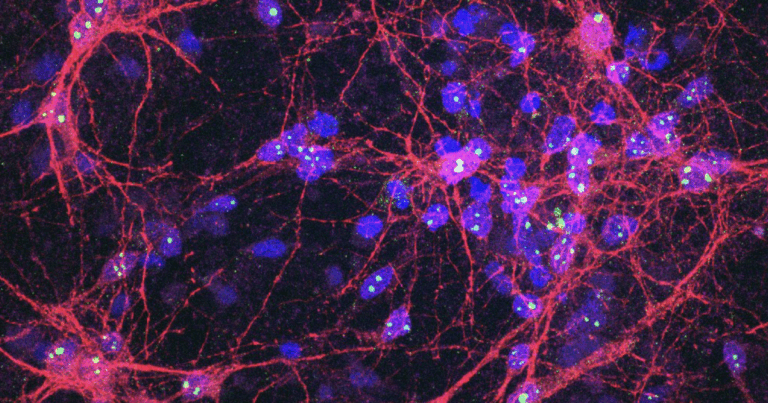
For the first time, a lab-grown brain-computer system has demonstrated that human neurons living and evolving in an artificial system respond to medication by learning, in real time, in a game-like environment. Subjected to anti-seizure drugs, Cortical Labs’ disease-modeled neurons didn’t just show altered brain activity, but spontaneous information-processing behavior. It’s a huge step forward for the company’s synthetic biological intelligence (SBI) technology and how we are able to research neurological conditions and develop new, effective treatments.
“This breakthrough is a major step forward in not only how we study and understand diseases and drugs that are designed to treat related neural processes impacted by these diseases,” said Brett Kagan, Chief Scientific Officer at Cortical Labs. “For the first time, alongside some of the world’s most eminent researchers in their field, we’ve been able to show that impaired information processes of a disease in a dish can be restored using a drug designed specifically to treat it.”
Cortical Labs
Led by Australia-based Cortical Labs, which we have covered extensively – from the earliest DishBrain advances – the study is the first to demonstrate the real-world potential of the commercial SBI CL1 platform. As extensively covered in our visit to the company’s Melbourne laboratory, the CL1 biological computer features lab-grown neurons from human stem cells on a silicon base in a life-supporting specially designed box. When together, each CL1 forms a rack that resembles a computer server. The neurons form networks and, in response to stimuli, process this information and respond in real time, rerouting or forming new connections in a way that optimizes efficiency and cell health.
These neurons are hooked up to a computer playing a simplified version of Pong, which can test neuronal information processing and changes in real time. As earlier research demonstrated, the SBI “learn” in response to game-play feedback, processing information and adjusting connections to improve performance.

Cortical Labs
Using the CL1 platform, which houses the DishBrain system, the team induced hyperactive glutamatergic dysregulation in human-induced pluripotent stem cells (hiSCs), where a glutamate neurotransmitter imbalance overstimulated the cells and resulted in epilepsy-like faulty neurons.
Following 21 days of glutamatergic neural differentiation, three anti-seizure medications – phenytoin, perampanel and carbamazepine – were tested on the SBI epilepsy model. Seeing how each drug altered neural behavior in real time, the researchers discovered that carbamazepine 200 µM had a significant impact on how the neurons responded, self-regulated and adjusted.
At this high dose, carbamazepine significantly improved the neural system’s ability to play the Pong game. While all three drugs reduced the neurons’ over-firing – epileptic-like bursts of activity – only carbamazepine made the network better at goal-directed behavior. And some neural networks became more stable and organized through treatment.
The research, which also involved University of Cambridge scientists and the UK-based biotech startup bit.bio, is the first to show how disease-modeled SBI changes in response to drug intervention.
“While this is an incredibly significant milestone, and the realization of years of focus at Cortical Labs, it’s only the start,” Kagan said. “The ability to observe how living neurons react to real-time stimulation and drug treatment opens up entirely new ways to develop, test, and personalize therapies – all without relying on animal models. Based on our early findings, we’ll continue to refine the modeling with the aim of developing more effective, patient-specific therapies in the future.”
The systems also allow for the simultaneous testing of experimental drugs and treatments, since the hiSCs in each CL1 box can be grown to have similar cell diversity, or be manipulated to represent different neurological disease models for drug testing. It not only does away with animal testing, but essentially allows for testing of experimental treatments on a human neural network – without the human.

Cortical Labs
While the SBI system is obviously a much simpler model than the human brain, and the drug intervention focused just on glutamatergic neurons, it’s nonetheless a big milestone for Cortical Labs, which has invested years of work to get to this point. As Kagan noted, it’s a great achievement but it’s just another stepping stone in demonstrating the potential of this unique SBI.
“One of the most pressing challenges in neuroscience is improving the success rate of effective new treatments reaching patients,” said Brad Watmuff, Head of Biology at Cortical Labs. “Our work highlights a key obstacle to this goal – that the neural functional endpoints we typically rely on to define treatment efficacy may not be optimal. Importantly, we show these endpoints can be influenced and even improved with drug intervention, opening the door to more meaningful measures of therapeutic success.”
The research was published in the journal Communications Biology.
Source: Cortical Labs via EurekaAlert!
Lucas Beyer, Former OpenAI Researcher, Criticizes $100 Million Signing Bonus from Meta
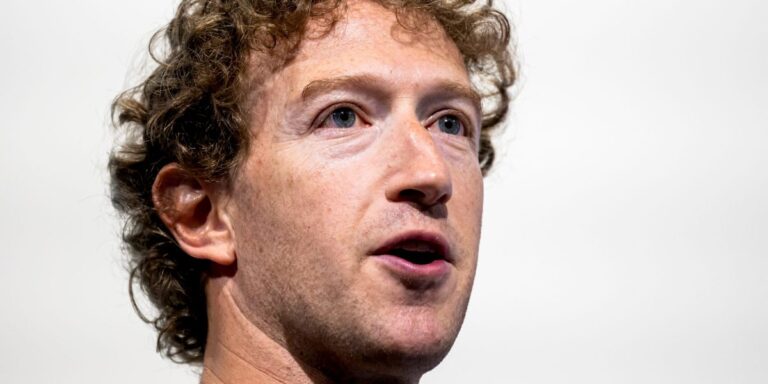
The trio of OpenAI engineers who co-founded the firm’s Zurich office last year will indeed be leaving to join Meta—but they aren’t getting $100 million apiece to do so.
Lucas Beyer posted on X Thursday that he, Alexander Kolesnikov, and Xiaohua Zhai would depart OpenAI to join the $1.8 trillion company led by Mark Zuckerberg. Beyer said it was “fake news” that Zuckerberg was paying him that level of compensation. However, that news came from OpenAI CEO Sam Altman himself, who called the offers “crazy” this month.
“They started making these like, giant offers, to a lot of people on our team—$100 million signing bonuses, more than that comp per year,” Altman told his brother Jack Altman in an episode of the podcast Uncapped. “I’m really happy that, at least so far, none of our best people have decided to take him up on that.”
hey all, couple quick notes:
1) yes, we will be joining Meta.
2) no, we did not get 100M sign-on, that’s fake news.Excited about what’s ahead though, will share more in due time!
cc @__kolesnikov__ and @XiaohuaZhai.— Lucas Beyer (bl16) (@giffmana) June 26, 2025
Beyer, Kolesnikov, and Zhai have been members of the technical staff at OpenAI since December 2024, which they joined after being poached from rival Google DeepMind. They depart for Meta at a time when competition for talent among AI firms is reaching a frenzied pitch, with Zuckerberg reportedly on a recruitment spree to counter the narrative that it is lagging behind in AI development. Reports claim the company is hiring a 50-person “Superintelligence” team to ramp up its AI efforts. Meta has also purchased a $14 billion stake in Scale AI, to bring CEO Alexandr Wang into the fold.
Zuckerberg famously earns only $1 as CEO at Meta, although the company provides him a $14 million allowance for costs related to security for Zuckerberg and his family. He holds about 13% of the tech behemoth’s stock and his fortune is valued at $250 billion by Forbes.
Among the top-paid executives at Meta, chief operating officer Javier Olivan was paid the most last year, with compensation valued at $25.5 million. No other top executive at Meta was paid $100 million in any of the past three years, according to the company’s financial filings.
The median of the total annual compensation of all Meta employees other than Zuckerberg was $417,400 last year.
On X, a commenter speculated that Altman “clearly just threw out the 100m figure out there to make potential takers think that they were being lowballed.”
“Yes, it was a brilliant move, gotta give him that,” posted Beyer in response.
OpenAI and Meta did not immediately respond to requests for comment.
Israel’s Defence Minister Katz reveals intention to remove Khamenei: Israel-Iran conflict update

Katz says Israel has ‘green light’ from US to attack Iran again if Tehran makes ‘progress’ with its nuclear programme.
Israeli Defence Minister Israel Katz has said that his country wanted to kill Iran’s Supreme Leader Ayatollah Ali Khamenei during the recent 12-day war between the two sides that ended this week with a ceasefire.
Katz said on Thursday that Israel would not have needed permission from the United States to kill Khamenei, appearing to refute previous media reports that Washington vetoed the assassination.
“We wanted to eliminate Khamenei, but there was no operational opportunity,” said Katz in an interview with Israel’s Channel 13.
Katz claimed that Khamenei knew an attempt on his life was on the cards, and went “underground to very great depths”, breaking off contact with commanders who replaced Islamic Revolutionary Guard Corps leaders assassinated in the first wave of Israeli strikes.
Khamenei released video messages during the war, and there is no evidence to confirm that he was cut off from his generals.
Killing Khamenei would have been a major escalation in the conflict. Besides being the de facto head of state in Iran, the supreme leader is a top spiritual authority for millions of Shia Muslims across the world.
Israeli Prime Minister Benjamin Netanyahu and US President Donald Trump had both suggested at various times that the war could spark regime change, the latter posting on social media last Sunday that the conflict could “MAKE IRAN GREAT AGAIN”.
Katz’s comments came amid conflicting reports on the extent of destruction wrought on Iran’s nuclear capability, primarily as a result of the US bombing of sites at Fordow, Natanz and Isfahan. Khamenei said on Thursday that the US had “exaggerated” the impact of strikes.
The Israeli defence minister said that his country has a “green light” from Trump to launch another attack on Iran if it were deemed to be making “progress” with its nuclear programme.
“I do not see a situation where Iran will restore the nuclear facilities after the attack,” he said.
For his part, Netanyahu said on Thursday that the outcome of the war presented a “window of opportunity” for further formal diplomatic agreements with Arab states.
The conflict ended with a US-brokered ceasefire after Iran responded to the US strikes with a missile attack on Qatar’s Al Udeid Air Base, which houses US troops.
“We have fought with determination against Iran and achieved a great victory. This victory opens the path to dramatically enlarge the peace accords,” Netanyahu said in a video address, in an apparent reference to the Abraham Accords, which established official ties between Israel and several Arab countries in 2020.
Iran also declared victory after the war, saying that it thwarted the Israeli objectives – namely ending Tehran’s nuclear and ballistic missile programmes – and managed to force Netanyahu to end the assault with the missile strikes that left widespread destruction in Israel.
Court dismisses Sarah Silverman’s lawsuit against Meta’s AI, rules that using copyrighted works for training is not considered ‘fair use’
For the second time this week, a US federal judge has issued an opinion on whether or not using copyrighted materials without permission to train AI amounts to “fair use” – and the most recent ruling contradicts the previous one.
In an order on Monday (June 23), Judge William Alsup handed a partial victory to AI company Anthropic in its defense against a lawsuit by three authors, declaring that training AI on copyrighted materials does indeed count as fair use.
Two days later, another judge in the same court – the US District Court for the Northern District of California – declared the exact opposite.
“This case presents the question whether such conduct is illegal,” Judge Vince Chhabria wrote. “Although the devil is in the details, in most cases the answer will likely be yes.”
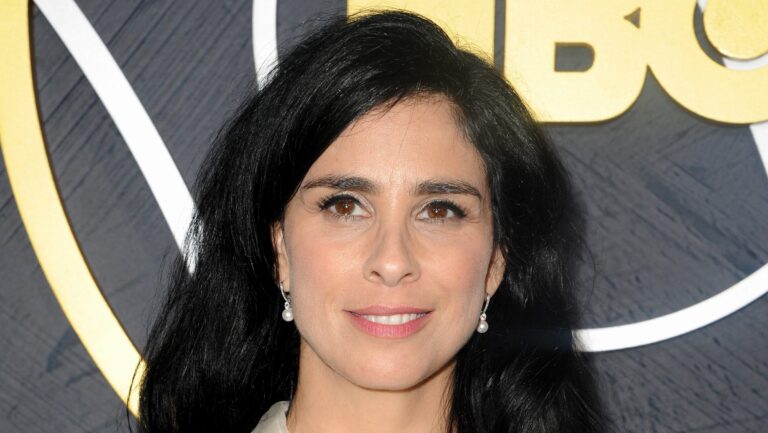
This latest ruling is in a class-action case brought in 2023 against Meta – owner of Facebook and Instagram and developer of the Llama large language model – by 13 writers, including comedian Sarah Silverman, who wrote the book The Bedwetter. Other authors involved in the suit include Richard Kadrey, Junot Diaz, and Laura Lippman.
They argued that Llama had been trained on their works without permission, and would even reproduce parts of those works when prompted.
Despite his conclusion that training AI on copyrighted works without permission isn’t fair use in most cases, Judge Chhabria ruled in Meta’s favor – but only because, in his view, the authors’ lawyers had argued the case badly.
The authors “contend that Llama is capable of reproducing small snippets of text from their books. And they contend that Meta, by using their works for training without permission, has diminished the authors’ ability to license their works for the purpose of training large language models,” the judge noted. He called both arguments “clear losers.”
“Llama is not capable of generating enough text from the plaintiffs’ books to matter, and the plaintiffs are not entitled to the market for licensing their works as AI training data,” the judge wrote in his order, which can be read in full here.
The judge granted Meta’s request for a partial summary judgment in the case.
But what may be of greatest interest to rightsholders is that Judge Chhabria offered what he says would be a winning argument: That allowing tech companies to train AI on copyrighted works would severely harm the market for human-created works.
“The doctrine of ‘fair use,’ which provides a defense to certain claims of copyright infringement, typically doesn’t apply to copying that will significantly diminish the ability of copyright holders to make money from their works (thus significantly diminishing the incentive to create in the future),” Judge Chhabria wrote.
“What copyright law cares about, above all else, is preserving the incentive for human beings to create artistic and scientific works… By training generative AI models with copyrighted works, companies are creating something that often will dramatically undermine the market for those works, and thus dramatically undermine the incentive for human beings to create things the old-fashioned way.”
“By training generative AI models with copyrighted works, companies are creating something that often will dramatically undermine the market for those works…”
US District Judge Vince Chhabria
Copyright owners likely won’t be happy to hear the judge’s assertion that they don’t have a right to a market for licensing works to AI companies, but they’re likely to rejoice over much of the rest of the judge’s argument – including a remarkable passage where he directly criticizes the earlier ruling by Judge Alsup, who sits on the same court.
“Judge Alsup focused heavily on the transformative nature of generative AI while brushing aside concerns about the harm it can inflict on the market for the works it gets trained on,” Judge Chhabria wrote.
“Such harm would be no different, he reasoned, than the harm caused by using the works for ‘training schoolchildren to write well,’ which could ‘result in an explosion of competing works’…
“But when it comes to market effects, using books to teach children to write is not remotely like using books to create a product that a single individual could employ to generate countless competing works with a miniscule fraction of the time and creativity it would otherwise take. This inapt analogy is not a basis for blowing off the most important factor in the fair use analysis.”
“If using copyrighted works to train the models is as necessary as the companies say, they will figure out a way to compensate copyright holders for it.”
US District Judge Vince Chhabria
The judge also demolished an argument often made by AI companies: That forcing them to license all the materials they use for training would slow down or even stop development of the technology.
“The suggestion that adverse copyright rulings would stop this technology in its tracks is ridiculous,” Judge Chhabria wrote.
“These products are expected to generate billions, even trillions, of dollars for the companies that are developing them. If using copyrighted works to train the models is as necessary as the companies say, they will figure out a way to compensate copyright holders for it.”
Using pirated works not OK, judges agree
The disagreement between the two judges notwithstanding, there is one thing they both agreed on: Using pirated copies of works to train AI is not acceptable.
In the case against Anthropic, Judge Alsup ordered the AI company to answer for its use of materials taken from online libraries known to offer pirated books. That part of the case will be heard in December, and Anthropic could find itself on the hook for up to $150,000 per infringed work.
Similarly, Judge Chhabria allowed one key part of the authors’ case to go forward: The part dealing with Meta’s alleged use of the torrent file-sharing network to download illegal copies of books, and its stripping out of rights management information from the books it obtained, in violation of the Digital Millennium Copyright Act (DMCA).
All in all, the two rulings present an unusual instance of one court offering two very different opinions on the same question – a matter likely to be resolved, sooner or later, by an appeals court.Music Business Worldwide
Man involved in Stockholm Syndrome case passes away at 78
 Getty Images
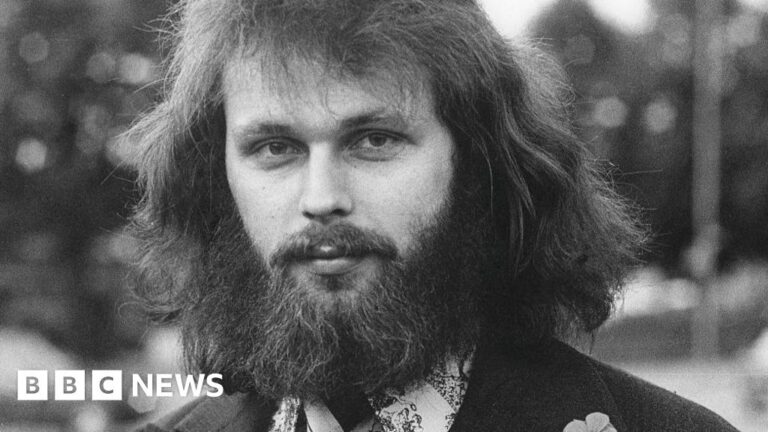
One of the two charismatic criminals involved in the kidnapping that gave the world the term “Stockholm syndrome” has died aged 78, his family has said.
Clark Olofsson – who rose to global notoriety in 1973 following a kidnapping and bank robbery in the Swedish capital – died following a lengthy illness, his family told online media outlet Dagens ETC.
During a six-day siege, Olofsson’s hostages began to sympathise with him and his accomplice, defending their actions while growing more hostile to the police outside.
The incident lends its name to a theorised psychological condition whereby kidnap victims develop affections for their captors.
The notorious bank siege was instigated by another man, Jan-Erik Olsson. After seizing three women and a man hostage, he demanded Olofsson – who he had previously befriended in prison – be brought to the bank from jail.
Swedish authorities agreed to his demand, and Olofsson entered the bank, which was surrounded by police.
Years later, in an interview with the Aftonbladet newspaper, he claimed he was asked to work as an inside man to keep the captives safe in exchange for a reduced sentence, but accused officials of not honouring the agreement.
Olofsson persuaded one of the hostages, Kristin Enmark, to speak to the Swedish prime minister on the phone on behalf of the robbers.
She begged to be allowed to leave the bank in a getaway car with the kidnappers, telling him: “I fully trust Clark and the robber… They haven’t done a thing to us.”
She went on: “On the contrary, they have been very nice… Believe it or not but we’ve had a really nice time here.”
Over the course of several phone calls, Enmark said she feared her captors would be harmed by police and repeatedly defended their actions.
In her memoir, she said of Olofsson: “He promised that he would make sure nothing happened to me and I decided to believe him. I was 23 years old and feared for my life.”
The hostage situation ended after six days when police officers broke through the roof and used tear gas to subdue the pair.
Initially, hostages refused to leave their captors over fears they would be shot by police. The hostages also later refused to testify against Olofsson and Olsson.
Experts have since debated whether Stockholm syndrome is an actual psychiatric condition, with some arguing it is a defence mechanism to cope with traumatic situations.
The term was coined in the aftermath of the siege by Swedish criminologist and psychiatrist Nils Bejerot to explain the seemingly irrational affection some captives felt for their hostage-takers.
The theory reached a wider audience the following year when Californian newspaper heiress Patty Hearst was kidnapped by revolutionary militants.
Speaking on the BBC’s Sideways podcast in 2021, Enmark rubbished the concept of Stockholm syndrome, saying: “It’s a way of blaming the victim. I did what I could to survive.”
Olofsson was a repeat offender and spent much of his life in prison. He was released for the last time in 2018 after serving a sentence for a drug offence in Belgium.
In 2022, actor Bill Skarsgård portrayed him in the Netflix drama series Clark.
Starmer offers costly concessions to rebel MPs as welfare cuts deal nears

Unlock the Editor’s Digest for free
Roula Khalaf, Editor of the FT, selects her favourite stories in this weekly newsletter.
Sir Keir Starmer gave rebel Labour MPs expensive concessions on welfare cuts on Thursday as the prime minister sought to defuse the biggest political crisis of his first year in office.
Leading rebels said they had been promised “significant changes” to welfare legislation that some MPs believed would be enough to avert a defeat for the government in the House of Commons next week.
Starmer offered to limit cuts to the main disability benefit to new claimants at a cost of £1.5bn a year, bring forward a £1bn package of employment support payments to this year, and consult on the reforms, according to MPs.
The compromise would reduce the £5bn in annual savings the government had hoped to make from the bill.
“These are significant changes, they’ve listened and they’ve heard and they’ve made the changes,” the MP said. “I think colleagues will be won over.”
But another influential rebel said they were not yet ready to capitulate. “MPs will be mad to accept concessions on trust until they’ve seen them in black and white, I still want them to pull the bill, because some of us simply don’t trust them,” they said.
Starmer’s offer on Thursday followed a week in which Labour MPs have been threatened with deselection or having funding stripped from their constituencies if they derail the welfare reforms.
With Starmer trying to fend off an uprising by more than 120 Labour MPs, one rebel said the government’s “brutal” approach had threatened to unleash a “civil war”.
MPs said earlier on Thursday that Number 10 appeared to be targeting the “leaders” of the revolt in the talks, but backbenchers insisted that they would need to see real change. With more names joining the rebellion, the number of MPs prepared to sign a “reasoned amendment” against the welfare bill had increased to 126.
There were frantic calls on Thursday evening between Labour MPs seeking to digest the details of the potential compromise and work out whether they would pull their names from the rebel amendment, which was designed to scupper the legislation at its second reading.
The prospect of a defeat has been highly embarrassing for a government that has a huge working majority of 165 seats and would threaten to undermine Starmer’s standing just before the anniversary of his general election win next week.
The prime minister has also been warned by City analysts that a retreat would make it even more likely that his struggling Labour administration will have to put up taxes in the autumn Budget.
Ministers are running out of time to hammer out a compromise, with the bill’s second reading in the Commons due on Tuesday. The legislation would then be rushed through parliament, with its third reading only a week later — leaving MPs with little time for further debate.
“All colleagues want to get this right, and so do I,” Starmer told MPs on Thursday. “We want to see reform implemented . . . that conversation will continue in the coming days, so we can begin making changes together on Tuesday.”
Health secretary Wes Streeting told the FT: “Keir and [deputy prime minister] Angela Rayner have been working intensively with [work and pensions secretary] Liz Kendall and MPs to try and get everyone back on the same page.”
The rebels, who include 10 chairs of select committees, stunned Downing Street when they announced on Monday night that they would put forward a “reasoned amendment” to torpedo the welfare bill.
As well as the opposition from dozens of rank-and-file MPs, there were also a handful of junior ministers and parliamentary aides understood to be on the brink of resignation if the government ploughed ahead.
Toby Perkins, a moderate MP who joined the rebellion on Wednesday night, said: “I fear that the changes . . . will hit too many disabled people, many of whom really need the payment in order to be able to access work or to cope with their disability.”
The legislation is designed to address the fact that 2.8mn people in the UK have a long-term health condition that prevents them from working, while the government says one-in-10 working-age adults claim a health-related benefit.
Kemi Badenoch, the Conservative party leader, has vowed aggressive cuts to welfare if elected, saying on Thursday that the number of people now registered as disabled in the country was “extraordinary”. However, the Tories have said they will only back the bill if Labour accepts several amendments the government deems unpalatable.
Reforms to both disability and incapacity benefits are expected to save the Treasury about £4.8bn, according to government estimates. Rachel Reeves, the chancellor, is seen by rebels as one of the biggest obstacles to agreeing concessions.
Ministers already need to find £1.25bn to pay for a U-turn last month when they decided to retreat from mass cuts to the winter fuel payment.
“The possible U-turns on benefit and welfare spending have left the chancellor in a sticky position,” said Capital Economics’ Ruth Gregory, who predicts the chancellor may need to raise between £10bn and £20bn in the Autumn Budget.
“If the chancellor wishes to avoid an adverse reaction in the financial market, she probably has little choice but to raise taxes in the Autumn Budget.”
One of the rebel ringleaders told the FT: “Tinkering with the eligibility criteria would not end this; what we are looking for is a wholesale rethink by the government, and now that they’ve seen the level of unhappiness in the [Parliamentary Labour party] they should consider very carefully.”
Iranian Leader Disputes U.S. President’s Claims of Strike Success

In his first remarks since a cease-fire agreement with Israel, Iran’s supreme leader, Ayatollah Ali Khamenei, declared victory over the U.S. and Israel, and accused President Trump of exaggerating the success of U.S. strikes on Iran’s nuclear sites.
Walmart’s Exclusive Decision: Closure of Sam’s Club Fulfillment Center in Texas to Impact Hundreds of Employees

Exclusive-Walmart to close Sam's Club fulfillment center in Texas, affecting hundreds of employees
Greece fights wildfire close to Athens as summer’s initial heatwave arrives | Climate Crisis Update

Coastal blaze triggers evacuation orders, days after state of emergency declared over fires on Aegean island of Chios.
A fast-moving wildfire has engulfed holiday homes and forest land on a section of the Greek coastline just 40km (25 miles) south of the capital, Athens.
More than 100 firefighters, supported by two dozen firefighting aircraft, battled the wildfire that tore across the coastal area of Palaia Fokaia on Thursday, officials said. The flames were whipped up by high winds as temperatures approached 40 degrees Celsius (104 degrees Fahrenheit) in the country’s first heatwave of the summer.
Fire department spokesman Vassilis Vathrakogiannis told reporters that 40 people had been evacuated by police, with evacuation orders issued for a total of five areas. A seaside roadway running across the affected areas was protectively cordoned off, he added.
The coastguard said two patrol boats and nine private vessels were on standby in the Palaia Fokaia area in case an evacuation by sea became necessary.
“We’re telling people to leave their homes,” local town councillor Apostolos Papadakis said on Greece’s state-run ERT television.
The cause of the fire was not immediately known, but the fire department spokesman said that an arson investigation unit had been sent to the area.
Local mayor Dimitris Loukas said on ERT television that several houses were believed to have been damaged by the blaze.
The wider Athens area, as well as several Aegean islands, were on Level 4 of a 5-level scale measuring the risk of wildfires owing to the weather conditions, with the heatwave expected to last until the weekend.
Early in the week, hundreds of firefighters took four days to bring a major wildfire under control on the eastern Aegean island of Chios, where a state of emergency was declared and more than a dozen evacuation orders issued.
The fire department said one woman had been arrested on suspicion of having contributed to the sparking of that fire.
Greece has spent hundreds of millions of euros to compensate households and farmers for damage related to extreme weather and to acquire new equipment to deal with wildfires.
It has increased its number of firefighters to a record 18,000 this year.
Scientists say human-caused climate change is contributing to extreme weather conditions and extending heatwaves for billions of people across the world.